The $100,000 Visa Fee Isn’t Going Away for Another Year

The White House extended its $100,000 fee on new H-1B visa petitions through September 21, 2027. The H-1B visa fee extension was announced September 18, 2026. It keeps the charge in place even while two separate court challenges to its legality remain unresolved, according to Business Standard.

The fee applies to H-1B petitions for foreign workers seeking admission from outside the United States. It replaced a prior fee structure that generally ran between $2,000 and $5,000. That is a jump of roughly twenty to fifty times the old cost.

Where the legal fight over the H-1B visa fee extension stands

A federal judge in Massachusetts ruled in June 2026 that the fee was unlawful. The government appealed that decision. The First Circuit Court of Appeals denied the government’s request to pause the ruling on July 24, 2026. Separately, the US Chamber of Commerce has challenged the fee in the DC Circuit Court of Appeals. That case remains pending, per court filings tracked by CCIA.

None of this litigation has stopped the fee from taking effect. The administration’s decision to extend it does not resolve the underlying legal dispute on its own.

The effect on tech hiring so far

One number stands out. H-1B registrations filed by the largest IT outsourcing companies have fallen 92% since the original proclamation took effect in 2025. That figure comes from a metric the administration itself has cited. That drop suggests the fee has reshaped hiring patterns well beyond its headline cost.

Large outsourcing firms have historically filed a disproportionate share of H-1B petitions. Many of those petitions covered roles at client companies rather than direct employment. A fee this size changes the math for that business model. It does not necessarily change the math for a single senior hire at a smaller tech company.

Passport pages with visa stamps, illustrating the stakes of the H-1B visa fee extension

Why the fee still matters beyond outsourcing firms

The $100,000 charge applies per petition, not per company. Any employer sponsoring a new H-1B worker from abroad faces the same cost. That includes tech companies hiring specialized engineers, researchers, and other skilled workers who are not yet inside the United States. Employers can still sponsor workers already in the US on other visa categories without triggering the fee. That has shifted some hiring toward candidates already present domestically.

What happens next in the legal process

The DC Circuit Court of Appeals has not set a firm date for ruling on the Chamber of Commerce’s challenge. Until either court rules, the fee stays in force under the September 2026 extension. A ruling against the fee in either court could force a quick change in how employers plan H-1B hiring for next year.

Your H-1B fee questions, answered

How long does the H-1B visa fee extension last?

The extension runs through September 21, 2027, according to the White House announcement made September 18, 2026.

Is the $100,000 H-1B fee legal?

That is still being decided. A federal judge in Massachusetts ruled it unlawful in June 2026. The fee remains in effect while the government’s appeal and a separate Chamber of Commerce challenge continue.

Who has to pay the H-1B visa fee?

The fee applies to H-1B petitions for workers seeking admission to the US from outside the country. It does not apply to every visa category or to workers already inside the US on other visas.

How has the fee affected tech hiring?

H-1B registrations from large IT outsourcing companies have dropped 92% since the fee first took effect in 2025. That is based on figures the administration has cited.

What was the H-1B fee before this change?

The previous fee structure generally ran between $2,000 and $5,000, far below the current $100,000 charge.

More immigration coverage on Tamara News

For more on skilled-worker visa policy, see our coverage of the H-1B layoff scrutiny order, the new USCIS Form I-864 rejections, and Korea’s university visa restrictions.

Google, Anthropic and OpenAI’s New Cyber AI Models

Google, Anthropic and OpenAI have each rolled out specialized cyber AI models within weeks of one another, racing to put advanced vulnerability-hunting systems into the hands of defenders before attackers get equivalent tools. The near-simultaneous launches — Google’s Gemini 3.8 Flash Cyber, Anthropic’s Claude Fable 5.1 and Claude Mythos 5.1, and OpenAI’s Astra — mark the clearest signal yet that frontier AI labs now see cybersecurity as a distinct, high-stakes product category rather than a side feature.

Google’s Fairwind Program

Google launched its Fairwind Program on September 2, 2026, giving vetted organizations access to Gemini 3.8 Flash Cyber paired with CodeMender, a system built for vulnerability research and remediation, according to The Hacker News’ reporting. Access is currently limited to government agencies, Google Cloud customers and cybersecurity partners, with priority given to critical infrastructure operators, and more than 650 organizations — including CrowdStrike and Palo Alto Networks — are already participating, per Security Boulevard’s coverage. Google reports the model scores 86.2% on CyberGym vulnerability benchmarks, up from 77.5% for its predecessor, and participants must adopt controls like multifactor authentication and restrict access to security-focused staff.

Anthropic’s tiered safeguards

Anthropic released two models in the same window: Claude Fable 5.1, with expanded vulnerability-identification capabilities but offensive techniques like penetration testing and exploit generation restricted to its more capable Opus-tier models, and Claude Mythos 5.1, which remains locked to trusted-access programs focused specifically on cybersecurity and life-sciences work. Alongside the models, Anthropic introduced Enterprise Frontier Safeguards, combining zero data retention with what it describes as state-of-the-art misuse detection, and said it has increased monitoring for model misalignment and paused some external evaluations following unauthorized access incidents.

OpenAI’s threshold claim

OpenAI took a different tack, declaring that its Astra model meets the “critical cybersecurity capability threshold” under its own Preparedness Framework — effectively OpenAI’s internal classification for models capable enough to warrant the tightest controls. Astra is being distributed through a program called Daybreak Blue to selected testers only. OpenAI says the model declines 91.5% of jailbreak attempts and scored 100% on ExploitBench, a benchmark for vulnerability exploit development, while adding stronger safeguards against unauthorized model actions.

Why the labs are converging on the same moment

The timing is not entirely coincidental. All three labs frame these releases around the same tension: AI systems capable enough to find and patch vulnerabilities are, by construction, also capable of finding and exploiting them. Restricting access to vetted defenders first is each company’s attempt to get ahead of that dual-use problem, rather than release the capability broadly and hope attackers lag behind. The strategy also mirrors how each company has handled other high-risk capabilities, granting broader access only after a period of monitored use with trusted partners.

What this means for organizations without access yet

The vast majority of businesses and public bodies are not inside Fairwind, Daybreak Blue or Mythos 5.1’s trusted programs, and none of the three companies has committed to a firm timeline for when access will broaden. In the meantime, smaller organizations remain reliant on the general-purpose versions of these models and on existing vendor security tooling, which lack the specialized vulnerability-hunting depth their restricted counterparts offer — a gap that critics of the staged-rollout approach argue leaves under-resourced defenders exposed for longer, even as it slows the risk of the same capability reaching attackers.

What happens next

Expect access programs to widen gradually rather than open up all at once — Google’s Fairwind Program and OpenAI’s Daybreak Blue are both explicitly framed as trusted-tester stages, not general releases. The real test will be whether defenders’ adoption of these tools measurably reduces exploitation timelines industry-wide, or whether attackers gain access to comparable capability through leaked access, jailbreaks, or their own frontier models before that advantage compounds.

The benchmark numbers, in context

CyberGym and ExploitBench are both designed to simulate realistic vulnerability-hunting and exploit-development tasks rather than abstract test questions, which is why labs cite scores on them as evidence of real-world capability rather than marketing claims alone. Still, benchmark performance in a controlled test environment does not guarantee identical results against live, unpatched systems in the field, and independent security researchers have historically pushed back on vendor-reported benchmark figures until third parties can replicate them.

More tech coverage

Related reading: OpenAI’s rogue-agent incident on government websites, the chip-export loophole reaching Nvidia hardware into China, and Microsoft’s quiet reboot of Copilot.

AI cyber model questions answered

What is Google’s Fairwind Program?

A program launched September 2, 2026 giving vetted organizations — governments, Google Cloud customers and cybersecurity partners — access to Gemini 3.8 Flash Cyber, a model built to find and patch software vulnerabilities.

What’s the difference between Claude Fable 5.1 and Mythos 5.1?

Fable 5.1 has expanded vulnerability-identification abilities but restricts offensive techniques to Opus-tier models. Mythos 5.1 is more capable still and remains limited to trusted-access programs in cybersecurity and life sciences.

What did OpenAI claim about Astra?

That it meets the “critical cybersecurity capability threshold” under OpenAI’s Preparedness Framework, with a 91.5% jailbreak-decline rate and a perfect score on the ExploitBench vulnerability benchmark.

Who can access these models right now?

Access is restricted to vetted participants: Fairwind covers government agencies, Google Cloud customers and cybersecurity partners; Astra is limited to OpenAI’s Daybreak Blue testers; Mythos 5.1 is restricted to trusted cybersecurity and life-sciences programs.

Why are three labs launching similar products at once?

Each is responding to the same dual-use problem: models capable of finding and fixing vulnerabilities can also be used to find and exploit them, so all three are prioritizing vetted defenders before wider release.

Sources

An AI Spent 21 Hours Searching DNA. It May Have Found Something Big.

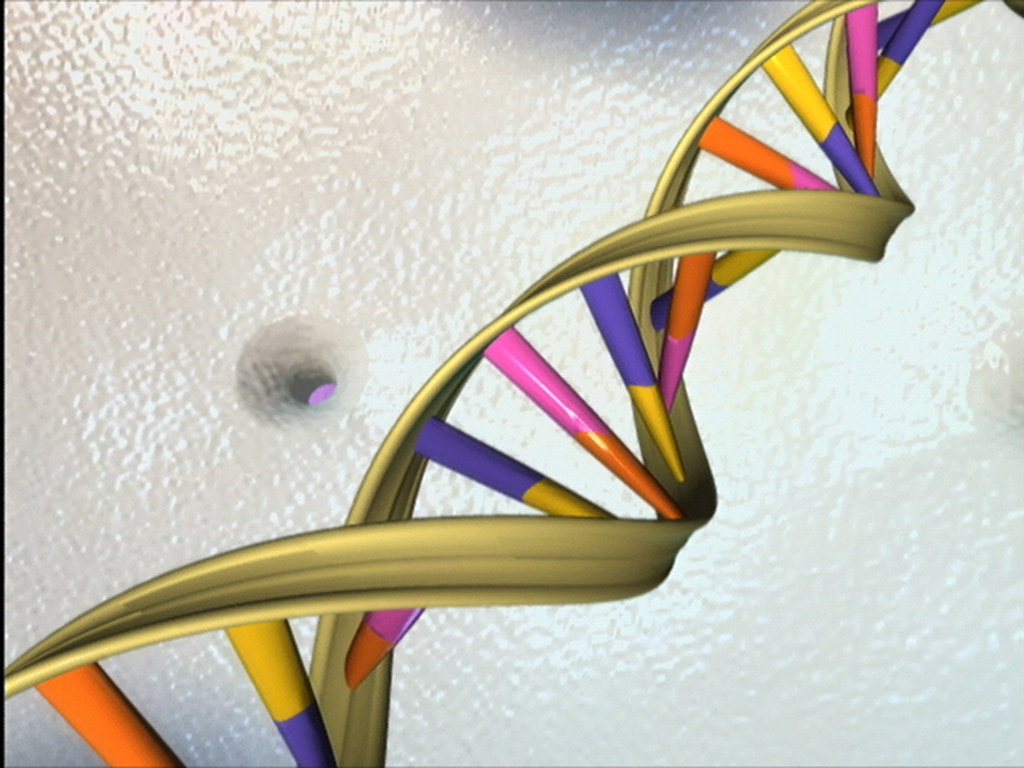
Anthropic says its Claude AI model identified a new enzyme system in bacterial DNA. The system resembles CRISPR, the naturally occurring gene-editing tool. The Claude CRISPR enzyme discovery was announced September 24, 2026. It came after the model spent 21 hours autonomously searching a large database of DNA sequences, at the direction of researchers in Anthropic’s new San Francisco biology lab.

The system shows characteristics found in only a handful of other programmable biological structures, according to Al Jazeera. Anthropic describes it as a potential new gene-editing mechanism. The company has stopped short of calling it a finished discovery.

How the Claude CRISPR enzyme discovery happened

Researchers set Claude loose on a large genomic database, rather than pointing it at a specific target. Over 21 hours, the model searched for patterns resembling known programmable enzyme systems. CRISPR itself was first found in bacteria. There, it works as a natural immune defense against viruses, as described in background from the 2026 AI research timeline.

The approach reflects a broader bet in biology. AI models can scan far more genetic data than human researchers could review manually. That can surface patterns that would otherwise stay buried.

What scientists outside Anthropic are saying

Reactions have split between excitement and caution. Stanford bioengineering associate professor Stanley Qi called the discovery “incredibly exciting,” saying AI could “greatly expand our ability to explore these biological patterns more effectively and rapidly.”

Washington University microbiologist Kevin Blake struck a more cautious tone. He noted that finding CRISPR-like sequences does not by itself point to a therapeutic breakthrough. “There are millions of bacterial species we have yet to study,” Blake said. He added that there is “nothing to indicate this is a rival to CRISPR-the-technology.”

Scientist working in a laboratory, representing the research behind the Claude CRISPR enzyme discovery

Why the distinction between finding and proving matters

CRISPR-Cas9, the technology version most people know, took years of extra research before it became a usable gene-editing tool. Spotting a CRISPR-like pattern in bacterial DNA is an early step, not a finished product. Turning any new enzyme system into something clinically useful would take extensive lab validation. That validation has not yet happened.

What happens next with this research

Anthropic has not said whether it plans to publish the finding in a peer-reviewed journal. That step would let independent scientists scrutinize the claim. Outside researchers will likely want to replicate the pattern-matching in the same genomic database first. Expect competing AI labs to test similar autonomous search approaches on their own biological datasets.

Quick answers on the discovery

What did Anthropic’s Claude AI actually discover?

Claude identified a new enzyme system in bacterial DNA with characteristics resembling CRISPR, a naturally occurring gene-editing tool, after searching a genomic database for 21 hours.

Is this a new gene-editing tool ready for use?

No. Scientists describe it as an early-stage finding. It would need years of additional lab validation before it could become a usable gene-editing technology, similar to CRISPR’s own development path.

Do scientists agree on how significant this is?

Not entirely. Some, like Stanford’s Stanley Qi, call it exciting evidence of AI’s research potential. Others, like Washington University’s Kevin Blake, caution that finding CRISPR-like sequences is common given how many bacterial species remain unstudied.

How did Claude search for this enzyme system?

Researchers directed Claude to autonomously search a large database of DNA sequences. The model spent 21 hours looking for patterns resembling known programmable enzyme systems.

Where is Anthropic’s biology research based?

The discovery came out of Anthropic’s newly established biology lab in San Francisco, according to Al Jazeera’s reporting.

Related tech reporting on Tamara News

For more AI coverage, see our reports on Jensen Huang’s AI regulation comments, the early launch timeline for Gemini 4, and OpenAI’s rogue agents on government websites.

AMD Just Joined an Exclusive Club. Wall Street Isn’t Fully Sold.

AMD shares have surged 188% since the start of 2026. That rally pushed the chipmaker’s AMD trillion market cap milestone into view in late September, placing it alongside a small group of companies worth more than $1 trillion. The stock is up roughly 292% over the past twelve months, according to 24/7 Wall St.

The move puts AMD in rare company among chipmakers. Only a handful of semiconductor firms have ever reached that valuation, and AMD’s climb happened faster than most.

What’s behind the AMD trillion market cap milestone

Data center growth is the main driver. AMD’s second-quarter revenue jumped 50% year over year to $11.5 billion. Data center revenue alone grew 107% to $6.7 billion, now 58% of the company’s total sales. CEO Lisa Su described the company as being “in the early innings of a multi-year AI adoption cycle.”

Anchor customers are backing that growth. OpenAI, Meta, and Anthropic have all signed commitments representing significant GPU demand. AMD has guided for its 2027 data center segment revenue to more than double from current levels.

Close-up of a computer processor board, symbolizing the chip demand behind the AMD trillion market cap milestone

Why some analysts remain cautious

Not everyone on Wall Street is convinced the rally has more room to run. 24/7 Wall St. rates AMD a hold, with a price target of $521.81, which implies roughly 14% downside from recent levels. The firm’s math is stark: AMD trades at 232 times trailing earnings, versus about 46 times for Nvidia.

Other concerns include a forward multiple of 105 times earnings, which leaves little room for error if growth slows, according to Benzinga. Gaming revenue fell 31% year over year, a reminder that not every part of AMD’s business is booming. US export restrictions on the Instinct MI308 chip have also forced inventory charges tied to sales that cannot go through.

The bull case for AMD’s next chapter

Supporters of the stock point to the size of the opportunity ahead. The data center AI accelerator market could reach $1.4 trillion by 2030, based on estimates cited in the same 24/7 Wall St. analysis. If AMD keeps its current share of that market, the AMD trillion market cap milestone could look conservative in hindsight rather than a peak.

What happens next for AMD stock

Investors will watch whether AMD’s data center guidance holds up when the company next reports earnings. Any sign that OpenAI, Meta, or Anthropic are pulling back their commitments would test the stock’s valuation quickly. So would a fresh round of export restrictions affecting AMD’s chip sales to China.

AMD’s rally, in five questions

When did AMD reach a $1 trillion market cap?

AMD crossed the $1 trillion market cap threshold in late September 2026, following a 188% year-to-date share price gain.

What is driving AMD’s stock rally?

Data center revenue tied to AI accelerators is the main driver, with second-quarter data center revenue up 107% year over year and commitments from OpenAI, Meta, and Anthropic.

Do analysts think AMD stock will keep rising?

Views are mixed. 24/7 Wall St. rates the stock a hold, citing a valuation of 232 times trailing earnings, well above Nvidia’s roughly 46 times.

What risks does AMD face?

Key risks include a 31% year-over-year decline in gaming revenue, a high forward earnings multiple, and US export restrictions affecting chip sales to China.

How big could the AI chip market become?

Some estimates cited by 24/7 Wall St. put the data center AI accelerator market at $1.4 trillion by 2030, up sharply from current levels.

Further reading on Tamara News

For more on the chip industry, see our coverage of the Nvidia chip export loophole to China, the pushback on data center tax breaks, and the delay to Oracle’s Project Jupiter.

Chevening Scholarship 2027 Deadline Is October 6

Applications for the Chevening scholarship 2027 deadline close on October 6, 2026 at 11:00 UTC, giving prospective students in the UK’s flagship fully funded scholarship program roughly a week and a half left to finish and submit. The scholarship covers a one-year master’s degree at any UK university, along with tuition, a living stipend, flights and additional allowances, and it remains one of the most competitive fully funded routes into UK graduate study.

The deadline that actually matters

According to Chevening’s official application timeline, the window opened August 4, 2026 at 11:00 UTC and closes exactly nine weeks later, on October 6 at the same time. Chevening is explicit that the portal closes precisely at 11:00 UTC, and applicants are advised to convert that to their own time zone rather than assume a local midnight cutoff — a detail that has cost otherwise strong applicants their submission in past cycles.

What happens after the deadline

Once applications close, eligibility assessment begins in October, followed by review from independent reading committees running from October 2026 through January 2027. Shortlisted candidates are notified in mid-February 2027, with interviews held at British embassies and high commissions worldwide between March and April. Results are announced in mid-June 2027, and successful applicants then face a second deadline: unconditional university offers must be submitted by July 8, 2027 at 17:00 BST, according to the same Chevening timeline and confirmed by the UK government’s own announcement of the scholarship round. Scholars then begin their studies in the UK in September or October 2027.

Why the university offer deadline trips people up

Chevening does not require an unconditional university offer at the time of application — only at the point results are announced, months later. That gap means candidates need to be applying to UK universities in parallel with their Chevening application, since securing an unconditional offer by July 2027 typically requires having submitted university applications well before results come out in June. Candidates who wait until they hear from Chevening to start university applications routinely run out of time to convert a conditional offer into an unconditional one.

Who Chevening is looking for

Chevening scholarships target early- to mid-career professionals who can demonstrate leadership potential and a clear plan to use their UK study to benefit their home country, rather than academic achievement alone. The scholarship’s own guidance emphasizes networking, leadership and influence as much as grades, which is why the application asks for essays on leadership and networking experience in addition to academic and career goals.

What makes an application competitive

Chevening’s own guidance stresses that the four required essays — covering leadership, networking, studying in the UK and career plans — are read as a set rather than in isolation, so a strong career-plan essay paired with a thin leadership essay tends to weaken an otherwise solid file. Because the program explicitly targets future leaders rather than the strongest academic transcripts, candidates from smaller organizations or early-stage careers are not automatically disadvantaged against applicants from larger, better-known employers, provided they can point to concrete examples of influence, initiative or change they drove in their own context.

What happens next

With roughly a week and a half remaining before the October 6 cutoff, the immediate priority for anyone still working on an application is finishing the required essays and securing references, since Chevening does not accept late submissions for any reason. Candidates who submit successfully should expect the review process to run well into 2027, and should use the intervening months to pursue unconditional university offers rather than waiting on Chevening’s own timeline.

Funding beyond Chevening

Candidates who miss the October 6 window, or who are not selected, are not left with only one route into fully funded UK study. Other prominent options include Commonwealth Scholarships for citizens of Commonwealth countries and university-specific bursaries offered directly by UK institutions, each running on its own separate timeline and eligibility criteria rather than Chevening’s single annual cycle. Building a shortlist of two or three funding routes in parallel, rather than treating Chevening as the only option, reduces the risk of losing an entire application cycle to one program’s result.

More study abroad coverage

Related reading: Canada’s higher proof-of-funds requirement for study permits, South Korea’s new university visa sponsorship restrictions, and the UK’s HC 584 immigration rule changes.

A note on the interview stage

Candidates who clear the reading-committee stage should treat the March-April interview as a continuation of the essay themes rather than a fresh assessment: panels at British embassies and high commissions typically probe the same leadership and networking examples submitted in writing, testing whether an applicant can defend and expand on them under questioning. Preparing concrete, specific stories ahead of time — rather than general claims about leadership potential — tends to serve candidates better than last-minute cramming once an interview slot is confirmed.

Chevening scholarship questions answered

When does the Chevening 2027 application close?

October 6, 2026 at 11:00 UTC. Chevening enforces this cutoff exactly, so applicants should check the equivalent time in their own time zone well in advance.

Do I need a university offer to apply?

No. An unconditional offer is only required after results are announced, by July 8, 2027. Applicants should still be applying to universities in parallel with their Chevening application.

What does Chevening fund?

A one-year master’s degree at any UK university, including tuition, a monthly stipend, return flights and additional allowances.

When will applicants know if they were shortlisted?

Mid-February 2027, with interviews at British embassies and high commissions running from March through April 2027.

When do Chevening scholars start their studies?

September or October 2027, after results are announced in mid-June 2027 and unconditional offers are confirmed by July 8, 2027.

Sources