Azerbaijan’s New Remote Work Visa Has a Strict Income Test

Featured photo: Bruno Girin / Wikimedia Commons (CC BY-SA 2.0)

The Azerbaijan digital nomad visa is now moving through parliament. It would let remote workers in digital technology, AI, cybersecurity and ICT-based innovation apply for a business visa. They would skip the invitation documents foreign visitors to Azerbaijan normally need. A Milli Majlis committee discussed the proposal at a late-September meeting. It is not yet law. If lawmakers adopt it, it would take effect on 1 January 2027. It sets out the clearest income and eligibility rules any Caspian-region country has proposed for remote workers so far.

The draft amendment to Azerbaijan’s Migration Code defines a “digital nomad” as a foreigner or stateless person. That person must work remotely in one of those fields and earn income from foreign sources. The definition excludes most other remote-work categories. It still covers the bulk of the software, security and technology freelancing market.

The income bar behind the Azerbaijan digital nomad visa

The business visa route would drop the invitation petition and purpose-of-invitation document that Azerbaijan’s standard visa process requires. Applicants would instead submit apostilled or legalized documents proving their professional activity. They would also need to show a stable average monthly foreign income over the preceding six months. That income must equal at least 13 times Azerbaijan’s monthly minimum wage.

Temporary residence permits carry the same 13-times income threshold. Authorities would grant them for the period requested, up to three years. Applicants could renew in further three-year increments as long as they keep qualifying. Registering with Azerbaijani tax authorities, or working as a resident of a technology park, would also count as valid grounds for residence. Permanent residence sets a considerably higher bar. It requires a six-month average foreign income of at least 26 times the monthly minimum wage, double the temporary threshold. The rules would waive the standard commission test of local rights knowledge and the state language for digital nomads seeking permanent residence.

Remote worker with laptop eligible for the Azerbaijan digital nomad visa
Photo: DominikaMiazek / Wikimedia Commons (CC BY-SA 4.0)

What’s new compared with other digital nomad programs

Most digital nomad visa programs worldwide set a flat minimum income in a named currency. Applicants either clear a fixed euro or dollar figure or they don’t. Azerbaijan’s proposal instead pegs eligibility to a multiple of the domestic minimum wage. That structure adjusts automatically as the minimum wage changes over time. It skips the need for periodic legislative updates. The tradeoff is real. Applicants can’t simply check a published dollar figure. Instead, they need to track Azerbaijan’s current minimum wage and do the multiplication themselves, or rely on an immigration advisor. Azerbaijani authorities set the underlying wage figure separately, and the original committee materials did not specify it.

The proposal also folds in social protection in a way many comparable programs skip entirely. A related amendment to the Law “On Social Insurance” would cover digital nomads under compulsory state social insurance once they gain status. That detail suggests Azerbaijan is positioning the program as a genuine residency pathway rather than a loosely regulated visa-of-convenience.

Why the sector restriction matters

Unlike programs that welcome any remote worker regardless of field, Azerbaijan’s draft explicitly ties eligibility to digital technologies, AI, cybersecurity and ICT-based innovation. Azerbaijan has been actively trying to grow this sector as part of its post-oil economic diversification push. The draft does not open the door to remote workers broadly. A freelance marketing consultant or a remote customer-support worker would likely fall outside the current definition. That holds even if their income cleared the threshold.

What happens next

The amendment still needs to clear the Milli Majlis in full before it becomes law. The committee stage it has reached so far is an early one rather than a final vote. If lawmakers pass it on the current timeline, the program would take effect 1 January 2027. That would give prospective applicants roughly two months after final passage to prepare documentation. Anyone planning around this visa should watch for the actual minimum wage figure once officials confirm it. Multiplied by 13 or 26, depending on the residency type sought, that number will determine real eligibility far more precisely than the multiplier alone.

Frequently asked questions

Who qualifies for the Azerbaijan digital nomad visa?
The draft proposal covers a foreigner or stateless person who works remotely in digital technologies, AI, cybersecurity or ICT-based innovation and earns income from foreign sources.

What income is required for the business visa route?
Applicants need a stable average monthly foreign income, over the preceding six months, of at least 13 times Azerbaijan’s monthly minimum wage. The route requires no invitation petition.

What income is required for permanent residence?
Applicants need a six-month average foreign income of at least 26 times the monthly minimum wage. That is double the temporary residence threshold.

When would the visa take effect?
If lawmakers adopt the current proposal, the program would take effect on 1 January 2027. It had not yet passed the Milli Majlis as of late September 2026.

Do digital nomads get social insurance coverage?
Yes. A related proposed amendment would place digital nomads who gain status under Azerbaijan’s compulsory state social insurance system.

Is there a language or local knowledge test?
No, not for permanent residence under this program. The rules waive the standard commission test of local rights knowledge and the state language for these applicants.

For other emerging visa and residency options, see our coverage of New Zealand’s graduate work visa changes and India’s tourist e-visa update. For another income-based residency route, read our report on the US visa bulletin for November 2026.

A New Report Says Some Green Card Applicants Will Wait Longer Than a Lifetime

A new analysis puts a hard number on something many employment-based applicants already feel. The green card backlog wait times tracked by the National Foundation for American Policy keep growing, and for some nationalities, the projected wait now stretches well beyond a working career.

The NFAP analysis was covered by Newsweek in late August 2026. It found the employment-based backlog across the EB-1, EB-2 and EB-3 categories reached about 1.26 million people by December 2025. That is up from roughly 1.05 million in April 2020. The increase works out to 20.6% in under six years. EB-2 grew 22.9% over that period. EB-3 grew 30.1%. EB-1, the smallest category, actually fell 16.6%.

Why green card backlog wait times hit Indian applicants hardest

India accounts for nearly 1 million people in the backlog. That is about 79% of the total. The breakdown shows 731,566 people in EB-2 and 213,414 in EB-3. For Indian applicants filing in January 2026 or later, NFAP projects a wait of roughly 179 years in EB-2. EB-3 comes in at 38 years. EB-1 looks far better by comparison, at an estimated four to five years. Those numbers describe a queue no single applicant will realistically outlive in the slower categories.

Other countries face long waits too, just not on the same scale. China’s 2026 filers face a projected 25-year wait in EB-2. EB-1 runs five years for China, and EB-3 runs seven. The Philippines looks very different. Its applicants sit current or near-current in EB-1 and EB-2. Only EB-3 carries a wait, at six years. The gap between countries comes down to one structural rule. It has nothing to do with how hard anyone’s case gets reviewed.

The rule driving green card backlog wait times

The Congressional Research Service has documented this limit for years. Congress set the annual employment-based green card limit at 140,000 back in 1990. It has not raised that number since. Demand from a growing global applicant pool has climbed steadily in the meantime. A separate per-country cap adds another constraint. It limits any single nation to 7% of each category’s annual allocation, no matter how many qualified applicants that country produces. India and China send far more applicants into these categories than that cap can absorb each year. That mismatch is the direct cause of their multi-decade queues.

More than 280,000 extra green cards went out from FY2020 to FY2024. Those came from unused family-sponsored numbers that would otherwise have gone unclaimed. Even that extra supply did not shrink the backlog. Demand outpaced the bonus numbers every single year in that stretch.

How this connects to other 2026 visa changes

The backlog numbers help explain why several other 2026 immigration stories matter together, not just individually. Tamara News covered the November 2026 Visa Bulletin. That update moved most categories forward while leaving India and China largely stuck. A similar pattern showed up in coverage of the Department of Labor’s PERM suspension affecting major employers. That suspension slows the pipeline feeding into this backlog even further, for workers at large tech companies especially. Canada’s own Express Entry reforms this October show a different country taking a very different approach. Canada prioritizes high earners through a points system, not a strict per-country cap.

What would actually move green card backlog wait times

NFAP’s report points to one lever above all others: congressional action. Raising the 140,000 annual cap would help. Adjusting or removing the 7% per-country limit would help too. Either step, or both together, would directly shrink the projected wait times described here. Without legislative change, the report expects backlogs to persist or grow. Current limits predate the internet-era applicant pool by more than three decades. No such legislation was pending in Congress as of the most recent reporting reviewed for this piece.

US Capitol, where Congress sets the limits behind the green card backlog wait times

FAQ: green card backlog wait times

How big is the US employment-based green card backlog?
The NFAP analysis put it at about 1.26 million people across EB-1, EB-2 and EB-3 as of December 2025.

Which country faces the longest green card backlog wait times?
India, by a wide margin. NFAP projects roughly 179 years in EB-2 and 38 years in EB-3 for Indian applicants filing from January 2026 onward.

Why do India and China face much longer waits than other countries?
A per-country cap limits each nation to 7% of each category’s annual green cards, regardless of applicant volume, and both countries send far more applicants than that cap can absorb.

Has Congress raised the green card limit recently?
No. The 140,000 annual employment-based limit has stood since 1990, with no increase as of the most recent reporting.

Do EB-1 applicants face the same backlog?
No. EB-1 is in much better shape, with the category’s backlog shrinking 16.6% and projected waits of four to five years for Indian applicants.

What would shorten the green card backlog wait times?
NFAP points to congressional action, such as raising the annual cap or adjusting the per-country limit, as the main levers that could meaningfully reduce the backlog.

Can an employer do anything to speed up a green card case?
An employer can file early and keep paperwork current, but it cannot change the per-country caps or the annual limit, since those are set by federal law, not employer practice.

Does the backlog affect family-sponsored green cards too?
This particular analysis focuses on employment-based categories. Family-sponsored visas have their own separate backlog and per-country rules, which NFAP’s report does not cover in the same detail.

75-Country Immigrant Visa Pause: 318 Approvals Since Ruling

Since a federal court struck down the 75-country immigrant visa pause on 21 August 2026, only a small share of the affected cases has been decided, according to a 26 October 2026 post by the Law Offices of Jacob J. Sapochnick, a San Diego immigration firm. Citing a State Department filing of 5 October 2026, the firm says 706 affected applications were adjudicated between 21 August and 30 September: 318 approved or issued, and 388 refused on other grounds. This account comes from a law firm’s blog rather than a court document.

Contents

What the court decided

The post names the case as CLINIC v. Rubio and says the court found the suspension unlawful and ordered reconsideration of applications refused solely because of it. It says more than 43,000 applications had been refused solely under the pause, and that the ruling set no deadline for processing each case. The post does not name the specific court.

What the filing numbers show

The 706 adjudicated cases include applications refused for reasons other than the pause, so the post says it is unclear how many of the 43,000 have actually been reviewed. It adds that as of 2 October, one plaintiff’s family member had received a visa, several applicants had interviews scheduled and others had individual decisions. That is a thin basis for broad conclusions, and it is the firm’s reading of the filing.

What applicants can do

The firm suggests: determine whether your refusal rested solely on the pause or on other grounds; respond promptly to any request for documents, information or interviews; ask the consular post for a status update and whether reconsideration is available; and consult an immigration attorney about an individual mandamus suit or other action. It notes that a mandamus court generally cannot order a consular officer to approve a visa. General rules for immigrant visas are on the State Department’s immigrant visa pages.

A worked example

As an illustration, not a real case: a Pakistani family whose spouse-based immigrant visa was refused only under the pause should first check the refusal notice for its stated ground, then contact the embassy about reconsideration. Related background is in our reports on the November 2026 Visa Bulletin and the USCIS fee increase, and the visa eligibility checker can help you compare alternative routes.

What happens next

Without a processing deadline, timelines remain uncertain. Watch for further government filings in the case and for consular guidance on reconsideration. Applicants should keep copies of their refusal notices, interview letters and any correspondence with the consulate, since the firm’s advice depends on whether a refusal rested solely on the pause. Because the figures come from the firm’s reading of a filing, readers who need certainty should ask an attorney to review the filing itself.

Questions on the pause

When was the pause struck down?

21 August 2026, in CLINIC v. Rubio, according to the Sapochnick firm’s post.

How many applications were refused under it?

More than 43,000, per the same post.

How many have been decided since?

706 adjudicated between 21 August and 30 September, with 318 approved or issued and 388 refused on other grounds.

Is there a deadline for reconsideration?

The post says the ruling set none.

Is this from a court document?

No. It is a law firm’s blog summarising a State Department filing.

Should I sue?

That is a question for an immigration attorney; mandamus generally cannot compel approval.

Sources

Image: US Capitol, public domain, via Wikimedia Commons.

Europe’s New Travel Permit Was Supposed to Start by Now — Here’s Why It Hasn’t

Travelers hoping to understand Europe’s new entry rules got a clearer, if frustrating, answer this year. The ETIAS launch delay 2027 is now the European Union’s own expectation. It is not just rumor anymore. The European Travel Information and Authorisation System is a pre-travel screening step for visa-free visitors. The EU pushed it back indefinitely in August 2026.

Euronews covered the delay in detail. The EU had previously targeted a 2027 start. That date is now uncertain too. On its own website, the EU states plainly: “ETIAS is currently not in operation and no applications for travel authorizations are collected at this point.” The EU has promised to announce a firm start date several months before the system actually goes live.

Why the ETIAS launch delay 2027 happened

The delay traces back to a separate system called the Entry/Exit System, or EES. EES ran into technical trouble. EES began registering non-EU travelers at Schengen borders in April 2026. It collects facial images and fingerprints on first entry. The rollout did not go smoothly everywhere. Some airports, including locations in Milan, fingerprinted travelers again even after they had already registered once. Long queues and missed flights followed during the busy summer travel season. Officials want EES running reliably first. ETIAS depends on the same border infrastructure, so adding it on top of a shaky system risked compounding the problem.

ETIAS officials planned to present a revised timeline in the weeks after the August announcement. Some early rumors suggested a late-2026 launch was still possible. Most reporting treats a 2027 start as more realistic. Even that date carries real uncertainty. This system has slipped several times already.

What travelers need to do right now

Nothing, for the moment. ETIAS stays optional until the system actually launches, and no one can submit an application yet. Travelers from visa-exempt countries can keep visiting the Schengen area under the current rules. That includes the United States, United Kingdom, Canada and Australia. The EU has specifically warned travelers not to pay anyone who claims to offer ETIAS applications ahead of the real launch. Early scam sites have already tried to charge for a service that does not yet exist.

When ETIAS does launch, the plan calls for a cost of €20 per application. The EU expects to exempt children under 18 and adults over 70 from that fee. It also expects some family members of EU citizens to qualify for an exemption. The EU expects an approved authorization to last three years, or until the holder’s passport expires. It would cover stays of up to 90 days in any 180-day period.

How this fits into Europe’s bigger border overhaul

EES and ETIAS are two halves of the same plan. One tracks entries and exits digitally. The other screens visa-free travelers before they arrive, rather than only at the border. The EES side is already live, even with rough patches at some airports. The ETIAS side keeps slipping. That mismatch leaves travelers with biometric registration duties now. They still lack the pre-travel screening step the EU originally wanted to pair with it. The European Commission’s own ETIAS page still describes the system as “not in operation,” confirming the delay is not just press speculation. Readers tracking shifting entry rules elsewhere can also see how Thailand recently cut its visa exemption period and how India adjusted its own e-visa rules this same month. Neither of those changes took anywhere near the years of delay Europe has faced with ETIAS.

What comes before ETIAS finally launches

Expect three things before a real start date arrives. First, EES needs a stretch of smooth operation at major airports, not just improvement at a few locations. Second, the EU must formally lock in the €20 fee. That fee was still in a review period as of the most recent reporting. Third, the EU has committed to a public announcement several months ahead of launch. That should give airlines and travelers real lead time once it finally comes. None of those three steps has a confirmed date yet. Travelers should treat any site offering ETIAS applications today as premature at best.

Schengen area border sign relevant to the ETIAS launch delay 2027

FAQ: ETIAS launch delay 2027

Do I need ETIAS to visit Europe right now?
No. ETIAS is not in operation, and nobody can submit an application as of this writing.

When will ETIAS actually launch?
The EU has not set a firm date. Most reporting treats 2027 as more likely than 2026, though the EU has delayed this system multiple times already.

How much will ETIAS cost when it launches?
The planned fee is €20, with expected exemptions for children under 18, adults over 70, and some family members of EU citizens.

Is the ETIAS launch delay 2027 related to EES?
Yes. Officials cited technical trouble with the Entry/Exit System, which already requires biometric registration at Schengen borders, as a key reason for holding back ETIAS.

Which travelers will need ETIAS?
Visa-exempt visitors to the Schengen area, plus Iceland, Norway, Liechtenstein and Switzerland, including travelers from the US, UK, Canada and Australia.

Should I pay a website for help applying for ETIAS now?
No. The EU has warned against paying anyone for ETIAS applications before the official system is live, since the real application process has not opened yet.

Does the ETIAS launch delay 2027 affect EES registration at the border?
No. EES registration continues separately at Schengen borders regardless of when ETIAS launches. The two systems are related but run on different timelines.

UK Immigration Rules HC 584: Visitor and Erasmus+ Changes

The UK Immigration Rules HC 584 package, published by the Home Office on 3 September 2026, has now taken effect for most of its changes, with the main provisions applying to applications and entries from 8 October 2026, according to a Lewis Silkin summary. The package widens what visitors can do in the UK, adds Erasmus+ to the rules and tightens how the system treats people who have previously frustrated immigration controls. The official statement is listed on GOV.UK, which shows it was last updated on 22 October 2026 without explaining why.

Contents

Visitor rules now more permissive

Lewis Silkin reports that for visa applications or entries on or after 8 October 2026, all visitors may take part in workshops and debates and attend skills competitions. Visitors who come to train in the UK no longer have to show the training is unavailable in their home country. Visiting artists, entertainers and musicians may attend rehearsals as well as performances, and a new “entertainment staff” definition lets people employed outside the UK by a visiting performer assist with the same creative activities.

Erasmus+ enters the Immigration Rules

For applications made on or after 8 October 2026, Erasmus+ is added to the Government Authorised Exchange requirements, according to the same summary. A new visitor activity category, “Erasmus+ activities”, covers programme-related training, education and work experience. Visitors on an Erasmus+ project may study at UK state-funded schools and academies for up to six months, subject to child safeguarding and other eligibility requirements, and students on Erasmus+ courses can be sponsored whether or not the course leads to an approved qualification. Lewis Silkin states that the UK rejoins Erasmus+ on 1 January 2027, which is when these provisions are designed to operate.

Where the rules tighten

Two changes point the other way. In-country applicants who have previously frustrated immigration controls, for example by failing to report for or absconding from bail, will be treated as having breached immigration law, which aligns in-country refusals with entry clearance. And for variation applications made on or after 8 October 2026, biometrics must be enrolled by the deadline for the previous application, leaving a single enrolment period. A further change lets Skilled Workers recognised as modern slavery victims, through a positive Conclusive Grounds decision, take other work for the rest of their visa; professional sport and sports coaching stay barred and the public funds restriction is unchanged. Lewis Silkin notes the Home Office has not yet published how that process will work.

What it looks like for a student

As an illustration, not a real case: a Brazilian university student whose home institution joins an Erasmus+ project with a UK partner would, from 2027, fall under the new Erasmus+ activities category rather than a general visitor route. They should confirm the exact route, fees and documents with the sponsor and with GOV.UK before booking travel. Students planning longer study should also see our guide to the UK student visa funds increase and use the visa eligibility checker to plan a route.

What happens next

The Home Office will need to publish guidance on the modern slavery work process, and the Erasmus+ provisions are tied to the 1 January 2027 start. Other dated items in the package, such as later student maintenance changes, should be checked against the primary statement before you rely on them; we did not verify them against the statement’s PDF for this report.

Questions on HC 584

When did HC 584 take effect?

Most changes apply to applications or entries from 8 October 2026, according to Lewis Silkin. The statement itself was published on 3 September 2026.

What can visitors now do?

Attend workshops, debates and skills competitions; trainees no longer need to show training is unavailable at home; artists may attend rehearsals.

When does the UK rejoin Erasmus+?

Lewis Silkin states 1 January 2027.

Is there a new Erasmus+ visa route?

There is a new visitor activity category called Erasmus+ activities, plus changes to the Government Authorised Exchange rules.

Who is affected by the biometrics change?

People making variation applications on or after 8 October 2026, who now get a single enrolment period tied to the earlier application’s deadline.

Where is the official text?

On GOV.UK under Statement of changes to the Immigration Rules HC 584.

Sources

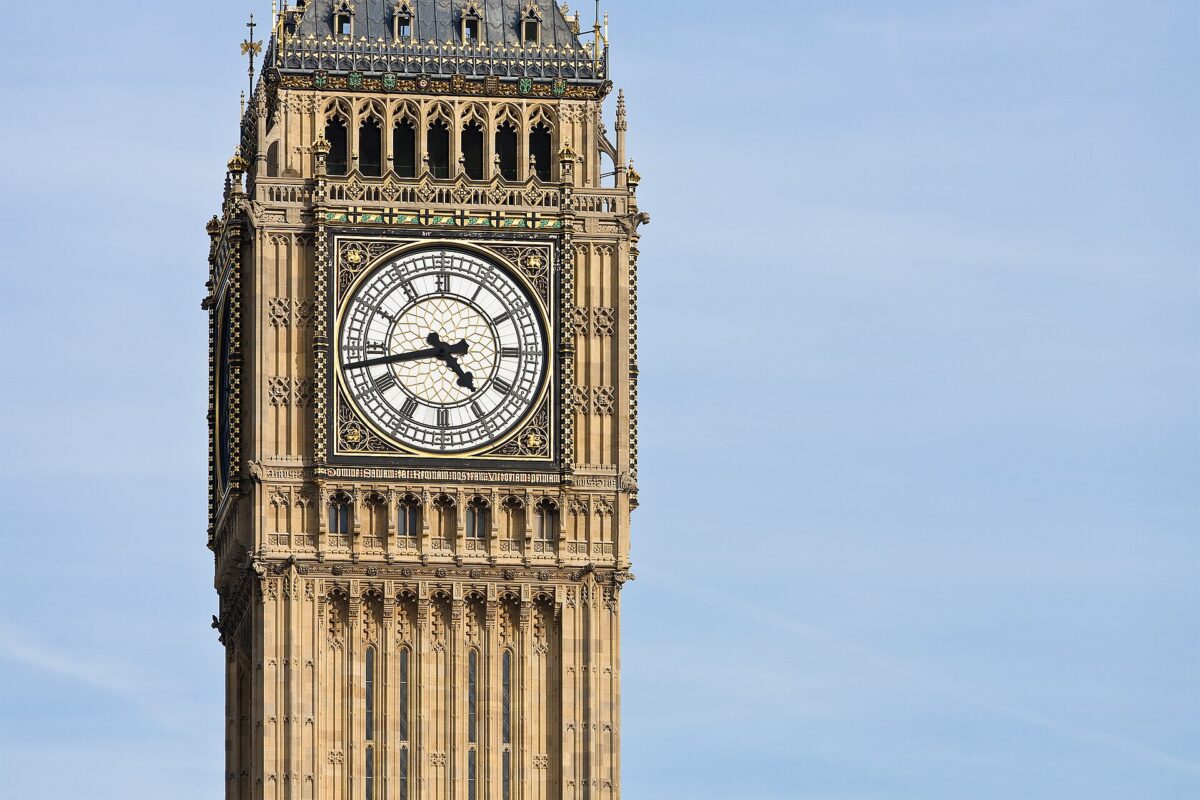
Image: Palace of Westminster clock tower by Diliff, CC BY 3.0, via Wikimedia Commons.