USCIS Is Raising Fees Again on October 16 — Here’s Exactly What Changes

USCIS quietly raised four immigration fees on 16 October 2026, under a new annual inflation adjustment rule that most applicants have never had to deal with before. The USCIS fee increase October 2026 is small in dollar terms, but it carries a hard deadline: get the new amount wrong and the agency says it will reject the filing outright.

The USCIS fee increase October 2026: what exactly went up

According to an official bulletin confirmed through USCIS’s own notification system, four specific fees changed. The annual asylum application fee rose from $102 to $105. The Form I-131 fee, used for immigration parole documents, rose from $1,020 to $1,050. The Form I-765 fee for an initial Employment Authorization Document, filed by asylum applicants, parolees and Temporary Protected Status holders, rose from $560 to $570. And the Form I-821 fee for Temporary Protected Status itself rose from $510 to $520. As Cronista reported, no other immigration fees changed in this round.

Why these four fees and why now

The increases implement a provision in the One Big Beautiful Bill Act, which requires the Department of Homeland Security to adjust certain immigration fees for inflation every fiscal year starting with FY 2026. USCIS first laid out these fee categories in a Federal Register notice back on 22 July 2025, and this particular round, covering FY 2027, reflects inflation measured from July 2025 through July 2026. In practical terms, that’s a legally mandated, formula-driven update rather than a discretionary policy choice, which is part of why the dollar amounts involved are modest, ranging from a $3 bump on the asylum fee up to a $30 increase on the parole document fee.

The deadline that actually matters

The fee amounts only matter if applicants get the timing right. USCIS has stated plainly that any request postmarked on or after 16 October 2026 must include the new, higher fee, and that submissions sent on or after that date with the old, lower amount will be rejected rather than processed with a request for the difference. For applicants and their attorneys, that makes the mailing date, not the date the form was filled out, the operative deadline. Anyone who prepared paperwork before the change took effect should double-check the fee amount before it actually goes in the mail.

Who should pay attention

This round of changes is narrowly targeted. Asylum applicants, people applying for or holding Temporary Protected Status, and immigration parolees are the groups directly affected, since those are the categories tied to the four forms involved. Most other visa categories and USCIS forms are untouched by this specific update, so the vast majority of applicants filing green card, work visa or naturalization paperwork won’t see any change from this particular notice.

What this means going forward

USCIS has described these as minor adjustments, but the inflation-linked mechanism behind them means this almost certainly won’t be the last update under the One Big Beautiful Bill Act’s fee provisions. Expect a similar round of smaller increases roughly every fiscal year going forward, which makes checking the official USCIS fee schedule immediately before filing, rather than relying on a figure from months earlier, the safest habit for anyone navigating these four forms.

Frequently asked questions

Which USCIS fees are increasing in October 2026?
Four fees rise effective 16 October 2026: the annual asylum application fee from $102 to $105, the Form I-131 parole document fee from $1,020 to $1,050, the Form I-765 initial work permit fee from $560 to $570, and the Form I-821 Temporary Protected Status fee from $510 to $520.

Who is affected by the USCIS fee increase October 2026?
Asylum applicants, immigration parolees, and Temporary Protected Status holders and applicants are affected, since the increases apply specifically to the annual asylum fee, parole document requests, initial work permit filings tied to these categories, and TPS applications.

Why is USCIS raising these fees now?
The increases implement an annual inflation adjustment required under the One Big Beautiful Bill Act, which directs the Department of Homeland Security to adjust certain fees for inflation each fiscal year starting in FY 2026. This round covers inflation measured from July 2025 through July 2026.

What happens if I send the old, lower fee after October 16?
USCIS says applications postmarked on or after 16 October 2026 that include the outdated, lower fee amount will be rejected outright, so applicants need to confirm the current fee before mailing any affected form.

Are other USCIS fees changing too?
No. USCIS has described this round of adjustments as minor, and the agency says other immigration fees outside these four forms remain unchanged for now.

Where can I confirm the exact current fee before filing?
Applicants should check the official USCIS fee schedule directly before submitting any affected form, since fee amounts can be updated again in future inflation adjustment cycles.

For more on US immigration costs and deadlines this season, see our coverage of the November 2026 Visa Bulletin and the $750 expedited visa interview pilot winding down in December.
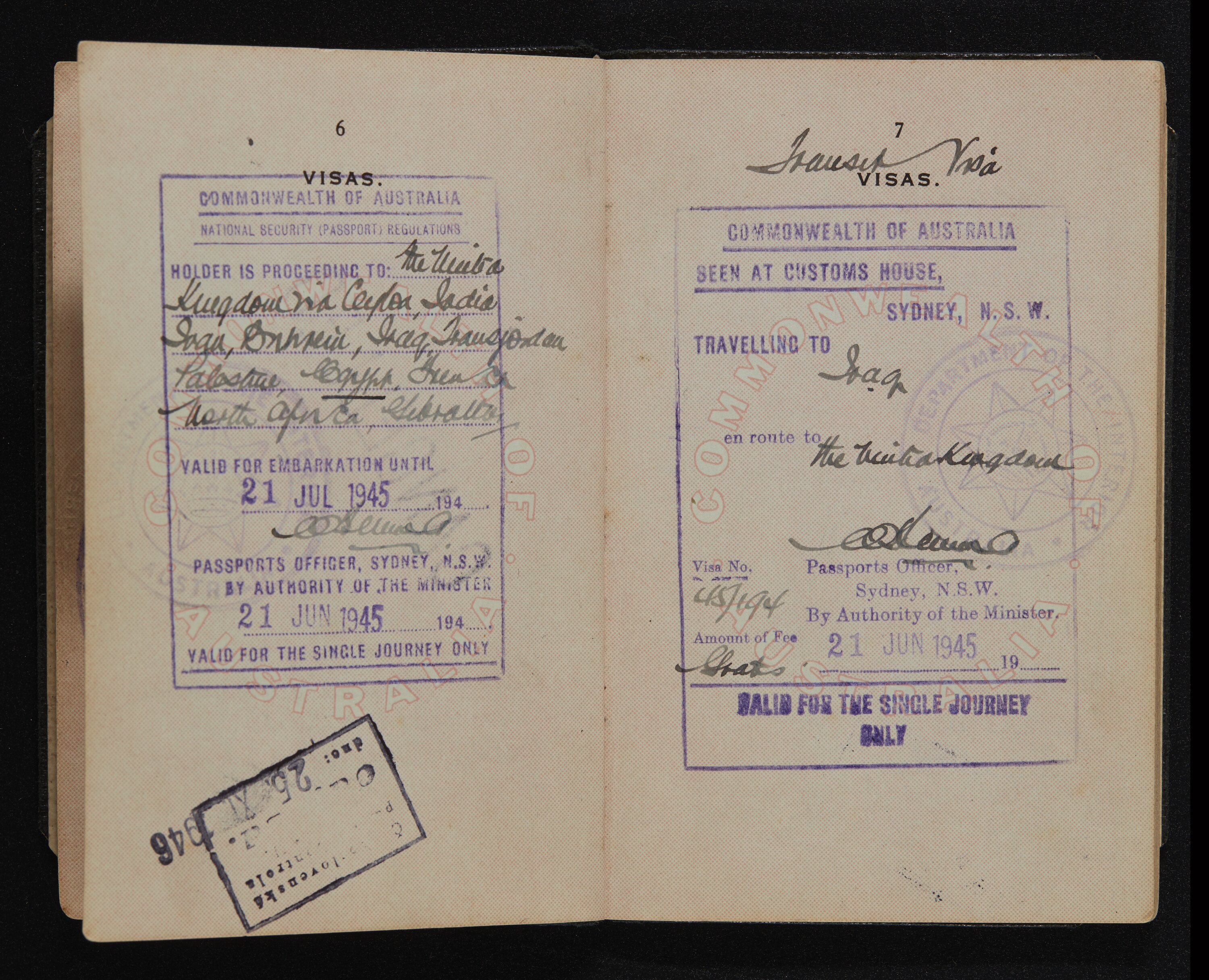

A travel document stamp, symbolising the paperwork affected by the USCIS fee increase October 2026 rule

The $100,000 H-1B Fee Is Dead for Now — But Don’t Celebrate Yet

The $100,000 fee the Trump administration tried to attach to many H-1B petitions remains blocked, but the H-1B visa fee court fight is nowhere near settled. On 24 July 2026, the US Court of Appeals for the First Circuit denied the federal government’s motion to pause a lower court ruling that had vacated the fee, according to reporting from SHRM. That leaves the fee unenforceable while the broader legal battle continues.

How the H-1B visa fee court fight got here

President Trump issued a proclamation on 19 September 2025 requiring an extra $100,000 payment for H-1B petitions processed through consular notification, a filing route commonly used by employers sponsoring workers applying from outside the United States. A Massachusetts district court, in a lawsuit brought by attorneys general from 20 states, ruled on 8 June 2026 that the fee effectively functioned as a tax and violated the Administrative Procedure Act, the federal law governing how agencies issue binding rules. US District Judge Leo Sorokin, who issued that ruling, found the fee exceeded the president’s authority, according to Staffing Industry’s reporting on the case. The district court then stayed its own ruling, which, somewhat counterintuitively, let USCIS keep collecting the fee while the government pursued its appeal.

What the appeals court actually ruled

That is where the First Circuit’s July decision changes the picture. The appeals court found the government unlikely to succeed in overturning the district court’s underlying ruling, and on that basis refused to let the fee collection continue during the appeal. Crucially, the court did not decide whether the $100,000 fee policy is ultimately lawful, only that the government hadn’t shown enough likelihood of winning to justify keeping it in force while the case plays out. That is a narrower, more procedural ruling than a final verdict on the fee’s legality, even though its practical effect right now is the same: employers don’t have to pay it.

What employers should actually do

For companies filing new H-1B petitions, including cap petitions, the immediate guidance is straightforward: the fee cannot currently be enforced, so petitions can move forward without it, though consulting immigration counsel before filing remains sensible given how quickly this status could change. For employers who already paid the fee before the ruling, the picture is murkier. They should hold on to proof of payment and wait for formal agency guidance, since it isn’t yet clear whether, or how, that money could be recovered. USCIS is expected to issue its own instructions on resuming H-1B filings in light of the ruling.

Why this almost certainly isn’t the end of it

One attorney quoted in the SHRM reporting expects the government to seek an emergency stay directly from the Supreme Court, which could act on such a request at any time regardless of the normal appeals calendar. If the Supreme Court grants a stay, the fee could come back into force while the underlying legal questions are still being litigated. The fee could also return outright if the government eventually wins its appeal, or if Congress passes legislation authorizing a similar charge through ordinary lawmaking rather than executive proclamation.

The broader legal landscape adds more uncertainty. Several related cases are still working their way through the courts, including State of California v. Markwayne Mullin, Chamber of Commerce v. DHS now on appeal at the DC Circuit, and Global Nurse Force v. Trump in the Northern District of California. Any one of those could shape how, or whether, a version of this fee eventually survives in some form.

What to watch in the weeks ahead

Watch for two things in the coming weeks: whether the government actually files for an emergency Supreme Court stay, and whether USCIS issues the formal filing guidance it’s expected to produce. Until either happens, H-1B sponsors can treat the $100,000 fee as paused rather than cancelled, and should plan filings with the possibility that the rules could shift again on short notice.

Frequently asked questions

Is the $100,000 H-1B fee currently in effect?
No. The fee cannot currently be enforced. The First Circuit Court of Appeals denied the federal government’s request to pause a lower court ruling that vacated the fee, so USCIS cannot collect it while the government’s appeal continues.

What did the First Circuit actually decide?
On 24 July 2026, the US Court of Appeals for the First Circuit denied the government’s motion to stay a 8 June 2026 district court order. It found the government unlikely to succeed on appeal, but it did not rule on whether the fee policy itself is ultimately lawful.

Where did the $100,000 H-1B fee come from?
President Trump issued a proclamation on 19 September 2025 requiring an extra $100,000 payment for H-1B petitions processed through consular notification. A Massachusetts district court later ruled on 8 June 2026 that the fee functioned as a tax and violated the Administrative Procedure Act.

Could the H-1B visa fee ruling still be overturned?
Yes. One attorney quoted in reporting on the case expects the government to seek an emergency stay from the Supreme Court, which could act at any time. The fee could also return if the government wins its appeal outright, or if Congress separately authorizes it.

What should employers do if they already paid the fee?
Keep proof of payment and wait for formal USCIS guidance, since it remains unclear how the ruling affects an employer’s ability to recover money already paid. Employers currently filing new H-1B petitions can do so without the fee for now, though consulting immigration counsel first is advisable.

Are other lawsuits challenging similar fees?
Yes. Separate related cases, including State of California v. Markwayne Mullin, Chamber of Commerce v. DHS at the DC Circuit, and Global Nurse Force v. Trump in Northern California, remain pending and could affect how this fight ultimately resolves.

For more on how US work-visa policy has been shifting, see our coverage of the DHS proposal to end deference on work visa extensions and the PERM suspension affecting major employers.

Visa and passport paperwork relevant to the H-1B visa fee court fight

Germany Makes Knowledge Exam the Default for Foreign Doctors

From 1 November 2026, the Germany Kenntnisprüfung for foreign doctors becomes the standard route to a licence for applicants with degrees from outside the EU, EEA and Switzerland, according to a summary by the study-prep provider Klinikfuchs. The Kenntnisprüfung is a knowledge examination. It replaces the default of a document-by-document equivalence check. The change comes from a federal law to speed up recognition of foreign health qualifications, and applications filed by 31 October 2026 stay under the old rules, so the next few days matter.

In this report

What the law changes

The Federal Ministry of Health (BMG) describes the act in its FAQ on the recognition law as a way to make recognition faster and more transparent while keeping patient-safety standards unchanged. The ministry says the knowledge test becomes the default (“Regelfall”). It calls the test a licensing exam that applies the same standards to everyone and does not focus on an individual applicant’s specific gaps.

The document-based equivalence check does not disappear. The BMG says it remains available if an applicant explicitly chooses it. That check compares a foreign qualification with German training and looks for significant differences. Klinikfuchs adds that the choice must be made within four weeks of applying and then binds the whole procedure, and that applicants with significant differences still end up taking the Kenntnisprüfung. That detail comes from a commercial provider, so confirm it with your state authority.

Two practical effects are stated by the ministry. Applicants who do not choose the document check no longer need to submit, translate or certify documents such as course curricula. And the German states (Länder) may in future test the language skills of third-country applicants before their professional qualification is assessed.

The dates that decide which rules apply

Klinikfuchs reports that the Bundestag passed the act on 26 March 2026 and the Bundesrat on 8 May 2026, that it was published in the Federal Law Gazette on 28 July 2026 (BGBl. 2026 I Nr. 225), and that it takes effect on 1 November 2026. The BMG’s FAQ page, as we read it, does not itself state the commencement date, so we are attributing the date to the law-gazette reference given by Klinikfuchs and by the law firm FMR Legal.

The transition rule is the part that matters most this week. Klinikfuchs says the application date decides, not nationality: applications submitted by 31 October 2026 stay under the old law, where the authority first assesses equivalence from your documents and requires the Kenntnisprüfung if equivalence is not established or cannot be fully assessed. Anything filed from 1 November follows the new default.

Who is affected

Klinikfuchs covers only doctors. FMR Legal, also a commercial source, says the standard knowledge-exam route applies to physicians, dentists, pharmacists and midwives. Applicants with EU, EEA or Swiss degrees are treated differently: Klinikfuchs says they do not take the Kenntnisprüfung, and substantial differences are addressed through an aptitude test instead. The BMG adds that for those qualifications the professional check still comes before any language check, as EU law requires.

Consider a hypothetical example. Ngozi is a Nigerian doctor with a medical degree from outside the EU who is preparing documents for a German licence. If she files by 31 October, the authority starts with a paper comparison of her training. If she files in November, the exam becomes her default path and she may not need to translate curricula at all. Neither outcome is better in every case; it depends on how complete her paperwork is and how ready she is to sit the exam.

What applicants can do now

First, find the licensing authority for the state where you plan to work, since the BMG notes the Länder run these procedures. Second, ask it in writing which rules apply to your file and whether the state is offering exam dates under the new system. Third, if you are a doctor from a third country weighing a move, compare Germany with other routes on our visa eligibility checker. Germany also appears in our coverage of German PhD scholarship deadlines, and for readers choosing between European destinations, see our report on ETIAS and EES border rules.

What happens next

The law takes effect on 1 November, and how quickly state authorities can schedule exams will determine whether the promised speed-up reaches applicants. The BMG estimates roughly 16 million euros in annual savings from reduced bureaucracy, about 12 million euros and 7,000 hours for applicants and about 3.9 million euros for the states. Those are the ministry’s own estimates. Tamara News will report if the Länder publish exam calendars or if the transition rules change.

Questions on the Kenntnisprüfung change

What is the Kenntnisprüfung?

It is a knowledge examination the BMG describes as a licensing exam applying the same standards to everyone. From 1 November 2026 it becomes the default route to recognition for third-country qualifications.

Does the equivalence check still exist?

Yes. The BMG says it remains available if the applicant explicitly chooses it. Klinikfuchs says the choice must be made within four weeks of applying.

Which applications stay under the old rules?

According to Klinikfuchs, applications submitted by 31 October 2026.

Do EU, EEA or Swiss graduates take the exam?

Klinikfuchs says no. Substantial differences are addressed through an aptitude test instead.

Will I still need translated curricula?

The BMG says applicants who do not choose the document-based check no longer need to submit, translate or certify documents such as curricula.

Who decides my case?

The licensing authority of the German state. Klinikfuchs notes its decision is binding, so confirm details with it directly.

Sources

New Zealand Graduate Work Visas Change on 16 November

From Monday 16 November 2026, the New Zealand graduate work visa options change: a new Short-Term Graduate Work Visa opens and the government widens eligibility for its Post Study Work Visa, with applications for both made through Enhanced Immigration Online. Immigration New Zealand (INZ) announced both changes. The new visa gives six months of open work rights, and the wider Post Study Work Visa now reaches more graduates holding diplomas, postgraduate diplomas and master’s degrees.

Contents

The Short-Term Graduate Work Visa

INZ says the new visa gives graduates six months of open work rights to look for work and, where suitable, move to an Accredited Employer Work Visa. Eligible graduates hold a New Zealand Qualifications and Credentials Framework (NZQCF) Level 5 to 7 qualification, studied full-time for at least 24 weeks in New Zealand, that is not an English language, foundation or bridging course and does not already qualify them for a Post Study Work Visa. They need at least NZ$5,000 available to support themselves, a medical certificate and chest X-ray where required, and must never have held a Short-Term Graduate Work Visa or Post Study Work Visa.

The visa allows work under an employment agreement or contract for services but not business ownership. It cannot be extended or granted a second time. Holders cannot support a partner’s work visa or a dependent child student visa, although partners and children may apply in their own right.

Wider Post Study Work Visa eligibility

For the longer visa, INZ lists these groups as benefiting from 16 November: graduate diploma (Level 7) holders who also hold a bachelor’s degree, postgraduate diploma (Level 8) graduates who may receive a one-year visa, and master’s (Level 9) graduates who may receive a three-year visa. Postgraduate diploma and master’s applicants need at least 30 weeks of full-time study in the qualification the visa is based on. Transferred credits, cross-credits and recognition of prior learning do not count toward the master’s for this purpose.

Only one Post Study Work Visa can be held per person. Holders can support partners and dependent children on visitor, work or dependent child student visas, if the requirements are met.

Filing windows and cut-offs

The Short-Term Graduate Work Visa must be applied for within three months of the student visa expiring. INZ’s own example is that a student visa which expired before 16 August 2026 would not qualify when applications open. Law firm Clark Hill’s September APAC recap adds that paper Post Study Work Visa applications end, with those filed by 15 November 2026 still processed. Treat that detail as the law firm’s reading and confirm it on the INZ site.

A worked example

Consider a hypothetical graduate. Maricel is a Filipino graduate finishing a Level 7 qualification that does not lead to a Post Study Work Visa. Under the new rules she could apply for the six-month visa within three months of her student visa ending, use that time to find an employer, and then explore an Accredited Employer Work Visa. She would need her funds evidence and medical documents ready before she applies. A neighbouring example: our report on Australia’s student visa changes shows how quickly neighbouring countries are reshaping post-study options.

What to do before 16 November

Check your qualification level and study length against the INZ lists, note when your student visa expires, and gather proof of funds and health documents. Create your Enhanced Immigration Online login in advance. If you are comparing study destinations, the visa eligibility checker can help you weigh post-study options before you pay tuition deposits.

New Zealand graduate visa questions

These answers rely on the INZ announcements cited above.

When does the Short-Term Graduate Work Visa open?

Applications open on Monday 16 November 2026 through Enhanced Immigration Online, according to Immigration New Zealand.

How long does the visa last?

Six months with open work rights, per INZ.

Can I get it twice or extend it?

No. INZ says holders cannot apply for a second visa or extend the first.

Who gets the three-year Post Study Work Visa?

Master’s (Level 9) graduates who meet the 30-week full-time study requirement in the master’s itself.

How much money do I need?

INZ says at least NZ$5,000 available to support yourself for the Short-Term Graduate Work Visa.

Can I run a business on this visa?

No. INZ says work must be for an employer under an agreement or contract for services, and business ownership is not allowed.

Sources

US Proposes Ending Deference on Work Visa Extensions

The USCIS deference proposal is the US Department of Homeland Security’s plan to end the rule that tells US Citizenship and Immigration Services (USCIS) to defer to prior approvals when it reviews work-visa extensions. The proposal was published in the Federal Register on 14 October 2026 and would delete 8 CFR 214.1(c)(5). It is only a proposal: the current deference rule stays in force unless and until DHS issues a final rule. Public comments close on 13 November 2026.

In this report

What DHS proposes

Under the current regulation, when USCIS decides an extension petition on Form I-129 involving the same parties and the same facts as an earlier approval, it generally defers to that earlier decision. The exceptions are a material error, a material change, or new material information that hurts eligibility. DHS says removing the provision places the burden of proof squarely on the petitioner and leads to a fuller review. Officers could still consider a prior approval where relevant, but it would carry no automatic weight.

Law firm Manifest Law, in its summary of the proposal, lists H-1B, L-1, O-1, TN and E classifications among the extensions that could be affected. Eligibility standards for each category would not change. What changes is how much an officer may rely on what was already decided.

DHS’s own estimates

The figures below come from DHS’s notice and should be read as the agency’s claims, not independent findings. DHS says about 208,429 Form I-129 petitions a year, out of roughly 688,830, were eligible for deference on average between fiscal years 2022 and 2025. It estimates the change would raise the rate of requests for evidence (RFEs) by 2.9 percentage points, or about 6,044 additional RFEs a year, and says it found no corresponding change in denial rates. It puts added cost to petitioners at about $133,987 a year.

Manifest Law reports that DHS justifies the change partly with worksite-inspection data, citing fraud or noncompliance findings of 22.4% for H-1B extensions in fiscal years 2022 to 2025, against 16.8% in fiscal years 2018 to 2020 when deference did not apply. Those are DHS’s numbers, presented by an agency that has an interest in the outcome.

Who could be affected

The people most exposed are those on a long-running status with the same employer. Consider a hypothetical example. Arjun is an Indian software engineer on an H-1B whose employer files for a three-year extension with the same job duties. Today, USCIS would normally treat the first approval as the starting point. Under the proposal, an officer could ask him to prove again that the role is a specialty occupation, even though nothing changed. Employers and workers from every country use these categories, so the proposal is not specific to any one nationality.

What changes for employers and workers

The practical effect is likely to be more paperwork and more waiting. A timely filed extension can generally allow continued work while it is pending, and the regulation on work authorization sets limits on how long that lasts. A longer review leaves less of that window. Manifest Law’s advice is to file complete petitions with initial-level evidence and not to assume a prior approval will carry the case.

The proposal also arrives alongside other tightening on the same classifications. Tamara News has tracked the H-1B $100,000 fee extension and the proposed $70,000 OPT fee. If you are planning a move to the US on a work route, the visa eligibility checker can help you compare routes before you commit.

What happens next

Comments must be submitted through Regulations.gov under docket USCIS-2026-0529 by 13 November 2026, before midnight Eastern time. DHS must then review them before it can finalise, change or withdraw the proposal. The proposed text, as summarised by Manifest Law, does not explain how pending petitions would be treated at the effective date, so that is a question to watch in any final rule.

Questions on the deference proposal

Is deference to prior approvals already gone?

No. The proposal is not final. The current rule remains in effect until DHS issues a final rule.

When is the comment deadline?

13 November 2026, through Regulations.gov under docket USCIS-2026-0529.

Which visas could be affected?

Form I-129 extensions, including H-1B, L-1, O-1, TN and E classifications, where the parties and facts match an earlier approval.

How many petitions does DHS say are eligible for deference?

DHS estimates about 208,429 a year, based on a fiscal 2022 to 2025 average.

Will approval standards change?

No. The eligibility criteria for each classification stay the same. The proposal changes how much weight a past approval carries.

What should employers do now?

File complete extension petitions with fresh evidence and plan for possible requests for evidence, rather than relying on a past approval.

Sources