Gates Cambridge Scholarship 2027: Deadlines of 8 Dec and 6 Jan

The Gates Cambridge Scholarship 2027 round for most international applicants closes on either 8 December 2026 or 6 January 2027, depending on the course, according to the scholarship’s official application timeline. The earlier US-resident round closed on 14 October 2026, so the dates below matter mainly to applicants from outside the USA. Everything in this article comes from the official pages we read; check the University of Cambridge course directory before you apply.

Contents

The deadlines

Round 2, for all eligible applicants other than US citizens living in the USA, opened on 11 September 2026. The deadline is either Tuesday 8 December 2026 or Wednesday 6 January 2027, depending on your course; the timeline tells applicants to check the Course Funding Deadline in the University Course Directory. The timeline says most applicants fall into this later round, which is aligned with the University’s postgraduate funding competition.

Who can apply

According to the eligibility page, you must be a citizen of any country outside the United Kingdom. US citizens who live in the USA had to apply in the October round and cannot apply later, while US citizens studying, working or living overseas at the time of application should apply in the later round. The pages we read do not describe the selection criteria or what the scholarship pays for, so check those pages on the official site.

Which courses count

Eligible courses are PhD study (full-time, with part-time PhD funding in a pilot scheme), the full-time MLitt and one-year full-time postgraduate courses, with some exceptions. Undergraduate degrees, MASt courses, part-time degrees other than the PhD and professional or non-standard degrees such as the MBA, PGCE and MD are excluded. Current Cambridge students can apply for a new postgraduate course but not for funding to finish one already started, and current Gates Cambridge Scholars can apply for a second scholarship for a new degree.

What happens after you apply

For Round 2, departmental ranking runs from December to February, outcomes are notified by 11:59pm UK time on Monday 8 March 2027, and the panel reviews cases on 22 and 23 March 2027. Scholarship offers follow by early April 2027, and candidates must accept within 72 hours of an offer.

A worked example

As an illustration, not a real case: an Indian mechanical engineer applying for a one-year MPhil should look up the course’s Course Funding Deadline first, because it decides whether the date is 8 December or 6 January, then plan documents backwards from it. A student weighing other UK options can also read our reports on the Chevening 2027/28 timeline and the Clarendon Scholarship at Oxford, and use the visa eligibility checker to prepare for the study visa that follows an offer.

What to do now

Check your course’s funding deadline in the University of Cambridge Course Directory, confirm that your course is on the eligible list, and work back from either date. Because the whole decision cycle runs to April 2027, applicants should also line up a second funding route in case the outcome is not positive; scholarship timelines at other universities differ, and we have not verified them here.

Gates Cambridge questions

When is the Gates Cambridge 2027 deadline for non-US applicants?

8 December 2026 or 6 January 2027, depending on the course, per the official timeline.

When did the US-resident round close?

14 October 2026, 11:59pm UK time.

Who is eligible?

Citizens of any country outside the UK, applying to eligible Cambridge courses.

Is an MBA eligible?

No. The eligibility page lists the MBA, PGCE and MD as excluded.

When are outcomes announced for Round 2?

By 11:59pm UK time on Monday 8 March 2027.

How long do I have to accept an offer?

72 hours, according to the timeline.

Sources

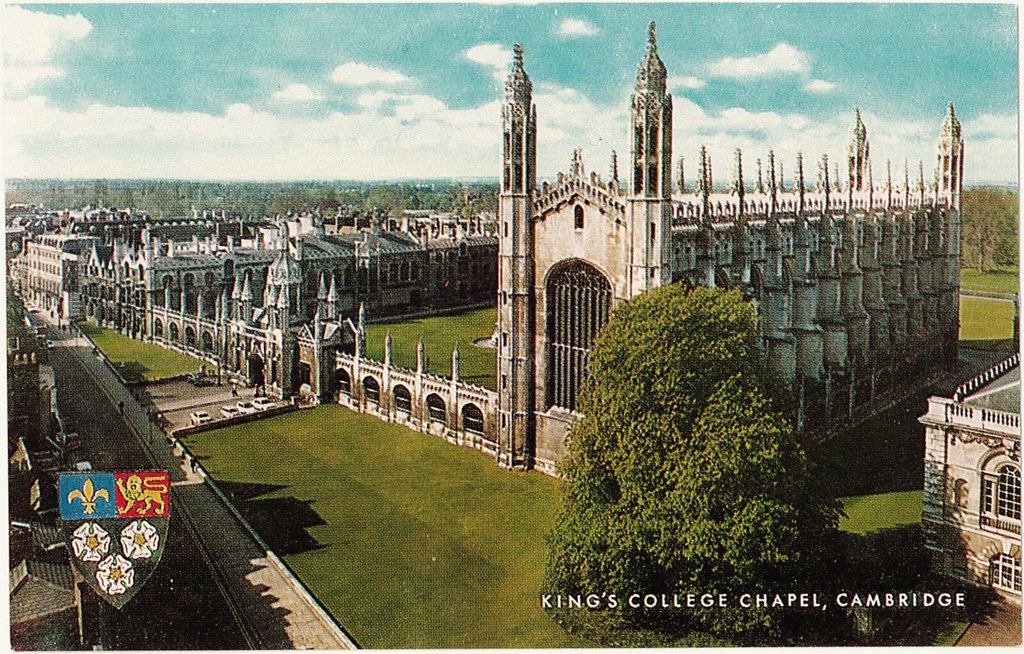
Image: King’s College Chapel, Cambridge, CC BY-SA 3.0, via Wikimedia Commons.
Chevening 2027/28: Applications Closed, What Happens Next

Applications for the Chevening 2027/28 scholarships have closed, and the Chevening 2027/28 timeline now moves to assessment and interviews. The UK government’s international scholarship programme says on its application timeline page that applications opened in August 2026 and closed in October 2026, with exact deadlines on each country’s page and the application system inaccessible afterwards. Everything below comes from that official page.

Contents

The dates after the deadline

Chevening says applications are checked against eligibility criteria from October 2026, and independent reading committees assess eligible applications from mid-October 2026 to January 2027. In mid-February 2027, embassies and high commissions shortlist candidates for interview. Interviews take place at British embassies and high commissions from March to April 2027, and candidates must upload their documents at least seven working days beforehand. Interview results are announced in mid-June 2027.

The university offer deadline

Successful candidates must submit an unconditional UK university offer by 17:00 BST (UK time) on 8 July 2027, according to Chevening. Scholars then begin their studies in the UK in September or October 2027. Because this date is fixed for everyone, candidates who are shortlisted are best placed if their university applications are already well advanced rather than started after the interview.

If you missed this round

Chevening is only one route. Our reports on the Clarendon Scholarship at Oxford and on Netherlands master’s scholarships for 2027 cover options with their own timelines, and the visa eligibility checker helps you plan the study visa that follows any offer.

A worked example

As an illustration, not a real case: a Nigerian public-health doctor who applied before the October deadline should expect no news until the mid-February shortlisting window, then should prepare documents for an interview between March and April. If she is successful in June, she has until 8 July 2027 to hold an unconditional offer, so conditional offers should be converted promptly.

What happens next

The next visible step for applicants is mid-February 2027. Chevening’s timeline is built around a single annual cycle, so a candidate who is not shortlisted has no appeal step on the page we read; the practical alternative is to look at other funded routes early rather than wait for the next opening, whose dates Chevening has not yet published. Applicants should also keep their reference providers informed, because reference letters feed into the interview stage, and keep copies of all submitted documents. Confirm your own country’s dates on its Chevening page, because the programme says deadlines and interview schedules vary by location.

Questions on Chevening 2027/28

Is Chevening 2027/28 still open?

No. Chevening says applications closed in October 2026.

When are shortlists announced?

Embassies and high commissions shortlist candidates in mid-February 2027.

When are interviews?

March to April 2027 at British embassies and high commissions.

When are results announced?

Mid-June 2027, according to the timeline.

What is the university offer deadline?

17:00 BST on 8 July 2027 for an unconditional offer.

When do scholars start?

September or October 2027.

Sources

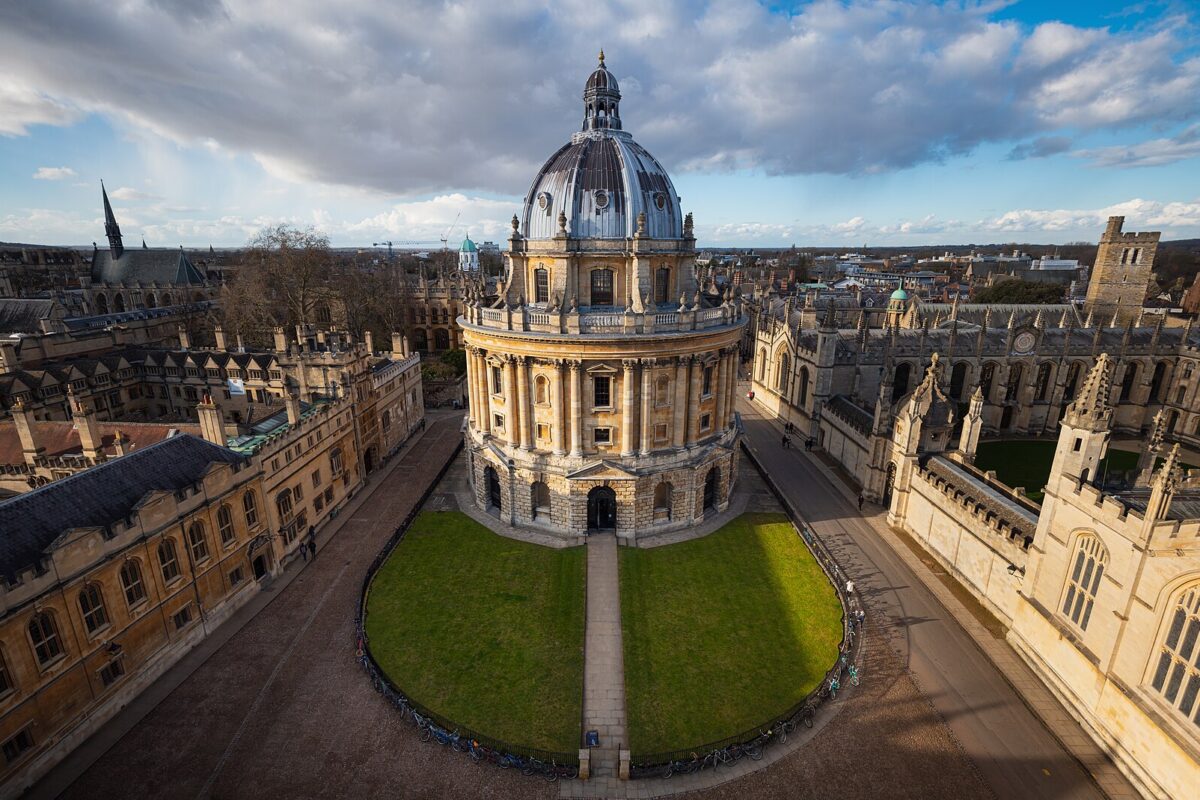
Image: Radcliffe Camera, Oxford by Julian Herzog, CC BY 4.0, via Wikimedia Commons.

Netherlands Master’s Scholarships for 2027: Key Deadlines

Two Dutch universities have Netherlands master’s scholarships for September 2027 with deadlines on 1 February 2027, and the steps before that start earlier. VU Amsterdam’s Fellowship Programme covers tuition and its Studielink registration is advised by 1 December 2026. Maastricht University runs a separate NL High Potential Scholarship. Both are aimed at students from outside the EU and EEA, and both require admission to a master’s programme first.

Contents

VU Amsterdam Fellowship Programme

According to VU Amsterdam, the programme covers tuition fees only, with no allowance for rent, food or insurance. A small number of recipients also receive a one-off NL Scholarship of €5,000 toward first-year living costs, from roughly 20 to 25 available a year. Applicants need a non-EU/EEA passport, no Dutch nationality, and a bachelor’s GPA equivalent to a Dutch 8.0 on the 1 to 10 scale. They must be admitted, conditionally or unconditionally, to a full-time English-taught master’s starting in September 2027. February starts and joint programmes where VU does not run admissions are excluded.

The dates are firm. Studielink applications open on 1 October 2026 with an advised deadline of 1 December 2026. The fellowship application opens on 1 November 2026 and closes on 1 February 2027 at 23:59 CET. Results are expected in mid-March 2027, and offers must be accepted by the end of March. Meeting the GPA minimum only gets an application processed and does not guarantee an award.

Maastricht NL High Potential Scholarship

Maastricht University lists the scholarship on its own scholarship page for students from abroad. We could not read the full 2027-28 terms there, so the details below come from a third-party summary on Scholars4Dev and should be checked against the university before you apply. That summary reports 21 awards of up to €36,000 per academic year, a scholarship application deadline of 1 February 2027, a GPA of 7.5 out of 10 or higher, a maximum age of 35 on 1 September 2027, and no earlier degree-seeking study in the Netherlands. It also gives conflicting admission deadline dates, one of which looks like a typo for 10 December 2026, so confirm the admission cut-off with Maastricht directly.

Order of steps

The sequence matters because both schemes require admission before the scholarship application. Register for your programme in Studielink, receive conditional admission, then submit the scholarship form with transcripts. Each form can only be submitted once, so gather the documents first and read the instructions twice. Our report on the Erasmus Mundus joint master’s deadlines covers a parallel European route with similar timing.

A worked example

Consider a hypothetical applicant. Linh is a Vietnamese engineering graduate with a strong transcript who wants a one-year master’s in Amsterdam. She would register in Studielink before 1 December 2026, wait for conditional admission, prepare her transcript with a clear explanation of the grading scale, and submit before 1 February 2027. If she is selected, tuition is covered but she would still need to budget for housing and living costs, unless she receives the NL Scholarship contribution.

Choosing between them

The two schemes differ in what they pay for, so read the terms before assuming either covers living costs. The VU programme is described by VU as tuition-only. The Maastricht summary reports a larger package, but that comes from a non-official source. Funding of this kind is competitive, so applying to more than one university is reasonable, as long as each application follows its own rules. Students weighing the UK instead can read our guide to the Clarendon Scholarship at Oxford. If you are unsure which visa and study route fits your profile, try the visa eligibility checker.

Dutch scholarship questions

When is the VU Fellowship Programme deadline?

The fellowship application closes on 1 February 2027 at 23:59 CET, according to VU Amsterdam. The advised Studielink deadline is 1 December 2026.

Does the VU programme pay living costs?

No. VU says it covers tuition only. A few recipients also receive a one-off €5,000 NL Scholarship.

Who can apply?

Students with a non-EU/EEA passport and no Dutch nationality who are admitted to a full-time English-taught master’s starting in September 2027, with a bachelor’s GPA equal to a Dutch 8.

What is the Maastricht scholarship deadline?

A third-party summary gives 1 February 2027 for the scholarship. Confirm this and the admission deadline with Maastricht University.

Do I need admission before applying?

Yes, for VU you must be conditionally or unconditionally admitted before submitting the fellowship application.

When are VU results announced?

VU expects results in mid-March 2027, with offers to be accepted by the end of March.

Sources

Clarendon Scholarship Oxford 2027-28: Deadlines and How It Works

The Clarendon Scholarship Oxford programme funds more than 200 new postgraduate students a year, and you are considered automatically if you apply to your course by its December or January deadline. Oxford’s own Clarendon page says no separate application is needed. With the 2027-28 cycle open, the practical task is to find your course’s exact deadline and apply on time.

In this guide

What the scholarship covers

According to Oxford, the scholarship pays course fees plus a grant for living expenses for the period of fee liability. It is awarded for outstanding academic merit and potential, and Oxford says there are over 200 new, fully funded scholarships each year. A third-party guide, Opportunity Inside, adds that the living grant is at least the UK Research and Innovation doctoral minimum, and prints a figure of £20,780 for 2025-26 while advising that the 2027-28 amount be confirmed. Treat that figure as a guide rather than a promise, since we could not verify it on an Oxford page.

Who is considered

The same guide says any nationality is eligible, with no country quota, for new full-time or part-time Oxford master’s and DPhil courses in any subject. It says departments nominate candidates, deferred offers are not considered, and continuing the same Oxford degree is not funded. Oxford’s page confirms the key rule: automatic consideration for those who meet the December or January deadline.

Consider a hypothetical case. Ngozi is a Nigerian public-health graduate who plans a one-year master’s in Oxford. Because the scholarship is automatic, her task is not to write a separate essay but to submit a strong course application, with references and transcripts in place, before the deadline for her course. If she misses that deadline, she is not considered for Clarendon funding in that cycle.

Deadlines for 2027-28 entry

Oxford’s page says only that the relevant deadline is in December or January, depending on the course, and does not list dates. The third-party guide lists 26 January 2027 in its details box, with a noon UK cut-off, and says applications opened in September 2026. It also says divisions meet in February or March 2027 and most first offers go out by the end of April 2027. Because these are secondary reports, check the exact date on your course page in the Oxford course directory before relying on them.

How to apply

Identify your course and its deadline, prepare the full application, and submit it by noon UK time on the day. Do not wait for the last hour, since documents and references are part of the deadline. After that, departments nominate candidates and there is no separate scholarship form to fill in. If you are choosing between several UK courses, the visa eligibility checker can help you plan the study-visa side alongside funding.

Other funding routes

Clarendon is one of several routes for postgraduate study abroad. Tamara News has also covered the Gates Cambridge deadlines, the Commonwealth master’s scholarships, the Chevening timeline and the Erasmus Mundus joint master’s programmes. Several have passed or are close, so apply to more than one where you qualify.

Clarendon questions

Do I need a separate Clarendon application?

No. Oxford says you are automatically considered if you apply by the December or January deadline for your course.

What does it cover?

Oxford says course fees plus a grant for living expenses for the period of fee liability.

How many scholarships are there?

Oxford says over 200 new, fully funded scholarships each year.

What is the deadline?

December 2026 or January 2027, depending on your course. A third-party guide lists 26 January 2027 for one deadline, so check your course page.

Is there a nationality restriction?

The third-party guide says any nationality can be considered, with no country quota.

Can I defer an offer?

The third-party guide says deferred offers are not considered for the scholarship.

Sources

Erasmus Mundus Scholarship 2027: Deadlines and How to Apply

Applications for the Erasmus Mundus scholarship 2027 intake are opening programme by programme this autumn, and several deadlines fall between December and January. There is no central application. According to the European Commission’s Erasmus+ page, students apply directly to the institution running their chosen Joint Master’s, and each programme’s website lists its own steps, requirements and dates. That makes the next few weeks the time to build a shortlist.

In this guide

How Erasmus Mundus Joint Masters work

An Erasmus Mundus Joint Master’s is a degree delivered by a consortium of universities in several countries, so students typically study in at least two of them. The Commission says some programmes offer full scholarships to the best-ranked students worldwide, covering participation costs and contributing to travel, visa and living costs. Not every student on a programme receives one. You can read the Commission’s own announcement of the latest 87 selected projects.

What the scholarship covers

The Commission page does not state amounts. Two guides published this year, which are not official sources, give a rate of EUR 1,400 a month for up to 24 months and say that cost contributions depend on programme conditions. Scholarships Central describes this as a contribution toward eligible costs rather than a guaranteed lump sum. Treat these figures as indicative and confirm the amount on the programme page before you rely on it. Students who have previously held an Erasmus Mundus scholarship cannot receive another, according to the same guide.

Deadlines to expect

The Commission says applications usually open between October and January for courses starting the following academic year. VisaWise Travel reports that most programme deadlines for the 2027-28 intake fall between December 2026 and January 2027, many around mid-January, with a few in February or March, and that some close earlier. A second guide says the newly selected 2027 programmes were expected to open in autumn 2026 for a September 2027 start. Because no central calendar exists, the only reliable date is the one on each programme’s own page.

Who can apply

You need a bachelor’s degree or be in your final year and graduate before the master’s begins. Applicants with equivalent learning can apply if the degree-awarding country recognises it. Each programme adds its own academic, language and mobility requirements, and some ask for work experience or a research proposal. Typical documents include transcripts, a motivation letter, references, a CV and an English test score unless waived.

A practical plan

Consider a hypothetical applicant. Amina is a Pakistani graduate in public health. She lists six programmes, notes each portal’s deadline, and asks her referees for letters in October instead of December. Because the guides do not set a limit on the number of applications, she applies to several but writes a separate motivation letter for each. She also checks visa rules for each study country. If you want to compare other awards, see our reports on the Commonwealth Master’s scholarships and the Gates Cambridge scholarship. Our visa eligibility checker can help with the study-country visa side.

Erasmus Mundus questions

Is there one Erasmus Mundus application?

No. You apply directly to the institution running each Joint Master’s programme, according to the European Commission.

When are the deadlines?

They vary. One guide reports most fall between December 2026 and January 2027, but the only reliable date is on each programme’s website.

How much is the scholarship?

The Commission page gives no figure. Unofficial guides cite EUR 1,400 a month for up to 24 months, so confirm with the programme.

Who can apply?

Applicants with a bachelor’s degree, or in their final year and graduating before the master’s starts, subject to each programme’s own criteria.

Can I apply to more than one programme?

The guides we read set no universal limit, but individual programmes may have their own rules.

Does admission guarantee funding?

No. Scholarships are competitive, and admission to a programme does not guarantee one.

Sources