The S&P 500 Keeps Hitting Records Even as Bond Yields Climb

The S&P 500 gained 1.2% over the week ending September 26, 2026, closing roughly 0.7% below its all-time high even as a fresh surge in 10-year Treasury yields failed to derail the advance. The resilience is notable given how directly rising yields typically pressure equity valuations, and it points to a market still willing to reward growth-oriented sectors even as the cost of borrowing climbs.

What drove the week’s gains

Large-cap growth stocks led the advance, with the “Mag 7” and broader technology sector outperforming, while smaller companies, real estate investment trusts and commodities lagged, according to market data summarized in weekly coverage of the session. Growth stocks substantially outperformed value stocks over the period — an unusual pattern to see alongside rising rates, since higher yields typically weigh more heavily on the long-duration cash flows growth companies are priced on, not less.

27 record closes and counting

This week’s move extends a pattern that has defined 2026: the S&P 500 had already closed at all-time highs 27 times through August 26, 2026, part of a year-to-date gain of roughly 13%, according to Yahoo Finance’s analysis of the index’s performance. Historical data spanning January 1988 through December 2023 shows that in the 12 months following a record close, the S&P 500 has averaged a 13.4% gain — compared with an 11.9% average across all 12-month periods — leading the analysis to note that “it has historically been better to buy after a record close than to buy stocks on the average day.”

The risks investors are still watching

The same analysis flags several headwinds that could yet interrupt the streak: the ongoing Iran conflict, elevated 30-year Treasury yields, and the possibility of further Federal Reserve interest rate increases. None of these guarantee an imminent correction, but they are cited as the main reasons record highs are not being treated as an unambiguous green light by every market participant. One analyst tracking the week’s action said they remain invested but are “gradually increasing cash reserves to hedge against a potential market correction” — a hedge-while-still-participating posture that seems to capture the market’s current mood better than either straightforward bullishness or alarm.

Why record highs aren’t automatically a warning sign

Despite the instinct to treat repeated record closes as a sign a pullback is overdue, the historical pattern cited in the Yahoo Finance analysis suggests the opposite has generally been true: markets hitting new highs tend to reflect genuine earnings growth and sustained momentum rather than an unsustainable bubble on the verge of popping. That does not mean this cycle is immune to a correction — only that the mere fact of hitting record 27 has historically told investors less than the underlying earnings and rate trends driving it.

What happens next

With the index sitting just 0.7% below its all-time high, a fresh record close looks within reach barring a shock from the Treasury market or an escalation tied to Iran. Watch the 10-year and 30-year yields closely in the coming weeks: continued increases without a corresponding equity pullback would extend an already unusual pattern, while a sharper yield spike could finally be the catalyst that tests how much further growth stocks can run.

More business coverage

Related reading: last week’s broader market gains, the Federal Reserve’s latest rate decision, and AMD’s trillion-dollar valuation.

S&P 500 record highs questions answered

How did the S&P 500 perform the week of September 26, 2026?

It gained 1.2% for the week, closing roughly 0.7% below its all-time high, even as 10-year Treasury yields surged.

How many record highs has the S&P 500 set in 2026?

27 record closes through August 26, 2026, part of a year-to-date gain of roughly 13%.

What does history say happens after a record close?

From January 1988 through December 2023, the S&P 500 averaged a 13.4% gain in the 12 months following a record close, compared with an 11.9% average across all 12-month periods.

What sectors led this week’s gains?

Large-cap growth stocks, particularly the ‘Mag 7’ and broader technology sector, while smaller companies, REITs and commodities underperformed.

What risks are analysts watching?

The ongoing Iran conflict, elevated 30-year Treasury yields, and the possibility of further Federal Reserve rate increases, though none of these guarantee an imminent correction.

Sources

Why the World’s Top Oil Forecasters Just Got a Lot More Pessimistic

The IEA’s oil demand outlook has darkened sharply, with the agency’s September 2026 Oil Market Report now projecting world oil demand will decline by 2.5 million barrels per day (mb/d) in 2026 before recovering by 2.6 mb/d in 2027. The steeper-than-expected decline is attributed directly to what the agency calls “the continuing impasse in negotiations between the United States and Iran,” underscoring how much of the current global energy picture is being shaped by a single unresolved standoff rather than ordinary shifts in consumption.

Supply is falling too

It is not just demand forecasts moving. According to the IEA’s September 2026 report, global oil production fell to 100.1 mb/d in August 2026, down 1.6 mb/d from the prior month. Annual supply for 2026 is now forecast at 100.7 mb/d, a 5.7 mb/d decline year-over-year, though the agency expects production to rebound by roughly 8 mb/d in 2027 once current disruptions ease.

The Strait of Hormuz is the choke point

The report points to more than 10 mb/d of Gulf output remaining shut in because of heightened security risks. Net exports of diesel and gasoil from Gulf countries averaged just 390,000 barrels per day in August — a little over a quarter of pre-war levels — as flows through the Strait of Hormuz stayed severely constrained. The IEA also flags “renewed attacks” in both the Gulf and the Red Sea’s Bab el-Mandeb chokepoint as compounding the disruption, alongside separate losses to Russian refining capacity that are squeezing supply from another direction entirely.

OPEC’s view has been more cautious than alarmed

Earlier in the summer, OPEC’s own reporting still anticipated demand growth for 2026, even as it trimmed its forecast — from 780,000 bpd of growth projected in July down to 580,000 bpd by August — citing the same Hormuz-related disruption and stalled US-Iran talks the IEA has now folded into a full downward revision. The gap between OPEC’s continued (if reduced) growth call and the IEA’s outright decline forecast reflects how differently the two organizations are weighing the odds of the Strait reopening to something resembling normal flow in the near term.

Why the earlier assumptions broke down

Both organizations had previously built their models around a gradual restoration of oil flows through Hormuz as tensions eased. That assumption is now obsolete: the continued shut-in of Gulf output, renewed attacks along regional shipping routes, and the lack of any breakthrough in US-Iran negotiations have combined to keep the corridor operating at a fraction of its normal capacity for far longer than either forecaster initially modeled.

What happens next

Barring a genuine diplomatic breakthrough on Hormuz access or the broader US-Iran impasse, expect the IEA’s 2.5 mb/d demand decline and constrained supply picture to hold through the rest of 2026, with the agency’s projected 8 mb/d production rebound in 2027 contingent on exactly the kind of de-escalation that has so far failed to materialize. Energy-importing economies and shipping-dependent industries should plan for continued elevated freight and insurance costs on Gulf routes rather than a near-term return to pre-disruption flows.

More business coverage

Related reading: Iran aviation sanctions and flight disruptions, the recent Treasury yields bond rout, and the renewed Iran travel warning.

Oil demand outlook questions answered

How much is oil demand expected to fall in 2026?

The IEA’s September 2026 report projects world oil demand will decline by 2.5 million barrels per day in 2026, before recovering by 2.6 mb/d in 2027.

Why is demand falling so much?

The IEA attributes the steeper-than-expected decline directly to the continuing impasse in US-Iran negotiations and the resulting disruption to Gulf oil flows.

How much Gulf oil output is currently shut in?

More than 10 million barrels per day of Gulf output remains shut in due to heightened security risks around the Strait of Hormuz.

Does OPEC agree with the IEA’s outlook?

Not entirely. As of its August 2026 report, OPEC still expected demand growth, though it cut its forecast from 780,000 bpd of growth in July to 580,000 bpd, citing the same Hormuz disruption.

What happened to diesel and gasoil exports from the Gulf?

Net exports averaged just 390,000 barrels per day in August 2026, a little over a quarter of pre-war levels, as Strait of Hormuz flows stayed severely constrained.

Sources

Canada Just Raised the Bank Balance You Need for a Study Permit

Canada’s study permit proof of funds requirement has gone up again, with Immigration, Refugees and Citizenship Canada now requiring a single applicant to show $23,448 in available funds, up $553 from the previous $22,895 threshold. The new amount applies to applications submitted on or after September 1, 2026, and it lands alongside a separate, deeper change to how IRCC actually verifies that money — a combination that makes this year’s financial screening noticeably tougher than in previous cycles.

The new numbers

According to Moving2Canada’s coverage of the change, the $23,448 figure covers living expenses only — applicants must separately demonstrate the ability to pay first-year tuition and travel costs on top of it. The requirement scales with family size: a family of two now needs $29,192, up from $28,502, with each additional family member adding $6,318. Quebec, which sets its own threshold, already moved to a $24,617 minimum for solo applicants as of January 1, 2026, and remains separate from the national figure.

A deeper change: six months of bank statements

The dollar amount is only part of the story. As of July 24, 2026, IRCC also requires applicants to provide six months of bank statements — covering the past six months, including the month of application or the month before it — replacing the previous four-month framework, according to VisaVerge’s analysis. Officers are now instructed to examine the source of funds in every case rather than simply checking the balance shown on a single statement, and they may request supplementary financial and employment records from applicants, family members or sponsors to confirm the money is genuine and durable rather than a one-time deposit designed to pass a snapshot check.

Accepted proof of funds documents

IRCC continues to accept several forms of documentation: Canadian bank account statements in the applicant’s name, Guaranteed Investment Certificates from participating Canadian financial institutions, evidence of an education or student loan, bank drafts convertible to Canadian dollars, letters from a sponsor showing available funds, and scholarship or funding letters from a Canadian institution or program. The shift toward examining the source of funds, not just the balance, means applicants relying on a sponsor letter or a recent lump-sum deposit should expect more follow-up questions than in prior years.

Part of a bigger pullback on student numbers

The tightened financial screening coincides with IRCC’s broader target of 408,000 total study permits for 2026 — a 16% reduction from 2024 levels. Read together, the higher funds threshold and the deeper documentation review look less like isolated tweaks and more like two levers of the same policy: making the study permit pathway harder to qualify for as Canada works to bring international student numbers down from their peak.

What happens next

Applicants preparing a study permit application should assemble six months of consistent bank statements well before applying, rather than making a last-minute deposit to hit the $23,448 threshold — a pattern officers are now specifically trained to scrutinize. Expect Canadian colleges and universities’ international offices to update their pre-arrival financial guidance to reflect both the new dollar figure and the six-month statement requirement as the fall and winter intake cycles proceed.

More immigration and study abroad coverage

Related reading: Canada’s IRCC processing time update, the Knight-Hennessy Scholars deadline, and the September 2026 US Visa Bulletin.

Canada study permit questions answered

How much money does a single study permit applicant need to show now?

$23,448 as of applications submitted on or after September 1, 2026, up $553 from the previous $22,895 threshold. This covers living expenses only, not tuition or travel.

How much do families need?

A family of two needs $29,192, up from $28,502, with each additional family member adding $6,318 to the total.

What changed about bank statements?

Since July 24, 2026, applicants must provide six months of bank statements, up from four months previously, and officers now examine the source of funds rather than just the balance shown.

What documents count as proof of funds?

Canadian bank statements, GICs from participating institutions, education or student loans, convertible bank drafts, sponsor letters, and scholarship or funding letters from a Canadian program.

Is Quebec’s requirement different?

Yes. Quebec sets its own threshold, which moved to a $24,617 minimum for solo applicants as of January 1, 2026, separate from the national figure.

Sources

Brazil Just Killed the Passport Drop-Off Line for Some Visa Applicants

Brazil’s new Brazil electronic visa system took effect September 1, 2026. It ends the need for eligible applicants to physically drop off or collect their passports at a consulate when applying for a temporary visa. Applicants now upload documents through Brazil’s Integrated Consular System and receive their visa electronically by email. The change aims to cut the administrative steps and travel time consulate visits used to require.

Brazil electronic visa system delivers approvals to a traveler's smartphone

What the Brazil electronic visa system actually changes

Under the previous process, applicants for Brazilian temporary visas generally had to submit their passport in person at a consulate. They then waited for processing and returned later to collect it once the visa was issued or mailed back. The new system removes that physical handoff for eligible applicants. Applicants submit documents digitally through the Integrated Consular System instead. Once officials approve the application, the visa arrives as an electronic document by email, rather than a stamp or sticker placed in the physical passport.

Which visa types are covered

The digital process covers several temporary visa categories: temporary work visas, family reunion visas, digital nomad visas, and other approved categories. Eligibility is limited to nationals of countries that already qualify for Brazil’s visitor visa exemption. That means the streamlined process is not universal. It applies to a defined set of applicant nationalities that Brazil has determined pose lower administrative risk for remote processing.

What stays the same for applicants

Brazil’s underlying approval requirements have not changed. Applicants still need to meet the same eligibility criteria and provide the same supporting documentation as before. Only the submission and delivery method moved online. Post-arrival registration with Brazil’s Federal Police remains a required step for those who need it. Employment authorization processes for work-visa holders continue under the same rules as before. Applicants approved under the new system should print their electronic visa before traveling. They should carry both a digital and a printed copy when they arrive, since border officials will need to verify the document on entry.

Why Brazil is making the shift now

The move fits a broader global pattern: countries are digitizing visa and travel-document processes to cut both applicant burden and consular workload. Removing the in-person passport drop-off step cuts down on the logistical barriers facing applicants who live far from a consulate. It also reduces the physical handling and mailing consulates previously managed for every temporary visa application. Brazil is actively courting remote workers through its digital nomad visa category. A faster, less demanding application process gives it a competitive edge, in a market where several countries now offer similar remote-work visa options.

What happens next for applicants

Applicants should confirm their nationality qualifies under Brazil’s visitor visa exemption rules before assuming they can use the new digital process, since it does not apply universally. Those planning travel to Brazil under a temporary work, family reunion or digital nomad visa should check Brazil’s Integrated Consular System directly for the current document checklist. Digitized systems like this one are typically refined in the months after launch. Consulates work through early cases first.

Frequently asked questions

When did the Brazil electronic visa system take effect?

The new digital process began on September 1, 2026, eliminating the need to physically submit or collect a passport at a consulate for eligible temporary visa applications.

Which visa categories does it cover?

Temporary work visas, family reunion visas, digital nomad visas, and other approved temporary visa categories.

Who is eligible to use the digital process?

Nationals of countries that already qualify for Brazil’s visitor visa exemption rules.

Do applicants still need to meet the same requirements?

Yes. Brazil kept eligibility criteria and required documentation unchanged; only the submission and delivery method moved online.

Do applicants need a printed copy of the visa?

Yes. Applicants should print their electronic visa and carry both digital and printed copies when traveling.

Does this change post-arrival requirements?

No. Registration with Brazil’s Federal Police and employment authorization steps for work-visa holders remain the same as before.

How this fits Brazil’s wider visa strategy

Brazil has been steadily expanding its appeal to remote workers and skilled migrants over the past several years. It introduced its digital nomad visa category and has periodically expanded the list of nationalities eligible for visa-free entry as a visitor. Digitizing the temporary visa application process is a logical next step in that strategy. A cumbersome paper-based consular process can genuinely deter remote workers. Many are comparing Brazil against a growing list of countries with similar programs and fewer bureaucratic steps. Immigration lawyers who track the digital nomad visa market say processing speed and administrative simplicity have become real differentiators between competing countries, not just the income requirements a program sets.

More on global visa processing changes

For more on how visa processing is changing worldwide, see our coverage of the September 2026 visa bulletin’s family-based updates and Canada’s revised work permit processing times.

Sources

A Rare September Storm Just Grounded Hundreds of East Coast Flights

A rare late-September storm system brought widespread nor’easter flight disruptions to the US Northeast from September 25 through the weekend. American, JetBlue, United, Delta and Southwest all issued travel waivers across dozens of airports, from Virginia to Maine. By Friday afternoon, roughly 600 flights were delayed at LaGuardia alone. Heavy rain and wind gusts up to 44 mph moved through Boston and New York at the same time.

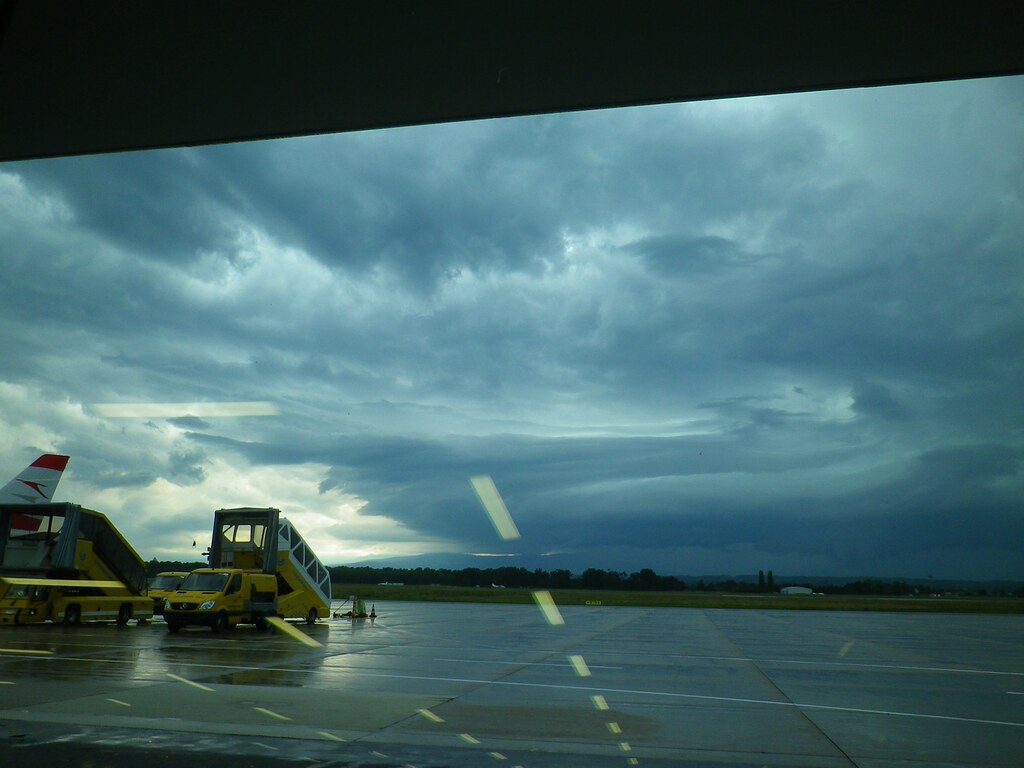
Nor'easter flight disruptions left aircraft waiting on rain-soaked tarmac

How widespread the nor’easter flight disruptions became

Each major US carrier covered a different slice of the affected region. American Airlines issued waivers across 16 airports stretching from Virginia to Maine. JetBlue covered 11 airports concentrated in the Mid-Atlantic and New England. United applied waivers to 10 Northeast airports, and Delta and Southwest each covered seven airports from New York to Maine. That overlapping coverage meant travelers passing through nearly any major Northeast hub faced some risk of delay or cancellation. The storm’s disruption ran for days.

Why this storm caught attention

Nor’easters typically peak in the colder months. That makes a storm severe enough to ground hundreds of flights in late September notable on its own. Sustained winds reached 40 to 44 mph in the Boston and New York City areas, combined with heavy rain bands. Those conditions force air traffic controllers to slow arrival and departure rates well below normal capacity. That slowdown produces cascading delays, even at airports that never lose full operational capability.

What travelers were told to do

“Anyone with travel plans from or into the East Coast needs to ask themselves what their tolerance for delays and potential cancellations is,” said Katy Nastro of the flight-tracking service Flighty. Her comment captured the practical advice airlines and travel-industry voices repeated throughout the storm. Airlines’ own guidance echoed that caution. Check flight status well before heading to the airport. Rely on airline apps or independent trackers like FlightAware for real-time updates, and use fee-free rebooking waivers to shift travel earlier when possible. Travelers were also told to avoid booking late-afternoon flights, since afternoon departures accumulate the delays that build up earlier in the day.

A second disruption for the same region this month

This is not the only recent stretch of trouble for Northeast air travel. Earlier in September, a separate air-traffic-control equipment transition caused delays into Boston, Newark and Philadelphia. That disruption stemmed from a technology changeover rather than weather. The back-to-back disruptions, one technical and one meteorological, underline how little slack the Northeast’s congested airspace has. It cannot easily absorb an interruption, whether from equipment, weather or staffing.

What happens as the storm clears

Airlines typically need one to two additional days beyond a storm’s departure to fully clear the backlog of delayed aircraft and crews. Planes and pilots end up out of position relative to their normal schedules. Travelers with trips planned into the following week should still monitor their flight status even after the weather has passed. Recovery delays can linger after the rain and wind move out of the region. That recovery typically unfolds unevenly, from Virginia to Maine. Larger hub airports generally restore normal schedules faster than smaller regional airports. Those smaller airports depend on connecting traffic from the hubs to get aircraft and crews back into position.

Frequently asked questions

Which airlines issued waivers for the nor’easter flight disruptions?

American Airlines, JetBlue, United, Delta and Southwest all issued weather waivers covering airports across the Northeast.

How many airports were affected?

American covered 16 airports from Virginia to Maine, JetBlue 11 and United 10. Delta and Southwest each covered seven airports from New York to Maine.

How bad were the delays at the storm’s peak?

Roughly 600 flights were delayed at LaGuardia alone by Friday afternoon. Wind gusts up to 44 mph were reported in the Boston and New York areas.

What should travelers do during a storm like this?

Check flight status before leaving for the airport, use airline apps or trackers like FlightAware, take advantage of fee-free rebooking waivers, and avoid late-afternoon flights when possible.

Is this related to the earlier September flight delays into Boston and Newark?

No. That earlier disruption was caused by an air-traffic-control equipment transition, while this nor’easter’s delays were driven by weather.

Why late-September nor’easters are unusual

Nor’easters get their name from the northeasterly winds that blow onshore ahead of the storm. They draw their strength from a temperature contrast: cold air moving south from Canada meets still-warm ocean water off the US East Coast. That contrast is normally sharpest in the late autumn and winter months. That is why a system powerful enough to ground hundreds of flights, with wind gusts near 44 mph, stood out as notable this early in the season. Meteorologists tracking the storm noted that similar ocean-temperature and jet-stream conditions could make early, intense nor’easters more common in the years ahead. Attributing any single storm to a longer-term pattern, though, requires more data than one event provides.

More on this month’s travel disruptions

For more on this month’s travel disruptions, see our reporting on the earlier air-traffic-control delays into Boston, Newark and Philadelphia and Hurricane Nolo’s disruption of Hawaii flights.

Sources