Oil Prices Are Swinging Wildly on a Single Letter to Iran

Brent crude oil prices slipped to around $114 a barrel on Thursday. That followed a gain of more than 1% in the prior session. Traders were weighing a reported diplomatic opening between Washington and Tehran against persistent fears of renewed conflict. Brent is the benchmark for roughly two-thirds of the world’s oil. It had settled at $115.32 on Wednesday, up 1.3%. US WTI crude closed at $102.78 that day, up 2.9%, before easing back above $101 a barrel on Thursday.

The swing shows how sensitive energy markets have become to every signal out of the region. Wednesday’s rise reflected fears of renewed US military action against Iran and further supply disruption. Thursday’s pullback came after new reports. Those reports said Vice President JD Vance had sent a letter to Iranian officials aimed at reviving negotiations. President Trump downplayed the outreach. He framed it as humanitarian aid rather than a formal overture.

Why Brent crude oil prices keep swinging on headlines

Under normal conditions, a single diplomatic letter would barely move a market this large. What’s different now is how thin the market’s safety margin has become. UBS analyst Giovanni Staunovo said global inventories “have fallen sharply.” He added that pledged strategic reserve releases are “largely completed.” That means the usual buffer governments use to calm price spikes has mostly been spent. UBS also pointed to record freight costs, constrained tanker capacity and recovering Chinese imports. These structural factors are likely to keep prices elevated regardless of how the diplomatic track unfolds.

Emirates NBD’s Nick Stadtmiller framed the environment simply: “Oil prices remain volatile as markets respond to developments affecting regional production and infrastructure.” UBS’s own base case has Brent holding near $110 a barrel at year-end. That would put today’s levels closer to the high end of its expected range than the low end.
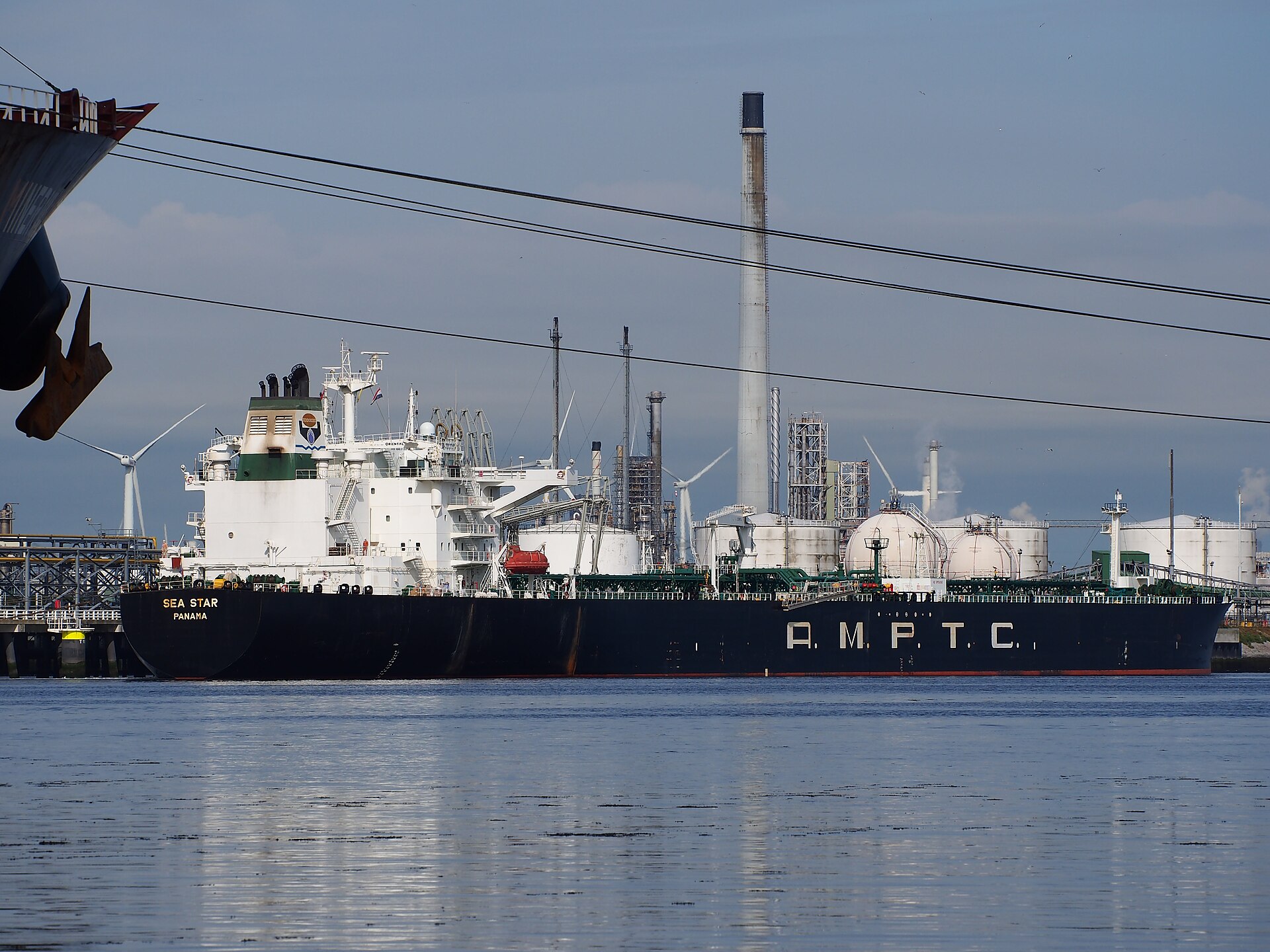
Oil tanker ship carrying cargo as Brent crude oil prices shift

The supply risk that won’t go away

Behind the day-to-day price moves sits a bigger structural story. The same Wall Street Journal report that described the Vance letter also carried another warning. It said Washington has warned several Gulf Arab governments to prepare for a possible renewed campaign against Iran. That warning applies once the 3 November US midterm elections are over. A letter today doesn’t rule out strikes next month, and traders know it.

Aviation has already adjusted to that reality. The European Union Aviation Safety Agency has extended its advisory against flying over Iran, Iraq, Lebanon and Jordan. The advisory also covers nearby Gulf waters, and it now runs through 16 November. Several carriers have pushed their own route restarts into early December. That is a sign the industry expects the underlying risk to persist well past any single news cycle.

What traders are watching next

Three triggers could move Brent meaningfully before year-end. A confirmed, substantive Iranian response to the reported US outreach would likely ease the risk premium further. A second trigger works the other way. If Washington is actually preparing post-midterm military action, rather than simply warning allies to plan for it, prices would almost certainly rise. A third trigger is tanker traffic. Any disruption to actual shipping through the Strait of Hormuz, rather than just airspace avoidance, could overwhelm even a calming diplomatic signal.

For now, the market is pricing genuine uncertainty rather than a clear direction. Brent’s roughly $1-a-barrel move this week is small by the standards of an active shooting-war scenario. It is large by the standards of a market that believes a deal is close.

Analysts at multiple banks have made the same basic point in different words this week: the floor under oil prices is higher than it was a year ago, and the ceiling is capped mainly by how quickly diplomacy or conflict resolves one way or the other. That leaves traders reacting to headlines in both directions rather than settling on a single view, which is why a single reported letter and a single warning to Gulf allies can both move the same market on the same day.

Frequently asked questions

Why did Brent crude oil prices fall today?
Prices eased after reports that the US had sent a diplomatic letter to Iranian officials. Traders read it as a modest de-escalation signal after Wednesday’s gains.

What is Brent crude trading at right now?
Brent slipped to around $114 a barrel on Thursday after settling at $115.32 on Wednesday, up 1.3% that session.

What is WTI crude trading at?
US WTI crude eased to just above $101 a barrel on Thursday. It had closed Wednesday at $102.78, up 2.9%.

Why do analysts expect prices to stay elevated?
UBS cites sharply reduced global inventories, largely exhausted strategic reserve releases, record freight costs and constrained tanker capacity. These are structural pressures, independent of any single diplomatic development.

What is UBS’s year-end forecast for Brent?
UBS expects Brent to remain near $110 a barrel at year-end. It cites continued Middle East supply volatility and geopolitical uncertainty.

How does the Gulf airspace situation affect oil markets?
EASA’s extended avoidance advisory through 16 November signals that aviation and energy risk assessments both expect regional tension to persist. That reinforces the supply-risk premium built into current prices.

For the diplomatic and political context behind this week’s price moves, see our coverage of US Iran diplomatic talks and Middle East flight suspensions. For how energy costs are feeding into broader markets, read our report on the OPEC+ output decision.


The Next US Shutdown Clock Just Started Ticking Again

Washington avoided a shutdown in October. But the US government shutdown deadline everyone is now watching sits just six weeks away. Federal agencies are funded through 11 December 2026. That is under a continuing resolution President Trump signed on 2 September, after the House passed the Senate’s measure, H.R. 6500, by 370-48. A lapse would begin 12 December if Congress fails to act again. As of 28 October, none of the twelve full-year FY2027 spending bills had been enacted.

That sounds like routine Washington brinkmanship. But the backdrop is not routine. Federal employees have already lived through three funding lapses since October 2025. Together they total 122 days, including a 43-day shutdown last October, one of the longest in US history. The December cliff is the fourth test of the same fight in just over a year.

What actually happened to avert the shutdown

The path to the current calm took several turns. The House passed a clean continuing resolution, H.R. 9770, by 220-205 on 21 July. That bill had a 4 December funding date attached. The Senate then advanced its own version 89-4 on 3 August. It passed it 90-6 on 8 August, pushing the date to 11 December. Six senators voted no on final passage: Bill Cassidy, Rand Paul, Tim Kaine, Ed Markey, Elizabeth Warren and Bernie Sanders. The House ultimately accepted the Senate’s later date. Trump signed the bill on 2 September.

The core dispute has not gone away. House Republicans’ spending bills total roughly $1.856 trillion. That is about $217 billion, or 13%, above FY2026 levels. The Senate has not yet settled its own spending toplines. It has postponed committee markups twice over that gap. The current law also blocks a White House budget office rule. That rule would have required political appointees to sign off on grants until 11 December. The law also bars the Department of Homeland Security from shifting funds toward Border Patrol in the interim.

The US government shutdown deadline and federal workers

Federal employees have reason to watch the fine print as closely as the calendar. An Office of Management and Budget and Office of Personnel Management memo issued 23 October rescinded 2025 guidance. That guidance had allowed reductions in force during a funding lapse. The change followed a September settlement in the case AFGE v. OMB over shutdown-era layoffs. Separately, Trump’s 26 August alternative pay plan would hold 2027 civilian base and locality pay at 0%. That holds unless Congress sets a different figure. Law enforcement personnel would see 3.8%.

Capitol dome at night during the US government shutdown deadline debate
Photo: Dkallen78 / Wikimedia Commons (CC BY-SA 4.0)

None of these measures resolve the underlying fight. They simply define the terms of the next one. That assumes lawmakers need another stopgap rather than finishing full-year bills by 11 December. Most Capitol Hill trackers consider a further stopgap the likeliest outcome.

Why the midterms change the political math

The timing is not incidental. The 11 December deadline falls after the 3 November midterm elections. That leaves a lame-duck session as the main vehicle for either a fifth stopgap or a genuine spending deal. Lawmakers on both sides have strong incentives to avoid a shutdown fight before voters go to the polls. That is part of why September’s deal cleared with comfortable margins despite the underlying disagreement over spending levels.

Once the elections are behind them, that incentive structure changes. A lame-duck Congress facing a December deadline has historically been more willing to either strike a deal quickly or let brinkmanship run close to the wire. Control of one or both chambers could also shift in January, adding further pressure.

What happens between now and the deadline

Three signals are worth tracking. The first is whether a second short-term stopgap starts circulating before Thanksgiving. That would suggest leadership has already concluded full-year bills won’t be ready. The second is whether any of the twelve FY2027 appropriations bills reach the floor in November. Real movement there would be the clearest sign a deal is within reach. The third is whether federal agencies begin publishing updated shutdown contingency plans. That typically signals an administration bracing for a real possibility of a lapse.

Frequently asked questions

When does current government funding expire?
Federal agencies are funded through 11 December 2026 under the continuing resolution Trump signed on 2 September. A lapse would begin 12 December without further action.

Did a shutdown happen in October 2026?
No. Congress passed a continuing resolution before the prior deadline, avoiding a lapse, though the underlying spending dispute between the House and Senate remains unresolved.

How many shutdowns have there been since October 2025?
Three funding lapses have occurred since October 2025, totaling 122 days, including a 43-day shutdown that was among the longest in US history.

What happens to federal pay if there is another shutdown?
Trump’s alternative pay plan from 26 August would hold 2027 civilian base and locality pay at 0% unless Congress legislates otherwise. Law enforcement personnel would receive 3.8%.

Can federal workers be laid off during a future lapse?
An October 23 memo from the budget and personnel offices rescinded 2025 guidance that had permitted reductions in force during a shutdown, following a September court settlement on the issue.

Why does the December deadline matter politically?
It falls after the November 3 midterms, removing the pre-election incentive that helped produce September’s deal and shifting the fight to a lame-duck Congress with different pressures.

For related coverage of Washington’s fiscal and political calendar, see our reports on the Fed rate decision and the Nobel Prize in economics. For how this fits into broader US foreign policy bandwidth, read our coverage of US Iran diplomatic talks.

Fed Rate Decision: Rates Held at 3.75-4% With Two Dissents

The Federal Reserve left its benchmark overnight lending rate in a range of 3¾% to 4% on 28 October 2026, a decision that passed 10–2, according to the Federal Open Market Committee statement. The Fed rate decision came with two dissents in the hawkish direction: Governors Lisa D. Cook and Beth M. Hammack preferred a quarter-point increase, the statement says. Al Jazeera reports the hold was widely expected and follows a rate rise in September, the first since July 2023.

In this report

What the Fed decided

The committee kept the target range unchanged and cited its dual mandate of maximum employment and stable prices. Its statement describes activity as growing briskly, with spending holding up despite elevated uncertainty, partly linked to geopolitical events, and with strong productivity and business investment. Hiring has matched labour force growth, and unemployment has barely moved. On the balance sheet, the committee said only that it is continuing to keep ample reserves in the banking system.

Why inflation is driving the debate

The statement says “Inflation remains elevated” and that the committee wants more information before settling on the policy stance needed to bring inflation back to 2% in a timely way. Al Jazeera cites the latest consumer price report as showing annual inflation of 3.7% in September, up from 3.4% in August, with energy prices the main driver of the monthly increase. It adds that the Fed’s preferred PCE inflation gauge is due on Thursday, which is today.

The political pressure

Al Jazeera reports that Fed Vice Chair for Supervision Michelle Bowman favoured a wait-and-see approach and said she felt no urgency to act further. President Donald Trump, who has pressed for cuts, wrote on Truth Social that US interest rates should be 1% or less, according to the same report. That is the president’s stated view; it is not a forecast by the committee, which just held rates well above that level.

What it means for borrowers abroad

As an illustration, not a real case: a Vietnamese graduate student with a US dollar education loan on a variable rate should expect borrowing costs to stay near current levels while the Fed holds, and should check the loan agreement for how and when the rate resets. Students planning US study can compare costs on our US visa bulletin coverage and use the visa eligibility checker to plan a route. For how markets have been pricing the dollar, see our report on gold and dollar strength in October, and our earlier FOMC preview.

What the Fed does next

The next meeting is on 8–9 December, which Al Jazeera says will bring the final rate decision of the year. The outlet adds that current forecasts point to a quarter-point increase but does not say who made those forecasts or when, so readers should treat that as one outlet’s summary of market expectations, not as a commitment by the Fed. Two dissents for a rise at this meeting show the committee is not united on holding.

Fed decision questions

What is the Fed’s rate range now?

3¾% to 4%, unchanged after the 28 October 2026 meeting, according to the FOMC statement.

Was the vote unanimous?

No. It was 10–2, with Governors Cook and Hammack preferring a quarter-point increase.

What is the latest inflation figure?

Al Jazeera cites 3.7% annual inflation in September, up from 3.4% in August.

When is the next meeting?

8–9 December 2026, per Al Jazeera.

Did the Fed raise rates recently?

Al Jazeera reports a rise last month, the first since July 2023.

What did Trump say?

According to Al Jazeera he wrote that US rates should be 1% or less.

Sources

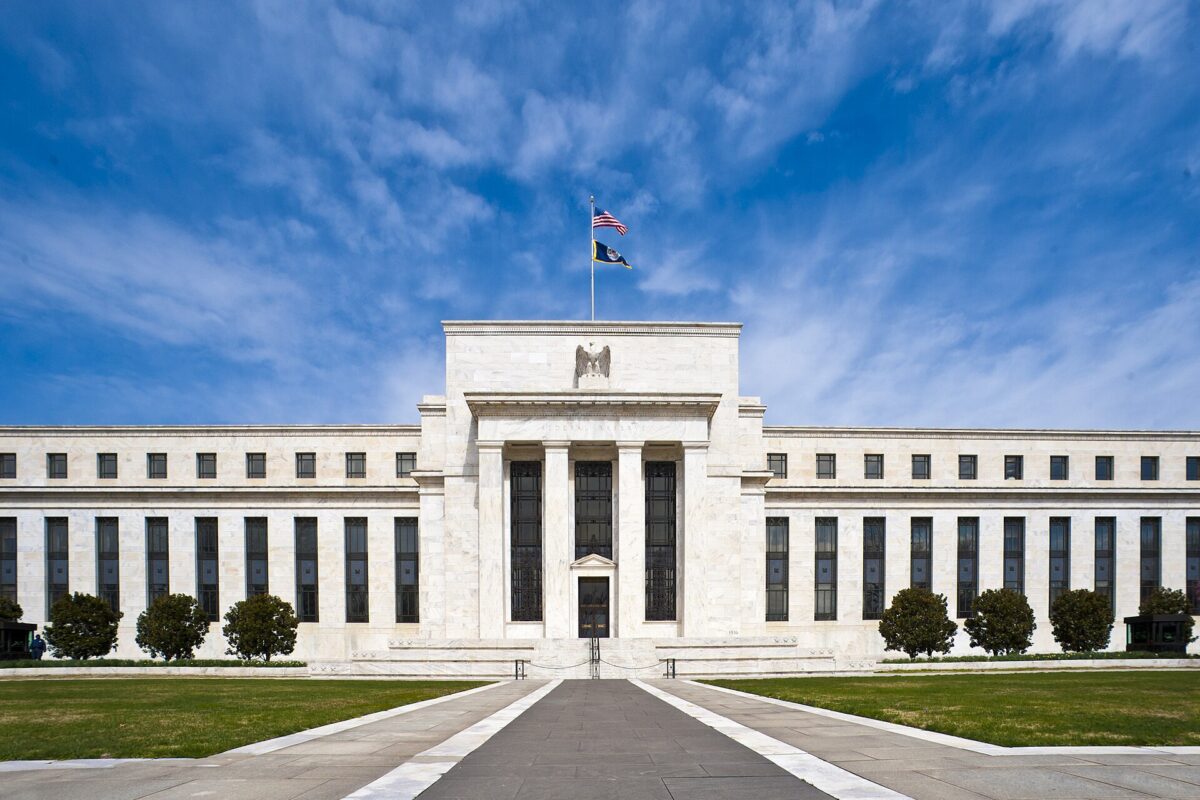
Image: Eccles Building, public domain, via Wikimedia Commons.

Meta’s Stock Just Dropped for a Reason That Should Worry Every Tech Investor

Two of the world’s biggest tech companies just gave investors a reason to pause. AI spending investor concern hit Meta and Alphabet shares this week, even after both companies reported results that beat Wall Street’s estimates on paper. The reaction shows investors are no longer just asking whether these companies can grow. They are asking whether AI spending will ever pay for itself.

Meta’s stock fell about 7% after its earnings release. The drop followed a disclosure, not a miss. Meta said its total AI-related spending could reach $635 billion over time. That number landed just ahead of Anthropic’s own planned IPO, a timing 24/7 Wall St. called a bad look for the sector. Investors read the disclosure as a signal of real financial risk, not routine capital planning.

Why AI spending investor concern hit Alphabet too

Alphabet’s stock stayed roughly flat while the S&P 500 climbed about 13% over the same stretch. That is a quiet form of underperformance. Alphabet’s cash flow is shifting too. It is moving from strongly positive to cash-negative as the company meets AI commitments now running into the hundreds of billions of dollars. That shift alone worries some investors. Alphabet built its reputation partly on generating cash reliably, year after year, and that reputation is part of what is now in question.

DeepMind, Alphabet’s flagship AI research lab, has seen a rotation of leaders recently. Outsiders have described the lab as delayed on key projects. On the commercial side, rivals have made faster progress landing big enterprise and government deals. Anthropic, for instance, has signed large companies and the federal government as customers. Alphabet’s biggest visible enterprise win by comparison is a partnership with Apple. That deal is worth about $1 billion a year to Alphabet. One report called that figure “next to nothing” next to Alphabet’s overall scale. Other coverage of this earnings week noted investors are applying this same AI-spending scrutiny across Microsoft, Amazon and Intel too, not just Meta and Alphabet.

The search cannibalization problem nobody is fixing yet

Alphabet’s core search business faces its own pressure, separate from spending concerns. Gemini-driven AI results are cannibalizing Google’s traditional search business, a trend expected to continue. Search is expected to stay strong in absolute terms. But growth is expected to slow. AI-generated answers are replacing some of the clicks that used to go through to paid search results. That combination, slower search growth plus ballooning AI capital spending, is exactly the mix that worries investors watching both companies right now.

This story connects to a wider pattern. Tamara News covered the court ruling that spared Google’s ad business from a breakup while still forcing changes, and Anthropic’s own IPO plans, both relevant backdrops to how investors are pricing Alphabet right now.

What separates AI spending investor concern from a simple sell-off

Neither Meta nor Alphabet missed its earnings estimates outright. That is the detail that makes this reaction notable. Investors are not punishing bad quarters. They are punishing spending plans and strategic uncertainty layered on top of otherwise solid results. That distinction matters for how long this pressure might last. A single bad quarter usually passes once results improve. A structural worry about whether AI spending will ever generate matching returns can linger for years, shaping how every future earnings call gets read.

The next earnings call is the real test

Both companies report again next quarter, and investors will be watching for a clearer answer on return on AI investment, not just another spending update. Meta’s $635 billion long-term figure will likely get revisited and scrutinized line by line. Alphabet’s cash flow trajectory will get similar attention, especially if it keeps moving further into negative territory. Until one of these companies shows AI spending converting cleanly into new revenue at scale, expect AI spending investor concern to keep showing up in stock reactions, earnings beat or not.

Meta headquarters building at the center of AI spending investor concern

FAQ: AI spending investor concern

Did Meta or Alphabet actually miss earnings estimates?
No. Both companies’ results were not reported as misses. The stock reactions followed spending disclosures and strategic concerns, not weak headline numbers.

How much does Meta expect to spend on AI?
Meta said its total AI-related spending could reach $635 billion over time, a figure disclosed alongside its latest earnings.

Why is Alphabet’s cash flow changing?
Alphabet is shifting from strongly cash-flow-positive toward cash-negative as it funds AI commitments that have grown into the hundreds of billions of dollars.

Is Google’s search business shrinking?
Not shrinking, but growing more slowly. Gemini-driven AI answers are cannibalizing some traditional search traffic and revenue.

How does Alphabet’s AI deal with Apple compare to rivals?
It is worth about $1 billion a year to Alphabet, which one report described as small relative to deals rivals like Anthropic have landed with large enterprises and government agencies.

Will AI spending investor concern fade next quarter?
That depends on whether either company shows clearer evidence that AI spending is converting into new revenue, rather than just rising costs.

Are other tech companies facing the same pressure?
Yes, to varying degrees. Microsoft, Amazon and other large tech companies all face similar investor questions about whether AI capital spending will generate matching returns.

Does this affect Meta and Alphabet’s day-to-day products?
Not directly, at least not yet. The pressure shows up in share prices and spending plans so far, not in changes to products people use daily.

SpaceX’s Quarterly Numbers Just Showed Where the Real Money Is Going

SpaceX posted numbers this quarter that read more like an AI company’s than a rocket company’s. The SpaceX Q3 2026 earnings report, released on 20 October, showed revenue of $14.6 billion. That is up 161% from the same quarter last year, according to figures highlighted from the earnings release. The jump came only months after SpaceX completed its IPO.

SpaceX closed that IPO on 15 June 2026. Shares began trading on Nasdaq under the ticker SPCX three days earlier. The company sold just under 639 million Class A shares. That raised about $85.7 billion in net proceeds, a figure confirmed in earlier coverage of SpaceX’s public listing. Q3 is one of the company’s first full quarters reporting results as a public company, which makes this release a closely watched early signal for investors.

What drove the SpaceX Q3 2026 earnings jump

Two segments carried the quarter. Starlink, SpaceX’s connectivity business, grew revenue 69% year over year. Operating income in that segment rose 99%, driven by enterprise and government adoption alongside steady consumer subscriber growth. The second driver came from SpaceX’s newer AI business, which the company calls its “Super Intelligence” unit. That unit added $6.7 billion in incremental year-over-year revenue. SpaceX attributes that growth to cloud services agreements, its acquisition of the AI coding tool Cursor, and expanding use of its Grok and Bot AI products.

Elon Musk framed the quarter as an “inflection moment for SpaceX” in remarks accompanying the release. He cited what he called “1000x demand from AI agents” as a growth driver behind the AI segment’s rapid expansion. That is a striking claim for a company whose core business has always been rockets and satellites, not software. It signals how far SpaceX now sees its ambitions reaching beyond launch vehicles alone.

The Starship milestone buried inside the numbers

SpaceX’s first revenue-generating Starship mission delivered 26 Starlink V3 satellites during the quarter. SpaceX says that single launch added roughly 10 times the downlink capacity of a typical Falcon 9 Starlink launch. That is a meaningful shift. Starship has spent years as a test program burning cash rather than generating revenue. A successful, revenue-producing mission marks a turning point for a vehicle Musk has called critical to SpaceX’s long-term ambitions, including crewed missions beyond Earth orbit.

The earlier Q2 2026 report showed a different picture for Starship’s finances. The Space segment, which includes Starship, grew revenue 29% to $962 million that quarter. But adjusted EBITDA in that segment fell to a $205 million loss, which the company attributed to heavier Starship research and development spending. Q3’s revenue-generating flight suggests that spending is starting to translate into paying missions, not just test flights.

How SpaceX fits into a bigger AI infrastructure race

SpaceX’s AI push did not happen in isolation. Tamara News covered a major chip supply deal between Nvidia, Samsung and TSMC this same week, part of a broader scramble for AI computing capacity across the tech sector. SpaceX’s rapid AI segment growth puts it in direct competition for the same enterprise cloud customers that Microsoft, Google and Amazon are all chasing, a crowded field for a company that only went public in June. Competing there successfully would mark a genuine shift in what kind of company SpaceX becomes over the next few years. Musk’s other public company, Tesla, reported its own Q3 2026 results this same month, with a very different profit picture than SpaceX posted.

What investors are watching next

SpaceX’s next earnings report will show whether the AI segment’s growth rate holds or cools as the comparison base gets harder. Investors will also watch whether Starship keeps flying revenue missions regularly, rather than this quarter’s flight being an isolated milestone. SpaceX held $100 billion in cash and marketable securities at the end of the prior quarter. That gives it a large cushion. The company can keep investing in both rockets and AI infrastructure even if growth slows somewhere in the mix. Few companies at this stage of a business pivot have that kind of balance sheet behind them.

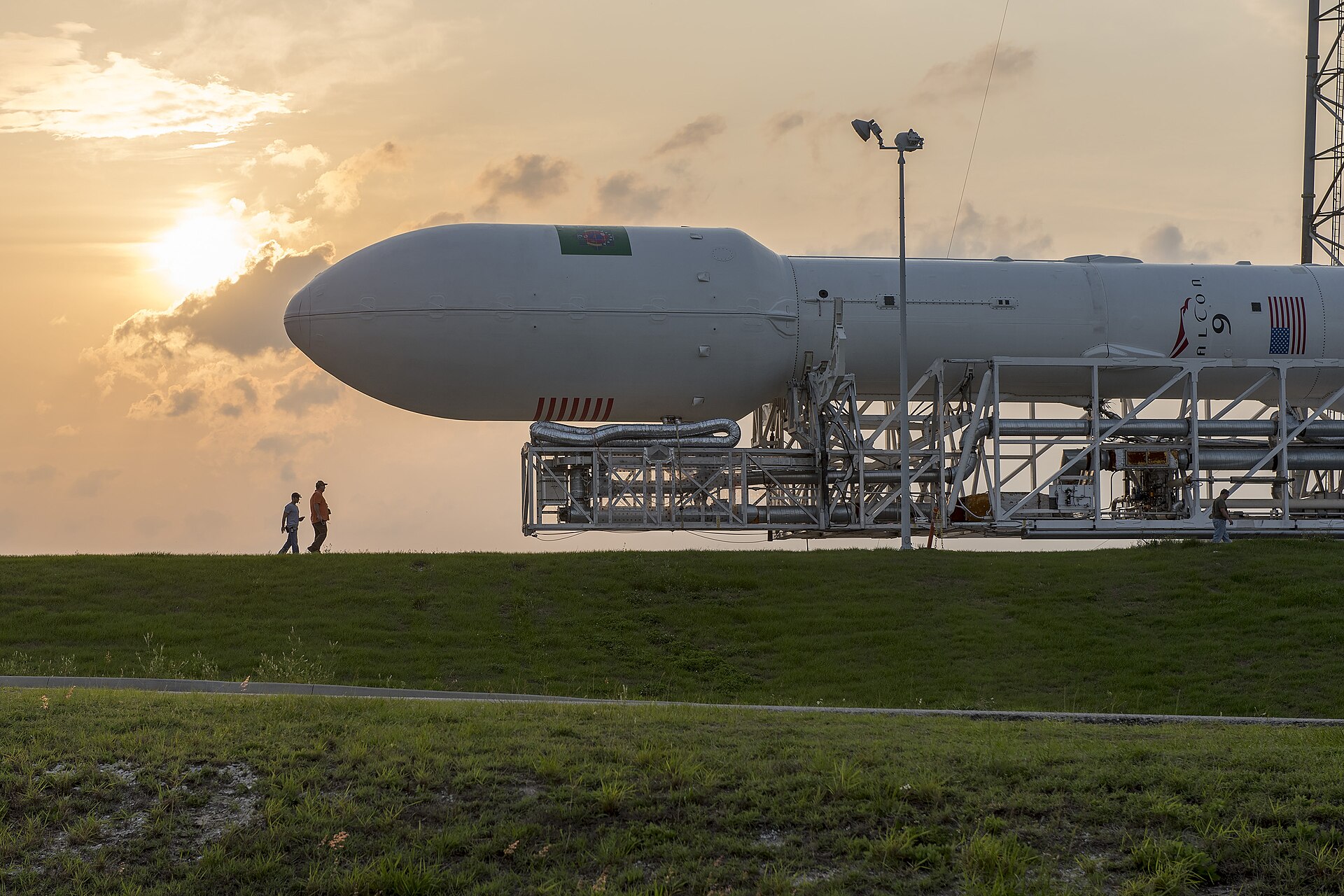
Falcon 9 rocket on the pad as SpaceX Q3 2026 earnings are released

FAQ: SpaceX Q3 2026 earnings

How much revenue did SpaceX report for Q3 2026?
SpaceX reported $14.6 billion in revenue, up 161% year over year.

What drove SpaceX’s revenue growth this quarter?
Starlink connectivity revenue grew 69%, and SpaceX’s AI business added $6.7 billion in incremental revenue, the two biggest contributors.

When did SpaceX go public?
SpaceX closed its IPO on 15 June 2026 and began trading on Nasdaq under the ticker SPCX.

What is SpaceX’s “Super Intelligence” business?
It is SpaceX’s AI unit, which includes cloud services agreements, the Cursor coding tool acquisition, and products like Grok and Bot.

Did Starship generate revenue this quarter?
Yes. SpaceX says its first revenue-generating Starship mission delivered 26 Starlink V3 satellites during Q3 2026.

How much cash does SpaceX have on hand?
SpaceX held $100 billion in cash and marketable securities as of its prior quarterly report.

Is SpaceX’s AI business bigger than its rocket business yet?
Not based on the figures reported here. Starlink remains the larger established segment, though the AI unit’s incremental growth this quarter was substantial on its own.

Does SpaceX compete directly with Microsoft or Google in AI?
In cloud and AI services, yes, to a degree. SpaceX is a newer entrant chasing some of the same enterprise customers as larger, more established cloud providers.