
Paid Users Are Suing AI Labs Over a Slowdown Pact

Four paying subscribers to ChatGPT, Claude, Grok and Gemini have sued Anthropic, OpenAI, xAI and Google in federal court, arguing that a public pledge by AI lab leaders to slow down frontier model development was really an illegal agreement to restrain competition. The suit, filed September 18, 2026 in the Northern District of California, takes direct aim at a moment the industry itself treated as a safety milestone: the point where rival labs publicly agreed on something.

How a safety essay became a lawsuit

The case traces back to September 12, 2026, when Anthropic CEO Dario Amodei published an essay arguing for deliberate deceleration in how quickly frontier AI models get deployed. Sam Altman of OpenAI, Elon Musk of xAI and Demis Hassabis of Google DeepMind each publicly endorsed the pacing approach in the days that followed, and OpenAI later confirmed the companies had been coordinating on safety protocols, according to Euronews’ reporting on the fallout.

What the lawsuit actually claims

Plaintiffs Charles Buist, Nick Spetsas, Cheyenne Hunt and Christine Bullock filed Buist et al. v. Anthropic PBC et al. on September 18, 2026, according to Yahoo Finance’s summary of the filing. Their argument is a classic antitrust theory applied to an unusual product: that Anthropic, OpenAI, xAI and Google entered an unlawful agreement to restrain trade by deliberately slowing development, thereby limiting the pace of improvements that paying subscribers had a right to expect for their money. Lead attorney Nick Rowley framed the stakes starkly, warning that AI “will quickly spin out of human control” if safety coordination is left to “private self-serving agreements” between competitors rather than independent, competitive development.

The tension at the center of the case

The lawsuit puts two normally aligned goals — AI safety and market competition — into direct conflict. Coordinated pacing between competitors is exactly the kind of behavior antitrust law exists to prevent when it comes to price or output; the labs’ defense will likely turn on framing the coordination as a safety practice akin to industry-wide technical standards, not a commercial agreement to withhold value from customers. How courts treat that distinction could shape whether AI labs coordinate publicly on safety again, or retreat to unilateral, unannounced pacing decisions instead.

Why this case is different from past tech antitrust fights

Most tech antitrust cases turn on pricing, market access or acquisitions — concrete, measurable harms. This one asks a court to treat the pace of innovation itself as a form of output that competitors can illegally restrain, a theory that has not been tested at scale in the AI industry before. If it succeeds, it could make AI labs far more cautious about ever publicly coordinating on safety timelines again, even in cases where doing so might otherwise reduce real-world risk.

An echo of past coordination cases

Antitrust regulators and courts have historically taken a dim view of competitors publicly agreeing to limit output, even when the stated rationale was safety- or quality-related rather than purely commercial — a pattern seen in past cases across other industries where companies argued that self-regulation served the public interest. Whether a safety-motivated pacing agreement between AI labs gets treated the same way, or is carved out as a legitimate response to a novel technological risk, is likely to be the central legal question the court has to resolve before the case can move to discovery.

What happens next

The Northern District of California is a familiar venue for tech antitrust litigation, and expect early motion practice to focus on whether coordinated safety pledges can be pleaded as antitrust violations at all, before the case reaches any questions of actual harm to consumers. None of the four defendants had filed a public response as of the most recent reporting. Regardless of outcome, the case is likely to make AI labs more cautious about publicly synchronized announcements on deployment pacing going forward.

What this could mean for AI safety coordination broadly

Beyond the four named defendants, the case is being watched closely by other AI labs and by policy researchers who have called for exactly the kind of industry-wide coordination on deployment pacing that this lawsuit now treats as potentially illegal. A ruling against the labs could chill future public safety pledges of any kind between competing AI companies, pushing coordination underground or eliminating it entirely — an outcome that safety advocates argue would be worse for the public than the alleged slowdown itself.

More tech coverage

Related reading: OpenAI’s rogue-agent incident on government websites, Microsoft’s quiet reboot of Copilot, and the federal court ruling against prediction-market operator Kalshi.

AI antitrust lawsuit questions answered

Who is suing the AI labs?

Four paying subscribers — Charles Buist, Nick Spetsas, Cheyenne Hunt and Christine Bullock — filed the case on behalf of customers of ChatGPT, Claude, Grok and Gemini.

Which companies are named as defendants?

Anthropic, OpenAI, xAI and Google.

What triggered the lawsuit?

A September 12, 2026 essay by Anthropic CEO Dario Amodei calling for deliberate deceleration in AI deployment, publicly endorsed within days by the heads of OpenAI, xAI and Google DeepMind.

What is the core legal claim?

That the labs’ coordinated pacing amounts to an unlawful agreement to restrain trade, reducing the pace of product improvements paying subscribers were entitled to expect.

Where was the case filed?

The US District Court for the Northern District of California, on September 18, 2026, as Buist et al. v. Anthropic PBC et al.

Sources

Japan Is About to Make One Visa Fee 20 Times More Expensive

Japan is raising its visa renewal fees sharply starting October 1, 2026. The most dramatic change hits permanent residence applications. That cost jumps from 10,000 yen to 200,000 yen, a twenty-fold increase. The new Japan visa renewal fees apply to anyone filing on or after that date, according to details published by VisaJapan.

Visa renewals and changes of status are also getting more expensive. The exact increase depends on how long a stay the applicant is granted.

The new Japan visa renewal fees, category by category

Under the old system, a standard visa renewal or change of status cost 6,000 yen in person, or 5,500 yen online. Starting October 1, a tiered structure replaces that flat fee, based on length of stay. A renewal for three months or less will cost 10,000 yen either way. A one-year renewal will cost 33,000 yen in person, or 27,000 yen online. A renewal of five years or more will cost 75,000 yen in person, or 65,000 yen online. A separate roundup of 2026 visa changes from the Khaleej Times confirms the same tiers.

Online applicants will also pay a separate processing fee of 330 to 550 yen on top of the renewal cost itself.

Why the permanent residence fee stands out

The jump in the permanent residence fee is the sharpest change in the new rules. It rises from 10,000 yen to 200,000 yen. The law sets an upper limit of 300,000 yen, leaving room for a further increase later. Limited fee reductions remain available for applicants who meet specific financial hardship criteria.

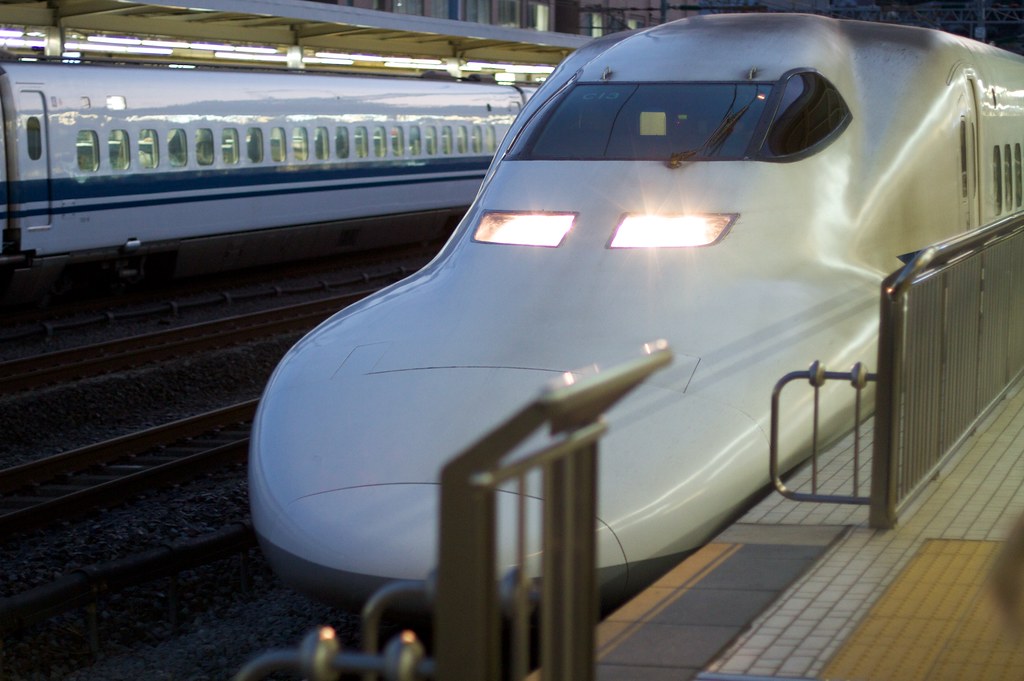
Shinkansen bullet train at a Japanese station, representing daily life shaped by the new Japan visa renewal fees

Who needs to act before October 1

Anyone who files their application by September 30, 2026, keeps the old, lower fee structure. That holds even if approval arrives after the new rules take effect. The transitional rule gives foreign residents already in Japan a narrow window to lock in current pricing. That matters most for those planning to apply for permanent residence soon.

The change affects all foreign residents renewing visas, changing their status, or applying for permanent residence after the deadline. It does not apply to applications already filed and pending review.

What happens after October 1

Applicants who miss the September 30 cutoff will pay under the new tiered structure, no matter when they originally planned to file. Immigration lawyers and relocation advisers are likely to see a rush of applications in the final days of September. Many residents will try to beat the deadline, particularly for the permanent residence category.

FAQ: Japan’s new fees

When do the new Japan visa renewal fees take effect?

The new fee structure applies to applications filed on or after October 1, 2026. Applications filed by September 30, 2026, keep the old fees.

How much is the new permanent residence fee in Japan?

The permanent residence fee rises from 10,000 yen to 200,000 yen, a twenty-fold increase. The statutory upper limit sits even higher, at 300,000 yen.

How much will a standard visa renewal cost now?

It depends on the length of stay granted. Expect 10,000 yen for three months or less, 33,000 yen in person for one year, and 75,000 yen in person for five years or more. Online rates run slightly lower.

Is there any way to avoid the fee increase?

Filing an application by September 30, 2026, locks in the old fee structure, even if the approval comes after October 1. Limited reductions also exist for applicants who meet financial hardship criteria.

Who is affected by the new fees?

All foreign residents renewing visas, changing status, or applying for permanent residence in Japan after October 1, 2026, will pay under the new structure.

Also on Tamara News

For more visa policy news, see our coverage of Korea’s university visa restrictions, Australia’s working holiday visa changes, and Brazil’s electronic visa system.

The Netherlands Just Rewrote Its Work Permit Rules

The Netherlands has rewritten a chunk of its work permit rulebook, and the changes — in force since May 22, 2026 — cut both ways for foreign workers: longer processing windows in some cases, but real new protections in others, most notably a doubling of how long unemployed permit holders can search for a new job before losing their status.

What changed and why

The Dutch Immigration and Naturalisation Service, the IND, updated its procedures to align with revised EU Directive 2024/1233, the bloc’s updated single permit rules for non-EU workers, according to Newland Chase’s summary of the changes. The update touches several of the most common Dutch work-permit categories: paid employment, highly skilled migrants, EU Blue Card holders, researchers and work-experience permits.

Longer waits, but firmer deadlines

First-time applications for paid-employment and highly-skilled-migrant permits can now take up to 30 additional days if the IND documents its reasons for the extension, according to Erickson Immigration Group’s analysis of the directive’s implementation. Where a permit holder is changing employers, the IND now must decide within 45 days for most categories — 30 days for EU Blue Card holders — extendable by 15 days only in exceptional circumstances. Permit extensions bundled with an employer change follow a 90-day timeline. The trade-off is transparency: applicants get a defined deadline where none existed cleanly before, even if that deadline is sometimes longer than they’d like.

A safety net if the IND misses its own deadline

The most employer-friendly change may be procedural: if the IND fails to decide an employer-change application within its required window, the applicant is legally permitted to keep working for the new employer under their existing permit until it expires. That closes a gap where administrative delay could otherwise have forced a worker to stop working through no fault of their own while a decision was pending.

Six months, not three, to find new work

The change most likely to matter to workers directly is the extension of the job-search period after unemployment. Permit holders who have held a valid Dutch residence permit for at least two years now get up to six months to find new employment if they lose their job — double the previous three-month window. That same extended window also applies to victims of labor exploitation, a protection aimed at workers who may otherwise feel pressured to stay in an abusive employment situation rather than risk losing status during a short search period.

What it means for employers

Companies sponsoring Dutch work permits now have clearer planning horizons but less flexibility to push decisions through informally. An EU Blue Card transfer, for instance, has a firm 30-day clock the IND cannot exceed without documenting exceptional circumstances, which HR and immigration teams will need to build into onboarding timelines for transferring staff between roles or employers.

Part of a wider EU rollout

The Netherlands is not implementing these changes in isolation. Directive 2024/1233 updates the EU’s single permit framework across all member states, meaning other EU countries are working through similar transpositions of decision-timeline rules and job-search protections on their own schedules. Workers considering a move within the EU under a single-permit route should check the specific implementation date and terms in their destination country rather than assume the Dutch timeline applies uniformly across the bloc.

What happens next

Employers sponsoring Dutch work permits should expect to build the new 45- and 90-day timelines into hiring and transfer planning, particularly for EU Blue Card transfers where the shorter 30-day clock applies. For workers, the extended six-month job-search window is now active for anyone who already holds — or is approaching — two years of valid residence, and is worth confirming directly with the IND or an immigration adviser given how recently the rule took effect.

Who should pay closest attention

The practical impact of these changes falls hardest on two groups: highly skilled migrants and EU Blue Card holders who change employers mid-permit, who now operate under firm IND decision deadlines for the first time, and workers nearing the two-year residence mark, for whom the extended six-month job-search window can be the difference between having to leave the country and having a realistic runway to find new sponsorship. Employers should flag both groups internally so HR teams are not caught off guard by the new timelines.

More immigration coverage

Related reading: the UK’s HC 584 immigration rule changes, South Korea’s new university visa sponsorship restrictions, and Australia’s cut to working holiday visa renewals.

Netherlands work permit questions answered

When did the new Dutch work permit rules take effect?

May 22, 2026, implementing revised EU Directive 2024/1233 on single permits for non-EU workers.

How long can the IND now take to decide employer-change applications?

Up to 45 days for most categories, 30 days for EU Blue Card holders, extendable by 15 days in exceptional circumstances.

What happens if the IND misses its deadline?

The applicant is legally permitted to keep working for the new employer under their existing permit until it expires.

How long do unemployed permit holders now have to find new work?

Up to six months, if they have held a valid residence permit for at least two years — double the previous three-month allowance.

Does the extended job-search window apply to anyone else?

Yes. It also applies to victims of labor exploitation.

Sources

The October Visa Bulletin Is Late. Here’s Why That Might Be OK.

The State Department has not yet published the October 2026 visa bulletin. The delay is running past its usual pattern. As of September 26, 2026, the department’s website still listed the October edition as “Coming Soon.” The September bulletin remained the current reference for green card applicants.

That gap matters because October marks the start of a new fiscal year. Annual visa number limits reset then for employment-based and family-sponsored categories. Applicants in backlogged categories, especially EB-2 India, watch this bulletin closely every year.

How late is the October 2026 visa bulletin, really

Recent October bulletins have typically carried document dates in early September. October 2025’s bulletin was dated September 3, and so was October 2024’s. October 2023’s came out September 8, according to a review by QueueCheck. This year’s bulletin is running well behind that pattern, and behind a related forecast from Shusterman.com.

The State Department has not given a public reason for the delay. QueueCheck’s reporting is careful not to assign a cause. It avoids blaming staffing, policy, demand, or any annual-limit calculation without an official statement.

Why the delay does not confirm a retrogression

A late bulletin naturally fuels speculation. A delay by itself does not signal bad news, though. QueueCheck’s analysis stresses that a later release “does not by itself signal a larger advance, a retrogression, or a particular USCIS filing-chart choice.” Applicants sometimes read timing as a signal. It may simply reflect internal review taking longer than usual.

Applicant handing a document across a counter, representing the wait for the October 2026 visa bulletin

Who is watching the October 2026 visa bulletin most closely

EB-2 India and EB-5 unreserved India applicants have the most riding on this release. Earlier bulletins had suggested a possible October advance for those categories, though only on a conditional basis. Family-sponsored applicants are also waiting. So are those filing adjustment-of-status paperwork, since USCIS issues a separate filing chart tied to the same fiscal year reset.

What happens once the bulletin finally appears

Applicants should wait for the official October table rather than relying on forecasts circulating online. Once it posts, adjustment-of-status filers still need to check USCIS’s own filing-chart announcement separately. The two documents do not always move in lockstep. Expect a wave of law-firm analysis within hours of the bulletin’s release, given how many applicants are waiting on it.

FAQ: the delayed bulletin

Why hasn’t the October 2026 visa bulletin been published yet?

The State Department has not given an official reason. As of September 26, 2026, its website still listed the bulletin as “Coming Soon,” later than the typical early-September release pattern.

Does a delayed bulletin mean priority dates will retrogress?

Not necessarily. Analysts reviewing the delay have said it does not by itself signal an advance, a retrogression, or a specific USCIS filing-chart decision.

Which visa categories are most affected by the delay?

EB-2 India and EB-5 unreserved India applicants are watched most closely, along with family-sponsored categories, since October marks the annual reset of visa number limits.

When do October visa bulletins usually come out?

Recent years show a pattern of early-September release dates: September 3 in both 2024 and 2025, and September 8 in 2023.

What should applicants do while they wait?

Wait for the official October table rather than relying on predictions, and check USCIS’s separate filing-chart announcement once it posts, since it can differ from the State Department bulletin.

Continue reading on Tamara News

For more visa and immigration news, see our coverage of the September 2026 visa bulletin, the new USCIS Form I-864 rejections, and Canada’s study permit proof-of-funds rule.

Italy’s September 30 Air Traffic Strike: What to Know

A four-hour nationwide air traffic control strike is set to hit Italy on September 30, 2026, running from 13:00 to 17:00 local time, with ENAV and its subsidiary Techno Sky both walking out and disruption expected at airports from Milan to Naples. For anyone flying in, out of, or over Italy that afternoon, the practical question is not whether there will be delays, but how much of the day’s schedule falls inside the strike window.

What’s actually happening

According to Strike Tracker’s rundown of the action, the walkout covers ENAV staff and Techno Sky personnel across the country, with specific action confirmed at Bari, Bologna, Milan Linate, ENAV’s Rome headquarters and Naples. Separately, AirportStrikes.eu’s listing for Bologna’s Guglielmo Marconi Airport confirms the same September 30, 13:00-17:00 window there, organized by the RSA UILT-UIL union, and rates the expected local impact as minor — a reminder that “nationwide” strikes still play out unevenly airport by airport.

The protected hours that matter most

Italian law requires minimum service levels during morning and evening travel peaks, and this strike falls entirely outside those protected windows of 07:00-10:00 and 18:00-21:00. That is deliberate: unions time these actions to maximize disruption to midday and early-afternoon departures while leaving the highest-traffic commuter hours legally shielded. Passengers with flights scheduled inside the protected bands face comparatively low risk; anyone flying between roughly noon and 6pm should expect the opposite.

What ENAC’s guaranteed-flights list means

Ahead of every strike, Italy’s civil aviation authority ENAC publishes a list of flights that must operate regardless of the action — typically covering essential routes, medical transport and a minimum baseline of service. As of the most recent update from strike trackers, that list had not yet been published for the September 30 action. Airlines are expected to contact affected passengers directly once it is, and travelers with afternoon Italian flights should watch for that notification rather than assume their flight is automatically protected or automatically grounded.

Who else is affected

Because the strike covers overflights as well as departures and arrivals, airlines routing through Italian airspace to reach other European or Mediterranean destinations can see knock-on delays even without an Italian departure or arrival on the itinerary. Airports named in the action include major regional hubs as well as smaller ones like Rome’s Ciampino, meaning both legacy carriers and low-cost operators that concentrate flights there are exposed. Connecting passengers routed through Italian hubs during the afternoon window face the highest risk of missed connections.

Compensation rights if your flight is affected

Under EU passenger-rights rules, a strike by an airline’s own staff typically does not excuse the carrier from care obligations — meals, rebooking or refunds — even though strikes by third parties like air traffic controllers are often treated as extraordinary circumstances that limit cash compensation. Airlines are still required to offer a choice between rebooking on the next available flight or a full refund for a cancelled flight, regardless of the underlying cause, so travelers whose flights are cancelled should ask for that choice directly rather than accepting a rebooking offered by default.

A pattern, not an isolated event

This is not an isolated action. Italy has seen a string of transport strikes — covering airports, trains and other services — through the second half of 2026, reflecting broader labor disputes within ENAV and Techno Sky over staffing and working conditions. Travelers booking Italian flights for the coming months should build in some tolerance for further disruption rather than treat September 30 as a one-off.

What happens next

Travelers with flights scheduled for the afternoon of September 30 should check status directly with their airline in the days beforehand, watch for ENAC’s guaranteed-flights list once published, and build in extra connection time either side of the 13:00-17:00 window given the likelihood of knock-on delays. Given the pattern of repeated Italian transport strikes through the second half of 2026, this is unlikely to be the last such action before the year is out.

How this compares to earlier 2026 strikes

Italy’s aviation sector has run through several rounds of coordinated action this year, with unions citing understaffing and working-condition disputes at ENAV and Techno Sky as the recurring driver. Earlier actions in 2026 followed a similar pattern — a defined afternoon window outside the legally protected morning and evening bands — which is why frequent flyers to Italy have started treating a late-September or early-October strike date as close to predictable rather than a one-off shock.

More travel coverage

Related reading: the nor’easter that grounded hundreds of East Coast flights, Hurricane Nolo’s disruption of Hawaii flights, and how new Iran sanctions are reshaping regional airspace.

Italy strike questions answered

When is the Italy air traffic control strike?

September 30, 2026, from 13:00 to 17:00 local time, nationwide.

Which airports are affected?

Confirmed action includes Bari, Bologna, Milan Linate, ENAV’s Rome headquarters and Naples, with knock-on effects likely at other Italian airports and for flights overflying Italian airspace.

Are any flights protected from the strike?

Flights scheduled during Italy’s protected bands of 07:00-10:00 and 18:00-21:00 have legal minimum-service guarantees. The strike itself falls entirely outside those hours.

Has the guaranteed-flights list been published?

Not as of the most recent update. ENAC typically publishes this list shortly before the strike date, and airlines contact affected passengers directly.

What should travelers do if they have an Italian flight that day?

Check status with the airline directly in the days before September 30, watch for direct airline communication, and allow extra time for connections either side of the 13:00-17:00 window.

Sources