Microsoft’s Cloud Just Beat Guidance for a Fifth Straight Quarter

Microsoft Azure earnings growth beat the company’s own forecast for the fifth straight quarter. Shares rose 4.1% in after-hours trading. Investors concluded that record AI spending is translating into real revenue, not just rising costs. Microsoft’s fiscal Q1 2027 results cover the quarter ended 30 September 2026. They showed total revenue of $92.3 billion. That is up 19% year over year. It is also above the top of the $89.85–$90.95 billion range Microsoft had guided to in July.

Operating income rose 21% to $45.9 billion. Diluted earnings per share came in at $4.92 on a GAAP basis. Excluding gains and losses tied to Microsoft’s OpenAI investment, the figure was $4.89. Shares traded at $552.55 in after-hours activity at 4:14 p.m. ET, up from a regular-session close of $531.01.

The number behind Microsoft Azure earnings growth

Azure, Microsoft’s cloud computing division, grew 48% in constant currency during the quarter. That is well above the 44% to 45% range Microsoft itself had forecast. It marks the fifth consecutive quarter Azure has beaten the top end of its own guidance. Azure revenue reached $33.2 billion for the quarter. The broader Microsoft Cloud segment bundles Azure with other commercial cloud products. It brought in $63.9 billion, up 30% year over year.

Microsoft’s commercial bookings backlog is known as remaining performance obligations, or RPO. It stood at $677 billion. That is up 73% from a year earlier, though roughly flat compared with June. Microsoft expects about 30% of that backlog to convert into recognized revenue within the next twelve months. The figure gives analysts a rough sense of how much growth is already locked in. It is not dependent on new deals closing.

Server room data center illustrating Microsoft Azure earnings growth

Why capex actually fell even as growth accelerated

The quarter’s most counterintuitive detail is that capital spending came in below guidance even as Azure growth beat expectations. Capital expenditure for the quarter, including finance-leased data center sites, was $45.2 billion. That fell short of the more-than-$50-billion outlook Microsoft had given. Cash paid for property and equipment came to $39.4 billion. Microsoft has also cut its calendar 2026 capex plan. The new figure is roughly $175 billion, down from about $190 billion projected in April.

The main reason is an accounting shift, not a change in ambition. Microsoft extended the useful life of its data center buildings from 15 to 25 years in July. That pushed more new leases into the “operating lease” category, which sits outside capex reporting. CFO Amy Hood explained the dynamic on an earlier call. The lease change, she said, “adjusts our expectation to approximately $175 billion.” She also noted that “customer demand continues to exceed supply.” That means Azure’s growth ceiling is still set by how fast Microsoft can bring new capacity online.

Other segments and shareholder returns

Beyond cloud, Microsoft’s Agents and Infra segment generated $76.8 billion, up 25% and above forecast. Devices and Consumer revenue fell 3% to $15.5 billion despite beating its own guidance. Operating cash flow for the quarter reached $58.0 billion, with free cash flow of $18.6 billion. Microsoft returned $10.2 billion to shareholders during the quarter: $7.3 billion in dividends and $2.9 billion in share buybacks. It also raised its next quarterly dividend 8% to $0.98 per share, payable 10 December 2026.

What happens next for Microsoft’s cloud bet

The next test is whether Azure can sustain a 48% growth rate as its comparison base gets larger. Investors will also watch whether the $677 billion backlog converts into revenue on Microsoft’s expected timeline. Whether the reduced 2026 capex figure holds, or creeps back up, is another open question. Microsoft has revised its spending plans more than once this year. And “customer demand continues to exceed supply” is not a phrase that suggests the company feels overbuilt.

The results arrive the same week as Alphabet’s earnings. Alphabet’s cloud business posted even faster percentage growth, but a very different profit picture. That contrast is already reshaping how investors think about which AI infrastructure bets are paying off fastest.

Microsoft’s own commentary suggests the company sees the current growth rate as sustainable rather than a one-off spike, pointing to the size of its backlog as evidence that demand is already contracted rather than merely hoped for. Whether that confidence survives a few more quarters of rising capital costs is the question investors will keep asking each earnings cycle.

Frequently asked questions

How much did Microsoft’s revenue grow in Q1 FY2027?
Total revenue reached $92.3 billion, up 19% year over year and above the top of Microsoft’s own forecast range.

How fast did Azure grow this quarter?
Azure grew 48% in constant currency, beating Microsoft’s 44%-to-45% forecast. It was the fifth straight quarter Azure topped its own guidance.

Why did Microsoft’s capital spending fall below guidance?
A July accounting change extended data center building life from 15 to 25 years. That shifted more new leases into operating-lease treatment, which sits outside reported capex.

What is Microsoft’s updated 2026 capex plan?
Microsoft now expects roughly $175 billion in calendar 2026 capital spending, down from about $190 billion projected in April. The lease accounting change is the main reason.

How did the stock react to the results?
Shares rose 4.1% in after-hours trading to $552.55, up from a regular-session close of $531.01.

What is Microsoft’s commercial backlog worth?
Remaining performance obligations stood at $677 billion, up 73% year over year. About 30% is expected to convert to revenue within 12 months.

For more on this earnings season, see our coverage of Alphabet Q3 earnings results and big tech’s AI spending concerns. For the broader semiconductor angle, read our report on the Nvidia Samsung TSMC chip deal.

Oil Prices Are Swinging Wildly on a Single Letter to Iran

Brent crude oil prices slipped to around $114 a barrel on Thursday. That followed a gain of more than 1% in the prior session. Traders were weighing a reported diplomatic opening between Washington and Tehran against persistent fears of renewed conflict. Brent is the benchmark for roughly two-thirds of the world’s oil. It had settled at $115.32 on Wednesday, up 1.3%. US WTI crude closed at $102.78 that day, up 2.9%, before easing back above $101 a barrel on Thursday.

The swing shows how sensitive energy markets have become to every signal out of the region. Wednesday’s rise reflected fears of renewed US military action against Iran and further supply disruption. Thursday’s pullback came after new reports. Those reports said Vice President JD Vance had sent a letter to Iranian officials aimed at reviving negotiations. President Trump downplayed the outreach. He framed it as humanitarian aid rather than a formal overture.

Why Brent crude oil prices keep swinging on headlines

Under normal conditions, a single diplomatic letter would barely move a market this large. What’s different now is how thin the market’s safety margin has become. UBS analyst Giovanni Staunovo said global inventories “have fallen sharply.” He added that pledged strategic reserve releases are “largely completed.” That means the usual buffer governments use to calm price spikes has mostly been spent. UBS also pointed to record freight costs, constrained tanker capacity and recovering Chinese imports. These structural factors are likely to keep prices elevated regardless of how the diplomatic track unfolds.

Emirates NBD’s Nick Stadtmiller framed the environment simply: “Oil prices remain volatile as markets respond to developments affecting regional production and infrastructure.” UBS’s own base case has Brent holding near $110 a barrel at year-end. That would put today’s levels closer to the high end of its expected range than the low end.

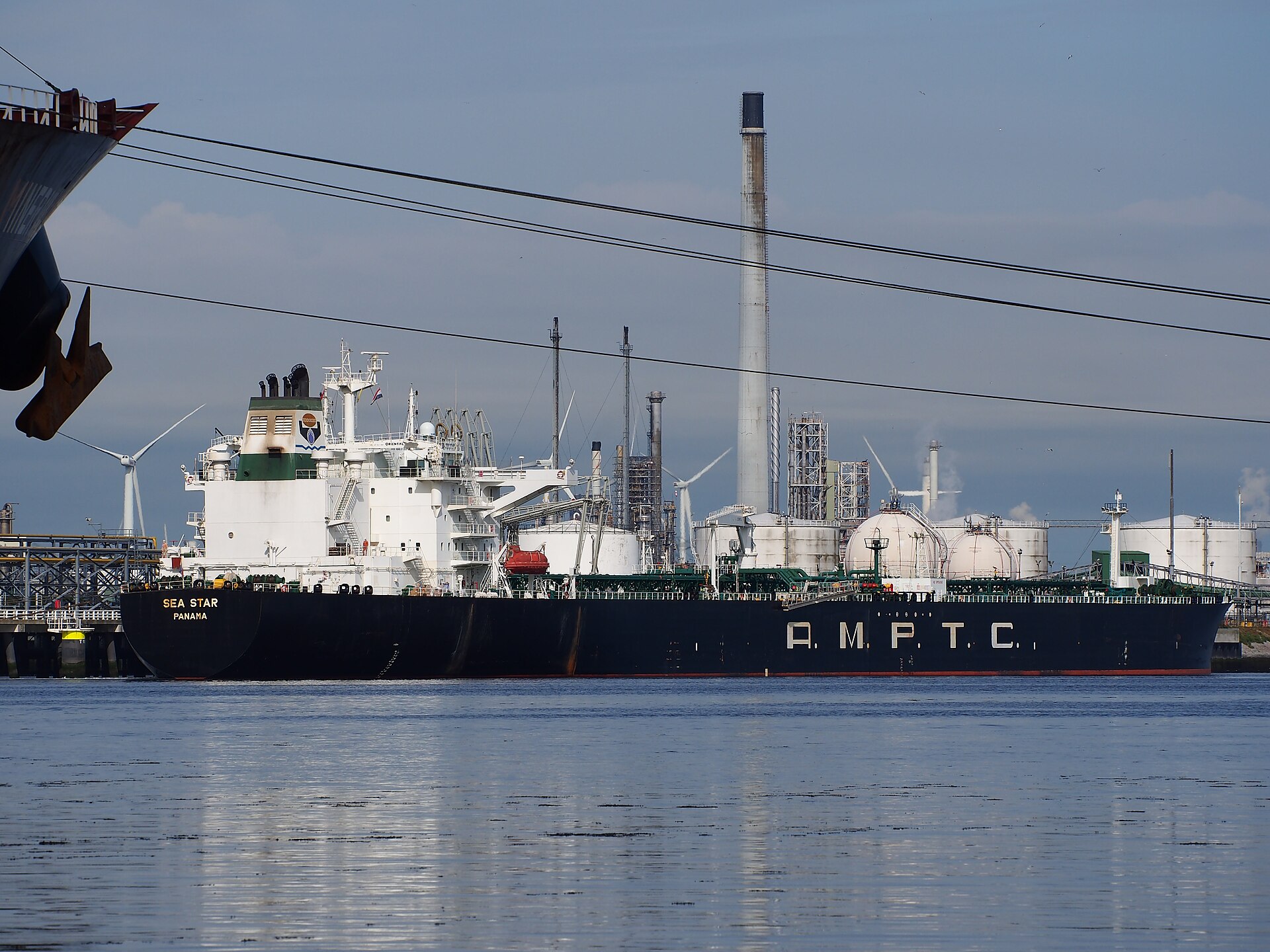
Oil tanker ship carrying cargo as Brent crude oil prices shift

The supply risk that won’t go away

Behind the day-to-day price moves sits a bigger structural story. The same Wall Street Journal report that described the Vance letter also carried another warning. It said Washington has warned several Gulf Arab governments to prepare for a possible renewed campaign against Iran. That warning applies once the 3 November US midterm elections are over. A letter today doesn’t rule out strikes next month, and traders know it.

Aviation has already adjusted to that reality. The European Union Aviation Safety Agency has extended its advisory against flying over Iran, Iraq, Lebanon and Jordan. The advisory also covers nearby Gulf waters, and it now runs through 16 November. Several carriers have pushed their own route restarts into early December. That is a sign the industry expects the underlying risk to persist well past any single news cycle.

What traders are watching next

Three triggers could move Brent meaningfully before year-end. A confirmed, substantive Iranian response to the reported US outreach would likely ease the risk premium further. A second trigger works the other way. If Washington is actually preparing post-midterm military action, rather than simply warning allies to plan for it, prices would almost certainly rise. A third trigger is tanker traffic. Any disruption to actual shipping through the Strait of Hormuz, rather than just airspace avoidance, could overwhelm even a calming diplomatic signal.

For now, the market is pricing genuine uncertainty rather than a clear direction. Brent’s roughly $1-a-barrel move this week is small by the standards of an active shooting-war scenario. It is large by the standards of a market that believes a deal is close.

Analysts at multiple banks have made the same basic point in different words this week: the floor under oil prices is higher than it was a year ago, and the ceiling is capped mainly by how quickly diplomacy or conflict resolves one way or the other. That leaves traders reacting to headlines in both directions rather than settling on a single view, which is why a single reported letter and a single warning to Gulf allies can both move the same market on the same day.

Frequently asked questions

Why did Brent crude oil prices fall today?
Prices eased after reports that the US had sent a diplomatic letter to Iranian officials. Traders read it as a modest de-escalation signal after Wednesday’s gains.

What is Brent crude trading at right now?
Brent slipped to around $114 a barrel on Thursday after settling at $115.32 on Wednesday, up 1.3% that session.

What is WTI crude trading at?
US WTI crude eased to just above $101 a barrel on Thursday. It had closed Wednesday at $102.78, up 2.9%.

Why do analysts expect prices to stay elevated?
UBS cites sharply reduced global inventories, largely exhausted strategic reserve releases, record freight costs and constrained tanker capacity. These are structural pressures, independent of any single diplomatic development.

What is UBS’s year-end forecast for Brent?
UBS expects Brent to remain near $110 a barrel at year-end. It cites continued Middle East supply volatility and geopolitical uncertainty.

How does the Gulf airspace situation affect oil markets?
EASA’s extended avoidance advisory through 16 November signals that aviation and energy risk assessments both expect regional tension to persist. That reinforces the supply-risk premium built into current prices.

For the diplomatic and political context behind this week’s price moves, see our coverage of US Iran diplomatic talks and Middle East flight suspensions. For how energy costs are feeding into broader markets, read our report on the OPEC+ output decision.

Gates Cambridge Scholarship 2027: Deadlines of 8 Dec and 6 Jan

The Gates Cambridge Scholarship 2027 round for most international applicants closes on either 8 December 2026 or 6 January 2027, depending on the course, according to the scholarship’s official application timeline. The earlier US-resident round closed on 14 October 2026, so the dates below matter mainly to applicants from outside the USA. Everything in this article comes from the official pages we read; check the University of Cambridge course directory before you apply.

Contents

The deadlines

Round 2, for all eligible applicants other than US citizens living in the USA, opened on 11 September 2026. The deadline is either Tuesday 8 December 2026 or Wednesday 6 January 2027, depending on your course; the timeline tells applicants to check the Course Funding Deadline in the University Course Directory. The timeline says most applicants fall into this later round, which is aligned with the University’s postgraduate funding competition.

Who can apply

According to the eligibility page, you must be a citizen of any country outside the United Kingdom. US citizens who live in the USA had to apply in the October round and cannot apply later, while US citizens studying, working or living overseas at the time of application should apply in the later round. The pages we read do not describe the selection criteria or what the scholarship pays for, so check those pages on the official site.

Which courses count

Eligible courses are PhD study (full-time, with part-time PhD funding in a pilot scheme), the full-time MLitt and one-year full-time postgraduate courses, with some exceptions. Undergraduate degrees, MASt courses, part-time degrees other than the PhD and professional or non-standard degrees such as the MBA, PGCE and MD are excluded. Current Cambridge students can apply for a new postgraduate course but not for funding to finish one already started, and current Gates Cambridge Scholars can apply for a second scholarship for a new degree.

What happens after you apply

For Round 2, departmental ranking runs from December to February, outcomes are notified by 11:59pm UK time on Monday 8 March 2027, and the panel reviews cases on 22 and 23 March 2027. Scholarship offers follow by early April 2027, and candidates must accept within 72 hours of an offer.

A worked example

As an illustration, not a real case: an Indian mechanical engineer applying for a one-year MPhil should look up the course’s Course Funding Deadline first, because it decides whether the date is 8 December or 6 January, then plan documents backwards from it. A student weighing other UK options can also read our reports on the Chevening 2027/28 timeline and the Clarendon Scholarship at Oxford, and use the visa eligibility checker to prepare for the study visa that follows an offer.

What to do now

Check your course’s funding deadline in the University of Cambridge Course Directory, confirm that your course is on the eligible list, and work back from either date. Because the whole decision cycle runs to April 2027, applicants should also line up a second funding route in case the outcome is not positive; scholarship timelines at other universities differ, and we have not verified them here.

Gates Cambridge questions

When is the Gates Cambridge 2027 deadline for non-US applicants?

8 December 2026 or 6 January 2027, depending on the course, per the official timeline.

When did the US-resident round close?

14 October 2026, 11:59pm UK time.

Who is eligible?

Citizens of any country outside the UK, applying to eligible Cambridge courses.

Is an MBA eligible?

No. The eligibility page lists the MBA, PGCE and MD as excluded.

When are outcomes announced for Round 2?

By 11:59pm UK time on Monday 8 March 2027.

How long do I have to accept an offer?

72 hours, according to the timeline.

Sources

Image: King’s College Chapel, Cambridge, CC BY-SA 3.0, via Wikimedia Commons.

Why Pakistan and Afghanistan Can’t Agree on a Ceasefire

The latest round of Pakistan Afghanistan ceasefire talks has ended the way most of this year’s attempts have. Both sides are still blaming each other. There is no joint statement to show for it. Pakistan’s Foreign Office said on 16 October that talks with Kabul “cannot be unconditional.” It insisted Islamabad is not avoiding dialogue, including with Afghan representatives. The two governments remain locked in a dispute that has run for most of 2026. That is despite repeated mediation attempts by at least four different countries.

The latest formal effort, the Moscow Format consultations held on 5 October, ended without a joint communiqué. Pakistani officials attribute that failure to Afghan reluctance. Kabul reportedly would not accept previously agreed language describing terrorist networks operating from Afghan soil, language both sides had accepted in earlier rounds.

What Pakistan is actually demanding

Islamabad has narrowed its position to a single, repeatedly stated condition. Foreign Office spokesperson Sajjad Haider Khan called it “a verifiable mechanism to ensure complete cessation of terrorist activities emanating from Afghan soil.” In practice, that means action against Tehreek-i-Taliban Pakistan and other armed groups. Islamabad says these groups use Afghan territory to stage cross-border attacks. Khan accused the Taliban government of taking “one step forward and one step backward” on the issue. That phrase captures the pattern of partial commitments followed by inaction seen since early in the year.

The Afghan Taliban administration has avoided a categorical position on the TTP. It continues to reject Pakistan’s framing that Afghanistan serves as a base for attacks against its neighbor.

Khyber Pass mountains near the Pakistan Afghanistan ceasefire talks border

Four mediators, one unresolved dispute

The list of countries that have tried to broker a settlement has grown steadily without producing a lasting one. Qatar and Türkiye helped negotiate a ceasefire in October 2025. It held only briefly before follow-on talks stalled. Saudi Arabia hosted a separate round of discussions. China convened talks between the two sides in Urumqi in April 2026. None resolved the core dispute over cross-border militancy. The pattern of mediated calm followed by renewed friction has repeated at least three times this year.

Russia has now offered to join that list. Moscow’s envoy, Zamir Kabulov, floated the idea of formal Russian mediation earlier in October. That is notable partly because Russia is the only country to have formally recognised the Taliban government. Pakistan’s Foreign Office said it is not aware of any formal Russian mediation initiative currently under discussion. The offer remains in diplomatic limbo for now.

Pakistan Afghanistan ceasefire talks and the wider regional picture

The dispute has also pulled in a third actor. Khan used this month’s briefing to reject a threat from India’s Defence Minister Rajnath Singh. Singh had threatened a larger strike in response to future terrorist attacks. Khan pointed to the two countries’ May 2025 confrontation and warned of a stronger Pakistani response to any aggression from that direction. That three-way tension means Islamabad is managing friction on two borders at once. Analysts say this partly explains its insistence on a verifiable security guarantee from Kabul before softening its position further.

What happens from here

The Moscow round failed to produce a communiqué. No new mediation session has been confirmed. The near-term path runs through informal channels rather than a scheduled summit. Three things would signal a genuine shift. Kabul could publicly name specific steps against TTP networks rather than issue general denials. Islamabad could soften its “no unconditional talks” stance in response. Or Russia’s mediation offer could be formally accepted by both sides. Absent one of those, the current stalemate looks likely to continue into the winter.

Border trade between the two countries has also suffered during the standoff, with intermittent crossing closures compounding the diplomatic freeze. Traders on both sides of the Durand Line have reported shipment delays running into weeks, adding economic pressure to a dispute that so far has been argued mainly in security terms.

Frequently asked questions

What is Pakistan’s core demand from Afghanistan?
A verifiable mechanism to ensure the complete cessation of terrorist activity originating from Afghan soil, targeted specifically at groups like Tehreek-i-Taliban Pakistan.

Did the Moscow Format talks produce an agreement?
No. The 5 October consultations ended without a joint communiqué, which Pakistani officials attribute to Afghan reluctance to accept previously agreed language on terrorist networks.

Which countries have tried to mediate the dispute?
Qatar and Türkiye brokered an October 2025 ceasefire, Saudi Arabia hosted separate discussions, and China held talks in Urumqi in April 2026. Russia has since offered to mediate as well.

Has Pakistan’s Foreign Office commented on Russian mediation?
Yes. Spokesperson Sajjad Haider Khan said Pakistan is not aware of any formal Russian mediation initiative currently under discussion, despite envoy Zamir Kabulov’s earlier offer.

How does the India dimension factor in?
Pakistan’s Foreign Office this month rejected a threat from India’s Defence Minister of a larger strike over future attacks, pointing to a May 2025 confrontation, which adds a second front to Islamabad’s security calculus.

Is a ceasefire currently in effect?
The Foreign Office has described ongoing diplomatic efforts toward de-escalation, but no durable, publicly confirmed ceasefire agreement has replaced the one brokered in October 2025.

For related coverage of regional diplomacy this month, see our reports on US Iran diplomatic talks and Venezuela’s political transition. For how South Asian border tension intersects with regional politics, read our coverage of the Israel election results.

The Next US Shutdown Clock Just Started Ticking Again

Washington avoided a shutdown in October. But the US government shutdown deadline everyone is now watching sits just six weeks away. Federal agencies are funded through 11 December 2026. That is under a continuing resolution President Trump signed on 2 September, after the House passed the Senate’s measure, H.R. 6500, by 370-48. A lapse would begin 12 December if Congress fails to act again. As of 28 October, none of the twelve full-year FY2027 spending bills had been enacted.

That sounds like routine Washington brinkmanship. But the backdrop is not routine. Federal employees have already lived through three funding lapses since October 2025. Together they total 122 days, including a 43-day shutdown last October, one of the longest in US history. The December cliff is the fourth test of the same fight in just over a year.

What actually happened to avert the shutdown

The path to the current calm took several turns. The House passed a clean continuing resolution, H.R. 9770, by 220-205 on 21 July. That bill had a 4 December funding date attached. The Senate then advanced its own version 89-4 on 3 August. It passed it 90-6 on 8 August, pushing the date to 11 December. Six senators voted no on final passage: Bill Cassidy, Rand Paul, Tim Kaine, Ed Markey, Elizabeth Warren and Bernie Sanders. The House ultimately accepted the Senate’s later date. Trump signed the bill on 2 September.

The core dispute has not gone away. House Republicans’ spending bills total roughly $1.856 trillion. That is about $217 billion, or 13%, above FY2026 levels. The Senate has not yet settled its own spending toplines. It has postponed committee markups twice over that gap. The current law also blocks a White House budget office rule. That rule would have required political appointees to sign off on grants until 11 December. The law also bars the Department of Homeland Security from shifting funds toward Border Patrol in the interim.

The US government shutdown deadline and federal workers

Federal employees have reason to watch the fine print as closely as the calendar. An Office of Management and Budget and Office of Personnel Management memo issued 23 October rescinded 2025 guidance. That guidance had allowed reductions in force during a funding lapse. The change followed a September settlement in the case AFGE v. OMB over shutdown-era layoffs. Separately, Trump’s 26 August alternative pay plan would hold 2027 civilian base and locality pay at 0%. That holds unless Congress sets a different figure. Law enforcement personnel would see 3.8%.

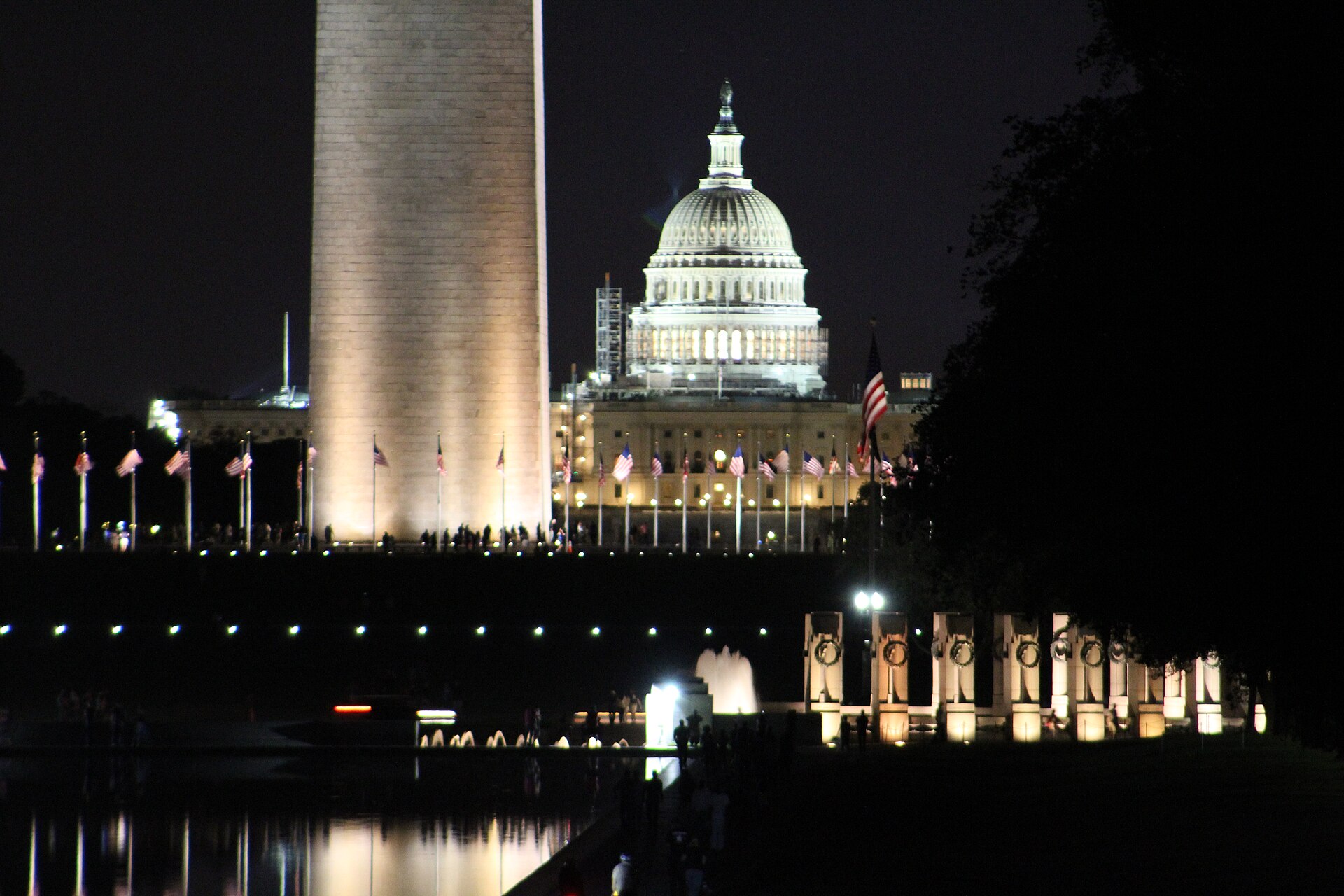
Capitol dome at night during the US government shutdown deadline debate
Photo: Dkallen78 / Wikimedia Commons (CC BY-SA 4.0)

None of these measures resolve the underlying fight. They simply define the terms of the next one. That assumes lawmakers need another stopgap rather than finishing full-year bills by 11 December. Most Capitol Hill trackers consider a further stopgap the likeliest outcome.

Why the midterms change the political math

The timing is not incidental. The 11 December deadline falls after the 3 November midterm elections. That leaves a lame-duck session as the main vehicle for either a fifth stopgap or a genuine spending deal. Lawmakers on both sides have strong incentives to avoid a shutdown fight before voters go to the polls. That is part of why September’s deal cleared with comfortable margins despite the underlying disagreement over spending levels.

Once the elections are behind them, that incentive structure changes. A lame-duck Congress facing a December deadline has historically been more willing to either strike a deal quickly or let brinkmanship run close to the wire. Control of one or both chambers could also shift in January, adding further pressure.

What happens between now and the deadline

Three signals are worth tracking. The first is whether a second short-term stopgap starts circulating before Thanksgiving. That would suggest leadership has already concluded full-year bills won’t be ready. The second is whether any of the twelve FY2027 appropriations bills reach the floor in November. Real movement there would be the clearest sign a deal is within reach. The third is whether federal agencies begin publishing updated shutdown contingency plans. That typically signals an administration bracing for a real possibility of a lapse.

Frequently asked questions

When does current government funding expire?
Federal agencies are funded through 11 December 2026 under the continuing resolution Trump signed on 2 September. A lapse would begin 12 December without further action.

Did a shutdown happen in October 2026?
No. Congress passed a continuing resolution before the prior deadline, avoiding a lapse, though the underlying spending dispute between the House and Senate remains unresolved.

How many shutdowns have there been since October 2025?
Three funding lapses have occurred since October 2025, totaling 122 days, including a 43-day shutdown that was among the longest in US history.

What happens to federal pay if there is another shutdown?
Trump’s alternative pay plan from 26 August would hold 2027 civilian base and locality pay at 0% unless Congress legislates otherwise. Law enforcement personnel would receive 3.8%.

Can federal workers be laid off during a future lapse?
An October 23 memo from the budget and personnel offices rescinded 2025 guidance that had permitted reductions in force during a shutdown, following a September court settlement on the issue.

Why does the December deadline matter politically?
It falls after the November 3 midterms, removing the pre-election incentive that helped produce September’s deal and shifting the fight to a lame-duck Congress with different pressures.

For related coverage of Washington’s fiscal and political calendar, see our reports on the Fed rate decision and the Nobel Prize in economics. For how this fits into broader US foreign policy bandwidth, read our coverage of US Iran diplomatic talks.