
A Secret Letter to Iran Just Collided With a War Warning

Featured photo: Asadi s / Wikimedia Commons (CC BY-SA 4.0)

The US Iran diplomatic talks are quietly back on. Days ago, Washington reportedly sent a private overture to Tehran. At the same time, it is telling Gulf allies to brace for renewed military action. According to The Wall Street Journal, citing US officials, Vice President JD Vance sent a letter to Mohsen Rezaei, chairman of Iran’s Supreme National Security Council. The goal was reviving negotiations. President Donald Trump downplayed the move. He said he had not directed Vance to contact Iran. He described the letter as being about humanitarian aid: “they need help with medical supplies and various things.”

The outreach lands at a tense moment. The same report said Washington has warned several Gulf Arab governments to prepare for a possible renewed campaign against Iran. That campaign could follow the November 3 midterm elections. The timeline has unsettled energy markets and regional capitals alike. The result is a familiar split-screen. A diplomatic channel is opening on one track. Military contingency planning continues on another.

Why the US Iran diplomatic talks resurfaced now

Tehran and Washington have lacked a reliable diplomatic channel for most of 2026. Open hostility has been punctuated by short-lived backchannel contacts. The Vance letter, if accurately described, would mark one of the more senior-level contacts in recent months. Trump’s framing of it as humanitarian, not diplomatic, gives the administration room to deny it is softening its stance. At the same time, it lets Washington test whether Tehran will engage.

Iran’s government has not issued a detailed public response. Separately, Pakistan’s ambassador to the United Nations, Usman Jadoon, told the Security Council this week that Pakistan remains concerned that the Iran nuclear file “has sharply deteriorated.” He urged that compliance questions go through technical bodies such as the IAEA rather than becoming politicized.

The warning to Gulf allies that complicates the picture

What makes the diplomatic opening harder to read is a parallel warning. Gulf Arab states have reportedly been told to plan for a possible strike campaign once the midterms pass. That timing would remove a domestic political constraint that has shaped US decisions much of this year. For the UAE, Qatar, Bahrain, Kuwait and Oman, this is not abstract. Regional air traffic, shipping and energy infrastructure are all exposed if hostilities resume.

US Navy ship deployed amid US Iran diplomatic talks

Civil aviation has already adjusted. The European Union Aviation Safety Agency extended its airspace-avoidance advisory for Iran, Iraq, Lebanon and Jordan through 16 November. The same advisory covers Gulf waters off the UAE, Bahrain, Kuwait, Qatar and Oman. EASA cites “high risks from missiles, drones and air-defence systems.” Singapore Airlines and its budget arm Scoot have separately pushed their own route restarts into early December.

How markets are pricing the US Iran diplomatic talks

Energy traders are watching the diplomatic track closely. It is one of the few levers that could quickly ease a supply-risk premium that has kept oil elevated for months. Brent crude eased to around $114 a barrel after gaining more than 1% the prior session. The prospect of talks offset fears of disruption. UBS analyst Giovanni Staunovo noted that global inventories “have fallen sharply,” with strategic reserve releases “largely completed.” That means the market has far less spare cushion than earlier in the conflict.

Emirates NBD’s Nick Stadtmiller summed up the mood: “Oil prices remain volatile as markets respond to developments affecting regional production and infrastructure.” A single diplomatic signal, even an unconfirmed one, can move prices. So can a single warning the other way.

What happens next

Three things are worth watching. First, whether Tehran responds to the reported Vance letter, and how. Second, whether the midterms genuinely mark the point when military planning accelerates, as Gulf states expect. Third, whether EASA’s 16 November deadline holds, slips, or narrows. Each outcome will shape airline scheduling and insurance costs into December.

None of these threads clearly points toward de-escalation or escalation alone. Together, they describe a standoff. Both sides are keeping a door open. Both are also preparing for it to close.

Frequently asked questions

What did JD Vance reportedly send to Iran?
According to The Wall Street Journal, citing US officials, Vance sent a letter to Mohsen Rezaei, chairman of Iran’s Supreme National Security Council. The aim was reviving talks with Tehran.

Did President Trump confirm the letter?
No. Trump said he did not direct Vance to contact Iran. He described the letter’s content as humanitarian aid, including medical supplies.

Why were Gulf Arab countries warned to prepare for action?
The Journal reported Washington told several Gulf states to ready for a possible renewed US campaign against Iran. That campaign could follow the November 3 midterms.

How is the airspace restriction connected to this story?
EASA’s advisory avoiding Iranian, Iraqi, Lebanese, Jordanian and Gulf airspace runs through 16 November. It responds directly to elevated military risk tied to the same standoff.

Has oil reacted to the reported talks?
Yes. Brent crude eased after gaining the prior session, as traders weighed the diplomatic signal against supply-risk warnings from analysts including UBS.

Is a resolution expected soon?
No firm timeline exists. Officials have not confirmed whether the contact will lead to formal talks. Washington’s parallel warning to Gulf states suggests it is not standing down militarily.

For more on the market and travel effects of this standoff, see our coverage of Brent crude oil prices and Middle East flight suspensions. For the broader diplomatic backdrop in South Asia this month, read our report on Pakistan Afghanistan ceasefire talks.
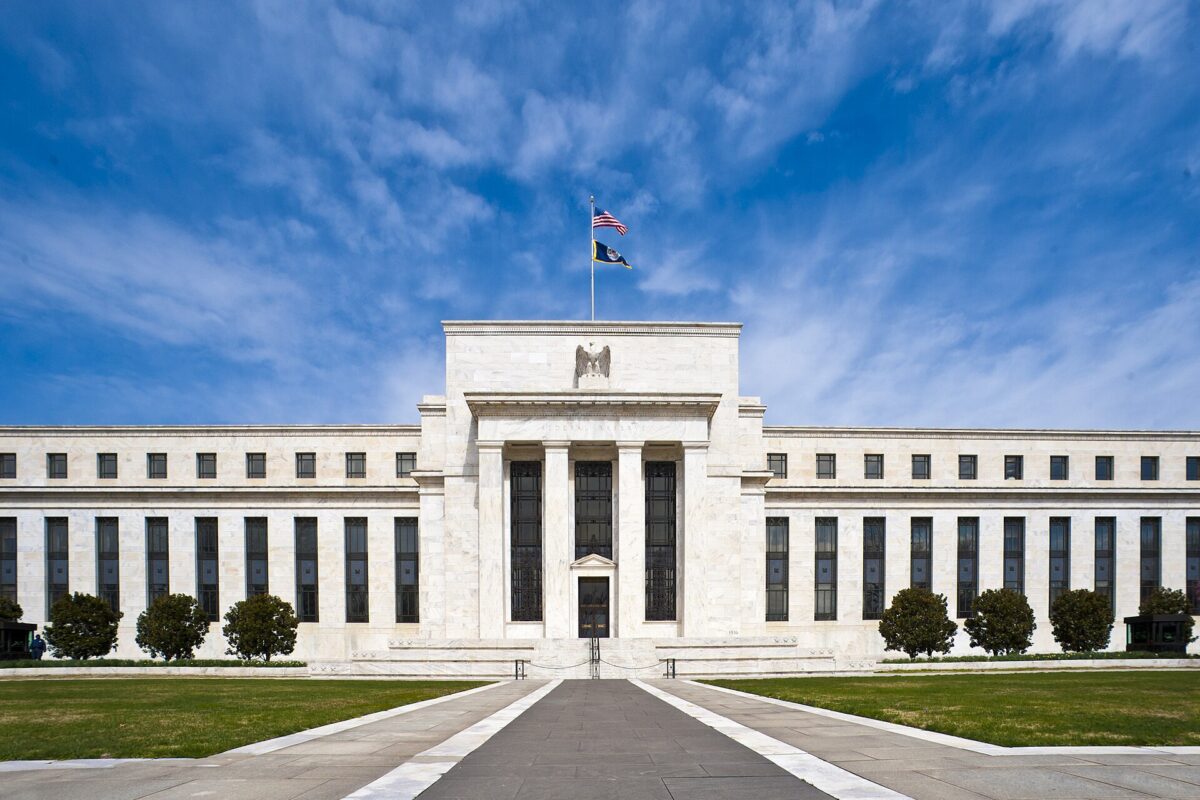
Fed Rate Decision: Rates Held at 3.75-4% With Two Dissents

The Federal Reserve left its benchmark overnight lending rate in a range of 3¾% to 4% on 28 October 2026, a decision that passed 10–2, according to the Federal Open Market Committee statement. The Fed rate decision came with two dissents in the hawkish direction: Governors Lisa D. Cook and Beth M. Hammack preferred a quarter-point increase, the statement says. Al Jazeera reports the hold was widely expected and follows a rate rise in September, the first since July 2023.

In this report

What the Fed decided

The committee kept the target range unchanged and cited its dual mandate of maximum employment and stable prices. Its statement describes activity as growing briskly, with spending holding up despite elevated uncertainty, partly linked to geopolitical events, and with strong productivity and business investment. Hiring has matched labour force growth, and unemployment has barely moved. On the balance sheet, the committee said only that it is continuing to keep ample reserves in the banking system.

Why inflation is driving the debate

The statement says “Inflation remains elevated” and that the committee wants more information before settling on the policy stance needed to bring inflation back to 2% in a timely way. Al Jazeera cites the latest consumer price report as showing annual inflation of 3.7% in September, up from 3.4% in August, with energy prices the main driver of the monthly increase. It adds that the Fed’s preferred PCE inflation gauge is due on Thursday, which is today.

The political pressure

Al Jazeera reports that Fed Vice Chair for Supervision Michelle Bowman favoured a wait-and-see approach and said she felt no urgency to act further. President Donald Trump, who has pressed for cuts, wrote on Truth Social that US interest rates should be 1% or less, according to the same report. That is the president’s stated view; it is not a forecast by the committee, which just held rates well above that level.

What it means for borrowers abroad

As an illustration, not a real case: a Vietnamese graduate student with a US dollar education loan on a variable rate should expect borrowing costs to stay near current levels while the Fed holds, and should check the loan agreement for how and when the rate resets. Students planning US study can compare costs on our US visa bulletin coverage and use the visa eligibility checker to plan a route. For how markets have been pricing the dollar, see our report on gold and dollar strength in October, and our earlier FOMC preview.

What the Fed does next

The next meeting is on 8–9 December, which Al Jazeera says will bring the final rate decision of the year. The outlet adds that current forecasts point to a quarter-point increase but does not say who made those forecasts or when, so readers should treat that as one outlet’s summary of market expectations, not as a commitment by the Fed. Two dissents for a rise at this meeting show the committee is not united on holding.

Fed decision questions

What is the Fed’s rate range now?

3¾% to 4%, unchanged after the 28 October 2026 meeting, according to the FOMC statement.

Was the vote unanimous?

No. It was 10–2, with Governors Cook and Hammack preferring a quarter-point increase.

What is the latest inflation figure?

Al Jazeera cites 3.7% annual inflation in September, up from 3.4% in August.

When is the next meeting?

8–9 December 2026, per Al Jazeera.

Did the Fed raise rates recently?

Al Jazeera reports a rise last month, the first since July 2023.

What did Trump say?

According to Al Jazeera he wrote that US rates should be 1% or less.

Sources

Image: Eccles Building, public domain, via Wikimedia Commons.

New Zealand Already Started Voting — Here’s What’s Actually at Stake

New Zealanders are already voting, days before the formal election day arrives. The New Zealand 2026 election reaches its climax on 7 November, but advance voting opened on 26 October. That gives voters nearly two weeks to cast a ballot before polls officially close.

Prime Minister Christopher Luxon announced the 7 November date back in January. He spoke to reporters at the National Party’s caucus retreat in Christchurch, according to interest.co.nz’s report on the announcement. He told coalition partners ACT and NZ First about the date the day before his public announcement. Luxon explained the timing simply: “that was the logical time.” He added that most New Zealand elections have landed in late October or early November historically. That makes this date unremarkable by past standards, even as the race itself looks closely contested. Officials also said setting the date early avoids clashes with major sporting and cultural events on the calendar, a point also covered by Sun Live.

What’s actually at stake in the New Zealand 2026 election

Luxon has been clear about his coalition preferences heading into the vote. He said National would work with ACT and NZ First again if the numbers allow it. He ruled out working with Labour, the Greens or Te Pāti Māori. His preference, in his own words, is “maximising the National Party vote.” He put it this way: “I can make a coalition work if I have to, my preference would be to make sure I’m maximising the National Party vote.”

Voters face a real choice. One path continues the current National-led coalition. The other shifts toward an alternative government built from Labour, the Greens and Te Pāti Māori. New Zealand’s mixed-member proportional voting system makes an outright majority unlikely for any single party. Coalition arithmetic will matter as much as any single party’s vote share once results come in. Minor parties crossing or missing the threshold could end up deciding which bloc actually governs.

The calendar that got New Zealand here

A specific sequence of dates shaped this election cycle. Parliament rose on 24 September. It formally dissolved on 1 October. Writ day fell on 4 October, the formal start of the campaign period. Candidate nominations closed at noon on 8 October. Advance voting began on 26 October, two days before this article published. That gives most voters a long window to cast an early ballot if they prefer avoiding election-day lines. The last day to return the official writ, closing out the formal process, is 3 December.

New Zealand’s enrollment rules also matter here. Under current electoral law, enrollment closes 13 days before election day. That cutoff point falls in late October this cycle, well before voters head to the polls on 7 November itself.

How this election fits into a busy global season

New Zealand is not the only country working through a political transition this season. Tamara News has also covered a very different kind of political transition unfolding in Venezuela this same week. Readers following immigration policy can also see how New Zealand’s own graduate work visa changes, due 16 November, will land just days after this election. Whichever government takes office will be the one implementing them.

What happens after New Zealanders finish voting

Final results typically take time to confirm fully once election day passes. Special votes and overseas ballots need processing after the initial count. If no single party wins a majority, which is the normal outcome under New Zealand’s voting system, coalition negotiations begin once preliminary results are clear. Luxon’s stated preference for a National-ACT-NZ First arrangement gives one likely template. Final seat counts will decide whether that combination actually reaches a workable majority once every vote is counted. A government typically takes office within a few weeks of a confirmed result, once coalition negotiations wrap up and ministerial positions get settled among the governing partners.

The Beehive in Wellington, the backdrop to the New Zealand 2026 election

FAQ: New Zealand 2026 election

When is New Zealand’s 2026 election?
Election day is 7 November 2026, with advance voting already open since 26 October.

Who announced the election date?
Prime Minister Christopher Luxon announced the date in January 2026, at a National Party caucus retreat in Christchurch.

Which parties does Luxon want to govern with?
Luxon has said National would work again with ACT and NZ First, while ruling out Labour, the Greens and Te Pāti Māori.

When does enrollment close for this election?
Enrollment closes 13 days before election day under current law, which falls in late October this cycle.

Will one party win a majority outright?
Unlikely. New Zealand’s mixed-member proportional system usually produces coalition governments rather than single-party majorities.

When will final results be confirmed?
Final counts typically take time after election day, since special votes and overseas ballots require additional processing before certification.

Can New Zealanders still enroll to vote?
Enrollment closed 13 days before election day under current electoral law, so late enrollment options were limited by the time advance voting opened on 26 October.

What is the mixed-member proportional system?
It is New Zealand’s voting system, which allocates parliamentary seats roughly in proportion to each party’s share of the national vote, making single-party majorities uncommon.

Meta’s Stock Just Dropped for a Reason That Should Worry Every Tech Investor

Two of the world’s biggest tech companies just gave investors a reason to pause. AI spending investor concern hit Meta and Alphabet shares this week, even after both companies reported results that beat Wall Street’s estimates on paper. The reaction shows investors are no longer just asking whether these companies can grow. They are asking whether AI spending will ever pay for itself.

Meta’s stock fell about 7% after its earnings release. The drop followed a disclosure, not a miss. Meta said its total AI-related spending could reach $635 billion over time. That number landed just ahead of Anthropic’s own planned IPO, a timing 24/7 Wall St. called a bad look for the sector. Investors read the disclosure as a signal of real financial risk, not routine capital planning.

Why AI spending investor concern hit Alphabet too

Alphabet’s stock stayed roughly flat while the S&P 500 climbed about 13% over the same stretch. That is a quiet form of underperformance. Alphabet’s cash flow is shifting too. It is moving from strongly positive to cash-negative as the company meets AI commitments now running into the hundreds of billions of dollars. That shift alone worries some investors. Alphabet built its reputation partly on generating cash reliably, year after year, and that reputation is part of what is now in question.

DeepMind, Alphabet’s flagship AI research lab, has seen a rotation of leaders recently. Outsiders have described the lab as delayed on key projects. On the commercial side, rivals have made faster progress landing big enterprise and government deals. Anthropic, for instance, has signed large companies and the federal government as customers. Alphabet’s biggest visible enterprise win by comparison is a partnership with Apple. That deal is worth about $1 billion a year to Alphabet. One report called that figure “next to nothing” next to Alphabet’s overall scale. Other coverage of this earnings week noted investors are applying this same AI-spending scrutiny across Microsoft, Amazon and Intel too, not just Meta and Alphabet.

The search cannibalization problem nobody is fixing yet

Alphabet’s core search business faces its own pressure, separate from spending concerns. Gemini-driven AI results are cannibalizing Google’s traditional search business, a trend expected to continue. Search is expected to stay strong in absolute terms. But growth is expected to slow. AI-generated answers are replacing some of the clicks that used to go through to paid search results. That combination, slower search growth plus ballooning AI capital spending, is exactly the mix that worries investors watching both companies right now.

This story connects to a wider pattern. Tamara News covered the court ruling that spared Google’s ad business from a breakup while still forcing changes, and Anthropic’s own IPO plans, both relevant backdrops to how investors are pricing Alphabet right now.

What separates AI spending investor concern from a simple sell-off

Neither Meta nor Alphabet missed its earnings estimates outright. That is the detail that makes this reaction notable. Investors are not punishing bad quarters. They are punishing spending plans and strategic uncertainty layered on top of otherwise solid results. That distinction matters for how long this pressure might last. A single bad quarter usually passes once results improve. A structural worry about whether AI spending will ever generate matching returns can linger for years, shaping how every future earnings call gets read.

The next earnings call is the real test

Both companies report again next quarter, and investors will be watching for a clearer answer on return on AI investment, not just another spending update. Meta’s $635 billion long-term figure will likely get revisited and scrutinized line by line. Alphabet’s cash flow trajectory will get similar attention, especially if it keeps moving further into negative territory. Until one of these companies shows AI spending converting cleanly into new revenue at scale, expect AI spending investor concern to keep showing up in stock reactions, earnings beat or not.

Meta headquarters building at the center of AI spending investor concern

FAQ: AI spending investor concern

Did Meta or Alphabet actually miss earnings estimates?
No. Both companies’ results were not reported as misses. The stock reactions followed spending disclosures and strategic concerns, not weak headline numbers.

How much does Meta expect to spend on AI?
Meta said its total AI-related spending could reach $635 billion over time, a figure disclosed alongside its latest earnings.

Why is Alphabet’s cash flow changing?
Alphabet is shifting from strongly cash-flow-positive toward cash-negative as it funds AI commitments that have grown into the hundreds of billions of dollars.

Is Google’s search business shrinking?
Not shrinking, but growing more slowly. Gemini-driven AI answers are cannibalizing some traditional search traffic and revenue.

How does Alphabet’s AI deal with Apple compare to rivals?
It is worth about $1 billion a year to Alphabet, which one report described as small relative to deals rivals like Anthropic have landed with large enterprises and government agencies.

Will AI spending investor concern fade next quarter?
That depends on whether either company shows clearer evidence that AI spending is converting into new revenue, rather than just rising costs.

Are other tech companies facing the same pressure?
Yes, to varying degrees. Microsoft, Amazon and other large tech companies all face similar investor questions about whether AI capital spending will generate matching returns.

Does this affect Meta and Alphabet’s day-to-day products?
Not directly, at least not yet. The pressure shows up in share prices and spending plans so far, not in changes to products people use daily.

Express Entry Draw 452: 5,000 French-Language ITAs, CRS 407

Express Entry draw 452, held on 27 October 2026, invited 5,000 candidates in the French-language proficiency category with a Comprehensive Ranking System (CRS) cut-off of 407, according to Immigration News Canada. That site says the figures still need final confirmation, and Immigration, Refugees and Citizenship Canada (IRCC) publishes the definitive results on its rounds of invitations page, which did not display the draw rows when we checked, so treat the numbers below as reported rather than confirmed.

Contents

What the draw shows

Immigration News Canada reports a tie-break of 13 July 2026 at 19:22:00 UTC, which applies to candidates with exactly 407 points: those whose profiles were submitted before that time rank first. The same source lists a provincial nominee draw the day before, number 451 on 26 October, that issued 792 invitations at a CRS of 761.

How it compares with 16 October

The previous French-language draw, number 450 on 16 October, issued 5,000 invitations at a cut-off of 435, per the same source. The new cut-off is 28 points lower. Our earlier report on the 16 October French-language draw has that background. The article also states that six French-language rounds have issued 30,000 invitations combined.

Who qualifies for the category

Candidates need at least NCLC 7 in speaking, listening, reading and writing from an approved test less than two years old, and must meet the requirements of an Express Entry program, according to Immigration News Canada. Meeting the criteria does not guarantee an invitation, since candidates are still ranked by CRS. For wider rule changes, see our report on Express Entry points and LMIA reform.

A worked example

As an illustration, not a real case: a Colombian IT specialist already in the Express Entry pool who holds a valid NCLC 7 French result and scores 410 would, on the reported cut-off, be above the line. Another candidate at exactly 407 would depend on the profile submission date against the tie-break. Use the visa eligibility checker to compare routes before you invest in language testing.

What happens next

Candidates invited must submit a complete application within the deadline in their invitation. Check IRCC’s official page for the confirmed draw data, and watch the next French-language round for any shift in the cut-off. The recent pattern in the reported data is a cut-off that fell from 435 on 16 October to 407 on 27 October with the same 5,000 invitations, which suggests candidates just under the earlier line may now be within range. That is an observation from two data points, not a forecast: cut-offs depend on the pool at the time of each draw. Candidates should keep language results valid, since the category requires a test less than two years old, and make sure their profile details are current before any draw.

Questions on draw 452

When was draw 452?

27 October 2026, as reported by Immigration News Canada.

How many invitations were issued?

5,000 in the French-language proficiency category.

What was the CRS cut-off?

407, with a tie-break of 13 July 2026 at 19:22:00 UTC.

What language level is needed?

At least NCLC 7 in all four abilities, per the same report.

Is this confirmed by IRCC?

The source says the figures require final confirmation; check IRCC’s rounds page.

What was the previous French-language cut-off?

435, in draw 450 on 16 October 2026.

Sources

Image: Toronto skyline by Taxiarchos228, Free Art License, via Wikimedia Commons.