Fed Rate Decision: Rates Held at 3.75-4% With Two Dissents

The Federal Reserve left its benchmark overnight lending rate in a range of 3¾% to 4% on 28 October 2026, a decision that passed 10–2, according to the Federal Open Market Committee statement. The Fed rate decision came with two dissents in the hawkish direction: Governors Lisa D. Cook and Beth M. Hammack preferred a quarter-point increase, the statement says. Al Jazeera reports the hold was widely expected and follows a rate rise in September, the first since July 2023.

In this report

What the Fed decided

The committee kept the target range unchanged and cited its dual mandate of maximum employment and stable prices. Its statement describes activity as growing briskly, with spending holding up despite elevated uncertainty, partly linked to geopolitical events, and with strong productivity and business investment. Hiring has matched labour force growth, and unemployment has barely moved. On the balance sheet, the committee said only that it is continuing to keep ample reserves in the banking system.

Why inflation is driving the debate

The statement says “Inflation remains elevated” and that the committee wants more information before settling on the policy stance needed to bring inflation back to 2% in a timely way. Al Jazeera cites the latest consumer price report as showing annual inflation of 3.7% in September, up from 3.4% in August, with energy prices the main driver of the monthly increase. It adds that the Fed’s preferred PCE inflation gauge is due on Thursday, which is today.

The political pressure

Al Jazeera reports that Fed Vice Chair for Supervision Michelle Bowman favoured a wait-and-see approach and said she felt no urgency to act further. President Donald Trump, who has pressed for cuts, wrote on Truth Social that US interest rates should be 1% or less, according to the same report. That is the president’s stated view; it is not a forecast by the committee, which just held rates well above that level.

What it means for borrowers abroad

As an illustration, not a real case: a Vietnamese graduate student with a US dollar education loan on a variable rate should expect borrowing costs to stay near current levels while the Fed holds, and should check the loan agreement for how and when the rate resets. Students planning US study can compare costs on our US visa bulletin coverage and use the visa eligibility checker to plan a route. For how markets have been pricing the dollar, see our report on gold and dollar strength in October, and our earlier FOMC preview.

What the Fed does next

The next meeting is on 8–9 December, which Al Jazeera says will bring the final rate decision of the year. The outlet adds that current forecasts point to a quarter-point increase but does not say who made those forecasts or when, so readers should treat that as one outlet’s summary of market expectations, not as a commitment by the Fed. Two dissents for a rise at this meeting show the committee is not united on holding.

Fed decision questions

What is the Fed’s rate range now?

3¾% to 4%, unchanged after the 28 October 2026 meeting, according to the FOMC statement.

Was the vote unanimous?

No. It was 10–2, with Governors Cook and Hammack preferring a quarter-point increase.

What is the latest inflation figure?

Al Jazeera cites 3.7% annual inflation in September, up from 3.4% in August.

When is the next meeting?

8–9 December 2026, per Al Jazeera.

Did the Fed raise rates recently?

Al Jazeera reports a rise last month, the first since July 2023.

What did Trump say?

According to Al Jazeera he wrote that US rates should be 1% or less.

Sources

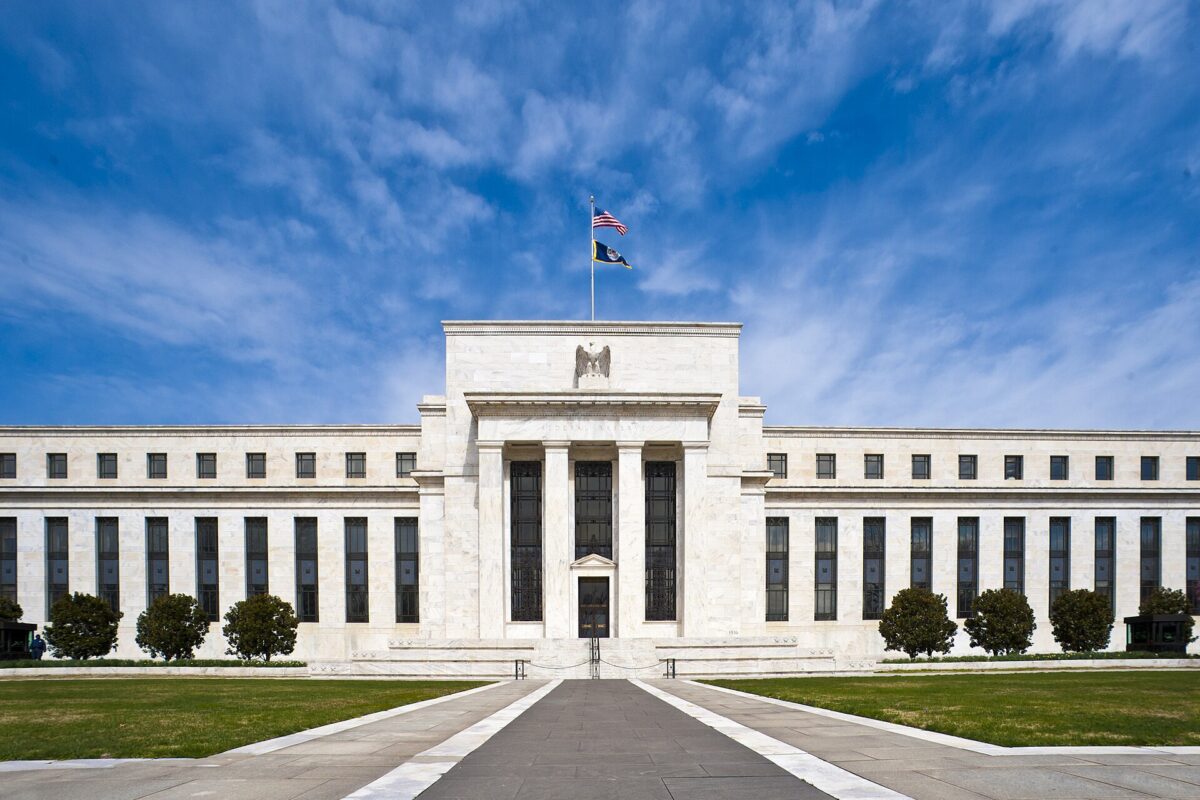
Image: Eccles Building, public domain, via Wikimedia Commons.

Express Entry Draw 452: 5,000 French-Language ITAs, CRS 407

Express Entry draw 452, held on 27 October 2026, invited 5,000 candidates in the French-language proficiency category with a Comprehensive Ranking System (CRS) cut-off of 407, according to Immigration News Canada. That site says the figures still need final confirmation, and Immigration, Refugees and Citizenship Canada (IRCC) publishes the definitive results on its rounds of invitations page, which did not display the draw rows when we checked, so treat the numbers below as reported rather than confirmed.

Contents

What the draw shows

Immigration News Canada reports a tie-break of 13 July 2026 at 19:22:00 UTC, which applies to candidates with exactly 407 points: those whose profiles were submitted before that time rank first. The same source lists a provincial nominee draw the day before, number 451 on 26 October, that issued 792 invitations at a CRS of 761.

How it compares with 16 October

The previous French-language draw, number 450 on 16 October, issued 5,000 invitations at a cut-off of 435, per the same source. The new cut-off is 28 points lower. Our earlier report on the 16 October French-language draw has that background. The article also states that six French-language rounds have issued 30,000 invitations combined.

Who qualifies for the category

Candidates need at least NCLC 7 in speaking, listening, reading and writing from an approved test less than two years old, and must meet the requirements of an Express Entry program, according to Immigration News Canada. Meeting the criteria does not guarantee an invitation, since candidates are still ranked by CRS. For wider rule changes, see our report on Express Entry points and LMIA reform.

A worked example

As an illustration, not a real case: a Colombian IT specialist already in the Express Entry pool who holds a valid NCLC 7 French result and scores 410 would, on the reported cut-off, be above the line. Another candidate at exactly 407 would depend on the profile submission date against the tie-break. Use the visa eligibility checker to compare routes before you invest in language testing.

What happens next

Candidates invited must submit a complete application within the deadline in their invitation. Check IRCC’s official page for the confirmed draw data, and watch the next French-language round for any shift in the cut-off. The recent pattern in the reported data is a cut-off that fell from 435 on 16 October to 407 on 27 October with the same 5,000 invitations, which suggests candidates just under the earlier line may now be within range. That is an observation from two data points, not a forecast: cut-offs depend on the pool at the time of each draw. Candidates should keep language results valid, since the category requires a test less than two years old, and make sure their profile details are current before any draw.

Questions on draw 452

When was draw 452?

27 October 2026, as reported by Immigration News Canada.

How many invitations were issued?

5,000 in the French-language proficiency category.

What was the CRS cut-off?

407, with a tie-break of 13 July 2026 at 19:22:00 UTC.

What language level is needed?

At least NCLC 7 in all four abilities, per the same report.

Is this confirmed by IRCC?

The source says the figures require final confirmation; check IRCC’s rounds page.

What was the previous French-language cut-off?

435, in draw 450 on 16 October 2026.

Sources

Image: Toronto skyline by Taxiarchos228, Free Art License, via Wikimedia Commons.

75-Country Immigrant Visa Pause: 318 Approvals Since Ruling

Since a federal court struck down the 75-country immigrant visa pause on 21 August 2026, only a small share of the affected cases has been decided, according to a 26 October 2026 post by the Law Offices of Jacob J. Sapochnick, a San Diego immigration firm. Citing a State Department filing of 5 October 2026, the firm says 706 affected applications were adjudicated between 21 August and 30 September: 318 approved or issued, and 388 refused on other grounds. This account comes from a law firm’s blog rather than a court document.

Contents

What the court decided

The post names the case as CLINIC v. Rubio and says the court found the suspension unlawful and ordered reconsideration of applications refused solely because of it. It says more than 43,000 applications had been refused solely under the pause, and that the ruling set no deadline for processing each case. The post does not name the specific court.

What the filing numbers show

The 706 adjudicated cases include applications refused for reasons other than the pause, so the post says it is unclear how many of the 43,000 have actually been reviewed. It adds that as of 2 October, one plaintiff’s family member had received a visa, several applicants had interviews scheduled and others had individual decisions. That is a thin basis for broad conclusions, and it is the firm’s reading of the filing.

What applicants can do

The firm suggests: determine whether your refusal rested solely on the pause or on other grounds; respond promptly to any request for documents, information or interviews; ask the consular post for a status update and whether reconsideration is available; and consult an immigration attorney about an individual mandamus suit or other action. It notes that a mandamus court generally cannot order a consular officer to approve a visa. General rules for immigrant visas are on the State Department’s immigrant visa pages.

A worked example

As an illustration, not a real case: a Pakistani family whose spouse-based immigrant visa was refused only under the pause should first check the refusal notice for its stated ground, then contact the embassy about reconsideration. Related background is in our reports on the November 2026 Visa Bulletin and the USCIS fee increase, and the visa eligibility checker can help you compare alternative routes.

What happens next

Without a processing deadline, timelines remain uncertain. Watch for further government filings in the case and for consular guidance on reconsideration. Applicants should keep copies of their refusal notices, interview letters and any correspondence with the consulate, since the firm’s advice depends on whether a refusal rested solely on the pause. Because the figures come from the firm’s reading of a filing, readers who need certainty should ask an attorney to review the filing itself.

Questions on the pause

When was the pause struck down?

21 August 2026, in CLINIC v. Rubio, according to the Sapochnick firm’s post.

How many applications were refused under it?

More than 43,000, per the same post.

How many have been decided since?

706 adjudicated between 21 August and 30 September, with 318 approved or issued and 388 refused on other grounds.

Is there a deadline for reconsideration?

The post says the ruling set none.

Is this from a court document?

No. It is a law firm’s blog summarising a State Department filing.

Should I sue?

That is a question for an immigration attorney; mandamus generally cannot compel approval.

Sources

Image: US Capitol, public domain, via Wikimedia Commons.

UAE Commercial Companies Law Amendments: What Founders Gain

The UAE Commercial Companies Law amendments in Federal Decree-Law No. 20 of 2025 change how founders can structure share capital, convert a company and move between jurisdictions. The Ministry of Economy and Tourism, in a statement published on 6 January 2026, says the decree amends 15 articles of Federal Decree-Law No. 32 of 2021 and adds one new article on transferring a company’s commercial register registration. Several of the changes still depend on Cabinet or ministerial decisions, so founders should treat them as a framework rather than a finished rulebook.

Contents

More flexible share structures

According to the ministry, LLCs can issue multiple quota classes and joint stock companies (JSCs) can issue multiple share classes subject to conditions; previously this was limited to public JSCs by Cabinet decision. Examples it lists include dividend shares, priority capital-recovery shares, preferred shares, shares with varying nominal values and restricted shares. The categories will be set by Cabinet decision. The law firm Kayrouz & Associates, in its own summary, likewise notes that the new share classes await implementing regulations.

Converting and moving a company

The ministry says companies can convert between legal forms while keeping their legal personality, and can transfer their commercial register registration between emirates, free zones and financial free zones without liquidation or re-incorporation. Conditions include compatible registration systems, no legal impediment, required approvals and publication of the transfer decision. It also says free zone and financial free zone companies can operate on the mainland through branches or representative offices.

Lock-ups, exits and shareholder rights

The lock-up on share disposal for private JSCs drops from two years to one, and a ministerial decision can reduce or waive it; private JSCs are exempt during a private placement or financial market listing. The ministry adds that drag-along and tag-along rights, forced-sale provisions and prior sale agreements can be written into the articles of LLCs and private JSCs. A new non-profit commercial company form is also created, with rules to be set by Cabinet decision.

What it means for a founder

As an illustration, not advice: an Indian software founder running a free zone company who wants to sell to mainland customers could, under the framework, use a mainland branch rather than a new entity, and an investor-backed startup could use preferred shares once the Cabinet decisions are issued. Check the current position with a licensed UAE adviser and your free zone authority before restructuring. Our company formation service page and the report on the Saudi Arabia foreign investor rules give regional context.

What happens next

The ministry says company registrations and licences are expected to rise 10 to 15 per cent in the first year after implementation. That is the government’s own projection, not an independent forecast. Watch for the Cabinet decisions on share classes and the non-profit form, and for the ministerial decision that will set in-kind valuation standards for contributions of assets other than cash. The ministry also says the amendments apply to foreign companies operating in or headquartered in the UAE and to branches or representative offices of free zone companies on the mainland, and that existing and future companies, including those in free zones, keep UAE nationality. For a founder choosing between a free zone and the mainland, the practical point is that these structural options are now written into the main law, even where the detailed rules are still to come. Until implementing decisions are issued, ask your licensing authority in writing which provisions it is applying.

Questions on the amendments

Which law was amended?

Federal Decree-Law No. 32 of 2021 on Commercial Companies, by Federal Decree-Law No. 20 of 2025.

How many articles changed?

The ministry says 15 articles were amended and one added.

Can a company move between free zones and emirates?

The ministry says registration can be transferred between emirates, free zones and financial free zones without liquidation, subject to conditions.

What happens to the private JSC lock-up?

It drops from two years to one, and can be reduced or waived by ministerial decision.

Are multiple share classes available now?

The ministry says categories will be set by Cabinet decision, so check whether the decision has been issued.

Where do I start?

With your free zone authority or mainland licensing department, and a licensed UAE adviser.

Sources

Image: Dubai Marina skyline by CT Cooper, public domain, via Wikimedia Commons.

Chevening 2027/28: Applications Closed, What Happens Next

Applications for the Chevening 2027/28 scholarships have closed, and the Chevening 2027/28 timeline now moves to assessment and interviews. The UK government’s international scholarship programme says on its application timeline page that applications opened in August 2026 and closed in October 2026, with exact deadlines on each country’s page and the application system inaccessible afterwards. Everything below comes from that official page.

Contents

The dates after the deadline

Chevening says applications are checked against eligibility criteria from October 2026, and independent reading committees assess eligible applications from mid-October 2026 to January 2027. In mid-February 2027, embassies and high commissions shortlist candidates for interview. Interviews take place at British embassies and high commissions from March to April 2027, and candidates must upload their documents at least seven working days beforehand. Interview results are announced in mid-June 2027.

The university offer deadline

Successful candidates must submit an unconditional UK university offer by 17:00 BST (UK time) on 8 July 2027, according to Chevening. Scholars then begin their studies in the UK in September or October 2027. Because this date is fixed for everyone, candidates who are shortlisted are best placed if their university applications are already well advanced rather than started after the interview.

If you missed this round

Chevening is only one route. Our reports on the Clarendon Scholarship at Oxford and on Netherlands master’s scholarships for 2027 cover options with their own timelines, and the visa eligibility checker helps you plan the study visa that follows any offer.

A worked example

As an illustration, not a real case: a Nigerian public-health doctor who applied before the October deadline should expect no news until the mid-February shortlisting window, then should prepare documents for an interview between March and April. If she is successful in June, she has until 8 July 2027 to hold an unconditional offer, so conditional offers should be converted promptly.

What happens next

The next visible step for applicants is mid-February 2027. Chevening’s timeline is built around a single annual cycle, so a candidate who is not shortlisted has no appeal step on the page we read; the practical alternative is to look at other funded routes early rather than wait for the next opening, whose dates Chevening has not yet published. Applicants should also keep their reference providers informed, because reference letters feed into the interview stage, and keep copies of all submitted documents. Confirm your own country’s dates on its Chevening page, because the programme says deadlines and interview schedules vary by location.

Questions on Chevening 2027/28

Is Chevening 2027/28 still open?

No. Chevening says applications closed in October 2026.

When are shortlists announced?

Embassies and high commissions shortlist candidates in mid-February 2027.

When are interviews?

March to April 2027 at British embassies and high commissions.

When are results announced?

Mid-June 2027, according to the timeline.

What is the university offer deadline?

17:00 BST on 8 July 2027 for an unconditional offer.

When do scholars start?

September or October 2027.

Sources

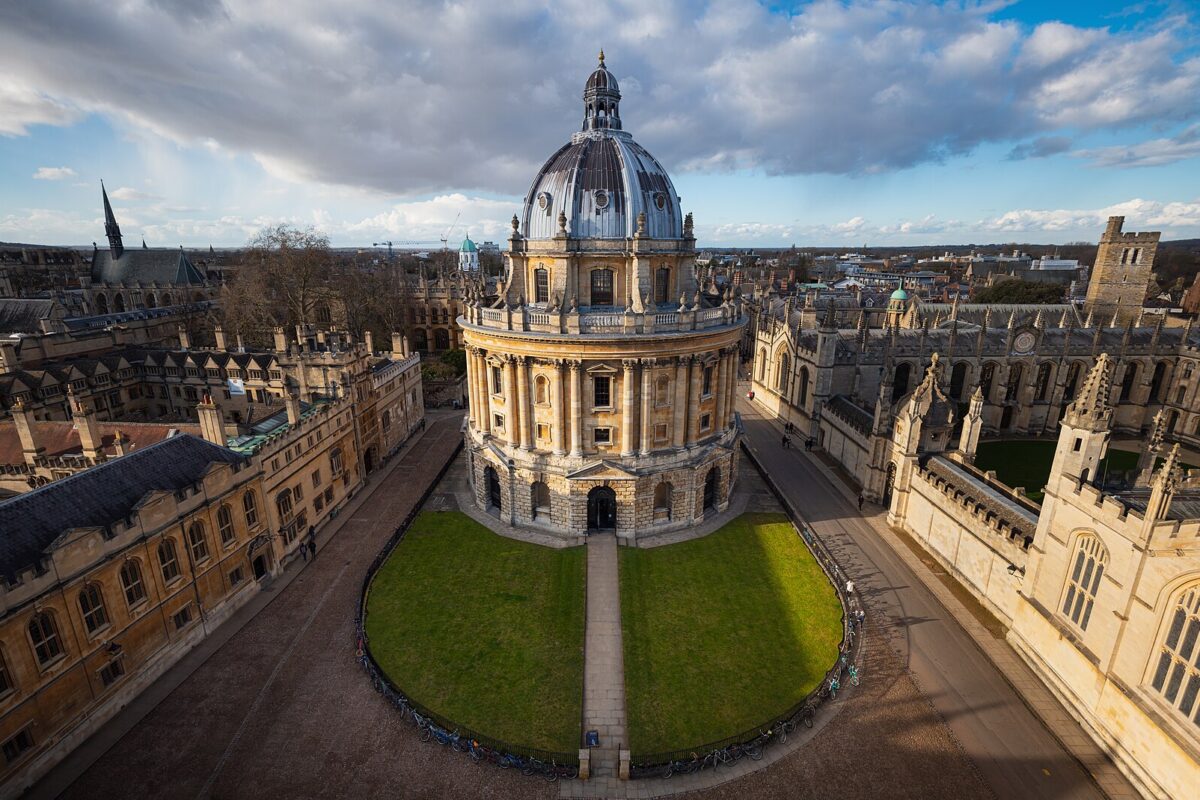
Image: Radcliffe Camera, Oxford by Julian Herzog, CC BY 4.0, via Wikimedia Commons.