Brazil Election Sunday: Lula and Bolsonaro in a Dead Heat

The Brazil presidential election takes place on Sunday 4 October 2026, and polls show a race too close to call. President Luiz Inácio Lula da Silva faces Senator Flávio Bolsonaro, and if neither wins more than 50 percent of valid votes, the top two go to a runoff on 25 October, according to Devdiscourse.

What this report covers

Where the polls stand

The most detailed recent figures come from Datafolha, which surveyed 2,002 people on 22 and 23 September. ThePrint reported first-round support of 40 percent for Lula and 36 percent for Flávio Bolsonaro, followed by Augusto Cury on 5, Ronaldo Caiado on 4 and Renan Santos on 3.

In a simulated runoff Lula led 47 to 45 percent. With a margin of error of two points, the poll described that as a technical tie. Devdiscourse notes that other surveys disagree: a BTG Pactual/Nexus poll gives Lula a slight advantage, while Quaest showed Bolsonaro ahead for the first time. Treat any single poll as a snapshot.

Who is on the ballot

Lula, aged 80 according to the Everything Briefing newsletter summary of the day’s news, is seeking a fourth non-consecutive term. Flávio Bolsonaro is the eldest son of former president Jair Bolsonaro, who is serving a 27-year sentence for attempting to overturn his 2022 election loss to Lula, as ThePrint reports.

According to an overnight brief compiled by the Foundation for Defense of Democracies citing the Associated Press, Lula and Bolsonaro both skipped a planned debate, leaving about 158 million voters without a head-to-head. That detail is secondhand, so check the AP report directly.

Why investors are watching

Devdiscourse reports that Bolsonaro’s market-friendly economic approach has drawn investor enthusiasm and helped trigger rallies in Brazilian assets. That makes the first-round result relevant beyond Brazil for anyone with exposure to emerging-market bonds, currencies or commodity exporters. For wider market context this week, see our pieces on European stocks and bond yields and US Treasury yields at the end of September.

A Brazilian founder with dollar-denominated debt, for example, would care less about who wins than about how long the uncertainty lasts. A runoff keeps the question open until 25 October.

What to watch on Sunday and after

The first thing to watch is whether either candidate clears 50 percent of valid votes. Given the polls, a runoff looks plausible, though no poll can confirm it. Official results come from Brazil’s electoral authorities; wire services and broadcasters will report early counts. If a runoff is needed, expect two more weeks of campaigning on the economy, security and the legacy of the 2022 election dispute.

Questions about the Brazil election

When is the Brazil election?

The first round is on Sunday 4 October 2026. A runoff, if needed, is scheduled for 25 October 2026.

When is a runoff needed?

If no candidate wins more than 50 percent of valid votes in the first round, the top two advance.

Who is leading in the polls?

It depends on the survey. Datafolha showed Lula ahead 40 to 36 percent in the first round; Quaest has shown Bolsonaro ahead, per Devdiscourse.

Is Jair Bolsonaro running?

No. His son, Senator Flávio Bolsonaro, is the candidate. Jair Bolsonaro is serving a 27-year sentence, ThePrint reports.

Our world coverage will carry the result once official counts are in.
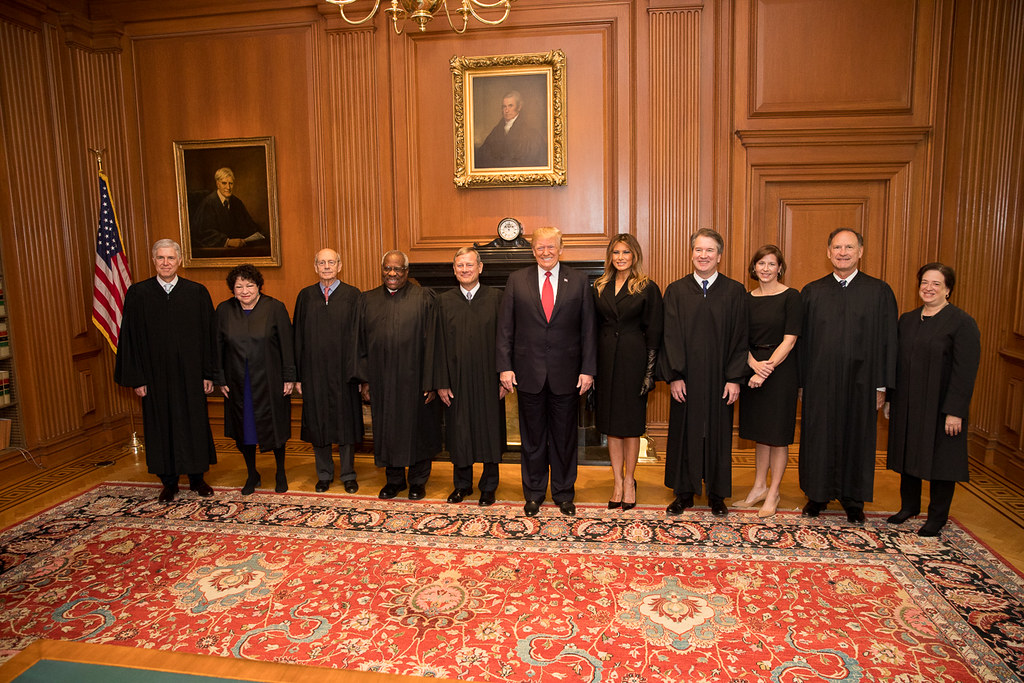
Supreme Court Takes Up Trump Immigration Detention Policy

The Supreme Court immigration detention case will decide whether people held by ICE can ask a judge for a bond hearing. The justices agreed on 1 October 2026 to review the Trump administration’s policy of detaining many immigrants without bond, according to Stateline and NBC Los Angeles. No date for oral argument has been set.

In this report

What the Supreme Court agreed to hear

The court will decide whether immigrants arrested inside the United States have a statutory or constitutional right to a bond hearing while their deportation cases proceed. NBC Los Angeles reported that the question reaches the court on a challenge brought by the ACLU, which says the outcome could affect millions of noncitizens.

Stateline identifies the case as Ricardo Barbosa da Cunha, an appeal from the 2nd U.S. Circuit. The administration put the policy in place in July 2025. It requires detention without a bond hearing for people arrested by ICE who crossed the border illegally, regardless of how long ago the crossing happened.

A deep split among the appeals courts

Stateline counts nine appeals courts against the policy, including the 2nd, 3rd, 4th, 6th, 7th, 9th, 10th and 11th circuits, and two in favour: the 5th Circuit, covering Louisiana, Mississippi and Texas, and the 8th Circuit in the Midwest. The same report says lower courts have rejected the policy more than 20,000 times, including judges appointed by Republican presidents.

The 2nd Circuit wrote that the policy would create “the broadest mass detention-without-bond mandate in our Nation’s history for millions of noncitizens.” The administration, for its part, argues that the split produces “an unworkable patchwork of inconsistent immigration enforcement” and that the 1996 immigration law supports mandatory detention.

Why bond hearings matter

A bond hearing is the point at which an immigration judge decides whether a person can wait out their case at home. Without one, detention lasts as long as the case does. A Bloomberg Law report from May put the detained population above 60,000 as of early April 2026, up from roughly 48,000 a year earlier, and quoted Georgetown Law professor Denise Gilman on what is at stake: “basic physical liberty”.

Stateline adds a caution for both sides. A ruling for the administration could entrench detention. A ruling against it would not guarantee release, because judges could still deny bond on flight-risk grounds.

What it means for people with a long US history

Consider a hypothetical case: a Mexican welder who crossed without papers a decade ago, has a steady job and family, and is arrested at a traffic stop. Under the policy as reported, he would not get a bond hearing even though he was arrested far from the border and long after entering. Under the approach most appeals courts have taken, he could ask a judge to weigh whether he is a danger or a flight risk.

That illustration is not a prediction about any real person. It shows why the date of entry and place of arrest are central to the dispute. For related changes affecting people already in the US, see our coverage of the duration-of-status injunction for F-1 students and the narrowed USCIS filing deadline extension.

What happens next

With no argument date set, a decision is unlikely in the immediate term. Until the court rules, outcomes continue to depend on the circuit where a person is held, which is exactly the patchwork the administration says it wants the justices to end. Anyone affected should speak to a licensed immigration attorney about their circuit and facts; this article is news, not legal advice. People planning travel or applications can also use the official guidance in our diversity visa update.

Questions about the detention case

Has the Supreme Court decided the case?

No. The court agreed on 1 October 2026 to hear it. No oral argument date has been announced, according to Stateline.

What is the policy being challenged?

A policy in effect since July 2025 that requires detention without a bond hearing for people arrested by ICE who crossed the border illegally, regardless of how long ago.

Which courts have ruled for the administration?

Stateline reports the 5th and 8th circuits have backed the policy, while nine other appeals courts have ruled against it.

Does a loss for the administration mean release?

Not automatically. Stateline notes judges could still deny bond on flight-risk grounds even if bond hearings are required.

Who is challenging the policy?

NBC Los Angeles reports the ACLU represents the plaintiffs.

Follow our immigration coverage for the next filing in the case, and see our report on US sanctions policy for other Washington developments this week.

Two Scholarship Deadlines, Days Apart: Chevening and DAAD in October

The DAAD scholarship deadline for most master’s and PhD awards starting in 2027 falls on 15 October 2026, according to the uni2study deadline calendar. Chevening, the UK government’s scholarship, closes sooner, at 11:00 UTC on 6 October. If you plan to apply for either, you have days, not weeks.

On this page

The DAAD scholarship deadline and how it works

The German Academic Exchange Service, known as DAAD, funds study and research in Germany. uni2study says most master’s and PhD scholarships for entry in 2027 close on 15 October 2026, and some programmes run later into October. That is a secondary source, so treat the date as a guide and check your own programme.

DAAD says on its site that you can find the various scholarship types and suitable offers in its scholarship database. Use that database to confirm the exact closing date and required documents for the award you want. See the DAAD scholarship pages.

Chevening closes first: 6 October

Chevening’s own timeline for the 2027/28 cycle is clear. Applications opened on 4 August 2026 and close on 6 October 2026 at 11:00 UTC. Late submissions are not accepted. Eligibility screening begins in October, and a reading committee reviews applications from October to January.

Shortlisted candidates are told in mid-February 2027, interviews run from March to April at British embassies, and results come in mid-June 2027. Scholars would start in the UK in September or October 2027. See the Chevening application timeline.

For more on the Chevening process, read our guide to the Chevening 2027-28 timeline.

DAAD scholarship deadline - Heidelberg old town on the Neckar at dusk

A realistic plan for the next two weeks

Start with documents. Most scholarships ask for transcripts, references, a personal statement and proof of language skills. These take time to collect, and referees need notice.

To illustrate, picture a Vietnamese engineering graduate comparing a master’s in Germany with one in the UK. They would list each award’s deadline, check the language requirement, and begin with the earliest closing date. This is a hypothetical example, not a real applicant.

Do not leave submission to the last hour. Chevening says its deadline is fixed, and the same discipline applies to DAAD.

Other scholarship rounds to watch

Erasmus Mundus Joint Masters are different. uni2study notes that each consortium sets its own timeline, and deadlines run from November 2026 to February 2027. There is no single central date, so check each programme page.

Also see the Cambridge route in our guide to Gates Cambridge 2027 deadlines. If you are weighing countries and visa routes, our visa eligibility checker is a quick place to start.

Questions on the DAAD scholarship and Chevening

When is the DAAD scholarship deadline?

uni2study says most master’s and PhD scholarships for 2027 entry close on 15 October 2026. Some programmes run later. Confirm your own programme with DAAD.

When does Chevening close?

Chevening closes on 6 October 2026 at 11:00 UTC. Late submissions are not accepted.

When are Chevening results announced?

Chevening lists mid-June 2027 for results, with interviews in March and April 2027.

Are Erasmus Mundus deadlines the same?

No. Each consortium publishes its own timeline, with deadlines between November 2026 and February 2027, according to uni2study.

Where do I find DAAD scholarships?

DAAD says its scholarship database lists the scholarship types and suitable offers.

Sources

Image: Heidelberg old town, castle and Old Bridge, photo by R. J. Mathar, Wikimedia Commons, licensed CC BY-SA 4.0. Second image: evening view of Heidelberg old town and the Neckar, photo by Hartmut Schmidt Heidelberg, Wikimedia Commons, licensed CC BY-SA 4.0.

The ICC Just Lost Its Insurer to the Fear of US Sanctions

The ICC Axa contract has ended. The International Criminal Court terminated its agreement with French insurer Axa as the Trump administration weighs sweeping sanctions on the court, Al Jazeera reported on 1 October 2026, citing the Financial Times. Axa feared that sanctions would force it to stop serving the court, and both sides called off the deal by mutual agreement.

On this page

What happened to the ICC and Axa

The Hague-based court switched to another provider, which it did not name. Axa had previously provided life and health insurance to the institution. An ICC spokesperson said Axa and the court “decided by mutual agreement to terminate the contractual relationship”.

Al Jazeera reports that the termination took effect immediately and followed months of negotiation. In the end, both sides judged the arrangement unworkable, even with European legal protections such as blocking statutes.

ICC Axa contract - the International Criminal Court building in The Hague

The sanctions threat behind the insurer exit

The report sets out a short timeline. In August 2026, the Trump administration sanctioned the ICC president and others. In late September, the Wall Street Journal reported that the White House was preparing wider sanctions. On 24 September, Trump called the court “evil” and a “rogue institution” in his address to the UN General Assembly.

The administration objects to the court’s claimed authority over countries that have not ratified its founding treaty, including the United States and Israel. Broad sanctions could bar dealings that involve US dollars, which is why a European company with global exposure would hesitate.

Why the ICC Axa contract collapsed

Sanctions law reaches far beyond the countries that impose it. A bank or insurer anywhere can be cut off from dollar payments if it deals with a sanctioned party. For a company like Axa, the risk is not the size of one contract. It is the exposure of its whole business.

EU blocking statutes are meant to shield European firms from foreign sanctions. Al Jazeera’s report suggests they did not give Axa enough comfort here. That tension is likely to matter to other suppliers of the court, from banks to software vendors.

The episode also fits a wider pattern of Washington using financial pressure. Our report on US sanctions on an Iran-linked network covers a different target but a similar tool.

What happens next for the court

The court now has to keep staff covered under a new provider and watch for further supplier exits. Only Nauru has followed Trump’s call for countries to withdraw from the ICC, according to the report, so the political isolation remains limited.

European governments are the next test. If they want the court to keep functioning, they may need to back it with stronger legal or financial protections. For how Washington and its European partners handle other security questions, see our report on the US-Denmark security pact.

Common questions on the ICC and Axa

Why did the ICC end its Axa contract?

Axa feared that looming US sanctions would force it to stop working with the court. After months of talks, both sides agreed to end the contract, according to Al Jazeera.

Which insurer is the ICC using now?

The court switched to a provider it has not named.

Has the US sanctioned the ICC?

The Trump administration sanctioned the court’s president and others in August 2026. The Wall Street Journal reported in late September that wider sanctions were being prepared.

Do EU blocking statutes protect companies?

They are designed to. In this case, the report says both parties still concluded the arrangement was not viable.

Have other countries left the ICC?

According to the report, only Nauru has followed Trump’s call to withdraw.

Sources

Image: International Criminal Court building in The Hague, photos by OSeveno, Wikimedia Commons, licensed CC BY-SA 3.0.

Canada Must Warn You Before Refusing a Work Permit Over a Job Offer

A Canada work permit refusal over a doubtful job offer now needs a warning first. Immigration, Refugees and Citizenship Canada (IRCC) updated its instructions on 17 September 2026 so that officers must send a procedural fairness letter before refusing an employer-specific work permit on genuineness grounds, according to CIC News.

Inside this guide

What changed for a Canada work permit refusal

IRCC’s updated bulletin, “Assessing the genuineness of the offer of employment on a work permit application”, ends the practice of summary refusals where officers doubt a job offer. Officers must now issue a procedural fairness letter, or PFL, and place the file on hold while they wait for an answer. The letter must set out the specific concerns about the genuineness of the offer.

You can read the rules in the official IRCC bulletin.

How long employers have to respond

CIC News reports that employers get 15 days, or the applicable office standard, to answer with documents. A 30-day review window then follows the employer’s deadline, during which officers assess the response.

Employment contracts are optional but officers may review them if submitted. In practice, strong evidence of a real business, real duties and real pay is the best defence.

Canada work permit refusal - Toronto skyline at sunset

Who the new Canada work permit rules cover

The change applies to all employer-specific work permit applicants. That includes workers under the International Mobility Program, whose permits are exempt from a labour market impact assessment, and applicants under the Temporary Foreign Worker Program. Employers who sponsor foreign workers are affected too.

To illustrate, imagine a Filipino care worker applying for a live-in caregiver role. The update exempts live-in caregivers from the “active engagement in business” requirement. That is an example of how the rules apply, not a real case.

The bulletin also removes physical location requirements for Canadian worksites, so home-based businesses can qualify. It clarifies that shell businesses used to bring foreign nationals into the country do not count as operating businesses.

What applicants should do next

Prepare your paperwork before you apply. Make sure the employer can show real operations, payroll records and a clear job description. If a PFL arrives, answer within the deadline and address each concern directly.

For wider context on timing, read our updates on Canada processing times and the latest Express Entry draw. You can also check your options with our visa eligibility checker.

Your Canada work permit questions answered

When did the Canada work permit instructions change?

IRCC published the updated instructions on 17 September 2026, according to CIC News.

What is a procedural fairness letter?

It is a letter in which an officer sets out specific concerns about your application and gives you a chance to respond before a decision.

How long do employers have to respond?

15 days, or the applicable office standard, followed by a 30-day review window.

Are home-based businesses allowed now?

Yes. The update removes physical location requirements and says home-based businesses can qualify.

Do live-in caregivers have to show active engagement in the business?

No. Live-in caregivers are exempt from that requirement under the update.

Sources

Image: Toronto skyline at night by Wladyslaw, Wikimedia Commons, licensed CC BY-SA 3.0. Second image: Toronto skyline at sunset by Jchmrt, Wikimedia Commons, licensed CC BY-SA 4.0.