Clarendon Scholarship Oxford 2027-28: Deadlines and How It Works

The Clarendon Scholarship Oxford programme funds more than 200 new postgraduate students a year, and you are considered automatically if you apply to your course by its December or January deadline. Oxford’s own Clarendon page says no separate application is needed. With the 2027-28 cycle open, the practical task is to find your course’s exact deadline and apply on time.

In this guide

What the scholarship covers

According to Oxford, the scholarship pays course fees plus a grant for living expenses for the period of fee liability. It is awarded for outstanding academic merit and potential, and Oxford says there are over 200 new, fully funded scholarships each year. A third-party guide, Opportunity Inside, adds that the living grant is at least the UK Research and Innovation doctoral minimum, and prints a figure of £20,780 for 2025-26 while advising that the 2027-28 amount be confirmed. Treat that figure as a guide rather than a promise, since we could not verify it on an Oxford page.

Who is considered

The same guide says any nationality is eligible, with no country quota, for new full-time or part-time Oxford master’s and DPhil courses in any subject. It says departments nominate candidates, deferred offers are not considered, and continuing the same Oxford degree is not funded. Oxford’s page confirms the key rule: automatic consideration for those who meet the December or January deadline.

Consider a hypothetical case. Ngozi is a Nigerian public-health graduate who plans a one-year master’s in Oxford. Because the scholarship is automatic, her task is not to write a separate essay but to submit a strong course application, with references and transcripts in place, before the deadline for her course. If she misses that deadline, she is not considered for Clarendon funding in that cycle.

Deadlines for 2027-28 entry

Oxford’s page says only that the relevant deadline is in December or January, depending on the course, and does not list dates. The third-party guide lists 26 January 2027 in its details box, with a noon UK cut-off, and says applications opened in September 2026. It also says divisions meet in February or March 2027 and most first offers go out by the end of April 2027. Because these are secondary reports, check the exact date on your course page in the Oxford course directory before relying on them.

How to apply

Identify your course and its deadline, prepare the full application, and submit it by noon UK time on the day. Do not wait for the last hour, since documents and references are part of the deadline. After that, departments nominate candidates and there is no separate scholarship form to fill in. If you are choosing between several UK courses, the visa eligibility checker can help you plan the study-visa side alongside funding.

Other funding routes

Clarendon is one of several routes for postgraduate study abroad. Tamara News has also covered the Gates Cambridge deadlines, the Commonwealth master’s scholarships, the Chevening timeline and the Erasmus Mundus joint master’s programmes. Several have passed or are close, so apply to more than one where you qualify.

Clarendon questions

Do I need a separate Clarendon application?

No. Oxford says you are automatically considered if you apply by the December or January deadline for your course.

What does it cover?

Oxford says course fees plus a grant for living expenses for the period of fee liability.

How many scholarships are there?

Oxford says over 200 new, fully funded scholarships each year.

What is the deadline?

December 2026 or January 2027, depending on your course. A third-party guide lists 26 January 2027 for one deadline, so check your course page.

Is there a nationality restriction?

The third-party guide says any nationality can be considered, with no country quota.

Can I defer an offer?

The third-party guide says deferred offers are not considered for the scholarship.

Sources

Google Is Nvidia’s Biggest Rival and Biggest Customer — Here’s Its Newest Bet

Google Cloud and Nvidia made an announcement at GTC Berlin 2026. Google Cloud Vera Rubin instances, known as A5X, will become generally available next month. The bare-metal instances run on Nvidia’s Vera Rubin NVL72 rack-scale systems. They target agentic inference and large-scale reinforcement learning workloads. The announcement extends a cloud partnership between the two companies that spans more than a decade.

Fiber optic cables representing the network behind Google Cloud Vera Rubin instances

What the Google Cloud Vera Rubin instances offer

A5X instances combine several pieces of hardware. That includes Nvidia Vera Rubin NVL72 systems, Nvidia ConnectX-9 SuperNICs, Google Cloud’s Virgo Network, and the company’s fourth-generation liquid cooling. Google Cloud’s AI Hypercomputer architecture ties it all together. That architecture combines compute, networking and storage. Nvidia described the result as “an integrated platform for training, inference and large-scale reinforcement learning” for cloud customers.

Google plans to scale the deployment to as many as 960,000 Rubin GPUs spread across multiple sites. Commentary on the announcement notes something important, though. Both an 80,000-GPU single-site figure and the 960,000 total are architectural targets. They are not capacity that is currently installed. General availability is set for November 2026. European availability is planned as part of the rollout.

Who is already using the platform

Ineffable Intelligence, a London-based company founded by David Silver, became the first customer with early access to A5X. It is using the platform for large-scale reinforcement learning. “We’re building superlearners that continually improve through their own experience,” Silver said. Advertising and marketing firm WPP also demonstrated a creative agent architecture on A5X. In initial tests, workloads that typically required a multi-node cluster ran on a single instance instead.

Both early customers represent different bets on what A5X is for. Ineffable’s reinforcement-learning focus tests the platform’s claims about training throughput. WPP’s single-instance result, on the other hand, speaks more directly to the cost and simplicity pitch Nvidia and Google are making to enterprise buyers.

Confidential computing and related announcements

Alongside A5X, Google Cloud said it will offer Nvidia Confidential Computing at rack scale. This runs on bare-metal A4X Max instances built on GB300 NVL72 hardware. Confidential Computing is also set to reach general availability on G4 virtual machines. Those machines use RTX PRO 6000 Blackwell Server Edition GPUs. Early users include Vertebrae, Polaris Cloud and Confidential Core AI. Google and Nvidia also said they are exploring Nvidia’s DSX MaxLPS technology. The goal is improving performance per watt across Google’s data centers.

Why this matters beyond one product launch

The announcement highlights an unusual dynamic in cloud computing. Google is simultaneously one of Nvidia’s largest customers and one of its most direct competitors. That rivalry comes from Google’s own Tensor Processing Units and Gemini AI models. Commentary on the GTC Berlin announcements argues that competition among AI infrastructure providers is shifting. The focus is moving away from raw chip specifications. It is moving toward total factory economics instead: networking, storage, power efficiency and cost per generated token. That shift explains something specific. Features like Virgo Network and fourth-generation liquid cooling got equal billing with the Vera Rubin chips themselves.

What happens before general availability

Between now and the November rollout, Google and Nvidia will need to validate the platform at larger scale. That means moving beyond early-access customers like Ineffable Intelligence and WPP. European availability timing is one detail to watch. Nvidia and Google described it only as “planned,” language that leaves room for it to firm up or slip in the coming weeks. Pricing details were also not disclosed at the Berlin announcement. Buyers evaluating the platform will likely wait for those numbers before committing to anything. For enterprises already running workloads on Google Cloud’s existing AI Hypercomputer instances, the practical question will be how A5X pricing compares once it is published, and whether migrating existing workloads makes financial sense on top of the performance gains Nvidia and Google are promoting. That cost comparison, more than the headline specifications, is likely to decide how quickly early interest turns into paying customers. Neither company has said when that pricing information will surface, so for now the comparison remains theoretical.

More cloud and AI coverage

AI infrastructure news moved quickly this week across the industry. See our reports on Nvidia and Huawei’s AI chip market share in China, Anthropic’s Q3 2026 revenue results, and Anthropic’s warning on self-replicating AI systems.

Google Cloud Vera Rubin: frequently asked questions

  • When do Google Cloud Vera Rubin instances become available? Google says A5X instances will reach general availability in November 2026, with European availability also planned.
  • What hardware powers the A5X instances? A5X runs on Nvidia Vera Rubin NVL72 rack-scale systems with ConnectX-9 SuperNICs, integrated into Google Cloud’s AI Hypercomputer.
  • How many GPUs does Google plan to deploy? Google’s architectural target is up to 960,000 Rubin GPUs across multiple sites, though this is a planning figure, not installed capacity.
  • Who has early access to the platform? London-based Ineffable Intelligence and advertising firm WPP are named early-access customers.
  • Is Google a competitor or customer of Nvidia? Both. Google buys Nvidia GPUs for cloud customers while also developing its own competing Tensor Processing Units and Gemini models.
  • Was pricing announced for A5X? No. Nvidia and Google did not disclose pricing details at the GTC Berlin announcement.

References and sources

Tesla Beat Delivery Estimates — So Why Did Profit Drop 43%?

Tesla released its Tesla Q3 2026 earnings on October 21, after market close. Revenue came in at $28.05 billion, flat compared with $28.1 billion a year earlier and in line with the roughly $28.06 billion analysts expected. Deliveries reached 486,532 vehicles, down 2.1% year over year but well above the 461,974 consensus estimate.

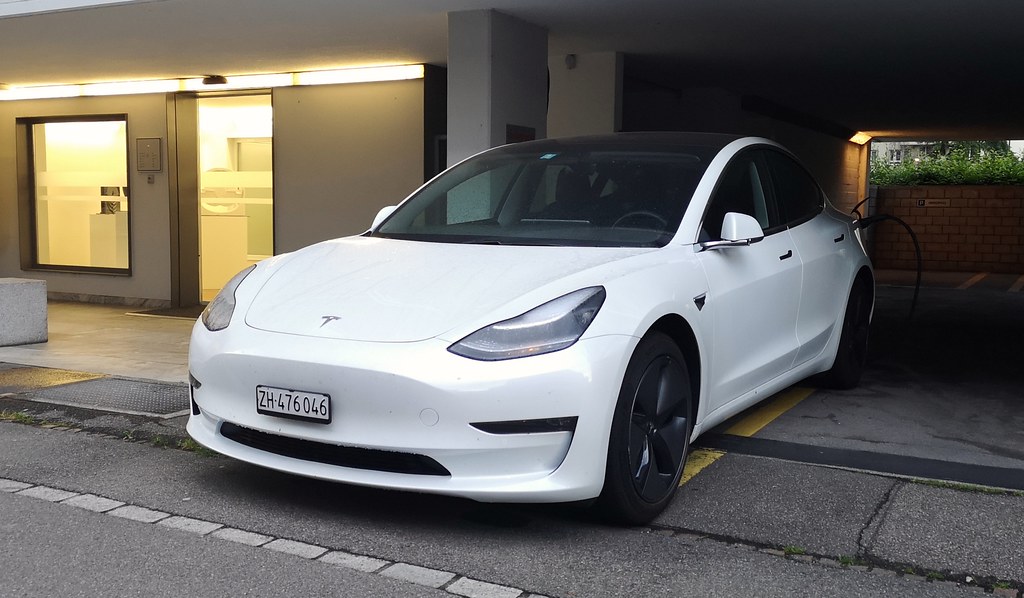
A Tesla Model 3, part of the lineup covered in the Tesla Q3 2026 earnings report

The headline numbers behind the Tesla Q3 2026 earnings

Production totaled 464,391 vehicles. That means Tesla sold more cars than it built in the quarter, trimming inventory by 22,141 units. Days of supply fell to 11 from 15 in the second quarter. Energy storage deployments reached 13.7 gigawatt-hours. That was up from 12.5 GWh a year ago but short of the roughly 15.9 GWh analysts had forecast.

Full self-driving subscriptions climbed 67% to 1.74 million active users. That figure includes upfront purchases, as defined in CEO Elon Musk’s 2025 pay package. Tesla’s robotaxi fleet passed nearly 2 million cumulative unsupervised miles by quarter-end. That milestone came about a month after the Cybercab model joined the Austin fleet.

Where the profit numbers tell a different story

Non-GAAP earnings per share hit $0.48. That beat the $0.45 consensus but was down 4% from $0.50 a year earlier. GAAP net income fell 43% to $787 million, or $0.22 per share. Operating income dropped 56% to $718 million. That pushed the operating margin down to 2.6% from 5.8% a year ago.

Operating expenses rose 39% to $4.78 billion. Research and development spending jumped 69% to $2.76 billion. Stock-based compensation totaled $1.17 billion on top of that. Regulatory credit revenue, which has cushioned Tesla’s margins in past quarters, fell 73% to $113 million from $417 million a year earlier.

Total gross margin did improve. It rose to 19.6% from 18.0% a year ago and 16.8% in the second quarter. Automotive gross margin excluding credits reached 18.1%, up from 15.4% a year earlier. Tesla said “battery availability continued to be the limiting factor in increasing auto volumes in the quarter.” That points to a supply constraint rather than weak demand.

Wall Street’s initial reaction was mixed. Several analysts noted that the delivery beat masked a weaker profit picture, while others pointed to the improving gross margin trend as evidence the battery bottleneck is easing gradually rather than worsening. The split in reactions reflects a broader debate among Tesla watchers about whether volume growth or margin recovery should be weighted more heavily when judging the company’s quarter. Bulls point to the delivery beat and improving margin trend as signs the worst of the battery constraint is over. Bears counter with a simpler fact: a 43% drop in net income is hard to wave away.

Energy and services move in opposite directions

Energy revenue fell 16% to $2.88 billion. Tesla partly attributed that drop to tariff-related customer refunds. Services and other revenue told a brighter story. It rose 33% to $4.61 billion, with a record $734 million in gross profit. That suggests Tesla’s repair, charging and software businesses are scaling faster than vehicle sales.

Spending, cash and what comes next

Capital expenditure reached $4.73 billion in the quarter. That was down from $5.79 billion in the second quarter but up sharply from $2.25 billion a year earlier. Nine-month capex now totals $13.01 billion. Free cash flow came in at $1.53 billion, a reversal from negative $1.09 billion in the second quarter. It still remained well below the $3.99 billion generated a year ago. Tesla ended the quarter with $45.4 billion in cash and investments.

Management had previously guided to more than $25 billion in 2026 capex. It did not update that figure in the Q3 letter. Hitting it would require roughly $12 billion in fourth-quarter spending alone, a sharp jump from recent quarterly totals. Tesla also said it ended the quarter with “the largest backlog for our passenger vehicles in four years.” That detail points to demand outpacing what battery supply currently allows the company to build. How quickly Tesla can resolve that bottleneck, rather than any single quarter’s delivery number, is likely to be the key variable determining whether margins recover meaningfully in 2027. Investors will get their next read on that question soon. Tesla reports fourth-quarter results early next year. That report will also show the final tally against management’s full-year capex target.

More EV and auto industry coverage

For more on this earnings season, read our reports on Boeing’s Q3 2026 delivery recovery, Goldman Sachs and Wells Fargo’s Q3 results, and the IMF’s 2026 global growth forecast.

Tesla earnings: frequently asked questions

  • Did Tesla beat earnings estimates? Tesla’s non-GAAP EPS of $0.48 beat the $0.45 consensus, and deliveries of 486,532 topped the 461,974 estimate.
  • Why did Tesla’s profit fall despite beating estimates? GAAP net income dropped 43% because operating expenses rose 39%, led by a 69% jump in R&D spending, and regulatory credit revenue fell 73%.
  • What limited Tesla’s vehicle production? Tesla said battery availability was the limiting factor on auto volumes during the quarter.
  • How many FSD subscribers does Tesla have? Active FSD subscriptions reached 1.74 million, up 67% year over year, including upfront purchases.
  • Did Tesla update its 2026 capex guidance? No. Tesla’s prior guidance of more than $25 billion for 2026 was not revised in the Q3 letter.
  • How much cash does Tesla have? Tesla ended Q3 2026 with $45.4 billion in cash and investments.

Reporting sources

Putin’s Adviser Just Named a Window for Peace Talks to Restart

Russia has agreed “in principle” to resume US-mediated Russia Ukraine peace talks after November 10, 2026, according to Yuri Ushakov, President Vladimir Putin’s foreign affairs adviser. Ushakov made the statement from St Petersburg on October 21, after US envoy Steve Witkoff met Putin there. No exact resumption date has been set.

The Kremlin in Moscow, where Russia Ukraine peace talks are expected to resume

What Russia’s envoy actually said

Ushakov said Putin agreed in principle to restart the US-brokered process once the November 10 window passes. He also said the Kremlin wants the talks to cover a “security framework” for Russia and Ukraine once the war ends. That goes beyond a simple ceasefire line. The framing matters. Previous rounds stalled partly because Moscow and Kyiv disagreed on timing. They could not agree on whether security guarantees should be negotiated before or after a ceasefire takes effect.

Witkoff’s trip follows months of on-and-off diplomacy. US President Donald Trump has pressed Ukrainian President Volodymyr Zelenskyy to reach a deal. Kyiv, meanwhile, has resisted terms it views as rewarding Russian territorial gains. The Kremlin’s own public statements have swung between two poles: describing talks as paused, and describing them as open. That inconsistency is part of why Ushakov’s “in principle” language is being read carefully rather than taken as a firm commitment.

Why the Russia Ukraine peace talks keep stalling

The core disagreement has not changed in months. Russia wants recognition of the territorial control it has established since 2022. It also wants binding limits on Ukraine’s future military alignment. Ukraine, for its part, wants enforceable security guarantees from Western partners first. Kyiv will not give up any claim to occupied territory without them. Both sides have used pauses in contact as leverage. Each blames the other for the lack of progress rather than announcing a formal end to diplomacy.

That pattern explains the gap in the calendar here too. Ushakov’s statement sets no fixed meeting date. It names only a window after which talks could resume. Diplomats involved in the process have learned not to publicize exact dates too early. Earlier announced meetings have been pushed back or canceled more than once, so caution has become the norm.

What the November 10 window signals

Picking a date five weeks out gives both sides room to maneuver. Neither side has to commit to an immediate session. It also lines up with other diplomatic activity. Envoys have been traveling between capitals in recent weeks, testing support for a US-drafted framework. A resumption after November 10 would build on that groundwork rather than restart negotiations from scratch.

Ukrainian officials have not issued a matching public statement confirming the same timeline. That silence is typical of this conflict’s diplomacy. Russia and the US tend to announce process details first. Kyiv usually responds separately, once it has reviewed what was actually agreed, rather than confirming details in real time.

Analysts following the talks note that this pattern of delayed confirmation has repeated through most of 2026. European officials involved in the broader sanctions track say they expect Kyiv to wait until closer to November 10 before commenting publicly, so as not to create expectations the Kremlin could later walk back.

What happens between now and the next round

Three things are worth watching before November 10. First, does Witkoff or another US envoy make a parallel visit to Kyiv to brief Zelenskyy’s government on what Ushakov described? Second, does Russia or Ukraine carry out any major battlefield offensive in the interim that could harden either side’s position? Third, does the “security framework” language Ushakov used become a formal agenda item, or does it fade once talks actually begin?

Given how many previous rounds have stalled at the agenda stage, a resumption date alone does not guarantee progress. Still, it marks something new. This is the first time since the St Petersburg meeting that both sides have pointed to the same month. Officials close to the talks caution against reading too much into that alignment, but after months of mismatched signals, even a shared reference point counts as modest progress.

Related coverage

Tamara News is tracking the diplomatic and economic fallout from the war closely. See our coverage of the EU summit on frozen Russian assets, the one-year assessment of the Gaza ceasefire, and our report on the IMF’s 2026 global growth forecast.

Russia-Ukraine peace talks: frequently asked questions

  • Who said Russia agreed to resume talks? Yuri Ushakov, Putin’s foreign affairs adviser, said Russia agreed “in principle” to resume talks after November 10, 2026.
  • Is a specific date set for the next round? No. Ushakov named only a window after November 10, with no confirmed meeting date.
  • Who did Putin meet with in St Petersburg? US envoy Steve Witkoff met Putin in St Petersburg on October 21, 2026, ahead of Ushakov’s statement.
  • What does Russia want the talks to cover? Ushakov said Russia wants to discuss a security framework for Russia and Ukraine after the war ends, not only a ceasefire.
  • Has Ukraine confirmed the same timeline? Ukrainian officials had not issued a matching public statement on the November 10 window as of this report.
  • Why have past talks stalled? Russia and Ukraine disagree over territorial recognition and the timing of security guarantees, a gap that has repeatedly delayed previous rounds.

Where this report comes from

China Visa-Free Entry Ends 31 December 2026: What to Know

China visa-free entry 2026 is scheduled to end for most eligible countries at 24:00 Beijing time on 31 December 2026, and no extension for 2027 had been announced as of 20 October, according to a third-party guide from VisaPilot. Russia’s separate arrangement runs to 31 December 2027, while Brunei has no end date. Travellers planning trips that straddle New Year should check the position before booking.

At a glance

What the guide reports

VisaPilot, a travel-visa information site rather than a government body, says the 30-day visa-free arrangement for ordinary passport holders ends at the close of 31 December 2026 for most countries on the list. It says it found no extension notice in the sources it checked on 20 October. That is the main fact for travellers: today the end date is published, and a renewal has not been. We have not independently confirmed the guide’s reading, so use the official channels below for decisions.

Which countries are affected

The guide counts 50 countries on the 30-day list, with 45 named in the latest extension notice, including France, Germany, Italy, Spain, the Netherlands, Australia, New Zealand, Japan, South Korea, Brazil and Saudi Arabia. It says Sweden, the United Kingdom and Canada also end on 31 December 2026, and that the UK and Canada were added from 17 February 2026. Its list is partial, so check the full list for your passport.

Consider a hypothetical case. Rafael is a Brazilian founder who wants to visit a supplier in Shenzhen in early December and again in January. Under the dates above, a December visit would fall inside the visa-free window if his nationality qualifies, while a January visit would not unless the policy is extended or he obtains a visa. He would need to plan the second trip on the assumption that a visa may be required.

Stay limits and what is excluded

According to the guide, visa-free stays are up to 30 days for business, tourism, family or friends, exchange or transit. Work, study and news reporting always require a visa. The separate 240-hour transit policy has no stated end date, but requires onward travel to a third country or region, a confirmed ticket and entry through a designated port. Rules on false statements at the border are covered in our report on China’s entry-ban rules.

What is still unknown

Whether the policy will be extended, for which countries and on what terms, is not stated. The guide also does not say how a stay that begins in late December and ends in January would be treated, and suggests asking the embassy or the 12367 immigration hotline. The National Immigration Administration’s English site, en.nia.gov.cn, lists a notice on adding Kyrgyzstan and Vietnam to the 240-hour transit list, but our review of its front page found no notice about extending visa-free entry beyond 2026.

How to plan a trip

If you travel before 31 December, check that your nationality is still on the list and that your stay fits within 30 days. If your trip runs into 2027, treat visa-free entry as unconfirmed and look at the visa route in parallel. Keep refundable bookings where you can. Official statements on policy changes appear through the Ministry of Foreign Affairs at fmprc.gov.cn and the embassy or visa centre in your country. If you are comparing several destinations, the visa eligibility checker can help you see which entry route fits.

China visa-free questions

When does China’s visa-free entry end?

VisaPilot reports it ends at 24:00 Beijing time on 31 December 2026 for most listed countries, with Russia running to 31 December 2027.

Has it been extended into 2027?

As of 20 October 2026, VisaPilot found no extension announced in the sources it checked. Official confirmation should come from Chinese authorities.

How long can I stay?

Up to 30 days for ordinary passport holders visiting for business, tourism, family or friends, exchange or transit, according to the guide.

Can I work or study visa-free?

No. The guide says work, study and news reporting always require a visa.

Does the 240-hour transit policy also end?

VisaPilot says it has no stated end date. It requires onward travel to a third country or region, a confirmed ticket and a designated port.

Where should I confirm my own position?

Check the National Immigration Administration, the Ministry of Foreign Affairs, or the Chinese embassy or visa centre in your country, or call the 12367 hotline.

Sources