Venezuela’s Biggest Protest in Two Years Just Happened — Here’s What Changed

Thousands of Venezuelans marched in several cities on October 22, 2026, to demand free elections. Reuters called it the first nationwide opposition protest in nearly two years. The Venezuela election protests reached Caracas, Valencia, Maracay, San Cristobal and Maracaibo. They came nine months after US forces captured President Nicolas Maduro in a January 2026 military raid.

The opposition movement Vente Venezuela organized the demonstrations. Its leader is Maria Corina Machado, winner of the Nobel Peace Prize. Machado has lived abroad for nearly a year. She went into hiding after the contested 2024 election. She says a vote must happen by July 2027.

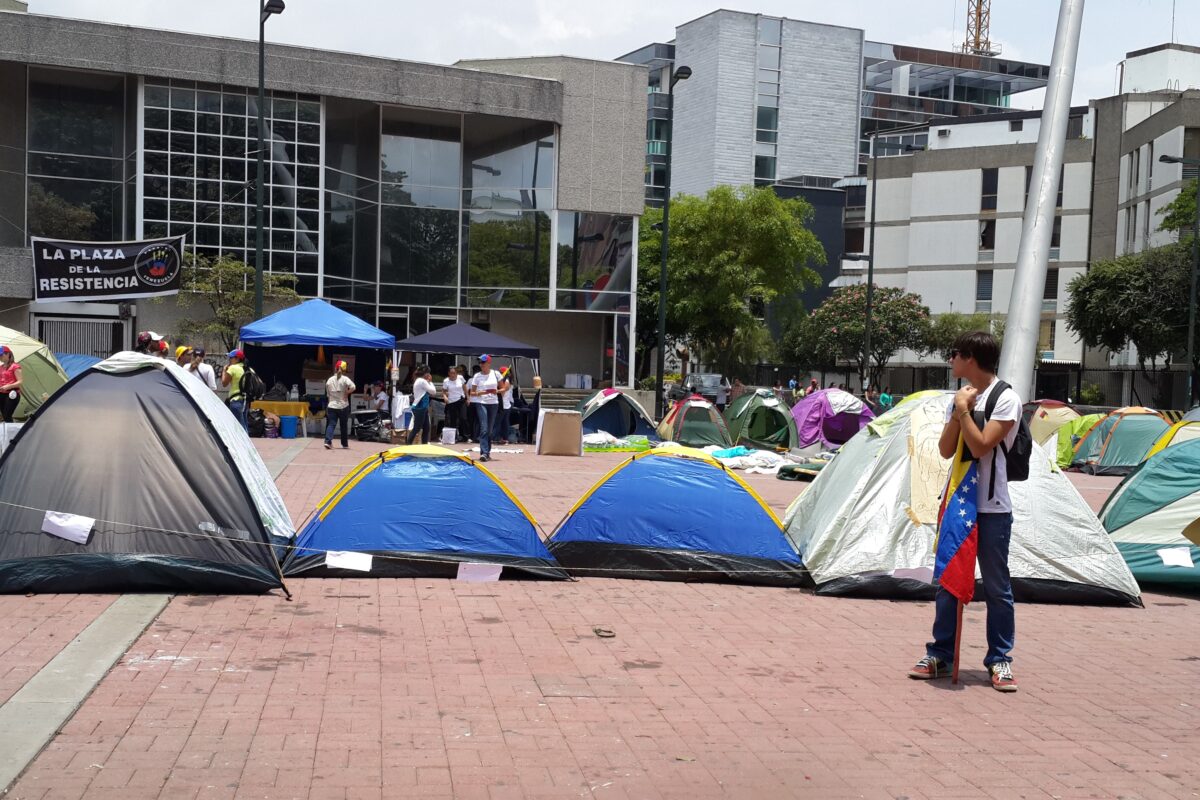
Venezuela election protests demonstrator waving the national flag in Caracas

What triggered the Venezuela election protests

No date has been set for a vote to choose Maduro’s successor. US President Donald Trump and acting President Delcy Rodriguez have both said elections will happen eventually. But neither has named a date. That open-ended promise, combined with the approaching anniversary of Maduro’s removal, pushed Machado’s movement back onto the streets after a long quiet period.

Government security forces kept a minimal presence at protest sites on Thursday. In several smaller cities, demonstrators dispersed before nightfall. The ruling Socialist Party, known as the PSUV, held its own march in Caracas the same day. That march was nominally timed to mark Breast Cancer Awareness Month. Interior Minister Diosdado Cabello attended it, and state television covered the event live. The opposition moved its gathering to a nearby location instead of confronting the PSUV march directly.

Eighteen-year-old cosmetology student Leosmary Hernandez joined the gathering in Maracay. She told reporters: “Seeing this makes me happy because I know change is possible.”

From Maduro’s capture to an interim government

The PSUV has governed Venezuela since 1999. Hugo Chavez led the party first, and Maduro succeeded him. US forces captured Maduro in the January 2026 raid. He and his wife, Cilia Flores, now face drug and torture charges in the United States. Both have pleaded not guilty. Delcy Rodriguez, Maduro’s former vice president, has led the country as interim president since January 3, 2026.

Washington backs Rodriguez’s government and holds a major stake in Venezuela’s oil sector. US officials are pressing her administration for reforms. Talks between part of the opposition and the interim government, backed by Washington, aim to overhaul the top court and electoral council before any vote takes place. The latest session happened this month. Machado’s movement is not part of those talks, though. Participants say the changes could still take a long time to complete.

The dispute traces back to the 2024 presidential election. Opposition figure Edmundo Gonzalez Urrutia says he won, based on tallies the opposition collected at polling stations. The government never released a full vote count. It backed Maduro’s victory instead, a result the country’s courts and electoral authority upheld at the time.

Human rights record colors the standoff

The PSUV has faced accusations of human rights abuses against dissidents. Rights groups cite arbitrary arrest, imprisonment and torture. Security forces have been deployed against protesters in the past, sometimes violently. That history explains why Thursday’s muted police presence drew attention on its own. For many Venezuelans, a protest that ends without mass arrests is itself notable.

International reaction to the protest was limited but watchful. Diplomats involved in the Washington-backed reform talks said they were monitoring the demonstrations for signs of wider unrest. Venezuelan rights organizations said the small number of detentions, compared with past crackdowns, suggested the interim government was wary of drawing fresh international criticism so soon after Maduro’s removal.

What happens next for Venezuela’s transition

Three things will determine whether Thursday’s protest marks a turning point or a one-off event. First, do the reform talks between the interim government and part of the opposition produce an actual electoral council and court overhaul, rather than another extended negotiation? Second, does Machado’s movement find a way into that process, or does it keep pressing from outside it? Third, does Rodriguez’s government set a concrete election date before Machado’s self-imposed July 2027 deadline arrives?

None of those questions has a firm answer yet. For now, the protest shows that part of the public is no longer willing to wait quietly for one to appear. Organizers say they plan further demonstrations if no election timetable emerges in the coming months.

Related world coverage

Venezuela’s standoff is one of several political transitions Tamara News is tracking this month. See our coverage of the humanitarian crisis in Sudan, the one-year assessment of the Gaza ceasefire, and the EU summit on frozen Russian assets.

Venezuela election protests: frequently asked questions

  • When did Maduro get captured? US forces captured Nicolas Maduro in a military raid in January 2026. He faces drug and torture charges in the United States.
  • Who is leading Venezuela now? Delcy Rodriguez, Maduro’s former vice president, has served as interim president since January 3, 2026.
  • Who organized the October protest? The opposition movement Vente Venezuela, led by Nobel Peace Prize winner Maria Corina Machado, organized the October 22 demonstrations.
  • Has an election date been announced? No. Trump and Rodriguez have said elections will take place, but no date has been set as of this report.
  • Is Machado part of the reform talks? No. US-backed talks between part of the opposition and the interim government are ongoing, but Machado’s movement is not a participant.
  • What does Machado want? Machado has called for a vote to be held by July 2027 and says free elections are the only way to resolve the standoff.

Sources for this report

Express Entry French-Language Draw: 5,000 Invited at CRS 435

Canada held an Express Entry French-language draw on 16 October 2026, issuing 5,000 invitations to apply for permanent residence at a minimum Comprehensive Ranking System (CRS) score of 435. CIC News describes 435 as the highest French-language cut-off of 2026. The round came one day after a 2,500-invitation Canadian Experience Class draw, which Tamara News covered in our report on the 15 October CEC draw.

Contents

What the 16 October draw shows

The round was open to candidates with French-language proficiency. According to CIC News, they needed a score of at least 435 and an Express Entry profile created before 9:31:22 p.m. UTC on 6 October 2026. An independent tracker, immigration.ca, lists the same figures as draw number 62 of the year. CIC News does not link to an Immigration, Refugees and Citizenship Canada (IRCC) notice, so confirm the result against the official rounds of invitations page.

How French draws differ

A category-based draw invites candidates who meet a specific criterion, in this case French ability, rather than only ranking everyone by score. That is why the cut-off here (435) sits far below the 519 needed in the CEC round a day earlier. A lower number does not mean an easier route. It means the pool is defined differently, and candidates must first show the language proficiency the category requires.

Consider a hypothetical case. Karim is a Moroccan software developer with strong French and a CRS score of around 440. In a general draw he would sit well below recent cut-offs. In a French-language round the same score was above the line, provided his profile was created before the profile cut-off date. The practical lesson is to check which categories your profile can qualify for, not only your overall score.

The 2026 pattern

CIC News reports 62 Express Entry draws so far this year: 20 provincial nominee, 18 Canadian Experience Class, 11 French-language, three each for physicians, healthcare and social services, and senior managers, two for trades, and one each for transport and skilled military recruits. It gives a year-to-date total of 143,467 invitations, but notes that its own category table adds up to 142,967, a 500-invitation gap that the article does not explain. Treat the total as approximate.

Other recent rounds fit the same picture. The 13 October provincial nominee draw invited 752 candidates at 772, as covered in our provincial nominee report, while the 1 October trades draw invited 3,500 at 476, according to the immigration.ca table.

After an invitation

CIC News notes that people in Canada who submit an Express Entry permanent residence application may be eligible for a Bridging Open Work Permit. For someone whose work permit is about to expire, this can allow work to continue under maintained status as long as they remain in Canada. Quebec runs its own selection system, which this draw does not change; see our note on Quebec’s permanent selection programme.

What candidates can do now

Check whether your language test results are current and whether your French scores meet the category requirement. Make sure your profile information is up to date, since an invitation is based on what is in the pool. If you are unsure which pathway fits your background, the visa eligibility checker can help you compare options before you commit to documents or fees. Always rely on IRCC for the final criteria.

French-language draw questions

How many invitations were issued on 16 October 2026?

CIC News and immigration.ca both report 5,000 invitations in a French-language proficiency draw.

What was the CRS cut-off?

435, which CIC News describes as the highest French-language cut-off of 2026.

What was the profile cut-off date?

CIC News says candidates needed a profile created before 9:31:22 p.m. UTC on 6 October 2026.

Does a lower cut-off mean the draw was easier?

No. Category draws invite a narrower pool, so cut-offs differ from general draws. Candidates still need the proficiency the category requires.

Can I work while my application is processed?

CIC News says some people in Canada may be eligible for a Bridging Open Work Permit after submitting an Express Entry application. Check IRCC for the conditions.

Where is the official result?

IRCC publishes rounds of invitations on its Express Entry page. CIC News does not link to an IRCC notice, so check it directly.

Sources

Qatar 10-Year Residency for Founders and Executives

Qatar has announced a renewable Qatar 10-year residency for two groups: entrepreneurs endorsed by an approved incubator, and senior executives working for qualifying employers. It is not an investor visa and it is not open to general professionals, freelancers or retirees, according to Gulf News. The programme was announced earlier this year, and sources disagree on whether it is fully open, so founders should check the current position with Qatari authorities before planning around it.

Inside this guide

The entrepreneur route

Gulf News says entrepreneurs must run high-impact or innovation-driven businesses and hold an endorsement from a recognised incubator, with Qatar Science and Technology Park given as an example. Vialto Partners lists the approved incubators as QFTH, QBIC, QSTP, Scale 7 or QDB, and a minimum bank balance of QAR 36,500 held over the last three months, plus a business model or investment plan. Deloitte Middle East says both local and overseas entrepreneurs may apply, though it gives no balance figure. Consider a hypothetical case. Camila is a Brazilian founder with a logistics start-up. Her first task is to win incubator endorsement, since the bank balance alone does not qualify her.

The executive route

For executives, Gulf News and Vialto agree on the core test: chairman, CEO, CFO, COO, CTO or executive director titles, at least five years of senior management experience, and a valid employment contract. Monthly pay must be at least QAR 50,000 for C-suite roles and QAR 80,000 for executive directors. The employer must be a listed company, a licensed bank or financial institution, a regulated insurer, or a consultancy serving government entities. Vialto and Deloitte add that executives need valid Qatari residency and employer nomination, so this is an upgrade path for people already in the country rather than an entry visa.

Family and status

Vialto says the permit allows sponsorship of spouses, children and parents, and Deloitte says dependents can be sponsored. Gulf News does not address family. The sources also differ on timing. Gulf News describes a rollout phase with no launch date, while Vialto and Deloitte describe the programme as introduced, and none cites a government notice with an effective date. Vialto notes it is not yet clear whether a separate work authorisation is needed. Whether existing five-year residents can upgrade is unconfirmed.

How it differs from other Gulf options

Qatar’s route is built around endorsed founders and senior staff, not property or capital deposits. Other Gulf states take different approaches, as set out in our guides to UAE company law changes, Saudi company registration and Oman free zone rules. If you are weighing where to set up, our company formation service page explains the options, and you can check wider routes with our visa eligibility checker.

Preparing an application

Gulf News says applications run through government platforms, naming the Ministry of Interior’s Hukoomi portal, Start from Qatar and Jusoor, while Deloitte points to the Jusour residency programme site. Expect to assemble credentials, contracts or a business plan, bank statements and attested documents. Because the sources are consultancy and press summaries from February and March 2026 rather than an official notice, treat the thresholds as indicative and confirm them with Invest Qatar or the Ministry of Interior. Legal and tax advice is specific to your situation, so speak to a qualified adviser.

Qatar residency questions

Who qualifies for Qatar’s 10-year residency?

Entrepreneurs endorsed by an approved incubator and senior executives at qualifying employers, according to Gulf News and Vialto Partners.

Is it an investor visa?

No. Gulf News says investors are not covered by this programme.

What bank balance do entrepreneurs need?

Gulf News and Vialto both report a minimum of QAR 36,500 maintained over the previous three months.

What salary do executives need?

QAR 50,000 a month for C-suite roles and QAR 80,000 for executive directors, according to Gulf News and Vialto.

Can my family come with me?

Vialto says spouses, children and parents can be sponsored, and Deloitte says dependents can. Gulf News does not address family.

Is the programme open now?

Sources differ. Gulf News describes a rollout phase with no launch date, while consultancies say it has been introduced. Confirm with Qatari authorities.

Sources

Dubai Just Handed Out 66,000 Golden Visas — Here’s Who Actually Qualifies

Dubai’s long-term residency program is still pulling in applicants at a record pace, even as other global investment-migration routes face tightening rules. New figures show the Dubai Golden Visa 2026 program issued 66,000 Golden Visas in the first half of the year alone, part of more than one million new residency permits the emirate processed over the same six-month period.

Gulf News and Khaleej Times both reported the figures, which come from Dubai’s General Directorate of Residency and Foreigners Affairs (GDRFA) and cover January through June 2026. The agency also confirmed a surge in five-year tourist visa applications alongside the Golden Visa numbers, pointing to broader growth in Dubai’s population of long-term foreign residents and frequent visitors alike.

Who actually qualifies for the Dubai Golden Visa 2026

The UAE’s Golden Visa program grants renewable long-term residency, typically for five or ten years, to applicants across several routes: real estate investors above set purchase thresholds, business owners and entrepreneurs, specialized professionals in fields the UAE has prioritized, and outstanding students or graduates. Each route carries its own minimum financial or professional criteria, and the program does not require the applicant to give up residency or citizenship elsewhere.

Legal and relocation advisories tracking the program, including Savory & Partners’ analysis of the H1 2026 figures, note that the real estate and business-investor routes continue to account for the largest share of approvals, consistent with Dubai’s broader strategy of using residency incentives to support its property and business-formation sectors.

Why the numbers keep climbing

Dubai’s government has steadily expanded Golden Visa eligibility criteria since the program’s 2019 launch, lowering some investment thresholds and widening the list of qualifying professions, changes that immigration advisories say are a direct driver of the rising application volume. The parallel surge in five-year tourist visas suggests the growth isn’t limited to people seeking permanent relocation — many of the new permits are going to frequent visitors and remote workers using Dubai as a long-stay base without necessarily relocating full-time.

Dubai Golden Visa 2026

That dual trend — rising permanent residency alongside rising long-stay tourism — has made Dubai one of the more closely watched destinations globally for both relocation seekers and tourism-dependent businesses, even as immigration advisers caution that approval criteria, while broad, still require applicants to document their qualifying investment or professional status thoroughly before applying.

What happens next for applicants

GDRFA has not signaled any plan to tighten Golden Visa criteria in response to the record volume, and officials quoted in Gulf News’s coverage framed the H1 2026 numbers as evidence the program is working as intended rather than a volume problem to manage. The agency’s next reporting checkpoint will be its full-year 2026 figures, which will show whether the H1 pace held through the second half of the year or whether the record first-half numbers reflected a temporary surge tied to specific announcements earlier in 2026.

For related coverage of regional business and residency rules, see Tamara News’s reporting on the UAE’s Commercial Companies Law amendments and Saudi Arabia’s property and company registration rules for non-Saudi firms.

Frequently asked questions about the Dubai Golden Visa 2026

How many Golden Visas did Dubai issue in the first half of 2026?

Dubai’s GDRFA issued 66,000 Golden Visas in the first half of 2026, as part of more than one million total new residency permits over the same period.

Who is eligible for the Golden Visa?

Eligible routes include qualifying real estate investors, business owners and entrepreneurs, specialized professionals in prioritized fields, and outstanding students or graduates, each with its own minimum criteria.

How long does the Golden Visa last?

The visa is typically granted for five or ten years, depending on the qualifying route, and is renewable.

Do I need to give up my citizenship elsewhere to get it?

No. The Golden Visa does not require applicants to relinquish residency or citizenship in their home country.

Why are five-year tourist visa applications also rising?

GDRFA figures show a parallel surge in five-year tourist visas, suggesting growth in long-stay visitors and remote workers using Dubai as a base without necessarily seeking permanent relocation.

Is Dubai expected to tighten Golden Visa rules given the record demand?

Officials have not signaled any plan to tighten criteria in response to the record volume, framing the numbers as a sign the program is working as intended.

Sources

South Korea Just Quietly Extended a Travel Perk Millions Rely On

Travelers from a long list of countries can keep skipping South Korea’s electronic travel authorization for another year. The South Korea K-ETA exemption has been extended through December 31, 2026, according to a notice published by the Ministry of Foreign Affairs, continuing a temporary waiver that has now been renewed multiple times since K-ETA itself launched.

The extension covers short-term visitors from a list of mostly visa-exempt countries that already includes the United States, Canada, the United Kingdom and most of the EU, meaning those travelers can enter South Korea for short stays without applying for the electronic authorization that would otherwise be required alongside their visa-free entry. VisitKorea’s official tourism site confirmed the extended exemption period in its own traveler guidance.

What the South Korea K-ETA exemption actually covers

K-ETA — the Korea Electronic Travel Authorization — was introduced as a pre-screening system for visa-exempt travelers, similar in concept to the US ESTA or Europe’s upcoming ETIAS. Since its rollout, South Korea has repeatedly paused mandatory enrollment for citizens of specific countries rather than requiring it universally, citing a desire to keep tourism and business travel friction low while the system’s processes matured.

The current extension, confirmed through the Ministry of Foreign Affairs’ official notice system, keeps that pause in place through the end of 2026 for the covered nationalities. Travelers from countries not on the exemption list, or planning longer stays that fall outside the visa-free framework, still need to apply for the appropriate visa or authorization before departure.

Why South Korea keeps extending rather than finalizing the rule

Government notices on the exemption have not detailed a specific reason for each renewal, but travel industry sources tracking the policy point to South Korea’s broader push to grow inbound tourism, alongside a desire to avoid adding a new application step for travelers from its largest source markets while the government works through system upgrades. South Korea has also waived group visa fees for travelers from several countries this year, part of a wider pattern of lowering entry friction rather than tightening it.

South Korea K-ETA exemption

That approach contrasts with the direction some other destinations are taking: the EU’s own ETIAS system, Europe’s answer to K-ETA, has faced its own repeated delays but is still expected to eventually require pre-registration for visa-exempt travelers, unlike South Korea’s current pattern of extending exemptions rather than winding them down.

What happens next for travelers to South Korea

With the exemption now confirmed through the end of 2026, travelers from the covered countries can plan trips through the rest of the year without budgeting time or cost for a K-ETA application. Whether the exemption gets renewed again into 2027 will likely depend on how South Korea’s immigration authorities assess the system’s readiness and tourism trends over the coming months; past renewals suggest an extension is more likely than a sudden reversal, but travelers planning trips into early 2027 should check for updated guidance closer to the date.

For more on visa-exemption policies elsewhere in the region, see Tamara News’s coverage of Thailand’s visa exemption rules and the UK’s own ETA enforcement for visa-exempt travelers.

Frequently asked questions about the South Korea K-ETA exemption

How long has the K-ETA exemption been extended?

The Ministry of Foreign Affairs has extended the temporary exemption through December 31, 2026.

Which travelers does the exemption apply to?

It covers short-term visitors from the list of countries already eligible for visa-free entry to South Korea, including the US, Canada, the UK and most EU member states.

Do I still need a visa to enter South Korea?

If your country already qualifies for visa-free short-term entry, you still don’t need a separate visa; the exemption only removes the additional K-ETA application step during the waiver period.

What is K-ETA normally required for?

K-ETA is South Korea’s electronic pre-screening system for visa-exempt travelers, comparable to the US ESTA, intended to vet visitors before they arrive.

Will the exemption be extended again after 2026?

There’s no guarantee, but South Korea has renewed the exemption multiple times since K-ETA launched, making another extension more likely than a sudden reversal based on the pattern so far.

Where can I check the current status before I travel?

The Ministry of Foreign Affairs’ official notice page and the VisitKorea tourism site both publish updates on the exemption’s status.

Sources