UAE Commercial Companies Law Amendments: What Founders Gain

The UAE Commercial Companies Law amendments in Federal Decree-Law No. 20 of 2025 change how founders can structure share capital, convert a company and move between jurisdictions. The Ministry of Economy and Tourism, in a statement published on 6 January 2026, says the decree amends 15 articles of Federal Decree-Law No. 32 of 2021 and adds one new article on transferring a company’s commercial register registration. Several of the changes still depend on Cabinet or ministerial decisions, so founders should treat them as a framework rather than a finished rulebook.

Contents

More flexible share structures

According to the ministry, LLCs can issue multiple quota classes and joint stock companies (JSCs) can issue multiple share classes subject to conditions; previously this was limited to public JSCs by Cabinet decision. Examples it lists include dividend shares, priority capital-recovery shares, preferred shares, shares with varying nominal values and restricted shares. The categories will be set by Cabinet decision. The law firm Kayrouz & Associates, in its own summary, likewise notes that the new share classes await implementing regulations.

Converting and moving a company

The ministry says companies can convert between legal forms while keeping their legal personality, and can transfer their commercial register registration between emirates, free zones and financial free zones without liquidation or re-incorporation. Conditions include compatible registration systems, no legal impediment, required approvals and publication of the transfer decision. It also says free zone and financial free zone companies can operate on the mainland through branches or representative offices.

Lock-ups, exits and shareholder rights

The lock-up on share disposal for private JSCs drops from two years to one, and a ministerial decision can reduce or waive it; private JSCs are exempt during a private placement or financial market listing. The ministry adds that drag-along and tag-along rights, forced-sale provisions and prior sale agreements can be written into the articles of LLCs and private JSCs. A new non-profit commercial company form is also created, with rules to be set by Cabinet decision.

What it means for a founder

As an illustration, not advice: an Indian software founder running a free zone company who wants to sell to mainland customers could, under the framework, use a mainland branch rather than a new entity, and an investor-backed startup could use preferred shares once the Cabinet decisions are issued. Check the current position with a licensed UAE adviser and your free zone authority before restructuring. Our company formation service page and the report on the Saudi Arabia foreign investor rules give regional context.

What happens next

The ministry says company registrations and licences are expected to rise 10 to 15 per cent in the first year after implementation. That is the government’s own projection, not an independent forecast. Watch for the Cabinet decisions on share classes and the non-profit form, and for the ministerial decision that will set in-kind valuation standards for contributions of assets other than cash. The ministry also says the amendments apply to foreign companies operating in or headquartered in the UAE and to branches or representative offices of free zone companies on the mainland, and that existing and future companies, including those in free zones, keep UAE nationality. For a founder choosing between a free zone and the mainland, the practical point is that these structural options are now written into the main law, even where the detailed rules are still to come. Until implementing decisions are issued, ask your licensing authority in writing which provisions it is applying.

Questions on the amendments

Which law was amended?

Federal Decree-Law No. 32 of 2021 on Commercial Companies, by Federal Decree-Law No. 20 of 2025.

How many articles changed?

The ministry says 15 articles were amended and one added.

Can a company move between free zones and emirates?

The ministry says registration can be transferred between emirates, free zones and financial free zones without liquidation, subject to conditions.

What happens to the private JSC lock-up?

It drops from two years to one, and can be reduced or waived by ministerial decision.

Are multiple share classes available now?

The ministry says categories will be set by Cabinet decision, so check whether the decision has been issued.

Where do I start?

With your free zone authority or mainland licensing department, and a licensed UAE adviser.

Sources

Image: Dubai Marina skyline by CT Cooper, public domain, via Wikimedia Commons.

Chevening 2027/28: Applications Closed, What Happens Next

Applications for the Chevening 2027/28 scholarships have closed, and the Chevening 2027/28 timeline now moves to assessment and interviews. The UK government’s international scholarship programme says on its application timeline page that applications opened in August 2026 and closed in October 2026, with exact deadlines on each country’s page and the application system inaccessible afterwards. Everything below comes from that official page.

Contents

The dates after the deadline

Chevening says applications are checked against eligibility criteria from October 2026, and independent reading committees assess eligible applications from mid-October 2026 to January 2027. In mid-February 2027, embassies and high commissions shortlist candidates for interview. Interviews take place at British embassies and high commissions from March to April 2027, and candidates must upload their documents at least seven working days beforehand. Interview results are announced in mid-June 2027.

The university offer deadline

Successful candidates must submit an unconditional UK university offer by 17:00 BST (UK time) on 8 July 2027, according to Chevening. Scholars then begin their studies in the UK in September or October 2027. Because this date is fixed for everyone, candidates who are shortlisted are best placed if their university applications are already well advanced rather than started after the interview.

If you missed this round

Chevening is only one route. Our reports on the Clarendon Scholarship at Oxford and on Netherlands master’s scholarships for 2027 cover options with their own timelines, and the visa eligibility checker helps you plan the study visa that follows any offer.

A worked example

As an illustration, not a real case: a Nigerian public-health doctor who applied before the October deadline should expect no news until the mid-February shortlisting window, then should prepare documents for an interview between March and April. If she is successful in June, she has until 8 July 2027 to hold an unconditional offer, so conditional offers should be converted promptly.

What happens next

The next visible step for applicants is mid-February 2027. Chevening’s timeline is built around a single annual cycle, so a candidate who is not shortlisted has no appeal step on the page we read; the practical alternative is to look at other funded routes early rather than wait for the next opening, whose dates Chevening has not yet published. Applicants should also keep their reference providers informed, because reference letters feed into the interview stage, and keep copies of all submitted documents. Confirm your own country’s dates on its Chevening page, because the programme says deadlines and interview schedules vary by location.

Questions on Chevening 2027/28

Is Chevening 2027/28 still open?

No. Chevening says applications closed in October 2026.

When are shortlists announced?

Embassies and high commissions shortlist candidates in mid-February 2027.

When are interviews?

March to April 2027 at British embassies and high commissions.

When are results announced?

Mid-June 2027, according to the timeline.

What is the university offer deadline?

17:00 BST on 8 July 2027 for an unconditional offer.

When do scholars start?

September or October 2027.

Sources

Image: Radcliffe Camera, Oxford by Julian Herzog, CC BY 4.0, via Wikimedia Commons.

Britain and Brussels Just Set a Date — And Migration Is on the Table

Britain and the European Union have locked in a date for their next major summit. The UK EU summit migration agenda is already taking shape before the two sides even sit down. The summit is set for 20 November 2026 in Brussels. Migration sits alongside trade as a top priority for the UK side.

UK officials confirmed the date after reports raised Russian meddling concerns around the original Brexit referendum. That added urgency to closer coordination with Brussels. Manchester mayor Andy Burnham is a prominent voice pushing for closer UK-EU ties. He has said he intends to prioritize trade and migration at the summit, according to EUobserver’s reporting on his remarks. The UK prime minister has separately said the “status quo” with the EU is “not good enough.” That signals London wants more than symbolic cooperation out of the meeting. AJ Bell’s report on the summit date carried that same line directly from the prime minister.

What the UK EU summit migration talks could actually produce

Migration cooperation between the UK and EU since Brexit has mostly meant information-sharing and limited returns agreements. It has not meant a shared asylum system. A summit focused partly on migration could still produce something real. New commitments on returning failed asylum seekers are one possibility. Cooperation on cross-Channel smuggling networks is another. Data-sharing on criminal records could also feature. A full return to EU-wide freedom of movement is unlikely. Neither side has signaled any appetite for reopening that debate.

Trade sits alongside migration on the announced agenda. Burnham has argued that closer alignment on both fronts strengthens Britain’s hand against outside interference. That framing ties migration cooperation to broader security concerns, rather than treating it as a separate issue. It also gives the UK government cover to deepen EU ties without reopening the free-movement debate that dominated the original Brexit campaign. That debate still carries real political weight on both sides of the English Channel, which is why officials keep steering the conversation toward narrower, practical fixes instead.

Why this summit matters more than past post-Brexit meetings

Several UK-EU meetings since Brexit produced modest, technical agreements rather than major shifts. This one carries different weight. It follows direct accusations of foreign interference in the original Brexit vote. That claim has reopened UK domestic debate about the EU relationship generally. A summit billed around rebuilding trust sets a higher bar than one focused only on leftover trade disputes. Success on 20 November will mean more than a polite joint photo.

The timing also overlaps with wider European political turbulence. Tamara News has covered cost-of-living protests in France and the EU’s new power to fine AI companies this same month. Both are signs of an EU juggling multiple pressures at once, heading into a summit that is already drawing outsized attention.

What happens between now and the summit

Expect preparatory talks between UK and EU officials in the weeks leading up to 20 November. Those talks will shape the detailed text both sides actually negotiate over. Migration and trade are described as priorities, not confirmed outcomes. The specific commitments on the table could still shift considerably before the summit itself. A joint statement or communique is the most likely public output on the day. Any binding agreements will probably follow in separate technical talks afterward, rather than being signed on the spot.

Both sides have strong incentives to show some concrete result. The political attention this summit has already drawn makes a purely symbolic outcome a harder sell than usual. Officials on both sides know a vague outcome would draw immediate criticism at home.

Downing Street in London before the UK EU summit migration agenda

FAQ: UK EU summit migration

When is the UK-EU summit?
The summit is scheduled for 20 November 2026 in Brussels.

Is migration the only topic on the agenda?
No. Trade sits alongside migration as a top priority, according to officials quoted in coverage of the summit’s planning.

Will the summit bring back free movement between the UK and EU?
There is no indication of that. Discussions appear focused on narrower cooperation, such as returns agreements and information-sharing, not a return to pre-Brexit freedom of movement.

Why did Russian interference claims come up around this summit?
A UK figure pushing for closer EU ties cited concerns about Russian meddling in the original Brexit referendum as part of the case for deeper cooperation now.

Who is pushing hardest for migration cooperation?
Manchester mayor Andy Burnham has publicly prioritized trade and migration ahead of the summit, according to reporting on his comments.

Will any agreements be signed on the day of the summit?
That is unclear. A joint statement is the most likely immediate output, with detailed agreements more likely to follow in later technical negotiations.

Does this summit affect UK visa rules for EU citizens?
Nothing announced so far points to new visa rules for EU citizens visiting the UK. The agenda as described focuses on cooperation measures rather than visa policy changes.

How does this summit connect to wider EU politics this month?
It lands during a period of broader EU strain, including cost-of-living protests in France and new enforcement powers under the EU’s AI Act. Brussels is managing several pressures at once heading into November.

Europe’s New Travel Permit Was Supposed to Start by Now — Here’s Why It Hasn’t

Travelers hoping to understand Europe’s new entry rules got a clearer, if frustrating, answer this year. The ETIAS launch delay 2027 is now the European Union’s own expectation. It is not just rumor anymore. The European Travel Information and Authorisation System is a pre-travel screening step for visa-free visitors. The EU pushed it back indefinitely in August 2026.

Euronews covered the delay in detail. The EU had previously targeted a 2027 start. That date is now uncertain too. On its own website, the EU states plainly: “ETIAS is currently not in operation and no applications for travel authorizations are collected at this point.” The EU has promised to announce a firm start date several months before the system actually goes live.

Why the ETIAS launch delay 2027 happened

The delay traces back to a separate system called the Entry/Exit System, or EES. EES ran into technical trouble. EES began registering non-EU travelers at Schengen borders in April 2026. It collects facial images and fingerprints on first entry. The rollout did not go smoothly everywhere. Some airports, including locations in Milan, fingerprinted travelers again even after they had already registered once. Long queues and missed flights followed during the busy summer travel season. Officials want EES running reliably first. ETIAS depends on the same border infrastructure, so adding it on top of a shaky system risked compounding the problem.

ETIAS officials planned to present a revised timeline in the weeks after the August announcement. Some early rumors suggested a late-2026 launch was still possible. Most reporting treats a 2027 start as more realistic. Even that date carries real uncertainty. This system has slipped several times already.

What travelers need to do right now

Nothing, for the moment. ETIAS stays optional until the system actually launches, and no one can submit an application yet. Travelers from visa-exempt countries can keep visiting the Schengen area under the current rules. That includes the United States, United Kingdom, Canada and Australia. The EU has specifically warned travelers not to pay anyone who claims to offer ETIAS applications ahead of the real launch. Early scam sites have already tried to charge for a service that does not yet exist.

When ETIAS does launch, the plan calls for a cost of €20 per application. The EU expects to exempt children under 18 and adults over 70 from that fee. It also expects some family members of EU citizens to qualify for an exemption. The EU expects an approved authorization to last three years, or until the holder’s passport expires. It would cover stays of up to 90 days in any 180-day period.

How this fits into Europe’s bigger border overhaul

EES and ETIAS are two halves of the same plan. One tracks entries and exits digitally. The other screens visa-free travelers before they arrive, rather than only at the border. The EES side is already live, even with rough patches at some airports. The ETIAS side keeps slipping. That mismatch leaves travelers with biometric registration duties now. They still lack the pre-travel screening step the EU originally wanted to pair with it. The European Commission’s own ETIAS page still describes the system as “not in operation,” confirming the delay is not just press speculation. Readers tracking shifting entry rules elsewhere can also see how Thailand recently cut its visa exemption period and how India adjusted its own e-visa rules this same month. Neither of those changes took anywhere near the years of delay Europe has faced with ETIAS.

What comes before ETIAS finally launches

Expect three things before a real start date arrives. First, EES needs a stretch of smooth operation at major airports, not just improvement at a few locations. Second, the EU must formally lock in the €20 fee. That fee was still in a review period as of the most recent reporting. Third, the EU has committed to a public announcement several months ahead of launch. That should give airlines and travelers real lead time once it finally comes. None of those three steps has a confirmed date yet. Travelers should treat any site offering ETIAS applications today as premature at best.

Schengen area border sign relevant to the ETIAS launch delay 2027

FAQ: ETIAS launch delay 2027

Do I need ETIAS to visit Europe right now?
No. ETIAS is not in operation, and nobody can submit an application as of this writing.

When will ETIAS actually launch?
The EU has not set a firm date. Most reporting treats 2027 as more likely than 2026, though the EU has delayed this system multiple times already.

How much will ETIAS cost when it launches?
The planned fee is €20, with expected exemptions for children under 18, adults over 70, and some family members of EU citizens.

Is the ETIAS launch delay 2027 related to EES?
Yes. Officials cited technical trouble with the Entry/Exit System, which already requires biometric registration at Schengen borders, as a key reason for holding back ETIAS.

Which travelers will need ETIAS?
Visa-exempt visitors to the Schengen area, plus Iceland, Norway, Liechtenstein and Switzerland, including travelers from the US, UK, Canada and Australia.

Should I pay a website for help applying for ETIAS now?
No. The EU has warned against paying anyone for ETIAS applications before the official system is live, since the real application process has not opened yet.

Does the ETIAS launch delay 2027 affect EES registration at the border?
No. EES registration continues separately at Schengen borders regardless of when ETIAS launches. The two systems are related but run on different timelines.

Apple’s New MacBook Pro Just Made Its Fastest Chip Even Faster

Apple unveiled a refreshed 14-inch MacBook Pro on 27 October 2026. The new MacBook Pro M6 chip is the headline change. Apple says it brings real gains in graphics and AI performance. This is not just a modest bump over last year’s model.

The M6 chip carries a 12-core CPU and a 12-core GPU. Apple claims up to 30% faster graphics than the M5 chip. It also claims up to 25% faster AI workloads. Overall performance rises by up to 1.3x, according to Apple’s own figures. For context, Apple says the new chip handles large language model prompt processing up to 13 times faster than the original M1 MacBook Pro. That is a striking jump across five generations of Apple silicon. TechCrunch covered the full announcement on launch day.

What the MacBook Pro M6 chip actually changes for buyers

Memory starts at 16GB of unified memory. Buyers can configure it up to 32GB. Memory bandwidth rises to 170GB/s, up from 153GB/s on the M5. Apple says the new model gets 24 hours of battery life. It also supports fast charging. The laptop can reach 50% charge in 30 minutes with a compatible high-wattage USB-C adapter. Connectivity moves to Wi-Fi 7 and Bluetooth 6, both newer standards than the prior model offered. The laptop keeps a familiar port layout. That means HDMI, MagSafe 3, three Thunderbolt 4 ports, an SD card slot and a headphone jack. Apple also kept the 12-megapixel camera from the prior generation.

Pricing starts at $1,999 for the base configuration. The laptop comes in space black and silver. Preorders opened on 28 October. First units start shipping on 6 November. Apple also announced a refreshed 24-inch iMac powered by the same M6 chip on the same day. That extends the upgrade beyond just the Pro laptop line, into Apple’s desktop range as well.

Why Apple is pushing AI performance this hard

Apple’s marketing leaned heavily on AI performance claims rather than raw clock speed. That reflects where the laptop market has moved. Rivals are racing to put AI model processing directly on-device. The goal is to avoid routing every request to the cloud. Running large models locally needs more memory bandwidth and faster matrix math. That is exactly where Apple says the M6 improves most. The 13x prompt-processing comparison to the original M1 chip targets a specific buyer. It speaks to anyone running AI coding tools or local chat assistants, a use case that barely existed when the M1 launched in 2020.

The launch also lands in a crowded week for hardware news. Tamara News reported on Amazon’s new Alexa tablet lineup and on a major chip supply deal between Nvidia, Samsung and TSMC just one day earlier. Chip announcements are arriving in quick succession this month. Every major hardware maker is leaning into AI-capable silicon at the same time, which makes October 2026 an unusually busy month for chip news.

The independent benchmarks still to come

Independent benchmarks will start appearing once reviewers receive units. That window opens ahead of the 6 November ship date. Apple’s own performance figures come from internal testing under specific conditions. Third-party testing usually narrows or confirms those claims within days of release. Buyers deciding between the M5 and M6 models will likely wait for those independent numbers first. That is especially true since the M5 MacBook Pro remains on sale at a lower price for now, giving budget-conscious buyers a real alternative.

Apple has not said whether a 16-inch M6 MacBook Pro is coming on the same timeline. Past launches suggest a larger model, if one arrives, would follow within weeks rather than months. Apple rarely leaves a large gap between screen sizes once a new chip generation begins shipping. MacRumors had tracked M6 MacBook Pro rumors for months before the official unveiling, and a 16-inch model, when it lands, typically carries the same chip with extra battery and display real estate rather than a separate silicon design.

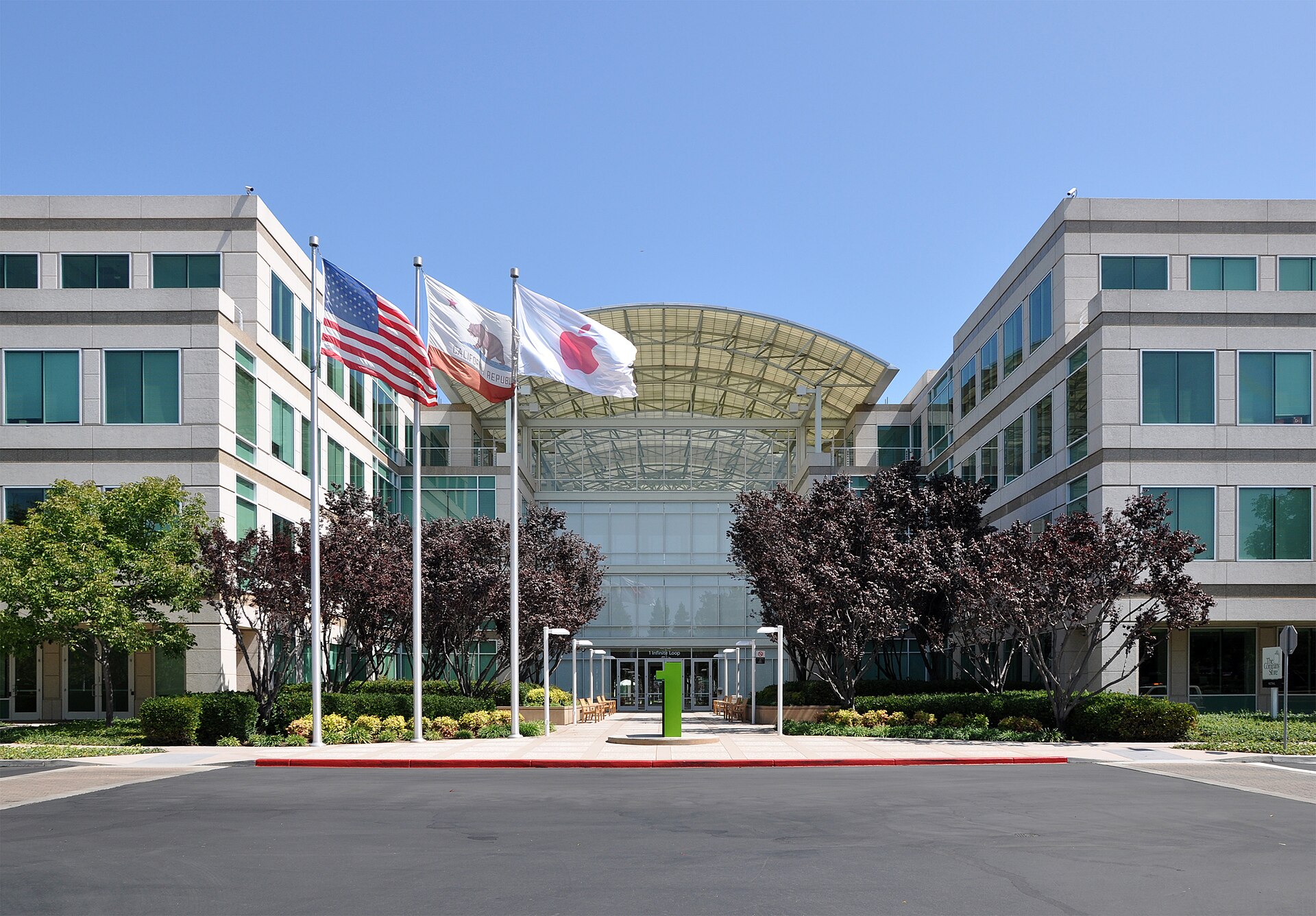
Apple Cupertino headquarters, home of the MacBook Pro M6 chip team

FAQ: MacBook Pro M6 chip

How much faster is the MacBook Pro M6 chip than the M5?
Apple claims up to 30% faster graphics, up to 25% faster AI workloads, and up to 1.3x faster overall performance compared with the M5 chip.

What does the new MacBook Pro cost?
Pricing starts at $1,999 for the base 14-inch configuration.

When does the new MacBook Pro ship?
Preorders opened 28 October 2026, with units shipping starting 6 November 2026.

Did Apple update any other products with the M6 chip?
Yes. Apple also announced a 24-inch iMac powered by the M6 chip on the same day.

How much memory does the MacBook Pro M6 support?
It starts at 16GB of unified memory and can be configured up to 32GB.

Does the MacBook Pro M6 chip support Wi-Fi 7?
Yes. The new model adds Wi-Fi 7 and Bluetooth 6 support, up from the previous generation’s connectivity standards.

Is the MacBook Pro M6 chip worth upgrading from an M5 model?
Apple’s own figures suggest a modest generational gain rather than a dramatic one. Buyers on an M4 or older chip are likely to notice a bigger difference than those already on an M5 machine, since the jump from M4 to M6 compounds two generations of gains at once.

Will there be a 16-inch MacBook Pro with the M6 chip?
Apple has not confirmed a 16-inch version yet. Past product cycles suggest one could follow within weeks if it arrives at all this generation.