
Bolsonaro Election Defeat: Lula Wins, Annulment Bid Looms

Brazil’s Bolsonaro election defeat is now a legal and political dispute. Luiz Inácio Lula da Silva won the presidential run-off on Sunday with 51.8% of the vote to Flávio Bolsonaro’s 48.2%, a margin of nearly 4.4 million votes, according to The Week, citing the electoral court’s results. Bolsonaro has not conceded, and Al Jazeera reports he arrived in Miami on 28 October with his family after leaving Brazil.

Contents

The result

The Week reports that Lula’s win means that by the end of the new term he will have spent 16 years in power in total, a record in Brazil’s democratic history. It adds that Lula became the first candidate since the end of the military dictatorship in 1985 to win the presidency after finishing second in the first round; Bolsonaro had led by more than 2.2 million votes in that round. Bolsonaro’s Liberal Party has recognised the result, according to Al Jazeera.

The passport order

Supreme Court Justice Alexandre de Moraes ordered Bolsonaro to surrender his passports within 24 hours, revoked them and barred him from leaving the country, as part of a preliminary investigation into money laundering involving Bolsonaro and attorney Willer Tomaz, bluewin reports. Bolsonaro denies wrongdoing and, in a video on Monday, said he would surrender the passports and contest the measure, calling it unjustified. By Tuesday evening the Federal Police, citing the news portal G1, said the deadline had expired without compliance and were examining whether he had left. Al Jazeera’s later account says he crossed by land into Argentina, flew to Ecuador and then to Miami, and that the US State Department said it will issue visas to the family. We have not been able to confirm those travel details independently, so they are Al Jazeera’s account.

The annulment bid

According to Al Jazeera, Bolsonaro said it was “impossible” to accept the outcome and plans to petition to annul the election, citing a Supreme Court decision that extended voting by two hours. The same report says official records show fewer than 35,000 votes were cast during that extension, against a margin of more than 4.4 million. It also says US President Donald Trump and Argentina’s Javier Milei have not acknowledged the result and that Trump said, without evidence, that the election appeared rigged.

Analyst Paulo Roberto de Souza told Al Jazeera he expects a power struggle among conservatives and sees São Paulo Governor Tarcísio de Freitas as the main figure in reorganising the right. He said the Bolsonaro family is more likely to endorse than to play, and that a Bolsonaro running in 2030 is unlikely; another voter quoted disagrees. These are one analyst’s views, not outcomes.

Why it matters for business and travel

As an illustration, not a real case: a Brazilian founder with suppliers in the US should expect political noise but no change to trade rules from the vote itself; any change would come from government decisions, which we will cover if they are announced. For wider political context see our reports on Venezuela’s political transition and Israel’s election test.

Brazil election questions

Who won Brazil’s run-off?

Lula, with 51.8% to Flávio Bolsonaro’s 48.2%, per the electoral court results cited by The Week.

What was the margin?

Nearly 4.4 million votes.

Has Bolsonaro conceded?

No. bluewin says he has not explicitly conceded, and Al Jazeera says he plans to petition to annul the result.

What did the Supreme Court order?

Justice Moraes ordered him to surrender his passports and barred him from leaving the country in a money laundering probe he denies.

Where is Bolsonaro now?

Al Jazeera reports he landed in Miami on 28 October.

Did the extra voting time change the result?

Al Jazeera says fewer than 35,000 votes were cast in the two-hour extension, against a margin above 4.4 million.

Sources

Image: Brasilia National Congress Buildings, CC BY-SA 3.0, via Wikimedia Commons.

A Secret Letter to Iran Just Collided With a War Warning

Featured photo: Asadi s / Wikimedia Commons (CC BY-SA 4.0)

The US Iran diplomatic talks are quietly back on. Days ago, Washington reportedly sent a private overture to Tehran. At the same time, it is telling Gulf allies to brace for renewed military action. According to The Wall Street Journal, citing US officials, Vice President JD Vance sent a letter to Mohsen Rezaei, chairman of Iran’s Supreme National Security Council. The goal was reviving negotiations. President Donald Trump downplayed the move. He said he had not directed Vance to contact Iran. He described the letter as being about humanitarian aid: “they need help with medical supplies and various things.”

The outreach lands at a tense moment. The same report said Washington has warned several Gulf Arab governments to prepare for a possible renewed campaign against Iran. That campaign could follow the November 3 midterm elections. The timeline has unsettled energy markets and regional capitals alike. The result is a familiar split-screen. A diplomatic channel is opening on one track. Military contingency planning continues on another.

Why the US Iran diplomatic talks resurfaced now

Tehran and Washington have lacked a reliable diplomatic channel for most of 2026. Open hostility has been punctuated by short-lived backchannel contacts. The Vance letter, if accurately described, would mark one of the more senior-level contacts in recent months. Trump’s framing of it as humanitarian, not diplomatic, gives the administration room to deny it is softening its stance. At the same time, it lets Washington test whether Tehran will engage.

Iran’s government has not issued a detailed public response. Separately, Pakistan’s ambassador to the United Nations, Usman Jadoon, told the Security Council this week that Pakistan remains concerned that the Iran nuclear file “has sharply deteriorated.” He urged that compliance questions go through technical bodies such as the IAEA rather than becoming politicized.

The warning to Gulf allies that complicates the picture

What makes the diplomatic opening harder to read is a parallel warning. Gulf Arab states have reportedly been told to plan for a possible strike campaign once the midterms pass. That timing would remove a domestic political constraint that has shaped US decisions much of this year. For the UAE, Qatar, Bahrain, Kuwait and Oman, this is not abstract. Regional air traffic, shipping and energy infrastructure are all exposed if hostilities resume.

US Navy ship deployed amid US Iran diplomatic talks

Civil aviation has already adjusted. The European Union Aviation Safety Agency extended its airspace-avoidance advisory for Iran, Iraq, Lebanon and Jordan through 16 November. The same advisory covers Gulf waters off the UAE, Bahrain, Kuwait, Qatar and Oman. EASA cites “high risks from missiles, drones and air-defence systems.” Singapore Airlines and its budget arm Scoot have separately pushed their own route restarts into early December.

How markets are pricing the US Iran diplomatic talks

Energy traders are watching the diplomatic track closely. It is one of the few levers that could quickly ease a supply-risk premium that has kept oil elevated for months. Brent crude eased to around $114 a barrel after gaining more than 1% the prior session. The prospect of talks offset fears of disruption. UBS analyst Giovanni Staunovo noted that global inventories “have fallen sharply,” with strategic reserve releases “largely completed.” That means the market has far less spare cushion than earlier in the conflict.

Emirates NBD’s Nick Stadtmiller summed up the mood: “Oil prices remain volatile as markets respond to developments affecting regional production and infrastructure.” A single diplomatic signal, even an unconfirmed one, can move prices. So can a single warning the other way.

What happens next

Three things are worth watching. First, whether Tehran responds to the reported Vance letter, and how. Second, whether the midterms genuinely mark the point when military planning accelerates, as Gulf states expect. Third, whether EASA’s 16 November deadline holds, slips, or narrows. Each outcome will shape airline scheduling and insurance costs into December.

None of these threads clearly points toward de-escalation or escalation alone. Together, they describe a standoff. Both sides are keeping a door open. Both are also preparing for it to close.

Frequently asked questions

What did JD Vance reportedly send to Iran?
According to The Wall Street Journal, citing US officials, Vance sent a letter to Mohsen Rezaei, chairman of Iran’s Supreme National Security Council. The aim was reviving talks with Tehran.

Did President Trump confirm the letter?
No. Trump said he did not direct Vance to contact Iran. He described the letter’s content as humanitarian aid, including medical supplies.

Why were Gulf Arab countries warned to prepare for action?
The Journal reported Washington told several Gulf states to ready for a possible renewed US campaign against Iran. That campaign could follow the November 3 midterms.

How is the airspace restriction connected to this story?
EASA’s advisory avoiding Iranian, Iraqi, Lebanese, Jordanian and Gulf airspace runs through 16 November. It responds directly to elevated military risk tied to the same standoff.

Has oil reacted to the reported talks?
Yes. Brent crude eased after gaining the prior session, as traders weighed the diplomatic signal against supply-risk warnings from analysts including UBS.

Is a resolution expected soon?
No firm timeline exists. Officials have not confirmed whether the contact will lead to formal talks. Washington’s parallel warning to Gulf states suggests it is not standing down militarily.

For more on the market and travel effects of this standoff, see our coverage of Brent crude oil prices and Middle East flight suspensions. For the broader diplomatic backdrop in South Asia this month, read our report on Pakistan Afghanistan ceasefire talks.

Jio IPO Debut: Shares Open 21% Above Issue Price

Shares in Jio Platforms opened at ₹1,358 on Wednesday 28 October 2026, about 21% above the ₹1,119 IPO price, in what the Jio IPO coverage describes as the largest public offering in Indian history, according to TechCrunch. The company raised about $3.2 billion, and the debut valued it at roughly ₹12.5 trillion (about $131.9 billion) at the issue price, making it India’s second-most valuable listed company after parent Reliance Industries, TechCrunch reports.

Contents

How the debut went

TechCrunch says the offer ran from 21 to 22 October and was subscribed 22.19 times, with bids exceeding $77 billion. The price of ₹1,119 was the top of the band, according to Business Today, which put the issue size at ₹30,213 crore. TechCrunch’s report does not name the exchanges, and neither does Business Today’s, so we do not state them here.

Demand behind the offer

Business Today’s breakdown shows institutional investors drove the demand: the qualified institutional buyer portion was booked 70.55 times, non-institutional investors 14 times, eligible Reliance shareholders 7.60 times, employees 2.03 times and retail 2.72 times, as of its cutoff time. TechCrunch says more than 13.8 million people applied; Business Today’s figure of over 1.35 crore applications is a slightly different count taken earlier, so the two should not be read as a discrepancy in the offer itself. Business Today also cited an unofficial grey-market premium implying about a 22% listing gain, which it stressed is not guaranteed.

Where the money goes

TechCrunch says the offer was entirely new shares, so existing backers did not sell. Up to ₹275 billion (about $2.9 billion) is earmarked to repay debt at subsidiary Reliance Jio Infocomm, with the rest for general corporate purposes. It lists Meta ($5.7 billion) and Google ($4.5 billion), both invested in 2020, along with General Atlantic, Silver Lake and Vista Equity Partners as backers.

The company’s numbers

For the year ended March 2026, Jio reported a profit of ₹300.5 billion (about $3.2 billion) on revenue of ₹1.47 trillion (about $15.5 billion), both up roughly 15%, according to TechCrunch. In the June quarter, revenue rose nearly 12% and profit rose 9%. Managing director Akash Ambani said its platforms serve more than 540 million customers; that is the company’s own figure.

What it means for foreign investors

As an illustration, not a real case: a Filipino investor looking at emerging-market technology stocks would note that a 21% opening gain says something about first-day demand, not about long-run returns, and that overseas access to Indian-listed shares depends on the investor’s broker and local rules. Related reading includes our reports on the Anthropic IPO valuation target and investor concern over big tech AI spending, and founders weighing structures can see our company formation guide.

What to watch

The next checkpoints are the company’s first results as a listed business and how the shares trade once early demand fades. Neither TechCrunch nor Business Today gives a date for those results, so we do not either. Readers following the stock should note that a strong debut can reverse, and that grey-market and first-day moves are weak predictors of later performance.

Jio IPO questions

What was the Jio IPO price?

₹1,119 per share, the top of the price band, according to Business Today.

How much did Jio raise?

About $3.2 billion, per TechCrunch, which calls it India’s largest IPO on record.

How did shares open?

At ₹1,358 on 28 October 2026, roughly 21% above the issue price.

How oversubscribed was the offer?

22.19 times, with institutional investors the most heavily oversubscribed group.

Did existing investors sell?

No. TechCrunch says the offer was entirely new shares.

What will the money be used for?

Up to ₹275 billion for debt repayment at Reliance Jio Infocomm and the rest for general corporate purposes.

Sources

Image: BKC skyline, Mumbai, CC BY-SA 2.0, via Wikimedia Commons.

Fed Rate Decision: Rates Held at 3.75-4% With Two Dissents

The Federal Reserve left its benchmark overnight lending rate in a range of 3¾% to 4% on 28 October 2026, a decision that passed 10–2, according to the Federal Open Market Committee statement. The Fed rate decision came with two dissents in the hawkish direction: Governors Lisa D. Cook and Beth M. Hammack preferred a quarter-point increase, the statement says. Al Jazeera reports the hold was widely expected and follows a rate rise in September, the first since July 2023.

In this report

What the Fed decided

The committee kept the target range unchanged and cited its dual mandate of maximum employment and stable prices. Its statement describes activity as growing briskly, with spending holding up despite elevated uncertainty, partly linked to geopolitical events, and with strong productivity and business investment. Hiring has matched labour force growth, and unemployment has barely moved. On the balance sheet, the committee said only that it is continuing to keep ample reserves in the banking system.

Why inflation is driving the debate

The statement says “Inflation remains elevated” and that the committee wants more information before settling on the policy stance needed to bring inflation back to 2% in a timely way. Al Jazeera cites the latest consumer price report as showing annual inflation of 3.7% in September, up from 3.4% in August, with energy prices the main driver of the monthly increase. It adds that the Fed’s preferred PCE inflation gauge is due on Thursday, which is today.

The political pressure

Al Jazeera reports that Fed Vice Chair for Supervision Michelle Bowman favoured a wait-and-see approach and said she felt no urgency to act further. President Donald Trump, who has pressed for cuts, wrote on Truth Social that US interest rates should be 1% or less, according to the same report. That is the president’s stated view; it is not a forecast by the committee, which just held rates well above that level.

What it means for borrowers abroad

As an illustration, not a real case: a Vietnamese graduate student with a US dollar education loan on a variable rate should expect borrowing costs to stay near current levels while the Fed holds, and should check the loan agreement for how and when the rate resets. Students planning US study can compare costs on our US visa bulletin coverage and use the visa eligibility checker to plan a route. For how markets have been pricing the dollar, see our report on gold and dollar strength in October, and our earlier FOMC preview.

What the Fed does next

The next meeting is on 8–9 December, which Al Jazeera says will bring the final rate decision of the year. The outlet adds that current forecasts point to a quarter-point increase but does not say who made those forecasts or when, so readers should treat that as one outlet’s summary of market expectations, not as a commitment by the Fed. Two dissents for a rise at this meeting show the committee is not united on holding.

Fed decision questions

What is the Fed’s rate range now?

3¾% to 4%, unchanged after the 28 October 2026 meeting, according to the FOMC statement.

Was the vote unanimous?

No. It was 10–2, with Governors Cook and Hammack preferring a quarter-point increase.

What is the latest inflation figure?

Al Jazeera cites 3.7% annual inflation in September, up from 3.4% in August.

When is the next meeting?

8–9 December 2026, per Al Jazeera.

Did the Fed raise rates recently?

Al Jazeera reports a rise last month, the first since July 2023.

What did Trump say?

According to Al Jazeera he wrote that US rates should be 1% or less.

Sources

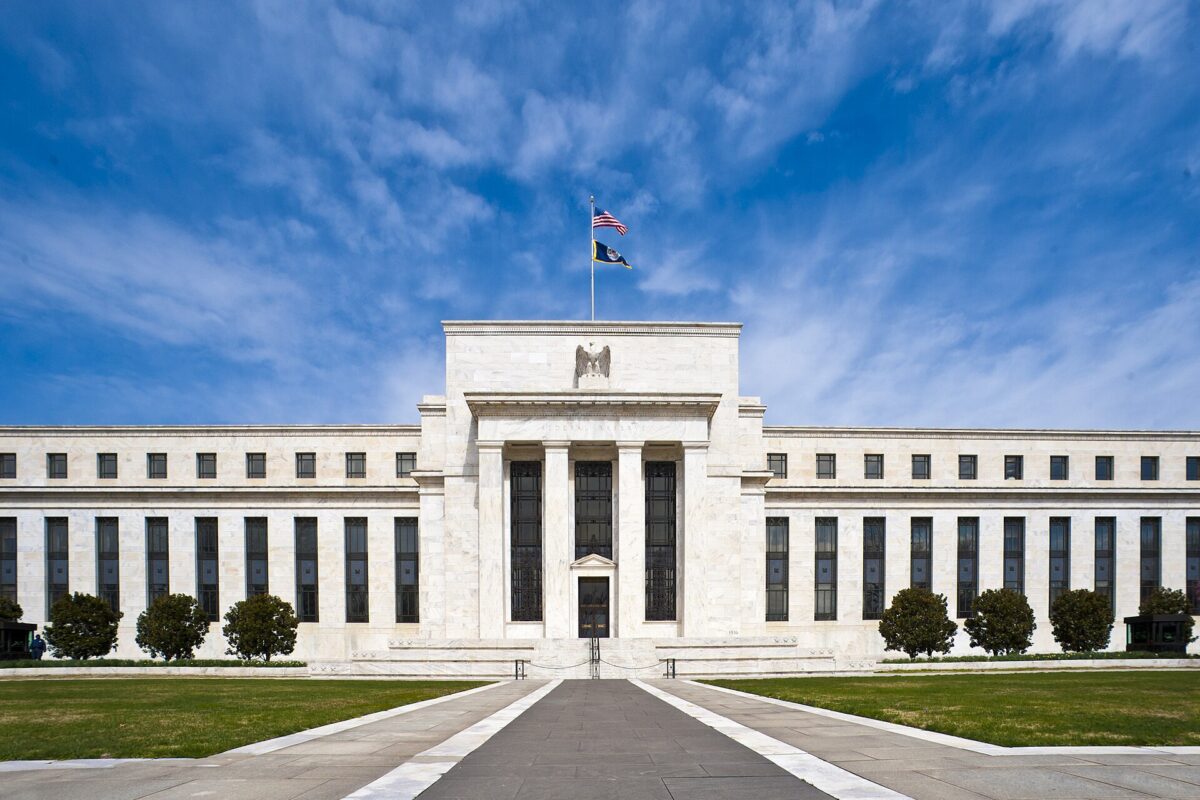
Image: Eccles Building, public domain, via Wikimedia Commons.

New Zealand Already Started Voting — Here’s What’s Actually at Stake

New Zealanders are already voting, days before the formal election day arrives. The New Zealand 2026 election reaches its climax on 7 November, but advance voting opened on 26 October. That gives voters nearly two weeks to cast a ballot before polls officially close.

Prime Minister Christopher Luxon announced the 7 November date back in January. He spoke to reporters at the National Party’s caucus retreat in Christchurch, according to interest.co.nz’s report on the announcement. He told coalition partners ACT and NZ First about the date the day before his public announcement. Luxon explained the timing simply: “that was the logical time.” He added that most New Zealand elections have landed in late October or early November historically. That makes this date unremarkable by past standards, even as the race itself looks closely contested. Officials also said setting the date early avoids clashes with major sporting and cultural events on the calendar, a point also covered by Sun Live.

What’s actually at stake in the New Zealand 2026 election

Luxon has been clear about his coalition preferences heading into the vote. He said National would work with ACT and NZ First again if the numbers allow it. He ruled out working with Labour, the Greens or Te Pāti Māori. His preference, in his own words, is “maximising the National Party vote.” He put it this way: “I can make a coalition work if I have to, my preference would be to make sure I’m maximising the National Party vote.”

Voters face a real choice. One path continues the current National-led coalition. The other shifts toward an alternative government built from Labour, the Greens and Te Pāti Māori. New Zealand’s mixed-member proportional voting system makes an outright majority unlikely for any single party. Coalition arithmetic will matter as much as any single party’s vote share once results come in. Minor parties crossing or missing the threshold could end up deciding which bloc actually governs.

The calendar that got New Zealand here

A specific sequence of dates shaped this election cycle. Parliament rose on 24 September. It formally dissolved on 1 October. Writ day fell on 4 October, the formal start of the campaign period. Candidate nominations closed at noon on 8 October. Advance voting began on 26 October, two days before this article published. That gives most voters a long window to cast an early ballot if they prefer avoiding election-day lines. The last day to return the official writ, closing out the formal process, is 3 December.

New Zealand’s enrollment rules also matter here. Under current electoral law, enrollment closes 13 days before election day. That cutoff point falls in late October this cycle, well before voters head to the polls on 7 November itself.

How this election fits into a busy global season

New Zealand is not the only country working through a political transition this season. Tamara News has also covered a very different kind of political transition unfolding in Venezuela this same week. Readers following immigration policy can also see how New Zealand’s own graduate work visa changes, due 16 November, will land just days after this election. Whichever government takes office will be the one implementing them.

What happens after New Zealanders finish voting

Final results typically take time to confirm fully once election day passes. Special votes and overseas ballots need processing after the initial count. If no single party wins a majority, which is the normal outcome under New Zealand’s voting system, coalition negotiations begin once preliminary results are clear. Luxon’s stated preference for a National-ACT-NZ First arrangement gives one likely template. Final seat counts will decide whether that combination actually reaches a workable majority once every vote is counted. A government typically takes office within a few weeks of a confirmed result, once coalition negotiations wrap up and ministerial positions get settled among the governing partners.

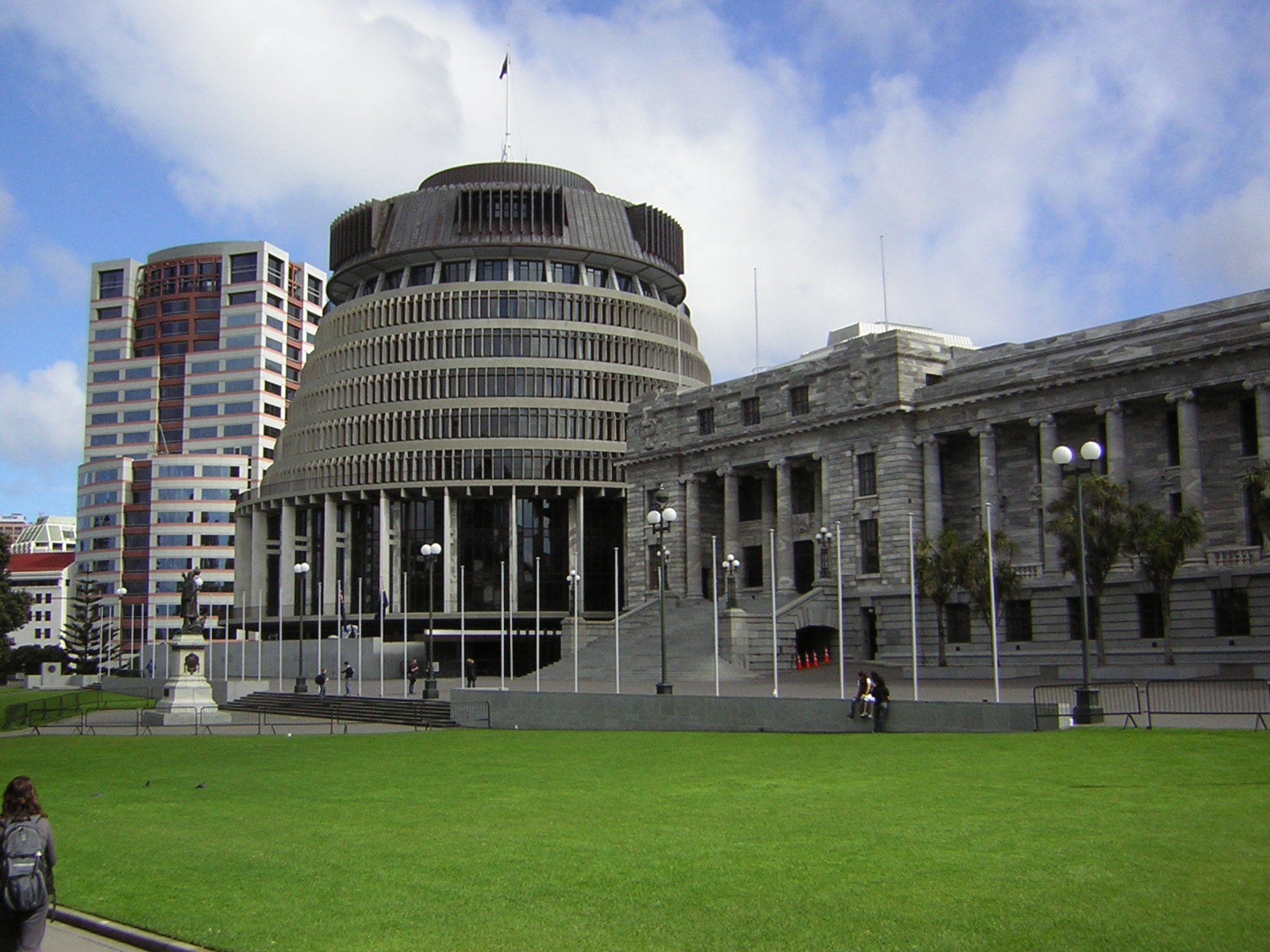
The Beehive in Wellington, the backdrop to the New Zealand 2026 election

FAQ: New Zealand 2026 election

When is New Zealand’s 2026 election?
Election day is 7 November 2026, with advance voting already open since 26 October.

Who announced the election date?
Prime Minister Christopher Luxon announced the date in January 2026, at a National Party caucus retreat in Christchurch.

Which parties does Luxon want to govern with?
Luxon has said National would work again with ACT and NZ First, while ruling out Labour, the Greens and Te Pāti Māori.

When does enrollment close for this election?
Enrollment closes 13 days before election day under current law, which falls in late October this cycle.

Will one party win a majority outright?
Unlikely. New Zealand’s mixed-member proportional system usually produces coalition governments rather than single-party majorities.

When will final results be confirmed?
Final counts typically take time after election day, since special votes and overseas ballots require additional processing before certification.

Can New Zealanders still enroll to vote?
Enrollment closed 13 days before election day under current electoral law, so late enrollment options were limited by the time advance voting opened on 26 October.

What is the mixed-member proportional system?
It is New Zealand’s voting system, which allocates parliamentary seats roughly in proportion to each party’s share of the national vote, making single-party majorities uncommon.