
Europe’s Border Checks Just Got Stricter — Here’s What Changed on September 6

Emergency flexibility measures that let European border authorities ease biometric checks expired on September 6, 2026. The EU entry exit system is now enforced with far less discretion for national authorities. Travellers heading to Europe this autumn should expect longer waits at passport control. That is especially true at busy airports where staff previously had room to pause biometric collection during peak periods.

European airport passport control area affected by the EU entry exit system enforcement

How the EU Entry Exit System Reached Full Enforcement

The EES became fully operational across participating European borders on April 10, 2026. That followed a phased rollout that began in October 2025. During the transition, border authorities could temporarily suspend biometric collection at individual crossing points when wait times became excessive. That emergency discretion expired on September 6, 2026, according to reporting from Greek City Times. The European Commission declined to extend it, despite lobbying from airlines that wanted the flexibility kept in place through the end of the year.

What Actually Changes for Travellers

The EU entry exit system registers a traveller’s name, travel document data and biometric data, including fingerprints and a facial image. It logs the date and place of entry and exit, replacing the ink passport stamp familiar to generations of travellers. It applies to non-EU nationals making short stays in the Schengen area, including UK citizens and anyone else travelling on a third-country passport. Coverage spans 29 countries: 25 EU member states excluding Cyprus and Ireland, plus Iceland, Norway, Switzerland and Liechtenstein.

Why Airlines Wanted More Time

Airlines had pushed to keep the emergency flexibility available through the end of 2026. They warned that removing it during the busy autumn travel season risked longer queues and missed connections. Travel And Tour World reported that UK travellers in particular face elevated risk of border chaos. Biometric checks are tightening, with less room left for local discretion. Some member states are reportedly not enforcing the checks as strictly as the rules technically allow. Travellers entering through France may see comparatively little change, due to ongoing technical issues with that country’s EES rollout.

Traveller passing through biometric border control under the EU entry exit system

What Travellers Should Do Now

Experts are advising anyone flying into or crossing land borders in the Schengen area to build in significantly more time for passport control. That is especially true at major hub airports. First-time EES registration, which requires fingerprints and a photo, takes longer than a routine border check. Travellers making their first post-flexibility crossing should expect the slowest experience of the transition.

How Europe’s System Compares Elsewhere

The EES puts Europe roughly in line with border systems already used in the United States, Australia and several Gulf states. All of those systems collect biometric data from arriving travelers. What sets the European rollout apart is its scale: 29 countries sharing a single database across a region that receives hundreds of millions of visits each year. Airports vary in how they handle first-time biometric registration. Some use self-service kiosks, while others rely primarily on staffed booths. That inconsistency helps explain the uneven experiences travelers are reporting since the flexibility period ended. The European Commission has said it will review enforcement data over the coming months to decide whether additional kiosk funding is needed before the busier summer 2027 travel season. Anyone traveling to Europe this autumn should check their specific entry airport’s setup in advance, since the pace of the rollout still varies meaningfully from one border crossing to the next.

Frequently Asked Questions

What is the EU Entry/Exit System?

The EU entry exit system is a digital border check for non-EU nationals travelling to the Schengen area for short stays. It replaces manual passport stamping with digital records of biometric data, entry and exit dates.

What changed on September 6, 2026?

The emergency flexibility that let border authorities temporarily pause biometric collection at congested crossing points expired on September 6, 2026. The European Commission declined to extend it despite airline lobbying.

Who does the EU entry exit system apply to?

It applies to non-EU nationals entering the Schengen area for short stays, including UK citizens and anyone else travelling on a third-country passport.

Which countries are covered?

The system covers 29 countries: 25 EU member states excluding Cyprus and Ireland, plus Iceland, Norway, Switzerland and Liechtenstein.

Will this mean longer queues at European airports?

Travel industry experts are warning of longer processing times now that border authorities have less discretion to ease biometric checks during high-traffic periods. They are advising travellers to allow extra time at passport control.

Are all member states enforcing it the same way?

Not uniformly. Some member states are reportedly not enforcing biometric checks as strictly in practice. Travellers crossing into France may see less change due to ongoing technical issues with the French EES rollout.

The next few weeks of autumn travel will be the clearest test yet of whether Europe’s busiest borders can handle full biometric enforcement. Airlines had grown used to the safety valve now gone. For more on how the region’s travel rules are shifting, see our coverage of the disruption already rippling across European airports. We also cover the new US student visa duration rules taking effect this month.

Sources

Thailand Just Cut Your Visa-Free Stay in Half — Here’s the New Limit

Thailand is cutting its visa-free stay from 60 days to 30 days starting September 15, 2026. The new rules affect 60 countries and territories, including the United States, United Kingdom, Canada, Australia and every EU member state. The Thailand visa free stay change also narrows what visa-free entry actually covers, limiting it strictly to tourism.

Bangkok airport terminal affected by the new Thailand visa free stay rules

What the New Thailand Visa Free Stay Rule Changes

Thailand’s Ministry of Interior published the new rules in the Royal Gazette on August 31, 2026. They take effect September 15, according to the Bangkok Post’s report on the change. Nationals of 60 countries and territories, including the US, UK, Canada, Australia, EU member states, Japan and, newly added, India, get visa-free tourist entry capped at 30 days. Travelers can apply for one 30-day extension. That effectively allows a maximum 60-day stay under the new system, though it now requires an extra administrative step at a Thai immigration office.

Who Gets a Shorter or Different Window

Not every nationality faces the same change. Seychelles and Mauritius nationals now receive a 15-day visa-free window rather than 30. Azerbaijan, Belarus and Serbia move from visa-free status to visa-on-arrival, according to the Tourism Authority of Thailand’s official announcement. Neighboring ASEAN nationals, including travelers from Malaysia, Singapore, Indonesia and Brunei, keep separate exemptions unaffected by the land-border cap.

A Crackdown on Visa Runs

Land-border entries under the tourist exemption are now capped at two per calendar year. The change directly targets so-called visa runs, where travelers exit Thailand briefly at a land crossing and immediately re-enter to reset their visa-free clock. Immigration compliance firm Newland Chase notes the new exemption is tourism-only. That closes a gap that had let some visitors use the old 60-day window for ad hoc business activity without a work permit.

Passport and visa stamps representing the tightened Thailand visa free stay policy

What Travelers Should Do Before September 15

Anyone planning a Thailand trip longer than 30 days should check which rule applies to their travel dates now. Entries on or after September 15 fall under the new cap. Long-stay visitors, including digital nomads and retirees who previously relied on repeated 60-day visa-free entries, will need to adjust. Some will apply for a longer-stay visa category instead. Others will plan trips around the new 30-day-plus-one-extension structure. Travel agents and immigration advisors are recommending that frequent visitors to Thailand review their itineraries well ahead of the effective date, to avoid an unexpected overstay penalty at departure.

Why Thailand Is Tightening the Rules Now

Thailand’s tourism sector has grown heavily reliant on long-stay visitors since the pandemic recovery. Officials have grown increasingly concerned about visa-free rules being stretched well beyond their original intent. The visa-run pattern targeted by the new land-border cap had become common at several border crossings. Immigration officials reported seeing the same travelers cycle through multiple times a month. Thailand’s government has framed the changes as a way to preserve visa-free access for genuine short-stay tourists. The rules close loopholes that let a smaller group of long-term residents avoid applying for proper long-stay visas. The shift also brings Thailand’s exemption scheme closer in line with rules already used by several neighboring Southeast Asian destinations. Many of those destinations cap visa-free stays at 30 days by default.

Who Actually Feels This Change

Short-stay vacationers are unlikely to notice much difference, since most tourist trips run well under 30 days already. The practical effect falls mainly on long-term visitors who had structured extended stays around the old 60-day exemption, including remote workers, retirees and repeat visitors who previously used Thailand as a base for months at a time. Those travelers now face a choice: adapt to the shorter tourist window and its one extension, or apply for a different visa category built for longer stays, such as retirement, education or long-term resident visas that Thailand offers separately from the tourist exemption. Immigration advisors expect a rise in applications for those longer-stay visa categories in the weeks after the new rule takes hold, as displaced long-stay visitors look for a legal alternative.

Frequently Asked Questions

When does Thailand’s new visa-free rule take effect?

The new rules take effect September 15, 2026, after Thailand’s Ministry of Interior published notifications in the Royal Gazette on August 31, 2026.

How long can visitors stay visa-free now?

Nationals of 60 countries and territories, including the US, UK, Canada, Australia, EU member states, Japan and India, get visa-free entry for tourism capped at 30 days, with one 30-day extension possible.

Did every visa-free stay get shorter?

Most did. The previous exemption allowed stays of up to 60 days for many nationalities. Seychelles and Mauritius nationals now get a shorter 15-day visa-free window.

What changed for land-border crossings?

Land-border entries under the exemption are now capped at two per calendar year. The cap is aimed at curbing so-called visa runs, where travelers exit and re-enter Thailand repeatedly to extend their stay.

Does the visa-free entry still cover business activity?

No. The new exemption is tourism-only. The old 60-day rule had implicitly allowed ad hoc business or work-related activity, which the new rules no longer cover.

Are any countries moving to visa-on-arrival instead?

Yes. Azerbaijan, Belarus and Serbia move from visa-free entry to visa-on-arrival status under the new framework.

Thailand’s tightening follows a broader pattern of destinations recalibrating visa-free travel this year. See our coverage of the new US student visa duration rules and flight disruptions affecting travelers through Dubai and Abu Dhabi.

Sources

Renewing an H-1B Just Got $4,000 Costlier, For Some Employers

A new US rule took effect on 9 September 2026 that adds thousands of dollars to certain work visa renewals. The H-1B extension fee now reaches $4,000 for covered employers, and the equivalent L-1 charge reaches $4,500. The change applies to extension petitions that previously escaped it.

The Department of Homeland Security published the final rule on 10 August 2026. It amends the regulations governing the 9-11 Response and Biometric Entry-Exit Fee.

Form I-129 petitions postmarked or filed electronically on or after 9 September must include the fee where it applies.

Who the H-1B extension fee actually hits

The charge is limited to “covered employers”. The definition has two parts and both must be true.

The employer must have 50 or more US employees. More than 50% of that workforce must hold H-1B or L-1 status.

Hand typing on a keyboard representing employers affected by the H-1B extension fee

That test excludes most companies outright. A large firm with a handful of visa holders does not meet it. A mid-sized firm built mainly on sponsored staff does.

The rule therefore concentrates on staffing and outsourcing businesses rather than on employers generally. Most H-1B and L-1 workers will not see their employer charged.

What changed on 9 September

The fee itself is not new. It already applied to petitions seeking an initial grant of status, and it still does, unchanged.

What changed is the scope. Covered employers must now pay it on all extension of status petitions.

Previously the charge was tied to whether the related fraud prevention and detection fee applied. The new rule removes that link. Extensions that keep an employee with the same employer are now captured.

That last point matters most in practice. Routine renewals for existing staff were the common case that fell outside the old wording.

What this means for workers on these visas

The fee is an employer cost. Workers do not pay it directly.

Indirect effects are the real question. Employers facing a higher renewal cost may weigh sponsorship differently at the point of extension, particularly where margins are thin.

Consider a software engineer on an H-1B at a mid-sized consultancy where most staff hold sponsored status. That employer now faces $4,000 at each extension on top of existing filing costs. The engineer’s status is unaffected, but the renewal decision carries a new number.

Nothing in the rule changes eligibility, processing times or the cap. It changes price, and only for a defined set of employers.

This sits alongside other cost changes we have covered, including the proposed six-figure H-1B fee and the weighted selection and prevailing wage proposal.

How the 50-50 test works in practice

The threshold has a specific history. Congress created the surcharge for employers whose US workforce depends heavily on H-1B and L-1 staff, and the 50-50 label comes from its two limbs.

Counting the workforce is the first step. Employers count US employees, including full-time and, depending on their policy, other categories their counsel treats as employees.

Counting visa holders is the second. More than half of that total must hold H-1B or L-1 status for the surcharge to apply.

Employers near the line need care. A company at 48% one quarter and 52% the next changes category, and the test applies at the time of filing.

Getting this wrong cuts both ways. Underpaying risks rejection of the petition. Overpaying hands money to an agency that will not volunteer it back.

Dates and filings to keep in view

The 9 September trigger is based on the postmark or electronic submission date, not on the decision date. Petitions sent before then follow the old rules.

Employers close to the 50-employee or 50% thresholds should confirm their position before filing. The test is applied to the employer, not the individual petition.

Separately, a revised public charge guidance applies to Form I-485 filings postmarked on or after 18 September 2026. Applications filed before that date fall under the 2022 policy. That is a different rule affecting a different filing.

September is also the final month of the US fiscal year, which is when employment-based categories can hit annual limits. Our summary of the October 2026 Visa Bulletin covers where those categories stand.

Keep the two filings separate in your planning. An I-129 extension and an I-485 adjustment follow different rules, different fees and different cut-off dates.

Employers running both for the same worker should date each one deliberately. A single week can move a filing from one rule set to another.

Frequently raised points on the new charge

  • How much is the fee? $4,000 for H-1B and $4,500 for L-1, payable by covered employers.
  • When did it start? The final rule took effect 9 September 2026 and applies to Form I-129 petitions filed on or after that date.
  • Who counts as a covered employer? An employer with 50 or more US employees where more than 50% hold H-1B or L-1 status.
  • Does it apply to new petitions? The fee already applied to initial grants of status and continues to apply there unchanged.
  • What exactly changed? Covered employers must now pay it on all extension petitions, including extensions with the same employer.
  • Do employees pay it? No. It is charged to the petitioning employer.

Related immigration coverage

Read our reports on the $100,265 H-1B fee proposal, the weighted H-1B selection plan and the October 2026 Visa Bulletin.

Sources

  • Federal Register — 9-11 Response and Biometric Entry-Exit Fee for H-1B and L-1 Visas. federalregister.gov
  • American Immigration Lawyers Association — DHS Final Rule Expanding 9-11 Response and Biometric Entry-Exit Fee. aila.org
  • USCIS — H-1B Specialty Occupations. uscis.gov

OpenAI Just Gave Every Developer the Tools Behind Its Coding Agent

OpenAI opened public beta access to its new Agents API on September 10, 2026, expanding what outside developers can build with its technology. It puts the infrastructure behind its Codex coding agent directly into developers’ hands through a single API call. The OpenAI Agents API lets outside developers build custom AI agents that can run code, browse the web and coordinate their own subagents. They no longer need to build that scaffolding themselves from the ground up.

Software development workspace representing the new OpenAI Agents API

What the OpenAI Agents API Actually Does

According to OpenAI’s own announcement, the API brings the same harness and infrastructure that powers Codex to any developer through a flexible interface. Inside a running session, an agent built on the API can execute code, edit files, search the web, apply predefined skills, and produce artifacts. It can also split tasks across subagents up to a set concurrency limit. Those capabilities previously required developers to assemble their own agent infrastructure from scratch.

How the Architecture Is Built

The API is organized around four core objects, as detailed by MarkTechPost’s technical breakdown. An Agent object defines the model, instructions, tools and any connected MCP servers. An optional Environment sandbox handles isolated execution. A durable Session persists state, and a stream of events reports what the session is doing as it works. Developers can run that compute inside an OpenAI-managed sandbox, on their own infrastructure, or through a partner sandbox. Integrations are already live from Cloudflare, DigitalOcean and Oracle.

Why This Matters Beyond Coding Tools

Codex itself remains a specific product aimed at software development. Exposing its underlying harness as a general-purpose API changes that. Developers outside the coding-tools space can now build agents for customer support, research or data analysis. Any workflow that benefits from an AI system capable of taking multi-step action, not just answering questions, is now a candidate. That positions OpenAI more directly against agent-infrastructure offerings from rivals racing to give developers similar building blocks.

Developer writing code that could integrate with the new OpenAI Agents API

What Comes Next in the Beta

The Agents API launched with pay-per-use pricing based on tokens and tool calls. There is no separate subscription layered on top. As the public beta continues, the real test will be adoption. Will third-party developers use the harness at scale for production workloads? And how quickly will OpenAI expand its list of managed-sandbox and infrastructure partners beyond the three announced at launch?

How This Fits the Wider Agent Race

OpenAI is not the only company racing to give developers agent-building infrastructure. Anthropic offers its own agent development kit for building custom Claude-based agents, and Google has been expanding similar tooling around its Gemini models. What sets OpenAI’s move apart is that it exposes the exact harness already proven in a shipping product, Codex. That is different from a separate framework built specifically for external developers. Developers weighing whether to adopt the new API will likely focus on pricing predictability and how easily existing Codex-based workflows can migrate over without a rewrite. OpenAI has not said whether Codex itself will eventually be rebuilt on top of the public Agents API or continue as a separate, parallel product. Infrastructure partners such as Cloudflare and DigitalOcean stand to benefit either way. Developer demand for sandboxed agent compute tends to translate directly into cloud spending, regardless of which underlying model or harness an agent uses.

Frequently Asked Questions

What is the OpenAI Agents API?

It is a public beta, launched September 10, 2026, that gives developers the same harness and infrastructure that powers OpenAI’s Codex coding agent. It is accessible through a single API rather than a standalone product.

What can developers build with it?

Inside a session, the Agents API can run code, edit files, search the web, apply skills and produce artifacts. It can also split work across subagents with a set concurrency limit, according to OpenAI’s own announcement.

How is the API structured?

It is built around four objects. An Agent defines the model, instructions, tools and MCP servers. An optional Environment sandbox handles execution, a durable Session persists state, and a stream of events reports what the session produces as it runs.

Where does the agent’s compute actually run?

Developers can choose to run agent compute in an OpenAI-managed sandbox, their own infrastructure, or a partner sandbox. Integrations are already available from Cloudflare, DigitalOcean and Oracle.

How much does it cost to use?

The Agents API operates on a pay-per-use model based on tokens and tool usage, with no additional flat fee on top of standard API costs.

Is this different from OpenAI’s Codex product?

Codex remains a specific coding-agent product. The Agents API exposes the same underlying harness so developers can build their own custom agents for tasks well beyond coding.

The launch adds to a busy stretch for OpenAI, which has spent September rolling out new capacity, safety governance changes and now a broader developer platform in quick succession. Developers who build on the new API will be watching closely for how OpenAI balances rapid feature releases against reliability. Enterprise customers expect stability from production infrastructure as more companies move agent workloads from experiments into everyday business use. For more on the AI infrastructure race this month, see our coverage of OpenAI’s GPT-6 Astra release and the memory chip shortage squeezing every major AI hardware maker.

Sources

The DOJ Wants to Know Why Nvidia’s $20B Groq Deal Wasn’t a Merger

The US Justice Department is examining whether Nvidia structured a $20 billion licensing agreement with AI chip startup Groq to avoid antitrust review. The Nvidia Groq antitrust probe was reported on 10 September 2026. Investigators have sent Nvidia a formal demand for information.

Groq presented the December arrangement as a non-exclusive licence. It gave Nvidia access to chips optimised for AI inference.

Two Groq executives moved to Nvidia as part of the same deal. Founder and chief executive Jonathan Ross and chief operating officer Sunny Madra both joined. Groq remained a separate company.

What the Nvidia Groq antitrust probe is testing

Merger review in the United States is triggered by acquisitions above certain thresholds. A licence is not an acquisition. Neither is hiring executives.

The question is whether those pieces together achieve what an acquisition would, without the filing that an acquisition requires. Regulators have looked at similar structures across the AI sector over the past two years.

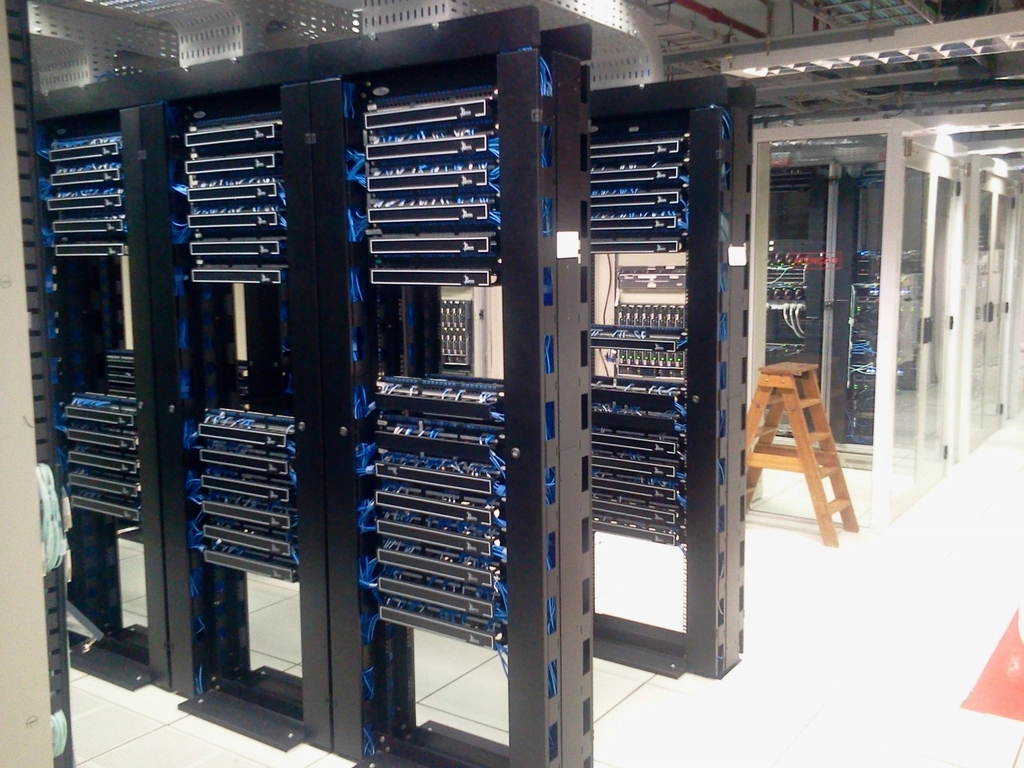
Server room representing the AI inference capacity at stake in the Nvidia Groq antitrust probe

The department opened the probe soon after the arrangement was announced, according to the reporting. That timing suggests the structure itself drew attention rather than any later conduct.

Why inference chips are the contested ground

Training a model and running it are different workloads. Training happens once and demands enormous parallel compute. Inference happens every time someone uses the model.

Inference volume grows with adoption. That makes inference silicon the larger long-run market, and the one where challengers have had the clearest opening against Nvidia.

Groq built its business on that opening. A deal that gives Nvidia access to its inference-optimised designs while moving its leadership across narrows the field, at least on paper.

None of that establishes a violation. A formal demand for information is an investigative step, not a finding.

The acqui-hire pattern regulators keep meeting

The structure at issue has become common across artificial intelligence. A large company licenses a startup’s technology, hires its senior leadership, and leaves the startup standing as a separate entity.

Each element looks ordinary on its own. Licences happen constantly. Executives change jobs constantly. Neither triggers a merger filing.

Combined, they can transfer the two things that matter most: the technology and the people who built it. What remains at the startup is a name, a cap table and whatever staff stayed behind.

Regulators in the United States, the United Kingdom and the European Union have all examined arrangements of this shape since 2024. Outcomes have varied, and several closed without action.

That history explains the department’s interest here without predicting where it lands. Structure alone does not establish harm, and the law asks about effects on competition rather than about form.

How this fits Nvidia’s wider regulatory picture

Nvidia is under pressure on several fronts at once. Export controls shape what it can sell and where, a subject we covered in our report on the chip export loophole.

Supply is the second front. Our note on the memory chip shortage sets out the constraint running through the whole accelerator market.

Litigation across AI companies is the third. Our coverage of Tennessee’s patent suit against Anthropic shows how quickly legal exposure has spread through the sector.

What happens after a demand for information

A civil investigative demand compels documents and answers. Companies typically negotiate scope before producing anything.

Most such investigations close without action. Some end in a consent agreement that changes how a deal is structured. A minority reach court.

Timelines run long. Antitrust reviews of this kind typically run for quarters rather than weeks.

Publicity is its own factor. Companies frequently adjust terms once an investigation becomes public, without ever conceding a problem.

Nothing in the reporting suggests the department has reached a view. It has asked for records, which is where these matters normally begin.

Nvidia has not commented publicly in the reporting reviewed here. Neither has Groq. Both descriptions of the deal so far come from the companies’ own framing at announcement.

That framing deserves scrutiny precisely because it is theirs. Calling a licence non-exclusive tells buyers Groq can still sell to others. It says nothing about whether Groq retains the people needed to do so.

Customers watching the probe face a practical question rather than a legal one. Anyone who designed a deployment around Groq silicon wants to know the roadmap survives the departures.

A Brazilian startup founder running inference at scale cares about supply and price, not about filing thresholds. Regulatory outcomes reach that founder slowly, if at all.

What people are asking about the investigation

  • What is being investigated? Whether Nvidia structured a $20 billion licensing deal with Groq to avoid antitrust review.
  • What was the deal? Groq described it in December as a non-exclusive licence giving Nvidia access to chips optimised for AI inference.
  • Did Nvidia buy Groq? No. Groq remained a separate company, though its chief executive and chief operating officer moved to Nvidia.
  • What step has the department taken? It sent Nvidia a formal demand for information.
  • Does this mean a violation occurred? No. An investigative demand is a request for records, not a finding.
  • Why does AI inference matter here? Inference workloads scale with usage, making inference chips the larger long-term market.

Continue reading on Tamara News

See our reporting on the Nvidia chip export loophole, the memory chip shortage and Tennessee’s patent case against Anthropic.

Sources

  • Bloomberg — DOJ Probes Nvidia’s $20 Billion License Deal With Groq on Antitrust Concerns. bloomberg.com
  • The Daily Guardian — US DOJ probes Nvidia’s licensing deal with AI startup Groq. thedailyguardian.com