The Supreme Court Just Stepped In on Missouri’s Voting Map — Twice in One Week

The US Supreme Court blocked Missouri from using its newly drawn, Republican-favoring congressional map on September 10, 2026, in a closely watched order. Justices intervened in November’s midterm elections for the second time in a single week. The pause over the Missouri congressional map keeps the fight over district lines tied up in the courts just weeks before ballots go to print. Election officials and candidates alike are left waiting for clarity.

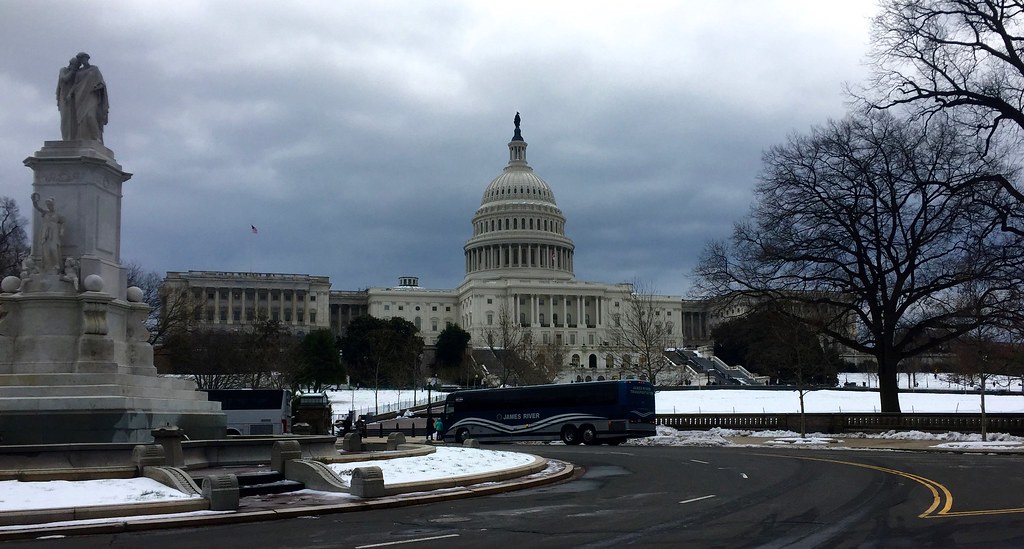
US Capitol building, focal point of the fight over the Missouri congressional map

Why the Missouri Congressional Map Ended Up at the Supreme Court

Missouri Republicans enacted a new congressional map in 2025. It was part of a broader, Trump-backed push to redraw district lines across GOP-controlled states ahead of the 2026 midterms. Opponents responded quickly by gathering signatures for a statewide referendum that would undo the new map entirely. The case has bounced between state and federal courts ever since. The Washington Post reported the Supreme Court’s Thursday order marked the second time in a week the justices paused the map’s use.

What the Missouri Supreme Court Already Decided

Earlier in September, the Missouri Supreme Court unanimously blocked the new districts from being used in the November election. It ordered a statewide vote on whether to keep or reject the Republican-drawn map, according to NBC News’ coverage of that ruling. That decision effectively froze the new map’s legal status while the referendum question makes its way to voters.

Which Map Missouri Will Actually Use

With the new map paused, Missouri is widely expected to fall back on its 2022 congressional map for November. That map currently splits the state’s seats six Republican to two Democratic. Legal analysts told NBC News the sequence of rulings likely signals the practical end of the fight over which map governs this cycle’s elections. The underlying referendum litigation may still continue in the background.

Voting machine used in US elections, relevant to the Missouri congressional map dispute

How This Fits the Bigger Redistricting Fight

Missouri’s case is one front in a nationwide, mid-decade redistricting push that has drawn in several Republican-led states this year. Similar legal battles are playing out elsewhere as both parties try to lock in favorable district lines before the midterms. What happens in Missouri could shape how aggressively other states pursue mid-cycle map changes. A Supreme Court willing to repeatedly pause a state’s preferred map sends a signal about how far courts will let legislatures go.

Other States Watching the Outcome

Missouri is not fighting this battle alone. Texas, Ohio and California have all pursued their own mid-decade map changes this year. It is part of a broader scramble by both parties to shore up House seats before November. Texas Republicans redrew their map earlier in 2026 with explicit encouragement from the White House, while California Democrats responded with a counter-effort of their own. Legal challenges are pending in several of those states too. The Supreme Court’s approach to Missouri could offer an early signal of how the justices might handle similar disputes elsewhere. Election administrators in Missouri face a practical deadline problem of their own. Ballots and voter information need to be finalized well before November, leaving a shrinking window to resolve which district lines apply.

Frequently Asked Questions

What did the Supreme Court do with Missouri’s map?

On September 10, 2026, the US Supreme Court temporarily blocked Missouri from using its newly drawn, Republican-favoring congressional map for the November elections. It was the second such block in a week.

Why was the Missouri congressional map redrawn in the first place?

Missouri Republicans enacted a new congressional map in 2025. It was part of a broader, Trump-backed push to redraw district lines in GOP-led states ahead of the 2026 midterms.

What did the Missouri Supreme Court rule?

Earlier in September, the Missouri Supreme Court unanimously blocked the new districts from being used in November. It ordered a statewide referendum asking voters whether to keep or reject the map.

Which map will Missouri use in November?

With the new map paused, Missouri is expected to fall back on its 2022 congressional map. That map currently allocates six seats to Republicans and two to Democrats.

Is this part of a bigger national redistricting fight?

Yes. Missouri’s case is one piece of a nationwide, mid-decade redistricting push led by President Trump. The push aims to redraw House district lines in Republican-controlled states before the midterms.

Does the Supreme Court’s pause end the legal fight?

Not fully. But legal observers say it likely signals the effective end of the battle over which map applies to the 2026 midterms. The referendum case itself continues in state court.

Missouri’s fight is a reminder that redistricting battles increasingly play out on compressed timelines, with courts, legislatures and voters all racing the election calendar at once. Whichever map Missouri ultimately uses, the dispute has already shown how a single state’s district lines can become a national flashpoint. In a closely divided Congress, a handful of seats can decide which party controls the chamber. For other elections shaping the fall political calendar, see our coverage of the AfD’s win in Saxony-Anhalt and Russia’s Duma election this month.

Sources

Nvidia Just Spent $13 Billion on a Company Most Shoppers Have Never Heard Of

Nvidia agreed on September 3, 2026 to buy Hugging Face, the open-source AI development platform. The deal is valued at roughly $12.93 billion. The Nvidia Hugging Face deal is Nvidia’s second-largest acquisition on record. It gives the chipmaker a direct line to the more than 18 million developers who use Hugging Face to build and share AI models.

Data center server racks tied to the Nvidia Hugging Face deal expansion into AI software

Inside the Nvidia Hugging Face Deal

The agreement is structured as approximately $11.9 billion in cash plus up to $1 billion in equity retention for Hugging Face employees. That comes from Bloomberg’s reporting on the transaction and Nvidia’s own securities filing. Hugging Face runs a platform and community for developing, sharing and deploying open-source models, datasets and applications. It is the software layer Nvidia has spent years trying to get closer to as it defends its position in AI hardware.

Why Nvidia Is Buying Its Way Into Open Source

Nvidia’s business has historically centered on chips, not the open developer communities that build on top of them. Acquiring Hugging Face changes that. It connects Nvidia’s hardware, software and cloud computing services directly to a platform where millions of developers already publish and download models daily. CNBC reported that Hugging Face’s own leadership approached Nvidia CEO Jensen Huang weeks ahead of the announcement. That suggests the platform saw the tie-up as beneficial for its own growth, not just Nvidia’s.

Nvidia’s Growing Acquisition Trail

The Hugging Face purchase ranks as Nvidia’s second-biggest acquisition. It trails only the roughly $20 billion purchase of assets from chipmaker Groq, completed in December 2025. That earlier deal is now drawing separate scrutiny. The US Justice Department is investigating whether Nvidia structured its licensing arrangement with Groq specifically to avoid antitrust review. The question could color how closely regulators examine the Hugging Face acquisition as it moves toward closing. Nvidia has made dozens of smaller acquisitions in recent years as it builds out its software and networking capabilities, according to deal-tracking firm Tracxn. The Hugging Face purchase breaks that pattern in scale, ranking it alongside only the Groq transaction as a deal large enough to draw sustained regulatory attention.

Server hardware representing the computing infrastructure behind the Nvidia Hugging Face deal

What Happens Before the Deal Closes

Nvidia’s securities filing points to a close in the first half of next year, pending regulatory approval. Until then, Hugging Face is expected to keep operating its platform independently. Developers and rival chipmakers will be watching closely. They want signs of how tightly Nvidia intends to integrate the platform with its own hardware and cloud offerings once the deal completes.

How Rivals and Investors Are Reacting

The deal size is large in absolute terms, but it remains a fraction of Nvidia’s overall market value, which analysts say helps explain why it has not dominated investor attention the way the Groq deal once did. The purchase can be read as a defensive move as much as an offensive one, aimed at keeping rivals from building closer ties to the open-source community Hugging Face anchors. Google and Meta both maintain their own open-model efforts. Developers on Hugging Face’s platform currently publish models built for a wide range of competing chip architectures, not just Nvidia’s. Whether that openness survives the acquisition is one of the biggest questions developers are asking. The deal is expected to close in the first half of next year. An open question is what happens to community-contributed models once a single hardware maker owns the platform hosting them. Neither company has detailed what governance changes, if any, will follow once the acquisition closes.

Frequently Asked Questions

What did Nvidia agree to buy?

Nvidia agreed on September 3, 2026 to acquire Hugging Face, the open-source AI platform used by developers to share and deploy models. The price is approximately $12.93 billion.

How is the Nvidia Hugging Face deal structured?

The transaction is roughly $11.9 billion in cash plus up to $1 billion in equity retention for Hugging Face staff, according to Nvidia’s securities filing.

Why does Nvidia want Hugging Face?

Hugging Face’s platform connects Nvidia with more than 18 million developers who build, share and deploy open-source models. It deepens the tie between Nvidia’s chips and the software ecosystem built on top of them.

Is this Nvidia’s biggest acquisition?

It is Nvidia’s second-largest acquisition on record. Only the roughly $20 billion purchase of assets from chipmaker Groq, completed in December 2025, was bigger.

When will the deal close?

Nvidia’s securities filing points to a close in the first half of next year, subject to regulatory approval.

Does this deal face antitrust scrutiny?

Nvidia already faces a separate US Justice Department inquiry into its licensing arrangement with AI-chip startup Groq. That backdrop could shape how regulators approach the Hugging Face deal.

Taken together, the Hugging Face deal and the ongoing Groq antitrust inquiry show a company simultaneously expanding its reach and defending its past dealmaking. That balancing act will likely define how regulators and rivals view Nvidia’s next moves. For more on Nvidia’s expanding footprint in AI infrastructure, see our coverage of the chip export loophole Washington is trying to close and the memory chip shortage squeezing Apple, Nvidia and Samsung. Our report on OpenAI’s GPT-6 Astra release covers the model Nvidia’s hardware increasingly competes to run.

Sources

NATO Caught Russian Subs Rehearsing an Attack You’d Never Trace

NATO allies tracked Russian submarines rehearsing an attack on Arctic communications lines earlier this year, according to an account published on 10 September 2026. The vessels were practising to deploy technology built to disable cables without leaving evidence. Undersea cable sabotage of that kind is designed to look like an accident.

The rehearsal took place near the Svalbard archipelago. Britain, Norway and the United States ran a joint operation that tracked the Russian vessels, confronted them at sea and stopped the exercise. The vessels eventually left the area.

Moscow’s Main Directorate of Deep-Sea Research, known by the Russian acronym GUGI, ran the operation. GUGI used deep-sea submersibles to simulate deploying the technology.

What the submarines were rehearsing near Svalbard

Two fibre-optic cables run along the floor of the Arctic Ocean between Svalbard and mainland Norway. Each stretches about 1,400 kilometres. They sit under roughly 2,700 metres of water.

Those cables are not ordinary internet links. They carry satellite data downloaded at SvalSat, described as the world’s largest civilian ground station, which sits about 1,200 kilometres from the North Pole. The station forms part of NASA’s Near Space Network.

Arctic coastline near Svalbard where undersea cable sabotage was rehearsed

Cutting those lines would not switch off the internet. It would sever a specific data path used by polar-orbiting satellites. That is a narrower target with a much larger strategic meaning.

Why deniable undersea cable sabotage is the point

Cables break often and for dull reasons. Fishing gear drags across them. Anchors catch them. Seabed movement shifts them.

That background noise is exactly what makes deniable damage attractive. A cut that resembles an anchor strike invites investigation rather than retaliation. Attribution takes months, and by then the political moment has usually passed.

The account of the Svalbard rehearsal describes technology built specifically to leave no trace. That detail, if accurate, separates this from opportunistic damage.

Europe has been treating infrastructure attacks as a pattern rather than a series of accidents. Our reporting on sabotage on Germany’s power grid and on the ransomware attack on Berlin city systems covers the same theme on land and online.

What was already public before this account

Britain and Norway disclosed in April that they had uncovered covert Russian activity in Arctic waters. Britain’s Defence Ministry pointed to statements made on 9 April acknowledging attempted covert activity in and near Norwegian and British waters by GUGI.

Washington and London have both sanctioned the directorate. That predates this week’s account.

What is new is the detail: where the rehearsal happened, which allies intervened, and what the submersibles were practising to deploy. Much of that detail comes from Western officials, who have an interest in how the episode is understood. Russia has not confirmed the account.

Why the Arctic is a harder place to watch

Distance does most of the work for anyone operating there. Svalbard sits far from the nearest large naval bases, so patrol aircraft and ships burn hours simply reaching the area.

Weather adds a second layer. Sea state and ice limit how long surface vessels can hold a position, and they degrade the sensors those vessels carry.

Darkness matters too. Polar night removes visual observation for months at a time, which pushes surveillance onto acoustic and satellite methods.

Depth completes the picture. A cable lying under 2,700 metres of water sits well beyond routine diving and beyond most commercial survey equipment. Reaching it requires purpose-built submersibles, which is precisely the capability GUGI is described as operating.

Those four factors explain why the Svalbard interception was notable. Allied forces did not simply detect activity. They arrived in time to interrupt it.

How allies are likely to respond next

Surveillance is the immediate lever. The Svalbard episode worked because allied forces were watching closely enough to intervene before the exercise finished.

Physical protection is harder. A cable buried under 2,700 metres of water cannot be patrolled along its whole length. Monitoring focuses on the vessels above it instead of the line below.

Redundancy is the third option. Additional routes reduce the value of cutting any single one, though building them in Arctic conditions is slow and expensive.

Sanctions remain the standard political response. The European Union has kept adding measures through 2026, as we reported in our coverage of the latest EU sanctions package.

Sanctions on a military directorate work differently from sanctions on a company. GUGI does not raise money on open markets, so the practical effect falls on suppliers and on the individuals named.

That limits how much deterrence sanctions alone can deliver here. Presence and surveillance carry more weight against an operation that depends on going unobserved.

Questions about the Arctic cable episode

  • Were the cables actually damaged? No. The account describes a rehearsal that allied forces interrupted before it was completed.
  • Where did this happen? In Arctic waters near the Svalbard archipelago, north of mainland Norway.
  • Which countries intervened? A joint operation involving Britain, Norway and the United States tracked and confronted the vessels.
  • What is GUGI? Russia’s Main Directorate of Deep-Sea Research, a unit already sanctioned by both Washington and London.
  • What do the Svalbard cables carry? Satellite data downloaded at the SvalSat ground station, which forms part of NASA’s Near Space Network.
  • Has Russia commented? Not in the published account. The detail comes from Western officials and from April statements by Britain and Norway.

More from Tamara News on infrastructure security

See our coverage of Germany’s power grid sabotage, the Berlin ransomware attack and the new EU sanctions on Russia.

Sources

  • Defense News — NATO allies foil Russian subsea cable sabotage plot. defensenews.com
  • Honolulu Star-Advertiser — NATO allies foil Russian subsea cable sabotage plot. staradvertiser.com

The ECB Just Raised Rates While the Fed Sat Still — Here’s the Gap That Opens

The European Central Bank raised interest rates on September 10, 2026. It lifted its deposit rate to 2.50% in a bid to bring persistent inflation back toward target. The ECB interest rate hike takes effect September 16. It marks a clear break from the US Federal Reserve, which has held its own rate steady through the summer even as American producer prices accelerate.

European Central Bank headquarters in Frankfurt, where the ECB interest rate hike was announced

The ECB Interest Rate Hike, By the Numbers

The Governing Council voted to raise all three key rates by 25 basis points. The deposit facility rate rises to 2.50%, the main refinancing rate to 2.65%, and the marginal lending facility to 2.90%. The changes take effect September 16, 2026, according to the ECB’s official monetary policy decision. The move marks a resumption of ECB rate hikes after a pause, according to FXStreet’s preview of the decision. Markets had widely expected the move once August’s inflation figures came in. Attention now turns to whether the bank keeps raising rates if energy costs stay elevated.

Why Inflation Still Won’t Cooperate

The bank’s own staff projections, published alongside the decision, see headline inflation averaging 3.0% in 2026. That eases to 2.5% in 2027 and 2.1% in 2028, still above the ECB’s 2% target for the entire forecast window. The monetary policy statement cited the continuing conflict in the Middle East as a persistent driver of energy costs across the eurozone. It echoes the same oil-price pressure showing up in US producer prices this month.

A Widening Gap With the Federal Reserve

The move puts the ECB on a different path from the Federal Reserve. The Fed left the federal funds rate unchanged at 3.50%–3.75% for a fifth consecutive meeting through the summer. That divergence matters for anyone holding euros or dollars. A hawkish ECB alongside a cautious Fed tends to support the euro’s exchange rate, while raising borrowing costs for eurozone governments and mortgage holders alike.

Frankfurt's financial district skyline, home to the ECB interest rate hike decision

What Happens Next for Eurozone Borrowers

Banks across the 20 eurozone countries are expected to pass the higher deposit rate through to savings accounts within weeks. Mortgage and business loan rates tied to eurozone benchmarks will climb more gradually. The ECB’s next policy meeting will show whether September’s move was a one-off adjustment or the start of a longer tightening cycle. That is especially true if Middle East-driven energy costs keep pushing inflation above target into 2027.

Who Feels the Rate Hike First

Savers are likely to notice the change before borrowers do. Banks across the eurozone tend to raise deposit rates within weeks of an ECB move, since they compete for customer deposits. Mortgage holders on variable-rate loans will see a slower, more gradual increase. Lenders typically reprice loans on a quarterly or annual cycle rather than overnight. Government borrowing costs move faster. Eurozone sovereign bond yields ticked higher within hours of the announcement, reflecting the higher rate environment bond investors now expect to persist into 2027. Southern European economies with heavier debt loads, including Italy and Spain, are watching the move closely. A sustained rise in borrowing costs would add real pressure to their national budgets. Businesses planning new investment or expansion loans face a similar calculation. A quarter-point move across the eurozone’s borrowing base adds up across large, multi-year financing packages.

Frequently Asked Questions

What did the European Central Bank decide?

On September 10, 2026, the ECB’s Governing Council raised its three key interest rates by 25 basis points. The deposit rate rises to 2.50%, the main refinancing rate to 2.65% and the marginal lending rate to 2.90%, effective September 16.

Why did the ECB raise rates instead of holding them?

The bank pointed to inflation that remains well above its 2% target. The conflict in the Middle East continues to push up energy costs across the eurozone.

How high does the ECB expect inflation to go?

New ECB staff projections see headline inflation averaging 3.0% in 2026. That eases to 2.5% in 2027 and 2.1% in 2028, still above target through the forecast horizon.

How does this compare with the US Federal Reserve?

The Fed has held its benchmark rate steady for five straight meetings. The ECB has now moved to actively raise rates, a divergence traders are watching for its effect on the euro-dollar exchange rate.

When does the new ECB rate take effect?

The new deposit, refinancing and lending rates apply from September 16, 2026, the day after the decision.

Who does a rate hike affect first?

Higher ECB rates typically raise borrowing costs for mortgages, business loans and government debt across the 20 eurozone countries. Consumer spending, and eventually inflation, tend to slow after that.

The ECB’s decision lands in the middle of a busy month for European policy. Sanctions, energy security and inflation are all competing for attention at once. The ECB’s move follows a summer of sanctions pressure on Russia tied to the war in Ukraine. See our coverage of the EU’s new Russia sanctions push after the Leipzig drone incident and the extension of existing EU sanctions. For how central banks elsewhere are responding to the same inflation pressure, read our report on the Bank of England’s September vote.

Sources

Houthis Take Mocha, and the World’s Busiest Oil Route Is Watching

Yemen’s Houthi forces took control of the Red Sea port city of Mocha on 10 September 2026. The city sits roughly 100 kilometres north of the Bab el-Mandeb strait. That puts Bab el-Mandeb shipping, one of the busiest trade corridors on earth, closer to a single armed group than at any point in the current war.

Witnesses described Houthi fighters entering the city on Thursday. Yemeni government military sources said the group had also reached the Hanish islands, a chain that lies directly in the approach to the strait. Mocha had been held by Yemen’s internationally recognised government until this week.

The city had been under sustained attack since early August. More than 25 missiles struck it inside a few days, and port operations stopped. The fall of Mocha therefore ends a month-long siege rather than marking a sudden collapse.

What the fall of Mocha changes on the ground

Mocha gives its holder a working deep-water port on Yemen’s south-western coast. It also gives observation over the sea lane that runs past it. Control of the city does not equal control of the strait itself. It does shorten the distance between Houthi positions and the water.

Container ship at sea illustrating Bab el-Mandeb shipping exposure after the fall of Mocha

The Hanish islands matter for the same reason. They sit inside the southern Red Sea rather than on its edge. Forces based there can watch traffic without crossing open water first.

Yemen’s army separately declared an area around the Taiz–Mocha road a military zone. It warned civilians to avoid the route until further notice. That warning points to continued fighting inland rather than a settled front line.

Why Bab el-Mandeb shipping matters to everyone else

Bab el-Mandeb is the southern gate of the Red Sea. Vessels heading for the Suez Canal from Asia pass through it. Vessels leaving the Mediterranean for the Indian Ocean do the same in reverse.

Taken together with the Strait of Hormuz, traffic through Bab el-Mandeb accounts for about a quarter of daily petroleum and crude shipments, and close to a third of the world’s maritime trade, according to reporting on the Houthi advance. Those two chokepoints sit on opposite sides of the Arabian Peninsula.

That geography explains the reaction in oil markets. Traders price chokepoint risk before any cargo is actually stopped. A credible threat to a second corridor changes the calculation even if the first corridor stays open.

We covered the earlier pressure on the other side of the peninsula in our report on the Strait of Hormuz tanker attack, and the market response in our note on the global oil surge.

How carriers and insurers usually respond

Shipping lines have two practical options when a corridor looks unsafe. They can keep sailing and pay more for war-risk cover. Or they can route around the Cape of Good Hope instead.

The Cape route adds roughly ten to fourteen days on an Asia–Europe voyage. It also burns more fuel. Carriers absorb some of that and pass the rest on through surcharges.

War-risk premiums move faster than schedules do. Underwriters reprice by area, and a widened risk zone can lift costs for every vessel crossing it. Neither response requires the strait to close.

None of this is automatic. Much depends on whether the Houthis actually interfere with traffic, and on how naval forces in the area respond. Our earlier piece on the escalation inside Yemen set out the wider military picture.

The claims that still need testing

Several elements of this story rest on interested accounts. Yemeni government military sources supplied much of the detail about the advance, and they have a clear stake in how it is read. Houthi statements carry the same caveat in the other direction.

Independent confirmation of exactly how far the front has moved is limited so far. What is documented is the entry into Mocha, the reported reach to the Hanish islands, and the military-zone declaration around the Taiz–Mocha road.

Reporting also links the advance to Iran’s position in its conflict with the United States. That reading is an assessment by analysts and officials, not an established fact.

What to watch over the coming weeks

The first signal is traffic volume through the strait. A visible drop in transits would show carriers acting on the risk rather than pricing it.

The second is insurance. A formal widening of the listed war-risk area would raise costs across the board.

The third is naval activity. Any increase in escort operations in the southern Red Sea would indicate that governments expect interference rather than posturing.

The fourth is Mocha’s port itself. If cargo handling restarts under Houthi control, the city becomes an economic asset rather than a purely military one.

Questions readers are asking about Mocha

  • Have the Houthis closed Bab el-Mandeb? No. They captured Mocha, a port near the strait, and reportedly reached the Hanish islands. The waterway remains open.
  • Where is Mocha? On Yemen’s Red Sea coast, roughly 100 kilometres north of the Bab el-Mandeb strait.
  • How much trade passes through the strait? Bab el-Mandeb and Hormuz together carry about a quarter of daily petroleum and crude shipments and close to a third of world maritime trade.
  • What is the alternative route? Vessels can sail around the Cape of Good Hope, which typically adds ten to fourteen days on Asia–Europe voyages.
  • Why did oil prices move? Markets price the risk to a second major transit corridor before any cargo is actually blocked.
  • Who held Mocha before? Yemen’s internationally recognised government, which had held it under sustained attack since early August.

Related coverage on Tamara News

Read our reporting on the Strait of Hormuz tanker attack, the escalation in Yemen and the global oil market surge.

Sources

  • Al Jazeera — Yemen’s Houthis seize strategic Red Sea city of Mocha. aljazeera.com
  • Euronews — Houthis capture Red Sea port city in push to seize Bab el-Mandeb. euronews.com
  • CNBC — Houthis seize key Yemeni port city as Iran pushes for new foothold on Red Sea coast. cnbc.com