China’s DeepSeek Just Handed Huawei a Weapon Against Nvidia

Chinese AI company DeepSeek released a set of software tools on September 30. They are designed specifically for Huawei’s Ascend AI chips, a move that strikes directly at one of Nvidia’s most durable advantages: the software ecosystem built around its hardware. The new DeepSeek Huawei chip tools include six open-source modules, according to reporting from the South China Morning Post. They are built to make Huawei’s chips easier for developers to actually use.

The centerpiece is an Ascend-compatible version of TileLang. DeepSeek originally built this programming language for high-performance computation on Nvidia hardware. It has now been adapted to run on Huawei’s chips instead.

Why the DeepSeek Huawei chip tools target software, not just chips

Nvidia’s dominance in AI computing rests as much on its CUDA software platform as on its silicon. Developers who have spent years building tools and workflows around CUDA face real friction switching to alternative hardware, even when that hardware is competitively priced or more available. DeepSeek is attempting to lower that switching cost directly by porting TileLang to Huawei’s Ascend platform. GitHub documentation describes the result as offering “native code generation, automatic scheduling, and synchronisation” for Ascend chips.

The South China Morning Post reported the release is part of a broader Chinese effort. The goal is an “independent and controllable” AI software ecosystem, reducing the country’s dependence on American technology. That effort comes at a time when U.S. export controls have restricted the sale of advanced Nvidia chips to Chinese buyers.

Technology factory floor in China building hardware for the DeepSeek Huawei chip tools push

The hardware gap DeepSeek is trying to close

DeepSeek’s chief executive, Liang Wenfeng, addressed the underlying hardware gap directly in comments reported by Digital Citizen in July. He said Huawei’s Atlas 950 SuperPoD system could functionally replace Nvidia’s GB200 and GB300 platforms for many workloads. That is true even though it currently takes roughly four Huawei accelerators to match the performance of a single Nvidia GPU. Wenfeng argued that availability matters more than raw performance when superior Nvidia chips cannot be bought in sufficient quantities due to export restrictions. He suggested Chinese firms would accept paying a 50% to 200% premium for Huawei hardware they can actually obtain.

He also estimated, in those July remarks, that Chinese AI labs remain roughly two years behind their American counterparts on model capability. The new software tools do not close that gap on their own. They are meant to help narrow it over time by making Chinese hardware more usable.

What Ascend 950 support means in practice

With direct software support now available, Huawei’s Ascend 950 accelerators become a more practical option for Chinese developers building and training AI models. That is according to the South China Morning Post’s reporting. It matters for DeepSeek’s own operations too. The company has said it currently works with computing capacity equivalent to roughly 20,000 Nvidia H100 GPUs, a fraction of the scale used by the largest U.S. labs.

What comes next for Huawei’s chip ecosystem

The open-source release does not resolve the performance gap between Huawei’s chips and Nvidia’s newest hardware. But it removes one of the practical barriers to adoption inside China. Whether other Chinese AI companies build on top of DeepSeek’s tools, rather than maintaining their own workarounds, will determine how much traction the effort gains. Continued U.S. export restrictions on advanced Nvidia chips give Chinese developers a strong incentive to make that switch work.

Why this matters outside China

For chipmakers and cloud providers outside China, a more usable Huawei ecosystem sends a signal. The current export-control strategy is accelerating the very domestic alternative U.S. policy aimed to prevent. It also gives global AI developers a second software stack to watch, one built outside the Nvidia-dominated toolchain that has underpinned most AI development to date.

What people want to know about the DeepSeek-Huawei tools

What did DeepSeek actually release?

DeepSeek open-sourced six software modules built for Huawei’s Ascend AI chips on September 30, 2026. These include an Ascend-compatible version of its TileLang programming language, according to the South China Morning Post.

Why does this challenge Nvidia?

Nvidia’s advantage comes largely from its CUDA software ecosystem, which makes its chips easier to develop for. DeepSeek’s tools aim to give Huawei’s Ascend chips a similar software layer, lowering the cost of switching away from Nvidia hardware.

Can Huawei’s chips actually match Nvidia’s performance?

Not chip-for-chip. DeepSeek CEO Liang Wenfeng said in July that it takes roughly four Huawei accelerators to match one Nvidia GPU’s performance. He argued availability matters more than raw performance given export restrictions.

Why is this happening now?

U.S. export controls have restricted Chinese access to advanced Nvidia chips. That has pushed Chinese AI companies to invest in domestic alternatives like Huawei’s Ascend platform, part of a push for what the South China Morning Post calls an “independent and controllable” AI ecosystem.

How far behind is Chinese AI development, according to DeepSeek?

Liang Wenfeng estimated in July that Chinese AI labs remain roughly two years behind U.S. counterparts on model capability. That estimate predates this week’s software release.

Related AI policy coverage

Source notes

  • South China Morning Post — China’s DeepSeek open-sources tools to help Huawei chips supplant Nvidia in AI. scmp.com
  • Digital Citizen — DeepSeek CEO says Huawei’s AI hardware can replace Nvidia racks despite lower per-GPU performance. digitalcitizen.life

OpenAI Wants an AI Agent Working for You Around the Clock

OpenAI used its 2026 DevDay conference on September 29 to introduce a product built around a simple pitch: an AI system that keeps working after you stop looking at it. The new OpenAI Dots AI agents run continuously in the background. They carry out tasks across ChatGPT, text messaging, email and Slack, with no need for a human to keep the conversation open.

The announcement, reported by Business Standard and other outlets covering DevDay, arrived alongside a second release. That release is GPT-6.1 Sol, a cheaper model aimed at coding and everyday professional tasks.

What the OpenAI Dots AI agents actually do

Dots is built on GPT-6 Astra. It comes with its own dedicated cloud computing resources and browser access, letting it interact with connected tools and services on a user’s behalf. According to Business Standard’s coverage of the launch, Dots can handle recurring work and delegated tasks. Users can set permissions that require confirmation before it takes certain actions. For now, access is limited to subscribers on OpenAI’s Pro, Business Premium and Enterprise tiers.

The always-on framing sets Dots apart from a standard chatbot session, which ends the moment a user closes the app. OpenAI’s pitch is that Dots can pick up multi-step projects and check back in on progress. It can keep working through tasks that would otherwise require a person to return and re-prompt the system repeatedly.

Data center server room powering OpenAI Dots AI agents

GPT-6.1 Sol: performance close to Astra at a fraction of the cost

GPT-6.1 Sol is positioned as the budget option in the GPT-6 family. It is built to approach the coding performance of the flagship GPT-6 Astra model while costing far less to run. Coverage from AI Weekly cited a price of roughly $2 per million input tokens, a fraction of what flagship-tier models typically cost. The model supports a 1.05 million-token context window. It can generate up to 128,000 output tokens in a single response, according to Business Standard’s report.

OpenAI also said safety testing showed improvements in five of eight production safety categories, compared with an earlier version of Sol. The company noted that cybersecurity vulnerability generation in Sol still lags behind GPT-6 Astra.

A new top-tier subscription plan

Alongside the model releases, OpenAI introduced ChatGPT Pro 500. It is a $500-per-month plan offering the highest usage allowances among its Pro tiers, plus access to a new “Ultrafast” service tier for GPT-6 Astra. OpenAI also unveiled several other tools at DevDay. These include ChatGPT Spaces, a team collaboration workspace; Living Pages, documents that update alongside a project’s progress; Codex Cloud, a browser-based coding environment; and new Agents and Decisions APIs for developers.

What Dots and Sol change starting now

For businesses already using ChatGPT’s higher-tier plans, Dots marks a shift. It moves users from prompting an assistant toward delegating standing tasks to it, provided they are comfortable with OpenAI’s permission model. For developers, GPT-6.1 Sol’s pricing makes near-frontier coding performance available at a lower-tier cost. That could pressure rival AI labs offering similarly priced mid-tier options.

Where this fits in the wider AI race

The launch lands in a week already dense with AI news, from Anthropic’s leaked IPO filing to a White House-brokered safety accord signed by OpenAI and five other AI companies. Positioning Dots as an always-on agent puts OpenAI in more direct competition with other companies building autonomous “agentic” tools. That category has become one of the most closely watched fronts in AI development over the past year. Google, Anthropic and several well-funded startups have all shipped their own agentic tools in recent months. OpenAI chose to build Dots directly into its existing ChatGPT subscription tiers, rather than launching it as a separate product. That suggests the company wants agentic features to feel like a natural upgrade, not a new purchase decision, for its largest customers.

Questions readers are asking about OpenAI’s Dots agents

What is OpenAI Dots?

Dots is an always-on AI agent introduced at OpenAI’s 2026 DevDay. It runs continuously in the background, carrying out tasks across ChatGPT, text messaging, email and Slack. It is built on the GPT-6 Astra model.

Who can use Dots right now?

Access is currently limited to subscribers on OpenAI’s ChatGPT Pro, Business Premium and Enterprise plans. That is according to Business Standard’s coverage of the DevDay announcement.

What is GPT-6.1 Sol?

GPT-6.1 Sol is a lower-cost model in the GPT-6 family aimed at coding and professional tasks. It is priced at roughly $2 per million input tokens while approaching the coding performance of the flagship GPT-6 Astra model.

How big is GPT-6.1 Sol’s context window?

The model supports a 1.05 million-token context window. It can produce up to 128,000 output tokens in a single response.

What is ChatGPT Pro 500?

It is a new $500-per-month subscription tier offering the highest usage allowances among OpenAI’s Pro plans. It also comes with access to a faster “Ultrafast” service tier for GPT-6 Astra.

Did OpenAI address safety concerns with Sol?

OpenAI said safety testing showed improvement in five of eight production safety categories, compared with an earlier Sol model. Cybersecurity vulnerability generation still trails GPT-6 Astra, the company noted.

Further reading on Tamara News

References

  • Business Standard — OpenAI DevDay 2026: Dots agent, GPT-6.1 Sol, new plans and more announced. business-standard.com
  • AI Weekly — OpenAI News Today. aiweekly.co

Morocco Names First Woman Prime Minister After Election

Morocco’s King Mohammed VI has appointed Fatima Zahra El Mansouri as prime minister, making her the first woman to head the country’s government. The appointment came on 29 September 2026, days after legislative elections held on 23 September, according to Al Jazeera. The royal palace has asked her to form a new government, PBS News reports. Her appointment as Morocco’s first woman prime minister now turns on whether she can assemble a working majority.

Contents

A lawyer who became mayor, then minister

El Mansouri, who is 50, was born in Marrakesh in 1976 and studied law at the University of Montpellier in France. Al Jazeera adds that she also studied at New York University. She became mayor of Marrakesh in 2009, the first woman to hold that post, and has served as minister of national spatial planning since October 2021. PBS News says she became a top leader of her party in 2024 and that her father, Abderrahmane El Mansouri, was a prominent local official and Morocco’s ambassador to the United Arab Emirates.

The appointment also has a regional footnote. Al Jazeera notes she is the second woman to lead an Arab government, after Tunisia’s Najla Bouden, who was prime minister from October 2021 to August 2023.

The vote and the coalition arithmetic

Her party, the Authenticity and Modernity Party (PAM), was founded in 2008 and is widely described as aligned with the monarchy. Al Jazeera reports it won 97 of the 395 seats in the House of Representatives, the largest bloc but well short of the 198 needed for a majority. PBS News describes the result as the party’s first electoral victory since its creation.

Morocco’s electoral system makes single-party majorities unusual, so coalition talks are the next phase. PAM has said it is willing to work with other parties. Two potential partners have ruled themselves out: both outlets report that the Justice and Development Party, a moderate Islamist party, and the left-wing Federation of Democratic Left will stay in opposition. The arithmetic therefore depends on other parties that have not yet publicly committed.

The in-tray waiting for her

PBS News lists the pressures on the new government: heavy public investment linked to the 2030 FIFA World Cup, which Morocco will host jointly with Portugal and Spain; inflation; wage demands; and job creation. The World Cup is a fixed deadline that shapes the budget, and partner countries watch delivery closely. For context on one co-host, see our earlier report on Madrid’s housing protests. For the wider regional economic picture, read our summary of the EBRD’s growth outlook for Africa.

Steps to watch in October

The constitutional task now is to present a government. Watch for which parties join PAM, how many ministries it concedes, and whether economic portfolios stay with technocrats or go to coalition partners. Neither source reviewed gives a date by which the government must be formed, so any timeline quoted elsewhere should be checked against an official announcement. Investors and foreign governments will read the cabinet list as the first real signal of policy direction.

Common questions

Who is Fatima Zahra El Mansouri?

She is a lawyer and politician born in Marrakesh in 1976, who studied law at the University of Montpellier in France. She has been mayor of Marrakesh since 2009 and held the national spatial planning portfolio in government since October 2021, according to Al Jazeera.

How many seats did her party win?

Al Jazeera reports the Authenticity and Modernity Party (PAM) won 97 of the 395 seats in the House of Representatives. A majority requires 198 seats, so PAM needs coalition partners.

Is she the first woman to lead a government in the Arab world?

No. Al Jazeera notes she is the second Arab woman to become prime minister, after Tunisia’s Najla Bouden, who served from October 2021 to August 2023.

Which parties have said they will stay in opposition?

Both Al Jazeera and PBS News report that the Justice and Development Party and the Federation of Democratic Left said they would remain in opposition.

What are the first tasks for the new government?

PBS News lists billions in investment tied to hosting the 2030 World Cup, reducing inflation, raising wages and creating jobs.

Wall Street Thinks Micron Is About to Prove a Point

Micron Technology reports its fiscal fourth-quarter and full-year 2026 results today. The numbers will be read as a referendum on the AI boom. Specifically, how much of that boom is reaching the companies that make the memory chips underneath it. The Micron Q4 earnings release is scheduled for September 30, 2026. It comes after a year in which memory prices and demand both climbed sharply on the back of AI infrastructure spending.

Analysts at JPMorgan have positioned Micron for what 24/7 Wall St. described as a “beat-and-raise” quarter. That means both current results and forward guidance are expected to top prior estimates.

Why this Micron Q4 earnings report matters more than usual

Micron makes DRAM and NAND memory chips, along with high-bandwidth memory used in AI accelerators. Demand for that high-bandwidth memory has surged as AI companies build out data centers. Coverage from The Motley Fool notes that available production capacity across the memory industry has effectively been presold. That is unusual for a sector that has historically moved through sharp boom-and-bust price cycles.

The scale of the underlying spending helps explain why. Data center capital spending is estimated to rise from roughly $800 billion in 2026 to $1.3 trillion in 2027. Some Wall Street estimates cited by The Motley Fool put the figure as high as $3 trillion to $4 trillion by 2030. If those projections hold even loosely, memory demand tied to AI infrastructure looks more like a structural shift. It would not be just a temporary spike.

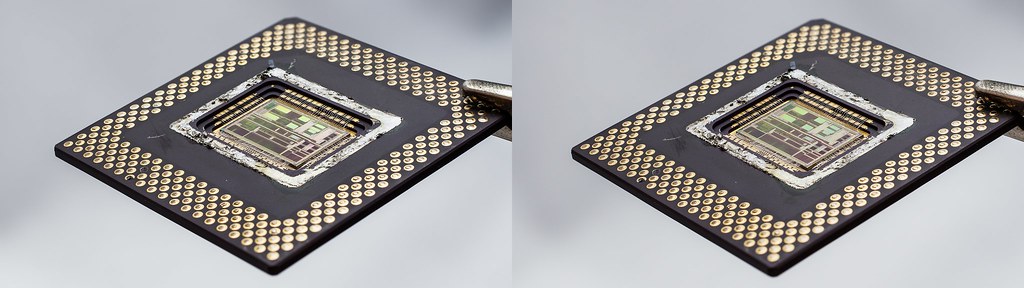
Close-up of a circuit board representing Micron Q4 earnings and memory chip demand

How the stock is priced heading into the report

Despite the bullish demand backdrop, Micron shares trade at roughly 6.8 times projected fiscal 2027 earnings. That is according to The Motley Fool’s analysis. Such a multiple would typically suggest the market expects a downturn rather than sustained growth. That gap between the stock’s valuation and the demand story is part of why today’s guidance carries extra weight. A strong outlook could force investors to reassess how durable this cycle really is.

What to watch in today’s numbers

Investors are expected to focus on several things beyond the headline revenue and earnings-per-share figures. Those include high-bandwidth memory revenue specifically, pricing trends across DRAM and NAND, and management commentary on capacity already locked in with AI chipmakers and cloud providers. Guidance for the first quarter of fiscal 2027 will matter as much as the quarter just reported.

What to watch when Micron reports

Results are due after markets close, with a call for analysts to follow. So much of Micron’s near-term capacity is already spoken for. That means the more consequential number may not be this quarter’s revenue. It may instead be management’s tone on how long the current pricing environment can hold. Investors will also listen for any sign that customers plan to pull back on committed orders.

The bigger picture for chipmakers

Micron’s results will also be read alongside other memory and equipment makers reporting around the same period, including ASML. A strong report from Micron would reinforce a broader narrative. AI infrastructure spending is flowing all the way down to component suppliers, not just to the AI labs and cloud giants at the top of the chain.

That dynamic also shapes how investors should read Micron’s results relative to its peers. South Korean rivals SK Hynix and Samsung compete directly in the high-bandwidth memory market. Any commentary Micron offers about pricing power or capacity constraints will inevitably be compared against how those competitors describe the same demand environment. A consistent message across all three companies, that capacity is effectively sold out well in advance, would carry more weight than any single company’s results alone.

How AI chipmakers and memory suppliers fit together

Memory chips do not compete directly with the AI accelerators made by companies like Nvidia and AMD. But the two categories are tightly linked. Every new generation of AI accelerator requires more high-bandwidth memory to function. That means memory suppliers benefit from the same spending cycle driving demand for the chips that do the actual AI computation. This relationship is part of why Micron’s results are often treated as a leading indicator for AI infrastructure spending more broadly, even though Micron itself does not build the processors that power large AI models.

Common questions about the Micron earnings report

When did Micron report its fiscal Q4 2026 results?

Micron scheduled its results for September 30, 2026, after markets closed. That is according to the company’s own investor announcement.

Why do analysts expect a strong quarter from Micron?

JPMorgan analysts positioned Micron for a beat-and-raise quarter. Reporting from The Motley Fool notes that available memory production capacity has effectively been presold due to AI-driven demand.

What is high-bandwidth memory and why does it matter here?

High-bandwidth memory, or HBM, is a type of memory chip used alongside AI accelerators to move data faster. Demand for HBM has been a major driver of memory chip revenue as AI infrastructure spending has grown.

Is Micron’s stock expensive right now?

According to The Motley Fool, Micron trades at about 6.8 times projected fiscal 2027 earnings. That is a relatively low multiple, suggesting the market has not fully priced in sustained AI-driven demand.

How large is data center spending expected to grow?

The Motley Fool cites estimates putting global data center capital spending at roughly $800 billion in 2026. That figure could rise to $1.3 trillion in 2027 and $3 trillion to $4 trillion by 2030.

More AI and business coverage

Sourcing

  • The Motley Fool — Sept. 30 Could Be the Start of a New Paradigm for Micron. fool.com
  • GlobeNewswire — Micron Technology to Report Fiscal Fourth Quarter Results on September 30, 2026. globenewswire.com

Anthropic’s Leaked IPO Filing Points to a $2 Trillion Price Tag

A prospectus for Anthropic’s initial public offering has leaked. The numbers inside are extraordinary, even by the standards of the current AI boom. The Anthropic IPO filing, reviewed separately by Reuters, Fortune and CNN, shows the maker of the Claude chatbot lost $8.06 billion in 2025. Revenue grew more than tenfold over the same period. The company is still pursuing a public valuation north of $2 trillion.

The filing shows a business scaling faster than almost any technology company before it. It also shows spending commitments large enough to reshape how investors think about the AI industry’s staying power.

What the Anthropic IPO filing actually shows

Anthropic’s revenue reached $4.6 billion in 2025. That is up 1,088% from the year before, according to the prospectus. Its operating loss widened to $8.06 billion, nearly triple the $2.98 billion it lost in 2024. Infrastructure and computing spending tripled to $7.33 billion over the same period. The company reported $20.28 billion in cash on hand at the end of December 2025.

Looking ahead, the filing discloses $518 billion in committed cloud, computing and infrastructure obligations. That figure covers capacity Anthropic has already signed contracts for. Fortune’s reporting says the company expects to need that capacity over roughly the next decade.

Trading screens reflecting market reaction to the Anthropic IPO filing

A valuation that keeps climbing

A filing reported by Axios valued Anthropic at $965 billion. Other accounts of the same prospectus describe a targeted public valuation above $2 trillion once shares begin trading. Either figure would place Anthropic among the largest public listings in history. A report from Uniladtech noted the debt and spending disclosed in the filing could put Anthropic on track to eclipse the stock market debut record set by SpaceX.

A group of former OpenAI researchers founded Anthropic in 2021. It has become one of two companies, alongside OpenAI, that dominate discussion of frontier AI development. Fortune expects the IPO to happen after the November 2026 U.S. midterm elections.

The company’s own warning about its technology

One of the more unusual elements of the filing is how bluntly Anthropic describes the risks of the technology it sells. CNN reported that the prospectus warns Anthropic’s own AI models could pose “existential risks to humanity.” It cautions that increasingly autonomous systems “could behave in unexpected ways, create security problems, be used for fraud or manipulate information.”

The filing also flags a concentration risk. Two unnamed customers accounted for nearly a quarter of Anthropic’s 2025 revenue. Most of the company’s customer contracts are not long-term agreements, according to Fortune’s review of the document.

What happens between now and the listing

A leaked prospectus is not a finished offering. Anthropic has not confirmed a listing date, an exchange, or a final share price range. The numbers in a draft filing can still change before any public sale of stock. Investors will be watching one thing closely: whether the $518 billion in infrastructure commitments is matched by revenue growth steep enough to justify it. That question matters more given how concentrated Anthropic’s revenue currently is among a small number of customers.

The listing will also test how public markets price a company that tells investors its core product carries catastrophic risk. An AI leader warning regulators and shareholders about its own technology, while asking them to fund its expansion, has no close precedent on Wall Street.

What this means beyond Silicon Valley

If Anthropic proceeds toward a $2 trillion valuation, it would rank among the most valuable companies ever to go public. It would compete for capital and attention with established giants rather than other startups. The scale of the $518 billion infrastructure commitment also has knock-on effects for chipmakers, cloud providers and the data-center construction industry. All three stand to benefit if Anthropic’s spending plans hold.

Frequently asked questions

What is the Anthropic IPO filing?

Several news organizations, including Reuters, Fortune and CNN, reviewed a draft prospectus for Anthropic’s planned initial public offering before its formal release. It discloses the company’s financial results, spending commitments and risk factors.

How much money did Anthropic lose in 2025?

The filing reports an operating loss of $8.06 billion for 2025, up from $2.98 billion in 2024, even as revenue grew to $4.6 billion.

What valuation is Anthropic seeking?

Accounts of the prospectus describe a targeted public valuation above $2 trillion, while a valuation of $965 billion was separately reported by Axios in connection with the filing.

When will Anthropic actually go public?

No date has been confirmed. Fortune’s reporting indicates the listing is expected after the November 2026 U.S. midterm elections, but the timeline could shift.

What did Anthropic say about the risks of its own AI models?

The filing reportedly warns that Anthropic’s AI systems could pose existential risks to humanity. It adds that more autonomous systems could behave unpredictably, create security problems, or enable fraud.

Is a leaked IPO filing final?

No. The figures, valuation and timeline in a draft prospectus can all change before a company completes its public offering.

Related coverage on Tamara News

Sources

  • Fortune — Anthropic’s leaked IPO prospectus details steep losses, rapid growth, and a fear that AI could end humanity. fortune.com
  • CNN Business — Anthropic says its AI models pose ‘existential risk to humanity’ in leaked IPO filing. cnn.com