Bumble Just Sold Itself for Less Than a Tenth of What It Was Worth at IPO

The Bumble Ithaca Holdings acquisition announced on October 13 takes the dating app private in an all-cash deal worth $1.3 billion. It ends a rocky five-year run as a public company. Under the terms, Ithaca Holdings will pay Bumble shareholders $6.05 per share in cash. That’s a premium of about 138% over the stock’s unaffected closing price on October 9, and roughly 119% over its 30-day volume-weighted average price.

The deal’s structure says as much about where Bumble has been as where it’s going. A premium that large over recent trading prices reflects just how far the stock had fallen before the announcement, not a sign the company is being bought at a peak.

Inside the Bumble Ithaca Holdings Acquisition Deal

Ithaca describes itself as a holding company focused on “enduring, market-leading technology businesses.” It pairs what it calls frontier technology with operating expertise to renew established companies. It’s co-led by Ravi Gupta and John Hegeman, who will become Bumble’s co-CEOs once the deal closes, working alongside founder Whitney Wolfe Herd. In a joint statement, Gupta and Hegeman said the investment is “a bet on the future of humanity,” framing the acquisition around using technology to support human connection rather than replace it. Reporting on the deal has noted that Ithaca has not yet detailed how it plans to use artificial intelligence within Bumble’s product.

The deal has Bumble’s board unanimous backing. An independent Special Committee, advised by outside legal and financial counsel, recommended the transaction. The full board approved it, with Wolfe Herd recusing herself given her dual role as founder and CEO. Board chair Ann Mather said the committee “determined that this transaction with Ithaca represents the best outcome for our shareholders.” Affiliates of Blackstone, Bumble’s largest shareholder, and Wolfe Herd then approved the deal by written consent, satisfying the shareholder approval requirement without a full vote.

Bumble Ithaca Holdings acquisition illustration

A Steep Drop From a $14 Billion IPO

Bumble went public in February 2021 at a valuation of roughly $14 billion. The $1.3 billion sale price, five years later, reflects a company that has struggled with a sustained decline in paying users and revenue. According to Reuters-sourced figures cited in coverage of the deal, Bumble’s paying user base fell 16.4% to 3.2 million in the second quarter of 2026 alone. Revenue has declined for nearly two consecutive years. Wolfe Herd, who returned to the CEO role in March 2025 after stepping back in 2023, has spent the time since cutting costs and revising the app’s core features, including dropping the rule that required women to message first.

What Happens to Bumble’s Public Listing

Once the transaction closes, Bumble will operate as a privately held company. It will keep offices in London, Austin and New York while remaining headquartered in Austin. Shareholders will receive an information statement under SEC rules, and certain deal participants will file a separate disclosure given the company’s move to private ownership. Bumble said it will still file its Q3 2026 quarterly report by November 9, but will not hold an earnings call for that quarter. That’s a sign the company is already operating with one foot out of the public markets. On social media, Bumble described the sale as “a new chapter, but not a new mission.”

What This Means for the Dating App Sector

Bumble’s exit from public markets lands amid a broader reckoning for dating apps. The sector has struggled with user fatigue, falling engagement among younger users, and intensifying competition for attention. Whether Ithaca’s technology-focused approach can reverse those trends, or whether Bumble simply becomes a smaller, private experiment in product turnaround, will likely take several quarters to become clear. The company won’t be holding public earnings calls to report on it. For related coverage of how investors are reassessing technology valuations more broadly this quarter, see Tamara News’ reporting on warnings over AI data center spending and Anthropic’s warning on self-replicating AI devices.

What People Are Asking About the Bumble Deal

How much is Ithaca Holdings paying for Bumble?
$1.3 billion in an all-cash deal, at $6.05 per share.

Does the deal price represent a premium or a discount for shareholders?
A premium relative to recent trading: about 138% above the unaffected closing price on October 9. It is, however, far below Bumble’s 2021 IPO valuation of roughly $14 billion.

Who will run Bumble after the deal closes?
Ithaca co-founders Ravi Gupta and John Hegeman will become co-CEOs, working alongside founder Whitney Wolfe Herd, who is staying involved.

Why was Bumble’s stock down so much before the sale?
Paying users fell 16.4% to 3.2 million in Q2 2026 alone, and revenue had declined for nearly two consecutive years.

Will Bumble still trade on the stock market?
No. Once the deal closes, Bumble becomes a privately held company. It will no longer operate as a publicly traded business or hold quarterly earnings calls.

Sources

Goldman Sachs Posts a Blowout Quarter While Wells Fargo Stumbles

Goldman Sachs Q3 2026 earnings landed well above what Wall Street expected this week. The bank posted one of its strongest quarters on record, even as rivals had a mixed showing. Goldman reported diluted earnings per share of $17.01 against a consensus estimate of $13.65. Revenue came in at $18.68 billion versus the $17.03 billion analysts had penciled in. The results, released October 13, kicked off a busy stretch of big-bank reporting. They showed just how differently the top US lenders are faring three years into a trading-driven earnings cycle.

CEO David Solomon described the results as reflecting “a complicated operating environment” alongside the firm’s “second highest quarterly net revenues.” That characterization captures both the headline beat and the caveats underneath it.

Where Goldman Sachs Q3 2026 Earnings Growth Actually Came From

The quarter’s strength was concentrated in trading and wealth management, rather than traditional dealmaking. Equities revenue reached $6.44 billion, up 72% year over year, while equities financing revenue rose 96%. Advisory fees hit a record $1.65 billion. Asset and wealth management revenue climbed 14% to $5.05 billion, and assets under supervision reached a record $4.1 trillion. Goldman’s year-to-date efficiency ratio improved to 59.4% from 62.1% a year earlier. The bank is converting revenue into profit more effectively, even after absorbing a roughly $450 million charitable contribution that weighed on the bottom line. Net earnings for the quarter came to $5.29 billion, and Goldman’s official filing puts annualized return on equity at 18.7%.

Not every signal in the report was positive. Goldman’s standardized CET1 capital ratio, a core measure of financial cushioning, fell to 12.4% from 14.3% at the end of 2025. That partly reflects the pace of share buybacks: the bank repurchased 2.9 million shares at an average price of $1,048.73 during the quarter. The investment banking fee backlog also declined from the end of the second quarter, driven mainly by a softer advisory activity pipeline, even as realized advisory fees hit a record.

Goldman Sachs Q3 2026 earnings illustration

Wells Fargo Didn’t Share in the Enthusiasm

Wells Fargo’s own Q3 2026 results, reported the same week, told a less flattering story. Revenue came in at $21.87 billion, a figure that disappointed traders and sent the stock down 3% to $81.08 in early trading. JPMorgan Chase, meanwhile, landed somewhere in the middle: shares were little changed around $334.39, as the market digested results that didn’t move the needle sharply in either direction. The divergence underscores how unevenly this earnings season has rewarded different business mixes. Banks leaning hardest into trading and wealth management outperformed those more dependent on traditional lending and deposit income.

What the Market Did With the News

Goldman shares rose roughly 1% in early trading to $904.09 following the release. That move was part of a broader rally that lifted the Financial Select Sector SPDR Fund (XLF) about 1% to $55.62, even as the S&P 500-tracking SPY dipped slightly. The muted index-level reaction suggests investors treated Goldman’s beat as a company-specific story, rather than a signal for the sector as a whole, especially with Wells Fargo’s weaker print landing in the same news cycle.

What to Watch as Earnings Season Continues

The biggest US banks are now mostly past their Q3 reporting dates. Attention shifts to what the mixed results mean for the rest of the financial sector heading into year-end. Three things stand out: capital ratios under pressure from buybacks, advisory pipelines that look softer than realized fee income suggests, and a trading environment that has rewarded scale and equities exposure over traditional lending. For related coverage of how the broader markets and monetary policy backdrop are shaping this earnings cycle, see Tamara News’ reporting on the Federal Reserve’s October rate decision and the widening gap between stock market highs and consumer sentiment.

Common Questions About This Earnings Season

How much did Goldman Sachs beat earnings estimates by?
Goldman posted diluted EPS of $17.01 against a consensus estimate of $13.65, and revenue of $18.68 billion against an estimate of $17.03 billion.

What drove Goldman’s strong quarter?
Equities trading revenue up 72% year over year, record advisory fees of $1.65 billion, and asset and wealth management revenue up 14%, with assets under supervision hitting a record $4.1 trillion.

Why did Wells Fargo’s stock fall after earnings?
Wells Fargo reported Q3 2026 revenue of $21.87 billion, which disappointed traders and sent shares down 3% to $81.08.

Did JPMorgan Chase have a good or bad quarter?
JPMorgan’s stock was little changed after its report, landing between Goldman’s strong beat and Wells Fargo’s disappointing print.

Is Goldman Sachs in a weaker financial position despite the earnings beat?
Its capital cushion narrowed somewhat. The standardized CET1 ratio fell to 12.4% from 14.3% at the end of 2025, partly due to share buybacks.

Sources

Companies House Identity Verification: 5 Weeks Left Before It Bites

Companies House identity verification becomes unavoidable for existing UK directors in about five weeks. GOV.UK says the rule became law on 18 November 2025 and started a 12-month transition period. Existing directors must verify by the time they file their next confirmation statement within that window. Sources give the end date as 17 or 18 November 2026, so plan for the earlier one.

Inside this guide

Who must complete Companies House identity verification

Directors and people with significant control (PSCs) must verify, according to the GOV.UK guidance. Law Debenture adds that LLP members are covered too and that nationality and residence do not matter. A foreign owner of a UK company is covered in the same way as a British one.

Many people have not yet acted. The Law Debenture analysis cites Companies House figures from April to June 2026. By the end of June, 55% of directors, 50% of LLP members and 42% of PSCs had told Companies House they were verified. Law Debenture reads that as roughly three in ten directors, and more than half of PSCs, still to complete the step. The firm also says it sees no sign of a significant grace period after the deadline.

Companies House identity verification applies to directors worldwide, including founders in São Paulo
Directors based overseas, such as in São Paulo, must verify too.

The first prosecutions show the risk is real

On 16 September 2026, three people appeared at City of London Magistrates’ Court, according to a GOV.UK press release of 17 September. Two acted as directors while unverified, and one was charged for not stopping that. The fines were £166, £307 and £80, plus costs and surcharges. The amounts are small, but the same release says each company also filed its confirmation statement late. The wider consequences are the real cost: Law Debenture lists filing restrictions, penalties and public marking on the register.

Four ways to verify your identity

GOV.UK lists four routes. The first is GOV.UK One Login online, which needs a photo ID such as a biometric passport from any country or a UK driving licence. The second uses UK bank or building society details with a National Insurance number. The third is in person at a Post Office, after you enter your ID details on GOV.UK. The fourth is an Authorised Corporate Service Provider (ACSP), such as an accountant or solicitor, who verifies you on your behalf.

Check your document’s validity first. GOV.UK says an expired passport cannot be used with the One Login app. After verification, you receive a Companies House personal code. Law Debenture says existing directors need it at their next confirmation statement.

If you run a UK company from outside the UK

Take a hypothetical founder, Rafael, who lives in São Paulo and owns a UK limited company through which he sells software. He holds a Brazilian biometric passport, so the One Login app can verify him in minutes. Without one, he could use an ACSP, which Law Debenture says can verify people in more than 120 countries without travel to the UK. Rafael is an illustration, not a real client.

A five-week plan before the window closes

Begin with your own record. List every director and PSC in each company you control. Next, ask each person to verify, and collect their personal codes. Then check your confirmation statement dates, because the filing is where the code is needed. Last, keep proof of each verification. If you are weighing a UK entity, see our company formation service. For Gulf rules on the same theme, read our UAE company law checklist.

This article is general information, not legal advice. Confirm your own dates on GOV.UK.

What the rule means for new appointments

The transition period only concerns existing directors. GOV.UK’s press release says newly appointed directors had to verify before acting as a director from 18 November 2025. If you plan to add a director to a UK company, verify that person first. Otherwise the new director risks acting unlawfully on day one. The same release says existing directors verify at the next confirmation statement, so check when yours falls due in the register.

Verification questions answered

Who has to verify?

Directors and people with significant control must verify. Law Debenture adds that LLP members are covered, whatever their nationality or residence.

When is the deadline?

GOV.UK describes a 12-month transition from 18 November 2025. Sources give 17 or 18 November 2026 as the end date, so aim to finish well before.

Is it free?

Law Debenture says verification through GOV.UK One Login is free. An ACSP may charge a fee, so ask first.

Can I verify without a UK passport?

Yes. GOV.UK accepts a biometric passport from any country for One Login, and the ACSP route is another option.

What happens if I do not verify?

Law Debenture lists filing restrictions, penalties and public marking on the register. Acting as an unverified director is an offence, and three people were fined in September 2026.

Sources

Saudi Property Company Registration: What Foreign Firms Must File

Saudi property company registration is now a defined process for foreign firms that want to own property without running a business in the kingdom. Gulf Business reported on 6 June 2026 that the Ministry of Investment added a chapter on registering non-Saudi companies for property ownership to its Investor Guide 2026. The service was available through the ministry’s electronic portal at the time. The piece cites a Saudi Gazette report, and the ministry’s own pages are the place to confirm current rules.

Contents

Who this route is for

The rule covers non-resident foreign companies that want to own property in Saudi Arabia “without engaging in economic activities,” in Gulf Business’s words. It does not cover a firm that wants to trade, hire or run operations in the kingdom. Those firms follow the ministry’s investment licensing process, which the Ministry of Investment site links to.

Saudi property company registration covers foreign firms that want to own property in Riyadh
The north side of Riyadh.

The Saudi property company registration checklist

According to Gulf Business, a foreign company needs six items. It needs a commercial registration certificate from its home country, translated by an accredited office and authenticated by the Saudi Embassy. It needs its articles of incorporation, put through the same translation and authentication process. It needs an authorisation document appointing a company representative, again authenticated. It needs a natural person named as authorised representative through a certified power of attorney. A company without a Saudi-recognised identification document must first get a digital identity through a Saudi diplomatic mission abroad. For annual updates, the ownership structure or management must not have changed since the original registration.

Think of the process as three layers: corporate proof, a named human representative, and an identity the Saudi system recognises. A gap in any layer stops the file.

How this differs from an operating licence

A firm that wants to trade, hire staff or open an office in Saudi Arabia needs an investment licence from the ministry, not this property registration. The two routes answer different questions. The property route asks who owns the real estate and who acts for the owner. The operating route asks what the business will do in the kingdom.

The distinction matters because the property route is limited by design. A company that registers only to own property cannot use that registration to run commercial activity. A company that later wants to earn rent as part of a wider business should speak to a Saudi lawyer before it signs anything.

After registration

The new chapter also covers property management and disposal obligations, bank account procedures, and updates to company and representative details. Each of those steps carries its own paperwork, so plan for ongoing filings rather than a one-time registration.

Take a hypothetical case. Camila is a Colombian investor who owns a holding company in Bogotá and wants to buy an office floor in Riyadh. She would start with her home-country certificate and articles. She would then arrange translations, Saudi Embassy authentication and a power of attorney for a named representative. Camila is an illustration only.

A sensible order for the paperwork

The order below is practical advice, not an official sequence. Start by naming the representative, because that person’s power of attorney and identity documents shape the rest of the file. Next, order certified copies of the home-country registration certificate and articles. Then book accredited translation, because the Saudi Embassy authenticates translated documents. Finally, allow time for the digital identity step if the company has no Saudi-recognised ID, since it runs through a Saudi diplomatic mission abroad.

Keep a single folder with originals, translations and authentication stamps. The annual update rule also means you should keep the company’s ownership and management records stable. A change in either can reopen the process.

What the guide does not tell you

Gulf Business states no fee and no effective date beyond the service being available at the time of the report. Readers should not assume costs or timelines. The report also relies on the Saudi Gazette, and Tamara News has not seen the full Investor Guide chapter. A foreign company should also take local legal advice on tax, financing and title rules, because the chapter covers registration, not every legal question about buying property. This article is general information, not legal advice.

For wider context on how Gulf governments are reshaping business law, read our coverage of the UAE commercial companies law amendments and the latest on OPEC’s output decision. Founders comparing jurisdictions can start with our company formation service.

Saudi registration: quick answers

Who can use this registration route?

Non-resident foreign companies that want to own property in Saudi Arabia without engaging in economic activities.

Who issues the rules?

Gulf Business reports that the Ministry of Investment added the chapter to its Investor Guide 2026.

Do documents need translation?

Yes. The commercial registration certificate and articles of incorporation need accredited translation and authentication by the Saudi Embassy.

Do I need a local representative?

Yes. The company must appoint a natural person as authorised representative through a certified power of attorney.

What does it cost?

The report does not state any fee, so check the ministry’s portal.

Sources

Singapore ONE Pass Replaces Tech.Pass, With a S$30,000 Bar

The Singapore ONE Pass will gain a dedicated AI and Technology track on 28 January 2027, and it replaces Tech.Pass. An EY tax alert says the Ministry of Manpower (MOM) confirmed the opening date and the eligibility rules. The same alert says the track was first announced on 3 March 2026. From 28 January 2027, the Economic Development Board (EDB) stops taking new and renewal Tech.Pass applications.

In this guide

What the Singapore ONE Pass AI and Tech track requires

The pay test is the first hurdle. Applicants must have earned at least S$30,000 a month, or the foreign-currency equivalent, for 12 consecutive months before applying. At least S$22,500 of that monthly figure must be fixed salary. The rest can come from vested non-cash pay such as employee stock options and share awards, and MOM assesses that portion.

The experience test is just as firm. Applicants need at least five cumulative years in the past ten as a founder, a C-suite officer, a technical professional, or a mix of those roles. The applicant’s current or most recent employer must be a tech company, the tech division of a larger company, or a tech venture capital firm.

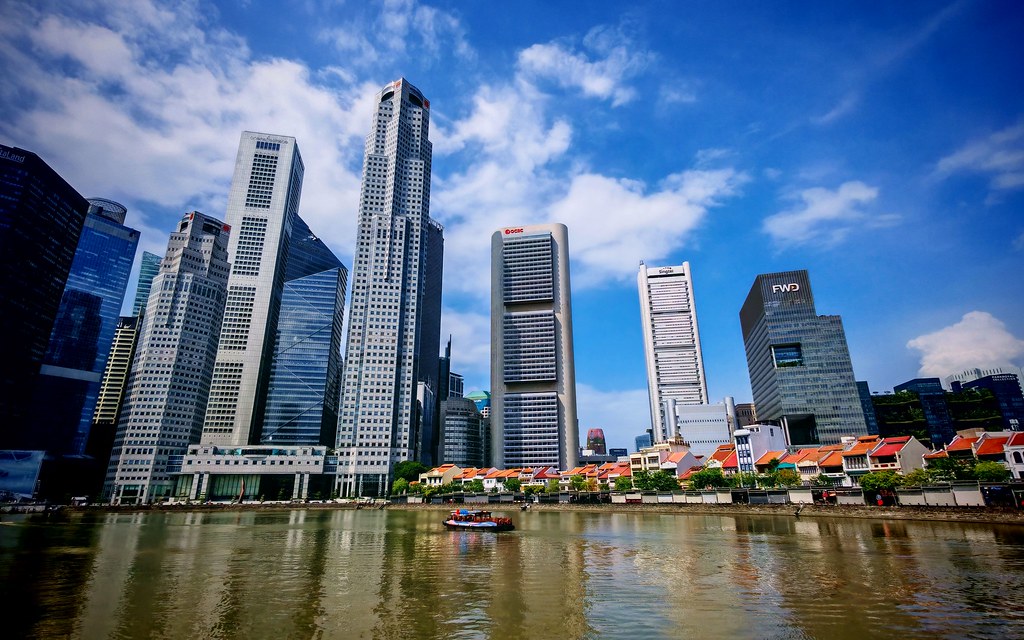
Singapore ONE Pass applicants will work in the Raffles Place financial district
Raffles Place, Singapore’s financial district.

The company-size test

The employer must also meet a scale threshold. It needs at least one of these: a valuation or market capitalisation of US$500 million, annual revenue of US$200 million, assets under management of US$500 million, or, for a tech start-up, US$30 million in funds raised. This rule screens out smaller employers even when the individual’s pay clears the bar.

Applicants must submit 12 months of payslips, proof of the qualifying founder, C-suite or technical roles, and recent financial information about the employer’s scale. The law-firm summary at Clark Hill lists the same documents and the same thresholds.

If you hold Tech.Pass today

Existing Tech.Pass holders keep their passes until those passes expire. The EY alert says eligible holders can then apply for the AI and Tech track or choose another work pass. The EDB’s own Tech.Pass page remains the place to confirm how the scheme winds down.

Consider a hypothetical case. Priya is a senior machine-learning engineer from Bengaluru who earns S$32,000 a month at a large AI company. Her fixed salary is S$24,000 and the rest is vested stock. She clears the pay test, because S$22,500 a month in fixed salary equals S$270,000 a year, and her total pay comes to S$384,000. She would still need to show that her employer meets one of the scale thresholds. Priya is an illustration, not a real applicant.

What the pass gives you

The pass runs for up to five years per issuance. According to EY, it is exempt from the Complementarity Assessment Framework (COMPASS) and the Fair Consideration Framework. Holders can take on several professional activities, or move between employers, without a fresh work pass application.

Renewal has two routes. A holder can show an average fixed monthly salary of at least S$30,000 over the preceding five years in Singapore. Alternatively, a holder can run a Singapore company with at least five local employees who each earn at least the prevailing Employment Pass qualifying salary.

Who will likely fall short

Many strong candidates will miss the bar. A founder whose start-up has raised less than US$30 million fails the scale test. An engineer paid mostly in cash below S$22,500 a month fails the fixed-salary test. A consultant who moved between non-tech employers fails the employer test. The pass targets a narrow group, so most skilled workers should look at other Singapore work passes instead.

Key dates and next steps

Three dates matter. Applications open on 28 January 2027. Tech.Pass stops accepting new and renewal applications the same day. Existing passes stay valid until they expire. If you plan to apply, start collecting 12 months of payslips now, and ask your employer’s finance team for the scale evidence.

The sources reviewed do not say how the pass treats dependants. Check MOM’s official guidance before you plan a family move. Readers who want a quick read on their own options can try our visa eligibility checker. Founders weighing a Singapore base can read our company formation guide.

Questions on the ONE Pass change

When does the AI and Tech track open?

Applications open on 28 January 2027, according to the MOM announcement summarised by EY. Tech.Pass stops taking new and renewal applications on that date.

What salary does the pass require?

Applicants need at least S$30,000 a month for 12 consecutive months. At least S$22,500 of that must be fixed salary, and vested non-cash pay can cover the rest.

Does my employer have to be a big company?

Yes. The employer must meet one scale test: a US$500 million valuation or market cap, US$200 million revenue, US$500 million assets under management, or US$30 million raised for a start-up.

What happens to my current Tech.Pass?

You keep it until it expires. After that, you can apply for the AI and Tech track if you qualify, or choose another work pass.

How long does the new pass last?

It is issued for up to five years at a time, with renewal rules based on salary history or on running a Singapore company with local staff.

Related coverage

For more on talent and business rules, read our report on the UAE commercial companies law changes and our explainer on Australia’s skilled visa salary thresholds.

Sources