
Brazil’s Bolsonaro election defeat is now a legal and political dispute. Luiz Inácio Lula da Silva won the presidential run-off on Sunday with 51.8% of the vote to Flávio Bolsonaro’s 48.2%, a margin of nearly 4.4 million votes, according to The Week, citing the electoral court’s results. Bolsonaro has not conceded, and Al Jazeera reports he arrived in Miami on 28 October with his family after leaving Brazil.
Contents
- The result
- The passport order
- The annulment bid
- What happens to the right
- Why it matters for business and travel
- Brazil election questions
The result
The Week reports that Lula’s win means that by the end of the new term he will have spent 16 years in power in total, a record in Brazil’s democratic history. It adds that Lula became the first candidate since the end of the military dictatorship in 1985 to win the presidency after finishing second in the first round; Bolsonaro had led by more than 2.2 million votes in that round. Bolsonaro’s Liberal Party has recognised the result, according to Al Jazeera.
The passport order
Supreme Court Justice Alexandre de Moraes ordered Bolsonaro to surrender his passports within 24 hours, revoked them and barred him from leaving the country, as part of a preliminary investigation into money laundering involving Bolsonaro and attorney Willer Tomaz, bluewin reports. Bolsonaro denies wrongdoing and, in a video on Monday, said he would surrender the passports and contest the measure, calling it unjustified. By Tuesday evening the Federal Police, citing the news portal G1, said the deadline had expired without compliance and were examining whether he had left. Al Jazeera’s later account says he crossed by land into Argentina, flew to Ecuador and then to Miami, and that the US State Department said it will issue visas to the family. We have not been able to confirm those travel details independently, so they are Al Jazeera’s account.
The annulment bid
According to Al Jazeera, Bolsonaro said it was “impossible” to accept the outcome and plans to petition to annul the election, citing a Supreme Court decision that extended voting by two hours. The same report says official records show fewer than 35,000 votes were cast during that extension, against a margin of more than 4.4 million. It also says US President Donald Trump and Argentina’s Javier Milei have not acknowledged the result and that Trump said, without evidence, that the election appeared rigged.
What happens to the right
Analyst Paulo Roberto de Souza told Al Jazeera he expects a power struggle among conservatives and sees São Paulo Governor Tarcísio de Freitas as the main figure in reorganising the right. He said the Bolsonaro family is more likely to endorse than to play, and that a Bolsonaro running in 2030 is unlikely; another voter quoted disagrees. These are one analyst’s views, not outcomes.
Why it matters for business and travel
As an illustration, not a real case: a Brazilian founder with suppliers in the US should expect political noise but no change to trade rules from the vote itself; any change would come from government decisions, which we will cover if they are announced. For wider political context see our reports on Venezuela’s political transition and Israel’s election test.
Brazil election questions
Who won Brazil’s run-off?
Lula, with 51.8% to Flávio Bolsonaro’s 48.2%, per the electoral court results cited by The Week.
What was the margin?
Nearly 4.4 million votes.
Has Bolsonaro conceded?
No. bluewin says he has not explicitly conceded, and Al Jazeera says he plans to petition to annul the result.
What did the Supreme Court order?
Justice Moraes ordered him to surrender his passports and barred him from leaving the country in a money laundering probe he denies.
Where is Bolsonaro now?
Al Jazeera reports he landed in Miami on 28 October.
Did the extra voting time change the result?
Al Jazeera says fewer than 35,000 votes were cast in the two-hour extension, against a margin above 4.4 million.
Sources
- The Week — Lula wins Brazil presidential election. https://www.theweek.in/news/world/2026/10/26/lula-wins-brazil-presidential-election.amp.html
- bluewin — Brazil election loser Bolsonaro refuses to hand over his passports. https://www.bluewin.ch/en/news/brazil-election-loser-bolsonaro-refuses-to-hand-over-his-passports-despite-court-order-li.3651031
- Al Jazeera — What’s next for Brazil’s Flavio Bolsonaro after election defeat. https://www.aljazeera.com/news/2026/10/28/whats-next-for-brazils-flavio-bolsonaro-after-election-defeat
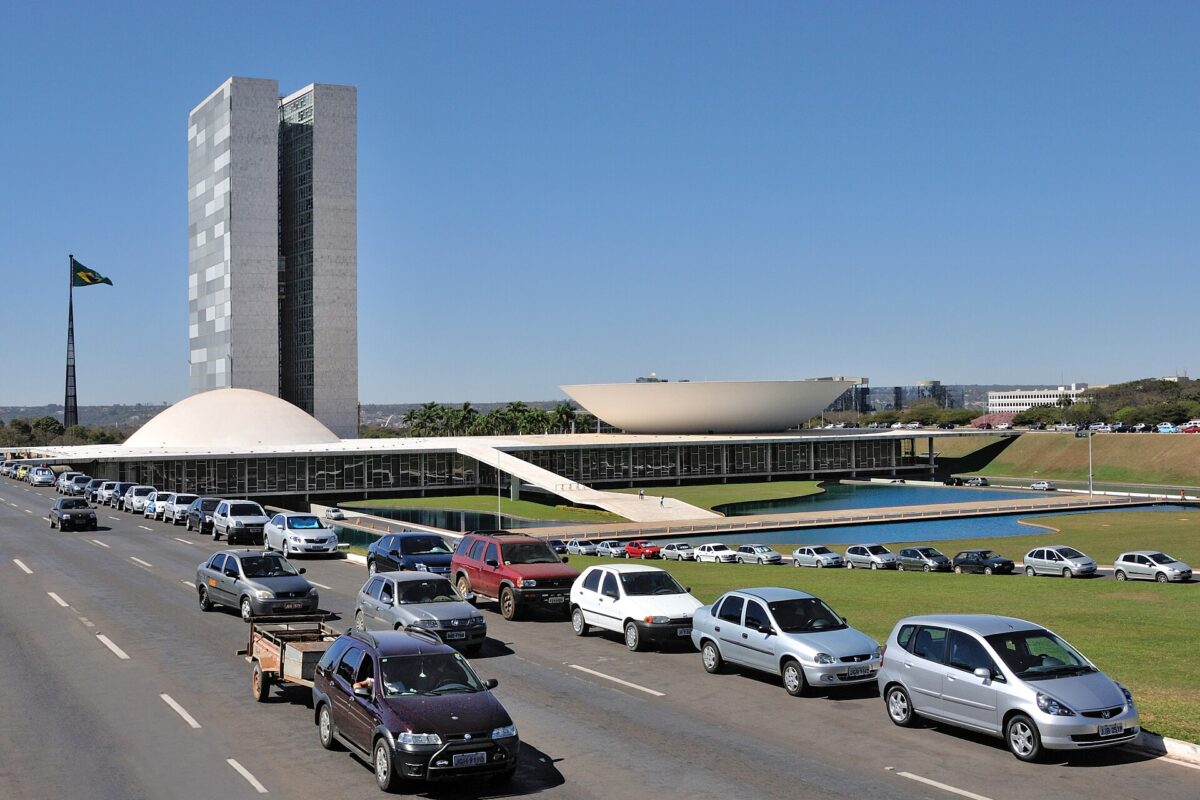
Image: Brasilia National Congress Buildings, CC BY-SA 3.0, via Wikimedia Commons.
