Australia Lifts Skilled Visa Salary Floors for 482 and 186

The Australia skilled visa salary threshold rose on 1 July 2026, and it affects anyone sponsored on the Skills in Demand (subclass 482) or Employer Nomination Scheme (subclass 186) visas. Erickson Immigration Group reports that the Core Skills Income Threshold is now AUD 79,499, up from AUD 76,515. This explainer sets out the numbers, how they are set, and what it means for workers and employers.

At a glance

The numbers

Under the figures reported by the law firm, the Core Skills Income Threshold rose from AUD 76,515 to AUD 79,499, and the Specialist Skills Income Threshold rose from AUD 141,210 to AUD 146,717. Both apply to subclass 482 and 186 applications lodged on or after 1 July 2026. Khaleej Times repeats the same figures in its roundup of 2026 visa changes. Note that the source is a law firm rather than the government, so confirm the amounts with the Department of Home Affairs before lodging.

How the threshold is set

The thresholds are indexed every year under regulation 5.42A of the Migration Regulations, using Average Weekly Ordinary Time Earnings data. The firm says the 2026-27 figures use data for November 2025, are about 3.9% higher, and take effect automatically on 1 July with no new legislative instrument needed. The underlying earnings series comes from the Australian Bureau of Statistics.

Who it affects

The thresholds apply to the salary an employer offers a sponsored worker, on top of market-rate and other sponsorship requirements. Employers hiring overseas will need to budget for the new floor, and workers negotiating offers can use it as a minimum. The changes only apply to applications lodged from 1 July, so earlier lodgements follow the previous figures.

A worked example

Imagine a hypothetical Pakistani IT specialist, Hira, offered AUD 78,000 by a Melbourne employer for a role under the core skills pathway. Before 1 July that salary would have cleared AUD 76,515. For an application lodged now it falls below AUD 79,499, so the employer would need to raise the offer or the role would not qualify under that pathway. The example is for illustration only and does not account for market-rate checks.

If you are comparing destinations, read our coverage of Australia’s student visa reform and the UK rule changes, or run your profile through the visa eligibility checker.

Salary threshold FAQ

What is the new Core Skills Income Threshold?

AUD 79,499 for applications lodged on or after 1 July 2026, per Erickson Immigration Group.

What is the Specialist Skills Income Threshold now?

AUD 146,717, up from AUD 141,210.

Which visas does it cover?

The Skills in Demand subclass 482 and Employer Nomination Scheme subclass 186.

How much did it rise?

About 3.9%, according to the firm’s reading of the indexation formula.

Where do I check the official figure?

On the Department of Home Affairs website before lodging an application.

More from us: the Australian student visa changes.

Six More Canadian Cities Just Got Shut Out of Cheap Foreign Labour

Six more Canadian cities just lost access to low-wage foreign labour, at least for now. The latest Canada work permit freeze update, effective October 9, 2026, adds Halifax, Fredericton, Kingston, St. Catharines-Niagara, Regina and Lethbridge to the list of regions where most new low-wage work permit applications face an automatic refusal.

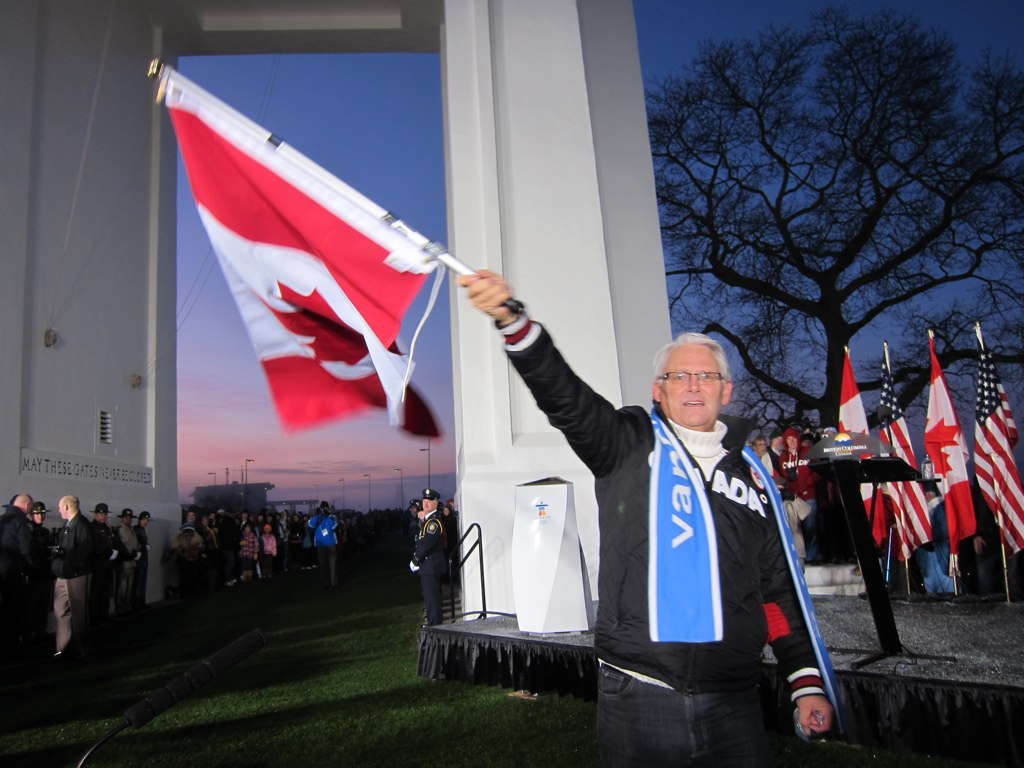
Canada work permit freeze shown through a Canadian flag outside a federal building

What triggered this round of the Canada work permit freeze

Employment and Social Development Canada updates regional unemployment rates every quarter. Any census metropolitan area with unemployment at or above 6% loses eligibility for most new low-wage Labour Market Impact Assessment applications. This quarter’s update pushed six more cities over that line. That is according to Moving2Canada’s analysis of the new figures.

The newly restricted regions and their unemployment rates are Halifax at 6.1%, Fredericton at 6.2%, Kingston at 6.3%, St. Catharines-Niagara at 6.5%, Regina at 6.7% and Lethbridge at 6.0%. Two regions moved the other way. Kamloops fell from 7.0% in July to 3.6%. Chilliwack dropped from 7.9% to 5.6%. Both regained eligibility for low-wage LMIA processing as a result.

How many regions are frozen now

Thirty census metropolitan areas now sit at or above the 6% threshold, up from roughly 26 last quarter. Only 11 regions remain below the line, down from 15 in July. The new figures apply to LMIA applications submitted between October 9, 2026 and January 7, 2027. Employment and Social Development Canada will issue the next quarterly update on January 8, 2027.

Warehouse workers in a region now covered by the Canada work permit freeze

The restriction has applied nationally since September 2024. It is part of a broader effort to prioritize Canadian and permanent resident workers in high-unemployment areas. We covered a related fairness change for employers in our report on Canada’s new work permit refusal rules. We also covered a related processing-time update in our piece on personalized wait-time estimates.

Who can still get an LMIA approved

Employers in a restricted region are not shut out completely. Raising the offered wage to the provincial or territorial median for that occupation moves the job into the high-wage stream. The freeze does not touch that stream at all. Employers can also simply wait roughly three months for the next quarterly update, in case local unemployment improves by then.

Several occupation categories are exempt from the freeze regardless of location. These include primary agriculture, construction, food manufacturing, hospital work, nursing and residential care, certain in-home caregiver roles, and short-duration jobs of 120 days or less that meet specific conditions. Workers already on a low-wage permit who cannot get it extended must stop working once that permit expires. They may still apply for a visitor record to remain in Canada without working.

That visitor-record option matters more than it might sound. It keeps a worker’s legal status intact while they look for a different path forward, rather than forcing them to leave the country the moment their work permit lapses.

Why this matters beyond Canada’s borders

Workers applying from abroad often choose a destination country partly based on how fast and how reliably a job offer can clear the paperwork. A freeze like this one changes those odds by city, not just by country. The calculation looks different for a worker eyeing Halifax than one eyeing Chilliwack this quarter, even though both cities sit in the same country under the same federal rules. Other countries are tightening labour rules too. The Netherlands recently rewrote its own work permit framework, a shift we detailed in our report on the Dutch changes.

Recruiters and employers who move workers between regions now have to track two moving targets: each province’s labour rules, and each city’s quarterly unemployment swing. A plan built around one city in July can look very different by October, as this quarter’s list change shows.

What happens next for Canada’s low-wage stream

The next scheduled update lands January 8, 2027. Quarterly unemployment swings have moved cities on and off this list before, in both directions. Employers in newly restricted cities who need workers soon have two realistic paths. They can raise wages into the high-wage stream, or they can wait out the quarter. Either way, nothing about this freeze is permanent for any single city. It resets every three months as the national jobs picture shifts.

Workers and employers alike are left watching the same quarterly calendar now. A city near the 6% line in October could tip either way by January, depending on local hiring and layoffs between now and then. That uncertainty is itself a planning cost, even before a single application gets filed.

Common questions about the Canada work permit freeze

Which cities were just added to the Canada work permit freeze?

Halifax, Fredericton, Kingston, St. Catharines-Niagara, Regina and Lethbridge were added effective October 9, 2026, after their unemployment rates rose to 6% or higher.

How many Canadian regions are affected by the freeze in total?

Thirty census metropolitan areas now have unemployment at or above the 6% threshold that triggers the low-wage LMIA restriction.

Can an employer still hire a foreign worker in a frozen region?

Yes, if the employer raises the wage to the provincial or territorial median for that occupation, which moves the job into the unrestricted high-wage stream.

How long does this version of the freeze last?

It applies to applications submitted from October 9, 2026 through January 7, 2027, when the next quarterly unemployment update takes effect.

Which jobs are exempt from the low-wage LMIA freeze?

Primary agriculture, construction, food manufacturing, hospital and residential care roles, certain in-home caregivers, and short-duration jobs of 120 days or less under specific conditions are all exempt.

Canada Extends Low-Wage LMIA Freeze to Six More Cities

Canada has widened its low-wage LMIA freeze to six more cities. According to CIC News, the freeze now covers Halifax, Fredericton, Kingston, St. Catharines-Niagara, Regina and Lethbridge, and runs from 9 October 2026 to 7 January 2027. Employers in those areas cannot get new low-wage Labour Market Impact Assessments (LMIAs) for non-exempt jobs during that period.

On this page

The six new cities

CIC News reports that 24 labour markets stay under the freeze from earlier rounds, while Kamloops and Chilliwack have been taken off the list. The six additions and the unemployment rates the outlet lists for them are Halifax (6.1%), Fredericton (6.2%), Kingston (6.3%), St. Catharines-Niagara (6.5%), Regina (6.7%) and Lethbridge (6.0%). The article says the list is next scheduled to be updated on 8 January 2027.

How the freeze works

The freeze applies to the low-wage stream of the Temporary Foreign Worker Program in census metropolitan areas where unemployment is 6% or higher. As CIC News describes it, a job counts as low-wage when it pays below 120% of the provincial or territorial median wage. The hourly cut-offs it lists include $36.92 in Ontario, $37.50 in Alberta, $38.40 in British Columbia, $34.62 in Saskatchewan, $31.96 in Nova Scotia and $31.73 in New Brunswick. The outlet says these figures apply to LMIAs received on or after 17 July 2026 and draw on Job Bank data.

In practice, an employer in a listed city offering a job below its province’s threshold cannot start a new hire or a renewal through the LMIA route while the freeze lasts. Jobs paying above the threshold are not caught by the low-wage freeze.

Who is exempt

CIC News lists several exemptions: primary agriculture, construction, food manufacturing, hospitals, nursing and residential care facilities, and private households hiring nurses, childcare providers or personal support workers as in-home caregivers. Employers can also ask for case-specific exemptions for temporary, highly mobile roles such as fair, carnival or concert work.

A worked example

Consider a hypothetical Mexican cook, Laura, whose employer in Regina planned to renew her work permit through a new LMIA at a wage below Saskatchewan’s $34.62 line. Under the freeze as CIC News describes it, that employer could not start the LMIA while the pause lasts, so Laura’s plan would need another route, such as an employer-specific permit not tied to the LMIA stream, a wage offer above the threshold, or a different eligible employer. Her case is illustrative only; anyone in a similar position should confirm the facts with the employer and a regulated adviser.

One related change from August: CIC News notes that on 21 August 2026 Canada’s immigration department extended the concurrent-processing window for in-Canada work permit applications from 30 to 60 days. It also reports that workers who apply to extend before their permit expires may keep working under the old conditions while they wait, provided they stay in Canada.

What comes next

The next review of the affected-area list is scheduled for 8 January 2027, and cities can move on or off depending on local unemployment. Workers and employers should check the current list on the government’s refusal-to-process page before filing. For other recent changes, read our explainer on Canada’s personalised work permit processing times and the Ontario earnings-points pathway. If you are weighing options across countries, our visa eligibility checker can narrow them down. You can also read CIC News on personalised processing times.

Low-wage LMIA freeze: questions answered

What is the low-wage LMIA freeze?

It is a pause on processing low-wage LMIAs in Canadian cities with unemployment of 6% or higher, as reported by CIC News. It now runs from 9 October 2026 to 7 January 2027.

Which cities were added?

Halifax, Fredericton, Kingston, St. Catharines-Niagara, Regina and Lethbridge were added, while Kamloops and Chilliwack were removed.

Does the freeze cancel my current work permit?

The reporting describes a limit on new LMIA-based hiring and renewals by employers, not the cancellation of permits already issued. Check your permit conditions and expiry date.

Which jobs are exempt?

CIC News lists primary agriculture, construction, food manufacturing, hospitals, nursing and residential care, and in-home caregiver roles in private households.

When is the list reviewed next?

The next update to the affected-area list is scheduled for 8 January 2027.

Related coverage: how personalised processing times work.

October 2026 Visa Bulletin: EB-2, EB-3 Dates Move Back

The State Department’s October 2026 Visa Bulletin, the first of fiscal year 2027, shows some employment-based green card categories moving backward for applicants worldwide. The October 2026 Visa Bulletin sets the EB-2 final action date for “all chargeability” at 1 January 2025 and EB-3 at 15 May 2024, and says some Rest of World categories retrogressed to keep issuances within quarterly and annual limits.

In this report

The key dates

Final action dates for October 2026, per the bulletin (numbers are available only to applicants with an earlier priority date):

  • EB-1: current for all chargeability; 1 July 2023 for China; 1 February 2023 for India.
  • EB-2: 1 January 2025 for all chargeability; 1 October 2021 for China; 1 November 2013 for India.
  • EB-3: 15 May 2024 for all chargeability; 8 January 2022 for China; 1 January 2014 for India.
  • EB-3 Other Workers: 1 January 2022 for all chargeability; 1 October 2019 for China; 1 January 2014 for India.

Why dates moved back

The bulletin says retrogression keeps issuances within FY2027 limits, does not name every affected category, and says the situation is being monitored and adjustments may follow. It also notes that the annual limit for Other Workers is reduced by about 150 for FY2027 under a NACARA provision. A summary from law firm Grape Law, reported in its October immigration update, also notes the F4 family category has reached priority dates around October 2011.

How to read it as an applicant

Take a Chinese researcher with an EB-2 priority date of March 2021: under the China column the final action date of 1 October 2021 means that case is current, whereas a worldwide applicant with a 2025 date would not be. Dates apply per country of birth, not citizenship, and USCIS separately publishes which chart adjustment-of-status filers must use each month. Check both before filing. Policy shifts elsewhere, such as the revised public charge assessment, can matter as much as the queue.

What happens next

The Department of State publishes a new bulletin monthly, so November’s will show whether the retrogression deepens. Use our visa eligibility checker to compare pathways, and confirm your own priority date against the official bulletin before acting. See also the H-1B fee ruling.

October 2026 Visa Bulletin: questions

What is a final action date?

The priority date cut-off at which immigrant visa numbers can be issued to applicants in a category.

Which categories moved backward?

The bulletin says some employment-based Rest of World categories retrogressed but does not list them all. Grape Law reports EB-2, EB-3 and EB-3 Other Workers dates went backward.

Is India worse off than China in EB-2?

On these dates, yes: 1 November 2013 for India against 1 October 2021 for China.

Can the dates change again?

Yes. The bulletin says it is monitoring and adjustments may follow.

Where do I check my own date?

The official Visa Bulletin on travel.state.gov and USCIS’s monthly filing chart guidance.

Related coverage: Canada Express Entry trades draw.

A Federal Judge Just Tore Up the $100,000 H-1B Fee. Here’s Why It Won’t Be the Last Word

The H-1B fee struck down this week by a federal judge in California leaves the Trump administration’s $100,000 charge on new H-1B petitions blocked for now, but employers hoping the issue is settled should hold off celebrating — a proposed replacement fee of $103,265 remains under review at the Department of Homeland Security. US District Judge Haywood S. Gilliam Jr., ruling in the Northern District of California on September 30, found the fee policy “arbitrary and capricious” and vacated it entirely, saying the administration failed to consider alternatives or the reliance interests of employers and workers affected by the sudden charge.

It is the second time a federal court has struck down the fee. A Massachusetts judge issued a similar nationwide ruling back in June 2026, finding comparable procedural defects in how the policy was imposed.

Why the H-1B fee struck down ruling matters

Judge Gilliam’s ruling centers on process rather than the underlying policy goal. The court found that imposing a $100,000 fee on H-1B petitions amounted to a “legislative rule” — a substantive change requiring the formal notice-and-comment process under the Administrative Procedure Act — rather than something the administration could simply impose by fiat. “There is no question here that Agency Defendants failed to consider any alternatives or the reliance interests of the regulated parties,” Gilliam wrote in his order, according to court filings reviewed by legal reporters.

The practical effect is that enforcement of the $100,000 fee is enjoined until the administration completes proper notice-and-comment rulemaking — a process that typically takes months and allows the public, employers, and advocacy groups to formally weigh in before a rule takes effect.

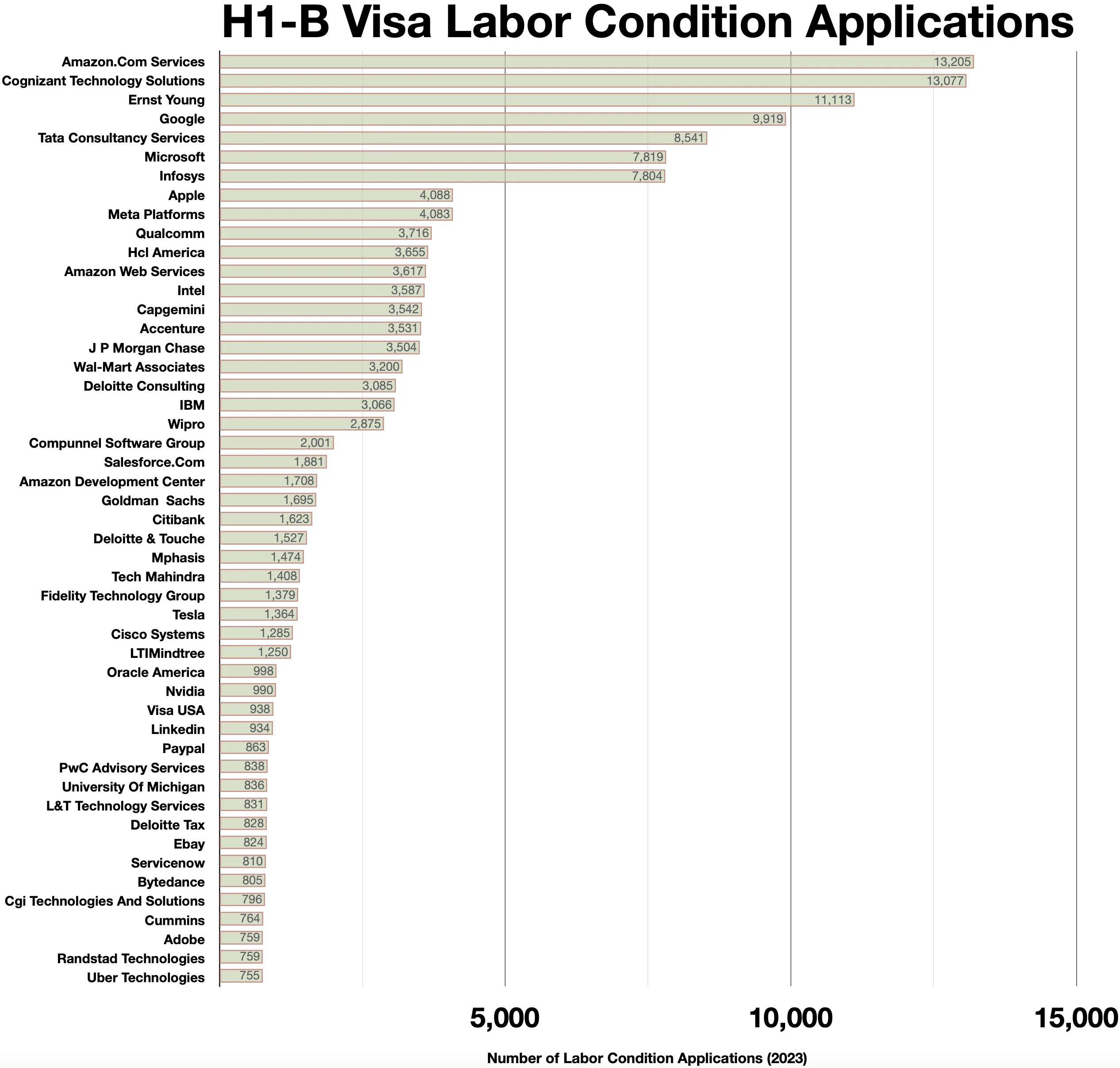
H-1B fee struck down: chart of H-1B visa applications by employer

What comes after the H-1B fee struck down decision

The ruling does not mean H-1B fees are off the table permanently. The Department of Homeland Security has a separate, proposed $103,265 fee already under review, and nothing in Gilliam’s decision prevents the administration from pursuing that or a similar charge through the proper rulemaking channel. Given that two separate federal courts have now struck down versions of this policy on nearly identical procedural grounds, any future attempt would likely need to clear the notice-and-comment bar explicitly to survive a legal challenge.

Immigration attorney Charles Kuck, among those who have tracked the litigation closely, has noted that the administration’s repeated attempts to impose steep H-1B fees without formal rulemaking suggest an urgency to raise the cost of the program quickly — an urgency that keeps running into the same procedural wall in court.

What this means for employers and visa holders

For now, employers filing new H-1B petitions are not subject to the $100,000 fee, restoring the prior cost structure while the legal situation remains unsettled. Companies that paid the fee before it was struck down, or that held back petitions due to the cost, will be watching closely for guidance from USCIS on how the agency plans to implement the court’s order in practice. The uncertainty itself has been costly for employers trying to plan hiring around a program whose cost structure has shifted multiple times within a single year.

What to watch next

The key date to watch is whether and when DHS formally opens notice-and-comment rulemaking on the proposed $103,265 fee, which would start a public comment period typically lasting 30 to 60 days before any new rule could take effect. Continued litigation is also likely regardless of that process, given the stakes for both the administration’s immigration agenda and the tech and consulting firms that rely heavily on the H-1B program.

What readers are asking

Is the $100,000 H-1B fee still in effect?
No. The fee is currently blocked following Judge Gilliam’s September 30, 2026 ruling, which found the policy unlawful.

Why did the judge strike down the fee?
The court found the fee amounted to a substantive “legislative rule” that required formal notice-and-comment rulemaking, which the administration did not conduct before imposing it.

Is this the first court to block the fee?
No. A Massachusetts federal judge issued a similar nationwide ruling against the fee in June 2026.

Could a new H-1B fee be introduced?
Yes. A proposed $103,265 fee announced by DHS in August 2026 remains under review and could move forward if the administration completes proper rulemaking.

What does “arbitrary and capricious” mean in this context?
It is a legal standard under the Administrative Procedure Act meaning the agency failed to reasonably justify its decision, including by not considering alternatives or the interests of affected parties.

Who is affected by this ruling?
Employers filing new H-1B petitions and the foreign workers those petitions cover are directly affected, as the ruling removes the $100,000 charge for now.

More on US visa policy

For more on US visa fee changes, see our coverage of the USCIS fee increases for asylum, parole, and TPS applicants and the new $750 expedited visa interview fee pilot. We also previously reported on the public charge rule change affecting green card applicants.

Sources