Singapore Just Made Its Work Pass Process Less of a Headache

Singapore’s Ministry of Manpower will roll out new Singapore work pass changes on October 29, 2026. The update reworks how employers and foreign workers submit work pass applications through the myMOM Portal. MOM first outlined the plan on May 20, 2026. An implementation update on October 20 confirmed the launch date.

A professional filing documents online, relevant to the Singapore work pass changes

What’s actually changing for Singapore work pass applicants

The biggest change is auto-fill. Applicants who already hold a Foreign Identification Number, known as a FIN, will see their passport details pre-populated. That only works if MOM already has valid passport data on file. First-time applicants without an existing FIN record still enter details by hand for now. MOM plans to extract passport data automatically from uploaded scans eventually. That feature is not live at launch. Until it arrives, agencies that handle high volumes of first-time applications will likely see less benefit from the update than those renewing passes for workers already in MOM’s system.

MOM also redesigned the application form itself. The agency says the new layout cuts down on manual data entry and makes the form easier to navigate. No new questions were added to the application. Document upload rules changed too. Applicants generally need to upload only the passport biodata page now. An amendment or observation page is required only when it changes identifying details, such as a corrected name or passport number.

Upload specifications are strict. Each page must be its own file, saved as JPG, PNG or PDF. Images need to be landscape and correctly oriented, or the system may reject them. The biodata page has to be uploaded before any other document.

Why MOM is rolling out the Singapore work pass changes now

MOM has not published a cost or time-savings estimate for the update. The stated goal is simpler. MOM wants to reduce repetitive data entry for returning applicants and tidy up a form that had grown unwieldy. Singapore depends heavily on foreign talent across its economy, from finance to construction. A smoother application system lowers friction for employers who file large numbers of work pass applications every year. The update also follows a broader push across Singapore’s public agencies to digitize routine paperwork and cut processing friction for both residents and foreign applicants.

The timing also matters. MOM first announced the changes back in May, giving employers and agents five months to prepare before the October 29 switch. That lead time suggests MOM wanted feedback and testing before a full rollout, rather than pushing a change through quickly.

What stays the same under the new process

Nothing about eligibility changes. Salary thresholds, qualification requirements and approval conditions remain exactly as they were. MOM did not create any new pass category as part of this update. Processing times have not been guaranteed to improve, despite the simpler form. Applications submitted before October 29 follow the existing process in full. Only applications filed on or after that date use the new auto-fill and upload rules.

That transition detail matters for anyone mid-application. An employer who started a submission in the old system before the cutover should expect to finish it under the rules that were in place when they began. They should not expect the format to switch partway through a single filing.

What applicants should do before October 29

Employers and agents filing multiple applications should check their saved passport records now, before the new system goes live. An outdated FIN record won’t auto-fill correctly. That mistake could slow a submission down rather than speed it up. Anyone preparing documents should also convert existing passport scans to the accepted formats in advance. A multi-page PDF that mixes formats may not upload the way the new form expects. Employers managing dozens of applications at once may find it worth building a short internal checklist, rather than relying on staff to remember the format rules case by case.

Agencies that regularly submit work pass applications are advising clients to test the new portal interface as soon as it opens. Waiting until a filing deadline forces the issue is a common and avoidable mistake. Confirming exactly which upload format the system accepts, rather than assuming compatibility, is the kind of small step that avoids a last-minute scramble once October 29 arrives.

More Asia work visa coverage

Work visa and permit rules are shifting across Asia this month. See our reports on Japan’s new residence permit fees, South Korea’s extended K-ETA exemption, and the status of the US $100,000 H-1B fee.

Singapore work pass changes: frequently asked questions

  • When do the Singapore work pass changes take effect? The new myMOM Portal process begins October 29, 2026.
  • What is the main change for applicants? Applicants with an existing FIN and passport details on file will have those details auto-filled on the application form.
  • Do first-time applicants get auto-fill too? Not yet. MOM plans to extract passport data from uploaded scans automatically, but that feature is not live at launch.
  • Did eligibility requirements change? No. Salary thresholds, qualification requirements and approval conditions are unchanged.
  • What document format does the new system require? JPG, PNG or PDF, with each page as its own file, uploaded in landscape orientation with the biodata page first.
  • Do applications filed before October 29 follow the new rules? No. Applications submitted before that date follow the existing process in full.

Sources consulted for this report

8 Major Employers Just Lost Their Green Card Pipeline — Here’s Why

The US Department of Labor announced on October 8, 2026, that it will stop accepting new labor certification applications tied to eight employers. It will also suspend processing of pending ones. The DOL PERM suspension covers Microsoft, Adobe, Cognizant, Infosys, Tata, Wipro, HCL and Capgemini. Officials described the move as following an investigation into possible misuse of employment-based immigration programs.

Laptop and paperwork representing applications affected by the DOL PERM suspension

What the DOL PERM suspension actually does

PERM, formally the Program Electronic Review Management system, is a required step for most EB-2 and EB-3 green card cases. An employer must complete it before filing the next-stage petition with US Citizenship and Immigration Services. Employers generally must show two things. First, that qualified US workers were unavailable for the role. Second, that hiring a foreign national will not harm wages or working conditions for comparable US employees. The Department of Labor runs this certification stage. USCIS handles the I-140 petition that follows.

A regulation, 20 C.F.R. § 656.31(b), gives the department this suspension power. It can suspend PERM processing for an employer connected to possible fraud or willful misrepresentation. It can also act against one under investigation by another federal agency. An initial suspension can run up to 180 days. After that, the department can resume normal processing, or it can extend the suspension while the underlying investigation continues.

How the suspension was announced

Vice President J.D. Vance announced the action at a press conference on October 8. DOL Inspector General Anthony D’Esposito confirmed that investigators had served subpoenas as part of the inquiry. Vance said the suspensions would last “as long as it needs to.” That language goes beyond the regulation’s built-in 180-day review point. Employment attorneys have criticized the open-ended wording. They argue it conflicts with how the suspension authority is meant to work.

The action builds on Executive Order 14431, which the administration signed September 18, 2026. That order directs three agencies, the State Department, Labor Department and Department of Homeland Security, to weigh a specific factor when reviewing H-1B applications. They must consider whether a sponsoring employer has conducted or planned layoffs of similarly situated US workers. The order also directs DOL’s Wage and Hour Division to review past labor condition applications that employers under scrutiny had filed.

What a suspension is not

A PERM suspension is not itself a finding of fraud. No court or agency has found that the named companies violated any law. The Labor Department has not made specific allegations publicly as of this report, either. If the investigation turns up no fraud, the department must still decide the suspended applications on their individual merits once processing resumes. If investigators do find fraud, the consequences escalate. The department can deny applications containing false statements. It can also bar a company from the PERM program for up to three years. Already-approved labor certifications stay in effect unless a separate revocation process opens, and none has as part of this announcement.

The suspension also leaves the H-1B status of current workers at the eight companies unchanged. What it removes, for now, is one of the main paths those workers have toward permanent residence. A pending or future PERM application simply cannot move forward while the employer remains on the suspended list.

What happens next for affected workers and employers

Employment attorneys are advising companies more broadly, not just the eight named firms, to take several steps now. They recommend reviewing recent layoffs alongside any pending H-1B or PERM filings. They also recommend auditing wage compliance and preparing for a possible subpoena or suspension notice. The Department of Labor is expected to send written notices to each named employer. Those notices should describe exactly which applications are covered and for how long. Those details were not fully public as of this report. Further enforcement actions against other employers look likely in the coming weeks and months, given the administration’s stated intent to expand the review.

Companies with pending H-1B petitions elsewhere in the economy are watching closely too. The same executive order gives agencies broad discretion to flag other sponsors for similar scrutiny.

More US immigration coverage

US work visa policy is moving on multiple tracks right now. See our reports on the status of the $100,000 H-1B fee, the proposed OPT fee for F-1 students, and the updated US public charge rule.

DOL PERM suspension: frequently asked questions

  • Which companies are affected by the DOL PERM suspension? Microsoft, Adobe, Cognizant, Infosys, Tata, Wipro, HCL and Capgemini.
  • When was the suspension announced? The Department of Labor announced the suspension on October 8, 2026, at a press conference led by Vice President J.D. Vance.
  • How long can a PERM suspension last? An initial suspension can run up to 180 days, with the department able to extend it while an investigation continues.
  • Does the suspension mean the companies committed fraud? No. A suspension is not a fraud finding. No specific violations have been alleged publicly as of this report.
  • Does this affect workers’ current H-1B status? No. The suspension does not change current H-1B status, but it blocks a main path to permanent residence while it remains in effect.
  • What executive order is connected to this action? Executive Order 14431, signed September 18, 2026, which directs federal agencies to scrutinize H-1B sponsors that have conducted layoffs.

Sources for this coverage

October 2026 Visa Bulletin: EB-2 and EB-3 Dates Move Back

The October 2026 Visa Bulletin, the first for fiscal year 2027, moved several employment-based green card cut-off dates backwards. The State Department says some categories for applicants from the rest of the world retrogressed to keep issuances within the quarterly and annual limits. According to the bulletin itself, the worldwide final action date is 1 January 2025 for EB-2, 15 May 2024 for EB-3 and 1 January 2022 for Other Workers. EB-1 remains current.

In this report

The October final action dates

These are the employment-based final action dates for applicants charged to all countries other than those listed separately, taken from the State Department table:

  • EB-1: current.
  • EB-2: 1 January 2025.
  • EB-3 (skilled and professional workers): 15 May 2024.
  • Other Workers: 1 January 2022.

The bulletin says only that some categories “retrogressed” to hold issuances within the fiscal year 2027 limits and that the department will monitor demand and adjust as needed. The pages I could read do not state what the earlier dates were, so this report does not quantify how far they moved. Grape Law describes EB-2, EB-3 and Other Workers as the categories affected.

India and China

Applicants born in India and mainland China have their own dates. For India, the October table shows EB-1 at 1 February 2023, EB-2 at 1 November 2013, EB-3 at 1 January 2014 and Other Workers at 1 January 2014. For mainland China it shows EB-1 at 1 July 2023, EB-2 at 1 October 2021, EB-3 at 8 January 2022 and Other Workers at 1 October 2019. The bulletin also notes that the annual Other Workers limit is reduced under NACARA, by about 150 numbers for fiscal 2027, and that the religious workers category is extended through 11 December 2026.

What a final action date means

A date in the table means the category is oversubscribed, and visa numbers are available only to applicants whose priority date is earlier. Consider a hypothetical case. Maricel is a Filipino nurse whose employer filed an EB-3 petition and whose priority date is 1 March 2024. Because the Philippines is charged to the worldwide column, that date is earlier than 15 May 2024, so her number would be available if everything else is in order. A colleague with a priority date of 1 August 2024 would wait. Which chart applies to an applicant can differ, so check the State Department bulletin and your own case.

The bulletin governs when a visa number is available. It does not replace the other rules affecting green card applicants. For those, read our reports on the public charge rule for I-485 filers and the H-1B $100,000 payment.

What to watch next

The State Department publishes a new bulletin each month and says it will keep adjusting dates. Dates can move forward as easily as back, and a retrogression does not mean a petition is denied. Employers and applicants should ask their attorney whether to file for adjustment of status now or wait, since that depends on the chart USCIS accepts for the month. Our visa eligibility checker can help you compare routes if the US wait does not suit you.

October 2026 Visa Bulletin questions

What changed in the October 2026 Visa Bulletin?

The State Department says some employment-based categories for rest-of-world applicants retrogressed to keep fiscal year 2027 issuances within limits.

What is the EB-2 date for most applicants?

The worldwide EB-2 final action date is 1 January 2025.

What is the EB-3 date for most applicants?

The worldwide EB-3 final action date is 15 May 2024, with Other Workers at 1 January 2022.

Is EB-1 affected?

EB-1 is listed as current for all chargeability areas, though India and China have dates.

Does retrogression cancel my petition?

No. It affects when a visa number is available. Your priority date is kept, and dates can advance again.

Where can I check my own priority date?

On the State Department’s monthly Visa Bulletin page, or with an immigration attorney who can read your case.

Sources

H-1B $100,000 Fee Extended to 2027, but Courts Block It for Now

The H-1B $100,000 fee now runs through 21 September 2027, but employers are not paying it today because of a court order. A presidential proclamation dated 18 September 2026 extended the payment by 12 months, according to Mintz. The extension leaves one practical question open: whether the court order that blocks collection of the original fee also covers the new proclamation.

Quick guide

What the extended proclamation says

The original proclamation of September 2025 applied the fee to certain petitions filed from 21 September 2025 to 21 September 2026. The new one, issued on 18 September 2026, extends it through 21 September 2027, according to Mintz. It targets consular petitions, meaning cases where the worker must be admitted to the United States for the petition to take effect.

Who pays and who is exempt

The employer pays. Mintz says the $100,000 applies to new H-1B petitions filed on or after 21 September 2026 in two situations: the worker is outside the US and has no valid H-1B visa, or the petition asks for consular notification, port-of-entry notification or pre-flight inspection.

The exemptions are significant. The fee does not apply to workers who already hold an H-1B visa or an approved petition filed before 21 September 2026. It also does not apply to people already in the US who are sponsored for an amendment, change of status or extension of stay. A change of status from F-1 to H-1B, for example, is not a consular petition, so it falls outside the fee as Mintz describes it.

Where the courts stand

The legal position has moved several times. A university international-student office page at CU Boulder reports that a federal court in Massachusetts ruled the fee unlawful on 8 June 2026, that the government appealed, and that the First Circuit reinstated the ruling on 24 July 2026. The government’s appeal is still pending. The same page reports a separate California ruling against the extension, but it gives a date that falls after the page’s own publication date, so check the court record before relying on that detail.

The October update from Grape Law says USCIS is not collecting the payment while the appeal is pending, and that the extension would apply through September 2027 only if the court ruling is overturned. Mintz takes a more cautious view. It suggests USCIS may try to apply the new fee immediately, on the argument that the July order does not cover the new proclamation, and it expects immediate litigation. These are law-firm readings, not rulings, so the position can change without notice.

What employers and applicants should do

Employers should budget for both outcomes. A cap-subject filing for a worker abroad could face the fee if the appeal succeeds or the new proclamation is enforced separately. Delay in an offer letter can cost more than a filing error, so many sponsors will want counsel to confirm the position the week they file.

Consider a hypothetical case. Arjun is an Indian software engineer abroad who has a job offer from a US company and no H-1B visa. His employer would be the paying party if the fee applied. A colleague already in the US on F-1 status who is changing status would not trigger it. Workers should ask their employer which category their petition falls in, and should not pay any part of a fee themselves without advice. Grape Law also notes a separate proposed $103,265 fee for cap-subject petitions, which remains a proposal and has not taken effect.

For related reading, see our reports on the PERM suspension for major IT firms and the October 2026 Visa Bulletin. You can also test your own route with our visa eligibility checker.

H-1B fee questions

How long does the extended H-1B fee last?

The proclamation of 18 September 2026 extends it through 21 September 2027, according to Mintz.

Is the $100,000 being collected now?

Not according to Grape Law, which says USCIS is not collecting it while the government’s appeal is pending.

Who pays the H-1B fee?

The employer pays it. The fee applies to new petitions for workers outside the US without a valid H-1B visa, or where the petition requests consular or port-of-entry notification.

Does it apply to a change of status inside the US?

Mintz says amendments, changes of status and extensions of stay for people already in the US are exempt.

Could the fee come back?

Yes, if the court ruling is overturned on appeal or if USCIS applies the new proclamation separately, as Mintz suggests it might. Check current guidance before filing.

Sources

Singapore ONE Pass Replaces Tech.Pass, With a S$30,000 Bar

The Singapore ONE Pass will gain a dedicated AI and Technology track on 28 January 2027, and it replaces Tech.Pass. An EY tax alert says the Ministry of Manpower (MOM) confirmed the opening date and the eligibility rules. The same alert says the track was first announced on 3 March 2026. From 28 January 2027, the Economic Development Board (EDB) stops taking new and renewal Tech.Pass applications.

In this guide

What the Singapore ONE Pass AI and Tech track requires

The pay test is the first hurdle. Applicants must have earned at least S$30,000 a month, or the foreign-currency equivalent, for 12 consecutive months before applying. At least S$22,500 of that monthly figure must be fixed salary. The rest can come from vested non-cash pay such as employee stock options and share awards, and MOM assesses that portion.

The experience test is just as firm. Applicants need at least five cumulative years in the past ten as a founder, a C-suite officer, a technical professional, or a mix of those roles. The applicant’s current or most recent employer must be a tech company, the tech division of a larger company, or a tech venture capital firm.

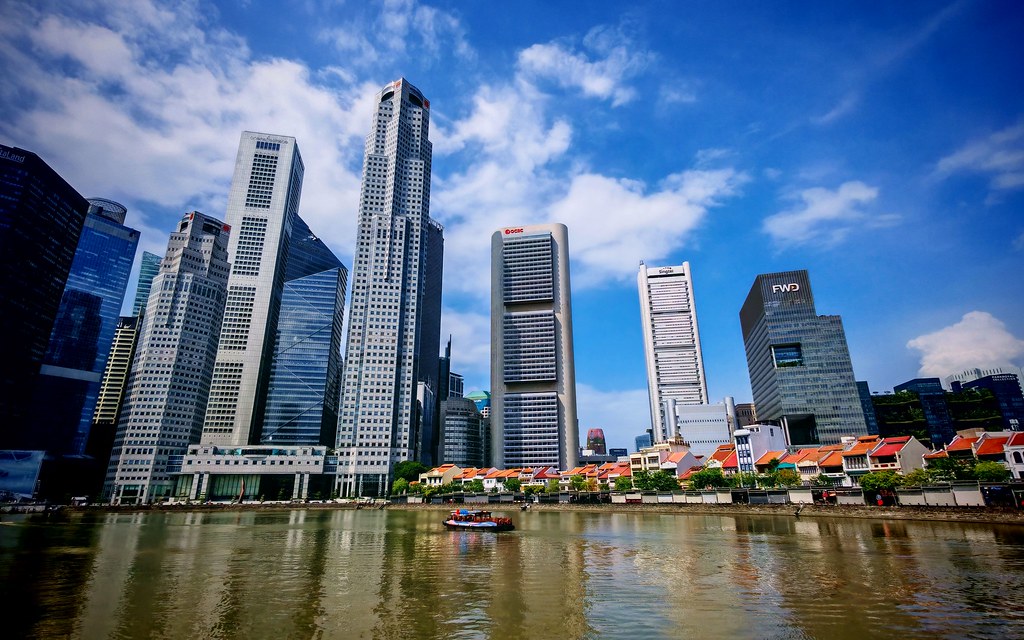
Singapore ONE Pass applicants will work in the Raffles Place financial district
Raffles Place, Singapore’s financial district.

The company-size test

The employer must also meet a scale threshold. It needs at least one of these: a valuation or market capitalisation of US$500 million, annual revenue of US$200 million, assets under management of US$500 million, or, for a tech start-up, US$30 million in funds raised. This rule screens out smaller employers even when the individual’s pay clears the bar.

Applicants must submit 12 months of payslips, proof of the qualifying founder, C-suite or technical roles, and recent financial information about the employer’s scale. The law-firm summary at Clark Hill lists the same documents and the same thresholds.

If you hold Tech.Pass today

Existing Tech.Pass holders keep their passes until those passes expire. The EY alert says eligible holders can then apply for the AI and Tech track or choose another work pass. The EDB’s own Tech.Pass page remains the place to confirm how the scheme winds down.

Consider a hypothetical case. Priya is a senior machine-learning engineer from Bengaluru who earns S$32,000 a month at a large AI company. Her fixed salary is S$24,000 and the rest is vested stock. She clears the pay test, because S$22,500 a month in fixed salary equals S$270,000 a year, and her total pay comes to S$384,000. She would still need to show that her employer meets one of the scale thresholds. Priya is an illustration, not a real applicant.

What the pass gives you

The pass runs for up to five years per issuance. According to EY, it is exempt from the Complementarity Assessment Framework (COMPASS) and the Fair Consideration Framework. Holders can take on several professional activities, or move between employers, without a fresh work pass application.

Renewal has two routes. A holder can show an average fixed monthly salary of at least S$30,000 over the preceding five years in Singapore. Alternatively, a holder can run a Singapore company with at least five local employees who each earn at least the prevailing Employment Pass qualifying salary.

Who will likely fall short

Many strong candidates will miss the bar. A founder whose start-up has raised less than US$30 million fails the scale test. An engineer paid mostly in cash below S$22,500 a month fails the fixed-salary test. A consultant who moved between non-tech employers fails the employer test. The pass targets a narrow group, so most skilled workers should look at other Singapore work passes instead.

Key dates and next steps

Three dates matter. Applications open on 28 January 2027. Tech.Pass stops accepting new and renewal applications the same day. Existing passes stay valid until they expire. If you plan to apply, start collecting 12 months of payslips now, and ask your employer’s finance team for the scale evidence.

The sources reviewed do not say how the pass treats dependants. Check MOM’s official guidance before you plan a family move. Readers who want a quick read on their own options can try our visa eligibility checker. Founders weighing a Singapore base can read our company formation guide.

Questions on the ONE Pass change

When does the AI and Tech track open?

Applications open on 28 January 2027, according to the MOM announcement summarised by EY. Tech.Pass stops taking new and renewal applications on that date.

What salary does the pass require?

Applicants need at least S$30,000 a month for 12 consecutive months. At least S$22,500 of that must be fixed salary, and vested non-cash pay can cover the rest.

Does my employer have to be a big company?

Yes. The employer must meet one scale test: a US$500 million valuation or market cap, US$200 million revenue, US$500 million assets under management, or US$30 million raised for a start-up.

What happens to my current Tech.Pass?

You keep it until it expires. After that, you can apply for the AI and Tech track if you qualify, or choose another work pass.

How long does the new pass last?

It is issued for up to five years at a time, with renewal rules based on salary history or on running a Singapore company with local staff.

Related coverage

For more on talent and business rules, read our report on the UAE commercial companies law changes and our explainer on Australia’s skilled visa salary thresholds.

Sources