Commonwealth Master’s Scholarships Close in 7 Days: Are You Eligible?

The Commonwealth Master’s Scholarships for 2027/28 close at 16:00 BST on Tuesday 20 October, according to the Commonwealth Scholarship Commission (CSC). That leaves seven days from today, 13 October 2026. The awards fund study at a UK university from September or October 2027. Candidates cannot apply directly, so the real clock is often earlier than 20 October.

On this page

Who can apply for the Commonwealth Master’s Scholarships

You must be a citizen of an eligible Commonwealth country, or hold refugee status granted by one, or be a British Protected Person. You must also live permanently in an eligible country. The CSC list includes Bangladesh, Ghana, India, Kenya, Malaysia, Nigeria, Pakistan, South Africa, Sri Lanka and Uganda, plus many small island states, which the CSC says it particularly welcomes.

You need a first degree of at least upper second-class (2:1) honours by September 2027. A lower second-class degree can work if you also hold a relevant postgraduate qualification. You must show that you cannot afford UK study without the award. The CSC does not normally fund a second master’s, and anyone who has studied at master’s level in the UK is not eligible.

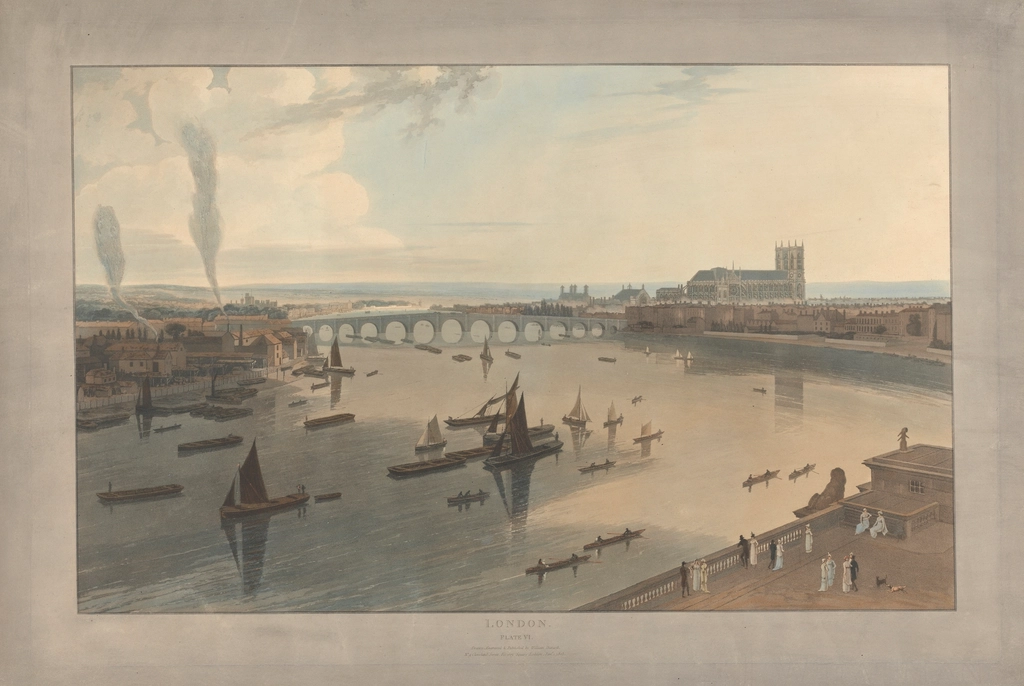
The London skyline, where many Commonwealth Master's Scholarships holders study
Many scholars study in London, where the stipend is higher.

What the award pays for

The CSC lists four main items. It pays approved airfare to the UK and back, and it pays full tuition fees by agreement with the university. The monthly stipend is £1,712, or £2,000 at universities in the London area, at current rates. A study travel grant covers study-related travel. Scholars who are widowed, divorced or single parents can also receive a partial contribution of £622 a month for a first child and £154 for the second and third children under 16. Dependants’ airfares are not covered.

Why your nominator’s date matters

This is the point most readers miss. The CSC accepts no direct applications. You apply to a nominating body, such as a national nominating agency, and each one sets its own closing date and extra criteria. The CSC says nominators must put their candidates forward by December 2026, and results are expected by July 2027.

Here is a hypothetical case. Chidi is a Nigerian doctor with a 2:1 who wants a public health master’s in Edinburgh. He sees the 20 October date and plans to apply on 19 October. His national nominator, however, closed three weeks earlier. Chidi is an illustration, not a real applicant, but the lesson is real: confirm your nominator’s date today.

Documents to upload before the deadline

Applications go through the CSC’s online system only, and there is no application fee. You upload a copy of your passport or national ID, full transcripts for all higher education, and two signed PDF references. Transcripts not in English need certified translations. The CSC says applications cannot be edited after submission, and late applications are not accepted. Ask your referees now, because two signed references often take the longest.

The week ahead: a short checklist

Start with the nominator, not the portal. Confirm the closing date and any extra rules. Next, order transcripts and translations. Then brief both referees. Finally, submit a day early to leave room for upload problems. If you miss this round, other UK and European awards close soon. Our guides cover the Chevening 2027/28 timeline and the Gates Cambridge deadlines. A scholarship listing compiled by Global South Opportunities on 8 October also shows Commonwealth PhD awards closing on 20 October.

Not sure which route fits your profile? Try our visa eligibility checker to plan the student visa step that follows an award.

Eligibility traps to check before you apply

Four details trip up strong candidates. First, the CSC prefers applicants who have already finished their undergraduate degree. Second, it does not normally fund a second master’s. Third, anyone who studied at master’s level at a UK institution is not eligible, and neither is anyone who held a Commonwealth Master’s scholarship before. Fourth, you must be free to start in the UK by September 2027. There is no age limit, so mid-career professionals can apply.

Commonwealth scholarship FAQ

When is the Commonwealth Master’s Scholarships deadline?

The CSC states 16:00 BST on Tuesday 20 October for the 2027/28 round. Your nominating body may close earlier.

Can I apply to the CSC directly?

No. You apply through a nominating body, and each sets its own closing date. The main route is a national nominating agency.

What is the monthly stipend?

The CSC lists £1,712 a month, or £2,000 for universities in the London area, at current rates.

Is there an application fee?

No. The CSC states that there is no application fee.

Can I edit my application after I submit it?

No. The CSC says applications cannot be edited after submission, and it does not accept late applications.

Sources

Auckland International Scholarship: Master’s Offer Needed by 20 Oct

The Auckland international scholarship for master’s students has a quiet deadline: you need a programme offer by 20 October 2026. The University of Auckland’s scholarship page says new international master’s students who receive a conditional or unconditional offer for Semester One or Quarter Two 2027 by that date are eligible. Eight days remain.

Timeline

Who gets the Auckland international scholarship

The award is the University of Auckland International Student Excellence Scholarship. You do not submit a separate first application. The university invites eligible students to complete a supplementary form. Eligibility depends on a master’s offer for Semester One or Quarter Two 2027, received by 20 October 2026.

Auckland international scholarship applicants study in a harbour city
Auckland’s skyline from Viaduct Basin.

The three dates that matter

Three dates run the process. First, 20 October 2026 is the deadline for your offer. Second, the university issues invitations to the supplementary application on 21 October 2026. Third, you must submit the supplementary form online by 4 November 2026.

Some third-party scholarship calendars list 21 October as the closing date. The university page shows 21 October as the invitation date and 4 November as the closing date, so trust the university.

Why the 20 October date catches people out

Most scholarships ask you to apply. This one works the other way round. The offer is your ticket in, so a late admissions decision can cost you the award even if your grades are strong. Students who applied late in the cycle should ask their faculty for a decision date today. They should also keep every email from the university, because the invitation on 21 October is the only door into the supplementary form.

The timing also affects your visa plans. A conditional offer can start the scholarship process, but a student visa needs an unconditional offer and proof of funds. Treat the scholarship as a bonus on top of your budget, not as the money that makes the plan work. Our guide to the New Zealand Post-Study Work Visa changes shows what comes after the degree.

What the scholarship is worth

The scholarship covers 25% of one year of tuition fees. It lasts one year and applies to a master’s degree at the University of Auckland. The number of awards varies, and the university offers the scholarship twice a year. Faculty or university committees make the awards on recommendation. The page does not list separate selection criteria, and the regulations PDF holds the full terms.

Consider a hypothetical Pakistani IT graduate, Hamza, who applied for a master’s in data science. Suppose a year of tuition cost NZ$40,000, a made-up figure used only for the sum. A 25% award would then be NZ$10,000. Check the real fee for your programme before you plan. If his offer arrives by 20 October, he gets an invitation the next day and has until 4 November to answer. He should read the regulations before he relies on the award, because the page says to check them. Hamza is an illustration only.

Another deadline: York University in Canada

Undergraduates planning ahead have a longer runway. York University lists the President’s International Scholarship of Excellence at C$180,000 in total, paid as C$45,000 a year for four years. The student deadline is 27 January 2027, and the nominee deadline is 4 February 2027. The award suits international high school applicants who show academic excellence, community commitment and leadership. York says the scholarship cannot combine with entrance scholarships, and applicants who qualify for both receive the higher value. See the York international scholarships page for the rules.

What to do this week

You have a short list of jobs, and each one takes less than an hour.

Start with the offer. If you applied for a 2027 master’s and have not heard back, contact the admissions team and ask about timing. Next, gather references and transcripts so you can complete the supplementary form quickly. Finally, check that your email inbox and spam folder can receive university messages on 21 October. If your offer arrives after 20 October, write to the scholarships team and ask whether you can still be considered in the next round.

The university’s wording is the final word. The page says to check the regulations and other information before relying on the details, so read the regulations PDF linked from the scholarship page. A student who meets the offer deadline but misses the 4 November form deadline loses the award for this round.

Scholarship hunters can compare other live deadlines in our guides to the Gates Cambridge scholarship deadlines and the Commonwealth master’s scholarships. Our visa eligibility checker also shows whether your profile fits a New Zealand student visa.

Auckland scholarship FAQ

Do I apply for the scholarship directly?

No separate first application exists. The university invites eligible students to complete a supplementary form.

What is the offer deadline?

You need a conditional or unconditional master’s offer for Semester One or Quarter Two 2027 by 20 October 2026.

When is the final deadline?

The supplementary form is due online by 4 November 2026, and invitations go out on 21 October 2026.

How much does it pay?

It covers 25% of one year of tuition fees, for one year of master’s study.

Does the scholarship run once a year?

The university offers it twice a year, so check the page for the next round if you miss this one.

Sources

Post-Study Work Visa Rules Change 16 Nov: Does Your Degree Count?

Immigration New Zealand will widen the Post-Study Work Visa on 16 November 2026 and launch a new six-month Short-Term Graduate Work Visa on the same day. The agency announced both changes on 10 September 2026. Graduates who finish a Level 7 graduate diploma can now qualify for the longer visa, and every application moves online.

Quick guide

Who qualifies for the Post-Study Work Visa from 16 November

The agency notice extends eligibility to graduates with a Level 7 graduate diploma on the New Zealand Qualifications and Credentials Framework. Three conditions apply. The graduate must have studied full time in New Zealand for the whole qualification. They must have been enrolled for its full duration, and cross-credits or recognition of prior learning do not count. They must also hold a bachelor’s degree, from New Zealand or overseas, awarded at any time.

Applicants must provide their bachelor’s certificate and an official transcript. Immigration New Zealand says an International Qualification Assessment is not needed for an overseas bachelor’s degree, although the agency can still verify the document.

Post-Study Work Visa holders can work across New Zealand, from Queenstown to Auckland
Queenstown, one of many places where graduates may work.

Visa length by qualification

Length depends on the level of the qualification. A graduate diploma holder can receive a visa covering the length of their study in New Zealand, up to a maximum of one year. A postgraduate diploma at Level 8 may earn a one-year visa. A master’s degree at Level 9 may earn a three-year visa. For either of the last two, the graduate must complete at least 30 weeks of full-time study in that qualification.

The agency assesses a master’s separately. Transferred credits, cross-credits and prior learning do not count toward it. Each person can receive only one Post-Study Work Visa, even if they later complete a higher qualification.

The new six-month visa for shorter courses

Graduates who miss the Post-Study Work Visa have another route. The Short-Term Graduate Work Visa gives six months of open work rights. Applicants need a Level 5 to 7 qualification studied full time in New Zealand for at least 24 weeks. They must not hold an English-language, foundation or bridging qualification, and they must show NZ$5,000 in available funds.

The window is tight. Applications must arrive within three months of the student visa expiring. The agency gives an example: a student visa that expired before 16 August 2026 would not qualify when applications open on 16 November. A holder can receive this visa only once and cannot extend it. Business ownership is not allowed on it.

How to apply from 16 November

From 16 November, international students apply online through enhanced Immigration Online, using the Login button on the agency’s website. A law-firm recap by Clark Hill adds that paper applications for the Post-Study Work Visa filed by 15 November will still be processed. Treat that detail as secondary and confirm it with the agency.

Take a hypothetical case. Linh is a Vietnamese graduate who holds a bachelor’s degree from Hanoi and is finishing a Level 7 graduate diploma in Auckland. Before this change, she may not have qualified for the longer visa. Under the new rule, she needs her degree certificate, her transcript and proof of full-time study. Linh is an illustration only.

The dates in one place

The agency announced both changes on 10 September 2026. Both take effect on Monday 16 November 2026. The agency’s example sets the cut-off for the six-month visa: a student visa that ended before 16 August 2026 falls outside the three-month window when applications open. If your student visa ends close to that line, check your exact expiry date before you do anything else.

Employers also have a stake. Graduates on the six-month visa can look for an Accredited Employer Work Visa, according to the agency, so hiring managers should expect more applicants with short-term permissions. Students should keep job-search evidence from the first week, because six months passes quickly. Mark both dates now. Do not wait. Have your documents ready before the portal opens.

Your next move

Check your qualification level and your student visa expiry date first. Then match them to the right visa. If your course is shorter than 30 weeks at Level 8 or 9, or sits below Level 7, the six-month visa may be the better fit. Partners and dependent children follow separate rules, so read the agency’s Post-Study Work Visa page before you book flights.

Students comparing destinations can see how another country handles the same question in our guide to the UK Graduate Route. You can also test your own profile with our visa eligibility checker.

New Zealand graduate visa questions answered

What changes on 16 November 2026?

Level 7 graduate diploma holders with a bachelor’s degree can qualify for the Post-Study Work Visa, a six-month Short-Term Graduate Work Visa launches, and applications move online.

How long can a master’s graduate work?

A Level 9 master’s graduate may receive a three-year visa if they complete at least 30 weeks of full-time study in the master’s itself.

Can I get the Post-Study Work Visa twice?

No. Each person can receive only one, even after a higher qualification.

Who needs the Short-Term Graduate Work Visa?

Graduates with a Level 5 to 7 qualification who do not qualify for the Post-Study Work Visa, studied at least 24 weeks full time, and hold NZ$5,000 in funds.

Where do I apply?

Online, through enhanced Immigration Online, from 16 November 2026.

Sources

UK Graduate Route Shrinks to 18 Months From January 2027

The UK Graduate Route shrinks to 18 months for applications made on or after 1 January 2027, less than three months from now. The PIE News reports that the post-study work visa for bachelor’s and master’s graduates falls from two years to 18 months, while PhD graduates keep three. If you are planning a UK degree, the timing of your application now matters.

Planning guide

What is changing

The cut was first signalled in the government’s May 2025 immigration white paper and written into the Immigration Rules in a statement of changes dated 14 October 2025, according to PIE. The Home Office has said “too many graduates are not progressing into graduate-level employment”. Its own impact assessment, published with the explanatory memorandum, expects a modest effect, with about 12,000 fewer applications a year and lost revenue of about £23 million from the Graduate Route and £27 million from the student route. These are government estimates.

The dates to know

The 18-month limit applies to Graduate Route applications submitted on or after 1 January 2027. Graduates who apply before then fall under the current two-year rule, as the effective date is tied to when the application is submitted. Because you can only apply once your course has been completed and while you still hold a student visa, your finish date and application date together decide which version applies, so check the rule text and your university’s guidance.

Cost and money rules

Other changes landed in the same package. UKCISA reports that from 11 November 2025 the monthly maintenance requirement rose to £1,529 in London and £1,171 outside London. PIE adds that on 25 November 2025 the Innovator Founder route opened to student visa holders who finish a UK degree, replacing the closed Start-up route, and that holders must meet their endorsing body at 12 and 24 months to show progress.

How to plan around it

Take a hypothetical Nigerian MSc student, Chidi, due to finish in December 2026. If he completes on schedule and applies before 1 January 2027, the two-year rule would apply, based on PIE’s description. If a resit or delayed result pushes his application into 2027, he would get 18 months. His best move is to confirm his course end date with his university and plan the application timeline early. This is an illustration, not immigration advice.

For graduates and students weighing the bigger picture, the shorter route raises the value of a sponsored job offer, a skilled worker route, or a founder route. Read our guide to the UK immigration rule changes of 8 October and the Chevening 2027/28 timeline for funding context. You can also test your options with our visa eligibility checker.

UK Graduate Route: common questions

When does the 18-month Graduate Route start?

It applies to applications submitted on or after 1 January 2027, per PIE News.

Who keeps the longer stay?

PhD graduates keep three years, according to PIE.

How many fewer applications does the government expect?

Its impact assessment expects about 12,000 fewer applications a year.

What are the new maintenance figures?

UKCISA reports £1,529 a month in London and £1,171 outside London from 11 November 2025.

Can student visa holders start a business?

PIE reports the Innovator Founder route opened to them on 25 November 2025.

Further reading: what changed on 8 October.

US Court Pauses Fixed-Term Student Visa Rule

A US federal court has paused the duration of status rule change that would have given international students fixed admission periods. According to the American Immigration Lawyers Association, Judge F. Dennis Saylor IV of the District of Massachusetts postponed the rule on 14 September 2026, one day before it was due to take effect. For now, F-1 students keep the existing “duration of status” system.

Contents

What the rule would have done

The Department of Homeland Security published the final rule in the Federal Register on 17 July 2026. It would replace open-ended “duration of status” for F students, J exchange visitors and I media representatives with a fixed admission period. For F and J holders that period would match the programme length, capped at four years, and people needing more time would apply to USCIS for an extension of stay. The text also proposes cutting the post-completion departure window from 60 to 30 days and limiting school transfers. DHS says the aim is stronger oversight and fraud prevention, and estimates annualised costs of roughly $443 million to $449 million, a figure that comes from the agency itself.

What the court decided

The case is Presidents’ Alliance on Higher Education and Immigration v. Department of Homeland Security. Per AILA, the court used a postponement under section 705 of the Administrative Procedure Act rather than striking the rule down. It found the plaintiffs likely to succeed in arguing the rule was arbitrary and capricious, citing four problems: no reasoned cost-benefit analysis, too little consideration of alternatives, no meaningful reply to significant public comments, and no rational link to the stated security and fraud goals. AILA describes the relief as nationwide.

What it means for students today

AILA’s reading is that duration of status remains the working framework, the 60-day grace period still applies and no new Form I-539 extension requirement kicks in. The postponement is not permanent, so multi-year plans should not assume the old system is safe.

An example

Take a hypothetical Indian master’s student, Arjun, starting a two-year programme in January. Under the rule, he would have been admitted for the programme length and would have needed an extension if his studies ran longer. With the rule paused, his I-94 would still read “D/S”. If the rule is later reinstated, his planning around travel, a change of programme or OPT timing could change, so he should keep documents organised and speak to his school’s international office. This example is illustrative, not legal advice.

Where the case goes

AILA says the case continues on the merits. The government could seek review at the First Circuit, or DHS could address the court’s concerns through further rulemaking. We will report when that changes. Related reading: our piece on the H-1B fee ruling and the Australian student visa reforms. Not sure where to study next? Try the visa eligibility checker.

Duration of status: your questions

Is the fixed-term student visa rule in force?

No. A federal court postponed its effective date on 14 September 2026, according to AILA.

Who brought the case?

The Presidents’ Alliance on Higher Education and Immigration, which AILA says represents roughly 600 institutions.

Does the 60-day grace period still apply?

AILA says yes: the 60-day grace period stands while the rule is postponed.

Is the rule cancelled for good?

No. The court postponed it rather than vacating it, so the case continues and the government may appeal.

Who would the rule have covered?

F academic students, J exchange visitors and I foreign media representatives, per the Federal Register text.

More student-visa coverage: Australia’s student visa reform.

Photo: “Nicola since 1972” via Openverse, licensed CC BY.