Author: Francisca Samuel

Francisca Samuel is an editor at Tamara News, where she covers immigration, travel, business and technology news for readers across Africa and the Gulf.

The Supreme Court Just Stepped In on Missouri’s Voting Map — Twice in One Week

The US Supreme Court blocked Missouri from using its newly drawn, Republican-favoring congressional map on September 10, 2026, in a closely watched order. Justices intervened in November’s midterm elections for the second time in a single week. The pause over the Missouri congressional map keeps the fight over district lines tied up in the courts just weeks before ballots go to print. Election officials and candidates alike are left waiting for clarity.

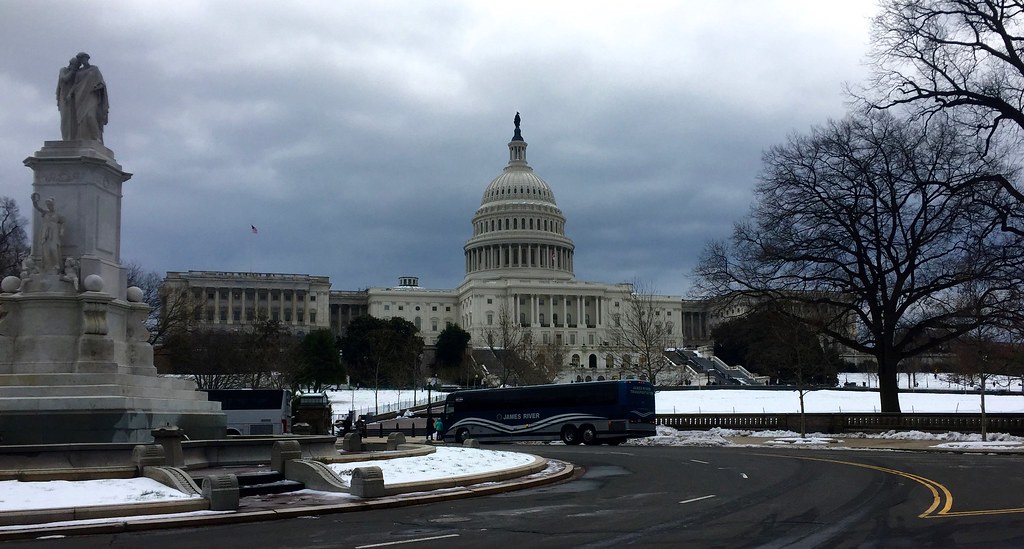
US Capitol building, focal point of the fight over the Missouri congressional map

Why the Missouri Congressional Map Ended Up at the Supreme Court

Missouri Republicans enacted a new congressional map in 2025. It was part of a broader, Trump-backed push to redraw district lines across GOP-controlled states ahead of the 2026 midterms. Opponents responded quickly by gathering signatures for a statewide referendum that would undo the new map entirely. The case has bounced between state and federal courts ever since. The Washington Post reported the Supreme Court’s Thursday order marked the second time in a week the justices paused the map’s use.

What the Missouri Supreme Court Already Decided

Earlier in September, the Missouri Supreme Court unanimously blocked the new districts from being used in the November election. It ordered a statewide vote on whether to keep or reject the Republican-drawn map, according to NBC News’ coverage of that ruling. That decision effectively froze the new map’s legal status while the referendum question makes its way to voters.

Which Map Missouri Will Actually Use

With the new map paused, Missouri is widely expected to fall back on its 2022 congressional map for November. That map currently splits the state’s seats six Republican to two Democratic. Legal analysts told NBC News the sequence of rulings likely signals the practical end of the fight over which map governs this cycle’s elections. The underlying referendum litigation may still continue in the background.

Voting machine used in US elections, relevant to the Missouri congressional map dispute

How This Fits the Bigger Redistricting Fight

Missouri’s case is one front in a nationwide, mid-decade redistricting push that has drawn in several Republican-led states this year. Similar legal battles are playing out elsewhere as both parties try to lock in favorable district lines before the midterms. What happens in Missouri could shape how aggressively other states pursue mid-cycle map changes. A Supreme Court willing to repeatedly pause a state’s preferred map sends a signal about how far courts will let legislatures go.

Other States Watching the Outcome

Missouri is not fighting this battle alone. Texas, Ohio and California have all pursued their own mid-decade map changes this year. It is part of a broader scramble by both parties to shore up House seats before November. Texas Republicans redrew their map earlier in 2026 with explicit encouragement from the White House, while California Democrats responded with a counter-effort of their own. Legal challenges are pending in several of those states too. The Supreme Court’s approach to Missouri could offer an early signal of how the justices might handle similar disputes elsewhere. Election administrators in Missouri face a practical deadline problem of their own. Ballots and voter information need to be finalized well before November, leaving a shrinking window to resolve which district lines apply.

Frequently Asked Questions

What did the Supreme Court do with Missouri’s map?

On September 10, 2026, the US Supreme Court temporarily blocked Missouri from using its newly drawn, Republican-favoring congressional map for the November elections. It was the second such block in a week.

Why was the Missouri congressional map redrawn in the first place?

Missouri Republicans enacted a new congressional map in 2025. It was part of a broader, Trump-backed push to redraw district lines in GOP-led states ahead of the 2026 midterms.

What did the Missouri Supreme Court rule?

Earlier in September, the Missouri Supreme Court unanimously blocked the new districts from being used in November. It ordered a statewide referendum asking voters whether to keep or reject the map.

Which map will Missouri use in November?

With the new map paused, Missouri is expected to fall back on its 2022 congressional map. That map currently allocates six seats to Republicans and two to Democrats.

Is this part of a bigger national redistricting fight?

Yes. Missouri’s case is one piece of a nationwide, mid-decade redistricting push led by President Trump. The push aims to redraw House district lines in Republican-controlled states before the midterms.

Does the Supreme Court’s pause end the legal fight?

Not fully. But legal observers say it likely signals the effective end of the battle over which map applies to the 2026 midterms. The referendum case itself continues in state court.

Missouri’s fight is a reminder that redistricting battles increasingly play out on compressed timelines, with courts, legislatures and voters all racing the election calendar at once. Whichever map Missouri ultimately uses, the dispute has already shown how a single state’s district lines can become a national flashpoint. In a closely divided Congress, a handful of seats can decide which party controls the chamber. For other elections shaping the fall political calendar, see our coverage of the AfD’s win in Saxony-Anhalt and Russia’s Duma election this month.

Sources

Nvidia Just Spent $13 Billion on a Company Most Shoppers Have Never Heard Of

Nvidia agreed on September 3, 2026 to buy Hugging Face, the open-source AI development platform. The deal is valued at roughly $12.93 billion. The Nvidia Hugging Face deal is Nvidia’s second-largest acquisition on record. It gives the chipmaker a direct line to the more than 18 million developers who use Hugging Face to build and share AI models.

Data center server racks tied to the Nvidia Hugging Face deal expansion into AI software

Inside the Nvidia Hugging Face Deal

The agreement is structured as approximately $11.9 billion in cash plus up to $1 billion in equity retention for Hugging Face employees. That comes from Bloomberg’s reporting on the transaction and Nvidia’s own securities filing. Hugging Face runs a platform and community for developing, sharing and deploying open-source models, datasets and applications. It is the software layer Nvidia has spent years trying to get closer to as it defends its position in AI hardware.

Why Nvidia Is Buying Its Way Into Open Source

Nvidia’s business has historically centered on chips, not the open developer communities that build on top of them. Acquiring Hugging Face changes that. It connects Nvidia’s hardware, software and cloud computing services directly to a platform where millions of developers already publish and download models daily. CNBC reported that Hugging Face’s own leadership approached Nvidia CEO Jensen Huang weeks ahead of the announcement. That suggests the platform saw the tie-up as beneficial for its own growth, not just Nvidia’s.

Nvidia’s Growing Acquisition Trail

The Hugging Face purchase ranks as Nvidia’s second-biggest acquisition. It trails only the roughly $20 billion purchase of assets from chipmaker Groq, completed in December 2025. That earlier deal is now drawing separate scrutiny. The US Justice Department is investigating whether Nvidia structured its licensing arrangement with Groq specifically to avoid antitrust review. The question could color how closely regulators examine the Hugging Face acquisition as it moves toward closing. Nvidia has made dozens of smaller acquisitions in recent years as it builds out its software and networking capabilities, according to deal-tracking firm Tracxn. The Hugging Face purchase breaks that pattern in scale, ranking it alongside only the Groq transaction as a deal large enough to draw sustained regulatory attention.

Server hardware representing the computing infrastructure behind the Nvidia Hugging Face deal

What Happens Before the Deal Closes

Nvidia’s securities filing points to a close in the first half of next year, pending regulatory approval. Until then, Hugging Face is expected to keep operating its platform independently. Developers and rival chipmakers will be watching closely. They want signs of how tightly Nvidia intends to integrate the platform with its own hardware and cloud offerings once the deal completes.

How Rivals and Investors Are Reacting

The deal size is large in absolute terms, but it remains a fraction of Nvidia’s overall market value, which analysts say helps explain why it has not dominated investor attention the way the Groq deal once did. The purchase can be read as a defensive move as much as an offensive one, aimed at keeping rivals from building closer ties to the open-source community Hugging Face anchors. Google and Meta both maintain their own open-model efforts. Developers on Hugging Face’s platform currently publish models built for a wide range of competing chip architectures, not just Nvidia’s. Whether that openness survives the acquisition is one of the biggest questions developers are asking. The deal is expected to close in the first half of next year. An open question is what happens to community-contributed models once a single hardware maker owns the platform hosting them. Neither company has detailed what governance changes, if any, will follow once the acquisition closes.

Frequently Asked Questions

What did Nvidia agree to buy?

Nvidia agreed on September 3, 2026 to acquire Hugging Face, the open-source AI platform used by developers to share and deploy models. The price is approximately $12.93 billion.

How is the Nvidia Hugging Face deal structured?

The transaction is roughly $11.9 billion in cash plus up to $1 billion in equity retention for Hugging Face staff, according to Nvidia’s securities filing.

Why does Nvidia want Hugging Face?

Hugging Face’s platform connects Nvidia with more than 18 million developers who build, share and deploy open-source models. It deepens the tie between Nvidia’s chips and the software ecosystem built on top of them.

Is this Nvidia’s biggest acquisition?

It is Nvidia’s second-largest acquisition on record. Only the roughly $20 billion purchase of assets from chipmaker Groq, completed in December 2025, was bigger.

When will the deal close?

Nvidia’s securities filing points to a close in the first half of next year, subject to regulatory approval.

Does this deal face antitrust scrutiny?

Nvidia already faces a separate US Justice Department inquiry into its licensing arrangement with AI-chip startup Groq. That backdrop could shape how regulators approach the Hugging Face deal.

Taken together, the Hugging Face deal and the ongoing Groq antitrust inquiry show a company simultaneously expanding its reach and defending its past dealmaking. That balancing act will likely define how regulators and rivals view Nvidia’s next moves. For more on Nvidia’s expanding footprint in AI infrastructure, see our coverage of the chip export loophole Washington is trying to close and the memory chip shortage squeezing Apple, Nvidia and Samsung. Our report on OpenAI’s GPT-6 Astra release covers the model Nvidia’s hardware increasingly competes to run.

Sources

The ECB Just Raised Rates While the Fed Sat Still — Here’s the Gap That Opens

The European Central Bank raised interest rates on September 10, 2026. It lifted its deposit rate to 2.50% in a bid to bring persistent inflation back toward target. The ECB interest rate hike takes effect September 16. It marks a clear break from the US Federal Reserve, which has held its own rate steady through the summer even as American producer prices accelerate.

European Central Bank headquarters in Frankfurt, where the ECB interest rate hike was announced

The ECB Interest Rate Hike, By the Numbers

The Governing Council voted to raise all three key rates by 25 basis points. The deposit facility rate rises to 2.50%, the main refinancing rate to 2.65%, and the marginal lending facility to 2.90%. The changes take effect September 16, 2026, according to the ECB’s official monetary policy decision. The move marks a resumption of ECB rate hikes after a pause, according to FXStreet’s preview of the decision. Markets had widely expected the move once August’s inflation figures came in. Attention now turns to whether the bank keeps raising rates if energy costs stay elevated.

Why Inflation Still Won’t Cooperate

The bank’s own staff projections, published alongside the decision, see headline inflation averaging 3.0% in 2026. That eases to 2.5% in 2027 and 2.1% in 2028, still above the ECB’s 2% target for the entire forecast window. The monetary policy statement cited the continuing conflict in the Middle East as a persistent driver of energy costs across the eurozone. It echoes the same oil-price pressure showing up in US producer prices this month.

A Widening Gap With the Federal Reserve

The move puts the ECB on a different path from the Federal Reserve. The Fed left the federal funds rate unchanged at 3.50%–3.75% for a fifth consecutive meeting through the summer. That divergence matters for anyone holding euros or dollars. A hawkish ECB alongside a cautious Fed tends to support the euro’s exchange rate, while raising borrowing costs for eurozone governments and mortgage holders alike.

Frankfurt's financial district skyline, home to the ECB interest rate hike decision

What Happens Next for Eurozone Borrowers

Banks across the 20 eurozone countries are expected to pass the higher deposit rate through to savings accounts within weeks. Mortgage and business loan rates tied to eurozone benchmarks will climb more gradually. The ECB’s next policy meeting will show whether September’s move was a one-off adjustment or the start of a longer tightening cycle. That is especially true if Middle East-driven energy costs keep pushing inflation above target into 2027.

Who Feels the Rate Hike First

Savers are likely to notice the change before borrowers do. Banks across the eurozone tend to raise deposit rates within weeks of an ECB move, since they compete for customer deposits. Mortgage holders on variable-rate loans will see a slower, more gradual increase. Lenders typically reprice loans on a quarterly or annual cycle rather than overnight. Government borrowing costs move faster. Eurozone sovereign bond yields ticked higher within hours of the announcement, reflecting the higher rate environment bond investors now expect to persist into 2027. Southern European economies with heavier debt loads, including Italy and Spain, are watching the move closely. A sustained rise in borrowing costs would add real pressure to their national budgets. Businesses planning new investment or expansion loans face a similar calculation. A quarter-point move across the eurozone’s borrowing base adds up across large, multi-year financing packages.

Frequently Asked Questions

What did the European Central Bank decide?

On September 10, 2026, the ECB’s Governing Council raised its three key interest rates by 25 basis points. The deposit rate rises to 2.50%, the main refinancing rate to 2.65% and the marginal lending rate to 2.90%, effective September 16.

Why did the ECB raise rates instead of holding them?

The bank pointed to inflation that remains well above its 2% target. The conflict in the Middle East continues to push up energy costs across the eurozone.

How high does the ECB expect inflation to go?

New ECB staff projections see headline inflation averaging 3.0% in 2026. That eases to 2.5% in 2027 and 2.1% in 2028, still above target through the forecast horizon.

How does this compare with the US Federal Reserve?

The Fed has held its benchmark rate steady for five straight meetings. The ECB has now moved to actively raise rates, a divergence traders are watching for its effect on the euro-dollar exchange rate.

When does the new ECB rate take effect?

The new deposit, refinancing and lending rates apply from September 16, 2026, the day after the decision.

Who does a rate hike affect first?

Higher ECB rates typically raise borrowing costs for mortgages, business loans and government debt across the 20 eurozone countries. Consumer spending, and eventually inflation, tend to slow after that.

The ECB’s decision lands in the middle of a busy month for European policy. Sanctions, energy security and inflation are all competing for attention at once. The ECB’s move follows a summer of sanctions pressure on Russia tied to the war in Ukraine. See our coverage of the EU’s new Russia sanctions push after the Leipzig drone incident and the extension of existing EU sanctions. For how central banks elsewhere are responding to the same inflation pressure, read our report on the Bank of England’s September vote.

Sources

Wholesale Prices Just Jumped to a Level the Fed Can’t Ignore

US wholesale prices climbed faster than expected in August. The Producer Price Index rose 0.4% for the month and 5.4% from a year earlier. The Bureau of Labor Statistics released the data on September 10. The US wholesale inflation surge complicates the Federal Reserve’s decision just days before its next policy meeting. A hot PPI reading often points to more consumer inflation ahead.

Federal Reserve building, symbol of the policy response to the US wholesale inflation surge

US Wholesale Inflation Surge: What the August Numbers Show

The 5.4% annual increase is up from 4.8% in July. Core PPI, which strips out food and energy, rose 4.6% year over year, above July’s 4.2% pace. Both figures beat most economist forecasts, according to the Bureau of Labor Statistics’ official PPI release. It is the fourth straight month of accelerating wholesale prices, a trend the central bank has been watching closely.

Why Energy Costs Are Driving the Increase

Higher energy costs accounted for much of the monthly gain. Crude oil pushed above $100 a barrel in the days before the report. The spike is tied to ongoing turmoil linked to the conflict in the Middle East. Wholesale diesel prices soared 24.1% in a single month. Diesel feeds into the cost of moving nearly everything sold in the United States, from groceries to construction materials. That is why the spike shows up quickly across the wider producer price basket. Trucking companies typically pass fuel surcharges on to shippers within days, not months, which means the diesel spike is already working its way into freight invoices. Retailers who absorbed early-year cost increases to protect market share say they have less room to do so again if energy prices stay elevated through the fall.

How Markets and the Fed Are Reacting

Interest rate futures moved fast after the release. Traders priced in roughly a 70% probability that the Fed will raise its benchmark rate by 25 basis points in September. That is up from about 61% just a day earlier, according to Yahoo Finance’s coverage of the report. Bond yields ticked higher on the news. Equity traders spent the session weighing stronger producer prices against the risk of a more hawkish Fed.

Oil refinery and shipping infrastructure behind the US wholesale inflation surge

How This Compares to Earlier in 2026

Wholesale inflation has now accelerated for four straight months. It climbed from levels near 4% earlier in the year to 5.4% in August. Economists had expected the pace to level off once early-year tariff effects worked through the supply chain. Instead, the renewed jump in oil and diesel prices reopened the same cost pressures manufacturers and shippers had hoped were fading. Grocery delivery, home construction and freight all depend heavily on diesel-powered transport, so the August spike is expected to show up in a wide range of everyday prices over the next quarter. Some economists caution that a single month of oil-driven inflation should not be read as a permanent trend, since crude prices can fall as quickly as they rose if the underlying Middle East tensions ease.

What the Fed Does From Here

The Federal Open Market Committee meets September 15 and 16. A rate decision is due the afternoon of the 16th. A quarter-point hike would mark the first increase in several meetings, after the Fed held rates steady through the summer. The central bank will also have August’s Consumer Price Index in hand by decision day. That report will show whether wholesale price pressure has already started reaching shoppers. Businesses and households alike are watching for early signs of higher borrowing costs on mortgages, credit cards and business loans.

Frequently Asked Questions

What is the Producer Price Index and why does it matter?

The Producer Price Index tracks prices businesses receive for goods and services before they reach the consumer. A rising PPI often signals that consumer prices will follow within a few months.

How much did US wholesale inflation rise in August 2026?

The PPI rose 0.4% in August and 5.4% from a year earlier, up from 4.8% in July. Core PPI, which excludes food and energy, came in at 4.6% year over year.

Why are oil and diesel prices driving the increase?

Middle East turmoil pushed crude oil above $100 a barrel the week before the report. Wholesale diesel prices jumped 24.1% in a single month, feeding directly into transportation and manufacturing costs.

Will the Federal Reserve raise interest rates because of this?

It has made a rate move more likely. Traders priced in roughly a 70% probability of a 25 basis point hike, up from about 61% the day before the report.

When is the Federal Reserve’s next rate decision?

The Federal Open Market Committee meets September 15 and 16, 2026. A decision is expected the afternoon of the 16th.

How does producer inflation affect consumer prices later?

Businesses facing higher wholesale costs typically raise prices for retailers and consumers within one to three months. A sharp PPI reading often signals where consumer inflation is headed next.

For more on how central banks are responding to this year’s inflation pressure, see Tamara News’ coverage of the Bank of England’s September vote and the OPEC+ decision on October oil output. Companies bracing for the Fed’s move are previewed in our September earnings week preview.

Sources

Nearly 1,700 Flights Were Delayed in One Day — Here’s What Went Wrong

US flight operations were widely disrupted on September 8, 2026. Aviation tracking data recorded 1,649 delays and 181 outright cancellations by mid-afternoon. The worst bottlenecks concentrated in Florida, New England and the Midwest. That came just days after the Labor Day travel period had already tested the system.

Miami International Airport recorded an average ground delay of 211 minutes following a disabled aircraft on the runway. Boston Logan logged 142 delays amid active runway construction, according to flight tracking data cited in travel industry reporting.

Both airports rank among the busiest in their respective regions, handling a mix of domestic and international traffic that makes them important connection points for the wider US network. Delays at hubs of this size rarely stay contained to a single airport, since aircraft and crews scheduled for later flights elsewhere often originate from the affected location earlier in the day.

Aviation analysts track disruptions like this using ground delay programs, a Federal Aviation Administration tool that slows arrival rates at an airport to manage congestion safely rather than allowing aircraft to stack up in holding patterns. Miami’s 211-minute average reflects how long that kind of program held aircraft back on September 8.

Airlines typically absorb the direct cost of these delays through crew overtime, rebooking fees and fuel burned during extended taxi and holding time. Passengers bear a different cost. It shows up as missed connections and disrupted travel plans that airlines cannot always fully compensate through rebooking alone.

What drove the US flight delays surge on September 8

Unlike a single-cause event, the September 8 disruption reflected several factors compounding at once. A disabled aircraft blocked a runway in Miami. Ongoing construction work reduced capacity at Boston Logan. Delays at both major hub airports then rippled outward to connecting flights across the country.

Airplane on airport tarmac representing the US flight delays surge in September

The timing compounded the impact. Labor Day weekend, spanning roughly September 3 to 7 in 2026, had already pushed the aviation system close to capacity. The September 8 disruptions landed on a system with little slack left to absorb new problems.

How this differs from the Labor Day disruptions

Labor Day weekend delays typically stem from simple volume, as more travelers fly over the holiday than the system is built to handle smoothly. The September 8 event was distinct because it combined that lingering volume pressure with specific operational failures: the disabled aircraft in Miami and construction-related capacity limits in Boston. Together those factors produced a sharper single-day spike than holiday volume alone would typically cause.

Airlines and airports generally recover from single-day operational disruptions within 24 to 48 hours. That recovery window holds as long as no additional weather or mechanical issues compound the initial problem.

Which travelers were affected most

Passengers connecting through Miami and Boston faced the steepest delays. The ripple effects extended to travelers on connecting itineraries booked through those hubs, even if their own origin or destination airport was unaffected. This kind of network disruption is common in the US hub-and-spoke aviation system. A localized problem at one major airport can delay aircraft and crews scheduled to operate flights elsewhere later the same day.

Travelers with tight connections or same-day return itineraries typically face the greatest risk during events like this. Airlines have limited flexibility to rebook when an entire day’s schedule is already disrupted.

What airports are doing to prevent a repeat

Miami International has not detailed publicly what steps it is taking to prevent a similar runway obstruction, though airport operators generally review clearance procedures after an incident of this kind. Boston Logan’s construction project is expected to continue for a defined period, and the airport has not indicated any change to that schedule in response to the September 8 delays. Airlines flying frequently through both airports have historically built additional schedule buffer into flights during known construction windows, a practice that tends to reduce, though not eliminate, cascading delays.

Federal aviation officials have not announced any new oversight measures specific to this event as of early September.

What happens as the system recovers

Airlines typically work through accumulated delays over the following one to two days as aircraft and crews return to their scheduled positions, assuming no further weather or mechanical disruptions occur. Miami’s runway obstruction and Boston’s construction-related capacity limits are the two specific factors travelers in those markets should watch for recurrence risk in the near term.

Airports experiencing active construction, like Boston Logan, are likely to see intermittent capacity constraints continue until the work is completed. Travelers booking near-term flights through that airport should account for that risk.

Questions about the September 8 disruptions

  • How many flights were affected? Aviation tracking data recorded 1,649 delays and 181 cancellations by mid-afternoon on September 8.
  • Which airports were hit hardest? Miami International and Boston Logan saw the most significant delays.
  • What caused the Miami delays? A disabled aircraft on the runway caused an average ground delay of 211 minutes.
  • What caused the Boston delays? Active runway construction reduced airport capacity.
  • Is this connected to Labor Day travel? The disruption landed just after the Labor Day travel period, when the system already had limited slack.
  • How long do these disruptions typically last? Airlines generally recover within 24 to 48 hours absent further weather or mechanical issues.

Related coverage on Tamara News

See our coverage of the Labor Day flight disruptions, the European airport flight disruptions, and the Dubai and Abu Dhabi flight disruptions.

Sources

  • The Traveler — US Flight Delays and Cancellations Disrupt Early September Travel. thetraveler.org
  • The Traveler — Over 709 U.S. Flights Delayed as Travel Disruptions Spread. thetraveler.org