8 Schengen Countries Are Still Checking IDs at the Border

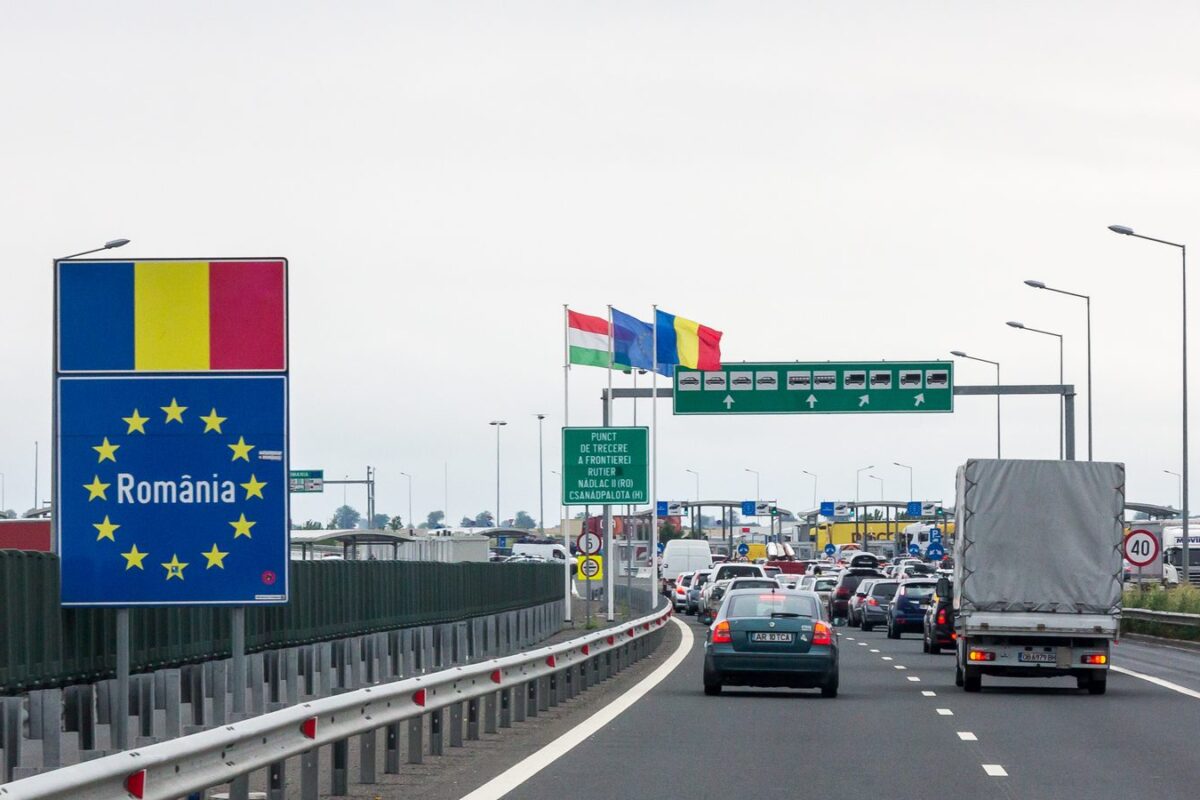
Eight Schengen countries are still checking IDs at borders that are supposed to be open. Schengen border checks extended through September, and in some cases through December 2026, cover Austria, France, Germany, Italy, the Netherlands, Norway, Poland, and Sweden, according to notifications filed with the European Commission.

Which Countries Have Schengen Border Checks Extended

Germany has prolonged checks at all nine of its land borders until September 15, 2026. The Netherlands extended its controls until September 30, with officials signaling this round is not expected to continue further in its current form.

Schengen border checks extended

France, Austria, Italy, Norway, Poland, and Sweden have each filed separate extensions running into the final months of 2026, citing a mix of security concerns and migration pressure at their respective frontiers.

Why Countries Keep Renewing These Checks

The Schengen Borders Code allows a member state to temporarily reinstate internal checks when it identifies a serious threat to public policy or internal security. Extensions require formal notification to Brussels and are meant to be short-term and proportionate.

In practice, several countries have renewed their checks repeatedly since 2023, citing ongoing irregular migration flows and, in some cases, upcoming major international events that raise security concerns. Critics argue the “temporary” checks have become close to permanent at some borders.

What This Means If You’re Crossing These Borders

A border check does not mean a closed border. Officials conduct spot checks on documents rather than systematic searches of every vehicle or traveler. Most crossings remain quick, though delays can build during peak travel periods or at high-volume road crossings.

Travelers with valid Schengen visas, passports, or residence permits should not expect to be refused entry. Carrying physical identity documents, rather than relying only on digital copies, remains the safest approach at any border currently under a reinstated check.

The Rules Behind a Temporary Border Check

Under Schengen rules, a member state notifies the European Commission before reinstating checks and must justify the threat driving the decision. Extensions typically run in six-month blocks, and the state must renew its notification each time it wants to keep the checks running.

The Commission reviews each notification but has limited power to force a country to end checks early. That gap in enforcement is part of why some countries have kept renewing checks for years rather than months, even though the rules describe the measure as exceptional and short-term.

How This Debate Keeps Resurfacing

Migration pressure and security concerns tied to major events remain the most common justifications countries cite. Germany’s land-border checks, for example, trace back to concerns about irregular crossings and have been renewed repeatedly rather than allowed to lapse.

Free-movement advocates argue the pattern undermines one of the EU’s core achievements, an open internal border. Governments defending the checks counter that spot verification is a proportionate tool while migration and security pressures remain elevated, not a rollback of Schengen itself.

The European Parliament has debated tightening the rules that govern how long a country can keep checks in place. So far, member states retain wide discretion to renew their own notifications, and no binding time limit has passed into EU law.

What Travelers Should Expect at the Border

Expect occasional document checks at land crossings in the eight countries listed above through at least September, longer in several cases. Air travelers face fewer disruptions, since these checks concentrate on land and, in some cases, key rail and sea routes.

The European Commission continues to press for a return to fully open internal borders, but has not blocked any of the current extensions. Anyone planning overland travel across these borders this autumn should build in extra time at major crossing points.

Keep a passport or national ID card accessible rather than packed away, even on routes that rarely see enforcement. Officers can request documents at any point during an active check, and delays are shorter for travelers who can produce them immediately.

Business travelers with recurring cross-border trips should factor in a buffer of 20 to 30 minutes at land crossings during peak hours, according to guidance several national border agencies have published alongside their extension notices.

Cross-border commuters and cargo drivers, who rely on predictable crossing times, have raised the loudest complaints, since repeated extensions make it harder to plan routes months in advance around any specific end date.

Frequently Asked Questions

Which Schengen countries currently have border checks in place?

Austria, France, Germany, Italy, the Netherlands, Norway, Poland, and Sweden have all filed extensions of internal border checks running through September or later in 2026.

Do I need a visa to cross a Schengen internal border with checks?

No new visa requirement applies. Existing Schengen visa, passport, or residence permit rules still govern entry; the checks are spot document verifications, not a new border regime.

Will these Schengen border checks become permanent?

They remain formally temporary under EU rules, though several countries have renewed them repeatedly since 2023, and the European Commission has not forced any country to end its checks early.

Do these checks affect flights within Europe?

Rarely. The reinstated checks concentrate on land borders and, in some countries, key rail and sea crossings, with limited impact on domestic and intra-Schengen flights.

Related Coverage on Tamara News

Sources

ChatGPT Just Landed on the EU’s Strictest Regulatory List

The European Commission has placed ChatGPT in the top tier of its online platform rulebook. The ChatGPT DSA designation, announced on 31 August 2026, classifies OpenAI’s chatbot search function as a Very Large Online Search Engine under the Digital Services Act. Reddit and Roblox were designated Very Large Online Platforms on the same day. All three now face the strictest obligations the law contains.

Twenty-eight services now carry that status in Europe. Until this week, the list read mostly as a roll call of social networks, marketplaces and app stores. A general-purpose chatbot and a children’s gaming platform did not sit on it.

Phone screen with apps affected by the ChatGPT DSA designation
ChatGPT, Reddit and Roblox now sit in the same DSA tier as Europe’s largest social platforms.

What the ChatGPT DSA designation actually means

The Digital Services Act sets a single numerical trigger. A service that averages at least 45 million monthly users inside the European Union crosses into the highest compliance tier. Platforms report those figures themselves, and the Commission then verifies and acts on them.

ChatGPT’s search function averaged roughly 159 million monthly active users in the bloc over the six months ending March 2026, according to the figures the Commission relied on. Reddit reported 57.2 million. Roblox reported around 48 million. Each number sits above the threshold, so each triggered a designation.

The split in labels matters. ChatGPT was designated as a search engine rather than a platform, because the Commission assessed its search feature. Reddit and Roblox were designated as platforms. The obligations overlap heavily, but the framing tells you which part of each product Brussels is looking at.

Why Reddit and Roblox met the DSA threshold too

Reddit’s European audience has grown steadily as its content surfaced more often in general web search. Roblox has a different profile: a very young user base, user-generated worlds, and an in-game economy. Regulators have paid close attention to both characteristics.

Roblox’s designation is the one to watch. The DSA’s minor-protection provisions were written with exactly this kind of service in mind, and the company must now assess and document how its design choices affect children in Europe. That is a heavier lift than a policy update.

The obligations that follow a top-tier designation

Designated services have four months to comply. That clock runs to the end of November 2026. In that window each company must build out a compliance programme covering several areas.

  • Annual systemic risk assessments covering illegal content, the protection of minors, effects on users’ mental and physical wellbeing, fundamental rights, electoral processes and public security.
  • Risk mitigation measures that respond to whatever those assessments find.
  • Independent audits of compliance, paid for by the company and conducted by an outside firm.
  • Data access for regulators and vetted researchers, so outside parties can study how the service behaves.

The Commission supervises this tier directly rather than leaving it to national regulators. That is a deliberate design choice in the law, and it removes the forum-shopping that shaped earlier EU tech enforcement.

How the DSA designation sits alongside the EU AI Act

Two separate European laws now touch the same product. The DSA governs how a service handles content, risk and users. The AI Act governs how an AI system is built, documented and disclosed. OpenAI has to satisfy both, and the requirements do not map onto each other neatly.

We covered the transparency provisions that took effect this summer in our report on the EU AI Act transparency rules. Read alongside this designation, the direction is consistent: Europe is regulating AI products through general platform law as well as through AI-specific law.

The commercial context matters too. AI companies are raising and spending at a scale that makes European compliance costs a rounding error, as the DeepSeek funding round illustrated this week. Compliance is a schedule problem for these firms, not a budget problem.

Where the DSA compliance clock goes from here

Expect three things before December. First, published risk assessments, which tend to arrive close to the deadline. Second, product changes in Europe that arrive quietly, particularly around age assurance on Roblox. Third, a period in which the Commission decides whether what it received is adequate.

Enforcement, if it comes, follows later. The DSA allows fines of up to 6% of global annual turnover for serious breaches, and the Commission has shown it will open proceedings against designated services. Nothing suggests that is imminent here. The immediate story is a deadline, not a penalty.

For anyone building on these platforms, the practical effect is narrower than the headlines suggest. Users in Europe should see more reporting options, clearer explanations of recommendation systems, and stronger defaults for younger accounts. Users elsewhere may see some of the same changes, because splitting a product by region is expensive.

Questions readers are asking about the DSA designation

Does the ChatGPT DSA designation apply outside the EU?

No. The Digital Services Act applies to services offered in the European Union. Companies often roll changes out globally for simplicity, but the legal obligation stops at the EU border.

Why was ChatGPT designated a search engine rather than a platform?

The Commission assessed ChatGPT’s search function, which retrieves and presents information from the web. That fits the DSA’s definition of an online search engine, so the Very Large Online Search Engine label applied.

When exactly does compliance start?

Designated services get four months from designation. For these three, that runs to the end of November 2026.

What happens if a company misses the deadline?

The Commission can open formal proceedings, request information, and ultimately fine a service up to 6% of global annual turnover for serious infringements. In practice, enforcement usually begins with information requests.

How many services are now designated?

Twenty-eight services are designated as very large online platforms or search engines following this announcement.

Sources

More of our technology and regulation coverage: the Pentagon’s new generative AI platform.

Morocco Votes September 23 — Why This Election Matters

Morocco heads to the polls in three weeks. The Morocco general election 2026 falls on September 23, when voters choose all 395 members of the House of Representatives. A party or coalition needs 198 seats for a majority. This cycle brings a procedural first: candidates are filing their paperwork online rather than in person. Election officials say the change is meant to speed up a process long criticized as slow and paper-heavy.

Provisional voter rolls show approximately 16.5 million registered voters, according to Moroccan election authorities cited by Morocco World News and the African Press Agency. The official campaign period runs from September 10 to September 22, a compressed two-week window for parties to make their case.

Morocco general election 2026

What’s at stake in the Morocco general election 2026

Prime Minister Aziz Akhannouch’s National Rally of Independents leads the outgoing government. It faces pressure over cost-of-living issues that have shaped Moroccan politics since the last cycle. Analysts writing for Eurasia Review frame the vote as a test of whether the current coalition can hold together a “competent, effective and territorially just” government. That language reflects ongoing frustration in rural and lower-income regions over uneven access to public services.

The election also lands against a backdrop of Moroccan diplomatic activity on the international stage. That includes the country’s continued push for recognition of its position on Western Sahara, a subject likely to feature in campaign messaging from multiple parties.

How the new online filing system changes candidacy

Morocco’s shift to digital candidacy filing breaks from a system long criticized for administrative bottlenecks. Those bottlenecks favored well-resourced, established parties over newer entrants with fewer staff to manage paperwork deadlines. Election observers will watch whether the online system genuinely broadens participation among independent and smaller-party candidates. Or whether digital literacy and connectivity gaps in rural provinces create a different kind of barrier.

Morocco’s vote sits alongside a broader pattern of national elections shaping global institutions this year. That includes the ongoing contest for open seats on the UN Security Council, where several states are seeking influence heading into 2027.

What happens after the September 23 vote

Coalition talks typically begin within days of results being finalized. In the prior cycle, Akhannouch’s party reached a coalition agreement with two others the day after voting closed. The new government took office roughly two weeks later. Whether this cycle moves as quickly depends on how fragmented the result is. A wider spread of seats across smaller parties would likely slow coalition talks and delay a confirmed government.

Why global observers are watching this vote

Morocco is one of the few North African states holding a full legislative election in 2026. The outcome will be read closely by regional partners and European governments that rely on Rabat as a security and migration-management partner. A stable coalition outcome would likely reinforce continuity in Morocco’s foreign policy posture. A fragmented result could complicate ongoing trade and migration talks with the European Union.

What issues are actually driving the campaign

Cost of living sits at the top of most campaign platforms this cycle, according to Moroccan political coverage from Fatumas Voice and Eurasia Review. Opposition parties are pressing the Akhannouch government over uneven regional development and the pace of public service delivery outside Morocco’s largest cities. Housing costs and youth unemployment are recurring themes in early campaign messaging. They reflect demographic pressure from a large working-age population entering the job market faster than it is absorbing.

Foreign policy features less in day-to-day campaigning but remains a backdrop issue, particularly Morocco’s push for recognition on Western Sahara. Candidates across the major parties have avoided daylight between themselves on that question. They treat it as national consensus rather than partisan debate. That means the September 23 result is unlikely to shift Morocco’s foreign policy path, regardless of which coalition emerges.

Turnout is a number worth watching once polls close. Morocco’s legislative elections have historically drawn lower participation than presidential-style contests elsewhere in the region. A low turnout figure would likely fuel debate over whether the new online filing system did enough to re-engage skeptical voters. Electoral commission officials say final turnout figures will publish within 48 hours of polls closing, with a province-by-province breakdown analysts will use to gauge rural turnout. International observer missions are expected to release their own preliminary assessment the same week. Their findings will feed into how foreign governments read the credibility of the new online filing process.

FAQ

When is Morocco’s general election?

September 23, 2026.

How many seats are being contested?

All 395 seats in the House of Representatives; a majority needs 198.

How many voters are registered?

Approximately 16.5 million, according to provisional rolls.

What is new about this election cycle?

Candidates are filing their paperwork online for the first time, rather than in person.

When does campaigning officially start?

September 10, running through September 22, the day before the vote.

Who currently leads the government?

Prime Minister Aziz Akhannouch, whose National Rally of Independents leads the outgoing coalition.

Related Guides

Europe Just Pushed ETIAS Back to 2027 — Again

Europe’s long-promised travel permit will not arrive this year after all. ETIAS delayed to 2027 is now the working assumption inside eu-LISA, the EU agency running the rollout, after officials told the Financial Times a late-2026 launch is no longer feasible.

ETIAS Delayed to 2027: The Two Reasons Why

eu-LISA points to two problems. The first is technical: parts of the ETIAS system are not ready for a full-scale launch. The second is operational: the Entry/Exit System, the biometric border check that went live earlier this year, is still causing long queues at major crossing points.

ETIAS delayed to 2027

Rolling out a second new system on top of a straining EES rollout risked compounding the chaos at border crossings and airports. eu-LISA and national border agencies both flagged that risk in recent weeks, which pushed the agency toward a delay rather than a rushed launch.

What Happens to the Confirmed Launch Date

There is no new official date yet. eu-LISA’s governing board plans to review a revised implementation timeline at a meeting this September. Industry sources cited by travel press are floating April 2027 as an early realistic estimate, though nothing is locked in.

This is not the first slip. ETIAS has slipped multiple times since its original target date, most recently from a planned late-2026 launch that outlets had reported as recently as July.

Why the EES Rollout Keeps Colliding With ETIAS

The Entry/Exit System records fingerprints and facial scans for non-EU travelers at Schengen borders. Since it launched, several major airports and land crossings have reported queues that stretch well beyond normal wait times, particularly during peak summer travel.

eu-LISA wants EES to stabilize before adding ETIAS on top of it. Running both systems at full capacity at the same time would multiply the strain on border staff who are already adapting to the new biometric checks, according to officials who spoke to European outlets covering the decision.

Some national border agencies reportedly asked eu-LISA directly for more breathing room between the two rollouts. A staggered approach, they argued, gives staff and infrastructure time to absorb one major change before taking on a second.

How This Compares to ETIAS’s Earlier Delays

ETIAS has missed its original target date more than once since the concept was first proposed years ago. Each previous delay traced back to similar causes: technical readiness gaps or the need to sequence the launch around other EU border projects.

Frequent travelers and airlines have grown accustomed to treating any announced ETIAS date as provisional until eu-LISA confirms it close to launch. This latest delay to 2027 fits that established pattern rather than breaking from it.

What ETIAS Is Supposed to Do

ETIAS is not a visa. It is a €20 online travel authorization for visa-exempt travelers entering the Schengen area, similar in concept to the US ESTA system. Travelers from the UK, US, and dozens of other countries would apply online before flying, with approval typically issued within minutes.

The system aims to screen travelers against security and migration databases before they reach the border, cutting down on checks once they land. With the delay, visa-exempt travelers can continue entering under existing rules for now.

Once live, an approved ETIAS authorization is expected to remain valid for multiple entries over a set validity window, sparing frequent travelers from reapplying before every trip to the Schengen area.

When Could ETIAS Actually Launch

Nothing changes for travelers immediately. Visa-exempt visitors to the Schengen area do not need to apply for anything new until eu-LISA confirms a firm date and opens the application system. Airlines and border agencies will get advance notice before any launch, since airline check-in systems need updates to verify authorizations.

Travelers planning trips to Europe in 2027 should watch for an official announcement expected after the September eu-LISA board meeting, rather than relying on any specific date currently circulating in the press.

Travel agents and tour operators serving the European market are telling clients to book flights and hotels as normal for now, since the delay affects a screening requirement rather than the ability to travel to Europe at all.

Anyone with an upcoming trip to Europe should recheck the ETIAS timeline closer to their travel date rather than assuming today’s estimate holds, given how often this launch window has already shifted.

Airlines flying transatlantic and other long-haul routes into Schengen airports are watching the September board meeting closely too, since a confirmed date determines how much lead time their check-in systems need before enforcing the new authorization requirement.

Frequently Asked Questions

Is ETIAS launching in 2026?

No. eu-LISA says a late-2026 launch is not feasible and the system is now expected to launch in 2027, with no confirmed date yet.

Why was ETIAS delayed?

eu-LISA cited technical readiness issues with the ETIAS system itself and operational strain from the ongoing Entry/Exit System rollout, which is already causing border queues.

Do I need to apply for ETIAS right now?

No. There is no ETIAS application open yet. Visa-exempt travelers continue entering the Schengen area under current rules until a launch date is confirmed.

How much will ETIAS cost when it launches?

The planned fee is €20 per application, with the authorization valid for multiple entries over a set period once issued.

Related Coverage on Tamara News

Sources

Canada’s New Tariffs Hit US Goods Sept 8 — What Gets Pricier

The trade fight between Washington and Ottawa just escalated again. On August 25, Canada announced Canada US retaliatory tariffs that will take effect September 8. They cover $27.6 billion worth of American goods with duties as high as 50%. Ottawa says the move matches, “dollar for dollar,” the 50% tariffs the Trump administration placed on roughly $28 billion of Canadian exports, according to CNBC’s report on the announcement. Those US duties followed a breakdown in trade talks over the weekend of August 22, first detailed by the Washington Post.

The counter-tariffs span 700 product categories. Steel and aluminum are joined by paper products, construction materials, home appliances, dairy and seafood. Canadian officials say the sectors were chosen to spread pressure across US export-heavy states rather than concentrate it in one industry.

Canada US retaliatory tariffs

What the Canada US retaliatory tariffs will cost shoppers

Economists tracking the dispute expect the duties to show up in consumer prices on both sides of the border within weeks. Steel, dairy and appliance costs move quickly into finished-goods pricing. CNN Business reported that American consumers should expect the clearest impact in home appliances and packaged food. Those products rely on Canadian-US supply chains built over three decades of tariff-free trade.

Ottawa is not leaving affected industries to absorb the hit alone. The government paired the tariff announcement with a C$7.5 billion support package. It includes funding for small and medium-sized businesses, cash-flow support for exporters, and assistance for workers in the most exposed sectors.

How the trade war reached this point

The current round traces back to a breakdown in bilateral trade talks in late August. Washington then imposed 50% duties on roughly $28 billion of Canadian goods. Prime Minister Mark Carney’s government responded within days rather than waiting. That is a faster retaliation cycle than earlier rounds of the dispute, which has run since 2025. The pattern echoes broader anxiety among American shoppers. Household budgets are already squeezed by inflation, a strain visible in recent retail earnings showing how stretched household budgets have become.

Markets have registered the dispute as one more source of uncertainty. It layers on top of Federal Reserve policy questions and Middle East-driven energy price swings. Both kept US equities volatile through late August.

What happens next in the Canada-US trade dispute

Both governments have left the door open to further talks before September 8. Neither side has signaled it will roll back its own duties first. Trade lawyers on both sides expect the dispute to run through the fall at minimum. The C$7.5 billion Canadian support package will likely be the first test of Ottawa’s political and fiscal room to sustain a prolonged fight. US industry groups dependent on Canadian steel and aluminum inputs have already begun lobbying Washington for exemptions.

Which sectors face the steepest Canada US retaliatory tariffs

Steel and aluminum carry the highest rate in the new schedule at 50%, mirroring the US duty structure directly. Dairy, seafood, paper and construction materials sit in the 15%-25% band. Farm equipment manufacturers, concentrated in the US Midwest, are among the most exposed exporters. Canada is a top destination for American-made agricultural machinery.

How other US trading partners are reading this dispute

Governments beyond Ottawa are watching how quickly and firmly Canada retaliated. The episode is becoming a reference case for how far Washington’s tariff strategy can push a close ally. Trade officials in the EU and Mexico have their own outstanding tariff friction with Washington. They are unlikely to ignore that Canada matched the US rate structure “dollar for dollar” within days. Ottawa did not open with a smaller, conciliatory counter-offer.

Canadian officials frame the swift response partly as a domestic political necessity. Prime Minister Carney faced pressure at home to show the government would not simply absorb a 50% duty without a matching response. That political calculus matters as much as the economic math. It is likely to shape how other governments respond if they land in a similar spot with Washington.

Canadian provinces with heavy cross-border manufacturing exposure are pressing Ottawa for sector-specific relief. Ontario’s steel corridor and Quebec’s paper industry are the clearest examples. They argue a uniform national program may not reach the hardest-hit regional economies fast enough to prevent layoffs before September 8. Ottawa has not ruled out adding sector-specific measures if the national package proves insufficient once the first round of duties lands. Provincial premiers are expected to raise the issue directly with Carney’s cabinet in the coming weeks. Business groups in both countries say they want clarity well before the September 8 start date.

FAQ

When do Canada’s retaliatory tariffs take effect?

September 8, 2026.

How much US trade is affected?

$27.6 billion in American goods across roughly 700 product categories.

What is the highest tariff rate Canada is applying?

50%, matching the US duty on Canadian steel and aluminum.

Why did Canada retaliate now?

Trade talks between Ottawa and Washington broke down in late August. The US then imposed 50% tariffs on about $28 billion of Canadian goods.

Is Canada offering support to affected businesses?

Yes, a C$7.5 billion package covering small business funding, cash-flow support and worker assistance.

Which products will see the biggest price increases?

Steel, aluminum, dairy, appliances and farm equipment are expected to see the most direct price impact.

Related Guides