
Everyone Around Switzerland Is Raising Rates. It Just Sat Still

The Swiss National Bank left its policy rate at 0% on Thursday, 24 September 2026. The Swiss National
Bank decision
stands out because its neighbours went the other way. In its own statement, the SNB noted
that key rates were raised both in the euro area and in the US. Switzerland can afford to wait, for now,
because its inflation remains low.

What the Swiss National Bank decision kept in place

The policy rate stays at 0%. Banks’ sight deposits at the SNB earn that rate up to a threshold. Above
it, the discount remains 0.25 percentage points. The bank also repeated that it is willing to act in the
foreign exchange market as necessary. Those details come from the
SNB’s monetary policy assessment.

The SNB called its stance "appropriate" to keep inflation within the range it defines as price
stability. That range is 0% to 2%.
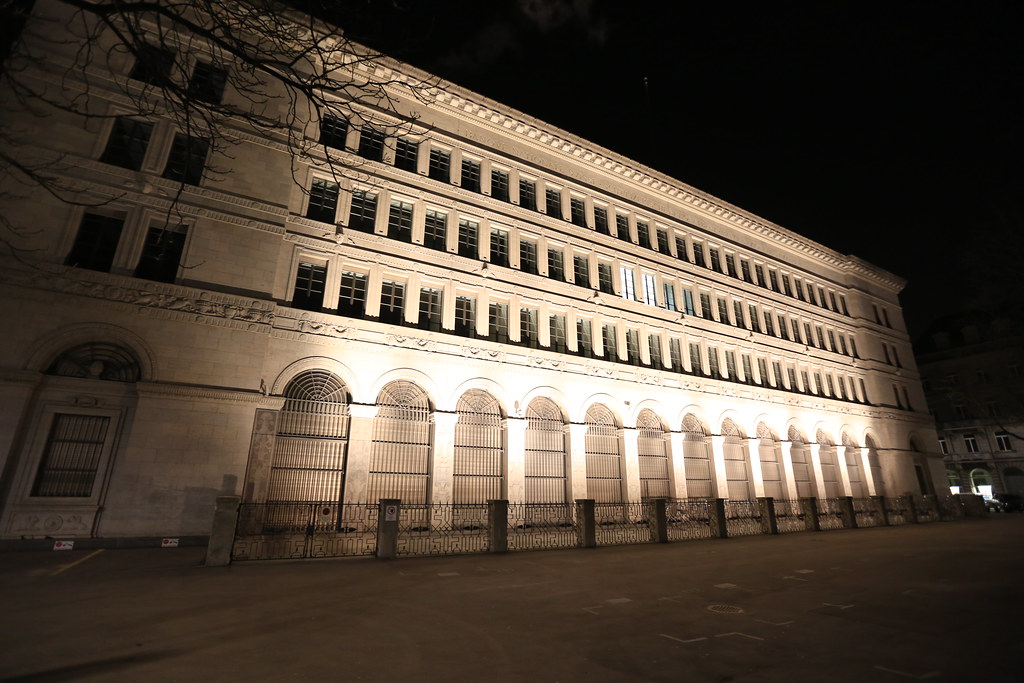
Swiss National Bank office in Zurich, one of the two seats behind the Swiss National Bank decision
The SNB runs head offices in Bern and Zurich.

The inflation picture behind the hold

Prices are rising, just slowly. Swiss inflation climbed from 0.6% in May to 0.8% in August. Goods
inflation turned positive in August for the first time since May 2024. Higher prices for oil products
drove most of that move.

The SNB expects inflation to rise a little further in the fourth quarter. It then sees it easing
during 2027 as energy inflation fades. Its conditional forecast reads:

  • 2026: 0.7% average inflation
  • 2027: 0.8%
  • 2028: 0.8%

That path stays inside the target band throughout. It assumes the policy rate holds at 0% over the
whole horizon. The bank said the medium-term forecast edged up partly because the Swiss franc has
weakened.

Why the Swiss National Bank decision diverges from the Fed and ECB

The contrast with other big central banks is the story. The US Federal Reserve raised its target range
to 3.75%-4.00% in September, its first hike since 2023, as CNBC reported.
Our coverage of the Fed’s rate hike explains
what drove that vote. The European Central Bank also tightened, as set out in our report on the
ECB interest rate hike.

Both face inflation above their 2% goals, much of it tied to energy. Switzerland does not. Its inflation
sits well below 1%. That gives the SNB room to hold while others squeeze.

A weaker franc helps the Swiss economy in the short run. The SNB said the recent depreciation is
having a supportive effect on growth.

The global backdrop matters here. The SNB noted that key rates rose in both the euro area and the US,
while inflation in many countries stayed above target on higher energy prices. Its own base case sees
moderate global growth ahead. It also sees inflation staying elevated for some time. That external picture
shapes how long Switzerland can keep its own rate at zero.

What the SNB expects for the Swiss economy

Second-quarter GDP growth was exceptionally strong. The SNB said an unusual surge in chemicals and
pharmaceuticals overstated the underlying pace. Even without it, growth was solid and broad-based.

There are soft spots. Capacity use sat below average, especially in manufacturing. Unemployment rose
again somewhat through early summer. The bank now expects growth of 1.5% to 2% for 2026, and around 1.5%
for 2027.

Where Swiss rates go from here

The SNB flagged the Middle East as the biggest risk. If energy prices end up significantly higher,
inflation would rise and growth would slow. Trade policy and exchange rates remain further sources of
uncertainty.

For savers and borrowers in Switzerland, little changes today. Mortgage and deposit rates tied to the
policy rate should stay near current levels. For currency watchers, the key variable is the franc. A much
weaker franc would push imported inflation up and test the 0% setting. The SNB holds its assessments
quarterly, so the next scheduled decision falls in December.

Swiss rate questions, answered

What did the Swiss National Bank decide?

On 24 September 2026 the SNB left its policy rate unchanged at 0%. The discount on sight deposits above the exemption threshold also stayed at 0.25 percentage points.

Why did the SNB hold while other central banks raised rates?

Swiss inflation is still inside the SNB’s 0-2% target range. It stood at 0.8% in August. The US Federal Reserve and the European Central Bank face inflation above target, which pushed them to hike.

What is the SNB’s inflation forecast?

The conditional forecast puts average inflation at 0.7% for 2026, 0.8% for 2027 and 0.8% for 2028. It assumes the policy rate stays at 0% throughout.

Will the SNB intervene in currency markets?

The SNB said it remains willing to be active in the foreign exchange market as necessary. It did not say whether it has intervened recently.

How fast is the Swiss economy growing?

The SNB expects growth of 1.5% to 2% in 2026 and around 1.5% in 2027. It said strong second-quarter GDP partly reflected an unusual boost from chemicals and pharmaceuticals.

What is the main risk the SNB flagged?

The situation in the Middle East. The SNB warned that energy prices could turn out significantly higher than expected, which would raise inflation and curb growth.

Sources

  • Swiss National Bank — Monetary policy assessment of 24 September 2026. snb.ch
  • CNBC — Fed rate decision September 2026: Rates rise to 3.75%-4%. cnbc.com

Images: featured photo by Robbie Conceptuel (CC0); in-article photo by TravelingOtter, licensed CC BY.

Gaza Just Got a $2.45 Billion Rebuild Plan — and No Start Date

The US-backed Board of Peace has put a price on the first step of rebuilding Gaza. On Wednesday,
23 September 2026, its governors unveiled a six-month, $2.45 billion Gaza reconstruction plan
covering 66 projects. The blueprint arrived at a meeting in New York on the sidelines of the UN General
Assembly. It came with no start date. Almost everything in it depends on steps that have not happened yet.

What the Gaza reconstruction plan contains

The first phase targets the most urgent gaps. Its 66 projects span infrastructure, education and health,
according to the Associated Press.
They are designed to support President Donald Trump’s 20-point plan to end the Israel-Hamas war.

The board framed the first phase as a down payment, not the whole bill. "The need is immense,"
it said. It estimates that repairing Gaza’s physical damage will cost about $35.2 billion over the medium
term. It adds another $71.4 billion over the next ten years.

Those figures come from the board itself. No independent audit of Gaza’s damage accompanied them.

Collapsed buildings on Wehda Street, one of the sites the Gaza reconstruction plan must eventually address
Whole streets in Gaza City remain rubble almost a year after the ceasefire began.

Why no start date came with the money

The plan hinges on disarmament. Nikolay Mladenov, the board’s high representative, has said progress
depends largely on Hamas giving up its weapons. The group has so far refused.

In July, Hamas and other Palestinian factions agreed a document setting out a disarmament process,
Al Jazeera reported.
Implementation has not followed. Mladenov was blunt about timing. "We are not bound by a calendar,"
he said. "We want to make sure that this works."

Mladenov has also pressed Israel to scale back its military operation. That pressure matters, because the
ceasefire framework rests on both sides moving at once.

How far Gaza is from reconstruction today

The ceasefire took effect on 10 October. It was meant to open the way for Israeli withdrawals, an
international peacekeeping force and a new apolitical Palestinian administration. Most of that is still
waiting.

  • The Israeli military has expanded its control and now occupies about 60% of the territory, the AP reports.
  • The international force and the new government have not entered Gaza.
  • Reconstruction has not begun.
  • Most Palestinians still live in tent camps or in the ruins of former homes.

Violence continues too. On the day the plan was unveiled, Israeli strikes killed seven Palestinians
across the enclave, according to Al Jazeera, citing local medics. Israel said one strike killed a senior
Hamas finance official. That claim comes from the Israeli prime minister’s office alone.

The scale of what the money must cover is hard to overstate. The board itself calls the need immense.
Its own estimate runs to $35.2 billion for medium-term repairs and $71.4 billion over a decade. Against
those figures, the $2.45 billion first phase is a start, not a solution. And even the first phase waits
on a political breakthrough that has not come.

The diplomatic pressure around the Gaza reconstruction plan

The plan landed in a week of sharp criticism of Israel at the General Assembly. Leaders of the United
Kingdom, France and Canada said Israeli settlement policy in the West Bank blocks a two-state solution.
UN Secretary-General António Guterres said the UN must be allowed to perform its mandates in Gaza. Our
report on Guterres’s warnings at this year’s Assembly
covers that speech in more detail.

Turkish President Recep Tayyip Erdogan, whose country signed the ceasefire, said rebuilding must start
"as soon as possible". Earlier doubts about the whole framework are set out in our analysis of
criticism of the Gaza ceasefire plan.

Three tests before any rebuilding starts

The board now has to answer harder questions than cost. Watch for three signals.

  1. A disarmament timetable. Without one, donors have little reason to release funds.
  2. Deployment of the stabilisation force. Uganda has approved sending troops. No force has yet crossed into Gaza.
  3. Building materials at the crossings. Cement, steel and machinery must enter at scale before any of the 66 projects can begin.

Regional security adds another layer of risk. Recent missile fire toward Saudi Arabia, covered in our report on the
Riyadh missile attack, shows how quickly
the wider Middle East picture can shift. For now, the $2.45 billion sits on paper.

Questions readers are asking

How much does the Gaza reconstruction plan cost?

The first phase costs about $2.45 billion and runs for six months. It covers 66 projects in infrastructure, education and health. The Board of Peace puts full physical reconstruction far higher: roughly $35.2 billion over the medium term and another $71.4 billion over ten years.

When will reconstruction start?

No start date has been set. The board’s high representative, Nikolay Mladenov, said the plan depends on Hamas disarming, and that the board is not bound by a calendar.

Who runs the Board of Peace?

The Board of Peace is the US-backed body created under President Donald Trump’s 20-point plan to end the Israel-Hamas war. Nikolay Mladenov serves as its high representative.

Has the ceasefire held?

The ceasefire that took effect on 10 October halted the heaviest fighting. Violence has not stopped. Al Jazeera reported that Israeli attacks killed seven Palestinians on the day the plan was unveiled.

Who controls Gaza on the ground?

According to the Associated Press, the Israeli military now occupies about 60% of the territory. The planned international force and the new Palestinian technocratic government have not entered Gaza.

What would unlock the money?

Three things sit on the critical path: Hamas disarmament, deployment of the international stabilisation force, and steady entry of building materials. None is in place yet.

Sources

  • Associated Press via PBS News — Trump’s Board of Peace proposes $2.45 billion blueprint to begin Gaza reconstruction. pbs.org
  • Al Jazeera — Board of Peace plans $2.4bn Gaza reconstruction as Israel kills seven. aljazeera.com

Images: featured photo by Felton Davis (public domain); in-article photo by Hla.bashbash, licensed CC BY.

Washington Just Renewed Its ‘Leave Now’ Warning for Iran — Here’s Why

The US State Department has renewed its starkest possible warning on Iran, telling Americans not to travel there “for any reason” and urging anyone already in the country to leave immediately. The Iran travel warning renewed keeps Iran at Level 4, the department’s highest advisory category, and arrives as Houthi attacks on Saudi Arabia add a fresh flashpoint to an already tense regional security picture.

What the Iran travel warning renewed covers

The advisory language is unambiguous: “Do not travel to Iran for any reason. U.S. citizens should leave Iran now.” That warning sits alongside a wider set of regional alerts issued around September 19, 2026, when at least eleven US diplomatic posts, including those in Bahrain, Iraq, Israel, Jordan, Kuwait, Lebanon, Oman, Qatar, Saudi Arabia and the United Arab Emirates, issued near-identical language about possible disruptions tied to the same underlying tensions. The coordinated timing of so many posts issuing nearly identical wording within hours of each other is itself unusual and underscores how closely Washington is now tracking the regional security picture.

The Houthi-Saudi flashpoint behind the timing

Iranian-backed Houthi forces have escalated hostilities against Saudi Arabia, including strikes and attempted strikes that have unsettled a region already on edge. That escalation is the immediate trigger for the renewed warning, layered on top of longer-running tension between Washington and Tehran that has kept Iran at the highest advisory level for years. Officials describe the current environment as one where the military conflict “has the potential to escalate rapidly,” language that shapes how seriously the accompanying regional alerts should be read.

What travelers across the region should expect

Beyond Iran itself, the State Department is warning Americans to prepare for sudden changes to travel across the wider Middle East, including flight cancellations, airspace closures and other disruptions that could arrive with little notice. Americans outside the region have also been told to seriously reconsider travel to and through the Middle East while the situation remains unsettled, a broader caution than the country-specific advisories typically carry.

Iran travel warning renewed

What to watch in the days ahead

Airlines operating routes through Gulf airspace are the most immediate indicator to watch, since a further escalation in Houthi-Saudi hostilities could force rerouting or grounded flights with little warning. The State Department has not set a timeline for when the elevated regional alerts might ease, and officials have signaled the advisories will remain in place as long as the underlying security picture stays volatile.

How the region’s aviation map is already shifting

Several carriers have already begun adjusting flight paths to avoid airspace closest to the Houthi-Saudi flashpoint, adding flight time and fuel costs on routes that previously crossed the region directly. Airlines have historically responded to this kind of advisory by building in contingency routing rather than canceling service outright, a pattern seen during earlier phases of regional tension, though officials caution that a sharp escalation could force more drastic schedule changes with little advance notice.

How this warning compares with earlier Iran advisories

Iran has sat at Level 4 for years, so the renewed language itself is not a new designation, but the near-simultaneous alerts across eleven other diplomatic posts mark a broader regional escalation than typical routine advisory updates. Previous Iran-specific warnings have not usually been accompanied by matching alerts from posts as far apart as Lebanon and the UAE within the same 48-hour window, which is part of why regional security analysts are treating this round of advisories as more significant than a routine renewal.

What travelers with existing Middle East plans should do

Travelers with upcoming trips to any of the eleven named countries are advised to register with the State Department’s travel program, monitor airline notifications directly rather than relying solely on news coverage, and build flexibility into itineraries given the explicit warning about sudden flight cancellations and airspace closures. Travel insurance policies purchased before an advisory is issued may offer different coverage than policies bought afterward, a distinction travel agents have been fielding more questions about since the alerts went out.

Frequently Asked Questions

What did the renewed Iran travel warning say?

The US State Department’s alert stated Americans should not travel to Iran for any reason and that citizens already in the country should leave immediately, keeping Iran at Level 4, its highest advisory category.

Why was the warning renewed now?

Houthi attacks on Saudi Arabia have added a new flashpoint to an already volatile regional security environment, raising the risk of rapid escalation across the wider Middle East.

Which other countries were included in related warnings?

Around September 19, 2026, at least eleven US diplomatic posts, including those in Bahrain, Iraq, Israel, Jordan, Kuwait, Lebanon, Oman, Qatar, Saudi Arabia and the UAE, issued near-identical warnings about possible travel disruptions.

What kind of disruptions is the State Department warning about?

The advisories flag the risk of sudden flight cancellations, airspace closures and limited consular support if the security situation deteriorates further.

Does the warning apply to Americans outside the Middle East?

The State Department has also urged Americans outside the region to seriously reconsider travel to and through the Middle East while tensions remain elevated.

Related coverage on Tamara News

For more context, see our reporting on Iran ceasefire diplomatic progress, Oil prices iran war fears and Cambodia thailand border advisory.

Sources

Canada Just Changed How It Reports Work Permit Wait Times

Canada’s immigration department released its latest processing-times figures this month, and the headline change is as much about how the numbers are reported as what they show. The IRCC processing time update shifted in-Canada work permit reporting from days to weeks, while showing wait times rising for applicants already inside Canada even as study permit timelines held steady for the first time in several cycles.

What the IRCC processing time update changed for work permits

Immigration, Refugees and Citizenship Canada began reporting in-Canada work permit processing times in weeks rather than days in its latest release. Under the new figures, in-Canada submissions, covering both initial applications and extensions, are estimated at 120 days, while applications submitted from outside Canada are estimated at 60 days. Work permit wait times rose for applicants located in Canada and the United States, marking Canada’s first increase in that category since at least early June, while wait times for applicants in the Philippines fell by one week over the same period. The shift in reporting units alone caught many applicants off guard, since a figure quoted in weeks reads very differently at first glance than the same duration expressed in days.

Study permits held steady

Study permit processing times showed no movement in the September update for any featured country, the first time since IRCC’s July 17 update that the figures had stayed flat across the board. That stability offers a measure of predictability for prospective international students planning their arrival dates around an upcoming academic term, even as work permit timelines moved in the opposite direction.

Why the reporting change matters

Switching from days to weeks for in-Canada work permit figures is a small technical adjustment, but it changes how applicants and immigration consultants interpret the numbers at a glance. IRCC has cautioned that actual processing times can run shorter or longer than the published estimate depending on an application’s complexity, the size of IRCC’s current inventory, and whether the department needs additional information or further verification before a decision.

IRCC processing time update

What applicants should expect next

IRCC’s next processing-times update is expected on or around September 30, 2026, and applicants currently in the queue should treat the current figures as a moving target rather than a fixed promise. Anyone with a time-sensitive work permit extension is advised to file well ahead of their current permit’s expiry, given that in-Canada wait times just moved in the wrong direction for the first time in months.

How Canada’s processing times are calculated

IRCC’s published figures represent an estimate covering 80% of cases processed within the stated window, not a guarantee for every individual file, which is why the department consistently cautions that actual outcomes can run shorter or longer. The methodology draws on rolling data from recently completed applications, meaning a sudden surge in a particular category can push the published estimate up even before the underlying backlog fully clears. That lag is part of why applicants sometimes see processing times move in a direction that seems disconnected from their own personal experience of submitting and waiting on a file.

Why in-Canada applicants saw the biggest shift

The rise in wait times specifically for applicants already inside Canada and the United States, rather than a uniform increase across every country, points to a processing backlog concentrated in particular application streams rather than a system-wide slowdown. Immigration consultants tracking the figures have suggested the shift may reflect higher application volumes from temporary residents seeking to extend their status domestically rather than apply from abroad, a pattern that tends to accelerate when broader immigration policy uncertainty makes applicants reluctant to leave the country while a decision is pending.

What this means for employers relying on temporary workers

Canadian employers who sponsor foreign workers on time-limited permits are watching the in-Canada figures particularly closely, since a 120-day estimate for extensions can create staffing gaps if an employee’s current permit expires before a renewal is approved. Immigration lawyers have generally advised employers to build additional lead time into renewal planning given the recent increase, rather than assuming processing will match the previous, faster baseline that applied through the summer months.

Frequently Asked Questions

What changed in the latest IRCC processing time update?

Immigration, Refugees and Citizenship Canada began reporting in-Canada work permit processing times in weeks rather than days, setting in-Canada submissions at 120 days and outside-Canada submissions at 60 days.

Did wait times go up or down?

Work permit wait times rose for applicants inside Canada and the United States, the first increase since at least early June, while wait times fell by one week for applicants in the Philippines.

What about study permits?

Study permit processing times were unchanged in the September update for every featured country, the first time in several update cycles that no movement was recorded.

How often does IRCC update these figures?

IRCC updates processing times regularly, and the next update was expected on or around September 30, 2026.

Do these published times guarantee how long an application will take?

No. IRCC says actual processing times can be shorter or longer depending on an application’s complexity, the size of IRCC’s inventory, and whether additional information or verification is required.

Related coverage on Tamara News

For more context, see our reporting on Alberta independence referendum vote, Employment based visa retrogression and Uscis new form editions i539 i765.

Sources

Three Weeks Ago, ChatGPT, Claude and Grok All Went Down at Once — Here’s What It Exposed

Three weeks ago, on September 3, 2026, millions of people around the world lost access to ChatGPT, Claude and Grok within the same 90-minute stretch, an incident now widely cited as the clearest evidence yet of how concentrated the AI industry’s infrastructure has become. The AI platforms simultaneous outage traced back to a single regional failure inside Microsoft Azure’s East US infrastructure, the cloud backbone that quietly underpins three of the world’s four biggest AI chatbots.

What the AI platforms simultaneous outage actually looked like

Outage reports climbed into the tens of thousands that Thursday morning as ChatGPT, Claude and Grok all became unreachable at once, knocking millions of daily workflows offline simultaneously. Downdetector spikes confirmed what users were already reporting on social media: this was not one company’s problem, but three at once. Services began recovering by 8:49 a.m. Pacific time and were fully restored by 12:38 p.m. Pacific time, meaning the worst of the disruption lasted roughly four hours from first reports to full recovery. Workers who relied on any of the three tools for coding, writing or customer support found themselves without a fallback, since many had not built any redundancy into workflows that had quietly become daily essentials.

Why one cloud region could take down three rivals

The trigger was a regional failure inside Microsoft Azure’s East US infrastructure. OpenAI, Anthropic and xAI all rely on Azure to some degree for compute capacity, meaning a single regional outage cascaded across services that most users assume compete independently of one another. Google’s Gemini, which runs on Google Cloud rather than Azure, stayed largely upright throughout the incident, with only about 500 outage reports at the peak, a stark contrast that analysts pointed to as evidence of how much resilience depends on cloud diversification.

The infrastructure risk nobody was pricing in

The incident forced a broader conversation about concentration risk in AI infrastructure that has only grown louder in the weeks since. Enterprises that built customer service tools, coding assistants or internal workflows on top of any of the three affected services discovered, some for the first time, that their AI vendor’s uptime depended on a cloud provider they had never directly evaluated. That single point of failure sits several layers beneath the branded chatbot interface most users interact with daily.

AI platforms simultaneous outage

What has changed since the outage

In the weeks since, cloud diversification has become a more prominent talking point among enterprise AI buyers, with some companies asking vendors directly which cloud region underpins their service before signing contracts. None of the three affected companies has publicly detailed permanent infrastructure changes in response, and Microsoft has not released a full public post-mortem of the September 3 regional failure. The episode remains a live case study in how much of the AI boom’s visible competition sits on a surprisingly narrow band of shared cloud infrastructure.

How businesses are rethinking AI vendor risk

For companies that had built customer-facing tools on top of ChatGPT, Claude or Grok, the outage was a rare moment of shared vulnerability across otherwise competing products. Procurement teams at several enterprises have since added cloud-region questions to vendor security reviews, treating an AI provider’s underlying infrastructure as material risk information rather than an implementation detail. Some analysts have argued the incident should accelerate multi-cloud strategies across the industry, though switching an AI workload between cloud providers is rarely as simple as it sounds given how deeply model-serving infrastructure is often tied to a specific provider’s hardware.

A preview of a bigger structural question

The outage also reopened a longer-running debate about how much of the modern internet, and now the AI layer built on top of it, depends on a handful of hyperscale cloud providers. Azure, AWS and Google Cloud collectively host the overwhelming majority of the world’s AI training and inference workloads, meaning a single regional failure at any one of them carries outsized consequences by design. Whether that concentration eases over time as AI labs diversify their infrastructure, or deepens further as switching costs rise, remains one of the more consequential open questions the September 3 incident left unanswered.

Frequently Asked Questions

What happened during the AI platforms simultaneous outage?

On September 3, 2026, ChatGPT, Claude and Grok all went down within the same 90-minute window, with outage reports climbing into the tens of thousands before services fully recovered.

What caused the outage?

A regional failure inside Microsoft Azure’s East US infrastructure, which hosts three of the four biggest AI chatbots, triggered the disruption across OpenAI, Anthropic and xAI’s services simultaneously.

How long did the outage last?

Services began recovering by 8:49 a.m. Pacific time and were fully restored by 12:38 p.m. Pacific time the same day.

Was Google’s Gemini affected?

No. Gemini runs on Google Cloud rather than Microsoft Azure, and it stayed largely unaffected, with only about 500 outage reports at the incident’s peak compared with tens of thousands for the Azure-hosted services.

What does this reveal about AI infrastructure risk?

It shows how concentrated the AI industry’s cloud dependence has become; three competing chatbot services that most users assume are independent all failed together because they share the same underlying cloud region.

Related coverage on Tamara News

For more context, see our reporting on Plugin4shell vulnerability ai coding agents, Ai antitrust lawsuit and Eu ai act compliance audits.

Sources