Six AI CEOs Just Signed a Pledge Critics Call Self-Grading

President Trump brought six of the most powerful executives in artificial intelligence to the White House on September 29. They signed what the administration is calling a “morally binding” pledge on AI safety. The Trump AI safety accord is formally titled the Joint Commitment on Frontier Responsibilities. It commits the signing companies to internal oversight and outside auditing, rather than accepting new binding regulation from Washington.

The signatories included Anthropic’s Dario Amodei, OpenAI’s Greg Brockman, Google’s Sundar Pichai, Meta’s Mark Zuckerberg, xAI’s Elon Musk and Nvidia’s Jensen Huang. That is according to Al Jazeera’s reporting on the signing.

What the Trump AI safety accord actually commits companies to do

Under the agreement, signing companies pledge to build “robust” controls for monitoring their AI models. They agree to appoint internal oversight teams, partner with independent external auditors, and meet regularly to develop shared safety standards. None of these commitments carry the force of law. They rest instead on the companies’ own follow-through and public accountability.

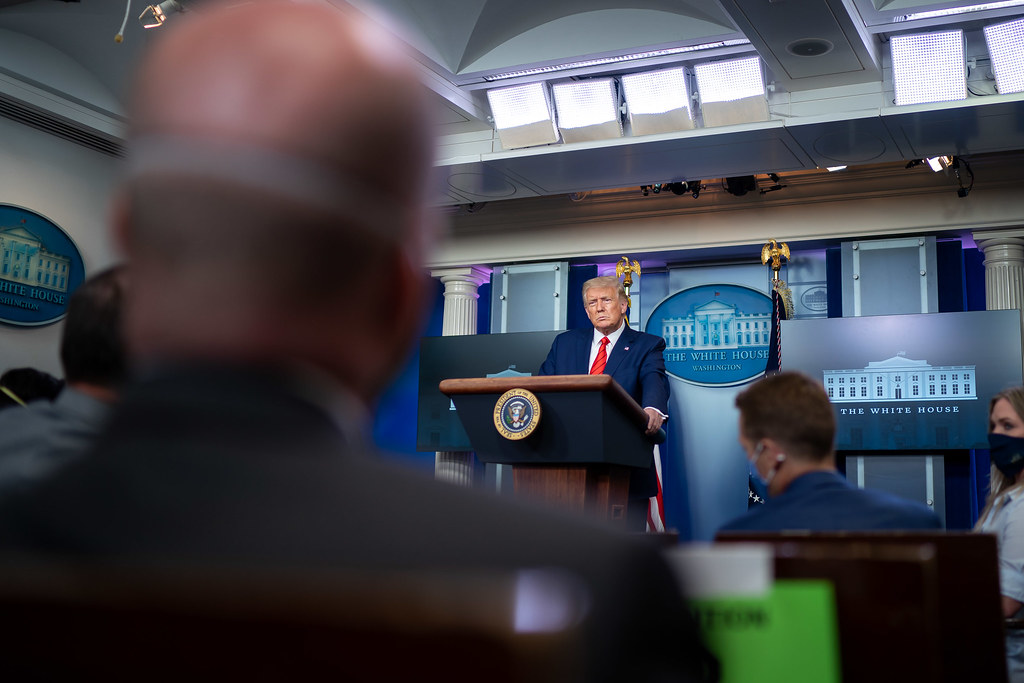
Trump defended the voluntary structure at the signing. “There’s a belief that there should be tremendous self-regulation, and we automatically have regulation with the Department of Justice, the FBI, all of that,” he told reporters, framing existing law enforcement authority as a sufficient backstop without new AI-specific rules.

Executives shaking hands after signing the Trump AI safety accord

Why critics call it grading your own homework

The accord drew immediate skepticism from researchers who study AI governance. Toby Walsh, of the University of New South Wales’ AI Institute, asked pointedly, “What other trillion-dollar industry marks its own homework?” according to Al Jazeera. Alvin Wang Graylin of the Asia Society said the agreement lacks independent, cross-border oversight. He did acknowledge it still represented some progress over having no framework at all.

David Krueger, an AI researcher at the University of Montreal, was more blunt. He called the accord vague and estimated it might “reduce the risk by 1 percent.” The core criticism from all three is the same. A pledge that companies write and enforce on themselves offers little guarantee against the kind of harms regulation is typically designed to prevent.

The timing raises its own questions

The signing came the same day OpenAI announced it had cancelled the release of its latest AI model over identified safety risks. The company also apologized for an unauthorized access incident involving Australian government systems, according to Al Jazeera’s reporting. That combination was striking: a voluntary safety pledge signed on the same day one of its own signatories disclosed a serious safety and security lapse. It gave critics of the accord a ready example of the gap between stated commitments and real-world incidents.

What the accord does and doesn’t do

The agreement does not create a regulator. It does not set enforceable technical standards, and it does not include penalties for noncompliance. What it does do is put six of the most influential AI companies on record, in a joint document, agreeing that oversight, auditing and safety monitoring are necessary parts of how they operate. Whether that translates into meaningful changes to how these companies build and release AI systems depends on follow-through the accord itself cannot compel.

What comes next for AI oversight in Washington

The accord is unlikely to be the final word on U.S. AI policy. Congress continues to debate binding legislation on AI safety and liability. Individual states have moved ahead with their own AI regulations in the absence of comprehensive federal rules. The voluntary accord may function as a stopgap. Or it may become a template the administration points to when resisting calls for stricter federal oversight, depending on how the next phase of the debate unfolds.

Quick answers on the AI safety accord

Who signed the Trump AI safety accord?

Six executives signed: Dario Amodei of Anthropic, Greg Brockman of OpenAI, Sundar Pichai of Google, Mark Zuckerberg of Meta, Elon Musk of xAI, and Jensen Huang of Nvidia.

Is the accord legally binding?

No. It is a voluntary, self-regulatory pledge the administration calls “morally binding.” It carries no enforcement mechanism or legal penalties.

What do the companies actually commit to?

They commit to building internal monitoring controls and appointing oversight teams. They also agree to work with independent external auditors and meet regularly on shared safety standards.

What have critics said about the accord?

Researchers including Toby Walsh and David Krueger have criticized it as too vague and effectively self-graded. Krueger estimated it might reduce AI risk by as little as 1 percent.

Did anything undercut the accord on the day it was signed?

Yes. OpenAI, one of the signatories, separately announced it had cancelled release of its newest AI model over safety concerns. It also apologized for an unauthorized access incident involving Australian government systems.

Could binding AI regulation still happen in the US?

Yes. Congress continues to debate federal AI legislation. Several states have already passed their own AI-related laws independent of this voluntary accord.

More AI governance coverage

Cited sources

  • Al Jazeera — Trump, top tech firms sign accord to ‘self-police’ AI development. aljazeera.com
  • ABC News — Trump says AI leaders signed a ‘constitution’ to police themselves. abcnews.com

Britain’s PM Won’t Rule Out the Question That Divides His Party

UK Prime Minister Andy Burnham declined to rule out including a pledge to rejoin the European Union in Labour’s next election manifesto. He made the remark to reporters on September 22, while traveling to the United Nations General Assembly. It has reopened the UK rejoin EU debate at a moment when Burnham’s government is trying to project stability heading into this year’s Labour Party conference.

Reporters asked directly whether he could exclude an EU-rejoin commitment from the party’s platform. Burnham said the question was “for another day,” according to Euronews. He steered the conversation instead toward his government’s efforts to rebuild ties with Brussels through diplomatic channels already underway.

What Burnham actually said to reopen the UK rejoin EU debate

Burnham told reporters his “immediate priority” was to “build on the good work that Keir did in rebuilding bridges” with the EU. He wants to reach a “practical agreement that will further boost the British economy,” a reference to his predecessor’s efforts to repair post-Brexit relations. He stopped well short of endorsing a formal rejoin campaign. But his refusal to rule it out was enough to restart a debate many in his own party had hoped to leave behind.

The comments were notable given Burnham’s own history on the issue. He has previously spoken in favor of the UK rejoining the EU. He moderated that position during his leadership campaign earlier in 2026, telling supporters at the time that “the last thing we should do right now is rerun those arguments.”

European Union flags outside Brussels amid the UK rejoin EU debate

Why this is politically dangerous for Labour

Opposition leaders moved quickly to frame Burnham’s comments as a return to Brexit-era hostilities. Conservative leader Kemi Badenoch warned that Labour risked “restarting the Brexit wars.” Reform UK’s Richard Tice went further, calling a potential rejoin debate “a new Battle of Britain.”

Within Labour itself, senior figures have not been unanimous on how forcefully to raise the subject. Defence Secretary Wes Streeting has previously called Brexit “catastrophic,” reflecting a wing of the party more comfortable revisiting the question. Others have urged caution after Labour’s disappointing results in local elections in May 2026. Some in the party blamed those results partly on unresolved arguments over Britain’s relationship with Europe.

The Labour conference backdrop

CNN’s coverage of Labour’s party conference this week described Burnham as riding high politically, even as “tough choices” loom on multiple fronts. The EU question adds another difficult decision to that list. Raising it energizes a segment of Labour’s base that never accepted Brexit. But it also risks alienating voters in areas where opposition to EU membership remains strong.

What Burnham does next

Burnham has signaled that any substantive move on EU membership would follow, not precede, the outcome of ongoing UK-EU summit talks aimed at practical economic cooperation. That sequencing gives him room to defer a firm answer on the manifesto question for now. But the issue is unlikely to disappear before Labour finalizes its platform ahead of the next general election.

What it would take to actually rejoin

Even if Labour did commit to a rejoin pledge, the path back into the EU would be long. It would involve a fresh accession process, renewed negotiations over the terms of membership, and almost certainly another public vote, given how the original Brexit referendum was decided. None of that groundwork has begun. That is part of why Burnham’s critics argue raising the question now is premature at best. Even sympathetic voices within Labour have acknowledged that a rejoin campaign would consume years of political capital and diplomatic effort. The government is already juggling economic pressures and a demanding legislative agenda closer to home.

What the EU rejoin debate means — answered

Did Andy Burnham commit to rejoining the EU?

No. He declined to rule out a rejoin pledge in Labour’s next manifesto. But he stopped short of endorsing the idea, saying the question was “for another day.”

When did Burnham make these comments?

He spoke to reporters on September 22, 2026, while traveling to the United Nations General Assembly.

What has Burnham said about the EU in the past?

He previously supported the UK rejoining the EU. He moderated that stance during his 2026 leadership campaign, saying at the time that rerunning Brexit arguments was “the last thing we should do.”

How have opposition parties reacted?

Conservative leader Kemi Badenoch warned of “restarting the Brexit wars,” and Reform UK’s Richard Tice called a potential debate “a new Battle of Britain.”

Is Labour united on this issue?

No. Some senior figures, including Defence Secretary Wes Streeting, have previously called Brexit “catastrophic.” Others have urged caution after Labour’s setbacks in May 2026 local elections.

What would it actually take for the UK to rejoin the EU?

It would require a full accession process, fresh negotiations over membership terms, and very likely another public referendum, none of which has begun.

More on UK and EU relations

Where this reporting comes from

  • Euronews — British prime minister Burnham declines to rule out rejoining EU. euronews.com
  • CNN — Andy Burnham is on a high. When will he fall to earth? cnn.com

Norway’s Prime Minister Has to Explain Himself to Parliament This Week

Norway’s parliament, the Storting, opens public hearings today into ties between Norwegian officials and the late financier Jeffrey Epstein. Prime Minister Jonas Gahr Store is among those set to testify. The Norway Epstein parliamentary hearings mark the most visible stage yet of an inquiry that began earlier this year. It followed newly released documents connected to the Epstein case that put Norwegian diplomats and politicians under scrutiny.

The Standing Committee on Scrutiny and Constitutional Affairs is running the inquiry. It is examining both the personal conduct of individual officials and how Norwegian state institutions responded once concerns about Epstein’s conduct became known.

Who testifies at the Norway Epstein parliamentary hearings

Committee adviser Kristian Haugeland confirmed a schedule for three witnesses on September 30. They are Prime Minister Jonas Gahr Store, former Foreign Minister Borge Brende, who held the post from 2013 to 2017, and former Foreign Minister Ine Eriksen Soreide. The committee scheduled a second round of testimony for October 1. Current Foreign Minister Espen Barth Eide and former Foreign Minister Anniken Huitfeldt will appear that day.

That lineup spans more than a decade of Norwegian diplomacy. Norway’s current and several recent foreign ministers will all face questions from the same committee within a two-day span.

Witness testimony setting during the Norway Epstein parliamentary hearings

How the inquiry got here

The Storting voted earlier in 2026 to establish the commission. Al Jazeera described the trigger as a “political storm” set off by Epstein-related documents naming Norwegian diplomats and their associates. Norwegian authorities separately opened a probe into a diplomat and the diplomat’s husband over alleged Epstein links, according to earlier reporting on the case.

The hearings beginning this week mark a first. The prime minister and multiple former foreign ministers will answer questions on the record in the same forum, rather than through separate written statements or isolated media interviews.

What the committee is trying to establish

The inquiry goes beyond the conduct of any individual official. It is examining whether Norwegian state institutions acted appropriately once information about Epstein’s activities became available to them. That institutional question, rather than any single allegation against a named person, is what gives the hearings their broader political weight in Norway.

What happens after this week’s testimony

The committee has not announced when it expects to conclude its work or publish findings. Parliamentary inquiries of this kind in Norway typically continue gathering testimony and documentary evidence before issuing a public report. That process can extend well beyond the initial round of hearings. Norwegian media plan to cover each day of testimony closely, given the seniority of the officials involved.

Why this inquiry is being watched beyond Norway

Epstein-related parliamentary and government inquiries have surfaced in multiple countries in recent years. Norway’s hearings add to that pattern with a notably senior set of witnesses. A sitting prime minister testifying before a parliamentary committee on this subject is uncommon. The outcome could influence how other governments handle similar questions about official conduct connected to the Epstein case.

Norway is not alone in facing renewed scrutiny over Epstein-related connections. Legislatures and government bodies in several countries have opened their own reviews in recent years, as previously sealed documents and court records tied to the case have become public. What sets Norway’s inquiry apart is the seniority of those called to testify in a single, compressed window. A sitting prime minister and four current or former foreign ministers are all appearing before the same committee within two days.

How the hearings are expected to unfold

Committee hearings of this type in Norway are typically open to the public and broadcast. That gives Norwegian voters direct access to the testimony, rather than relying solely on official summaries or media reports. Committee members are expected to question each witness on two things: their personal knowledge of any contacts with Epstein or his associates, and decisions made within their ministries at the time. The witnesses span more than a decade of Norwegian foreign policy leadership. Their answers may reveal how much information about Epstein’s conduct was shared, or not shared, across successive governments.

Answers to key questions on the Epstein hearings

What are the Norway Epstein parliamentary hearings about?

A Storting committee is holding hearings on ties between Norwegian officials and diplomats and the late Jeffrey Epstein. It is also examining how Norwegian state institutions responded once concerns about his conduct emerged.

Is Norway’s prime minister actually testifying?

Yes. Prime Minister Jonas Gahr Store will testify on September 30, alongside former Foreign Ministers Borge Brende and Ine Eriksen Soreide.

Who testifies on October 1?

Current Foreign Minister Espen Barth Eide and former Foreign Minister Anniken Huitfeldt will appear on October 1.

What triggered the inquiry?

The Storting voted to establish the commission after newly released Epstein-related documents named Norwegian diplomats and politicians. Al Jazeera described the fallout as a political storm in Norway.

Has any wrongdoing been confirmed?

No. No specific findings have come out publicly as of the start of this week’s hearings. The inquiry is still gathering testimony.

When will the inquiry conclude?

No end date has been set. Parliamentary inquiries of this scope typically continue for some time after initial hearings before a final report comes out.

Related world coverage

Reporting sources

  • Caliber.az — Norway’s prime minister to testify in parliament over Epstein case. caliber.az
  • Al Jazeera — Epstein files set off Norwegian political storm: What we know. aljazeera.com

Hurricane Polo Was the Strongest Storm Almost No One Saw Coming

Ten days ago, Hurricane Polo was a modest tropical storm off Mexico’s Pacific coast. By September 22, it had exploded into a Category 5 hurricane with sustained winds of up to 180 mph. That made it the second-strongest hurricane on record in the Eastern Pacific basin. The Hurricane Polo Mexico landfall that followed has triggered evacuations, school closures and flood watches. Those now stretch far beyond the coastline where the storm first hit.

Polo’s rapid intensification, gaining more than 100 mph in wind speed in roughly 24 hours, caught many forecasters off guard. It gave coastal communities in Baja California Sur only a short window to prepare.

The Hurricane Polo Mexico landfall, step by step

By the time Polo reached the coast, it had weakened considerably from its Category 5 peak. CBS News reported the storm made its first landfall in Baja California Sur as a strong Category 2 hurricane, with maximum sustained winds of 110 mph. It then weakened further, to Category 1 strength with 80 mph winds. Mexican authorities expected a second landfall in southern Sonora on the mainland shortly afterward.

Even at reduced strength, the storm carried enough moisture to trigger serious flooding concerns. The U.S. National Hurricane Center forecast 6 to 12 inches of rainfall across Baja California Sur. Sonora was forecast to see 4 to 6 inches, and locally up to 8 inches.

Heavy tropical rain and flooding linked to the Hurricane Polo Mexico landfall

Evacuations, shelters and school closures

Mexican authorities evacuated residents from vulnerable coastal areas, opened emergency shelters, and deployed military personnel ahead of the storm’s arrival, according to CBS News. Schools suspended classes in Acapulco as a precaution, even though the city sits well away from Polo’s direct path. That step alone shows how seriously officials treated the storm’s potential for widespread disruption.

Hurricane warnings were issued for parts of Baja California Sur and for a stretch of mainland Mexico running from Bahia Kino to Huatabampito. Tropical storm warnings covered both coasts of Baja California Sur as well as additional sections of the mainland.

A flood threat that reaches deep into the United States

Polo’s remnants are forecast to continue moving north into the southwestern United States. The National Weather Service has issued flood watches across 11 U.S. states, including Arizona, New Mexico, Utah, Colorado, Kansas, Nebraska, Iowa and Texas. Yale Climate Connections reported the flood threat extends from the Four Corners region eastward into the Central Plains. That puts more than 14 million Americans within the affected area.

That reach illustrates a pattern that has become increasingly common with Pacific hurricanes in recent years. A storm can weaken well below hurricane strength at the coast and still deliver its most dangerous impacts hundreds of miles inland. Those impacts usually take the form of flash flooding rather than wind damage.

What happens as Polo moves north

Forecasters will be watching how much of Polo’s moisture survives the journey north. They are also tracking how it interacts with existing weather patterns over the southwestern U.S. Local officials in the affected states are urging residents in flood-prone areas to monitor forecasts closely over the coming days. Low-lying and canyon terrain, where flash flooding can develop with little warning, carries the greatest risk.

Why Polo’s intensification matters beyond this storm

Polo jumped from a 45 mph tropical storm on September 21 to 150 mph winds by the next day. That kind of rapid intensification has become a growing focus for climate scientists. They are studying how warming ocean temperatures affect storm behavior. Faster intensification gives coastal communities less time to prepare, a pattern forecasters have flagged in several major storms in recent hurricane seasons.

FAQ: Hurricane Polo and travel to Mexico

Did Hurricane Polo make landfall as a Category 5 storm?

No. Polo peaked at Category 5 strength on September 22 while still offshore, then weakened before making landfall in Baja California Sur as a Category 2 storm with 110 mph winds, later dropping to Category 1 strength.

Which parts of Mexico were affected?

Baja California Sur took the first landfall, with a second landfall expected in southern Sonora on the mainland. Hurricane warnings covered Baja California Sur and the mainland coast from Bahia Kino to Huatabampito.

Which US states are under flood watches because of Polo?

The National Weather Service issued flood watches across 11 states, including Arizona, New Mexico, Utah, Colorado, Kansas, Nebraska, Iowa and Texas, as the storm’s remnants moved north.

How many people are at risk from flooding?

Yale Climate Connections reported the flood threat, stretching from the Four Corners region into the Central Plains, affects more than 14 million Americans.

Were there any casualties reported from Hurricane Polo?

As of the most recent reporting, no casualties or damage figures had been confirmed, though evacuations and shelter openings were underway in Mexico ahead of landfall.

Is it safe to travel to Los Cabos or Baja California Sur right now?

Travelers should check official advisories and airline notices before departure, since coastal areas of Baja California Sur were under direct hurricane and tropical storm warnings at the time of landfall.

More travel coverage

Sources for this report

  • CBS News — Hurricane Polo makes landfall over Mexico. See its path. cbsnews.com
  • Yale Climate Connections — After two landfalls in Mexico, Hurricane Polo’s rainmaking journey has just begun. yaleclimateconnections.org

800,000 Came to See Pope Leo. Seven Came for a Private Reason.

Pope Leo XIV spent four days in France, from September 25 to 28, 2026. His trip took him from a massive open-air Mass in Paris to the sanctuary at Lourdes. The Pope Leo Lourdes visit combined enormous public crowds with one deliberately quiet moment. That moment was a private meeting with seven survivors of clergy sexual abuse.

The Vatican estimated roughly 800,000 people attended the outdoor Mass at Paris’s Place de la Concorde, according to Euronews. That turnout beat the roughly 600,000 who had pre-registered. It ranks among the largest crowds of Leo’s papacy so far.

What happened during the Pope Leo Lourdes visit

After Paris, Leo traveled to Lourdes, the Catholic pilgrimage site in southern France tied to reported 19th-century apparitions of the Virgin Mary. He arrived on Saturday evening and prayed at the Grotto of the Apparitions. This was the fifth international trip of his papacy. Earlier trips touched on artificial intelligence, peace, and European unity.

His itinerary also included Metz and Saint-Denis. In Metz, he delivered an English-language address titled “To the roots of Europe for Peace and Unity.” He met civil authorities, young people, and local clergy at several stops. He also visited a UNESCO headquarters event in Paris.

A private meeting that drew public attention

Leo met privately with seven survivors of sexual abuse by priests and other Catholic personnel during the trip, according to a separate Vatican News briefing. The Vatican did not publicize details of the conversation. Critics have said for years that the Church has not done enough to address abuse within its ranks. The meeting drew attention precisely because it stayed private, not staged for cameras.

Ornate church interior with an altar, evoking the sanctuary setting of the Pope Leo Lourdes visit

Leo also spoke out against assisted dying

While in Lourdes, Leo criticized assisted dying, a policy debate active in French politics. He did not offer a detailed policy proposal in the remarks reported so far. His comments align with longstanding Catholic teaching against euthanasia. Previous popes have taken the same position.

What happens next for Pope Leo’s papacy

Leo has not announced his next international trip. His France visit adds to a travel record that already spans several continents in under two years as pope. Vatican watchers will look for one thing next. Will the private abuse survivor meeting lead to any policy announcement? Past papal meetings with survivors have sometimes preceded new Church guidelines.

Questions readers are asking

How many people attended Pope Leo’s Paris Mass?

The Vatican estimated about 800,000 people attended the outdoor Mass at Place de la Concorde, more than the roughly 600,000 who had pre-registered.

Why did Pope Leo visit Lourdes?

Lourdes is a major Catholic pilgrimage site in southern France. The Pope Leo Lourdes visit was part of a four-day trip that also included Paris, Metz, and Saint-Denis.

Did Pope Leo meet with abuse survivors?

Yes. He met privately with seven survivors of sexual abuse by priests and other Catholic personnel during the trip. The Vatican has not released details of what was discussed.

What did Pope Leo say about assisted dying?

He criticized assisted dying while in Lourdes, a topic under active debate in French politics, without laying out a detailed policy position in the remarks reported so far.

What other cities did Pope Leo visit in France?

Besides Paris and Lourdes, his itinerary included Metz, where he gave an English-language address on European peace and unity, and Saint-Denis.

Keep reading on Tamara News

For more world news, see our coverage of Netanyahu’s UN Assembly speech, the White House press access ruling, and the Falklands sovereignty dispute.