Europe Is Sitting on €210 Billion of Frozen Russian Money. It Still Won’t Touch It

European Council leaders gathered in Brussels on October 15-16, 2026, for a summit that put EU frozen Russian assets back on the agenda. Once again, they left without resolving what to do with them. A senior European diplomat briefed reporters on condition of anonymity ahead of the meeting. Ukraine’s financing needs beyond 2026 would be discussed, the diplomat said — but no funding decision was expected this time around.

That holding pattern has defined the debate for the better part of a year. Roughly €210 billion in Russian central bank assets remain frozen across European institutions, most of it held through the Brussels-based clearing house Euroclear. Using that money to fund Ukraine’s defense and reconstruction has obvious appeal on paper. In practice, the EU has been unable to agree on how, or whether, to do it.

Why the EU Frozen Russian Assets Question Keeps Resurfacing

The idea came close to a breakthrough at the European Council’s December 2025 summit. The Commission proposed a so-called “reparations loan”: EU governments would advance Ukraine funds backed by the frozen Russian assets, to be repaid once Russia compensates Ukraine for the war. Belgium, which hosts most of the frozen holdings through Euroclear, blocked it. Belgian officials have repeatedly warned that unilaterally seizing sovereign assets, rather than merely freezing them, could expose Euroclear and the eurozone to legal and financial retaliation. That risk includes claims from Moscow and knock-on damage to confidence in European asset custody more broadly.

Instead of the reparations loan, the EU adopted a conventional €90 billion support package for Ukraine covering 2026 and 2027, approved in December. Officials say that package was expected to cover only around two-thirds of Ukraine’s financing needs over that period. That leaves a gap that frozen Russian assets were meant to help close — and still might, if Belgium’s objections can eventually be overcome.

EU frozen Russian assets illustration

What EU Leaders Actually Discussed in Brussels

According to the diplomat who briefed Interfax-Ukraine ahead of the summit, the October 15-16 talks were expected to revisit Ukraine’s financing gap without producing a concrete decision. Positions on using the frozen assets “have not changed” since December, the diplomat said. It remained unclear how the discussion among the 27 heads of state and government would unfold once they sat down.

A separate EU spokesperson confirmed that the €90 billion package was never meant to be the whole answer. Work with international partners is continuing to help close the remainder of Ukraine’s funding needs, the spokesperson said. Those partners include the United Kingdom, Canada and Norway. The spokesperson gave no timeline for when, or whether, the asset question itself would be resolved.

Belgium’s Objection Is the Real Obstacle

Belgium’s position matters disproportionately because of where the money physically sits. Euroclear’s Brussels headquarters makes Belgium the custodian of most of the EU’s frozen Russian holdings. That gives Brussels effective veto power over any scheme that touches the underlying assets, rather than just the interest they generate. EU governments have so far relied on windfall profits from the frozen assets, interest income rather than the principal, to help fund Ukraine. It’s a far more legally conservative approach than the reparations loan Belgium rejected.

That caution reflects a genuine legal question EU lawyers have not fully settled. Is seizing a sovereign state’s central bank reserves defensible under international law, even in response to an illegal invasion? Or would it set a precedent that other states, and markets, come to see as confiscation rather than enforcement? The EU has not answered that question yet.

What Happens Next on Ukraine’s Funding Gap

Nothing in the Brussels talks suggests the stalemate breaks soon. The €90 billion package keeps Ukraine funded through 2027 on paper, but officials acknowledge it falls short of the full bill. The reparations loan idea has not been formally withdrawn, only shelved pending a legal and political fix that satisfies Belgium. Expect the topic to return at the next European Council meeting. Expect the UK, Canada and Norway to keep absorbing some of the gap in the meantime through bilateral support, rather than a unified EU mechanism.

For Ukraine, the practical effect is a financing plan built one summit at a time, rather than the multi-year certainty a resolved asset question would provide. For more on how the EU’s internal politics are shaping Europe’s response to the war, see Tamara News’ coverage of France’s 2027 budget cuts and the IMF and World Bank’s October meetings in Bangkok, where Ukraine’s financing also featured on the sidelines.

Frequently Asked Questions

How much Russian money is actually frozen by the EU?
EU officials put the figure at roughly €210 billion, most of it held through the Euroclear clearing system in Belgium.

What did EU leaders decide about EU frozen Russian assets at the October summit?
No new decision. A diplomat briefed on the talks said positions remain unchanged from December, when Belgium blocked a plan to use the assets as collateral for a “reparations loan.”

Why does Belgium object to using the frozen assets?
Belgium hosts most of the holdings through Euroclear. It has warned that seizing the underlying assets, rather than just their interest income, carries legal and financial risk that a windfall-profits approach avoids.

Does the EU’s €90 billion package cover all of Ukraine’s needs?
No. EU officials have said it was expected to cover only about two-thirds of Ukraine’s financing needs for 2026-2027, with the rest meant to come from partners or an eventual resolution on the frozen assets.

Who else is helping fund Ukraine besides the EU?
The United Kingdom, Canada and Norway are named as continuing partners working alongside the EU, though no unified mechanism has replaced the stalled reparations loan.

Is a decision on the frozen assets likely before the end of 2026?
Nothing from the October summit suggests an imminent breakthrough. Officials describe the legal and political questions as unresolved, rather than close to agreement.

Sources

The New Charges Against Maduro Go Far Beyond Drug Trafficking

Nicolás Maduro’s legal troubles just got heavier. A revised US indictment, unsealed Thursday, October 8, 2026, brings new Maduro Flores torture charges against the former Venezuelan president and his wife, Cilia Flores. Prosecutors say the couple used torture, arbitrary detention and violence to hold onto power. They are also accused of using those tactics to crush political opposition.

Maduro Flores torture charges represented by a US federal courthouse flag

What the Maduro Flores torture charges actually allege

The indictment accuses Maduro of authorizing torture against specific individuals. It names electric shocks, beatings and asphyxiation as methods used. Prosecutors also allege he personally threatened to kill a prisoner’s child as a form of psychological torture. Prosecutors say people acting on the government’s behalf harassed, arrested, assaulted, tortured or killed thousands of Venezuelans during his time in office, according to an Associated Press report carried by WOWT.

The new conspiracy-to-torture charges sit on top of an existing case. Maduro already faced a charge of conspiring to send cocaine into the United States. Flores faces a related cocaine-importation conspiracy charge alongside him. Both have pleaded not guilty to the original drug case. That case also names numerous alleged co-conspirators and carries the possibility of a life sentence for each defendant.

Courtroom gavel symbolizing the Maduro Flores torture charges case

How Maduro ended up in a US jail

Maduro led Venezuela from 2013 until American forces captured him in a raid. That raid hit his Caracas home in early January 2026. He and Flores were flown to New York. They have been held there ever since. The Trump administration has defended the operation as a “surgical law enforcement operation,” according to reporting from The Print.

Flores is being held at the Metropolitan Detention Center in Brooklyn. Her lawyers are asking for release to house arrest. They cite heart problems as the reason. They say she has lost 25 pounds in custody and may need heart surgery. Prosecutors oppose bail. They argue she poses what they call an “extreme risk of flight and danger to the public.”

Both sides dig in over the Maduro Flores torture charges

Lawyers for Maduro and Flores have asked a judge to dismiss the case entirely. They argue that diplomatic immunity protects the couple as Venezuela’s head of state and first lady. Maduro has called himself a prisoner of war. He has described his capture as a kidnapping. His attorney did not respond to a request for comment on the torture charges specifically.

Flores’s lawyers describe her as “intent on supporting her husband” through the proceedings. Prosecutors have not detailed how the new torture allegations will affect scheduling in the existing cocaine case. Prosecutors filed that case years before Maduro’s capture. The case adds to a run of major court news out of the Americas. See our coverage of how US strikes on suspected drug boats in the Caribbean have escalated through 2026.

Why the timing matters

Adding torture charges to an existing drug case is a common prosecutorial strategy when new evidence surfaces mid-proceeding. It raises the legal and political stakes at once. A conviction on torture conspiracy carries its own weight internationally, separate from a drug-trafficking verdict, and could shape how other governments respond to Maduro’s case going forward. Human rights advocates have pushed for accountability on torture allegations for years, long before the drug case against Maduro existed. It also gives prosecutors a second, independent basis to pursue the case if the immunity defense succeeds against the original charges.

What happens next in the case

A judge will need to rule on both the dismissal motion and Flores’s bail request before the case moves toward trial. If the torture charges proceed alongside the cocaine conspiracy, Maduro and Flores could face two sets of proceedings running on overlapping timelines. Watch for a ruling on jurisdiction and immunity first. A successful dismissal motion would reshape the entire case before a jury hears any torture evidence in open court.

The case will also draw attention far beyond the courtroom. Human rights groups have tracked allegations against Maduro’s government for years, and a US conviction, if it happens, would give those allegations their most formal legal weight yet. A dismissal on immunity grounds, by contrast, would leave the underlying allegations unresolved in any court, even as the original drug-trafficking case continues on its own track toward trial. Either outcome will likely shape how other governments handle similar cases involving former heads of state in the years ahead.

Common questions about the Maduro Flores torture charges

What new charges does Maduro face?

A revised US indictment unsealed October 8, 2026 adds a conspiracy-to-torture charge against Maduro and his wife, Cilia Flores. It sits on top of an existing cocaine-trafficking conspiracy case.

How did Maduro end up in US custody?

American forces captured him in a raid on his Caracas home in early January 2026. He has been held in New York since.

What does the torture indictment specifically allege?

It alleges Maduro authorized electric shocks, beatings and asphyxiation against specific individuals. It also alleges that people acting for his government harassed, detained, assaulted or killed thousands of Venezuelans.

Is Cilia Flores facing the same charges as Maduro?

She faces a related cocaine-importation conspiracy charge, and prosecutors have now also charged her in the torture conspiracy case.

What is the defense arguing?

Lawyers for both defendants argue that diplomatic immunity protects them as Venezuela’s former head of state and first lady. They have asked the court to dismiss the case on that basis.

Gaza’s Ceasefire Has a Body Count Now Topping 1,446 — Here’s How That Happened

A Gaza ceasefire anniversary strike killed at least six Palestinians over the weekend, including a Christian mother and daughter in Gaza City, as Israel marked the two-year anniversary of the October 7, 2023 Hamas-led attack by closing all crossings into Gaza and the West Bank. The Israeli military said it killed a Hamas official in an overnight strike on an apartment building, but gave no further detail on the civilian deaths that accompanied it.

The weekend violence is not an aberration. Since the ceasefire took effect roughly a year ago, at least 1,446 Palestinians have been killed and more than 5,060 injured, according to figures compiled after the latest strikes — a toll that sits uneasily alongside the word “ceasefire” itself.

What happened over the weekend

Israeli strikes killed at least five people on Saturday, including four women, in an apartment building attack in Gaza City. A family member, Fouad Al Najjar, said he lost his mother and grandmother in the strike, calling it “the worst day of my life.” A separate strike in Deir al-Balah on Sunday killed one person and injured ten more. The Israeli military said the Gaza City strike targeted a Hamas official, but did not address the other casualties in the building.

Israeli Defense Minister Israel Katz ordered all crossings into Gaza and the West Bank closed to mark the anniversary of the October 7 attacks, a move that compounds the humanitarian strain already facing the territory a year into a ceasefire that was supposed to have ended large-scale fighting.

Gaza ceasefire anniversary strike: humanitarian aid being delivered

The Gaza ceasefire anniversary strike and what “ceasefire” has actually meant

The ceasefire that took hold roughly a year ago substantially reduced the scale of fighting compared with the earlier phases of the war, but it did not end Israeli strikes inside Gaza, which have continued at a steady pace against targets the military describes as Hamas operatives or infrastructure. The result is a running toll that, over twelve months, has reached 1,446 deaths — a figure that complicates any account of the ceasefire as a durable end to hostilities rather than a lower-intensity continuation of them.

Palestinian and international aid officials have repeatedly flagged the gap between the ceasefire’s formal terms and conditions on the ground, particularly around crossings and humanitarian access, which open and close depending on the security situation Israel determines on any given day.

Why the anniversary mattered this year

October 7 remains the most sensitive date on the calendar for both sides of the conflict — the anniversary of the attack that triggered the war, and now also a flashpoint within the ceasefire period itself. Israel’s decision to close all crossings on the anniversary reflects persistent security concerns even a year into the truce, while Palestinian officials and residents have pointed to the closures as evidence the ceasefire has not meaningfully changed daily conditions in Gaza.

What happens from here

Mediators involved in the original ceasefire agreement — reportedly including the United States, Qatar, and Egypt — have periodically pushed for a “next phase” intended to formalize longer-term arrangements around governance, reconstruction, and security guarantees. Those talks have moved slowly, and incidents like this weekend’s strikes tend to harden positions on both sides rather than accelerate them. Whether the anniversary becomes a turning point toward a more durable arrangement, or simply another entry in a year-long pattern of strikes inside a nominal truce, will depend largely on decisions made in the coming weeks rather than the ceasefire’s original terms.

Common questions about the current situation

How many people have died since the Gaza ceasefire began?
At least 1,446 Palestinians have been killed and more than 5,060 injured in the roughly year since the ceasefire took effect, according to tallies compiled after the latest weekend strikes.

What happened on the anniversary of October 7?
Israel closed all crossings into Gaza and the West Bank, and carried out a strike that killed a Hamas official along with several civilians in Gaza City.

Is the ceasefire still technically in effect?
Yes, in the sense that large-scale fighting has not resumed, but strikes have continued throughout the ceasefire period, raising questions about what the term means in practice.

Who confirmed the identity of the Hamas official killed?
The Israeli military said it killed a Hamas official in the overnight strike but did not release further identifying details in the initial reporting.

What role are mediators playing now?
Reports indicate the US, Qatar, and Egypt remain involved in talks aimed at a further ceasefire phase, though progress has been slow.

More on this story

See our coverage of the Palestinian legislative elections scheduled for November 28 and Canada’s asylum waiver for Israeli and Palestinian applicants. For broader sanctions context, read about the ICC’s contract termination under US sanctions threat.

Sources

The US Has Now Hit 70 Boats in the Caribbean — Four More Died This Weekend

The US military killed four more people in the latest of its Caribbean drug boat strikes over the weekend, US Southern Command said late Sunday, bringing the campaign’s total to roughly 70 strikes and at least 235 deaths since it began in September 2025. The military released video of the attack but, as with most strikes in the campaign, offered no evidence that the vessel was actually carrying narcotics.

The strike took place along established trafficking routes in the eastern Pacific and Caribbean, the areas US forces have targeted under an operation the Pentagon calls Southern Spear. It is the first confirmed strike since Nicolás Maduro’s capture earlier this year, and it suggests the campaign is continuing largely unchanged despite the removal of the Venezuelan leader the administration had cited as a central target.

What happened this weekend

US Southern Command announced the strike late Sunday, saying it had destroyed a vessel believed to be smuggling narcotics toward the United States. Four people on board were killed. The military did not name them, did not say what nationality they held, and did not release evidence — drugs, weapons, or otherwise — recovered from the wreckage. That pattern has held across most of the campaign’s strikes: officials assert the boats are trafficking vessels, but public proof is rarely produced.

Defense Secretary Pete Hegseth has overseen an expansion of the campaign’s legal and logistical footing this year, including new counter-narcotics agreements signed with Colombia, Guatemala, and Honduras in August. Those agreements sit under a broader regional security framework the administration calls the Shield of the Americas coalition, launched in March 2026.

Inside the Caribbean drug boat strikes campaign

President Trump has described the campaign as an active armed conflict with drug cartels, a framing his administration has used to justify strikes without the individualized evidence or judicial process that would normally accompany a law enforcement action against suspected traffickers. Defenders of the policy argue that cartel supply routes function as a direct threat to American lives through overdose deaths, and that military tools are justified against what they describe as narco-terrorism.

Critics, including UN human rights experts, take a different view. They have warned that strikes carried out without verifying who is on board, and without attempting interdiction or arrest first, may violate international law and could constitute extrajudicial killings. Those experts have gone further, suggesting the pattern of strikes — hitting disabled vessels, in some cases after survivors were seen in the water — could amount to crimes against humanity. The administration has rejected that characterization and has not released the legal justification underpinning individual strikes.

Caribbean drug boat strikes: US Navy personnel ceremony at sea

Why the Caribbean drug boat strikes have outlasted Maduro

For much of 2025 and early 2026, the campaign was publicly tied to pressure on Maduro, who the US accused of running Venezuela as a narco-state. His capture by US forces earlier this year removed that specific target, and many observers expected the pace of strikes to slow once he was in American custody facing prosecution. Instead, Sunday’s strike — the first confirmed since his capture — indicates the operation has its own institutional momentum, built on bilateral agreements, deployed assets, and a legal posture the administration shows no sign of unwinding.

That raises a harder question for the region: whether the campaign was ever primarily about Maduro, or whether it was always intended as an open-ended effort against trafficking networks that will continue regardless of who runs Venezuela’s government.

What happens next for the campaign

Congress has periodically pressed the Pentagon for the legal memos justifying individual strikes, with limited success. Legal challenges are possible but face steep hurdles, since courts have historically given the executive branch wide latitude over military operations conducted abroad against non-citizens. Regional governments that have signed on to the Shield of the Americas framework face their own domestic pressure, particularly if strikes continue killing people without public evidence of trafficking.

For now, the operational tempo — a strike roughly every few days since the campaign began — shows no sign of slowing, and SOUTHCOM has not indicated any change in rules of engagement following Maduro’s removal from the picture.

Frequently asked questions

How many people have died in the Caribbean drug boat strikes?
At least 235 people have been killed across roughly 70 strikes since the campaign began in September 2025, according to figures reported after the latest strike.

Has the US provided evidence the boats were trafficking drugs?
In most cases, no. The military has released strike footage but has not consistently published evidence — recovered narcotics, weapons, or vessel registration — tying individual boats to trafficking.

Did the strikes stop after Maduro’s capture?
No. The strike reported this weekend is the first confirmed since Maduro’s capture, indicating the campaign is continuing independent of his removal.

What is Operation Southern Spear?
It is the Pentagon’s name for the broader counter-narcotics military campaign in the Caribbean and eastern Pacific, operating alongside the Shield of the Americas regional security coalition launched in March 2026.

Is the campaign legal under international law?
That is disputed. UN human rights experts have warned the strikes may violate international law; the US administration maintains they are a legitimate response to what it calls narco-terrorism.

Which countries have signed security agreements tied to the campaign?
Colombia, Guatemala, and Honduras signed counter-narcotics agreements with the US in August 2026 as part of the broader regional framework.

Related coverage

For more on the administration’s approach to foreign sanctions and military pressure campaigns, see our coverage of Putin’s Valdai remarks on Ukraine and the ICC’s contract termination under US sanctions pressure. We also previously reported on new US sanctions on an Iran-linked network.

Sources

The ‘Cockroach’ Party Rattling India’s Election Commission

A satirical protest party named after a cockroach has turned into one of India’s most persistent political headaches. The India election commission protests escalated on October 1, 2026. Police briefly detained Abhijeet Dipke, founder of the Cockroach Janta Party, on Mumbai’s Marine Drive. He was holding placards. Officers took him to a nearby station, questioned him about his identity, then released him after senior officials got involved. A video of the detention spread quickly online. The episode is the latest flashpoint in a weeks-long standoff between the movement and India’s election authorities.

What sparked the India election commission protests

The Cockroach Janta Party, known as the CJP, is demanding the resignation of Chief Election Commissioner Gyanesh Kumar. The group points to reports of internal divisions inside the Election Commission. It says that is evidence something has gone wrong at the top. Its demands go further than a single resignation. The CJP wants criminal proceedings opened against Kumar. It wants the Special Intensive Revision process, a controversial review of voter rolls, paused entirely. It wants January 2025 voter lists restored. It also wants 2023 legislation covering the Election Commission repealed in favor of broader structural reform.

Those demands reflect a deeper distrust of how India updates its voter rolls. The Special Intensive Revision process has drawn criticism from opposition parties and civil society groups. They argue it risks removing eligible voters from the rolls without adequate safeguards. The CJP has turned that technical dispute into a street-level protest movement, something few voter-roll disputes manage to do.

A movement built on confrontation

The CJP first threatened mass protests in late September, giving the commission a short deadline to respond before escalating. Mumbai police denied the group permission to protest at Shivaji Park on September 27. Officials cited legal constraints, a lack of municipal clearance and noise concerns. The CJP pressed ahead regardless. It characterized the denial as, in its own words, “tactics to suppress voices.”

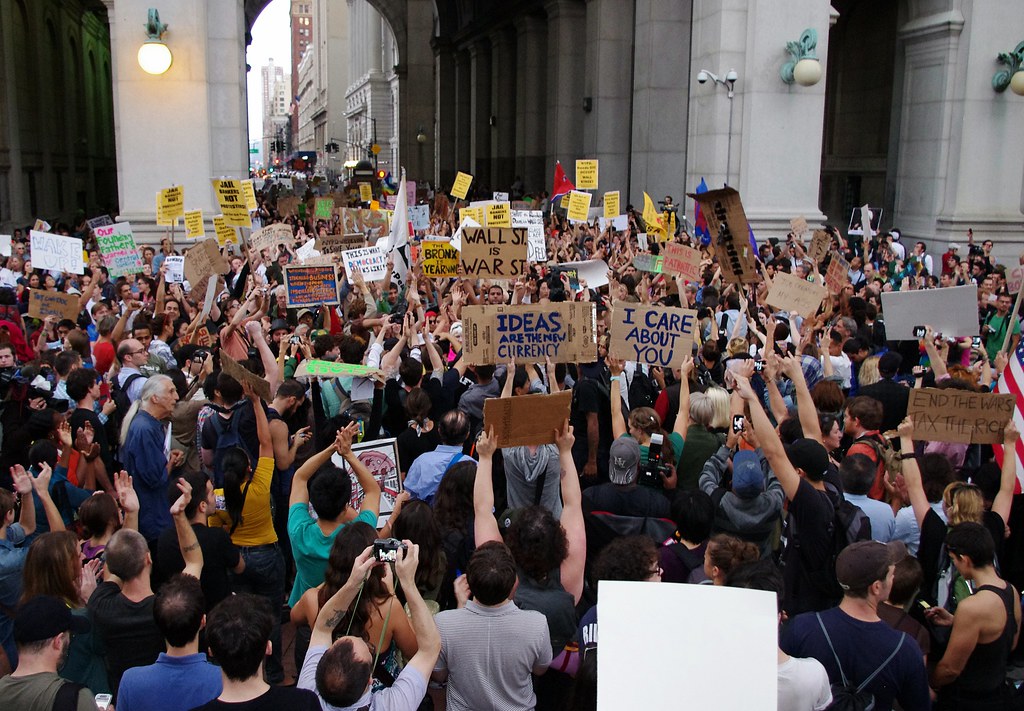
Crowds at an India election commission protests rally demanding reform

That framing pits a scrappy protest movement against an unresponsive bureaucracy. It has helped the CJP draw attention well beyond its core supporters. Dipke’s brief detention on October 1 only reinforced the narrative the group has been building. Supporters quickly held it up as proof. They say authorities would rather silence the movement than answer its concerns about the integrity of the voter rolls.

Why this matters beyond Mumbai

India is the world’s largest democracy, and its election machinery affects hundreds of millions of voters. Disputes over who controls that machinery carry weight well beyond any single protest group. So does the question of how voter lists get compiled and checked. The CJP is a new and unconventional player. But the questions it raises about the Special Intensive Revision process echo concerns that established opposition parties have also voiced.

The government has not responded publicly to the CJP’s specific demands. Kumar remains in his post as Chief Election Commissioner. Mumbai police have defended both the permit denial and Dipke’s brief detention. They call it routine law enforcement, not political suppression.

A protest movement built on satire

The Cockroach Janta Party’s name is deliberately provocative. Founder Abhijeet Dipke has framed the group as speaking for ordinary citizens who feel ignored by formal political institutions, the way a cockroach survives in the margins no matter how hard someone tries to stamp it out. That branding has helped the movement attract young, online-savvy supporters who might otherwise stay disengaged from traditional party politics.

Critics dismiss the CJP as a publicity stunt. Supporters say the satire is exactly what makes its message land. Either way, the group has managed something many more established opposition voices have struggled to do this year: keep the Special Intensive Revision process in the headlines, week after week.

Where the standoff goes from here

Watch for whether the CJP escalates further. That could include more “jail bharo,” or fill-the-jails, demonstrations designed to overwhelm police with mass voluntary arrests. The group has signaled it will keep pressing. It wants Kumar to resign, or the government to address its concerns about the voter-roll review process. Also watch whether larger opposition parties start coordinating more directly with the CJP. That could turn a fringe protest movement into a broader coalition ahead of India’s next election cycle.

Your questions answered

What is the Cockroach Janta Party?
It is a youth-led protest movement in India. It demands the resignation of Chief Election Commissioner Gyanesh Kumar over concerns about the integrity of the country’s voter rolls.

What happened on October 1, 2026?
Mumbai police briefly detained CJP founder Abhijeet Dipke on Marine Drive while he held protest placards. He was questioned and released after senior officials intervened.

What does the CJP actually want?
It wants Gyanesh Kumar’s resignation and criminal proceedings against him. It also wants a pause on the Special Intensive Revision process, restored January 2025 voter lists, and repeal of 2023 Election Commission legislation.

What is the Special Intensive Revision process?
It is a review of India’s voter rolls. Critics, including the CJP and opposition parties, say it risks removing eligible voters without adequate safeguards.

Why did Mumbai police deny the CJP’s protest permit?
Police denied the group permission to protest at Shivaji Park on September 27. They cited legal constraints, a lack of municipal clearance and noise concerns.

Has the Indian government responded to the CJP’s demands?
Not publicly. Gyanesh Kumar remains in his post. The government has not issued a direct response to the CJP’s specific demands as of this report.

Reporting and sources

  • Daily Jagran — Abhijeet Dipke briefly detained by Mumbai police ahead of CJP October 2 protest against CEC Gyanesh Kumar. thedailyjagran.com
  • The National — India’s “cockroach” movement pledges more protests if election chief does not resign. thenationalnews.com

For more world coverage, see our reporting on Serbia’s Vucic resigning ahead of an early election. We also covered Morocco naming its first woman prime minister.