Two Economists Just Won the Nobel Prize for Explaining Why Central Banks Do What They Do

The Royal Swedish Academy of Sciences awarded the 2026 Nobel Memorial Prize in Economic Sciences to Robert E. Hall of Stanford University and Michael Woodford of Columbia University on October 12, 2026. The honor recognizes decades of work on how governments and central banks can stabilize a volatile economy. The Nobel Prize economics 2026 announcement recognized research that sits underneath much of how modern central banks actually operate.

What the Nobel Prize economics 2026 recognized

Hall and Woodford built much of the theoretical foundation for stabilization policy. That branch of economics studies how to smooth out booms and busts. Left unchecked, those swings would otherwise whipsaw employment and prices. According to the National Bureau of Economic Research, their combined body of work spans several areas. It covers how central banks should set interest rates. It covers how credible commitments about future policy shape current behavior. It also covers how to think about an economy’s capacity to grow without overheating.

City financial skyline reflecting the global economic backdrop behind the Nobel Prize economics 2026 award

Woodford in particular is closely associated with research on forward guidance. That term describes a central bank’s public commitment about its future actions. Woodford treated it as a policy tool in its own right. He separated it from the interest rate decision made at any single meeting.

Hall’s research extended beyond stabilization theory into measuring how efficiently an economy uses its resources. That body of work helped economists separate temporary slowdowns from more permanent declines in an economy’s underlying capacity. Distinguishing between the two matters enormously for policy. A central bank reacting to a temporary slowdown as if it were permanent risks setting interest rates wrong for years.

Why the Nobel Prize economics 2026 timing feels pointed

The announcement landed as central banks around the world are managing a genuinely difficult stretch. Inflation remains elevated. A geopolitical shock to energy markets, tied to tensions around Iran, has pushed oil prices higher. An AI investment boom is reshaping growth unevenly across countries at the same time. The International Monetary Fund’s own October 2026 forecast added to that picture. It described global growth as increasingly concentrated in a small number of economies. Inflation, the IMF said, is projected to rise rather than ease next year.

That backdrop turns stabilization policy into more than an academic exercise. It sits close to the daily job description of officials at the Federal Reserve and the European Central Bank. Their counterparts worldwide face the same pressure right now.

The academy’s own framing

The Royal Swedish Academy of Sciences has a clear pattern in how it awards the economics prize. It tends to recognize work that shaped real institutional practice, not just theory confined to academic journals. Al Jazeera’s coverage of the announcement noted that both laureates are American economists. That continues a long pattern of U.S.-based researchers dominating the prize’s recent history.

How this connects to today’s interest rate decisions

Hall and Woodford’s work does not dictate what any single central bank meeting decides. It shapes the intellectual toolkit officials bring into the room instead. Modern central bank statements spend as much time describing future intentions as they do announcing the current rate move. Woodford’s research on forward guidance is a big part of why that habit exists. The U.S. Federal Reserve is heading into its own October policy meeting soon. The tools Woodford helped formalize remain part of the standard playbook being applied there, and at central banks elsewhere.

Forward guidance, the specific tool most associated with Woodford’s research, works partly through expectations rather than through the rate change itself. If markets believe a central bank will keep rates low for an extended period, borrowing costs across the economy can fall even before any formal rate cut happens. That mechanism, once a novel academic idea, is now a standard part of how major central banks communicate policy.

What the economics community is saying

Economists outside the laureates’ own universities have broadly welcomed the choice. Several have noted that stabilization theory has rarely felt more relevant. This year combines an energy shock with an AI-driven productivity surge, which is exactly the kind of mixed signal the theory was built to untangle. Other commentators have pointed to a longer pattern in how the prize committee operates. It tends to reward work with decades-long staying power rather than the latest academic fashion. Hall and Woodford’s research fits that pattern closely, since both built their core ideas decades before this year’s prize.

Some critics within academic economics have also noted the limits of stabilization theory. The framework assumes policymakers can credibly commit to future actions and that markets believe those commitments. Real-world politics does not always cooperate with that assumption, particularly when central bank independence faces political pressure, as it has in several countries in recent years.

A brief look at the laureates themselves

Hall has spent much of his career at Stanford, where his research also touched on measuring productivity and the business cycle more broadly. Woodford, based at Columbia, is best known within the field for formalizing how expectations about future policy feed back into present-day economic behavior. Both economists have advised or consulted for policy institutions over the years, which is part of why their theoretical work ended up shaping practice rather than staying confined to textbooks.

What happens next for the laureates and their field

Hall and Woodford will receive the prize at the formal Nobel ceremony later this year, alongside the other 2026 laureates. Expect renewed academic and policy interest in stabilization theory. Central banks are still grappling with how to respond to supply-side shocks, like an energy disruption. Many of the tools they are using were originally designed for ordinary demand-side downturns instead.

For more on how global growth and monetary policy are playing out this year, read Tamara News’ coverage of the IMF’s October 2026 growth forecast and the latest oil price outlook.
France Promised Curfews, Not a Lockdown — Here’s the Difference

France spent the back half of October trying to calm nationwide unrest. More than half a million people took to the streets on October 18, 2026. Some of those protests turned into looting and arson in several cities. The France curfew protests have eased since then. Prime Minister Sebastien Lecornu’s government is still weighing targeted curfews rather than declaring the crisis over.

What set off the France curfew protests

The October 18 demonstrations combined two separate grievances. Students had already been protesting education conditions for weeks. A wider group of demonstrators turned out over the rising cost of living and fuel prices on the same day. According to Al Jazeera’s reporting, the protests spread into looting and arson in multiple locations. More than 2,500 people have been arrested so far.

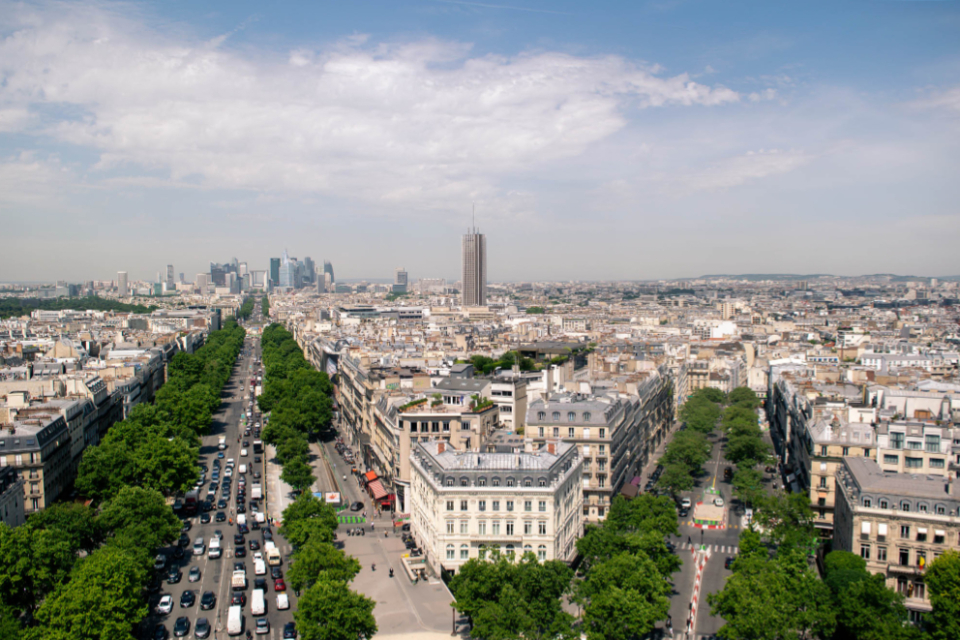
Arc de Triomphe and central Paris avenue, a focal point during the France curfew protests unrest

The cost-of-living piece of the protests reflects a strain that has been building in France for months. Fuel prices climbed through much of 2026, squeezing households already dealing with higher grocery and housing costs. Unlike the student demonstrations, which focused on specific education policy complaints, the broader cost-of-living protests drew a wider crowd. That crowd included workers from multiple industries who do not typically join the same demonstrations.

A targeted curfew approach, not a nationwide lockdown

Lecornu did not impose a single blanket curfew. He said on October 20 that new curfews would apply only where local authorities judge them necessary. Each prefecture is coordinating directly with its own mayors. That is a notably different approach from a nationwide measure. It reflects how unevenly the unrest has actually spread across the country.

Digital Minister Anne Le Henanff took aim at a secondary problem: looted goods being resold online. She met with social media company executives to press them to remove listings for stolen merchandise. It was an unusual but direct response to unrest that spilled from the streets into e-commerce platforms within days.

Local officials in the hardest-hit cities welcomed the flexibility a targeted approach gives them. A single nationwide curfew would have applied even to areas that saw little or no unrest, a mismatch critics said would have punished calm regions unfairly. Mayors in cities that avoided serious violence pushed back early against any blanket measure, and Lecornu’s prefecture-by-prefecture approach appears designed partly to address that specific objection.

The government’s week of political meetings

Lecornu laid out a short, deliberate schedule after announcing the curfew approach. First came a meeting with union officials. Talks with political parties followed soon after. That sequencing suggests the government wanted labor groups on side before opening broader political talks. It is a sign of how seriously officials are treating the political risk here. They worry the unrest could become a vehicle for opposition parties, rather than staying a contained public-order problem. Euronews reported that President Macron separately denounced the rioting and looting directly.

Opposition lawmakers offered sharply different readings of the same unrest. Some on the left argued the protests reflect a genuine crisis of household purchasing power that the government has ignored for too long. Some on the right argued the demonstrations show a breakdown in public order that demands a tougher security response rather than further political dialogue. Lecornu’s government has tried to occupy a middle position, acknowledging the economic grievances while still promising a firm response to the looting and arson specifically.

Why the timing matters for France’s 2027 election

The unrest lands just over a year before France’s presidential election in April and May 2027. Macron cannot contest that vote himself because of term limits. Current polling puts Marine Le Pen of National Rally in the lead. Jean-Luc Melenchon of La France Insoumise sits close behind her. Both politicians have faced accusations of exploiting the protests for political gain. That adds extra pressure on Lecornu’s government to be seen managing the crisis competently, not just policing it.

Analysts covering French politics have noted that unrest this far ahead of an election rarely determines the outcome by itself. It can, however, shape which issues dominate the campaign once it formally begins. A prolonged standoff over cost-of-living measures would likely keep economic grievances near the center of the 2027 race. That would benefit whichever candidate voters trust most to address rising prices directly.

How this unrest compares with past French protest waves

France has a long history of large, disruptive street protests, from the 2018 to 2019 Yellow Vest movement to repeated pension reform strikes in recent years. What sets this round apart is the combination of two separate grievances. Student conditions and cost-of-living pressure arrived at the same moment, rather than one dominating the other. That overlap is part of why the government’s response has focused on local, targeted measures instead of a single nationwide policy.

Historians of French protest movements point out that sustained unrest often leaves a lasting mark. Even once it fades from the streets, its effect on policy debates can linger for years. The Yellow Vest movement, for instance, reshaped how French governments approach fuel tax changes long after the protests themselves ended.

What happens next as France tries to de-escalate

Monday night passed without major incidents, according to police. That is a sign the worst of the unrest may have passed for now. Demonstrators still called for a fresh round of protests on October 24. France’s main trade unions have not backed that call, though, which suggests the movement has fractured into smaller, less coordinated groups rather than disappearing outright. Whether Lecornu’s targeted curfews hold through the weekend will be the clearest early test of whether the government has actually regained control.

For more on how governments elsewhere are managing political and economic pressure, see Tamara News’ coverage of the EU’s Brussels summit on frozen Russian assets and the latest Russia-Ukraine peace talks.

Gaza’s Ceasefire Was Holding — Then the Strikes Started Again

A year after it was signed, the Gaza ceasefire is facing its sharpest test yet. Israeli forces resumed strikes in parts of the Gaza Strip this week, and medics on the ground reported several deaths, reigniting fears that the agreement brokered in late 2025 could unravel entirely. The Gaza ceasefire under strain is now the dominant story in a truce that had already drawn criticism over slow reconstruction and recurring violations from both sides.

The Israeli military said it resumed “enforcement” operations after accusing Hamas of violating terms of the agreement, while Palestinian medical officials said strikes killed civilians, including in areas the ceasefire had designated as protected. Al Jazeera’s running tally shows the Gaza death toll has continued climbing since the ceasefire took effect, with monitors citing more than 1,300 deaths attributed to post-ceasefire incidents.

What’s actually in the ceasefire deal

The agreement, reached after more than two years of war, set out phased troop withdrawals, a hostage-and-prisoner exchange, and a reconstruction and governance framework for Gaza overseen in part by international monitors. It was never a single clean handoff: both sides retained forces inside parts of the territory, and a buffer zone patrolled by Israeli troops has remained a persistent friction point whenever Palestinians attempt to return to areas near it.

Khaleej Times reported that the Israeli army said it was resuming enforcement of the ceasefire’s terms rather than abandoning it outright, language that rights monitors say has repeatedly preceded rounds of strikes throughout the past year whenever Israel has accused Hamas of rearming or attacking Israeli positions.

Why the Gaza ceasefire under strain keeps slipping back into violence

Analysts following the agreement point to three recurring triggers: disputes over the pace of Israeli withdrawal from the buffer zone, accusations that Hamas has used the lull to rebuild tunnel networks and weapons caches, and the slow pace of reconstruction funding pledged by Gulf and Western donors. None of those disputes has been resolved by the mechanisms written into the original deal, which relies on an international monitoring body with limited enforcement power of its own.

Al Jazeera’s year-in-review coverage of the ceasefire noted that humanitarian access, while far better than during the war itself, still falls well short of what aid agencies say Gaza’s roughly two million residents need for rebuilding homes, hospitals and water infrastructure destroyed over two years of fighting.

Gaza ceasefire under strain

The reconstruction gap behind the renewed fighting

Donor pledges made at reconstruction conferences in late 2025 and early 2026 have been only partially disbursed, according to UN agencies tracking the funding, and the physical rebuilding of Gaza’s housing stock has barely begun in the worst-hit areas like northern Gaza City. That slow pace has left hundreds of thousands of displaced Gazans still living in tents or damaged structures a year after the fighting formally ended, a situation aid workers say leaves little buffer when violence flares and movement is restricted again.

What happens next if the truce holds — or doesn’t

Mediators including Egypt, Qatar and the United States have reportedly reopened contact with both sides to contain the latest flare-up before it spreads beyond the areas already affected. If the current round of strikes stays limited and enforcement eases again, the ceasefire’s broader structure is likely to survive, as it has through several previous rounds of localized violence. A wider breakdown would most likely be triggered by a mass-casualty incident on either side severe enough to collapse political will for restraint — the same dynamic that has defined the agreement’s fragility since it was signed.

For more on the diplomatic stakes still tied up in the region, Tamara News has covered the standoff over frozen Russian assets at the EU’s Brussels summit and the UN’s own one-year assessment of the Gaza ceasefire.

Frequently asked questions about the Gaza ceasefire under strain

Has the Gaza ceasefire officially collapsed?

No. Israeli officials describe the latest strikes as “enforcement” of the existing agreement rather than its termination, and mediators are working to contain the flare-up rather than renegotiate the deal from scratch.

Why did Israel resume strikes this week?

The Israeli military said the strikes followed alleged violations by Hamas, though it has not always detailed the specific incidents publicly; Palestinian officials dispute that characterization in relation to the latest deaths.

How many people have died since the ceasefire began?

Monitors cited by Al Jazeera put the toll from post-ceasefire incidents at more than 1,300, a figure that has climbed steadily through sporadic rounds of strikes and clashes over the past year.

What is holding up Gaza’s reconstruction?

UN agencies say donor funding pledged at reconstruction conferences has been only partially disbursed, slowing rebuilding of housing, hospitals and water systems in the hardest-hit areas.

Who is mediating the current tension?

Egypt, Qatar and the United States, the same three parties that brokered the original ceasefire, have reportedly reengaged with both sides to try to prevent the latest strikes from escalating further.

Could the war restart fully?

It’s possible but not the most likely outcome based on the pattern so far: previous flare-ups over the past year have stayed contained to limited strikes rather than triggering a full return to war, though officials on both sides acknowledge the risk remains real.

Sources

Sudan’s War Just Crossed a Line the World Keeps Missing

Sudan’s civil war has pushed past another threshold few outside the region are tracking closely. Since the Rapid Support Forces (RSF) seized El Fasher, the last major army stronghold in Darfur, in late October, aid agencies have documented mass killings, blocked humanitarian convoys and a renewed wave of displacement. The Sudan war humanitarian crisis that United Nations officials warned about for months is now playing out in the open, with survivors describing door-to-door executions and looted hospitals.

The United Nations says at least 6,000 people were killed over three days during the RSF’s assault on El Fasher earlier this year, a toll that aid workers on the ground describe as conservative. Sudan Tribune and other regional outlets have continued reporting executions, abductions and the obstruction of aid convoys trying to reach the city and the wider Darfur region through October.

How the Sudan war humanitarian crisis reached this point

Sudan’s army and the RSF have fought since April 2023, when a power-sharing arrangement between the two forces collapsed into open conflict. El Fasher had held out as the army’s last foothold in Darfur for roughly a year and a half under siege, with the city’s roughly 260,000 remaining residents surviving on dwindling food stocks before the RSF broke through. The fall of the city removed the last organized resistance to RSF control across the five Darfur states.

Reuters, Al Jazeera and other outlets covering the siege’s collapse reported satellite imagery showing mass graves and burned neighborhoods consistent with survivor testimony of ethnically targeted killings, echoing patterns documented by UN investigators earlier in the war. The UN’s Sudan crisis situation analysis, tracked through ReliefWeb, has logged a steady deterioration in access for aid convoys since the city fell.

Why the humanitarian response keeps falling short

Sudan is already the world’s largest displacement crisis, with the International Organization for Migration counting more than 10 million people displaced inside the country and several million more who have fled across borders into Chad, Egypt, South Sudan and Libya. Aid agencies say funding for the response has consistently lagged behind need, and access negotiations with both the army and the RSF have repeatedly broken down over safe passage for convoys into Darfur.

Sudan Tribune’s reporting through October describes repeated instances of RSF checkpoints turning back aid trucks bound for displacement camps outside El Fasher, even as camp populations swell with people fleeing the city. The World Food Programme and Médecins Sans Frontières have both said famine conditions are already present in parts of Darfur and risk spreading further without a sustained corridor for food and medical supplies.

Sudan war humanitarian crisis

What outside powers have and haven’t done

The United States, the African Union and Gulf states including the UAE have all faced criticism over their roles in the conflict — the UAE has repeatedly denied allegations, which it disputes, that it has supplied the RSF with weapons, while Washington has imposed sanctions on individual commanders from both sides without brokering a lasting ceasefire. Diplomatic efforts led by the so-called Quad (the US, Saudi Arabia, the UAE and Egypt) have produced temporary local truces but nothing resembling a national ceasefire since the war began.

A UN Security Council effort to extend an arms embargo across all of Sudan, not just Darfur, has stalled repeatedly amid disagreements among permanent members. Without an embargo covering the whole country, analysts tracking the conflict say neither side faces meaningful pressure to negotiate while battlefield momentum keeps shifting.

What happens next for Sudan’s civilians

Aid organizations are now focused on two things: securing any corridor into Darfur’s displacement camps before the dry season ends, and documenting the El Fasher killings for potential future accountability processes, which the International Criminal Court has said it is investigating as a continuation of its existing Darfur case. Neither effort has a clear timeline, and humanitarian officials quoted by Sudan Tribune and Reuters say the window to prevent further mass casualties in the camps around El Fasher is narrowing by the week.

For readers following the broader pattern of conflicts disrupting civilian life and travel across the region this year, Tamara News has also covered the flooding crisis affecting foreign trekkers in Nepal and the extended airspace disruption over Saudi Arabia following drone and missile attacks.

Frequently asked questions about the Sudan war humanitarian crisis

What triggered the latest escalation in Sudan?

The RSF’s capture of El Fasher in Darfur removed the Sudanese army’s last significant foothold in the region after an 18-month siege, and was followed by reports of mass killings and displacement that the UN has called some of the worst documented since the war began in April 2023.

How many people have been killed in the war overall?

Casualty estimates vary widely because access for independent verification is limited, but the UN has cited a toll of at least 6,000 killed over three days during the El Fasher assault alone, on top of tens of thousands of deaths documented since 2023.

Is this considered a genocide?

UN investigators and rights groups have previously said RSF attacks on non-Arab communities in Darfur, including during the current war, show patterns consistent with ethnic cleansing; the RSF has denied carrying out systematic ethnic violence. The International Criminal Court has an active investigation covering Darfur.

What is being done to get aid into Darfur?

The World Food Programme and other agencies are negotiating access with both the army and the RSF, but Sudan Tribune has reported repeated instances of aid convoys being blocked or turned back at checkpoints near El Fasher since the city fell.

Are other countries involved in the conflict?

Egypt has backed the Sudanese army, while the RSF has faced allegations, which the UAE disputes, of receiving external support; both relationships remain contested and unresolved diplomatically, and a UN effort to widen an arms embargo across all of Sudan has not advanced.

Where can I follow verified updates on the crisis?

Sudan Tribune and the UN’s ReliefWeb platform both publish near-daily situation updates, and the International Organization for Migration tracks displacement figures as they change.

Sources

A Year Into the Gaza Ceasefire, the UN Says the Killing Never Stopped

A year after the guns were meant to fall silent, the Gaza ceasefire one year mark has arrived with a grim verdict from humanitarian groups. More than 100 of them, in a joint statement issued October 9, warned that the truce “exists in name only.” Signatories include Amnesty International, the Norwegian Refugee Council, Save the Children, Oxfam and Greenpeace. Their statement lands alongside separate figures from the United Nations Human Rights Office documenting over a thousand deaths since the ceasefire took effect.

The ceasefire itself began on October 10, 2025, under a US-backed framework known as the Gaza Board of Peace. One year on, two sets of casualty figures are circulating this week. They tell a similar story from different angles: a truce that stopped the heaviest fighting without stopping the killing.

What the Gaza Ceasefire One Year Mark Has Actually Verified

The UN Human Rights Office, OHCHR, says it has verified 1,076 Palestinian deaths in Gaza between the ceasefire’s announcement and the end of July 2026. Of those, 268 were children and 126 were women, meaning women and children made up 37% of verified fatalities. Ajith Sunghay, the OHCHR’s head for the Occupied Palestinian Territory, described continued violations during what was supposed to be a ceasefire as appalling. He said Palestinians continue to face attacks in what he called an “ever-shrinking area.”

The Palestinian Ministry of Health has put the toll higher, at more than 1,400 killed since the truce began. The OHCHR has verified 1,076 of those cases and says its own count is likely conservative, since it does not capture every civilian death among adult men. Separately, the 100-plus NGOs behind this week’s joint statement cited more than 1,400 deaths including at least 327 children in the year since the deal. Save the Children said nearly one child has been killed in Gaza every day since the ceasefire was announced.

Gaza ceasefire one year illustration

The “Yellow Line” Keeps Moving

Central to the dispute is the so-called Yellow Line, a buffer zone established under the ceasefire framework that marks how far Israeli forces have withdrawn. Humanitarian groups say Israel has shifted the line further into Gaza than the original agreement intended, crowding Palestinians into smaller areas. The OHCHR recorded 331 deaths near the Yellow Line alone, including 66 children, 27 women and 238 men. Violence has continued in the days immediately around the anniversary. At least eight Palestinians were reportedly killed on October 8, and heavy tank fire was reported in Khan Younis on October 9.

A Health System Still Running on Fumes

None of Gaza’s 36 hospitals is currently operating at full capacity, hampered by shortages of medicine, equipment and fuel, according to the NGO coalition’s statement. More than 18,500 patients are said to need medical evacuation out of Gaza, including at least 4,000 children. More than 1,000 people have died while waiting for one to be arranged. The World Health Organization estimates roughly 24% of the wounded from the broader war have sustained life-changing injuries requiring long-term rehabilitation, a quarter of them children.

Those figures sit on top of a much larger total. The Palestinian Ministry of Health’s running count since October 2023 stands at 74,254 people killed, including at least 21,000 children, or roughly 3% of Gaza’s pre-war population. About 175,000 people have been wounded, the equivalent of 1 in every 13 residents. The ministry’s methodology counts only hospital-recorded or officially registered deaths, so the true toll is likely higher.

Shelter and Food Are Still a Crisis, Not an Afterthought

Nearly 2 million Palestinians need shelter, with about 80% of structures in Gaza damaged, the NGO statement says. Humanitarian groups blame Israeli restrictions on construction materials and equipment for blocking reconstruction and repair work. On food, the coalition projects that 1.4 million people will face crisis-level hunger or worse through the end of 2026. Amnesty International’s Secretary General, Agnes Callamard, framed the stakes bluntly: “Accountability cannot be buried under the rubble.” The signatory groups are calling on Israel to comply with the International Court of Justice’s binding orders related to humanitarian access.

What Comes Next for Gaza’s Reconstruction

None of this week’s reporting points to an imminent resolution. The ceasefire framework remains in place on paper, but the gap between its terms and conditions on the ground is now the subject of UN verification reports and NGO monitoring, rather than active negotiation. Reconstruction funding, movement of materials, and accountability for the Yellow Line’s position are all likely to remain open questions well into next year. For related coverage of how international accountability and sanctions pressure is playing out elsewhere this month, see Tamara News’ reporting on the UK’s sanctions against Iranian nationals and the new torture charges filed against Venezuela’s Maduro and Flores.

Questions Readers Are Asking About the Ceasefire’s First Year

When did the Gaza ceasefire actually start?
It took effect on October 10, 2025, under the US-backed Gaza Board of Peace framework.

How many people has the UN confirmed were killed since the ceasefire began?
The UN Human Rights Office has verified 1,076 deaths between October 2025 and the end of July 2026, while cautioning that its count is likely incomplete.

Why do the casualty numbers from different sources not match?
The Palestinian Ministry of Health’s count (over 1,400) and the UN’s verified figure (1,076) cover different methodologies and time windows. The UN has formally confirmed a subset of the ministry’s reported cases.

What is the Yellow Line and why does it matter?
It’s the buffer zone marking the extent of the Israeli military withdrawal under the ceasefire deal. Humanitarian groups say it has moved further into Gaza than agreed, and nearly a third of verified deaths since the ceasefire have occurred near it.

Is Gaza’s humanitarian situation improving a year on?
Not according to the NGOs and UN agencies cited here. None of Gaza’s hospitals are at full capacity, almost 2 million people need shelter, and 1.4 million are projected to face crisis-level hunger through the end of 2026.

What are humanitarian groups asking Israel to do?
The coalition of over 100 organizations is calling for compliance with the International Court of Justice’s binding orders on humanitarian access and accountability for ceasefire violations.

Sources

Featured image for illustration: war-damaged buildings in Aleppo, Syria (not Gaza), credit: EU Civil Protection and Humanitarian Aid / Flickr (CC BY 2.0). In-content image: Zaatari refugee camp, Jordan, credit: DFID – UK Department for International Development / Flickr (CC BY 2.0).