75-Country Immigrant Visa Pause: 318 Approvals Since Ruling

Since a federal court struck down the 75-country immigrant visa pause on 21 August 2026, only a small share of the affected cases has been decided, according to a 26 October 2026 post by the Law Offices of Jacob J. Sapochnick, a San Diego immigration firm. Citing a State Department filing of 5 October 2026, the firm says 706 affected applications were adjudicated between 21 August and 30 September: 318 approved or issued, and 388 refused on other grounds. This account comes from a law firm’s blog rather than a court document.

Contents

What the court decided

The post names the case as CLINIC v. Rubio and says the court found the suspension unlawful and ordered reconsideration of applications refused solely because of it. It says more than 43,000 applications had been refused solely under the pause, and that the ruling set no deadline for processing each case. The post does not name the specific court.

What the filing numbers show

The 706 adjudicated cases include applications refused for reasons other than the pause, so the post says it is unclear how many of the 43,000 have actually been reviewed. It adds that as of 2 October, one plaintiff’s family member had received a visa, several applicants had interviews scheduled and others had individual decisions. That is a thin basis for broad conclusions, and it is the firm’s reading of the filing.

What applicants can do

The firm suggests: determine whether your refusal rested solely on the pause or on other grounds; respond promptly to any request for documents, information or interviews; ask the consular post for a status update and whether reconsideration is available; and consult an immigration attorney about an individual mandamus suit or other action. It notes that a mandamus court generally cannot order a consular officer to approve a visa. General rules for immigrant visas are on the State Department’s immigrant visa pages.

A worked example

As an illustration, not a real case: a Pakistani family whose spouse-based immigrant visa was refused only under the pause should first check the refusal notice for its stated ground, then contact the embassy about reconsideration. Related background is in our reports on the November 2026 Visa Bulletin and the USCIS fee increase, and the visa eligibility checker can help you compare alternative routes.

What happens next

Without a processing deadline, timelines remain uncertain. Watch for further government filings in the case and for consular guidance on reconsideration. Applicants should keep copies of their refusal notices, interview letters and any correspondence with the consulate, since the firm’s advice depends on whether a refusal rested solely on the pause. Because the figures come from the firm’s reading of a filing, readers who need certainty should ask an attorney to review the filing itself.

Questions on the pause

When was the pause struck down?

21 August 2026, in CLINIC v. Rubio, according to the Sapochnick firm’s post.

How many applications were refused under it?

More than 43,000, per the same post.

How many have been decided since?

706 adjudicated between 21 August and 30 September, with 318 approved or issued and 388 refused on other grounds.

Is there a deadline for reconsideration?

The post says the ruling set none.

Is this from a court document?

No. It is a law firm’s blog summarising a State Department filing.

Should I sue?

That is a question for an immigration attorney; mandamus generally cannot compel approval.

Sources

Image: US Capitol, public domain, via Wikimedia Commons.

SpaceX’s Quarterly Numbers Just Showed Where the Real Money Is Going

SpaceX posted numbers this quarter that read more like an AI company’s than a rocket company’s. The SpaceX Q3 2026 earnings report, released on 20 October, showed revenue of $14.6 billion. That is up 161% from the same quarter last year, according to figures highlighted from the earnings release. The jump came only months after SpaceX completed its IPO.

SpaceX closed that IPO on 15 June 2026. Shares began trading on Nasdaq under the ticker SPCX three days earlier. The company sold just under 639 million Class A shares. That raised about $85.7 billion in net proceeds, a figure confirmed in earlier coverage of SpaceX’s public listing. Q3 is one of the company’s first full quarters reporting results as a public company, which makes this release a closely watched early signal for investors.

What drove the SpaceX Q3 2026 earnings jump

Two segments carried the quarter. Starlink, SpaceX’s connectivity business, grew revenue 69% year over year. Operating income in that segment rose 99%, driven by enterprise and government adoption alongside steady consumer subscriber growth. The second driver came from SpaceX’s newer AI business, which the company calls its “Super Intelligence” unit. That unit added $6.7 billion in incremental year-over-year revenue. SpaceX attributes that growth to cloud services agreements, its acquisition of the AI coding tool Cursor, and expanding use of its Grok and Bot AI products.

Elon Musk framed the quarter as an “inflection moment for SpaceX” in remarks accompanying the release. He cited what he called “1000x demand from AI agents” as a growth driver behind the AI segment’s rapid expansion. That is a striking claim for a company whose core business has always been rockets and satellites, not software. It signals how far SpaceX now sees its ambitions reaching beyond launch vehicles alone.

The Starship milestone buried inside the numbers

SpaceX’s first revenue-generating Starship mission delivered 26 Starlink V3 satellites during the quarter. SpaceX says that single launch added roughly 10 times the downlink capacity of a typical Falcon 9 Starlink launch. That is a meaningful shift. Starship has spent years as a test program burning cash rather than generating revenue. A successful, revenue-producing mission marks a turning point for a vehicle Musk has called critical to SpaceX’s long-term ambitions, including crewed missions beyond Earth orbit.

The earlier Q2 2026 report showed a different picture for Starship’s finances. The Space segment, which includes Starship, grew revenue 29% to $962 million that quarter. But adjusted EBITDA in that segment fell to a $205 million loss, which the company attributed to heavier Starship research and development spending. Q3’s revenue-generating flight suggests that spending is starting to translate into paying missions, not just test flights.

How SpaceX fits into a bigger AI infrastructure race

SpaceX’s AI push did not happen in isolation. Tamara News covered a major chip supply deal between Nvidia, Samsung and TSMC this same week, part of a broader scramble for AI computing capacity across the tech sector. SpaceX’s rapid AI segment growth puts it in direct competition for the same enterprise cloud customers that Microsoft, Google and Amazon are all chasing, a crowded field for a company that only went public in June. Competing there successfully would mark a genuine shift in what kind of company SpaceX becomes over the next few years. Musk’s other public company, Tesla, reported its own Q3 2026 results this same month, with a very different profit picture than SpaceX posted.

What investors are watching next

SpaceX’s next earnings report will show whether the AI segment’s growth rate holds or cools as the comparison base gets harder. Investors will also watch whether Starship keeps flying revenue missions regularly, rather than this quarter’s flight being an isolated milestone. SpaceX held $100 billion in cash and marketable securities at the end of the prior quarter. That gives it a large cushion. The company can keep investing in both rockets and AI infrastructure even if growth slows somewhere in the mix. Few companies at this stage of a business pivot have that kind of balance sheet behind them.

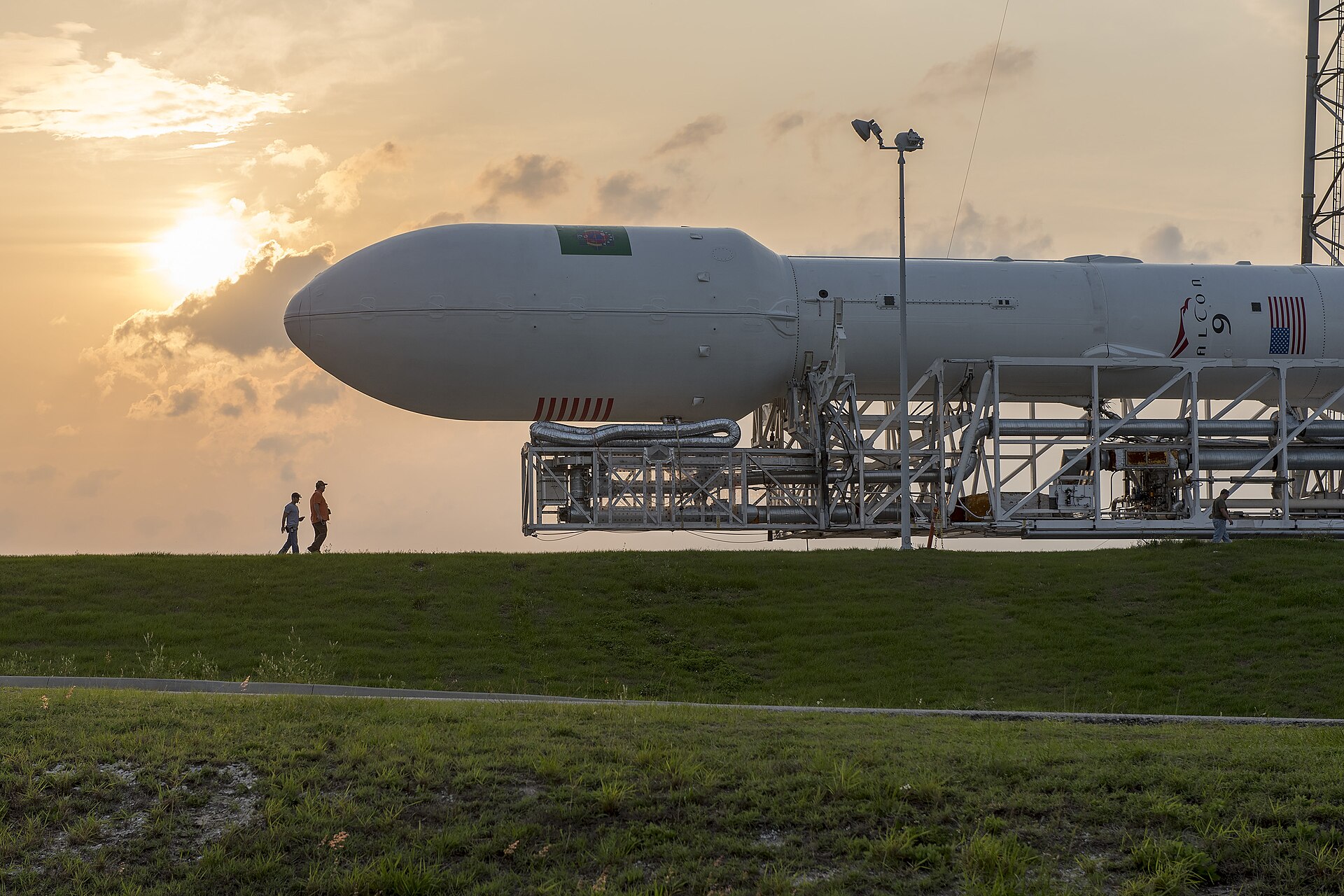
Falcon 9 rocket on the pad as SpaceX Q3 2026 earnings are released

FAQ: SpaceX Q3 2026 earnings

How much revenue did SpaceX report for Q3 2026?
SpaceX reported $14.6 billion in revenue, up 161% year over year.

What drove SpaceX’s revenue growth this quarter?
Starlink connectivity revenue grew 69%, and SpaceX’s AI business added $6.7 billion in incremental revenue, the two biggest contributors.

When did SpaceX go public?
SpaceX closed its IPO on 15 June 2026 and began trading on Nasdaq under the ticker SPCX.

What is SpaceX’s “Super Intelligence” business?
It is SpaceX’s AI unit, which includes cloud services agreements, the Cursor coding tool acquisition, and products like Grok and Bot.

Did Starship generate revenue this quarter?
Yes. SpaceX says its first revenue-generating Starship mission delivered 26 Starlink V3 satellites during Q3 2026.

How much cash does SpaceX have on hand?
SpaceX held $100 billion in cash and marketable securities as of its prior quarterly report.

Is SpaceX’s AI business bigger than its rocket business yet?
Not based on the figures reported here. Starlink remains the larger established segment, though the AI unit’s incremental growth this quarter was substantial on its own.

Does SpaceX compete directly with Microsoft or Google in AI?
In cloud and AI services, yes, to a degree. SpaceX is a newer entrant chasing some of the same enterprise customers as larger, more established cloud providers.

UAE Commercial Companies Law Amendments: What Founders Gain

The UAE Commercial Companies Law amendments in Federal Decree-Law No. 20 of 2025 change how founders can structure share capital, convert a company and move between jurisdictions. The Ministry of Economy and Tourism, in a statement published on 6 January 2026, says the decree amends 15 articles of Federal Decree-Law No. 32 of 2021 and adds one new article on transferring a company’s commercial register registration. Several of the changes still depend on Cabinet or ministerial decisions, so founders should treat them as a framework rather than a finished rulebook.

Contents

More flexible share structures

According to the ministry, LLCs can issue multiple quota classes and joint stock companies (JSCs) can issue multiple share classes subject to conditions; previously this was limited to public JSCs by Cabinet decision. Examples it lists include dividend shares, priority capital-recovery shares, preferred shares, shares with varying nominal values and restricted shares. The categories will be set by Cabinet decision. The law firm Kayrouz & Associates, in its own summary, likewise notes that the new share classes await implementing regulations.

Converting and moving a company

The ministry says companies can convert between legal forms while keeping their legal personality, and can transfer their commercial register registration between emirates, free zones and financial free zones without liquidation or re-incorporation. Conditions include compatible registration systems, no legal impediment, required approvals and publication of the transfer decision. It also says free zone and financial free zone companies can operate on the mainland through branches or representative offices.

Lock-ups, exits and shareholder rights

The lock-up on share disposal for private JSCs drops from two years to one, and a ministerial decision can reduce or waive it; private JSCs are exempt during a private placement or financial market listing. The ministry adds that drag-along and tag-along rights, forced-sale provisions and prior sale agreements can be written into the articles of LLCs and private JSCs. A new non-profit commercial company form is also created, with rules to be set by Cabinet decision.

What it means for a founder

As an illustration, not advice: an Indian software founder running a free zone company who wants to sell to mainland customers could, under the framework, use a mainland branch rather than a new entity, and an investor-backed startup could use preferred shares once the Cabinet decisions are issued. Check the current position with a licensed UAE adviser and your free zone authority before restructuring. Our company formation service page and the report on the Saudi Arabia foreign investor rules give regional context.

What happens next

The ministry says company registrations and licences are expected to rise 10 to 15 per cent in the first year after implementation. That is the government’s own projection, not an independent forecast. Watch for the Cabinet decisions on share classes and the non-profit form, and for the ministerial decision that will set in-kind valuation standards for contributions of assets other than cash. The ministry also says the amendments apply to foreign companies operating in or headquartered in the UAE and to branches or representative offices of free zone companies on the mainland, and that existing and future companies, including those in free zones, keep UAE nationality. For a founder choosing between a free zone and the mainland, the practical point is that these structural options are now written into the main law, even where the detailed rules are still to come. Until implementing decisions are issued, ask your licensing authority in writing which provisions it is applying.

Questions on the amendments

Which law was amended?

Federal Decree-Law No. 32 of 2021 on Commercial Companies, by Federal Decree-Law No. 20 of 2025.

How many articles changed?

The ministry says 15 articles were amended and one added.

Can a company move between free zones and emirates?

The ministry says registration can be transferred between emirates, free zones and financial free zones without liquidation, subject to conditions.

What happens to the private JSC lock-up?

It drops from two years to one, and can be reduced or waived by ministerial decision.

Are multiple share classes available now?

The ministry says categories will be set by Cabinet decision, so check whether the decision has been issued.

Where do I start?

With your free zone authority or mainland licensing department, and a licensed UAE adviser.

Sources

Image: Dubai Marina skyline by CT Cooper, public domain, via Wikimedia Commons.
Chevening 2027/28: Applications Closed, What Happens Next

Applications for the Chevening 2027/28 scholarships have closed, and the Chevening 2027/28 timeline now moves to assessment and interviews. The UK government’s international scholarship programme says on its application timeline page that applications opened in August 2026 and closed in October 2026, with exact deadlines on each country’s page and the application system inaccessible afterwards. Everything below comes from that official page.

Contents

The dates after the deadline

Chevening says applications are checked against eligibility criteria from October 2026, and independent reading committees assess eligible applications from mid-October 2026 to January 2027. In mid-February 2027, embassies and high commissions shortlist candidates for interview. Interviews take place at British embassies and high commissions from March to April 2027, and candidates must upload their documents at least seven working days beforehand. Interview results are announced in mid-June 2027.

The university offer deadline

Successful candidates must submit an unconditional UK university offer by 17:00 BST (UK time) on 8 July 2027, according to Chevening. Scholars then begin their studies in the UK in September or October 2027. Because this date is fixed for everyone, candidates who are shortlisted are best placed if their university applications are already well advanced rather than started after the interview.

If you missed this round

Chevening is only one route. Our reports on the Clarendon Scholarship at Oxford and on Netherlands master’s scholarships for 2027 cover options with their own timelines, and the visa eligibility checker helps you plan the study visa that follows any offer.

A worked example

As an illustration, not a real case: a Nigerian public-health doctor who applied before the October deadline should expect no news until the mid-February shortlisting window, then should prepare documents for an interview between March and April. If she is successful in June, she has until 8 July 2027 to hold an unconditional offer, so conditional offers should be converted promptly.

What happens next

The next visible step for applicants is mid-February 2027. Chevening’s timeline is built around a single annual cycle, so a candidate who is not shortlisted has no appeal step on the page we read; the practical alternative is to look at other funded routes early rather than wait for the next opening, whose dates Chevening has not yet published. Applicants should also keep their reference providers informed, because reference letters feed into the interview stage, and keep copies of all submitted documents. Confirm your own country’s dates on its Chevening page, because the programme says deadlines and interview schedules vary by location.

Questions on Chevening 2027/28

Is Chevening 2027/28 still open?

No. Chevening says applications closed in October 2026.

When are shortlists announced?

Embassies and high commissions shortlist candidates in mid-February 2027.

When are interviews?

March to April 2027 at British embassies and high commissions.

When are results announced?

Mid-June 2027, according to the timeline.

What is the university offer deadline?

17:00 BST on 8 July 2027 for an unconditional offer.

When do scholars start?

September or October 2027.

Sources

Image: Radcliffe Camera, Oxford by Julian Herzog, CC BY 4.0, via Wikimedia Commons.

Britain and Brussels Just Set a Date — And Migration Is on the Table

Britain and the European Union have locked in a date for their next major summit. The UK EU summit migration agenda is already taking shape before the two sides even sit down. The summit is set for 20 November 2026 in Brussels. Migration sits alongside trade as a top priority for the UK side.

UK officials confirmed the date after reports raised Russian meddling concerns around the original Brexit referendum. That added urgency to closer coordination with Brussels. Manchester mayor Andy Burnham is a prominent voice pushing for closer UK-EU ties. He has said he intends to prioritize trade and migration at the summit, according to EUobserver’s reporting on his remarks. The UK prime minister has separately said the “status quo” with the EU is “not good enough.” That signals London wants more than symbolic cooperation out of the meeting. AJ Bell’s report on the summit date carried that same line directly from the prime minister.

What the UK EU summit migration talks could actually produce

Migration cooperation between the UK and EU since Brexit has mostly meant information-sharing and limited returns agreements. It has not meant a shared asylum system. A summit focused partly on migration could still produce something real. New commitments on returning failed asylum seekers are one possibility. Cooperation on cross-Channel smuggling networks is another. Data-sharing on criminal records could also feature. A full return to EU-wide freedom of movement is unlikely. Neither side has signaled any appetite for reopening that debate.

Trade sits alongside migration on the announced agenda. Burnham has argued that closer alignment on both fronts strengthens Britain’s hand against outside interference. That framing ties migration cooperation to broader security concerns, rather than treating it as a separate issue. It also gives the UK government cover to deepen EU ties without reopening the free-movement debate that dominated the original Brexit campaign. That debate still carries real political weight on both sides of the English Channel, which is why officials keep steering the conversation toward narrower, practical fixes instead.

Why this summit matters more than past post-Brexit meetings

Several UK-EU meetings since Brexit produced modest, technical agreements rather than major shifts. This one carries different weight. It follows direct accusations of foreign interference in the original Brexit vote. That claim has reopened UK domestic debate about the EU relationship generally. A summit billed around rebuilding trust sets a higher bar than one focused only on leftover trade disputes. Success on 20 November will mean more than a polite joint photo.

The timing also overlaps with wider European political turbulence. Tamara News has covered cost-of-living protests in France and the EU’s new power to fine AI companies this same month. Both are signs of an EU juggling multiple pressures at once, heading into a summit that is already drawing outsized attention.

What happens between now and the summit

Expect preparatory talks between UK and EU officials in the weeks leading up to 20 November. Those talks will shape the detailed text both sides actually negotiate over. Migration and trade are described as priorities, not confirmed outcomes. The specific commitments on the table could still shift considerably before the summit itself. A joint statement or communique is the most likely public output on the day. Any binding agreements will probably follow in separate technical talks afterward, rather than being signed on the spot.

Both sides have strong incentives to show some concrete result. The political attention this summit has already drawn makes a purely symbolic outcome a harder sell than usual. Officials on both sides know a vague outcome would draw immediate criticism at home.

Downing Street in London before the UK EU summit migration agenda

FAQ: UK EU summit migration

When is the UK-EU summit?
The summit is scheduled for 20 November 2026 in Brussels.

Is migration the only topic on the agenda?
No. Trade sits alongside migration as a top priority, according to officials quoted in coverage of the summit’s planning.

Will the summit bring back free movement between the UK and EU?
There is no indication of that. Discussions appear focused on narrower cooperation, such as returns agreements and information-sharing, not a return to pre-Brexit freedom of movement.

Why did Russian interference claims come up around this summit?
A UK figure pushing for closer EU ties cited concerns about Russian meddling in the original Brexit referendum as part of the case for deeper cooperation now.

Who is pushing hardest for migration cooperation?
Manchester mayor Andy Burnham has publicly prioritized trade and migration ahead of the summit, according to reporting on his comments.

Will any agreements be signed on the day of the summit?
That is unclear. A joint statement is the most likely immediate output, with detailed agreements more likely to follow in later technical negotiations.

Does this summit affect UK visa rules for EU citizens?
Nothing announced so far points to new visa rules for EU citizens visiting the UK. The agenda as described focuses on cooperation measures rather than visa policy changes.

How does this summit connect to wider EU politics this month?
It lands during a period of broader EU strain, including cost-of-living protests in France and new enforcement powers under the EU’s AI Act. Brussels is managing several pressures at once heading into November.