Argentina Just Threatened Sanctions Over Oil Near the Falklands

Argentina’s government has announced new Falkland Islands oil sanctions. The move targets companies working near the disputed South Atlantic archipelago. It revives a sovereignty dispute with Britain that dates back more than four decades. President Javier Milei made the announcement on September 4. He wants a law change that allows tougher penalties. Those penalties would hit firms that service hydrocarbon exploration near the islands. The timing matters: a British-led drilling project is about to move forward.

What the Falkland Islands oil sanctions actually target

The Falkland Islands oil sanctions do not target the islands themselves. They target the companies that service offshore drilling nearby. Milei’s proposal would let Argentina penalize shipping companies, suppliers and insurers. Any firm that supports hydrocarbon exploitation in waters Buenos Aires still claims could face sanctions. Milei paired the sanctions push with a military announcement. He unveiled new funding for a naval base in Argentina’s southernmost province. That step would increase the country’s military presence near the islands.

The islands are known as the Malvinas in Argentina. Britain has administered them since 1833. Argentina and the UK fought a 74-day war over the territory in 1982. Britain won that war. Argentina has never dropped its underlying claim. Roughly 3,400 people live on the islands today, and referendums there have repeatedly shown strong support for remaining British.

Why the Sea Lion project reignited the oil dispute

Helicopter servicing an offshore platform, similar to operations covered by Falkland Islands oil sanctions

The trigger this time is Sea Lion, a deep-sea oil project. It sits about 220 kilometers north of the Falklands. British company Rockhopper Exploration and Israel’s Navitas Petroleum are developing it together. They plan to begin drilling in the coming months. First oil is targeted for 2028, according to CNN. Argentina has long objected to commercial exploitation of resources near the islands without its consent. The project’s advance toward active drilling appears to have accelerated Milei’s response now.

Trump’s comments give Milei new leverage

Milei’s escalation follows remarks from US President Donald Trump. Trump suggested Washington could revisit its long-standing position on Falklands sovereignty. That position is often called “strategic ambiguity.” It has accepted de facto British rule without formally endorsing either country’s claim. According to NPR, Milei seized on those comments quickly. He is framing the sanctions push as newly viable. His bet: a friendlier White House posture gives Argentina more room to press its case internationally.

Britain’s response to the Falkland Islands oil sanctions threat

UK Defence Secretary Wes Streeting rejected any suggestion that Britain’s position was under threat. “The Falklands are British because Falkland Islanders choose to be British,” he said. He described London’s commitment to the territory as “absolute and unshakeable.” Al Jazeera reported those remarks on September 4. British officials have made similar statements during past flare-ups in the dispute, and this one echoes that established pattern.

What comes next for the Falklands oil standoff

Milei’s sanctions plan still needs to clear Argentina’s congress. It is not yet clear how Argentina would enforce it against foreign companies operating outside its jurisdiction. Rockhopper and Navitas have given no public sign that political pressure will delay their drilling timeline. The bigger variable is Washington. If Trump’s administration follows through on reconsidering its neutral stance, that could reshape the diplomatic backdrop entirely. This is a dispute that has simmered largely unchanged since 1982. For now, both London and Buenos Aires are holding their positions. The Sea Lion project remains on track for drilling within months, regardless of the political noise around it.

Fishing and tourism remain the islands’ main industries today, alongside the hope that offshore oil could eventually diversify the economy. Argentina’s economy, meanwhile, has struggled with inflation and currency pressure for years, giving Milei a political incentive to rally nationalist sentiment around a cause with broad domestic support. Falklands sovereignty remains one of the few issues that unites Argentine politicians across the ideological spectrum, which helps explain why the topic keeps resurfacing regardless of who holds power in Buenos Aires.

Frequently asked questions

What are the new Falkland Islands oil sanctions?
They are penalties Argentina’s government wants to impose on companies that service oil and gas exploration near the Falkland Islands. The plan requires a change to Argentine law before it can take effect.

Which companies are involved in the Sea Lion oil project?
British firm Rockhopper Exploration and Israel’s Navitas Petroleum are developing the project. It sits about 220 kilometers north of the islands.

Why did Trump’s comments matter to this dispute?
Trump suggested the US could reconsider its neutral stance on Falklands sovereignty. Milei has cited that as an opening to press Argentina’s claim more forcefully.

Has the UK responded to the sanctions threat?
Yes. UK Defence Secretary Wes Streeting reaffirmed Britain’s commitment to the islands. He called it “absolute and unshakeable.”

When would Sea Lion oil actually start flowing?
Developers are targeting the start of production in 2028. Drilling itself is expected to begin within the coming months.

Is this the first clash between Argentina and the UK over the Falklands?
No. The two countries fought a war over the territory in 1982. Disputes over resource rights near the islands have recurred periodically since then.

For more on how governments are using trade and diplomatic pressure this year, see our coverage of Canada’s retaliatory tariff dispute with the US and the opening of this year’s UN General Assembly.

Featured image: European Space Agency, satellite image of the Falkland Islands. In-content image: James from Cheltenham, Gloucestershire, CC BY-SA 2.0, via Wikimedia Commons.

A UN Expert Says Zambia’s Post-Election Crackdown Is Getting Worse

The Zambia opposition crackdown has intensified in the roughly three weeks since the country’s contested presidential and parliamentary elections. A UN Human Rights Council-appointed special rapporteur issued a public statement urging Lusaka to reverse course. UN News and the Office of the High Commissioner for Human Rights both reported the warning. It describes systemic violence, mass arrests and detentions that extend beyond legally mandated limits without formal charges.

What the Zambia Opposition Crackdown Looks Like on the Ground

Security forces have arrested hundreds of opposition supporters since the election. Many were held past the timeframes Zambian law allows before charges must be filed, the UN statement said. Some detainees face what the rapporteur’s office called disproportionate or “concocted” charges. That group includes senior opposition alliance leader Brian Mundubile and his running mate Makebi Zulu, who face treason charges.

Zambian authorities have said the arrests connect to an alleged insurrection plot. Security forces reportedly seized weapons and arrested 11 people, including senior opposition figures, in a raid in the capital, Lusaka. Mundubile himself was found present at the scene, according to reporting compiled by People Daily. Tamara News has not independently verified the insurrection allegations. The government’s stated justification is reported here alongside the UN’s characterization of the crackdown as disproportionate.

The gap between the two accounts is stark. Government officials describe a security operation against an active plot. The UN’s rapporteur describes a pattern of mass detention without charge that extends well beyond anyone connected to the alleged raid. Both descriptions can be partly true at once. A genuine security concern does not, on its own, justify holding hundreds of people past legal time limits — the specific practice the rapporteur’s statement singles out.

A Pattern Beyond Individual Arrests

The rapporteur’s office also pointed to the government’s de facto cancellation of RightsCon, a summit on human rights and technology that had been expected to draw more than 5,000 attendees. Officials framed this as part of a broader pattern of closing space for civil society and independent scrutiny, not an isolated response to the election alone.

Why the Zambia Opposition Crackdown Is Drawing International Attention

UN special rapporteurs have no enforcement power. Their public statements still carry diplomatic weight, and they often precede more concrete responses from bodies like the UN Human Rights Council or individual governments considering aid conditions. The rapporteur has called for the immediate release of political detainees and protection of democratic freedoms. That framing turns the situation into a test of whether Zambia’s institutions can constrain executive power after a disputed vote.

Zambia’s situation echoes tensions playing out elsewhere on the continent this election season. Tamara News has also covered Morocco’s general election, part of a busier-than-usual African election calendar in September 2026.

What Comes Next for Zambia’s Opposition

Watch for whether the government responds to the UN rapporteur’s statement, or dismisses it as outside interference. That choice will likely shape whether the crackdown escalates or eases in the coming weeks. Mundubile and Zulu’s treason case is the one to watch most closely. How it proceeds through Zambia’s courts will be read internationally as a signal of whether due process survives a contested election, or whether it becomes a template for handling future opposition challenges. Regional bodies including the African Union and the Southern African Development Community have a track record here. Both have weighed in on post-election disputes elsewhere on the continent before. Pressure from those blocs, more than from the UN alone, has historically shifted outcomes in similar standoffs.

Neither body had issued a public statement on Zambia as of this report. Their silence so far stands in contrast to the UN rapporteur’s swift intervention. Diplomats watching the situation say regional bodies often move slower. They tend to prefer quiet pressure over public statements. That pattern could still shift if the crackdown escalates further.

Zambia’s own courts remain the most immediate venue where this plays out. Independent legal observers inside the country will be watching whether judges hearing the treason case face any political pressure of their own. A visibly fair trial process would do more to ease international concern than any diplomatic statement from Lusaka. A rushed or opaque one would likely deepen it instead, regardless of the eventual verdict. Zambia’s own bar association has historically been vocal on judicial independence issues, and its response to this specific case will be an early indicator worth watching in the weeks ahead.

UN Human Rights Council chamber addressing the Zambia opposition crackdown

A Few Common Questions

What triggered the Zambia opposition crackdown?
Zambia’s contested presidential and parliamentary elections, held roughly three weeks before the UN statement, which the opposition disputed.

Who are the main opposition figures facing charges?
Opposition alliance leader Brian Mundubile and his running mate Makebi Zulu, who face treason charges the UN rapporteur’s office described as disproportionate.

What does the Zambian government say about the arrests?
Authorities have linked the arrests to an alleged insurrection plot, saying weapons were seized and 11 people arrested in a raid in Lusaka.

What has the United Nations done in response?
A UN Human Rights Council-appointed special rapporteur issued a public statement calling for the immediate release of political detainees and an end to the crackdown.

Has any independent event been affected by the crackdown?
Yes. RightsCon, a human rights and technology summit expected to draw over 5,000 attendees, was effectively canceled by the government.

Featured image: “CGI Zambia Flag.png” by Aerra Carnicom (CC BY-SA 4.0), via Wikimedia Commons. In-content image: “UN Human Rights Council Chamber, Geneva” by U.S. Mission Geneva (CC BY 2.0), via Wikimedia Commons.

Related Guides

Xi Jinping Hadn’t Visited Egypt in a Decade. Here’s Why He Just Did

The Xi Jinping Egypt visit began on the evening of September 1, 2026. China’s president landed in Cairo for a state visit at the invitation of Egyptian President Abdel Fattah El-Sisi. It was Xi’s first trip to Egypt in ten years. The stop capped a longer swing through Central Asia. That trip also took Xi to Kyrgyzstan for the Shanghai Cooperation Organisation summit. The full itinerary ran from August 30 to September 3, 2026.

Xi and El-Sisi held formal talks on September 2. Xi visited the Grand Egyptian Museum near the pyramids of Giza during his three days in the country, according to Al Jazeera.

Why the Xi Jinping Egypt Visit Is Landing Now

The timing is not incidental. Xi’s visit comes as U.S. influence in the region has been strained by the ongoing military confrontation between the United States and Iran, which has flared again after a month-long lull. During his meeting with El-Sisi, Xi called on Middle Eastern countries to oppose external influence and to consider reshaping the region’s security order. Al Jazeera reported those remarks as a direct signal of Beijing’s ambition to position itself as an alternative security partner while Washington is preoccupied elsewhere.

ABC News described the visit as part of a broader pattern: “China seeking deeper influence across the Mideast” at a moment when traditional U.S. partners in the region are recalibrating their alliances.

Tamara News has covered the diplomatic backdrop to this moment in detail this week, including the opening of this year’s UN General Assembly session, where competing claims to global leadership are already a central theme. The Iran conflict has drawn most of Washington’s diplomatic bandwidth in recent weeks — exactly the gap Xi’s Cairo trip appears designed to exploit.

The Economic Relationship Behind the Xi Jinping Egypt Visit

China’s investment in Egypt already exceeds $10 billion. That includes stakes in Egypt’s New Administrative Capital east of Cairo and an electric rail line serving industrial zones in the Nile Delta. Egyptian exports to China nearly doubled in the first half of 2026, a trend that gives the diplomatic visit real economic weight rather than symbolic value alone.

Infrastructure financing of this kind has become China’s signature approach to expanding influence across Africa and the Middle East. Beijing trades capital and construction expertise for political goodwill and long-term economic ties, without the conditions typically attached to Western aid or loans.

Critics, including some Western officials, argue this model can leave recipient countries carrying debt tied to projects with uncertain returns. Egypt’s government has not raised that concern publicly about its own arrangements with Beijing. Nothing in the reporting around this visit suggests strain in the relationship — if anything, the near-doubling of Egyptian exports to China points the other direction.

How Egypt Is Positioned Between Two Powers

Egypt has long balanced two relationships. Washington provides significant military aid. Beijing has become an increasingly important economic partner. Hosting Xi for a rare state visit lets Cairo signal strategic flexibility. It does this without formally breaking from Washington, even while the U.S. stays consumed by the Iran conflict. Other regional governments are watching this hedging posture closely as they weigh their own positioning.

Egypt is not alone in this balancing act. Morocco’s own general election this month unfolds against a similar backdrop. Governments across the region are recalibrating alliances as global power dynamics shift. Both countries have deep, decades-old ties to Washington. Both have also deepened economic links with Beijing in recent years. That pattern is playing out across much of the region at once.

Analysts who track Chinese foreign policy note a consistent playbook. Beijing tends to lead with infrastructure and trade, then follow with security rhetoric once the economic relationship is established. Egypt fits that sequence closely. A decade of investment came first. Xi’s call for a new regional security order came only now, after the economic groundwork was already in place.

What Xi’s Visit Sets in Motion

Watch for concrete follow-through on the security framework Xi floated during talks with El-Sisi. Vague calls for a new regional order tend to either firm up into specific proposals within weeks or quietly disappear from official statements. Also worth tracking: whether Gulf states, several of which have their own extensive trade ties with China, echo Xi’s language about reduced external influence. They may instead keep their distance to avoid antagonizing Washington while the Iran conflict stays active.

Flag of Egypt, host of the Xi Jinping Egypt visit

Common Questions, Answered

When did Xi Jinping visit Egypt?
Xi arrived in Cairo on the evening of September 1, 2026, and held talks with President El-Sisi on September 2, staying three days.

Why was this visit significant?
It was Xi’s first trip to Egypt in a decade, and it came while U.S. attention and influence in the region are strained by the ongoing conflict with Iran.

What did Xi say during the visit?
He called on Middle Eastern nations to oppose external influence and consider a new regional security framework, according to Al Jazeera’s reporting on his remarks with El-Sisi.

How large is China’s economic relationship with Egypt?
Chinese investment in Egypt exceeds $10 billion, and Egyptian exports to China nearly doubled in the first half of 2026.

Did Xi visit other countries on this trip?
Yes. The same trip included a stop in Kyrgyzstan for the Shanghai Cooperation Organisation summit before Xi continued to Egypt.

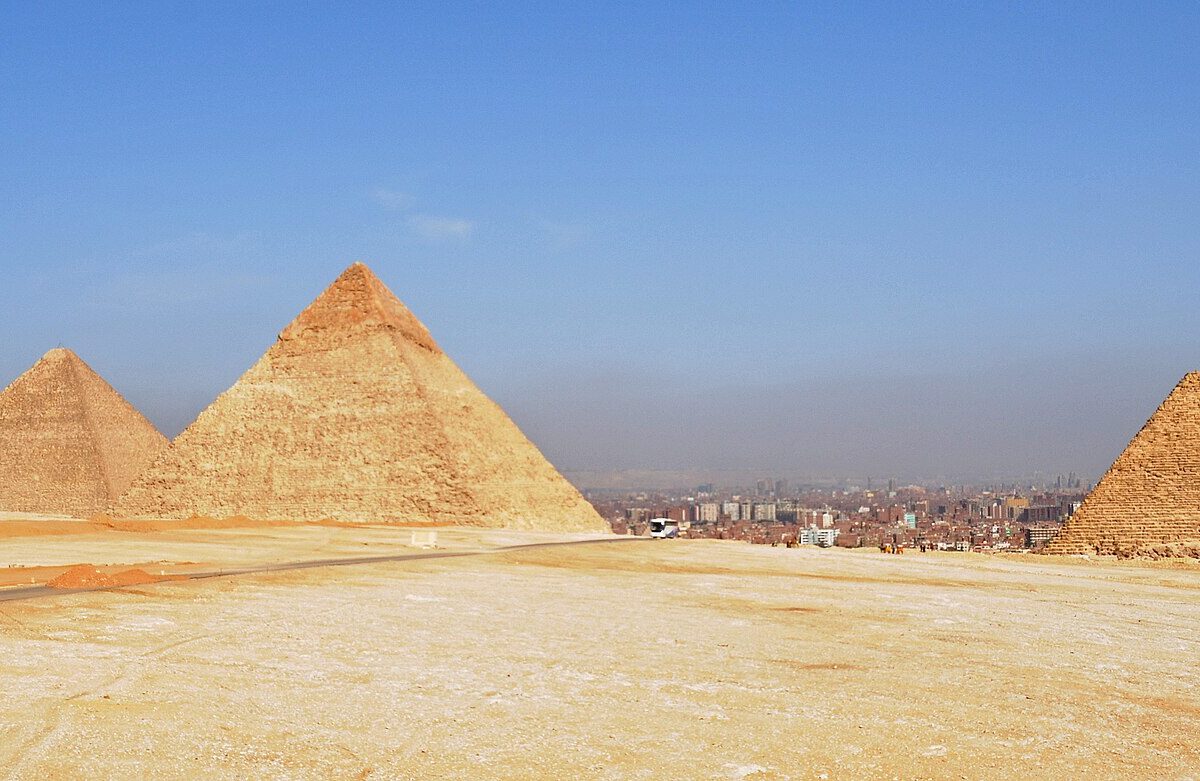
Featured image: “Pyramids of Giza, Egypt – Cairo skyline in the background – panoramio.jpg” by David Broad (CC BY 3.0), via Wikimedia Commons. In-content image: “CGI Egypt Flag.png” by Aerra Carnicom (CC BY-SA 4.0), via Wikimedia Commons.

Germany Just Accused Russia of a Drone Plot — and Shut a Consulate Over It

Germany announced the Germany Russia consulate closure on September 1, 2026. German Interior Minister Alexander Dobrindt formally accused Russia of orchestrating a drone attack on Leipzig/Halle Airport the previous month. Germany ordered the Russian consulate in Bonn shut, effective September 18. It also closed the Russian House cultural center in Berlin and tightened entry controls on Russian nationals.

The accusation traces back to August 4 and 5, 2026. Two drone incidents occurred on airport grounds in Saxony that weekend. One device, found near a Ukrainian cargo aircraft, carried explosives; technicians defused it on site. The Washington Post and NBC News both reported the details.

The Evidence Behind the Germany Russia Consulate Closure

Dobrindt said investigators found drone components, explosives and a detonator configuration matching patterns “known to us from other Russian hybrid operations.” He told reporters the police investigations, the pattern and intelligence findings “prove a Russian responsibility for the attempted attack at Leipzig airport.” Germany’s government is standing behind that statement publicly. It has not released the underlying forensic evidence for independent review.

Russia has denied any involvement. Ambassador Sergey Nechayev called the accusations “unsubstantiated, absurd, and irrational,” per the same NBC News report. Tamara News has not independently verified either side’s account. This report treats both the German government’s stated evidence and Russia’s denial as competing claims from interested parties.

Leipzig/Halle Airport is a major cargo hub for European logistics. Its proximity to flights supporting Ukraine made it a plausible target for exactly the kind of hybrid interference Western intelligence agencies have warned about since Russia’s full-scale invasion began. A drone carrying explosives landing undetected on airport grounds raises pointed questions about perimeter security at facilities that handle both commercial and military-adjacent cargo.

What the Germany Russia Consulate Closure Includes

Beyond shutting the Bonn consulate and the Berlin cultural center, Germany is tightening entry screening for Russian nationals. The European Commission has separately signaled plans for additional sanctions tied to the incident, though it has not detailed specific targets yet. NATO Secretary General Mark Rutte welcomed Germany’s response, calling it a firm stance against what he described as hybrid aggression.

Consulate closures are a rare step for Germany to take against Russia. Berlin has historically reserved this move for the most serious accusations rather than routine friction. Bonn’s consulate has operated for decades, a legacy of the city’s status as former West Germany’s capital. Closing it signals Berlin views the Leipzig incident as a different order of threat than earlier hybrid incidents it chose not to escalate this far.

Part of a Wider Pattern of Hybrid Incidents

The Leipzig case is one of several drone and sabotage incidents across Europe that Western governments have linked to Russia over the past two years. NATO officials call this a hybrid warfare campaign short of open conflict. Tamara News has covered related developments this week, including Latvia’s import ban tied to Russia and Belarus and ongoing Russian strikes on Kyiv. Both are part of the same deteriorating security picture along the eastern edge of Europe.

What Berlin Does Next

The Bonn consulate closure takes effect September 18. That gives Russian diplomatic staff roughly two and a half weeks to wind down operations. Watch for whether the European Commission’s promised sanctions package produces specific targets. Watch too for whether other NATO members follow Germany’s lead with their own consulate or visa restrictions. Russia has given no sign of a reciprocal move against German diplomatic facilities so far. Retaliation of that kind would fit the pattern of prior disputes between the two countries. A tit-for-tat closure from Moscow would send the clearest early signal that this dispute is escalating rather than settling.

German lawmakers across the political spectrum have broadly backed Dobrindt’s response so far. That is a rare moment of consensus in a coalition that disagrees on most other foreign policy questions. That unity could fray quickly if Russia responds with a matching consulate closure of its own. Opposition parties would then face pressure to show they can match Moscow’s escalation without provoking a wider diplomatic break.

Other European governments are likely watching Berlin’s next moves closely too. Unexplained drone activity near military and transport sites has been reported in several parts of Europe over the past two years, generally without the kind of direct public attribution Germany has now made. A German precedent for naming Russia this explicitly could make it easier for other capitals to do the same in future incidents.

Airport runway tied to the Germany Russia consulate closure

Questions Readers Are Asking

What triggered the Germany Russia consulate closure?
Germany’s formal accusation, made September 1, 2026, that Russia was behind a drone plot targeting Leipzig/Halle Airport in early August.

Which Russian facilities did Germany close?
The Russian consulate in Bonn, effective September 18, 2026, and the Russian House cultural center in Berlin.

Has Russia responded to the accusation?
Yes. Russian Ambassador Sergey Nechayev called the claims “unsubstantiated, absurd, and irrational” and denied any involvement.

What was found at Leipzig airport?
Two drone incidents happened on August 4-5, 2026. One device, found near a Ukrainian cargo aircraft, carried explosives; technicians defused it on site.

Is the EU taking further action?
The European Commission has signaled plans for additional sanctions but has not yet detailed specific targets.

Featured image: “Berlin, Reichstagsgebäude — 2019 — 6310.jpg” by Dietmar Rabich (CC BY-SA 4.0), via Wikimedia Commons. In-content image: “Airport Frankfurt – Fraport – Flughafen Frankfurt – border between wood and runway 4.jpg” by Norbert Nagel, Mörfelden-Walldorf, Germany (CC BY-SA 3.0), via Wikimedia Commons.

Two Oil Supertankers Just Got Hit in the Strait of Hormuz — Nobody Has Claimed It

A Strait of Hormuz tanker attack struck two supertankers with unidentified projectiles late Monday. It adds a fresh flashpoint to an already tense standoff between Iran and the United States over shipping rights through the waterway. No group has claimed responsibility, and Tehran has not acknowledged involvement.

The Saudi-operated very large crude carrier Sidr and the Sinokor-operated Senegal Prosperity were both hit by three projectiles each. The strikes hit vessels transiting waters roughly 17 nautical miles east of Khasab, Oman. Shipping insurers say neither vessel suffered casualties, injuries, or environmental damage, though both sustained hull damage.

What happened in the Strait of Hormuz tanker attack

Bloomberg reported that the strikes hit both vessels within a short window as they completed outbound transits of the strait. Arab News confirmed maritime security firms tracked the incident in real time. Analysts flagged it as part of a wider pattern of unclaimed attacks on commercial shipping in the corridor this year.

Oil tanker at sea representing vessels involved in the Strait of Hormuz tanker attack

Oil tanker photo: Jernej Furman, CC BY 2.0, via Wikimedia Commons.

Why responsibility remains unclear

Neither Iran nor any allied or proxy group has claimed the strikes. That fits a pattern seen throughout the current standoff. Attacks on commercial vessels tend to go unclaimed even as both sides accuse each other of destabilizing the waterway. The incident comes days after direct exchanges between Iranian and U.S. forces reopened. That followed a period when the conflict had shifted toward economic pressure rather than open strikes.

Iranian officials spoke at the Shanghai Cooperation Organisation summit in Kyrgyzstan. They said Tehran would reciprocate if Washington returns to the terms of a memorandum of understanding reached earlier this year. That would include guarantees of free navigation through Hormuz. The offer has not visibly slowed the pace of unclaimed incidents at sea.

How the shipping industry is reacting

Maritime insurers have already raised war-risk premiums for vessels transiting the strait. Several shipping lines are reviewing routing options, though no viable alternative avoids Hormuz entirely for Gulf crude exports. Brent crude rose roughly 2% in the immediate aftermath of the attack, touching its highest level in about a week. Traders priced in the risk of further disruption to a corridor that carries a large share of the world’s seaborne oil.

What the region’s governments are saying

Gulf state officials have called for restraint from all sides while stopping short of assigning blame for Monday’s strikes. Oman, whose coastal waters saw the attack, has increased naval patrols in the area. Qatar and the United Arab Emirates have both reiterated that freedom of navigation through Hormuz remains a shared regional priority regardless of who is behind individual incidents.

The Strait of Hormuz carries roughly a fifth of the world’s oil supply on any given day. That is why even a single unclaimed incident draws outsized attention from energy markets. Countries that rely heavily on Gulf oil imports, including several major Asian economies, have urged all parties to avoid further escalation. Diplomats from Gulf Cooperation Council states have offered to mediate between Washington and Tehran, though neither side has formally accepted an outside broker for the current standoff.

What happens if the attacks keep coming

Shipping security firms expect naval escorts and convoy-style transits through the strait to increase in the coming days. That mirrors responses to earlier waves of unclaimed attacks. A sustained pattern of strikes could push more insurers to raise premiums further or restrict coverage for certain routes. Those costs eventually show up in fuel and shipping prices well beyond the Gulf. For related coverage on the broader standoff, see our reporting on the direct Iran-US military exchanges and the Middle East travel advisory currently in effect.

This is not the first unclaimed strike on shipping in the strait this year. Maritime trackers say the pattern has grown more frequent since direct exchanges between Iranian and U.S. forces resumed. Vessel operators increasingly route additional security personnel aboard ships transiting the corridor. Some have begun sailing in tighter groups to reduce individual exposure. The lack of a clear culprit makes it harder for any single government to respond directly. Analysts say that ambiguity may be part of the appeal for whoever is behind the attacks.

Frequently asked: the Hormuz incident

Which ships were hit in the Strait of Hormuz tanker attack?
The Sidr, operated by Saudi Arabia’s Bahri, and the Senegal Prosperity, operated by South Korea’s Sinokor Group, were both struck by three projectiles each.

Were there any casualties?
No casualties, crew injuries, or environmental damage have been reported by either operator.

Who is responsible for the attack?
No group has claimed responsibility. Iran has not acknowledged involvement, consistent with the unclaimed pattern of recent incidents in the strait.

How has the oil market reacted?
Brent crude rose about 2% following the strikes, touching its highest level in roughly a week.

Is shipping through Hormuz still possible?
Yes. Vessels continue to transit the strait, though insurers have raised war-risk premiums and some operators are reviewing security measures.

Could this escalate further?
Officials on both sides have floated conditions for de-escalation. The pattern of unclaimed strikes has continued despite those diplomatic signals.

Naval analysts say identifying the source of these projectiles is technically difficult even with satellite tracking. Small fast boats or shore-based launchers can strike and withdraw within minutes. That technical difficulty is one reason attribution has lagged behind nearly every recent incident in the strait. Regional airlines have also adjusted some flight paths near the Gulf coast as a precaution, though commercial air traffic through the wider region continues largely as normal.

Sources: