Canada’s New Tariffs Hit US Goods Sept 8 — What Gets Pricier

The trade fight between Washington and Ottawa just escalated again. On August 25, Canada announced Canada US retaliatory tariffs that will take effect September 8. They cover $27.6 billion worth of American goods with duties as high as 50%. Ottawa says the move matches, “dollar for dollar,” the 50% tariffs the Trump administration placed on roughly $28 billion of Canadian exports, according to CNBC’s report on the announcement. Those US duties followed a breakdown in trade talks over the weekend of August 22, first detailed by the Washington Post.

The counter-tariffs span 700 product categories. Steel and aluminum are joined by paper products, construction materials, home appliances, dairy and seafood. Canadian officials say the sectors were chosen to spread pressure across US export-heavy states rather than concentrate it in one industry.

Canada US retaliatory tariffs

What the Canada US retaliatory tariffs will cost shoppers

Economists tracking the dispute expect the duties to show up in consumer prices on both sides of the border within weeks. Steel, dairy and appliance costs move quickly into finished-goods pricing. CNN Business reported that American consumers should expect the clearest impact in home appliances and packaged food. Those products rely on Canadian-US supply chains built over three decades of tariff-free trade.

Ottawa is not leaving affected industries to absorb the hit alone. The government paired the tariff announcement with a C$7.5 billion support package. It includes funding for small and medium-sized businesses, cash-flow support for exporters, and assistance for workers in the most exposed sectors.

How the trade war reached this point

The current round traces back to a breakdown in bilateral trade talks in late August. Washington then imposed 50% duties on roughly $28 billion of Canadian goods. Prime Minister Mark Carney’s government responded within days rather than waiting. That is a faster retaliation cycle than earlier rounds of the dispute, which has run since 2025. The pattern echoes broader anxiety among American shoppers. Household budgets are already squeezed by inflation, a strain visible in recent retail earnings showing how stretched household budgets have become.

Markets have registered the dispute as one more source of uncertainty. It layers on top of Federal Reserve policy questions and Middle East-driven energy price swings. Both kept US equities volatile through late August.

What happens next in the Canada-US trade dispute

Both governments have left the door open to further talks before September 8. Neither side has signaled it will roll back its own duties first. Trade lawyers on both sides expect the dispute to run through the fall at minimum. The C$7.5 billion Canadian support package will likely be the first test of Ottawa’s political and fiscal room to sustain a prolonged fight. US industry groups dependent on Canadian steel and aluminum inputs have already begun lobbying Washington for exemptions.

Which sectors face the steepest Canada US retaliatory tariffs

Steel and aluminum carry the highest rate in the new schedule at 50%, mirroring the US duty structure directly. Dairy, seafood, paper and construction materials sit in the 15%-25% band. Farm equipment manufacturers, concentrated in the US Midwest, are among the most exposed exporters. Canada is a top destination for American-made agricultural machinery.

How other US trading partners are reading this dispute

Governments beyond Ottawa are watching how quickly and firmly Canada retaliated. The episode is becoming a reference case for how far Washington’s tariff strategy can push a close ally. Trade officials in the EU and Mexico have their own outstanding tariff friction with Washington. They are unlikely to ignore that Canada matched the US rate structure “dollar for dollar” within days. Ottawa did not open with a smaller, conciliatory counter-offer.

Canadian officials frame the swift response partly as a domestic political necessity. Prime Minister Carney faced pressure at home to show the government would not simply absorb a 50% duty without a matching response. That political calculus matters as much as the economic math. It is likely to shape how other governments respond if they land in a similar spot with Washington.

Canadian provinces with heavy cross-border manufacturing exposure are pressing Ottawa for sector-specific relief. Ontario’s steel corridor and Quebec’s paper industry are the clearest examples. They argue a uniform national program may not reach the hardest-hit regional economies fast enough to prevent layoffs before September 8. Ottawa has not ruled out adding sector-specific measures if the national package proves insufficient once the first round of duties lands. Provincial premiers are expected to raise the issue directly with Carney’s cabinet in the coming weeks. Business groups in both countries say they want clarity well before the September 8 start date.

FAQ

When do Canada’s retaliatory tariffs take effect?

September 8, 2026.

How much US trade is affected?

$27.6 billion in American goods across roughly 700 product categories.

What is the highest tariff rate Canada is applying?

50%, matching the US duty on Canadian steel and aluminum.

Why did Canada retaliate now?

Trade talks between Ottawa and Washington broke down in late August. The US then imposed 50% tariffs on about $28 billion of Canadian goods.

Is Canada offering support to affected businesses?

Yes, a C$7.5 billion package covering small business funding, cash-flow support and worker assistance.

Which products will see the biggest price increases?

Steel, aluminum, dairy, appliances and farm equipment are expected to see the most direct price impact.

Related Guides

Latvia Just Banned These Russian and Belarusian Goods

Latvia has stopped a wide range of Russian and Belarusian goods at its border. The Latvia Russia Belarus ban took effect on September 1, 2026. The country’s Cabinet of Ministers approved the regulation on August 25. The rule blocks printed books, newspapers, clothing, footwear, headwear, toys, games and sports equipment sourced from either country. It applies even when those goods arrive through a third country first.

Latvian officials frame the move as security policy, not just trade policy. The government wants to cut revenue that Russian and Belarusian exporters earn from Baltic consumers. It also wants to reduce the flow of printed material carrying Kremlin-aligned messaging into Latvian bookshops and schools. Food and drink are not on the banned list. The measure targets consumer and cultural goods rather than staples.

Latvia Russia Belarus ban

What the Latvia Russia Belarus ban actually covers

The regulation lists specific tariff codes for printed matter, apparel, footwear, headwear, toys, games and sporting goods. Officials at Latvia’s Ministry of Foreign Affairs describe the goal as closing off “reputational and financial channels.” Russian and Belarusian producers have used those channels to reach EU consumers despite existing sanctions. The ban applies regardless of the goods’ shipment route. A Russian-made jacket routed through a non-EU intermediary is still barred.

Latvian trade data shows why the political impact may outweigh the economic one. Imports from Russia and Belarus have already fallen 91% since 2022, according to reporting from Latvian public broadcaster LSM. They dropped from €2,129 million to €193 million in 2025 as EU sanctions narrowed legal trade routes. The new list finishes off what remains in a handful of consumer categories.

Why Latvia is going further than EU sanctions require

Latvia sits on NATO’s eastern flank. It has consistently pushed for tougher measures than the EU’s baseline sanctions package. Riga frames successive rounds of restrictions as both economic pressure and a domestic security measure. Officials argue that Russian-language books and media distributed commercially can carry propaganda. That propaganda, they say, undermines ties between Latvia’s large Russian-speaking minority and independent information sources.

The move lands as NATO members watch airspace violations near their borders with renewed concern. Romania intercepted a Russian drone that crossed into its territory just days earlier. Romania’s drone interception and Latvia’s import ban reflect the same posture. Both states treat low-level friction with Moscow as cumulative risk, not isolated incidents.

What happens next for traders and travelers

Latvian customs officers began enforcing the new codes at the border on September 1. Businesses that previously imported Russian or Belarusian books, clothing or toys need alternative suppliers immediately. The regulation carries no grace period. Individual travelers carrying personal items are not the rule’s main target, since it is aimed at commercial import volumes. Customs officials have flagged that personal parcels above certain thresholds could still face scrutiny.

Riga has not signaled plans to extend the list to food or energy products soon. Latvian officials say further measures remain under review depending on how the security situation in Ukraine develops. Escalating strikes inside Ukraine continue to shape how aggressively Baltic states calibrate their own sanctions posture.

How this fits the broader Baltic sanctions picture

Latvia is not acting alone. Estonia and Lithuania have pursued similar unilateral tightening in past sanctions rounds. All three Baltic states coordinate informally on enforcement gaps that let goods re-enter the bloc through non-EU transit points. The Latvia Russia Belarus ban closes one such gap for consumer goods. Customs lawyers say enforcement against relabeled or transshipped goods will be the real test of how well the rule works.

The economic footprint importers should expect

Latvian retailers who stocked Russian-language books and Belarusian-made clothing now need new suppliers fast. The regulation carries no transition period. Small booksellers near Riga and Daugavpils, home to large Russian-speaking populations, are likely to feel the tightest squeeze. They relied on direct shipments of Russian-language print material that is now barred outright, not merely taxed. Wholesalers who used Belarus as a low-cost sourcing hub for footwear and toys face a similar scramble. Latvian trade groups say members are already asking which suppliers in Poland, Lithuania and Western Europe can fill the gap before the autumn retail season.

Latvia’s customs authority says it will scrutinize relabeled goods as closely as direct shipments. That enforcement choice will likely decide whether the ban meaningfully cuts Russian and Belarusian revenue. Otherwise, the same goods may simply take a longer, costlier route into the country. Baltic customs officials coordinate informally with Estonian and Lithuanian counterparts on this exact transshipment risk. A gap enforced in one Baltic port but not another would undercut the policy region-wide.

FAQ

When did the Latvia Russia Belarus ban take effect?

The ban took effect on September 1, 2026, after Latvia’s Cabinet of Ministers approved the regulation on August 25.

What goods does the ban cover?

Printed books and newspapers, clothing, footwear, headwear, toys, games and sports equipment originating in Russia or Belarus, including goods routed through third countries.

Does the ban include food or energy products?

No. Foodstuffs and drinks are explicitly excluded from the current list.

Why did Latvia introduce this ban now?

Officials cite both economic pressure on Russia and Belarus and a domestic security goal of limiting Kremlin-aligned printed material reaching Latvian consumers.

Has trade with Russia and Belarus already declined?

Yes. Latvian import data shows a 91% drop since 2022, from €2,129 million to €193 million in 2025.

Could Latvia expand the ban further?

Officials have not announced plans to add food or energy but say further steps depend on how the security situation with Russia develops.

A Government Shutdown Could Wreck Air Travel Just as Fall Season Peaks

government shutdown air travel disruption is becoming a real possibility. The funding measure covering most of the Department of Homeland Security, including the Transportation Security Administration, expires on 30 September 2026. Major US travel industry groups have issued a joint warning urging Congress to pass a continuing resolution before the deadline. They cite the toll a previous shutdown took on travelers.

How a government shutdown air travel disruption would actually unfold

TSA officers and air traffic controllers are classified as essential employees. That means they would keep working, but without pay, until Congress restores funding. That arrangement sounds like it should keep airports running normally. The 2025 shutdown showed otherwise. Roughly 10% of TSA employees called in sick during that 35-day closure as unpaid work stretched on. Staffing pressure at checkpoints led to security lines stretching past three hours at some airports.

government shutdown air travel

What the last shutdown cost travelers

The 2025 shutdown carried an estimated $6.1 billion toll on travelers, according to figures cited by travel-industry analysts. The Federal Aviation Administration reduced operations at 40 airports during that closure. National parks lost ranger services. Passport-processing offices faced delays that rippled into travel plans booked months in advance. Industry groups are pointing to that episode directly as they lobby Congress ahead of the 30 September deadline. They argue a repeat would land during the already-busy fall travel season.

Why this deadline is harder to avoid than it sounds

The funding measure covering DHS is one of several appropriations bills Congress must pass or extend by 30 September. Previous years have shown that a single unresolved bill can trigger a broader shutdown, even when most other agencies have secure funding. TSA leadership testified earlier this year about the operational strain a shutdown places on the agency. They warned lawmakers directly that staffing gaps compound the longer a funding lapse continues. That testimony has become a reference point in the current lobbying push from airlines, airports, and hospitality groups.

Travel trade associations estimate that a shutdown lasting more than two weeks would cause measurably worse disruption than 2025’s closure, since the fall travel season concentrates more trips into a shorter window than the shutdown’s original timing did.

How airlines and airports are preparing regardless

Major carriers have started reviewing contingency staffing plans in case checkpoint lines grow. Industry sources tracking the lobbying push confirm those preparations. Airports with only one or two security lanes are seen as the most exposed. They have little room to absorb slower processing without long queues forming. Larger hub airports have more flexibility to shift staff between checkpoints. They also handle far higher passenger volumes during the fall travel season, though, which cuts against that flexibility.

Hospitality and hotel groups have joined the lobbying effort too. They warn that visible airport delays tend to depress last-minute bookings, even for travelers not flying through the worst-affected airports. That ripple effect is part of why the joint warning to Congress includes signatures from groups well outside the airline industry itself.

Some airlines have already begun quietly padding connection times on itineraries that route through smaller airports, a precaution similar to what several carriers did in the weeks before the 2025 shutdown began. Travel advisors are telling clients booking September trips to build in extra buffer time at connections, particularly for international itineraries with tight layover windows. Several advisors said they are now flagging the shutdown risk to every client. They no longer wait for someone to ask about it directly.

Airport authorities in several major cities have also started drafting communication plans for passengers. The goal is to give travelers earlier warning than they received during the 2025 closure. Many travelers that year learned about checkpoint delays only after arriving at the airport. City aviation departments say text alerts and app notifications are part of the new plans under discussion, alongside updated signage at checkpoints themselves.

What happens next

Congress has until 30 September to pass a continuing resolution or full-year appropriations covering DHS. Travel groups are pressing for an agreement well before the deadline, rather than a last-minute deal that leaves airlines and airports little time to prepare. Travelers with flights booked around the end of September should expect airlines to issue guidance if a shutdown looks imminent. That is based on how carriers communicated during the 2025 closure.

Frequently Asked Questions

When does the funding deadline that could disrupt air travel expire?

The appropriations measure covering most of DHS, including TSA, expires 30 September 2026 unless Congress passes new funding.

Would TSA officers stop working during a shutdown?

No. TSA officers and air traffic controllers are classified as essential and would keep working, but without pay until funding is restored.

What happened during the 2025 shutdown?

TSA staffing pressure led to security lines exceeding three hours at some airports, the FAA reduced operations at 40 airports, and the shutdown carried an estimated $6.1 billion cost to travelers.

What are travel industry groups asking Congress to do?

Major US travel organizations have jointly urged Congress to pass a continuing resolution before the 30 September deadline to avoid disrupting the fall travel season.

Related Coverage

Sources

Why This UN General Assembly Opening Carries More Weight Than Usual

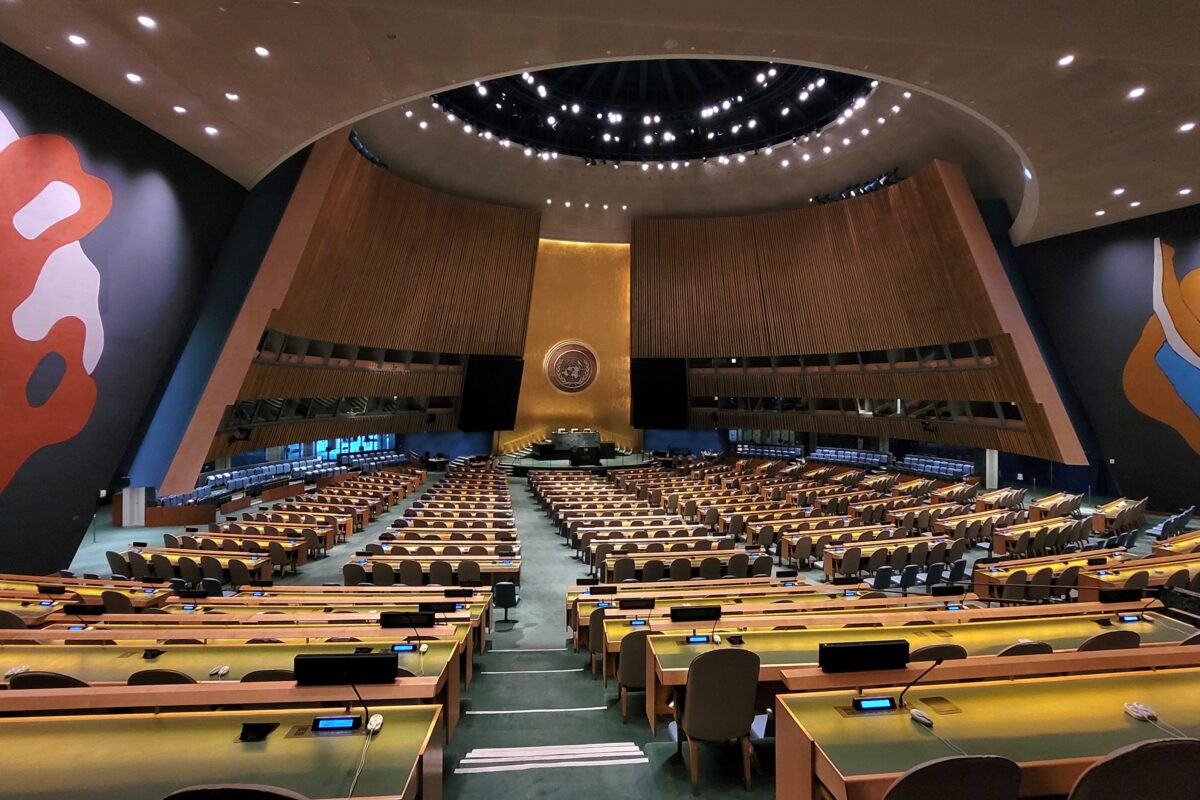
The UN General Assembly opening is set for 8 September 2026. The 81st session formally convenes at UN headquarters in New York under the presidency of Khalilur Rahman of Bangladesh. The opening itself is a procedural formality. This year’s session still arrives with an unusually heavy agenda. Renewed fighting between the United States and Iran, an intensifying Russia-Ukraine war, and elected seats on the Security Council are all converging within weeks of each other.

What actually happens at the UN General Assembly opening

The 8 September date marks the first plenary meeting of the session. The incoming president is formally installed, and the chamber sets its calendar for the months ahead. The substantive part of that calendar is High-Level Week, when heads of state and government take the podium. That general debate does not begin until 22 September and runs through 28 September. Diplomats describe the gap between the two dates as a working period. Committees quietly negotiate the resolutions and side events that will define the session’s output.

UN General Assembly opening

Image credit: Basil D Soufi / Wikimedia Commons (CC BY-SA 3.0)

The disputes hanging over this year’s session

Iran and the United States traded strikes as recently as 31 August. Both governments are expected to use their General Assembly floor time to stake out positions publicly. Neither side is expected to rely much on back-channel diplomacy this time. Ukraine is separately pushing allies for a General Assembly resolution. That resolution would address attacks on civilian and logistics infrastructure. The push follows a strike on an ammunition depot near Kyiv. That strike killed 38 people just over a week before the session opens. Neither dispute is expected to be resolved at the UN. Still, General Assembly floor time has historically shaped the diplomatic narrative around ongoing conflicts, even when it cannot end them.

Why the Security Council election matters this year

Member states are also finalizing results from this year’s UN Security Council election alongside the opening. That election determines which non-permanent members join the 15-seat body for the next two-year term. Newly elected members typically do not take their seats until January. The outcome still shapes which countries hold influence over Council votes on Iran, Ukraine, and other crises well before then. Incoming members begin coordinating with allies and blocs immediately after election.

What delegates will be negotiating behind closed doors

Committee staff typically draft the resolutions that member states will later vote on or reference in speeches, in the gap between the 8 September opening and the 22 September General Debate. This year, diplomats expect early committee work to focus on humanitarian access language tied to both the Iran-US confrontation and the Ukraine war. Routine budget and staffing resolutions rarely make headlines, but they determine how UN agencies operate for the following year. Several smaller member states have also signaled they will use committee sessions to push climate-finance commitments that stalled at last year’s session.

Credentialing disputes sometimes surface during this window too, when member states challenge which government delegation the Assembly recognizes as legitimate. No state has formally raised one for this session as of the opening date. Diplomats tracking the Assembly say that could still change once floor debate begins in earnest.

How the session’s outcome could ripple beyond New York

General Assembly resolutions carry no binding force the way Security Council resolutions do. They still shape how governments justify positions to their own domestic audiences. A resolution addressing strikes on civilian or logistics infrastructure would give Ukraine’s allies language to cite when announcing new aid packages, even without changing the legal situation on the ground. Any floor statement from Iranian or American officials will get parsed closely too. Diplomats will be looking for signals about whether either side is open to a renewed ceasefire after the 31 August strikes.

Smaller member states also use the crowded diplomatic calendar around the General Assembly to hold bilateral meetings that would otherwise take months to schedule. Foreign ministries typically report a spike in requested meeting slots in the two weeks surrounding the General Debate, since so many counterparts are already in New York for the session.

What happens next

Expect the opening itself to pass with little public drama. Two weeks of closed-door committee work follow before the real spectacle begins on 22 September. Heads of state confirmed to address the General Debate typically release their speaking order roughly a week in advance. That release will be the next concrete marker to watch for anyone tracking how this session addresses the Iran and Ukraine crises.

Frequently Asked Questions

When does the UN General Assembly opening take place?

The 81st session opens on 8 September 2026 with its first plenary meeting. The General Debate, where world leaders speak, runs from 22 to 28 September.

Who is presiding over this session?

Khalilur Rahman of Bangladesh is presiding over the 81st session of the UN General Assembly.

Will Iran and Ukraine be discussed at the opening itself?

The 8 September opening is procedural. Substantive debate on crises including the Iran-US strikes and the war in Ukraine is expected during the General Debate later in the month.

How does the Security Council election affect this session?

Newly elected non-permanent Security Council members do not take their seats until January, but they typically begin coordinating with allies immediately, shaping influence over Council votes well before the formal term starts.

Related Coverage

Sources

This Ukraine Weapons Depot Strike Is the War’s Deadliest Yet

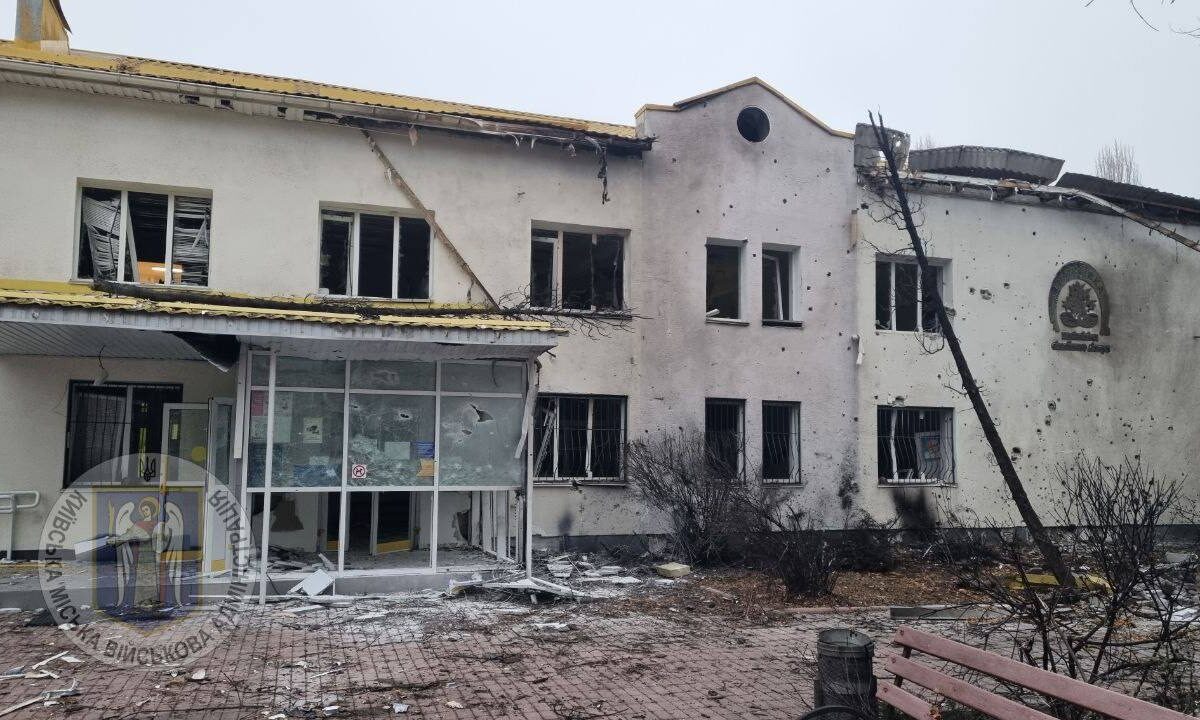
A Ukraine weapons depot strike in the village of Myla, just outside Kyiv, has killed at least 38 people. Ukrainian President Volodymyr Zelenskyy called it the deadliest single attack of the war so far this year. A Russian drone hit an ammunition depot late on 29 August 2026. The impact triggered a detonation that set off secondary explosions and fires. Emergency crews were still fighting those fires a day later.

What the Ukraine weapons depot strike destroyed

The blast injured dozens of people. Rescue teams evacuated hundreds more from the area around the depot as the fires spread. This was the second attack on a munitions storage site near Kyiv within two months. Ukrainian prosecutors have opened a criminal negligence investigation into how the depot was sited and secured. The strike landed as Russian air attacks on Kyiv stretched into a third consecutive day. Ukrainian officials say the intensification has accelerated since mid-August.

Ukraine weapons depot strike

Image credit: Ministry of Defence of Ukraine / Wikimedia Commons (CC BY 4.0)

Why this attack stands out from earlier strikes

Ukraine has absorbed thousands of drone and missile strikes since the war began. Attacks that detonate stored ordnance carry a distinct risk. Their blast radius and secondary fires can exceed what the original warhead alone would cause. That is part of why the death toll climbed so sharply. It rose from an initial count of 27 to 38 as rescue teams worked through the wreckage. Local officials said the scale of the secondary detonations made a final casualty figure hard to establish quickly.

How Kyiv and its allies are responding

Ukrainian authorities used the attack to press allies for faster delivery of air-defense systems. They argue that depots storing Western-supplied ammunition need better protection, given Russia’s apparent ability to track and target them. The strike also lands as the US Senate considers a fresh sanctions bill aimed at Russia’s energy exports. Kyiv has lobbied hard for that bill throughout the summer. European governments supply much of the ammunition stored at sites like the one hit in Myla. They now face renewed pressure to fund hardened storage facilities rather than rely on existing warehouses.

The human toll behind the casualty figures

Emergency responders described a chaotic scene in the hours after the strike. Secondary blasts made it too dangerous to enter parts of the site for several hours. Crews evacuated hundreds of residents in Myla and neighboring communities overnight. Some residents had already fled once before, after the earlier depot attack nearby two months ago. Local hospitals reported treating dozens of injuries, ranging from blast trauma to smoke inhalation. Officials cautioned that the toll could rise further as search teams finish clearing the wreckage.

Ukrainian officials have not released the nationalities or roles of all 38 confirmed dead. Early reports suggest the casualties include both military logistics personnel and civilian residents near the depot’s perimeter. That mix is part of why prosecutors opened a negligence investigation, rather than treating the deaths solely as a wartime casualty count.

How this fits the wider pattern of the war

Russia has shifted more of its strike campaign toward logistics and storage sites over the past year. Ukrainian military analysts attribute the change to diminishing returns from strikes on front-line positions alone. Targeting depots disrupts supply chains further back from the fighting. It also forces Ukraine to disperse storage across more, smaller sites, which is logistically harder and costlier to defend. The Myla strike fits that pattern closely. It hit a facility believed to store both Ukrainian-produced and allied-supplied ammunition, not a front-line position.

Western officials have previously raised concerns that consolidated storage sites make attractive targets. A single successful strike can destroy a disproportionate share of available ammunition. Ukraine’s own military has faced pressure to disperse stockpiles more aggressively. Doing so requires additional secure facilities and transport capacity, which take time to build even with allied funding.

What happens next

Kyiv’s criminal investigation into the depot’s security will likely take weeks. Its findings could shape how Ukraine and its allies store ammunition going forward. Ukrainian officials expect Russian strikes on logistics and storage sites to continue in the meantime. Moscow has increasingly targeted supply infrastructure, not just front-line positions, over the past year. Diplomats say the attack adds urgency to United Nations discussions expected once the General Assembly’s new session opens in September. Allied governments will likely announce specific air-defense pledges in the days ahead, since Kyiv has made that request the centerpiece of its public response.

Frequently Asked Questions

How many people died in the Ukraine weapons depot strike?

At least 38 people were killed, according to President Zelenskyy, after the death toll rose from an initial count of 27 as rescue crews worked through the site.

Where did the strike happen?

The depot was in the village of Myla, near Kyiv. It was the second attack on an ammunition storage site near the capital in two months.

What caused the high casualty count?

The drone strike triggered detonations of stored ammunition, which set off secondary explosions and fires that spread beyond the immediate impact zone.

Is this connected to the pending Russia sanctions bill?

Ukrainian officials have cited the strike while lobbying for a Russia sanctions bill moving through the US Senate, though the two are separate legislative and military developments.

Related Coverage

Sources