Thailand Cut Its Visa-Free Stay in Half. Here’s Who’s Affected.

Travelers who could once stay in Thailand for 60 days without a visa now get half that. New Thailand visa exemption rules took effect on September 15, 2026. The standard visa-free stay dropped to 30 days, for tourism only. A smaller group of countries is limited to just 15 days.

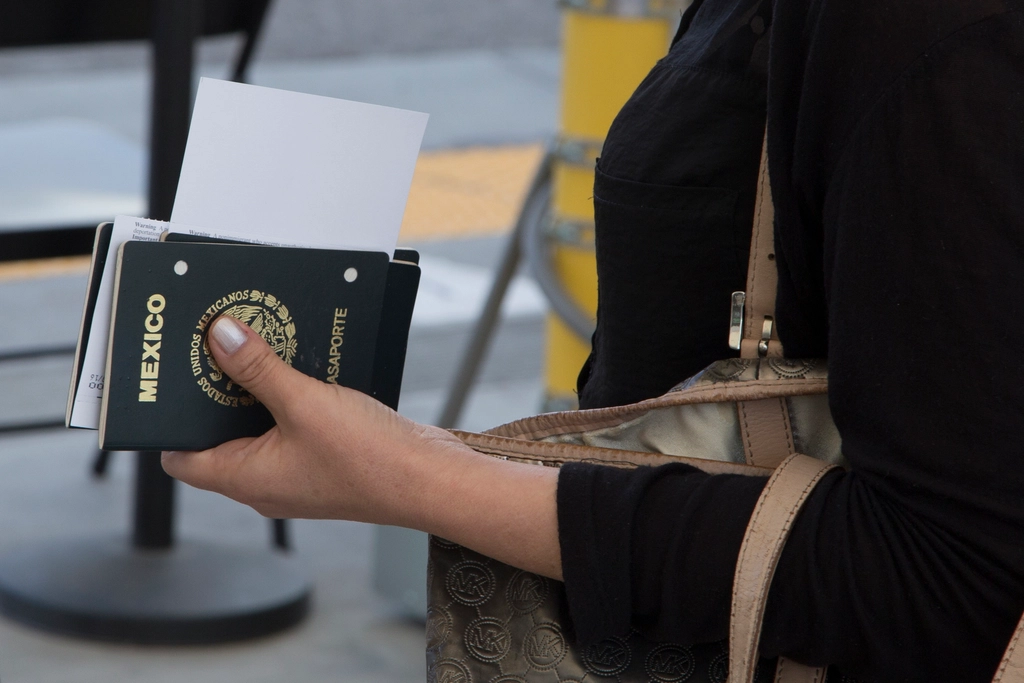
Thailand visa exemption rules now apply to arriving travelers at a Thai airport

What the new Thailand visa exemption rules actually say

The Thai Cabinet approved the framework on July 14, 2026. The Ministry of Interior published it in the Royal Gazette on August 31, 2026. It took effect 15 days later. Under the new structure, 60 countries and territories get a 30-day tourism-only exemption. Seychelles and Mauritius get just 15 days, according to TTG Asia’s report on the change.

India was added to the 30-day list after travel industry pushback. Industry groups had objected to its exclusion from an earlier 54-country version the Cabinet had approved in May. Visa on arrival, separately, is now limited to nationals of just three countries: Azerbaijan, Belarus and Serbia. Thirty-one countries had visa-on-arrival access back in 2024.

The old 60-day scheme is gone

The previous 60-day visa exemption is repealed outright. That scheme was introduced in July 2024 for 93 countries and territories. It stayed valid only for entries completed through September 14, 2026. Travelers who entered under the old rules keep their originally granted stay length. The same applies to travelers who arrived just before the cutoff, even after the new rules apply to everyone else.

Tourists in Thailand affected by the new Thailand visa exemption rules

Bilateral exemption deals with China, Russia and Vietnam are unaffected by any of this. Those countries’ travelers keep their existing 30-day arrangements regardless of the broader overhaul. Thailand negotiated those deals separately, outside the general exemption scheme this update replaces.

Why Thailand tightened the Thailand visa exemption rules

Thailand’s Public Relations Department pointed to several reasons for the change. These include national security, promoting tourism and economic interests, and reciprocity with other countries’ visa policies. The list also includes reducing overlapping exemption categories, and the growing convenience of the e-Visa system for travelers who now need one. The department also acknowledged the shift “could create confusion for foreign visitors.” That is a tacit admission that simplifying one system can complicate things for people used to the old rules.

The new rules also cap land border entries. Visa-exempt travelers crossing by land are now limited to two entries per calendar year. Malaysia, Brunei, Indonesia and Singapore are exempt from that specific cap. Thailand is not alone in tightening entry rules this year. Australia recently closed a separate onshore pathway for international students, which we covered in our report on Australia’s student visa changes.

Who needs to pay attention now

Short-term business and work visitors from the affected 60 countries face a new requirement. The revised exemption covers tourism only. That means anyone traveling for business purposes now needs an actual visa, even from a country on the 30-day tourism list. Travelers from any country left off both the 30-day and 15-day lists also need a visa starting from the September 15 effective date. The Visa Policy Committee will keep reviewing arrangements country by country. Thailand’s Deputy Prime Minister and Foreign Minister chairs that committee, and it weighs security and economic factors as it goes.

The broader pattern echoes shifts elsewhere in Asia. Japan raised its own visa fees fivefold earlier this year, detailed in our explainer on that increase. That fee hike is part of a wider regional trend toward tighter, more tiered entry rules across Asia’s major travel destinations.

Travel agents booking trips for groups spanning several nationalities now face a more complicated checklist than before. A single tour group could include travelers eligible for 30 days, travelers eligible for only 15, and travelers who need a visa outright, all on the same itinerary.

What happens next for Thailand travel

Expect the Visa Policy Committee to keep adjusting country-by-country placement on the 30-day and 15-day lists as it reviews security and tourism data. Travelers should check their own nationality’s current category before booking a trip. A country can move between the e-Visa, 30-day, and 15-day tiers as circumstances change. A category checked months ago may no longer apply by the time someone actually travels. Thailand’s tourism board has not announced a timeline for further revisions beyond that ongoing review.

For now, the practical advice is the same regardless of nationality: check the current rules close to the travel date, not months in advance. A booking made under one set of entry conditions can still run into a different set of rules by the time the trip actually happens.

Common questions about Thailand visa exemption rules

When did Thailand’s new visa exemption rules take effect?

The new rules took effect on September 15, 2026, 15 days after publication in the Royal Gazette on August 31, 2026.

How long can tourists stay visa-free in Thailand now?

Most of the 60 eligible countries and territories get a 30-day tourism-only exemption. Seychelles and Mauritius get 15 days.

What happened to the old 60-day visa exemption?

It is repealed. It stayed valid only for entries completed through September 14, 2026, under the scheme introduced in July 2024.

Does the new exemption cover business travel?

No. The revised visa exemption covers tourism only, so business and work visitors now need an actual visa even from countries on the 30-day list.

Which countries still have visa on arrival in Thailand?

Only Azerbaijan, Belarus and Serbia, down from 31 countries that had visa-on-arrival access in 2024.

Japan’s Visa Fees Rose Fivefold: What to Know

Japan’s visa fees rose fivefold on 1 July 2026, the first increase in decades. Single-entry visas now cost 15,000 yen, up from 3,000, and multiple-entry visas 30,000 yen, up from 6,000, according to law firm EIG. The Japan visa fee increase was announced by the Minister for Foreign Affairs at a press conference on 19 June 2026, the firm says. This is an explainer, as the change is already in force.

In this explainer

The new fees

Single-entry: 3,000 to 15,000 yen. Multiple-entry: 6,000 to 30,000 yen, an increase of 400% in each case. Khaleej Times says the rise is the first since 1978. Neither source says whether specific nationalities or visa categories are exempt, so applicants should confirm the fee with the Japanese embassy or consulate handling their case.

Related changes for business managers

Khaleej Times also reports a 30 million yen capital requirement for business manager visas, with a three-year grace period for existing holders to meet the new conditions. No date is given in that summary, so founders should check with Japan’s immigration authorities before relying on it.

Who feels it most

The fee is paid per application, so families, repeat visitors and those reapplying carry the largest cost. Consider a Filipino nurse applying for a work-related visa with a spouse and two children: even at the single-entry rate, four applications add up to far more than before. Employers and sponsors sometimes cover fees, which is worth asking about.

What to do next

Check the current fee on the Ministry of Foreign Affairs of Japan site and your nearest mission before paying. Compare destinations with our visa eligibility checker. Other fee changes we covered include the US $750 expedited interview pilot.

Japan visa fees: questions

How much are Japan visa fees now?

15,000 yen for single-entry and 30,000 yen for multiple-entry visas, according to EIG.

When did the increase start?

1 July 2026.

Why did fees rise?

The reports cited do not explain the reasoning; check the Ministry of Foreign Affairs announcement.

Are any applicants exempt?

The sources do not say. Confirm with the embassy or consulate.

Does this affect residence status fees?

The sources cover entry visa fees only and do not mention residence card fees.

More: ETIAS launch delayed to 2027.

October 2026 Visa Bulletin: EB-2, EB-3 Dates Move Back

The State Department’s October 2026 Visa Bulletin, the first of fiscal year 2027, shows some employment-based green card categories moving backward for applicants worldwide. The October 2026 Visa Bulletin sets the EB-2 final action date for “all chargeability” at 1 January 2025 and EB-3 at 15 May 2024, and says some Rest of World categories retrogressed to keep issuances within quarterly and annual limits.

In this report

The key dates

Final action dates for October 2026, per the bulletin (numbers are available only to applicants with an earlier priority date):

  • EB-1: current for all chargeability; 1 July 2023 for China; 1 February 2023 for India.
  • EB-2: 1 January 2025 for all chargeability; 1 October 2021 for China; 1 November 2013 for India.
  • EB-3: 15 May 2024 for all chargeability; 8 January 2022 for China; 1 January 2014 for India.
  • EB-3 Other Workers: 1 January 2022 for all chargeability; 1 October 2019 for China; 1 January 2014 for India.

Why dates moved back

The bulletin says retrogression keeps issuances within FY2027 limits, does not name every affected category, and says the situation is being monitored and adjustments may follow. It also notes that the annual limit for Other Workers is reduced by about 150 for FY2027 under a NACARA provision. A summary from law firm Grape Law, reported in its October immigration update, also notes the F4 family category has reached priority dates around October 2011.

How to read it as an applicant

Take a Chinese researcher with an EB-2 priority date of March 2021: under the China column the final action date of 1 October 2021 means that case is current, whereas a worldwide applicant with a 2025 date would not be. Dates apply per country of birth, not citizenship, and USCIS separately publishes which chart adjustment-of-status filers must use each month. Check both before filing. Policy shifts elsewhere, such as the revised public charge assessment, can matter as much as the queue.

What happens next

The Department of State publishes a new bulletin monthly, so November’s will show whether the retrogression deepens. Use our visa eligibility checker to compare pathways, and confirm your own priority date against the official bulletin before acting. See also the H-1B fee ruling.

October 2026 Visa Bulletin: questions

What is a final action date?

The priority date cut-off at which immigrant visa numbers can be issued to applicants in a category.

Which categories moved backward?

The bulletin says some employment-based Rest of World categories retrogressed but does not list them all. Grape Law reports EB-2, EB-3 and EB-3 Other Workers dates went backward.

Is India worse off than China in EB-2?

On these dates, yes: 1 November 2013 for India against 1 October 2021 for China.

Can the dates change again?

Yes. The bulletin says it is monitoring and adjustments may follow.

Where do I check my own date?

The official Visa Bulletin on travel.state.gov and USCIS’s monthly filing chart guidance.

Related coverage: Canada Express Entry trades draw.

US Suspends Microsoft, Adobe and IT Firms From PERM

The US government is suspending Microsoft, Adobe and several major IT services firms from the PERM labour certification process used to sponsor green cards, according to Al Jazeera. Vice President JD Vance and Labor Secretary Keith Sonderling announced the move at a White House news conference on Thursday 8 October 2026. This PERM suspension could leave tens of thousands of foreign workers waiting longer, the report says, though no policy text has been published.

In this report

What was announced

Per Al Jazeera, the US will not process new or pending PERM applications involving the named companies, and Vance said the suspensions would last “as long as it needs to”. Al Jazeera lists Microsoft and Adobe (US), Capgemini (France), and Cognizant, Infosys, Tata Consultancy Services, Wipro and HCL Technologies (India). It says Meta, Amazon and Google are not affected. A second Al Jazeera report describes the action as a suspension from the H-1B programme and adds that a separate J-1 visa fraud crackdown targets nine universities. The two reports describe the programme differently and neither links to an official document, so the precise legal scope is unconfirmed.

The claims and the pushback

Vance said Microsoft laid off 6,000 US workers while obtaining 6,300 H-1B visas and almost 3,000 green cards, and the Labor Department said it had uncovered $22bn in visa fraud, according to Al Jazeera. Microsoft disputed the claims in a blog post, saying 80% of its visas were to extend or change the status of existing employees. Al Jazeera notes it could not see how the $22bn figure was calculated. India’s Ministry of External Affairs criticised the suspension and Vance’s comments, the report says. These are the administration’s allegations, not findings tested in court.

Who is most exposed

The people at the centre are foreign workers on temporary visas, such as H-1B holders, whose employers have started the green card process. Al Jazeera reports that Indian nationals make up about 79% of the roughly 1.25 million-person green card backlog. Picture an Indian software engineer whose employer filed PERM last year: if that employer is on the list, the case may simply stop moving while the suspension lasts. Workers at companies not named appear unaffected for now, though that is not guaranteed.

The move lands on top of earlier changes covered here, including the court ruling on the $100,000 H-1B fee and the revised public charge assessment.

What happens next

Watch for the text of any order, a Labor Department notice on PERM processing, and legal challenges. Until then, affected workers should ask their employer’s immigration counsel whether the company is covered and keep copies of filed paperwork. You can test your own options with our visa eligibility checker. For official programme details see the Labor Department PERM page.

PERM suspension: common questions

What is PERM?

Permanent Labor Certification, the Labor Department step many employers must complete before sponsoring a worker for an employment-based green card.

Which companies are named?

Al Jazeera lists Microsoft, Adobe, Capgemini, Cognizant, Infosys, TCS, Wipro and HCL Technologies, and says Meta, Amazon and Google are not affected.

Is the suspension in force now?

Al Jazeera describes it as already announced but gives no effective date and links no official text, so details remain unconfirmed.

Does Microsoft agree with the allegations?

No. Microsoft disputed them in a blog post, saying most of its filings were for existing employees.

What should affected workers do?

Check with the employer’s immigration lawyers, keep records, and watch for official Labor Department or USCIS notices.

More on this topic: Australia student visa reform and the US $750 expedited visa interview pilot.

Europe’s New Border Rule Was Supposed to Start This Year. It Didn’t.

Europe’s new travel authorization system was supposed to be live by now. It isn’t. The ETIAS launch delay has pushed the start date past the end of 2026. Nobody has set a new one yet. Travelers heading to Europe from visa-exempt countries can relax a little longer. But the uncertainty is starting to cause its own problems.

The official EU travel portal says only that ETIAS “is not currently in operation.” No applications are being collected. That wording replaced a firmer “last quarter of 2026” target in mid-July 2026.

Why the ETIAS Launch Delay Keeps Happening

ETIAS launch delay

ETIAS, the European Travel Information and Authorisation System, screens visa-exempt travelers before they reach the Schengen area. Think of it as Europe’s answer to the US ESTA system. Travelers from the UK, the US, Canada, and Australia would apply online. They would pay a small fee and get approval before departure.

The system kept slipping for years before this latest delay. Officials once aimed for 2024. Then they pushed to 2025. Then they settled on the last quarter of 2026. That target held through March 2026. At that point, eu-LISA, the EU agency running the technology, still called ETIAS a project “preparing to go live at the end of 2026.” Then the picture changed. By mid-July 2026, the 2026 window disappeared from the official site entirely.

The Entry/Exit System Problem Behind the ETIAS Postponement

ETIAS depends on a separate system first. That system is the Entry/Exit System, or EES. It records biometric data for non-EU travelers at Schengen borders. EES became mandatory at all external borders on April 10, 2026. The rollout has not gone smoothly.

Airports reported queues running several hours at peak times. Temporary flexibility rules let border staff scale back biometric registration during the worst congestion. Those rules expired on September 6, 2026. Nobody has announced an extension yet, even though airline groups including IATA and ABTA asked for one running into 2027. The Financial Times reported that eu-LISA now sees a 2026 ETIAS launch as unfeasible, given how unsettled EES still is.

The logic from Brussels is simple. Regulators want the biometric checks already in place to stabilize first. Only then will they add a second layer of screening on top. Stacking two unfinished systems invites more of the airport chaos EES has already caused on its own.

What the ETIAS Delay Means for Travelers Right Now

Nothing changes for travelers today. Visa-exempt visitors from eligible countries can enter the Schengen area the same way they always have. No ETIAS application exists to file. No fee is due yet.

That matters because third-party websites have already started advertising ETIAS “pre-approval” and paid processing services. None of them are legitimate yet. The European Commission has not opened applications. The Commission has promised several months of public notice before launch, followed by a transition period once it starts. Watch the official EU travel portal for that notice. Don’t trust a travel agency or booking site to announce it first.

Once ETIAS does launch, the basics are already set. Adults aged 18 to 70 will pay €20. Approval will last three years, or until the traveler’s passport expires, whichever comes first. A single approval will cover multiple short trips to any Schengen country during that window, much like a multi-entry visa does today. The rest of the Schengen area’s entry rules keep working independently of ETIAS. That includes the reintroduced border checks between Spain and Italy covered separately this week. None of that has changed.

Travel agents and airlines also face a planning headache of their own. Booking platforms built around a 2026 ETIAS rollout now need to rework their timelines, and some have quietly removed references to the system from their checkout pages rather than guess at a date.

No Confirmed ETIAS Date, But a Meeting on the Calendar

Press reports point to 2027 as the likely new launch window. No EU body has confirmed that in writing. The European Commission sets the actual start date only after eu-LISA finishes its technical sign-off. That process carries no public deadline right now.

One date is on the calendar, though. The eu-LISA Management Board holds its next scheduled meeting from November 17 to 19, 2026, in Dublin. The board may well discuss a revised ETIAS timetable there, though nobody has formally promised to announce one. Until then, plan around a simple assumption: ETIAS could appear sometime in 2027, without a specific month attached. Travelers from the UK should also track separate changes to UK immigration rules that took effect this week. Those rules apply on top of whatever Europe eventually decides about ETIAS, not instead of it.

ETIAS Delay: Your Questions Answered

  • Is ETIAS live yet? No. The official EU travel portal states that ETIAS is not currently in operation and that no applications are being accepted as of October 2026.
  • When will ETIAS launch? No confirmed date exists. Press reports point to 2027, but the European Commission has not announced an official start date.
  • Do I need to apply for ETIAS to travel to Europe right now? No. Visa-exempt travelers can still enter the Schengen area under existing rules, with no ETIAS application required.
  • Why was the ETIAS launch delayed again? Regulators cite ongoing problems with the Entry/Exit System, the biometric border-check system that has to stabilize before ETIAS adds a second screening layer.
  • How much will ETIAS cost once it launches? €20 for travelers aged 18 to 70, with approval valid for three years or until the passport expires.
  • Should I pay a website that offers ETIAS pre-approval? No. No legitimate ETIAS application process exists yet. Any site charging for one is not an official channel.