Draft
03 Jun 2026


On 12 June 2026 Germany’s CEAS asylum law enters into force, and it is the biggest rewrite of the country’s protection rules in three decades. For West and North African applicants — from Lagos to Casablanca to Dakar — the change is not academic. It reshapes who can claim asylum, how fast a claim can be rejected, and, surprisingly, how quickly some arrivals can legally start working. Here is the plain-language version, with the parts that actually touch African families.
The Germany CEAS asylum law implements the EU’s Common European Asylum System across all member states on the same day. The 420-page German statute introduces mandatory screening centres near external borders, lets authorities reject applications as “inadmissible” much faster, and abolishes the older concept of automatic family asylum. In practice, claims now move through an accelerated border procedure first, and only those who clear it enter the regular system. If you were planning a protection route into Germany, the window for a slow, paper-heavy process has closed. Speed — both yours and the state’s — now defines the outcome.
The reform names several countries as “safe countries of origin,” meaning claims from their nationals are presumed unfounded and fast-tracked for refusal unless the applicant proves a personal risk. The list includes Egypt, Morocco and Tunisia, alongside Kosovo, Colombia and others. For a Tunisian or Egyptian applicant, this is the single most important line in the law: the burden of proof flips onto you, and timelines shrink to weeks. Consider Yasmine, a journalist from Tunis — under the new rules she must arrive with documented, individualised evidence of persecution, not a general country narrative, or face an inadmissibility decision before she ever reaches a full hearing.
Buried in the statute is a pilot that cuts the other way. Asylum applicants whose claims run through the accelerated border procedure may gain labour-market access in as little as ten days, versus the months of waiting that defined the old system. For skilled arrivals — nurses, welders, IT technicians — that early work authorisation can be the difference between dependency and a payslip. It also nudges many Africans toward the smarter move: skip the asylum gamble entirely and enter through Germany’s EU Blue Card or Opportunity Card, where the odds and the rights are far stronger.
Confused about whether asylum or a work visa fits your case? Talk to a Travel Explore adviser first — one wrong filing can bar you for years: https://wa.link/i9l1ec
Does this stop Africans from claiming asylum in Germany? No, but for “safe origin” nationals it raises the evidence bar sharply and speeds up refusals, so claims need strong, individual proof.
I already have a pending claim — am I affected? Cases already in the system are generally assessed under prior rules, but border and screening changes may still touch new steps; get advice on your specific file.
Is the ten-day work permit automatic? No. It is a pilot tied to the accelerated border procedure and specific conditions, not a blanket right for every applicant.
What is the safer route for a skilled worker? Germany’s Opportunity Card and EU Blue Card offer clearer rights and far higher approval odds than an asylum bid.
The CEAS shake-up rewards people who pick the right door the first time. Whether that is the Blue Card, the Opportunity Card, or a protection claim with airtight evidence, get it mapped before you move. Start with the Travel Explore team and our free resources here: https://wa.link/i9l1ec

En bref (français) : En 2026, le seuil de salaire de la Carte Bleue Européenne a baissé. En Allemagne, les métiers en tension et les nouveaux diplômés peuvent désormais qualifier dès environ 45 934 € par an, contre 50 700 € pour les autres professions. Pour un ingénieur ivoirien, un développeur camerounais ou un médecin sénégalais, cela veut dire qu’un poste qualifié en Europe est plus accessible qu’avant. La Belgique et le Luxembourg, francophones et au cœur de l’Europe, fixent leurs propres seuils mais suivent la même logique. Ce guide compare les trois destinations et explique, étape par étape, comment un candidat francophone d’Afrique peut viser la Carte Bleue cette année — diplôme, contrat, salaire et délais à l’appui.
The headline shift in the EU Blue Card 2026 salary rules is a lower entry point. In Germany, shortage occupations and recent graduates entering the labour market can now qualify from about €45,934 per year (45.3% of the pension ceiling), while other professions need roughly €50,700 (50%). A Blue Card also shortens the road to permanent residence — as little as 21 months with B1 German, or 27 months otherwise. Belgium and Luxembourg run their own national thresholds, but the EU-wide recast pushes all three toward easier access for qualified non-EU talent.
Germany offers the deepest job market and the clearest shortage-occupation discounts, ideal for engineers, IT specialists and health professionals. Belgium is fully francophone in Brussels and Wallonia, which removes the language barrier for many West and Central African applicants and shortens onboarding. Luxembourg pairs French as a working language with some of Europe’s highest salaries, useful if your offer comfortably clears its threshold.
Picture Aristide, a civil engineer in Abidjan. In Germany he could lean on the shortage-occupation rate and learn German on the job; in Brussels he could start working in French immediately; in Luxembourg his salary might clear the bar outright. The “best” choice depends on his language plans and the offer in hand, not on prestige.
Une question sur votre dossier Carte Bleue ? Écrivez-nous → https://wa.link/i9l1ec
Confirm your degree is recognised — an Anabin check for Germany, or the equivalent recognition step in Belgium or Luxembourg. Secure a qualifying job offer that meets the country’s threshold for your profession, ideally a shortage role to use the lower figure. Gather your diploma, contract, passport and proof of salary, then file for the national visa that converts into the Blue Card on arrival. Applicants who fix recognition and the offer first move through the rest quickly.
Do I need to speak German for the Blue Card? Not to qualify — a recognised degree and a qualifying salary suffice — but B1 German speeds up permanent residence and daily life.
Can francophone Africans work in French in Europe? Yes — Brussels, Wallonia and Luxembourg use French as a working language, making them natural landing spots.
Is a job offer required first? Yes. The Blue Card is tied to a qualifying employment contract that meets the salary threshold.
Does the lower threshold apply to all jobs? No — the reduced figure targets shortage occupations and new labour-market entrants; other roles use the higher threshold.
Related reads: The EU Blue Card IT route for African developers · France’s Pass Talent categories for African professionals
Share this story:
The applicants who win Blue Cards this year sort out degree recognition and a qualifying offer before anything else. Get a francophone-friendly checklist and a country-fit review from the Tamara News team at https://wa.link/i9l1ec
Sources
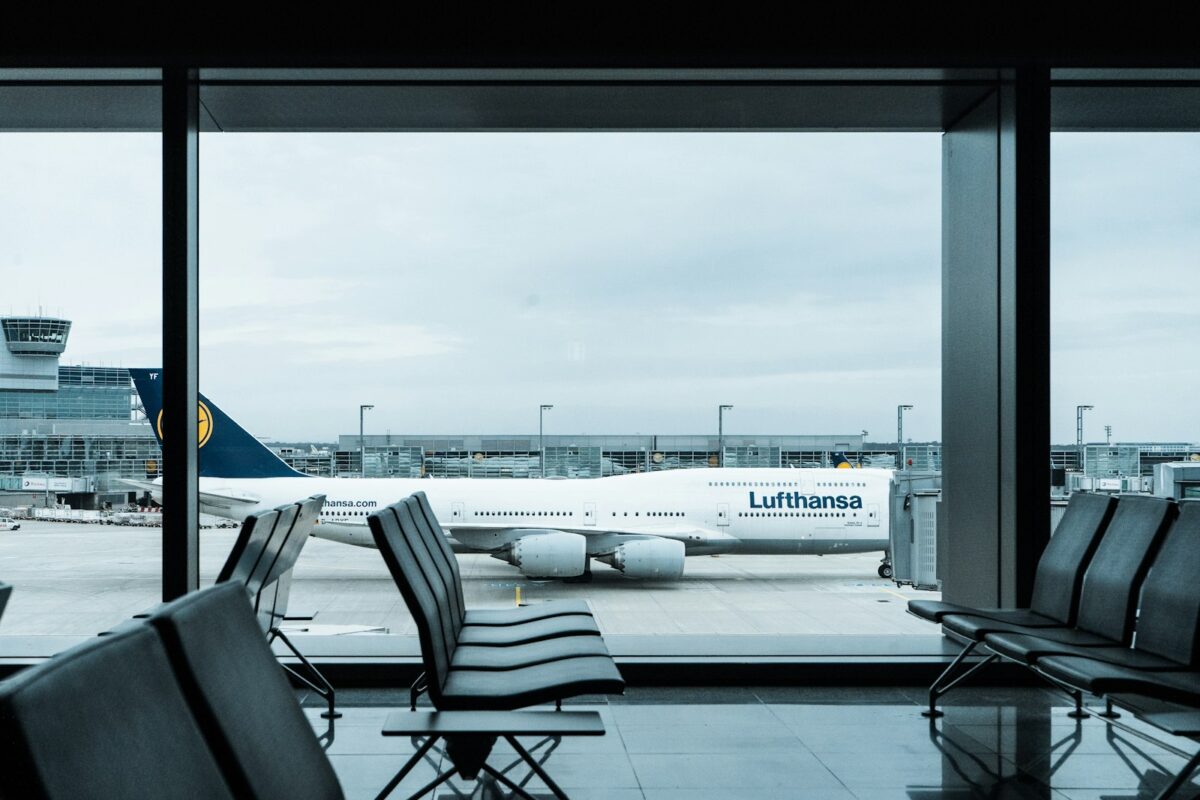
Europe’s borders now remember you. Since becoming fully operational on 10 April 2026, the Schengen EES biometric border records every non-EU traveller’s fingerprints and face on entry and exit, replacing the old ink stamp with a permanent digital trail. Most African travellers will sail through — but a handful of avoidable mistakes are turning quick airport crossings into long, stressful ones. Here are the traps worth knowing before your next trip to Paris, Frankfurt or Lisbon.
The biggest confusion is treating the Schengen EES biometric border as the same thing as ETIAS. They are not. EES is the system that scans your fingerprints and face at the border itself; ETIAS is a separate online authorisation visa-exempt travellers will need before boarding. Mixing them up leaves people thinking one registration covers everything. It does not. Know which applies to your nationality, complete any pre-travel step in advance, and arrive at the border expecting a biometric scan rather than a quick stamp and wave-through.
Under the old stamp system, counting your days in Schengen was a manual guess. EES now tallies them automatically and flags overstays instantly. Consider Tunde, a Nigerian consultant who hopped between client visits across several countries and assumed each trip reset his clock — it never did. With EES, a few days over the 90-in-180 limit can surface immediately and trigger refusals or bans on future trips. Track your own days carefully, because the system already is, and “I lost count” is no longer a defence at the desk.
Your first EES entry takes longer because the system enrols your biometrics from scratch — fingerprints, photo and document data. Travellers who book tight connections or assume a five-minute passage can miss flights during peak periods. Build in buffer time on your first post-April 2026 trip, keep your passport and any authorisation ready, and stay patient at self-service kiosks. After enrolment, later crossings are faster. Frequent flyers who already navigated the ETIAS rollout should still treat EES as a separate step.
Travelling to Europe soon and unsure what applies to your passport? Get a clear pre-trip checklist at https://wa.link/i9l1ec.
No. EES is the biometric entry-exit system at the border; ETIAS is a separate travel authorisation you apply for online before you fly.
It captures your name, travel document, fingerprints and a facial image, plus the date and place of each entry and exit.
No. EES replaces manual passport stamping with a digital record of your short stays in the Schengen area.
No, but it tracks your days automatically, so overstaying short visits is far easier for border officers to detect.
The travellers who breeze through EES are simply the ones who prepared. Tamara News keeps African flyers ahead of every Schengen change. Get your pre-trip checklist today at https://wa.link/i9l1ec

The Italy Digital Nomad Visa 2026 is finally a real, written rule rather than a press release. The implementing guidelines published in March 2026 set an income floor of €28,000, a one-year renewable residence permit, and — critically — a route that sits outside the Decreto Flussi quota system that bottlenecks most Italian work permits. For African remote workers in Nairobi, Accra, Lagos, Cape Town, Dakar or Tunis already billing European or US clients, this is the cleanest legal way to live in Italy long-term that has ever existed.

Italy’s Digital Nomad Visa is open to non-EU nationals who work remotely as either an employee of a foreign company or as a self-employed professional with clients outside Italy. The applicant must hold a recognised qualification or at least six months of proven professional experience in the activity, must take out private medical insurance valid across Italy, and must show stable accommodation. This is a “highly qualified” visa in Italian terms — you are demonstrating that you bring economic activity into the country rather than consuming labour-market quota.
Adaeze, a Lagos product designer billing two Berlin-based startups, fits the profile perfectly. She has a university degree, a portfolio that proves 4+ years of UX work, two foreign contracts paying in EUR, and €1,200 saved per month after costs. Three years ago her only Italian route was Decreto Flussi click-day chaos. Now she submits at the Consulate-General of Italy in Lagos and waits roughly 30–60 days for her D-visa.
The €28,000 number is gross annual income — roughly three times Italy’s minimum income exemption. The consulate accepts twelve months of bank statements, invoices, employment contracts and tax filings as evidence. If you are self-employed, the test looks at gross billing minus business expenses. Couples can stack: a partner with income at the threshold is enough to bring the other in as a dependant. Children are admitted on family cohabitation grounds and unlock free Italian state schooling.
Italian consulates abroad will scrutinise three things harder than the income line: (1) that your work is genuinely remote and not for an Italian client, (2) that your foreign employer or clients are real legal entities, and (3) that the activity is sustainable past one renewal cycle.
You will need: D-visa application form, valid passport with two blank pages, one biometric photo, proof of accommodation in Italy (rental contract or letter of hospitality), private health insurance covering Italy and Schengen, certified translations of your degree and any professional registrations, twelve months of bank statements, your employment contract or self-employed registration, and a clean criminal-record certificate from every country you have lived in for the past five years.
Once in Italy you have eight days to apply for the permesso di soggiorno at the Questura. The permit is one year, renewable as long as the underlying activity continues. After five continuous years on the permit you become eligible for long-term EU residence.
Most rejected DNV files fail on income classification, not income level. We run a structured audit of your contracts, billing currency and tax residency to make sure the consulate reads your file the way Rome wants it read. Begin here → https://wa.link/i9l1ec
Once you spend more than 183 days a year in Italy you become Italian tax-resident. That is not punitive — Italy’s regime degli impatriati still offers a 50% income-tax abatement for the first five years if you transfer residence and certain conditions on prior non-residence are met. Self-employed nomads must register with INPS (the social security agency) and pay contributions around 26% of net income up to a cap. Plan this with an Italian commercialista before your first March tax window.
No. The visa is conditioned on income flowing from outside Italy. One occasional invoice to an Italian client is tolerated, but ongoing Italian engagement breaks the visa basis.
Indirectly. After five years on the permit you can apply for EU long-term residence, and after ten years of legal residence you can apply for Italian citizenship by naturalisation.
Yes. Family reunification permits attached to a DNV give the spouse unrestricted right to work in Italy.
No. The DNV is outside the annual flussi quotas and does not require a Nulla Osta from the Sportello Unico.
Most African posts are returning DNV D-visa decisions in 30–60 calendar days from the appointment, with Lagos and Nairobi running fastest in spring 2026.
Travel Explore prepares your full DNV file end-to-end — income narrative, translations, consulate booking and Questura registration. Get started at https://wa.link/i9l1ec
Sources: Italian Ministry of Foreign Affairs digital nomad implementing decree, March 2026; Decreto Flussi Clickdays 2026 official portal; Italian Agenzia delle Entrate impatriati guidance.