Canada Must Warn You Before Refusing a Work Permit Over a Job Offer

A Canada work permit refusal over a doubtful job offer now needs a warning first. Immigration, Refugees and Citizenship Canada (IRCC) updated its instructions on 17 September 2026 so that officers must send a procedural fairness letter before refusing an employer-specific work permit on genuineness grounds, according to CIC News.

Inside this guide

What changed for a Canada work permit refusal

IRCC’s updated bulletin, “Assessing the genuineness of the offer of employment on a work permit application”, ends the practice of summary refusals where officers doubt a job offer. Officers must now issue a procedural fairness letter, or PFL, and place the file on hold while they wait for an answer. The letter must set out the specific concerns about the genuineness of the offer.

You can read the rules in the official IRCC bulletin.

How long employers have to respond

CIC News reports that employers get 15 days, or the applicable office standard, to answer with documents. A 30-day review window then follows the employer’s deadline, during which officers assess the response.

Employment contracts are optional but officers may review them if submitted. In practice, strong evidence of a real business, real duties and real pay is the best defence.
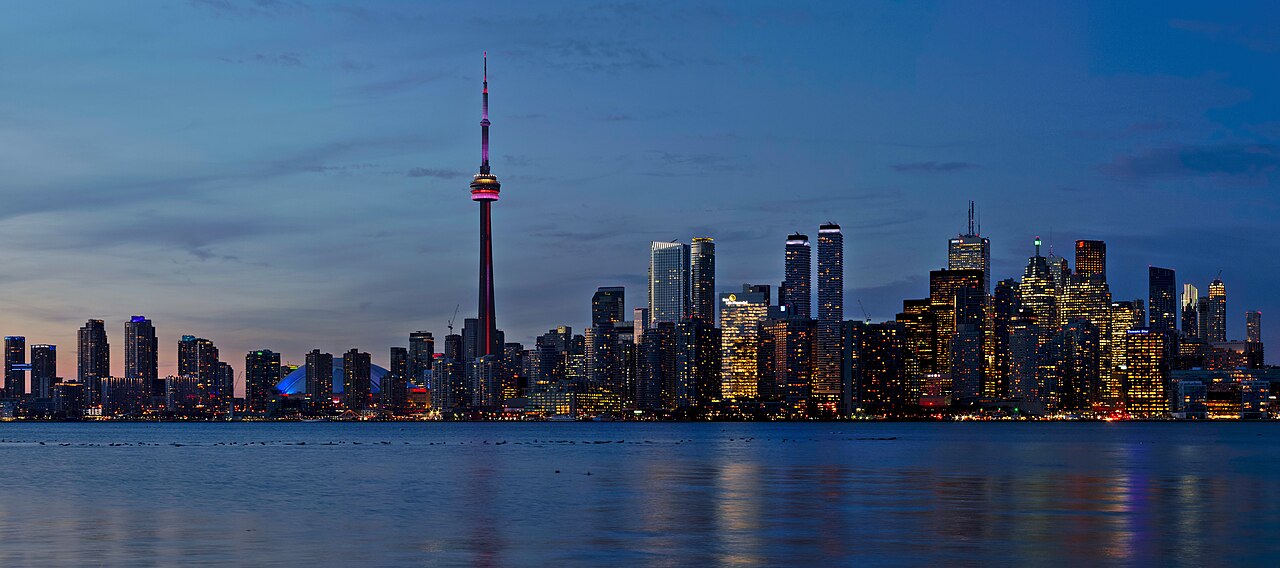
Canada work permit refusal - Toronto skyline at sunset

Who the new Canada work permit rules cover

The change applies to all employer-specific work permit applicants. That includes workers under the International Mobility Program, whose permits are exempt from a labour market impact assessment, and applicants under the Temporary Foreign Worker Program. Employers who sponsor foreign workers are affected too.

To illustrate, imagine a Filipino care worker applying for a live-in caregiver role. The update exempts live-in caregivers from the “active engagement in business” requirement. That is an example of how the rules apply, not a real case.

The bulletin also removes physical location requirements for Canadian worksites, so home-based businesses can qualify. It clarifies that shell businesses used to bring foreign nationals into the country do not count as operating businesses.

What applicants should do next

Prepare your paperwork before you apply. Make sure the employer can show real operations, payroll records and a clear job description. If a PFL arrives, answer within the deadline and address each concern directly.

For wider context on timing, read our updates on Canada processing times and the latest Express Entry draw. You can also check your options with our visa eligibility checker.

Your Canada work permit questions answered

When did the Canada work permit instructions change?

IRCC published the updated instructions on 17 September 2026, according to CIC News.

What is a procedural fairness letter?

It is a letter in which an officer sets out specific concerns about your application and gives you a chance to respond before a decision.

How long do employers have to respond?

15 days, or the applicable office standard, followed by a 30-day review window.

Are home-based businesses allowed now?

Yes. The update removes physical location requirements and says home-based businesses can qualify.

Do live-in caregivers have to show active engagement in the business?

No. Live-in caregivers are exempt from that requirement under the update.

Sources

Image: Toronto skyline at night by Wladyslaw, Wikimedia Commons, licensed CC BY-SA 3.0. Second image: Toronto skyline at sunset by Jchmrt, Wikimedia Commons, licensed CC BY-SA 4.0.

Canada Just Updated Visa Wait Times — And the Numbers Are a Mixed Bag

The latest Canada processing times update from Immigration, Refugees and Citizenship Canada shows a mixed picture for applicants, with faster turnaround in some categories and longer waits in others depending on where an applicant is applying from. Work permits for Pakistan dropped by a week, while study permits from the Philippines got a week slower.

IRCC’s Latest Numbers, Category by Category

For work permits, Pakistan saw the most notable improvement, dropping from eight weeks to seven, while in-Canada applicants saw a smaller two-day improvement to 113 days. The Philippines moved in the opposite direction, with work permit processing jumping from five weeks to seven, according to CIC News’ breakdown of the update. India’s work permit times also rose slightly, from nine weeks to ten.

Study permits told a different story. India saw the sharpest improvement of any category in this update, dropping from seven weeks to five, while in-Canada study permit applicants saw processing rise by a week to eight weeks, the category’s highest point in three months.

Where the Canada Processing Times Update Helped Applicants

Visitor visas saw only minor movement across the board, with changes limited to one or two days for India, the Philippines and Pakistan. That relative stability suggests IRCC resources are being shifted toward specific categories and countries, work permits and study permits in particular, rather than spread evenly across every visa type.

Super visas, the long-stay option for parents and grandparents of Canadian citizens and permanent residents, saw some of the largest improvements in this update. Pakistan’s super visa processing time dropped 23 days to 139 days, and the Philippines improved by 11 days to 93 days.

These country-specific differences generally trace back to visa office capacity and local application volumes rather than any policy distinction between applicants from different countries. A visa post handling a sudden surge in applications will naturally see its processing times climb relative to a post with steadier volumes, even when both are working from the same federal rules and resources.

Canada processing times update

Where Wait Times Got Worse

India was the exception on super visas, rising five days to 66 days even as most other categories for Indian applicants improved. That kind of divergence, where one country improves on some categories and worsens on others within the same update, is common with IRCC’s rolling processing-time estimates, which reflect current application volumes and staffing rather than a fixed target.

In-Canada applicants also saw increases in two categories, work permits aside: study permits rose by a week, suggesting domestic processing capacity may be under more strain than overseas visa posts handling the same application types.

What These Numbers Don’t Promise

IRCC is explicit that these processing time estimates reflect how long a newly submitted application may take based on current conditions, not a guarantee or a firm timeline for any individual case. An application already in the queue when the numbers shift does not necessarily speed up or slow down to match a newly published estimate, since actual processing depends on the specific application’s complexity and completeness.

Applicants comparing this update to the previous one should treat the percentage or day-count changes as a general trend indicator for new applicants, not a precise forecast for their own case, especially given how much individual categories can swing between updates.

What to Expect in the Next Update

IRCC typically refreshes these processing time estimates on a rolling basis, so the next update could shift again depending on application volumes received in the interim. Given how much the Philippines’ work permit times moved in a single update, applicants from countries seeing worsening numbers should plan for further volatility rather than assuming wait times have settled into a new normal.

For prospective applicants with flexibility on timing, this update is a reminder that submission timing and country of application can meaningfully affect how long a decision takes, even for the same visa category.

Applicants who can submit from a visa post with shorter current wait times, where that flexibility genuinely exists, may want to weigh that factor alongside the usual considerations of cost and convenience when deciding where and when to file.

Processing Times: Common Questions

Which category saw the biggest improvement?
Study permits from India, which dropped from seven weeks to five.

Which category got noticeably slower?
Work permits from the Philippines, which rose from five weeks to seven.

Did visitor visa processing change much?
No, movement was limited to one or two days across India, the Philippines and Pakistan.

What happened to super visa processing?
Pakistan and the Philippines both saw significant improvements, while India’s super visa times rose slightly.

Are these processing times guaranteed?
No. IRCC describes them as estimates based on current conditions, not firm timelines for individual applications.

Related Coverage on Tamara News

For more on how visa processing is shifting globally this year, see our coverage of Canada’s new study permit proof-of-funds rule and the delayed October 2026 US visa bulletin.

Sources

Canada Just Issued Its Biggest Provincial Nominee Round Since June

The latest Canada Express Entry draw invited 733 provincial nominees to apply for permanent residence on September 28, 2026, making it the largest round for this category since late June. Candidates needed a Comprehensive Ranking System score of at least 725 to make the cut, and only those who created an Express Entry profile before September 17 at 1:36 a.m. UTC were eligible.

Inside the September 28 Draw

Immigration, Refugees and Citizenship Canada runs Express Entry draws targeting different pools: some rounds are open to all candidates, others target specific programs such as the Canadian Experience Class, and this one focused exclusively on the Provincial Nominee Program. A provincial nomination adds 600 points to a candidate’s CRS score, which is why PNP-specific draws tend to pull from a narrower, higher-scoring pool than general rounds, as detailed by CIC News.

The 725 cutoff reflects that dynamic. Candidates without a provincial nomination rarely reach that score, so this round was effectively a call to people who had already secured one from a province or territory and were simply waiting for IRCC to issue the formal invitation to apply.

How the Canada Express Entry Draw Works

Once invited, candidates have 60 days to submit a complete application for permanent residence, including proof of funds, medical exams and police certificates where required. Missing that window means losing the invitation and having to re-enter the pool, so applicants who were nominated by a province should already have most of their documents ready before an invitation lands.

This draw brought Canada’s 2026 total to 57 Express Entry rounds and more than 129,715 invitations issued year-to-date, underlining how central the program remains to the country’s overall immigration intake even as individual draw sizes fluctuate month to month.

Canada Express Entry draw

Who Made the Cut

Because every invited candidate already held a provincial nomination, this round skews toward people with a specific job offer, in-demand occupation, or regional connection that a province wanted to retain. It also tends to favor candidates already living and working in Canada, since many provincial nominee streams prioritize applicants with Canadian work experience or a job offer from a local employer.

For candidates already in Canada on a valid work permit, a successful application can come with a Bridging Open Work Permit, which lets them keep working while IRCC processes their permanent residence application rather than facing a gap in status.

Provincial nominations themselves come from a patchwork of programs run independently by each province and territory, each with its own criteria tied to local labor market needs. A nomination from Ontario’s tech-focused stream, for example, looks very different on paper from one issued by an Atlantic province prioritizing healthcare or skilled trades workers, even though both carry the same 600-point boost once a candidate enters the federal Express Entry pool.

What’s Ahead for Canada’s Express Entry Pool

With 57 rounds already run this year, IRCC shows no sign of slowing its PNP-focused approach, which has consistently favored candidates with provincial or Canadian ties over general high-CRS candidates without either. Anyone in the pool without a nomination should treat a provincial nomination as the most reliable way to improve their odds, rather than waiting for score inflation to work in their favor.

Watch for the next general draw to clarify whether IRCC is easing cutoffs for candidates without a nomination, or continuing to prioritize PNP and CEC rounds through the rest of the year.

Candidates still waiting in the pool without a provincial nomination should treat this draw as a data point rather than a reason to panic. General draws targeting the full Express Entry pool typically run at lower CRS cutoffs than PNP-specific rounds, so a 725 threshold here says more about this particular draw’s target group than about where the overall pool is trending.

Express Entry Draw: Your Questions Answered

How many invitations were issued?
733 invitations went out on September 28, 2026, exclusively to Provincial Nominee Program candidates.

What was the minimum CRS score?
725, reflecting the 600-point boost a provincial nomination adds to a candidate’s score.

How long do invited candidates have to apply?
60 days from the date of invitation to submit a complete application.

Can candidates in Canada keep working while they wait?
Those already in Canada on a valid work permit may qualify for a Bridging Open Work Permit during processing.

How many invitations has Canada issued in 2026 so far?
More than 129,715 across 57 Express Entry rounds, as of this draw.

Related Coverage on Tamara News

For more on how Canada’s visa system is shifting this year, see our coverage of Canada’s new study permit proof-of-funds requirement and the delayed October 2026 US visa bulletin for a look at how processing timelines compare across countries.

Sources

UBC International Scholars Program 2027: Nov 15 Deadline

In this article

The UBC International Scholars Program, one of the University of British Columbia’s need-and-merit awards for undergraduates, closes for applications on 15 November 2026 for study starting in 2027, with the separate UBC admission application due on 1 December 2026. Only about 50 awards are made across four categories, so the process rewards early preparation.

Who can apply

Per the UBC program page as summarised by Scholars4Dev, applicants must be international students who need a Canadian study permit, entering from a recognised secondary school or transferring after their first year. High school graduation cannot be earlier than June two years before the application year. Applicants must show superior academic achievement, described as all As or an equivalent standard, and financial need that would otherwise prevent them attending UBC. They must also meet UBC admission and English language standards. A Vantage One Award applies to students who do not yet meet the English standard and come directly from high school.

What the award covers

The scholarship amount is proportional to financial need: tuition, fees and living costs minus the family contribution. It is renewable for up to three additional undergraduate years if the recipient keeps satisfactory academic standing and continues to show need. UBC does not publish a single fixed figure, so treat any headline amount you see elsewhere with caution.

Dates to work back from

The scholarship deadline of 15 November 2026 comes before the 1 December 2026 admission deadline, so the scholarship materials are the first hurdle. Because nomination and a referee letter are needed, a student should ask their school counsellor to start the nomination well before the middle of October. Consider a student in São Paulo finishing secondary school: the nominating school, the referee and the family financial documents all have to be ready before the application itself.

How the nomination works

Applicants must be nominated by their school or a non-profit organisation and submit a reference from an academic referee. UBC automatically considers eligible applicants for every award they match. Separately, students should confirm study permit requirements; our explainer on Canada’s proof-of-funds rules covers the money you must show. Comparing options? See the Chevening 2027 deadline guide, and check your own options with the visa eligibility checker. Always verify current details with UBC before applying, since this summary relies on a scholarship directory’s reading of the official page.

Common questions

When is the UBC International Scholars Program deadline?

The scholarship application deadline is 15 November 2026, with the UBC admission application due 1 December 2026, according to the program listing.

Who can apply?

International students who need a Canadian study permit, are entering from a recognised secondary school or transferring after first year, and can show superior academic achievement and financial need.

How much is the award?

The amount is proportional to financial need, calculated from tuition, fees and living costs minus family contribution. Awards are renewable for up to three additional undergraduate years.

How many awards are there?

Approximately 50 across four award categories, per the program listing.

Do I apply on my own?

No. Applicants must be nominated by their school or a non-profit and submit an academic referee reference.

Canada Just Raised the Bank Balance You Need for a Study Permit

Canada’s study permit proof of funds requirement has gone up again, with Immigration, Refugees and Citizenship Canada now requiring a single applicant to show $23,448 in available funds, up $553 from the previous $22,895 threshold. The new amount applies to applications submitted on or after September 1, 2026, and it lands alongside a separate, deeper change to how IRCC actually verifies that money — a combination that makes this year’s financial screening noticeably tougher than in previous cycles.

The new numbers

According to Moving2Canada’s coverage of the change, the $23,448 figure covers living expenses only — applicants must separately demonstrate the ability to pay first-year tuition and travel costs on top of it. The requirement scales with family size: a family of two now needs $29,192, up from $28,502, with each additional family member adding $6,318. Quebec, which sets its own threshold, already moved to a $24,617 minimum for solo applicants as of January 1, 2026, and remains separate from the national figure.

A deeper change: six months of bank statements

The dollar amount is only part of the story. As of July 24, 2026, IRCC also requires applicants to provide six months of bank statements — covering the past six months, including the month of application or the month before it — replacing the previous four-month framework, according to VisaVerge’s analysis. Officers are now instructed to examine the source of funds in every case rather than simply checking the balance shown on a single statement, and they may request supplementary financial and employment records from applicants, family members or sponsors to confirm the money is genuine and durable rather than a one-time deposit designed to pass a snapshot check.

Accepted proof of funds documents

IRCC continues to accept several forms of documentation: Canadian bank account statements in the applicant’s name, Guaranteed Investment Certificates from participating Canadian financial institutions, evidence of an education or student loan, bank drafts convertible to Canadian dollars, letters from a sponsor showing available funds, and scholarship or funding letters from a Canadian institution or program. The shift toward examining the source of funds, not just the balance, means applicants relying on a sponsor letter or a recent lump-sum deposit should expect more follow-up questions than in prior years.

Part of a bigger pullback on student numbers

The tightened financial screening coincides with IRCC’s broader target of 408,000 total study permits for 2026 — a 16% reduction from 2024 levels. Read together, the higher funds threshold and the deeper documentation review look less like isolated tweaks and more like two levers of the same policy: making the study permit pathway harder to qualify for as Canada works to bring international student numbers down from their peak.

What happens next

Applicants preparing a study permit application should assemble six months of consistent bank statements well before applying, rather than making a last-minute deposit to hit the $23,448 threshold — a pattern officers are now specifically trained to scrutinize. Expect Canadian colleges and universities’ international offices to update their pre-arrival financial guidance to reflect both the new dollar figure and the six-month statement requirement as the fall and winter intake cycles proceed.

More immigration and study abroad coverage

Related reading: Canada’s IRCC processing time update, the Knight-Hennessy Scholars deadline, and the September 2026 US Visa Bulletin.

Canada study permit questions answered

How much money does a single study permit applicant need to show now?

$23,448 as of applications submitted on or after September 1, 2026, up $553 from the previous $22,895 threshold. This covers living expenses only, not tuition or travel.

How much do families need?

A family of two needs $29,192, up from $28,502, with each additional family member adding $6,318 to the total.

What changed about bank statements?

Since July 24, 2026, applicants must provide six months of bank statements, up from four months previously, and officers now examine the source of funds rather than just the balance shown.

What documents count as proof of funds?

Canadian bank statements, GICs from participating institutions, education or student loans, convertible bank drafts, sponsor letters, and scholarship or funding letters from a Canadian program.

Is Quebec’s requirement different?

Yes. Quebec sets its own threshold, which moved to a $24,617 minimum for solo applicants as of January 1, 2026, separate from the national figure.

Sources