Author: Francisca Samuel

Francisca Samuel is an editor at Tamara News, where she covers immigration, travel, business and technology news for readers across Africa and the Gulf.

Three Trillion-Dollar Earnings Reports Land This Week — Here’s What Wall Street Wants to See

This is Big Tech earnings week. The numbers coming out of Redmond, Mountain View and Seattle will show whether AI spending is paying off yet. Microsoft and Alphabet report after markets close on Wednesday, October 28, 2026. Amazon follows on Thursday, October 29, according to a report carried by TokenPost.

What Wall Street Expects From Big Tech Earnings Week

Analysts polled ahead of the reports expect Microsoft to post earnings of $4.71 per share. That is on revenue of $90.63 billion for its fiscal first quarter of 2027. Alphabet is expected to report $3.03 per share on roughly $127.92 billion in revenue. Amazon’s consensus estimate is $1.96 per share on revenue of about $202 billion, based on figures reported by KuCoin News. None of the three companies has confirmed these figures. They are analyst projections, not guidance.

Big Tech earnings week stock market trading screen

The AI Capex Question Hanging Over the Results

Every one of these reports will be read first for capital expenditure figures. AI infrastructure spending matters more right now than the headline revenue and profit numbers. All three companies have spent heavily this year on data centers, custom chips and cloud capacity. Investors are increasingly asking when that spending converts into proportionate revenue growth. A quarter showing spending accelerating faster than AI-related revenue would likely unsettle a market already having a rough week.

A Shaky Market Walking Into the Reports

Both benchmarks were already under pressure heading into earnings week. The Nasdaq Composite closed at 25,955.34 on Friday, October 23, down 0.21% for the session. The S&P 500 finished at 7,623.68, down 0.52%, extending its losing streak for the week. That backdrop raises the stakes for each report. A market already pricing in some disappointment can swing sharply on results that beat or miss by even a modest margin. The Federal Reserve’s own rate decision lands in the same 48-hour window, adding another variable.

Why the Timing Makes This Week Unusually Loaded

Big Tech earnings week overlaps almost exactly with the Fed’s October 27-28 policy meeting. Traders are digesting rate guidance and corporate earnings at the same time. A Fed that sounds confident alongside strong AI-driven results would reinforce the market’s current optimism. A weaker combination from either side could compound the other’s effect in either direction.

Why These Four Companies Move the Whole Market

Microsoft, Alphabet and Amazon are among the handful of companies whose combined value makes up a large share of major US indexes. That is why their results tend to move the Nasdaq and S&P 500 as a whole, not just their own share prices. Apple reports separately on Thursday alongside Amazon. It rounds out the group of companies whose AI spending decisions are shaping how the broader market reads this earnings season. A disappointing set of results from even one of them can drag down sentiment well beyond that single stock.

Why AI Capex Has Become the Market’s Main Obsession

Wall Street’s focus on capital spending wasn’t always this intense. A year ago, investors cared mostly about cloud revenue growth and advertising numbers. That shifted as Microsoft, Alphabet and Amazon each disclosed sharply higher spending commitments on AI infrastructure over the past year, pushing their combined capital expenditure plans well above where they stood going into 2026. The logic now cuts both ways. Spending that outpaces revenue growth raises questions about returns on that investment, while spending seen as falling short of expectations can be read as a company pulling back on AI, which markets have punished just as harshly. That is part of why each report this week will be parsed line by line for capex guidance, not just the headline profit and revenue figures investors used to focus on first. Analysts will also compare each company’s capex guidance against what it signaled just one quarter earlier, since the pace of change has itself become a story investors watch closely.

What to Watch Once the Reports Are Out

Beyond the headline beat-or-miss, watch each company’s forward guidance on cloud growth and AI spending plans for 2027. Microsoft’s results will also be scrutinized for anything related to its financial exposure to OpenAI. That relationship has weighed on its stock since its last earnings report. However the numbers land, the reaction is likely to ripple through the rest of the market. A small number of AI-exposed companies have driven much of the S&P 500’s recent gains.

Related Coverage on Tamara News

For more on the AI infrastructure buildout behind these results, see our coverage of Anthropic’s jump in quarterly revenue, Google Cloud’s new AI chip instances, and Nvidia’s rapid AI data center build.

Big Tech Earnings Week: Common Questions

When do Microsoft and Alphabet report earnings this week?
Both report after markets close on Wednesday, October 28, 2026.

When does Amazon report?
Amazon reports on Thursday, October 29, 2026.

What revenue is Microsoft expected to post?
Analysts expect roughly $90.63 billion in revenue and $4.71 in earnings per share for Microsoft’s fiscal first quarter of 2027.

Why is this earnings week considered especially important?
It overlaps with the Federal Reserve’s October rate decision and follows a weak week for both the Nasdaq and S&P 500, raising the stakes for any surprise.

What are investors watching for beyond revenue and profit?
Capital expenditure and AI infrastructure spending figures, since these show whether AI investment is converting into proportionate revenue growth.

Has any of the three companies confirmed these estimates?
No. The figures are analyst consensus projections, not guidance from Microsoft, Alphabet or Amazon.


Maduro Faces a Second Set of Charges — And They’re Worse Than the First

The man US forces captured in a January raid on Caracas now faces a second set of federal charges. Manhattan federal court unveiled the Maduro torture indictment on October 8, 2026. It adds a conspiracy-to-commit-torture charge. That charge sits alongside the drug trafficking case Nicolás Maduro and his wife, Cilia Flores, already face. Both have pleaded not guilty to the drug charges.

What the Maduro Torture Indictment Alleges

Federal prosecutor Jamie McDonald announced the revised indictment at a news conference. He said the conspiracy’s members “were holding the shovel.” Prosecutors allege the scheme ran from at least 1999 through 2025. It drew in Venezuelan military, intelligence and law enforcement officials, according to Al Jazeera. Prosecutors say officials shocked and asphyxiated one detainee. That followed his arrest after a 2018 drone attack the Venezuelan government blamed on an effort to target Maduro.

Maduro torture indictment courtroom gavel symbolizing the case

The American Victims Named in the Case

Prosecutors cite three US citizens detained in Venezuela. Intelligence officers arrested one in January 2025 without even targeting him specifically. Officials allegedly beat him over two days, causing a permanent eye injury. They reportedly released him about a year later and warned him not to disclose what happened. Prosecutors allege Maduro personally directed, or was regularly briefed on, detainee abuse. In one instance, he allegedly ordered officials to “squeeze them harder” after a detained officer remained defiant. Flores allegedly attended some meetings where officials discussed detainee treatment.

How Maduro Ended Up in US Custody

Maduro served as Venezuela’s president from 2013 until his capture on January 3, 2026. US military forces seized him and Flores from their Caracas home that day. President Trump had authorized the raid, according to PBS NewsHour. Delcy Rodríguez now serves as Venezuela’s acting president. Brooklyn’s Metropolitan Detention Center holds both Maduro and Flores. Their drug trafficking trial is set for June 1, 2027. Maduro’s attorney, Barry Pollack, says his client denies the new torture allegations and looks forward to his day in court.

A Separate Fight Over Flores’s Detention

Judge Alvin Hellerstein denied a request to release Flores over medical concerns the same Thursday prosecutors unveiled the torture charges. Her lawyers told the court she is 69 and has lost 25 pounds. She may have suffered a minor heart attack in July. The court wasn’t persuaded that her condition justified release before trial. Her attorney said at the time he hadn’t yet reviewed the new torture allegations in detail.

What the New Charges Change Going Forward

The torture count doesn’t replace the drug trafficking charges. It sits alongside them, giving prosecutors a second and arguably more politically resonant case for the June 2027 trial. Venezuela is still adjusting to Maduro’s removal after more than a decade in power. The indictment keeps the accountability question in American courts rather than Venezuelan ones. That dynamic is likely to shape both the legal proceedings and the political transition under Rodríguez’s acting government. Venezuelan officials who served under Maduro now face a choice. They can cooperate with the broader investigation, or risk their own exposure if evidence implicates them directly.

What Happens Next in the Legal Process

A superseding indictment like this one does not restart the case from scratch. It adds the torture conspiracy charge to proceedings already underway over the drug trafficking allegations. Both sets of charges are set for the same June 2027 trial. Between now and then, prosecutors and defense attorneys exchange evidence through discovery. Courts also hear pretrial motions over what evidence can be used at trial. Maduro and Flores are expected to formally respond to the amended charges at an arraignment in the coming weeks. The allegations span more than two decades and involve multiple co-conspirators and overseas witnesses. Prosecutors have signaled that pretrial proceedings alone could take months. Judge Hellerstein denied Flores’s separate request for release pending trial, citing her medical condition. That ruling suggests both defendants will likely stay in federal custody at the Metropolitan Detention Center through pretrial proceedings. Federal criminal trials in the Southern District of New York are open to the public and press, so each stage of the case, from arraignment through jury selection, is likely to draw significant attention. US media outlets covered the January 2026 capture and the original drug trafficking charges heavily, and interest in the case has stayed high since.

Related Coverage on Tamara News

For more on Venezuela’s post-Maduro transition, see our coverage of the nationwide protests demanding new elections. We’ve also reported on the proposed window for Russia-Ukraine peace talks, another case testing what follows a change at the top.

Maduro Torture Indictment: Questions Readers Are Asking

What is the Maduro torture indictment?
A federal indictment unveiled October 8, 2026, in Manhattan. It adds a conspiracy-to-commit-torture charge to Nicolás Maduro’s existing drug trafficking case.

Is Maduro still president of Venezuela?
No. US forces captured him in January 2026, and he remains in federal custody in New York. Delcy Rodríguez is Venezuela’s acting president.

Who else was charged alongside Maduro?
His wife, Cilia Flores, faces the same torture conspiracy charge along with the existing drug trafficking charges.

What do the torture charges allege?
That Venezuelan officials tortured detainees between 1999 and 2025. Prosecutors say Maduro directed or was briefed on the abuse, and at least three victims were US citizens.

Where is Maduro being held?
At the Metropolitan Detention Center in Brooklyn, New York.

When is the trial scheduled?
June 1, 2027, according to court filings reported by PBS NewsHour.

Singapore Keeps Its Passport Crown, But One Rival Is Closing In Fast

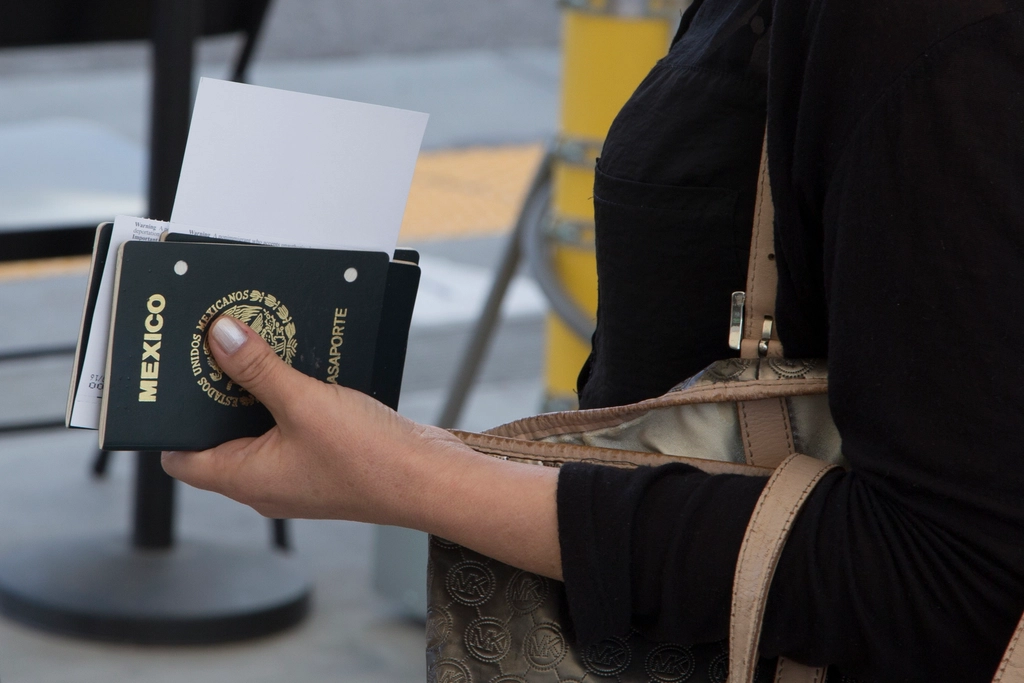
The Henley Passport Index 2026 has Singapore holding the top spot again. The bigger story this year is how much ground the United Arab Emirates has closed on the traditional leaders. The index ranks 199 passports by how many destinations their holders can enter without a prior visa. It shows a widening gap between the most mobile travelers and everyone else.

Singapore Stays on Top of the Henley Passport Index 2026

Singapore’s passport gives holders visa-free or visa-on-arrival access to 192 destinations. That is enough to keep it in first place, a spot it has held for several years, according to Travel And Tour World. No other passport matches that figure in the current rankings.

Henley Passport Index 2026 traveler at airport passport control

The UAE’s Climb to Second Place

The UAE now sits in a three-way tie for second with Japan and South Korea. Each offers access to 187 destinations. A decade ago, the UAE passport ranked far outside the top ten. Its rise reflects years of bilateral visa-waiver agreements the country has negotiated, though Henley’s published summary doesn’t break out the exact year-over-year gain. Belgium, Denmark, Germany, Ireland, Italy and Switzerland share fourth place with 185 destinations apiece.

Where the UK and US Rank in the Henley Passport Index 2026

The United Kingdom sits sixth with 183 destinations, tied with Hungary, Malaysia and Poland. The United States ranks tenth, with access to 179 destinations. Both countries have slipped down the index over the past decade. Gulf and East Asian passports have added visa-free agreements faster than legacy Western powers have. At the other end of the list, Afghanistan ranks last among the 199 passports assessed. Its holders can enter just 23 destinations without a prior visa.

Why the Rankings Keep Shifting

Henley’s index is built entirely from the number of visa-waiver agreements each country has in place. That means it moves whenever governments sign new deals or suspend old ones. It is as much a snapshot of diplomatic relationships as of tourism convenience. A passport’s rank can rise even if its holder’s actual travel habits never change, simply because their government struck a new agreement with another state.

How the Index Has Shifted Over the Past Decade

Henley has tracked passport strength using the same travel-document database for years, which is part of why comparisons across editions are considered reliable. Singapore has sat at or near the top for most of the index’s recent history, while the biggest story of the past decade has been the Gulf region’s rise. The UAE’s jump from outside the top ten to a share of second place reflects a deliberate diplomatic strategy rather than a single breakthrough deal, built instead on a string of bilateral waiver agreements signed over several years. Traditional Western powers such as the UK and US have not lost agreements outright. They have simply added new ones more slowly than Gulf and East Asian governments have, which is enough on its own to erode a ranking even without any country tightening its own rules. The practical effect for travelers is that passport strength has become less tied to a country’s wealth or diplomatic weight alone, and more to how actively its government has pursued waiver deals in recent years. Henley compiles the index twice each year, so a country’s position can still shift by the time the next edition is published.

Which Regions Dominate the Top of the 2026 Rankings

The top tier this year is a mix that would have looked unusual a decade ago. A Southeast Asian city-state holds first place. A Gulf state and two East Asian economies share second place. Six European countries bunch together in fourth. That spread shows the ranking is no longer a story of Europe versus the rest. Gulf states in particular have spent years negotiating reciprocal visa-waiver deals, pushing passports like the UAE’s into contention with the traditional leaders. European passports still dominate the upper-middle of the table, but they no longer have the top spot to themselves.

What the Gap Means for Travelers

For travelers from the top ten, a visa is rarely the obstacle it once was. For those lower down the list, including Afghan nationals, a visa application is still a routine part of almost any trip abroad. That comes with the cost, paperwork and waiting time it always has. The Henley Passport Index 2026 doesn’t just rank convenience. It’s a rough proxy for how unevenly visa-free mobility spreads worldwide.

Related Coverage on Tamara News

For more on how visa access is shifting around the world, see our coverage of Dubai’s record year for golden visas, South Korea’s extended travel exemption, and the US pilot program for expedited visa interviews.

Henley Passport Index: Reader Questions

Which passport ranks first in the Henley Passport Index 2026?
Singapore ranks first, with visa-free or visa-on-arrival access to 192 destinations.

Where does the UAE rank this year?
The UAE ties for second with Japan and South Korea, each offering access to 187 destinations.

How does the UK passport rank?
The UK sits sixth, tied with Hungary, Malaysia and Poland, with access to 183 destinations.

Where does the US passport rank?
The United States ranks tenth, with access to 179 destinations.

Which passport ranks last?
Afghanistan ranks last among the 199 passports assessed, with access to just 23 destinations.

How is the Henley Passport Index calculated?
It is based on the number of destinations each passport holder can enter without a prior visa, drawn from bilateral and multilateral visa-waiver agreements.

The Fed Meets This Week — Here’s Why Almost No One Expects a Surprise

The Federal Reserve’s policy committee meets on October 27 and 28, 2026. Traders have all but written the outcome in advance. The Fed October rate decision is widely expected to hold rates steady. Futures markets price a 90.6% probability of a pause, according to CME FedWatch data cited by FXStreet. That near-certainty is already moving currency and commodity markets a day ahead of the announcement.

Where the Fed October Rate Decision Stands Right Now

The federal funds rate has sat in a 3.75%-4.00% range since September. The Fed raised it by 25 basis points that month, Brown Brothers Harriman strategist Elias Haddad told FXStreet. Futures imply only about a 10% chance of a hike at this week’s meeting. Haddad describes a possible increase at the Fed’s next meeting, on December 9, as “virtually fully priced in.” Traders are watching this week’s PCE inflation data and the preliminary third-quarter GDP reading. Either could shift those odds before Wednesday’s announcement.

Fed rate decision October stacks of US dollar banknotes

Why the Dollar Has Been Sliding

The US Dollar Index traded near 101.50-101.70 during Monday’s Asian session. It continued to lose ground as safe-haven demand eased. Part of that move traces back to geopolitics rather than monetary policy. President Trump said over the weekend that “there will not be a strike today” on Iran. That ruled out immediate military action and eased the dollar’s safe-haven bid. Risk has not disappeared entirely. Israel holds a national election on October 27, and US midterms follow on November 3. For now, a steady Fed and a calmer headline cycle are pulling the dollar lower together.

What a Pause Would Mean for Borrowers and Savers

A hold at 3.75%-4.00% keeps borrowing costs roughly where they have been since September. That covers mortgages, credit cards and business loans alike. It also keeps returns on cash savings and money-market funds largely unchanged for another six weeks. Markets have effectively already priced in the December move. The bigger swing factor for household finances this week is less the decision itself, and more the language the Fed uses to describe its next step.

Why the Federal Funds Rate Matters Beyond This Week

The federal funds rate works mostly indirectly on everyday borrowing costs. It sets the rate banks charge each other overnight, which then feeds into the prime rate banks use for credit cards, auto loans and adjustable-rate mortgages. Fixed mortgage rates track longer-term Treasury yields more closely than the federal funds rate itself, which is one reason a hold in the 3.75%-4.00% range does not guarantee a quiet week in the mortgage market if long-bond yields move on other news. Savers see the clearest direct link. Money-market funds and short-term certificates of deposit tend to reprice within weeks of a Fed move, which is why a pause this week effectively locks in current savings yields until at least the December 9 decision. That six-week window gives households and small businesses planning loans or renewals a rare stretch of rate certainty, even as the broader data calendar keeps markets busy.

What the Fed’s Statement Will Be Watched For

Investors will parse the post-meeting statement and the Chair’s press conference closely. They are looking for signals on how the Fed sees inflation trending into 2027. They will also watch for any reaction to this week’s earnings from Microsoft, Alphabet and Amazon, all reporting in the same 48-hour window as the Fed decision. A statement flagging persistent inflation pressure would reinforce the December rate-increase bets already priced into futures. A more reassured tone on prices could unwind some of that positioning quickly.

What Happens Once Wednesday’s Statement Lands

If the Fed holds as expected, attention shifts almost immediately to the December 9 meeting. Traders will watch whether this week’s inflation and GDP data firm up or soften the case for another increase. A surprise — either a hike this week or a sharp shift in language — would likely jolt the dollar and rate-sensitive stocks harder than markets are currently positioned for. Either way, the decision lands in one of the heavier data weeks of the quarter, alongside Big Tech earnings and Israel’s own national election.

Related Coverage on Tamara News

For more on the forces shaping this earnings season, see our coverage of JPMorgan’s third-quarter profit, Goldman Sachs’ blowout quarter, and the IMF’s latest global growth forecast.

Fed Rate Decision: Questions Readers Are Asking

When does the Fed announce its October rate decision?
The Federal Open Market Committee meets October 27-28, 2026. The decision follows after the meeting concludes on the 28th.

What rate is the Fed expected to set?
Markets price a 90.6% chance the Fed holds its benchmark rate in the current 3.75%-4.00% range.

Why is a December rate increase considered almost certain?
Futures markets price a rate increase at the Fed’s December 9 meeting as “virtually fully priced in,” according to Brown Brothers Harriman.

Why has the US Dollar Index been falling?
Easing safe-haven demand has pulled it down. President Trump ruled out an immediate strike on Iran, and markets expect a steady Fed, pushing the index toward 101.50.

What economic data could change the outlook this week?
Traders are watching preliminary third-quarter GDP and the latest PCE inflation reading, both due around the same time as the Fed meeting.

Does the rate decision affect mortgage rates right away?
A hold keeps the federal funds rate unchanged. It doesn’t directly push mortgage rates up or down, though long-term yields can still move on the Fed’s tone.

Israel Votes Tomorrow — And the Polls Say Netanyahu’s Coalition Could Lose

Israel goes to the polls on October 27, 2026. It is the first national election since the October 7, 2023 Hamas attack. Wars followed in Gaza, Lebanon and Iran. The Israel election 2026 vote is widely read as a referendum on Prime Minister Benjamin Netanyahu’s wartime leadership. Final surveys show his coalition narrowly trailing a rival bloc led by a former military chief.

What’s at Stake in the Israel Election 2026

The Knesset has 120 seats. A governing coalition needs 61 of them for a majority. Parties must also clear 3.25% of the national vote to win any seats at all. Ofir Katz, who heads Netanyahu’s coalition in parliament, confirmed in July that the vote would go ahead on the date set by law. That came after the Knesset voted in May to disband, according to Arab News. Surveys since then have repeatedly found Israelis unhappy with how the government handled the aftermath of the war with Iran. Netanyahu’s security record is still marked by the intelligence failures that preceded October 7.

Israel election 2026 ballot box used for voting

Who’s Challenging Netanyahu in This Election

The clearest challenger is Gadi Eisenkot, a former Israeli military chief of staff. His new Yashar party has become a leading contender in the campaign’s final days. Eisenkot is running on accountability for the security failures before October 7. He is also campaigning on a more equal split of military service duty and on the cost of living. Naftali Bennett, a former prime minister, is contesting the vote in an alliance with Yair Lapid. Netanyahu’s Likud needs its usual religious and nationalist partners to have any realistic route back into government. Those partners are Shas, United Torah Judaism, Religious Zionism, and Otzma Yehudit, led by Itamar Ben-Gvir, according to Business Standard.

What the Final Election Polls Are Showing

Four polls published on October 25, two days before the vote, each put Yashar ahead of Likud. Channel 12 had Yashar on 23 seats to Likud’s 21. Channel 13 put it at 22 to 19. KAN 11 showed 22 to 20. Maariv gave Yashar 21 seats without naming a Likud figure, according to The Jerusalem Post. Averaged across the four polls, Yashar leads Likud by just over two seats.

Why an Election Deadlock Looks Likely

The seat math gets tighter at the bloc level. Averaging the same four polls, the opposition bloc sits at roughly 54 seats. Netanyahu’s coalition averages about 49.5, with Arab-led parties holding the remaining 14 to 16. Neither side reaches the 61 seats needed to govern alone. Two smaller lists sit right at the edge of relevance. The Reservists-Economic list averages just under the 3.25% threshold. Ofer Winter’s People of Israel list falls short in every poll surveyed. If neither bloc can govern alone, coalition talks could drag on for weeks after the ballots are counted.

How Israel’s Coalition System Works

Israel’s parliamentary system makes a single-party majority essentially impossible. With 120 seats split among more than ten parties clearing the 3.25% threshold, no governing coalition has formed without several partners in recent decades. That is why Netanyahu’s bloc counts on Shas, United Torah Judaism, Religious Zionism and Otzma Yehudit rather than Likud’s own seats alone, and why Eisenkot’s Yashar party would need its own set of allies to reach 61. The arithmetic also explains why Arab-led parties, which neither major bloc has included in government for most of the last decade, could matter more this time if the vote is as close as the final four polls suggest. A bloc that falls just short of 61 seats typically spends weeks negotiating portfolios and policy concessions before a government is sworn in, and sometimes fails to form one at all.

What Happens After the Election Closes

Exit polls are expected shortly after voting ends on October 27. The real seat count follows over the next day or two. Israeli governments rarely finish a full four-year term. Netanyahu is the country’s longest-serving prime minister, and Reuters still calls him an “unmatched political survivor.” Whether that survival continues depends on coalition arithmetic neither side controls outright. A deadlocked result would likely mean weeks of negotiation. It could also mean a repeat election, a scenario Israel has lived through before.

Related Coverage on Tamara News

For more on the region’s shifting conflicts, see our coverage of the fragile Gaza ceasefire, the proposed window for Russia-Ukraine peace talks, and the protests demanding elections in Venezuela.

Israel Election 2026: Common Questions

When is the Israel election 2026 vote held?
Israel holds its national election on October 27, 2026.

Why is this election being called a test for Netanyahu?
It is the first national vote since the October 7, 2023 attack. Polls have repeatedly found Israelis unhappy with his handling of the war’s aftermath.

Who is Gadi Eisenkot?
A former Israeli military chief of staff whose Yashar party leads Likud in final pre-election polls. He is campaigning on accountability for pre-war intelligence failures.

Could the election end in a deadlock?
Yes. Averaged polling puts neither Netanyahu’s coalition nor the opposition bloc at the 61 seats needed for a majority.

What role could Arab-led parties play?
If neither major bloc reaches a majority, parties such as Ra’am could become pivotal to forming a government. Opposition parties are divided on relying on them.

When will the results be known?
Exit polls are expected shortly after voting closes on October 27. Final counts follow over the next day or two.