Samsung May Be About to Let Its Biggest Rival Build Part of Its Newest Chip

Samsung may be about to hand part of its most important new chip contract to its biggest manufacturing rival. Reports of a deal covering Nvidia Samsung HBM chips say Samsung will use TSMC’s 3-nanometre process to produce base dies for Nvidia’s next-generation custom high-bandwidth memory. That would mark the first time Samsung has worked with TSMC at the HBM manufacturing stage.

What’s Reportedly Changing With Nvidia Samsung HBM Chips

The Seoul Economic Daily first reported the arrangement on October 18, 2026. It cited industry sources. Reuters picked up the account, according to coverage in The Star. Samsung, TSMC and Nvidia have not confirmed the report themselves. Outlets covering it call it a supply-chain report, not a confirmed three-company announcement.

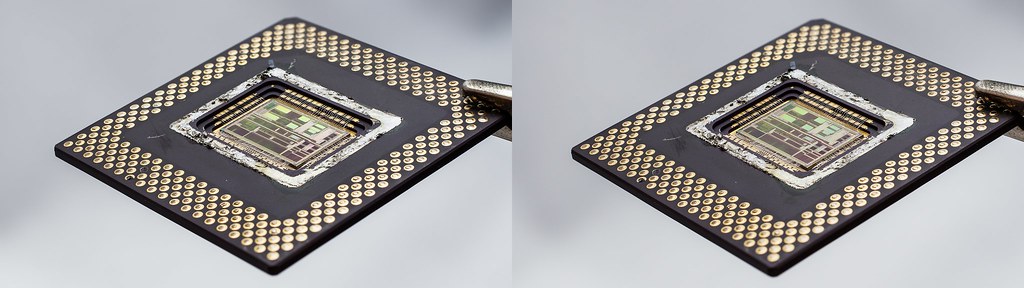
Nvidia Samsung HBM chips computer circuit board close-up

Why Nvidia Wants a Common Manufacturing Process

Nvidia unveiled its NVHBM memory standard in August 2026. Unlike conventional HBM, NVHBM places Nvidia’s own custom memory controller inside the base die. That gives the base die a more central role in the chip’s design. LetsDataScience reports that Nvidia asked its three major memory suppliers to use TSMC’s process for NVHBM base dies. Those suppliers are Samsung, SK hynix and Micron. Nvidia also asked them to standardize core dies around sixth-generation DRAM. A single shared foundry process would simplify validation for Nvidia. It would also make Nvidia’s custom memory implementation more consistent across vendors.

Samsung’s Balancing Act Between Rival and Customer

Samsung reportedly accepted Nvidia’s requirements after an internal review. It still plans to keep its own in-house production for standard HBM. It will also keep making custom memory it supplies to other customers. Samsung is also weighing whether its own foundry could produce NVHBM base dies itself. That option would matter if TSMC’s manufacturing capacity turns out to be insufficient to meet demand. It’s a hedge that would let Samsung fall back on its own fabs, rather than depend entirely on a competitor for a critical part of its biggest new product line.

A Pattern That Fits Earlier Reporting

A separate TrendForce report from October 9, 2026, said Samsung was exploring a dual-track approach to custom HBM production. Samsung could make base dies in-house or route them through an external foundry, depending on the customer. That report fits an external-foundry option for Nvidia’s business specifically. It doesn’t, though, confirm the specific October 18 arrangement. Taken together, the two reports point toward Samsung increasingly treating TSMC as a manufacturing partner for its most demanding AI memory customer. The two companies still remain direct rivals in foundry services more broadly.

Samsung and TSMC’s Long Rivalry

Samsung and TSMC have competed directly in contract chip manufacturing, known as foundry services, for more than a decade. TSMC has held the largest share of that market for years, while Samsung has positioned itself as the main alternative for companies that don’t want to depend on a single supplier. That rivalry has mostly played out in the production of logic chips, the processors that do the computing. Memory chips like HBM have traditionally stayed inside each company’s own vertically integrated supply chain, with Samsung designing and manufacturing its own memory from start to finish. A move to have TSMC manufacture base dies for Samsung-branded HBM would cross that line for the first time, blending two companies that otherwise compete head-to-head for the same foundry customers. It would not be the first time a tech supply chain has produced unusual partnerships between rivals. Apple, for instance, has long bought components from Samsung even as the two companies compete directly in smartphones. Analysts following the chip sector say this kind of cross-rival manufacturing deal has grown more common as AI chip demand outpaces what any single foundry can supply alone.

What Confirmation Would Mean for the Chip Supply Chain

Confirmation of the arrangement would mark a notable crack in the usual separation between Samsung’s and TSMC’s manufacturing operations. It would also signal how much leverage Nvidia now holds over its memory suppliers as the dominant buyer of AI accelerator components. Reporting so far says little about how SK hynix and Micron plan to answer the same TSMC-process request. That leaves open whether this becomes an industry-wide standard, or stays specific to Samsung’s arrangement with Nvidia.

Related Coverage on Tamara News

For more on the AI chip supply chain, see our coverage of Nvidia’s rapid AI data center build, TSMC’s latest earnings on AI chip demand, and Huawei’s push to close the AI chip gap with Nvidia in China.

Nvidia Samsung HBM Chips: Reader Questions

What is the reported Nvidia Samsung HBM chips arrangement?
A report that Samsung will use TSMC’s 3-nanometre process to make base dies for Nvidia’s next-generation custom HBM memory, first reported October 18, 2026.

Has this been confirmed by the companies involved?
No. Samsung, TSMC and Nvidia haven’t confirmed the report themselves, and outlets describe it as a supply-chain account rather than an official announcement.

What is NVHBM?
Nvidia’s custom high-bandwidth memory standard, unveiled in August 2026, which places Nvidia’s own memory controller inside the base die.

Why would Samsung work with a rival like TSMC?
To meet Nvidia’s request that its memory suppliers use a common manufacturing process for NVHBM base dies, standardizing implementation across vendors.

Will Samsung still make chips in-house?
Yes — reportedly for standard HBM and custom products for other customers, while it weighs whether its own foundry could back up TSMC capacity for Nvidia specifically.

Are other memory makers affected?
Nvidia reportedly made the same request to SK hynix and Micron, though neither company’s response has been reported in detail.

Huawei Is Closing the Gap on Nvidia in China’s AI Chip Market

New data on Nvidia Huawei AI chip market share in China shows just how much ground Nvidia has given up to its homegrown rival over the past year. According to an IDC report highlighted by Reuters on October 13, Nvidia’s share of China’s data-center AI chip market fell to 34% in the first half of 2026, down sharply from the prior year. Huawei climbed to 28% in the same period, closing to within six percentage points of the longtime leader.

The shift is as much about shipment volumes as market share percentages. IDC pegged the total Chinese AI accelerator market at 2.008 million units shipped in the first half of the year. Nvidia shipped 678,000 of those units, down 44% year over year. Huawei shipped 572,000, up from just over 300,000 units a year earlier.

Export Controls Are Doing Most of the Work

The research attributes much of Nvidia’s decline to continued US export controls restricting the sale of advanced AI chips to Chinese customers, a policy that has been tightening rather than easing. Beijing’s parallel push for domestic AI chip self-sufficiency is cited as a contributing factor as well. The IDC figures don’t isolate exactly how much of Huawei’s gain is due to policy support versus genuine technical progress on its own chip designs.

Nvidia Huawei AI chip market share illustration

The Rest of the Field Is Growing Too

Nvidia and Huawei aren’t the only players moving. Alibaba’s T-Head chip division holds 7% of the Chinese market, Cambricon has 5%, Baidu’s Kunlunxin unit has 4%, and Hygon holds 3%. IDC tracks 11 Chinese chip vendors in total, and nine of them reported year-over-year shipment growth. That’s a sign the market is fragmenting across multiple domestic suppliers, rather than consolidating around a single Nvidia challenger.

A Quiet Shift From GPUs to Specialized Chips

One of the more structurally significant findings in the IDC data: non-GPU accelerators, including application-specific chips (ASICs) and neural processing units (NPUs), outsold traditional GPUs by volume in China for the first time. Non-GPU shipments rose nearly 80% to 1.016 million units, while GPU shipments fell 26% to 991,000 units. That split matters. It suggests Chinese AI developers are increasingly willing to build around specialized, often domestically designed hardware, rather than waiting for GPU access to improve. That trend could make it structurally harder for Nvidia to regain share, even if export rules eventually loosen.

What the Nvidia Huawei AI Chip Market Share Shift Means Globally

For Nvidia, the China numbers are a reminder of a growing divide. The world’s largest AI chip market by unit volume is increasingly operating on a different hardware trajectory than the rest of the world, where the company still dominates. For Huawei and its domestic peers, sustained growth despite comparatively less mature chip designs suggests China’s AI buildout is prioritizing supply security over raw performance, at least for now. Whether that calculus shifts again will likely depend on both the trajectory of US export policy and how quickly domestic Chinese chipmakers can close the remaining technical gap. For related coverage of the broader AI hardware landscape, see Tamara News’ reporting on Microsoft’s new in-house AI chip, the memory chip shortage squeezing the wider industry, and how Brussels is now enforcing the EU AI Act.

Questions About Nvidia and Huawei’s Standing in China

What share of China’s AI chip market does Nvidia hold now?
34% as of the first half of 2026, according to IDC data, down sharply from the prior year.

How close is Huawei to catching up?
Huawei held 28% of the market in the same period, about six percentage points behind Nvidia, with unit shipments nearly doubling year over year.

Why is Nvidia losing ground in China specifically?
IDC’s research attributes most of the decline to US export controls restricting sales of advanced AI chips to Chinese customers.

Are GPUs still the dominant type of AI chip in China?
No. Non-GPU accelerators such as ASICs and NPUs outsold GPUs for the first time in the first half of 2026.

Which other companies are gaining share in China’s AI chip market?
Alibaba’s T-Head (7%), Cambricon (5%), Baidu’s Kunlunxin (4%) and Hygon (3%) all hold meaningful shares, and 9 of the 11 vendors IDC tracks reported shipment growth.

Sources

TSMC’s Quarterly Results Show Just How Hungry the World Is for AI Chips

TSMC Q3 2026 earnings are due out today, October 15. The world’s largest contract chipmaker has already guided investors to expect roughly 37% year-over-year revenue growth at the midpoint of its forecast. TSMC’s own September monthly sales report, released ahead of the full results, showed NT$511.86 billion for the month, up 54.6% from a year earlier. That reinforces that demand tied to artificial intelligence computing has yet to show any sign of slowing.

The company’s guidance for the quarter put revenue at $44.6 billion to $45.8 billion. TSMC has already used the run-up to the earnings call to raise its outlook for the full year, now expecting 2026 revenue growth of slightly above 40%.

Why Everyone Is Watching Margins in TSMC Q3 2026 Earnings

Revenue growth alone isn’t the whole story. TSMC guided third-quarter gross margin to a range of 65% to 67%, down from 67.7% in the second quarter. Analysts have flagged margin trends as one of the most closely watched metrics on today’s call. A chipmaker can grow revenue quickly while still giving up profitability, if the mix shifts toward more capital-intensive manufacturing processes or if pricing power weakens even briefly. Investors are looking for confirmation that TSMC can keep expanding output without sacrificing much of that margin cushion.

TSMC Q3 2026 earnings illustration

Where the Money Is Going: 2-Nanometer and Advanced Packaging

TSMC’s 2026 capital spending plan runs to $60 billion-$64 billion, with 70% to 80% of that earmarked for advanced process technologies. That spending underpins two themes analysts expect to dominate today’s call. One is the ramp of TSMC’s 2-nanometer manufacturing node, the company’s most advanced process yet. The other is continued expansion of advanced packaging capacity, the technology that lets multiple chips be combined into a single package, which has become a bottleneck for AI accelerator production industry-wide.

The AI Demand Story Behind the Numbers

TSMC doesn’t design its own AI chips, but it manufactures them for nearly every major player in the industry. That makes its results one of the clearest proxies available for the underlying strength of AI chip demand, rather than any single company’s performance. The roughly 50% revenue growth implied by TSMC’s own monthly sales data points to continued strong bookings from its largest customers. At the same time, some analysts and investors have begun openly debating whether spending on AI infrastructure across the industry has outrun near-term demand.

What to Watch When Results Land

Beyond the headline revenue and margin figures, today’s call is expected to address capital spending guidance for 2027, the pace of 2-nanometer yield improvements, and management’s read on whether customer demand signals still justify the current pace of expansion. A result in line with or above the guided range would reinforce the view that AI-driven chip demand remains a durable trend, rather than a short-term spike. A miss, however small, would likely reignite the debate over whether the broader AI infrastructure buildout is moving faster than actual usage can support. For related coverage of how that debate is playing out across the chip and AI infrastructure sector, see Tamara News’ reporting on the memory chip price shortage, Microsoft’s new in-house AI chip, and warnings that AI data center spending may be running ahead of demand.

Frequently Asked Questions About TSMC’s Earnings

When does TSMC report its Q3 2026 earnings?
TSMC’s full third-quarter 2026 results and conference call are scheduled for October 15, 2026.

How much revenue growth is TSMC expecting?
Guidance put Q3 revenue at $44.6 billion to $45.8 billion, implying about 37% year-over-year growth at the midpoint, with full-year 2026 growth now guided to slightly above 40%.

Why does TSMC’s gross margin matter so much to investors?
Margin guidance of 65% to 67% for the quarter, down from 67.7% in Q2, signals whether rapid revenue growth is coming at the cost of profitability as production mix shifts toward more advanced, capital-intensive processes.

How much is TSMC spending on new capacity in 2026?
Its 2026 capital spending plan is $60 billion to $64 billion, with 70% to 80% directed toward advanced process technologies including the 2-nanometer node.

Does TSMC’s performance tell us anything about AI chip demand generally?
Yes. Because TSMC manufactures chips for most major AI chip designers rather than competing with them directly, its results are widely used as a proxy for underlying AI infrastructure demand across the industry.

Sources

Your Next Laptop Is About to Cost More, and Memory Chips Are Why

A worsening memory chip price shortage has pushed the cost of DRAM and SSD storage sharply higher through 2026. Some component prices up more than 100% in just a few months as AI data centre demand collides with limited factory capacity.

Industry tracker TrendForce and multiple supply-chain reports describe a memory market caught off guard by how fast AI server buildouts have absorbed supply that used to go toward phones. Laptops and game consoles. The result is a squeeze that is now reaching ordinary consumer electronics. Not just data centre hardware.

How bad the memory chip price shortage has gotten

Reports tracking component pricing found RAM and storage costs rising by as much as 107% over a three-month stretch in mid-2026. DRAM contract prices alone projected to climb roughly 90% in a single quarter. Multiple supply-chain publications describe memory makers in South Korea and the United States halting routine price quotes altogether for stretches of the year. An unusual move that left module makers and PC builders unable to even get a firm number to plan around.

memory chip price shortage illustration

The driver is demand, not a single factory outage. AI companies are buying high-bandwidth memory and standard DRAM at a pace that memory manufacturers did not plan their factories around two or three years ago. When the current generation of fabrication capacity was being built.

Who actually pays for the shortage

PC and phone makers are the first to feel it. Memory and storage are built into nearly every device they sell. Consumer electronics brands have already signalled that higher component costs are working their way into retail prices. The squeeze is expected to persist through at least the first half of 2027 given how long it takes to add new memory fabrication capacity.

For AI companies themselves, the shortage cuts the other way. It is both a symptom of how much hardware they are buying and a rising cost line in their own infrastructure budgets. Adding to the broader debate over whether AI data centre spending is sustainable at its current pace.

Why this is not a simple supply-and-demand story

Semiconductor supply chains cannot expand overnight. Building new memory fabrication capacity typically takes one to two years and billions of dollars. Even if manufacturers commit today to new plants, relief for consumers would not arrive quickly. That lag is part of why industry trackers expect prices to keep climbing into 2027 rather than ease once current orders are filled.

Where memory prices go from here

Expect component costs to keep showing up in finished-product prices for laptops. Phones and game consoles through the rest of 2026 and into 2027. Memory makers have strong incentive to keep expanding capacity given the margins on offer. New fabrication plants take years to come online. The current squeeze is unlikely to ease quickly.

Buyers in the market for new devices or server hardware should expect list prices to track memory costs closely for the foreseeable future. Businesses planning data centre expansions should budget for storage and memory costs well above what they may have modelled a year ago.

Related reading

This shortage sits alongside a wider reckoning over AI infrastructure spending covered in our report ondelayed AI data centre IPOs amid valuation concerns, and our earlier coverage of Finland halting a Google data centre project.

How businesses are responding

Some device makers have started locking in longer-term supply contracts to protect against further price swings. Others are passing costs directly to consumers rather than absorbing them. Either approach reflects the same underlying reality. Nobody in the supply chain expects memory prices to return to 2024 levels while AI infrastructure spending keeps climbing.

What this means for the AI companies driving demand

Ironically, the same AI firms whose appetite for memory helped create the shortage are now paying more for the chips they need to keep expanding. That dynamic adds another cost pressure on top of the compute and power expenses already drawing scrutiny from investors watching overall AI infrastructure spending.

It also creates an incentive for AI companies to invest directly in memory supply. Whether through long-term purchase agreements or direct stakes in manufacturers. A strategy some chipmakers and cloud providers have already begun pursuing to lock in capacity rather than compete for it on the open market.

Frequently Asked Questions

Why are memory chip prices rising so fast in 2026?

AI data centre buildouts are consuming DRAM and high-bandwidth memory at a pace manufacturers didn’t plan their factories around. Leaving limited supply for phones, laptops and consumer electronics.

How much have memory prices increased?

Industry reports have tracked RAM and storage price increases of up to 107% over a three-month period in 2026. DRAM contract prices projected to rise roughly 90% in a single quarter.

Will laptop and phone prices go up because of this?

Likely yes. Consumer electronics makers have signalled that higher component costs are feeding into retail prices as the memory chip price shortage continues.

When will the memory shortage end?

Analysts expect the squeeze to persist through at least the first half of 2027. New memory fabrication capacity typically takes one to two years to come online.

Is this shortage connected to AI spending concerns?

Yes. The same AI infrastructure boom driving memory demand is also fuelling broader questions about whether current data centre investment levels are sustainable.

Sources

Broadcom Smashed Earnings — So Why Did Investors Sell the Stock?

Broadcom shares fell after the company issued fourth-quarter guidance that trailed Wall Street’s target. The Broadcom revenue forecast miss overshadowed a blowout third quarter built on soaring AI chip sales. Broadcom told investors to expect roughly $34.8 billion in fiscal fourth-quarter revenue. Analysts polled by LSEG had expected about $35.03 billion, according to Reuters. The gap is small in percentage terms. But it landed on a stock priced for perfection, and traders sold first and asked questions later.

The Broadcom revenue forecast miss, by the numbers

Broadcom’s own numbers tell two different stories. The third quarter, reported on September 2, was excellent. Revenue hit $29.6 billion, up 86% from a year earlier, according to the company’s investor relations release. Non-GAAP operating income reached $20.1 billion, a 92% jump. Free cash flow came in at $13.7 billion, or 46% of revenue.

Broadcom revenue forecast miss: inside a semiconductor fabrication facility

The trouble sits in the outlook. Broadcom guided fourth-quarter revenue to about $34.8 billion. That still marks 93% growth from a year earlier. Yet it fell short of the $35.03 billion consensus tracked by LSEG. Bloomberg’s own survey put the average estimate near $35.1 billion, with some analysts modeling above $36 billion. Broadcom also guided non-GAAP operating margin to about 66% of revenue for the quarter, flat against the year-ago period. Wall Street had penciled in further margin expansion, not a plateau.

What Hock Tan and Amie Thuener Told Investors

Broadcom CEO Hock Tan pointed to a specific growth engine. “Demand for our custom AI accelerators and networking continues to be very strong,” Tan said in the earnings release. He noted that AI semiconductor revenue reached $16.7 billion in the third quarter, up 221% year-over-year and 54% from the prior quarter. Tan told investors that momentum would continue. He guided AI semiconductor revenue to climb to $21.7 billion in the fourth quarter, a 236% annual increase.

CFO Amie Thuener echoed that confidence while acknowledging the flat margin outlook. “We delivered non-GAAP operating income growth of 92% year-over-year, as consolidated revenue grew 86% year-over-year to $29.6 billion,” Thuener said. She added that fourth-quarter revenue growth is forecast at 93% year-over-year, with the non-GAAP operating margin held at 66%, flat from a year ago. Investors read that as a signal. Heavy investment, not weakening demand, is compressing near-term profitability.

AI Chip Demand Is Soaring — So Why the Forecast Gap?

Broadcom’s custom AI chip business, often called XPUs, has become central to its growth story. The company designs application-specific processors for hyperscale customers, including Alphabet’s Google. Google’s tensor processing units, built with Broadcom, sit at the center of that partnership. Broadcom has also helped arrange financing so Anthropic can buy the computing power its custom chips help produce. That build-out sits inside a wider debate over chip export bills touching Anthropic and the industry group ITI. Export strength elsewhere reinforces the point. South Korea’s chip exports hit a record in the same stretch, a sign that global AI infrastructure spending has not slowed.

Competition is the other half of the story. Rival Nvidia delivered a strong forecast of its own the week before Broadcom reported. Bloomberg Intelligence analysts said Nvidia had set a high sales bar for the rest of the sector. Marvell Technology and MediaTek are both racing to win custom chip work, and both count Nvidia as a backer. Marvell announced a deal last month to help build custom semiconductors for Google, a customer Broadcom has long served. That competitive pressure, more than any drop-off in AI demand, appears to explain the cautious guidance.

How Wall Street Reacted to the Forecast Miss

Broadcom shares dropped about 4% in after-hours trading once the numbers landed, according to Bloomberg. The stock had climbed roughly 6% for the year heading into the report, leaving little room for disappointment. Some analysts pushed back on the sell-off. Bernstein’s Stacy Rasgon said the underlying quarter was strong. He called the results very, very good and noted that semiconductor revenue actually landed slightly above expectations. Other analysts framed the move as a reset in expectations after a run of AI-driven gains, rather than a sign of fading demand.

What Comes Next for Broadcom’s AI Chip Business

Broadcom’s own guidance points to continued expansion, not contraction. Management has said it expects AI-related revenue to keep growing sharply into fiscal 2027 and 2028, based on commitments already on the books. Broadcom is not alone in wiring multi-year AI compute commitments into today’s numbers. OpenAI has been in its own funding talks tied to a rising valuation, and its backers are locking in the same kind of long-term computing bets Broadcom is chasing with Anthropic. The financing arrangements with Apollo Global Management and Blackstone still need to close and fund actual chip purchases, a process that will take years to play out. Investors will also watch whether new custom chip customers emerge beyond Google, and whether Broadcom can defend its lead against Marvell and MediaTek. The next real test comes when Broadcom reports fourth-quarter results in December. The market will then see whether $34.8 billion in revenue landed, or beat it.

Frequently Asked Questions

What is the Broadcom revenue forecast miss?

The Broadcom revenue forecast miss refers to the company’s fourth-quarter guidance of about $34.8 billion, below the $35.03 billion analysts expected, according to LSEG data cited by Reuters.

Why did Broadcom stock fall after strong earnings?

Shares fell because the fourth-quarter outlook missed consensus estimates, even though third-quarter revenue grew 86% and beat expectations. Investors focused on the forward guidance rather than the results already reported.

How much did Broadcom’s AI chip revenue grow?

Broadcom’s AI semiconductor revenue reached $16.7 billion in the third quarter, up 221% from a year earlier. The company guided AI semiconductor revenue to $21.7 billion for the fourth quarter.

What operating margin did Broadcom guide for the fourth quarter?

Broadcom guided non-GAAP operating margin to approximately 66% of revenue for the fourth quarter, flat compared with the year-ago period.

Is competition affecting Broadcom’s custom chip business?

Yes. Marvell Technology and MediaTek are both pursuing custom AI chip deals, and Nvidia’s own strong forecast the week before Broadcom’s report raised expectations across the sector.

Does the forecast miss mean AI chip demand is slowing?

Not according to Broadcom’s own numbers. Guidance still calls for 93% year-over-year revenue growth in the fourth quarter. Analysts including Bernstein’s Stacy Rasgon described the underlying business as strong.

Sources