UK Immigration Rules HC 584: Visitor and Erasmus+ Changes

The UK Immigration Rules HC 584 package, published by the Home Office on 3 September 2026, has now taken effect for most of its changes, with the main provisions applying to applications and entries from 8 October 2026, according to a Lewis Silkin summary. The package widens what visitors can do in the UK, adds Erasmus+ to the rules and tightens how the system treats people who have previously frustrated immigration controls. The official statement is listed on GOV.UK, which shows it was last updated on 22 October 2026 without explaining why.

Contents

Visitor rules now more permissive

Lewis Silkin reports that for visa applications or entries on or after 8 October 2026, all visitors may take part in workshops and debates and attend skills competitions. Visitors who come to train in the UK no longer have to show the training is unavailable in their home country. Visiting artists, entertainers and musicians may attend rehearsals as well as performances, and a new “entertainment staff” definition lets people employed outside the UK by a visiting performer assist with the same creative activities.

Erasmus+ enters the Immigration Rules

For applications made on or after 8 October 2026, Erasmus+ is added to the Government Authorised Exchange requirements, according to the same summary. A new visitor activity category, “Erasmus+ activities”, covers programme-related training, education and work experience. Visitors on an Erasmus+ project may study at UK state-funded schools and academies for up to six months, subject to child safeguarding and other eligibility requirements, and students on Erasmus+ courses can be sponsored whether or not the course leads to an approved qualification. Lewis Silkin states that the UK rejoins Erasmus+ on 1 January 2027, which is when these provisions are designed to operate.

Where the rules tighten

Two changes point the other way. In-country applicants who have previously frustrated immigration controls, for example by failing to report for or absconding from bail, will be treated as having breached immigration law, which aligns in-country refusals with entry clearance. And for variation applications made on or after 8 October 2026, biometrics must be enrolled by the deadline for the previous application, leaving a single enrolment period. A further change lets Skilled Workers recognised as modern slavery victims, through a positive Conclusive Grounds decision, take other work for the rest of their visa; professional sport and sports coaching stay barred and the public funds restriction is unchanged. Lewis Silkin notes the Home Office has not yet published how that process will work.

What it looks like for a student

As an illustration, not a real case: a Brazilian university student whose home institution joins an Erasmus+ project with a UK partner would, from 2027, fall under the new Erasmus+ activities category rather than a general visitor route. They should confirm the exact route, fees and documents with the sponsor and with GOV.UK before booking travel. Students planning longer study should also see our guide to the UK student visa funds increase and use the visa eligibility checker to plan a route.

What happens next

The Home Office will need to publish guidance on the modern slavery work process, and the Erasmus+ provisions are tied to the 1 January 2027 start. Other dated items in the package, such as later student maintenance changes, should be checked against the primary statement before you rely on them; we did not verify them against the statement’s PDF for this report.

Questions on HC 584

When did HC 584 take effect?

Most changes apply to applications or entries from 8 October 2026, according to Lewis Silkin. The statement itself was published on 3 September 2026.

What can visitors now do?

Attend workshops, debates and skills competitions; trainees no longer need to show training is unavailable at home; artists may attend rehearsals.

When does the UK rejoin Erasmus+?

Lewis Silkin states 1 January 2027.

Is there a new Erasmus+ visa route?

There is a new visitor activity category called Erasmus+ activities, plus changes to the Government Authorised Exchange rules.

Who is affected by the biometrics change?

People making variation applications on or after 8 October 2026, who now get a single enrolment period tied to the earlier application’s deadline.

Where is the official text?

On GOV.UK under Statement of changes to the Immigration Rules HC 584.

Sources

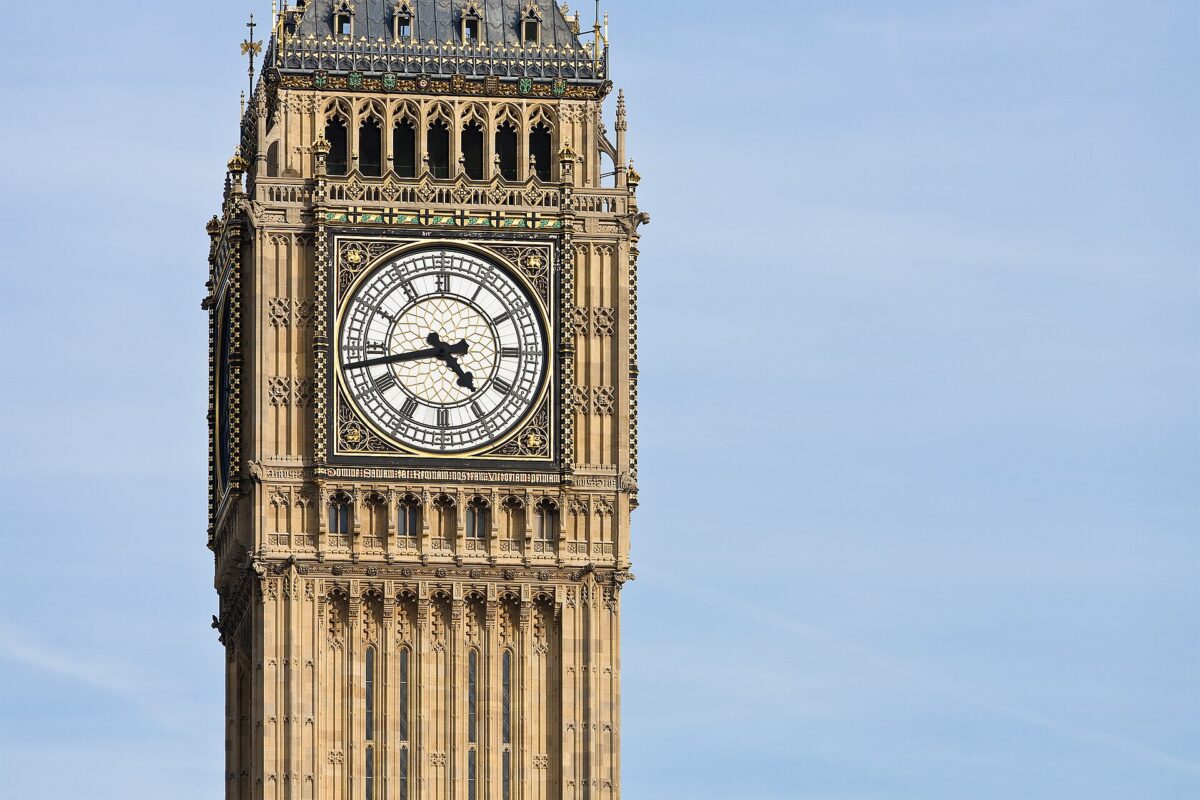
Image: Palace of Westminster clock tower by Diliff, CC BY 3.0, via Wikimedia Commons.
UK Visa Brake 2026: What the Cameroon Student Ban Means for African Applicants Two Months In

The UK Visa Brake 2026 is now two months old. Since 26 March, student visa applications from Cameroon, Afghanistan, Myanmar and Sudan have been refused at the gate, and Skilled Worker applications from Afghanistan have been blocked on the same date. The Home Office Statement of Changes published on 5 March 2026 introduced the mechanism, and the new rule is no longer an announcement — it is a settled reality that the September 2026 intake has to plan around.

For African applicants the headline story is Cameroon. It is the only African country named in the first activation of the brake, and the refusals have already started feeding back through agents and embassies. This piece walks through what the brake does, who is exposed, and what the alternative routes look like for the rest of the continent.

What the Visa Brake actually does

The Visa Brake is a policy tool the Home Office can pull when it thinks one nationality is over-represented in asylum claims, overstays, or refused work. Once activated, applications under the named route from named countries are refused automatically — not assessed on merit. For the current activation, that means a Cameroonian who submits a Student Visa application on or after 26 March 2026 receives a refusal letter regardless of university offer, finances or English level.

The brake is reviewed quarterly. The Home Office has confirmed it can be lifted, extended, or expanded to new nationalities at any review point. The official Statement of Changes notice on gov.uk documents the trigger criteria and the appeal mechanism in full.

Two practical points get lost in the headlines. First, Skilled Worker is only blocked for Afghan nationals — Cameroonian skilled workers can still apply for the route if a sponsoring employer is in play. Second, the Visa Brake is not retroactive. A Student Visa filed on 25 March 2026 is being assessed normally; only applications filed from 26 March onward are caught.

Why Cameroon ended up on the list

The Home Office has not published the underlying statistics, but Migration Observatory and CIC News briefings point to a sharp rise in Cameroonian asylum claims tagged to Student Visa entries between 2023 and 2025. The brake is the Home Office’s response to that pattern — punitive at the country level rather than the applicant level.

For a Cameroonian Master’s candidate holding a confirmed September 2026 offer at, say, the University of Manchester, this is a difficult letter to write to the admissions office. The options are narrow: defer to 2027 in the hope the brake is lifted at the September review, redirect the offer through the Erasmus Mundus joint Master’s network (most consortia have a non-UK lead university), or switch destination entirely. A Cameroonian software engineer who was eyeing a Tier 4 Master’s at Edinburgh would currently be better served pivoting to the Germany Opportunity Card or the Netherlands Orientation Year route — neither is affected by the brake.

UK Visa Brake 2026: which routes are still open

If you hold a passport from Ghana, Kenya, Nigeria, South Africa, Senegal, Côte d’Ivoire, Tanzania, Rwanda, Uganda, Egypt, Zimbabwe or any other African country not named in the activation, the UK Visa Brake 2026 does not block your application. What it does do is set the tone for tougher scrutiny at the case-officer level — refusal rates on Student Visa applications from Sub-Saharan Africa rose three percentage points between Q4 2025 and Q1 2026, even before the brake. Bundle your documents tightly and assume the case officer is looking for a reason to refuse.

  • Student Visa — still open for all African nationals except Cameroon.
  • Skilled Worker — open for all African nationals; new B2 English threshold applies from 8 January 2026.
  • Health and Care Worker — open, but the Care Worker sub-route is closed to new overseas applicants; the Senior Care Worker route remains.
  • Graduate Visa — open and unaffected by the brake.
  • Global Talent — open and a strong fallback for researchers and senior tech professionals who can secure endorsement.

Worried about a refusal letter? Have Travel Explore audit your bundle first — https://wa.link/i9l1ec

If you were planning a UK route this autumn

The next review point lands in September 2026. The smart play right now is two-track planning: keep a UK offer warm if you hold one and your nationality is not blocked, but build a second application in parallel for an EU destination that does not use a country-level brake. The CIC News briefing on Canada’s parallel rule changes shows how quickly the post-study landscape is shifting across destinations this year — UK applicants need backups for the first time in a decade.

For Cameroonian readers specifically, the highest-conversion alternative routes right now are Germany’s Opportunity Card (no country-level restriction, lets you arrive without a job offer), Ireland’s Critical Skills Permit (Cameroon is not on any restricted list), and the Netherlands Orientation Year for graduates of recognised universities. All three are explored in our Germany guides and Ireland guides.

Frequently asked questions about the UK Visa Brake 2026

Is the UK Visa Brake 2026 permanent?

No. The brake is reviewed every quarter. The Home Office has the legal authority to lift it, extend it, or add new nationalities at each review point. The next review is scheduled for September 2026.

Does the UK Visa Brake 2026 affect Nigerian or Kenyan applicants?

No. As of May 2026 the brake applies only to Cameroon, Afghanistan, Myanmar and Sudan for Student Visas, and to Afghanistan alone for Skilled Worker. Nigerian, Ghanaian, Kenyan, South African and other African nationals can apply normally, subject to the usual eligibility checks.

Can I appeal a UK Visa Brake refusal?

The Home Office has confirmed there is no merits-based appeal where the refusal is solely on Visa Brake grounds. Judicial review remains theoretically available but is rarely cost-effective. The pragmatic response is to redirect to another destination or wait for the next review.

Does the brake apply to applications already in the queue?

No. Only applications submitted on or after 26 March 2026 are caught. Applications lodged before that date are assessed under the rules in force at submission.

What about UK Skilled Worker applications from Cameroon?

Cameroonian Skilled Worker applications are not blocked — only the Student Visa is. The Skilled Worker route remains open if you have a sponsoring employer and meet the new B2 English requirement that took effect on 8 January 2026.

Will the brake be expanded to more African countries?

It can be. The criteria are non-public, but high refusal rates, high asylum-claim rates, or high overstay rates can trigger it. Watch the September 2026 review notice for any additions.

Five things to lock in

  • The UK Visa Brake 2026 is the Home Office’s quarterly tool — it refuses applications at the gate rather than on merit.
  • Cameroon is the only African country named in the current activation; Student Visa applications from Cameroon filed on or after 26 March 2026 are being refused automatically.
  • Skilled Worker applications from Cameroon are still being assessed normally — only the Student Visa is blocked.
  • Nigerian, Ghanaian, Kenyan, South African and other African nationals are not affected, but case-officer scrutiny has tightened across the board.
  • The September 2026 review is the next decision point; build a parallel EU application in case the brake is extended.

Get expert help with your UK Visa Brake situation

Worried about a refusal letter? Have Travel Explore audit your bundle first — https://wa.link/i9l1ec

Related reads on Travel Explore

Share this story

  • The UK Visa Brake just refused another batch of Cameroonian students — here is what is open instead.
  • Two months into the UK Visa Brake 2026: the routes still working for Africans.
  • Cameroon got hit by the UK Visa Brake. Germany, Ireland and the Netherlands did not.