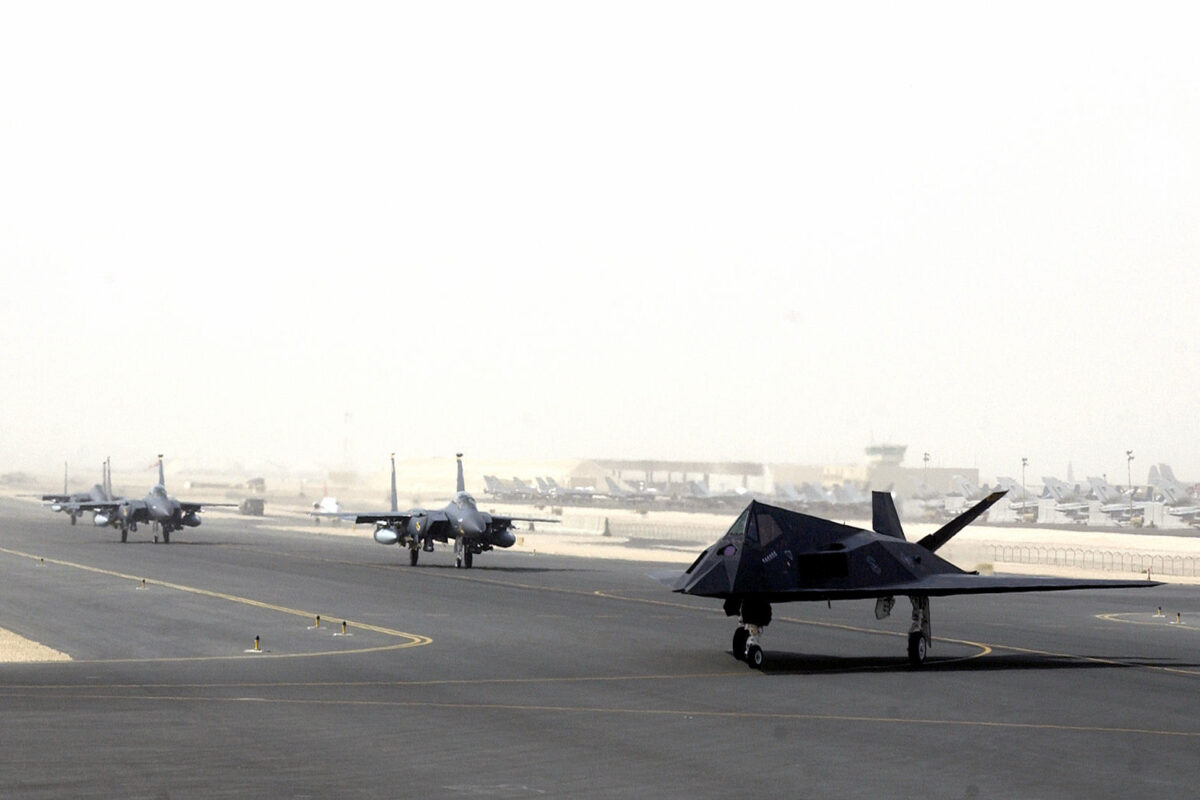
The Pentagon Finally Put Numbers on What the Iran War Cost It

The Defense Department’s inspector general has published the first formal accounting of what the
Iran war cost American forces. The Pentagon watchdog Iran report, released on Monday 14
September 2026, covers 28 February to 30 June. It tallies damage to bases across eight countries, the loss
of critical radar, and the strain on munitions stockpiles. It is the most detailed public picture of the
war’s early months so far.

What the Pentagon watchdog Iran report counted

Iranian strikes damaged or destroyed hundreds of buildings and structures at American bases, according to
the review. The affected countries span the Gulf and the wider region: Kuwait, Bahrain, Qatar, the United
Arab Emirates, Saudi Arabia, Iraq, Oman and Jordan.

Some losses mattered more than their replacement cost suggests. Missile defence radar installations were
among the assets destroyed in the war’s opening days. Radar is what turns an interceptor into a defence. Lose
the sensor and the shooter has nothing to aim at.

Air defence battery of the type covered in the Pentagon watchdog Iran report
A Patriot air-defence battery. The watchdog review found radar installations among the earliest losses.

Why losing Bahrain reshaped the naval map

The destruction of the Navy’s regional hub in Bahrain forced an improvisation. With the hub gone, the
Navy struggled to establish adequate bases and support ports in the region.

Diego Garcia took up much of the load. The British Indian Ocean Territory atoll sits roughly 2,400 nautical
miles from the Gulf. Using it as a sea logistics hub stretched resupply cycles to between 14 and 18 days.
That is a long time for a ship waiting on parts, fuel or ordnance.

Distance is not a footnote in naval operations. It sets how often a ship can be on station, how quickly a
damaged vessel returns to service, and how much of the fleet is in transit rather than in position.

The munitions question the review reopens

The report acknowledges depletion of key munition stockpiles. That is a notable admission, because the
Pentagon has repeatedly pushed back against reporting of a shortage. Defence officials have said the
military has every weapon it needs to fight any conflict.

Both statements can be technically true at once. A stockpile can fall sharply and still exceed the level
planners consider adequate. The gap between the two positions is a judgement about how much margin is
enough, not a dispute about arithmetic. Readers should note that the Pentagon’s position here is the
Pentagon’s own account of its readiness.

What the review does not settle is replacement time. Interceptors and precision munitions have long
production lead times. A stockpile drawn down over four months can take years to rebuild.

Production capacity is the constraint, not budget. Advanced interceptors need specialised solid-rocket
motors and seeker components from a small supplier base. Adding a production line takes years of tooling and
qualification. Money released today shows up as delivered rounds well after the crisis that prompted it.

What the findings mean for eight host governments

The report names the countries where American bases took damage. That list is diplomatically sensitive.
Several of those governments have discussed the strikes only in general terms at home.

Basing arrangements rest on a bargain. The host provides territory and access. The guest provides
security and, usually, economic benefit. A public accounting of damage tests both halves of that bargain in
front of domestic audiences.

Expect the review to surface in parliamentary questions and local reporting across the Gulf. It gives
critics of the basing arrangements a document to cite, and it gives governments a reason to press for
clearer defensive commitments before the next round of negotiations.

What the accounting signals beyond the Gulf

The findings land while the region is still unsettled. Energy markets remain sensitive to anything that
touches Gulf infrastructure, as our reports on
the shutdown of the Saudi
East-West pipeline
and the oil
price shock reaching Asian economies
set out. The diplomatic track is unsettled too — see our coverage of
the Iran sanctions panel
vote
.

For the eight host countries, the review is also a domestic political document. It puts numbers on damage
that governments in Kuwait, Bahrain and Qatar have discussed only in general terms.

The questions the report leaves open

The review stops at 30 June. Anything after that date falls outside it, so the current state of the bases
is not covered. Expect follow-up reviews, and expect congressional committees to ask for the classified
annexes.

Three questions will shape the next round. How long will radar and air-defence replacement take? What
does the Bahrain hub’s loss mean for permanent basing decisions? And will the munitions finding change
procurement budgets in the next request to Congress?

Reader questions on the report

Who wrote the report?

The Defense Department’s inspector general, the Pentagon’s own internal watchdog, in a special report released on 14 September 2026.

What period does it cover?

From the start of the war on 28 February through 30 June 2026. Later events fall outside its scope.

Which countries had bases damaged?

Kuwait, Bahrain, Qatar, the United Arab Emirates, Saudi Arabia, Iraq, Oman and Jordan.

Does the Pentagon accept there is a munitions shortage?

The report acknowledges stockpile depletion. The Pentagon has separately said it has the weapons it needs for any conflict.

Why does Diego Garcia matter?

It became a sea logistics hub after the Bahrain naval hub was destroyed, stretching resupply cycles to 14 to 18 days.

Reporting sources

Two Immigration Forms Change Today — and There Is No Grace Period

From today, two of the most-used immigration forms in the United States have a fresh version
number. The new USCIS form editions of Form I-539 and Form I-765 carry the date 09/15/26.
U.S. Citizenship and Immigration Services says it will reject applications filed on or after 15 September
2026 on any earlier edition. There is no grace period. The agency also says it will reject the new editions
if they arrive early.

What the new USCIS form editions replace

The 09/15/26 edition of Form I-539 replaces the 08/28/24 edition. The 09/15/26 edition of Form I-765
replaces the 08/21/25 edition. Both edition dates print in the lower corner of every page. Check that corner
before you file.

Form I-539 is the application to extend or change nonimmigrant status. Form I-765 is the application for
employment authorisation. Between them they cover a very large share of routine filings: F-1 Optional
Practical Training, STEM OPT extensions, J-2 work authorisation, and status extensions for dependants.

Passport pages with visa stamps illustrating the new USCIS form editions rules
Passport pages and visa stamps. Form I-539 and Form I-765 sit behind most routine status and work-permit filings.

The timing trap in the new USCIS form editions

Most form updates come with a transition window. This one does not. USCIS has said the cutover is hard in
both directions, which creates a narrow trap.

File an old edition on 15 September or later and USCIS rejects it. File the new edition before 15
September and USCIS rejects that too, even though preview copies were already posted. A rejected package
comes back unfiled. Any fee you paid returns with it, and your filing date disappears.

That last point does the damage. A rejected OPT application does not hold its place in the queue. For a
student whose work start date depends on an approval arriving in time, a rejection can cost weeks.

A practical example. A master’s graduate from Vietnam posts an OPT packet on 12 September using the older
I-765. It arrives at the lockbox on 16 September. The edition was valid on the day it was posted and invalid
on the day it was received. Postmark rules matter here, so read the current filing instructions on the USCIS
form page rather than relying on an adviser’s older handout.

Why the forms changed when they did

The revision was not routine housekeeping. USCIS rewrote both forms around the DHS rule replacing
duration of status with a fixed period of admission — the rule that a federal court in Massachusetts
postponed on 14 September 2026.

That sequence leaves an awkward gap. The forms built for a framework now sit alongside an injunction
against that framework. As of publication, the USCIS alert requiring the 09/15/26 editions still stands and
has not been withdrawn. The form requirement and the substantive rule are separate things, and the court
order addressed the rule.

We set out what the court did in our report on
the duration of status
injunction issued on 14 September
. Filing fees are a separate moving part again — see our coverage of
the new H-1B extension fee.

Check these before your envelope leaves

Four checks take five minutes and prevent most rejections.

Download the form fresh from the USCIS website on the day you print it. Saved copies go stale. Confirm
the edition date reads 09/15/26 in the page corner. Confirm the fee against the current fee schedule, not a
printed guide. Keep proof of postage, because the date you can evidence is the date you can argue.

If you filed in the days before 15 September on an older edition, that filing stands. The rejection rule
applies to what USCIS receives from 15 September onward.

What to expect at the filing window

Expect a rejection bulge. Hard cutovers with no grace period generate them, and the volume usually peaks
two to four weeks after the switch. Expect university international offices to reissue guidance, especially
where an earlier advisory told students to file before the deadline.

Watch for a USCIS update tying the forms to the injunction. If the litigation continues, the agency may
clarify which fixed-term questions applicants should answer. Check the official form page immediately before
filing rather than trusting any summary, including this one.

Filing questions answered

Which edition dates are now required?

The 09/15/26 editions of Form I-539 and Form I-765. They replace the 08/28/24 I-539 and the 08/21/25 I-765.

Is there a grace period for old editions?

No. USCIS says it will reject applications on earlier editions that it receives on or after 15 September 2026.

Can I file the new edition early?

No. USCIS says it will reject a 09/15/26 edition postmarked or e-filed before 15 September 2026.

What happens if my application is rejected?

USCIS returns the package unfiled with the fee. You lose the original filing date and have to send it again.

Does the court injunction cancel the form change?

The court order addressed the DHS fixed-term rule, not the form editions. The USCIS form requirement stood as of publication.

Which filings use these two forms?

I-765 covers OPT, STEM OPT and J-2 work authorisation. I-539 covers extensions and changes of nonimmigrant status, including for dependants.

Sources used

The Student Visa Rule Due Today Just Got Frozen by a Judge

A federal judge has frozen the rule that was due to end duration of status today. The
duration of status injunction came from the U.S. District Court for the District of
Massachusetts on 14 September 2026. It postpones the effective date of a Department of Homeland Security
final rule. That rule would have replaced open-ended admission with a fixed term for F-1 students, J-1
exchange visitors and I media representatives. DHS published it on 17 July. It was set to bite on 15
September. For now, it does not.

What the duration of status injunction actually does

Judge F. Dennis Saylor IV granted a nationwide preliminary injunction. The order postpones the rule’s
effective date while the case proceeds. It does not strike the rule down. That distinction matters. DHS can
still defend the rule, and an appeal court could narrow or lift the order.

The court found the plaintiffs likely to succeed on their claim that the rule breached the Administrative
Procedure Act. That statute governs how federal agencies write rules. Courts use it to test whether an
agency explained itself and followed the required process.

The plaintiffs are a coalition rather than a single school. They include NAFSA: Association of
International Educators, the Presidents’ Alliance on Higher Education and Immigration, and the Association
of Independent Colleges and Universities in Massachusetts. Three unions joined them: the American Federation
of Teachers with its Graduate Labor Organization local, the United Auto Workers with UAW Local 2322, and the
NewsGuild-CWA. The union presence reflects how many affected people work as teaching and research staff.

Federal courthouse in Boston where the duration of status injunction was issued
The Boston federal courthouse, where the order postponing the DHS rule was issued on 14 September 2026.

What the blocked rule would have changed

The July rule rewrote a system that has run since 1978. Under duration of status, an F-1 student stays
lawfully while they make progress in their programme. There is no end date stamped on the admission record.
The rule would have replaced that with a date certain.

The headline change was a cap. New admissions would run for the length of the programme or four years,
whichever was shorter. Anyone needing longer would file an extension of stay with U.S. Citizenship and
Immigration Services and show a compelling reason. A pending extension would carry an automatic 240-day
authorisation.

The grace period after finishing a programme would have dropped from 60 days to 30 for F visa holders.
Students who completed one level could move up to a higher degree, but not sideways or down. Graduate
students would have been barred from changing educational level or major at any point. Undergraduates would
have faced that bar in their first year, absent extenuating circumstances. Dependants would have followed
the same fixed-term structure.

Consider a doctoral researcher from India in year five of a six-year programme. Under the old system her
status simply continued. Under the new rule she would have needed an approved extension, filed on time, with
a reason a USCIS officer accepted.

Who the duration of status injunction reaches

The order is nationwide. It is not limited to the plaintiffs or to Massachusetts. Every F, J and I visa
holder in the United States sits under the old framework while it stands.

Harvard’s International Office had spent weeks urging students to be physically inside the country on 15
September. On 14 September it said the rule now has no immediate impact on visas, or on starting an autumn
programme. Other universities issued similar notices. Read institutional guidance rather
than social media summaries, because each school phrases the practical advice differently.

One caution is worth repeating. An injunction is provisional. Travel plans built on the assumption that
the old rules will last all year carry real risk. The advice many advisers gave before the ruling — avoid
non-essential international travel while the litigation runs — has not stopped being sensible.

Where the case goes from here

Three things decide what students face next. The first is whether the government appeals to the First
Circuit and asks for a stay. The second is how the district court rules on the merits, which can take
months. The third is whether DHS withdraws the rule and issues a revised version with a fuller
justification.

Meanwhile the paperwork built for the rule is still arriving. USCIS moved to new editions of Form I-539
and Form I-765 dated 09/15/26, drafted partly around the fixed-term framework. Our companion piece on the
new USCIS form editions taking
effect today
sets out what to file and when. We also covered
the rule itself when
its effective date was still standing
, and the separate
public charge test arriving
on 18 September
, which is not affected by this order.

Common questions about the ruling

Is the duration of status rule dead?

No. A court has postponed its effective date while litigation continues. The rule still exists and the government can defend it.

Do I still get an open-ended admission?

While the injunction stands, yes. F and J admissions continue under duration of status rather than a date-certain I-94.

Does this change my 60-day grace period?

The cut from 60 days to 30 for F visa holders was part of the blocked rule. It is not in force while the order stands.

Should I travel internationally now?

Speak to your designated school official first. An injunction can be stayed on appeal, and the rules at the moment of re-entry are what count.

Which court issued the order?

The U.S. District Court for the District of Massachusetts, in a case brought by NAFSA, the Presidents’ Alliance, AICUM and several unions.

Sources

China Exit and Entry Regulations Start on 15 September

New China exit and entry regulations take effect on 15 September 2026. Issued as State Council Decree No. 841 and signed by Premier Li Qiang, they rewrite the administrative rules governing visas, entry, stay and residence for foreign nationals, and set out new obligations for the people and organisations that sponsor them. The State Council approved the text on 29 June, the premier signed it on 22 July, and it was published on 31 July, giving roughly six weeks’ notice before it bites.

What the decree is

The Regulations on Exit and Entry Administration are implementing rules sitting beneath China’s Exit and Entry Administration Law. They govern how the law is applied in practice: what applicants must show, what authorities may check, and what happens when documentation does not match reality. The official framing, published on the State Council’s English portal, is that the regulations standardise exit and entry administration, protect the lawful rights and interests of travellers, and safeguard national sovereignty, security and development interests. That is the government’s own characterisation of its own rules; the operative content is narrower and more specific.

Tighter checks on purpose of travel

The central change is an explicit reinforcement that applications for a visa, entry, stay or residence must be made for genuine and lawful purposes, with correspondingly stronger scrutiny of travel documents and of the stated reason for the trip.

In plain terms, the mismatch that used to be tolerated is now the thing being looked for. A business visa supported by an invitation from a company the traveller has no relationship with, a tourist entry by someone who intends to work, a study route used as a residence shortcut — these are the cases the tightened checks are aimed at. China.org.cn’s summary of the regulation on publication set out the same emphasis.

The new exposure for inviters and agents

This is the part that changes behaviour fastest. Organisations and individuals that issue invitation letters or supporting documentation for foreign nationals now carry explicit accountability for their accuracy. Authorities can impose penalties, suspend operations or revoke licences where violations are serious. Visa agents are named as a specific object of scrutiny.

The immediate consequence is that the market in convenience invitations gets more expensive and less available. A Chinese company that has been willing to issue a letter as a favour now faces a licence risk for doing so, and will start asking the questions the consulate would have asked. Anyone whose China trip depends on a third-party invitation should expect more documentation requests, longer lead times, and some agents declining business they previously took. Immigration practitioners including Erickson Immigration Group have flagged the sponsor-side exposure as the most significant operational change for employers.

The outbound side, which is easy to miss

The regulations are not only about people coming in. They also build out an exit security risk prevention system: foreign affairs and culture and tourism departments are to issue overseas safety alerts, and immigration authorities are to advise Chinese citizens travelling to high-risk countries or regions.

That is a formalisation of something already happening informally, and it gives the advisories an administrative home. For businesses employing Chinese nationals on overseas assignments, it is worth tracking which destinations attract alerts, because in practice those advisories shape what employers can ask staff to do.

Practical effect for travellers

  • Match your documents to your actual plans. The visa category should describe what you will really do. A mismatch is now the specific target of scrutiny rather than a technicality.
  • Check who is inviting you. If an invitation letter comes from an entity you have no genuine relationship with, that is now a risk to them as well as to you.
  • Allow more time. Sponsors doing more diligence means slower turnarounds, particularly for business and work routes in the first months.
  • Vet your agent. Agents facing licence exposure will behave differently; a cheap agent promising an easy route is a worse bet than it was in August.
  • Keep your paperwork consistent. The itinerary, invitation, employment record and stated purpose should tell one story.

None of this closes China to visitors. Ordinary tourism and genuine business travel on accurate paperwork are unaffected in substance. The regulation narrows the gap between what applications say and what trips are, and it moves a share of the enforcement burden onto the people who vouch for travellers.

Traveller questions

When do the China exit and entry regulations take effect?

15 September 2026, under State Council Decree No. 841.

Who signed them and when were they published?

Premier Li Qiang signed the decree on 22 July 2026 after State Council approval on 29 June; the text was published on 31 July.

What is the main change for applicants?

Reinforced requirements that visa, entry, stay and residence applications be for genuine and lawful purposes, with stricter checks on travel documents, stated purpose of stay and visa agents.

What changes for companies issuing invitation letters?

They carry explicit accountability for the accuracy of invitations and supporting documents, and face penalties, suspension of operations or licence revocation for serious violations.

Do the rules affect Chinese citizens travelling abroad?

Yes. The regulations formalise an exit security risk prevention system, with overseas safety alerts issued by foreign affairs and tourism departments and advice from immigration authorities for high-risk destinations.

Do I need a new visa if I already hold one?

The regulations do not invalidate existing visas. They change how applications are assessed and how sponsors are held accountable going forward.

Where to go next

NATS Air Traffic Failure: The Report Britain Demanded Is Due Now

The NATS air traffic failure of 8 September 2026 cancelled around 2,000 UK flights and left the country’s busiest airports clearing backlogs into a second day. NATS, the UK’s air navigation service provider, says the fault was in its flight data processing system — the software that handles flight plans and departure data — and has ruled out a cyber attack. The company’s chief executive agreed to give the government a report on the cause by 16 September, and the transport secretary has ordered a separate six-month independent review by the Civil Aviation Authority.

What broke, and for how long

The failure hit the system that processes flight plans and departure data, not radar or air-to-ground communications. That distinction matters: controllers could still see and talk to aircraft, which is why this was a capacity crisis rather than a safety one. With automated flight-plan processing degraded, traffic has to be handled with manual procedures, and manual handling means far fewer movements per hour. Restrictions follow, and airlines cancel.

The outage itself has been reported at around four hours. The disruption lasted much longer, because a four-hour restriction in European airspace displaces aircraft and crews for the rest of the day and often the next. NATS has said it has ruled out a cyber attack.

Where the cancellations landed

Aviation analytics firm Cirium’s count of roughly 2,000 cancelled flights, cited across UK reporting, covers services to, from and within the United Kingdom across 8 and 9 September. Heathrow, Gatwick, Manchester and Birmingham were worst affected. Ryanair cancelled around 260 flights, which it said affected about 48,000 passengers; British Airways cancelled close to 200.

The pattern is familiar from previous large ATC events: the first-day cancellation count understates the disruption, because the recovery consumes the following day’s slack. Aircraft finish the evening in the wrong airports, crews run out of legal duty hours, and the timetable has no spare capacity in September to absorb either.

Airways Magazine reported the regulator’s move to review the outage alongside ministerial comments that resilience fell short.

Two deadlines that matter

16 September — the cause report. NATS chief executive Martin Rolfe agreed to provide the government with a report on the cause within a week of the failure. A one-week report is a preliminary technical account, not a root-cause analysis; the useful content is whether it identifies a specific defect and whether that defect had been flagged before.

March 2027 — the CAA review. The independent six-month review commissioned from the Civil Aviation Authority is the substantive piece. Its remit covers the root cause of the September failure and the broader resilience of UK air navigation infrastructure.

There is a precedent sitting directly underneath both. In August 2023, a NATS flight planning system failure caused comparable disruption. The CAA commissioned an independent review; the interim report was published as CAP2981, and the final report made 34 recommendations directed at NATS, airlines, airports, the regulator and government.

The obvious question for the 2027 review is therefore not what went wrong in September 2026, but which of those 34 recommendations were implemented, by whom, and whether any of them would have prevented this. A second failure in the same broad system three years after a review that produced 34 recommendations is a governance question as much as an engineering one.

What passengers are actually owed

Under the UK’s retained air passenger rights rules, an airline that cancels must offer a choice between a refund and rerouting, and must provide care — meals, communication and, where an overnight stay is required, accommodation — while you wait. Those duties apply regardless of the cause.

Fixed cash compensation is different. Air traffic control failures are generally treated as extraordinary circumstances outside the airline’s control, which removes the compensation entitlement while leaving the refund, rerouting and care duties intact. In practice that means: do not expect a compensation payment for this event, do expect the airline to rebook you or refund you and to cover reasonable costs in the meantime, and keep receipts.

If an airline refuses a refund or leaves you to fund your own accommodation, the escalation route is the airline’s alternative dispute resolution scheme, and then the CAA’s passenger advice service.

Passenger questions

What caused the NATS air traffic failure?

NATS says a technical fault affected its flight data processing system, which handles flight plans and departure data. It has ruled out a cyber attack. A fuller account was due to government on 16 September.

How many flights were cancelled?

Around 2,000 across 8 and 9 September, per figures from aviation analytics firm Cirium cited in UK reporting.

Which airports were worst hit?

Heathrow, Gatwick, Manchester and Birmingham.

Am I entitled to compensation?

Generally not for an ATC failure, which is usually treated as an extraordinary circumstance. You remain entitled to a refund or rerouting, and to meals and accommodation where applicable.

Has this happened before?

Yes. A NATS flight planning system failure in August 2023 caused similar disruption and led to an independent CAA review whose final report made 34 recommendations.

When will the independent review report?

The CAA’s six-month review is expected to conclude in March 2027.

More aviation reporting