Meta’s Stock Just Dropped for a Reason That Should Worry Every Tech Investor

Two of the world’s biggest tech companies just gave investors a reason to pause. AI spending investor concern hit Meta and Alphabet shares this week, even after both companies reported results that beat Wall Street’s estimates on paper. The reaction shows investors are no longer just asking whether these companies can grow. They are asking whether AI spending will ever pay for itself.

Meta’s stock fell about 7% after its earnings release. The drop followed a disclosure, not a miss. Meta said its total AI-related spending could reach $635 billion over time. That number landed just ahead of Anthropic’s own planned IPO, a timing 24/7 Wall St. called a bad look for the sector. Investors read the disclosure as a signal of real financial risk, not routine capital planning.

Why AI spending investor concern hit Alphabet too

Alphabet’s stock stayed roughly flat while the S&P 500 climbed about 13% over the same stretch. That is a quiet form of underperformance. Alphabet’s cash flow is shifting too. It is moving from strongly positive to cash-negative as the company meets AI commitments now running into the hundreds of billions of dollars. That shift alone worries some investors. Alphabet built its reputation partly on generating cash reliably, year after year, and that reputation is part of what is now in question.

DeepMind, Alphabet’s flagship AI research lab, has seen a rotation of leaders recently. Outsiders have described the lab as delayed on key projects. On the commercial side, rivals have made faster progress landing big enterprise and government deals. Anthropic, for instance, has signed large companies and the federal government as customers. Alphabet’s biggest visible enterprise win by comparison is a partnership with Apple. That deal is worth about $1 billion a year to Alphabet. One report called that figure “next to nothing” next to Alphabet’s overall scale. Other coverage of this earnings week noted investors are applying this same AI-spending scrutiny across Microsoft, Amazon and Intel too, not just Meta and Alphabet.

The search cannibalization problem nobody is fixing yet

Alphabet’s core search business faces its own pressure, separate from spending concerns. Gemini-driven AI results are cannibalizing Google’s traditional search business, a trend expected to continue. Search is expected to stay strong in absolute terms. But growth is expected to slow. AI-generated answers are replacing some of the clicks that used to go through to paid search results. That combination, slower search growth plus ballooning AI capital spending, is exactly the mix that worries investors watching both companies right now.

This story connects to a wider pattern. Tamara News covered the court ruling that spared Google’s ad business from a breakup while still forcing changes, and Anthropic’s own IPO plans, both relevant backdrops to how investors are pricing Alphabet right now.

What separates AI spending investor concern from a simple sell-off

Neither Meta nor Alphabet missed its earnings estimates outright. That is the detail that makes this reaction notable. Investors are not punishing bad quarters. They are punishing spending plans and strategic uncertainty layered on top of otherwise solid results. That distinction matters for how long this pressure might last. A single bad quarter usually passes once results improve. A structural worry about whether AI spending will ever generate matching returns can linger for years, shaping how every future earnings call gets read.

The next earnings call is the real test

Both companies report again next quarter, and investors will be watching for a clearer answer on return on AI investment, not just another spending update. Meta’s $635 billion long-term figure will likely get revisited and scrutinized line by line. Alphabet’s cash flow trajectory will get similar attention, especially if it keeps moving further into negative territory. Until one of these companies shows AI spending converting cleanly into new revenue at scale, expect AI spending investor concern to keep showing up in stock reactions, earnings beat or not.

Meta headquarters building at the center of AI spending investor concern

FAQ: AI spending investor concern

Did Meta or Alphabet actually miss earnings estimates?
No. Both companies’ results were not reported as misses. The stock reactions followed spending disclosures and strategic concerns, not weak headline numbers.

How much does Meta expect to spend on AI?
Meta said its total AI-related spending could reach $635 billion over time, a figure disclosed alongside its latest earnings.

Why is Alphabet’s cash flow changing?
Alphabet is shifting from strongly cash-flow-positive toward cash-negative as it funds AI commitments that have grown into the hundreds of billions of dollars.

Is Google’s search business shrinking?
Not shrinking, but growing more slowly. Gemini-driven AI answers are cannibalizing some traditional search traffic and revenue.

How does Alphabet’s AI deal with Apple compare to rivals?
It is worth about $1 billion a year to Alphabet, which one report described as small relative to deals rivals like Anthropic have landed with large enterprises and government agencies.

Will AI spending investor concern fade next quarter?
That depends on whether either company shows clearer evidence that AI spending is converting into new revenue, rather than just rising costs.

Are other tech companies facing the same pressure?
Yes, to varying degrees. Microsoft, Amazon and other large tech companies all face similar investor questions about whether AI capital spending will generate matching returns.

Does this affect Meta and Alphabet’s day-to-day products?
Not directly, at least not yet. The pressure shows up in share prices and spending plans so far, not in changes to products people use daily.

Express Entry Draw 452: 5,000 French-Language ITAs, CRS 407

Express Entry draw 452, held on 27 October 2026, invited 5,000 candidates in the French-language proficiency category with a Comprehensive Ranking System (CRS) cut-off of 407, according to Immigration News Canada. That site says the figures still need final confirmation, and Immigration, Refugees and Citizenship Canada (IRCC) publishes the definitive results on its rounds of invitations page, which did not display the draw rows when we checked, so treat the numbers below as reported rather than confirmed.

Contents

What the draw shows

Immigration News Canada reports a tie-break of 13 July 2026 at 19:22:00 UTC, which applies to candidates with exactly 407 points: those whose profiles were submitted before that time rank first. The same source lists a provincial nominee draw the day before, number 451 on 26 October, that issued 792 invitations at a CRS of 761.

How it compares with 16 October

The previous French-language draw, number 450 on 16 October, issued 5,000 invitations at a cut-off of 435, per the same source. The new cut-off is 28 points lower. Our earlier report on the 16 October French-language draw has that background. The article also states that six French-language rounds have issued 30,000 invitations combined.

Who qualifies for the category

Candidates need at least NCLC 7 in speaking, listening, reading and writing from an approved test less than two years old, and must meet the requirements of an Express Entry program, according to Immigration News Canada. Meeting the criteria does not guarantee an invitation, since candidates are still ranked by CRS. For wider rule changes, see our report on Express Entry points and LMIA reform.

A worked example

As an illustration, not a real case: a Colombian IT specialist already in the Express Entry pool who holds a valid NCLC 7 French result and scores 410 would, on the reported cut-off, be above the line. Another candidate at exactly 407 would depend on the profile submission date against the tie-break. Use the visa eligibility checker to compare routes before you invest in language testing.

What happens next

Candidates invited must submit a complete application within the deadline in their invitation. Check IRCC’s official page for the confirmed draw data, and watch the next French-language round for any shift in the cut-off. The recent pattern in the reported data is a cut-off that fell from 435 on 16 October to 407 on 27 October with the same 5,000 invitations, which suggests candidates just under the earlier line may now be within range. That is an observation from two data points, not a forecast: cut-offs depend on the pool at the time of each draw. Candidates should keep language results valid, since the category requires a test less than two years old, and make sure their profile details are current before any draw.

Questions on draw 452

When was draw 452?

27 October 2026, as reported by Immigration News Canada.

How many invitations were issued?

5,000 in the French-language proficiency category.

What was the CRS cut-off?

407, with a tie-break of 13 July 2026 at 19:22:00 UTC.

What language level is needed?

At least NCLC 7 in all four abilities, per the same report.

Is this confirmed by IRCC?

The source says the figures require final confirmation; check IRCC’s rounds page.

What was the previous French-language cut-off?

435, in draw 450 on 16 October 2026.

Sources

Image: Toronto skyline by Taxiarchos228, Free Art License, via Wikimedia Commons.

A New Report Says Some Green Card Applicants Will Wait Longer Than a Lifetime

A new analysis puts a hard number on something many employment-based applicants already feel. The green card backlog wait times tracked by the National Foundation for American Policy keep growing, and for some nationalities, the projected wait now stretches well beyond a working career.

The NFAP analysis was covered by Newsweek in late August 2026. It found the employment-based backlog across the EB-1, EB-2 and EB-3 categories reached about 1.26 million people by December 2025. That is up from roughly 1.05 million in April 2020. The increase works out to 20.6% in under six years. EB-2 grew 22.9% over that period. EB-3 grew 30.1%. EB-1, the smallest category, actually fell 16.6%.

Why green card backlog wait times hit Indian applicants hardest

India accounts for nearly 1 million people in the backlog. That is about 79% of the total. The breakdown shows 731,566 people in EB-2 and 213,414 in EB-3. For Indian applicants filing in January 2026 or later, NFAP projects a wait of roughly 179 years in EB-2. EB-3 comes in at 38 years. EB-1 looks far better by comparison, at an estimated four to five years. Those numbers describe a queue no single applicant will realistically outlive in the slower categories.

Other countries face long waits too, just not on the same scale. China’s 2026 filers face a projected 25-year wait in EB-2. EB-1 runs five years for China, and EB-3 runs seven. The Philippines looks very different. Its applicants sit current or near-current in EB-1 and EB-2. Only EB-3 carries a wait, at six years. The gap between countries comes down to one structural rule. It has nothing to do with how hard anyone’s case gets reviewed.

The rule driving green card backlog wait times

The Congressional Research Service has documented this limit for years. Congress set the annual employment-based green card limit at 140,000 back in 1990. It has not raised that number since. Demand from a growing global applicant pool has climbed steadily in the meantime. A separate per-country cap adds another constraint. It limits any single nation to 7% of each category’s annual allocation, no matter how many qualified applicants that country produces. India and China send far more applicants into these categories than that cap can absorb each year. That mismatch is the direct cause of their multi-decade queues.

More than 280,000 extra green cards went out from FY2020 to FY2024. Those came from unused family-sponsored numbers that would otherwise have gone unclaimed. Even that extra supply did not shrink the backlog. Demand outpaced the bonus numbers every single year in that stretch.

How this connects to other 2026 visa changes

The backlog numbers help explain why several other 2026 immigration stories matter together, not just individually. Tamara News covered the November 2026 Visa Bulletin. That update moved most categories forward while leaving India and China largely stuck. A similar pattern showed up in coverage of the Department of Labor’s PERM suspension affecting major employers. That suspension slows the pipeline feeding into this backlog even further, for workers at large tech companies especially. Canada’s own Express Entry reforms this October show a different country taking a very different approach. Canada prioritizes high earners through a points system, not a strict per-country cap.

What would actually move green card backlog wait times

NFAP’s report points to one lever above all others: congressional action. Raising the 140,000 annual cap would help. Adjusting or removing the 7% per-country limit would help too. Either step, or both together, would directly shrink the projected wait times described here. Without legislative change, the report expects backlogs to persist or grow. Current limits predate the internet-era applicant pool by more than three decades. No such legislation was pending in Congress as of the most recent reporting reviewed for this piece.

US Capitol, where Congress sets the limits behind the green card backlog wait times

FAQ: green card backlog wait times

How big is the US employment-based green card backlog?
The NFAP analysis put it at about 1.26 million people across EB-1, EB-2 and EB-3 as of December 2025.

Which country faces the longest green card backlog wait times?
India, by a wide margin. NFAP projects roughly 179 years in EB-2 and 38 years in EB-3 for Indian applicants filing from January 2026 onward.

Why do India and China face much longer waits than other countries?
A per-country cap limits each nation to 7% of each category’s annual green cards, regardless of applicant volume, and both countries send far more applicants than that cap can absorb.

Has Congress raised the green card limit recently?
No. The 140,000 annual employment-based limit has stood since 1990, with no increase as of the most recent reporting.

Do EB-1 applicants face the same backlog?
No. EB-1 is in much better shape, with the category’s backlog shrinking 16.6% and projected waits of four to five years for Indian applicants.

What would shorten the green card backlog wait times?
NFAP points to congressional action, such as raising the annual cap or adjusting the per-country limit, as the main levers that could meaningfully reduce the backlog.

Can an employer do anything to speed up a green card case?
An employer can file early and keep paperwork current, but it cannot change the per-country caps or the annual limit, since those are set by federal law, not employer practice.

Does the backlog affect family-sponsored green cards too?
This particular analysis focuses on employment-based categories. Family-sponsored visas have their own separate backlog and per-country rules, which NFAP’s report does not cover in the same detail.

75-Country Immigrant Visa Pause: 318 Approvals Since Ruling

Since a federal court struck down the 75-country immigrant visa pause on 21 August 2026, only a small share of the affected cases has been decided, according to a 26 October 2026 post by the Law Offices of Jacob J. Sapochnick, a San Diego immigration firm. Citing a State Department filing of 5 October 2026, the firm says 706 affected applications were adjudicated between 21 August and 30 September: 318 approved or issued, and 388 refused on other grounds. This account comes from a law firm’s blog rather than a court document.

Contents

What the court decided

The post names the case as CLINIC v. Rubio and says the court found the suspension unlawful and ordered reconsideration of applications refused solely because of it. It says more than 43,000 applications had been refused solely under the pause, and that the ruling set no deadline for processing each case. The post does not name the specific court.

What the filing numbers show

The 706 adjudicated cases include applications refused for reasons other than the pause, so the post says it is unclear how many of the 43,000 have actually been reviewed. It adds that as of 2 October, one plaintiff’s family member had received a visa, several applicants had interviews scheduled and others had individual decisions. That is a thin basis for broad conclusions, and it is the firm’s reading of the filing.

What applicants can do

The firm suggests: determine whether your refusal rested solely on the pause or on other grounds; respond promptly to any request for documents, information or interviews; ask the consular post for a status update and whether reconsideration is available; and consult an immigration attorney about an individual mandamus suit or other action. It notes that a mandamus court generally cannot order a consular officer to approve a visa. General rules for immigrant visas are on the State Department’s immigrant visa pages.

A worked example

As an illustration, not a real case: a Pakistani family whose spouse-based immigrant visa was refused only under the pause should first check the refusal notice for its stated ground, then contact the embassy about reconsideration. Related background is in our reports on the November 2026 Visa Bulletin and the USCIS fee increase, and the visa eligibility checker can help you compare alternative routes.

What happens next

Without a processing deadline, timelines remain uncertain. Watch for further government filings in the case and for consular guidance on reconsideration. Applicants should keep copies of their refusal notices, interview letters and any correspondence with the consulate, since the firm’s advice depends on whether a refusal rested solely on the pause. Because the figures come from the firm’s reading of a filing, readers who need certainty should ask an attorney to review the filing itself.

Questions on the pause

When was the pause struck down?

21 August 2026, in CLINIC v. Rubio, according to the Sapochnick firm’s post.

How many applications were refused under it?

More than 43,000, per the same post.

How many have been decided since?

706 adjudicated between 21 August and 30 September, with 318 approved or issued and 388 refused on other grounds.

Is there a deadline for reconsideration?

The post says the ruling set none.

Is this from a court document?

No. It is a law firm’s blog summarising a State Department filing.

Should I sue?

That is a question for an immigration attorney; mandamus generally cannot compel approval.

Sources

Image: US Capitol, public domain, via Wikimedia Commons.

SpaceX’s Quarterly Numbers Just Showed Where the Real Money Is Going

SpaceX posted numbers this quarter that read more like an AI company’s than a rocket company’s. The SpaceX Q3 2026 earnings report, released on 20 October, showed revenue of $14.6 billion. That is up 161% from the same quarter last year, according to figures highlighted from the earnings release. The jump came only months after SpaceX completed its IPO.

SpaceX closed that IPO on 15 June 2026. Shares began trading on Nasdaq under the ticker SPCX three days earlier. The company sold just under 639 million Class A shares. That raised about $85.7 billion in net proceeds, a figure confirmed in earlier coverage of SpaceX’s public listing. Q3 is one of the company’s first full quarters reporting results as a public company, which makes this release a closely watched early signal for investors.

What drove the SpaceX Q3 2026 earnings jump

Two segments carried the quarter. Starlink, SpaceX’s connectivity business, grew revenue 69% year over year. Operating income in that segment rose 99%, driven by enterprise and government adoption alongside steady consumer subscriber growth. The second driver came from SpaceX’s newer AI business, which the company calls its “Super Intelligence” unit. That unit added $6.7 billion in incremental year-over-year revenue. SpaceX attributes that growth to cloud services agreements, its acquisition of the AI coding tool Cursor, and expanding use of its Grok and Bot AI products.

Elon Musk framed the quarter as an “inflection moment for SpaceX” in remarks accompanying the release. He cited what he called “1000x demand from AI agents” as a growth driver behind the AI segment’s rapid expansion. That is a striking claim for a company whose core business has always been rockets and satellites, not software. It signals how far SpaceX now sees its ambitions reaching beyond launch vehicles alone.

The Starship milestone buried inside the numbers

SpaceX’s first revenue-generating Starship mission delivered 26 Starlink V3 satellites during the quarter. SpaceX says that single launch added roughly 10 times the downlink capacity of a typical Falcon 9 Starlink launch. That is a meaningful shift. Starship has spent years as a test program burning cash rather than generating revenue. A successful, revenue-producing mission marks a turning point for a vehicle Musk has called critical to SpaceX’s long-term ambitions, including crewed missions beyond Earth orbit.

The earlier Q2 2026 report showed a different picture for Starship’s finances. The Space segment, which includes Starship, grew revenue 29% to $962 million that quarter. But adjusted EBITDA in that segment fell to a $205 million loss, which the company attributed to heavier Starship research and development spending. Q3’s revenue-generating flight suggests that spending is starting to translate into paying missions, not just test flights.

How SpaceX fits into a bigger AI infrastructure race

SpaceX’s AI push did not happen in isolation. Tamara News covered a major chip supply deal between Nvidia, Samsung and TSMC this same week, part of a broader scramble for AI computing capacity across the tech sector. SpaceX’s rapid AI segment growth puts it in direct competition for the same enterprise cloud customers that Microsoft, Google and Amazon are all chasing, a crowded field for a company that only went public in June. Competing there successfully would mark a genuine shift in what kind of company SpaceX becomes over the next few years. Musk’s other public company, Tesla, reported its own Q3 2026 results this same month, with a very different profit picture than SpaceX posted.

What investors are watching next

SpaceX’s next earnings report will show whether the AI segment’s growth rate holds or cools as the comparison base gets harder. Investors will also watch whether Starship keeps flying revenue missions regularly, rather than this quarter’s flight being an isolated milestone. SpaceX held $100 billion in cash and marketable securities at the end of the prior quarter. That gives it a large cushion. The company can keep investing in both rockets and AI infrastructure even if growth slows somewhere in the mix. Few companies at this stage of a business pivot have that kind of balance sheet behind them.

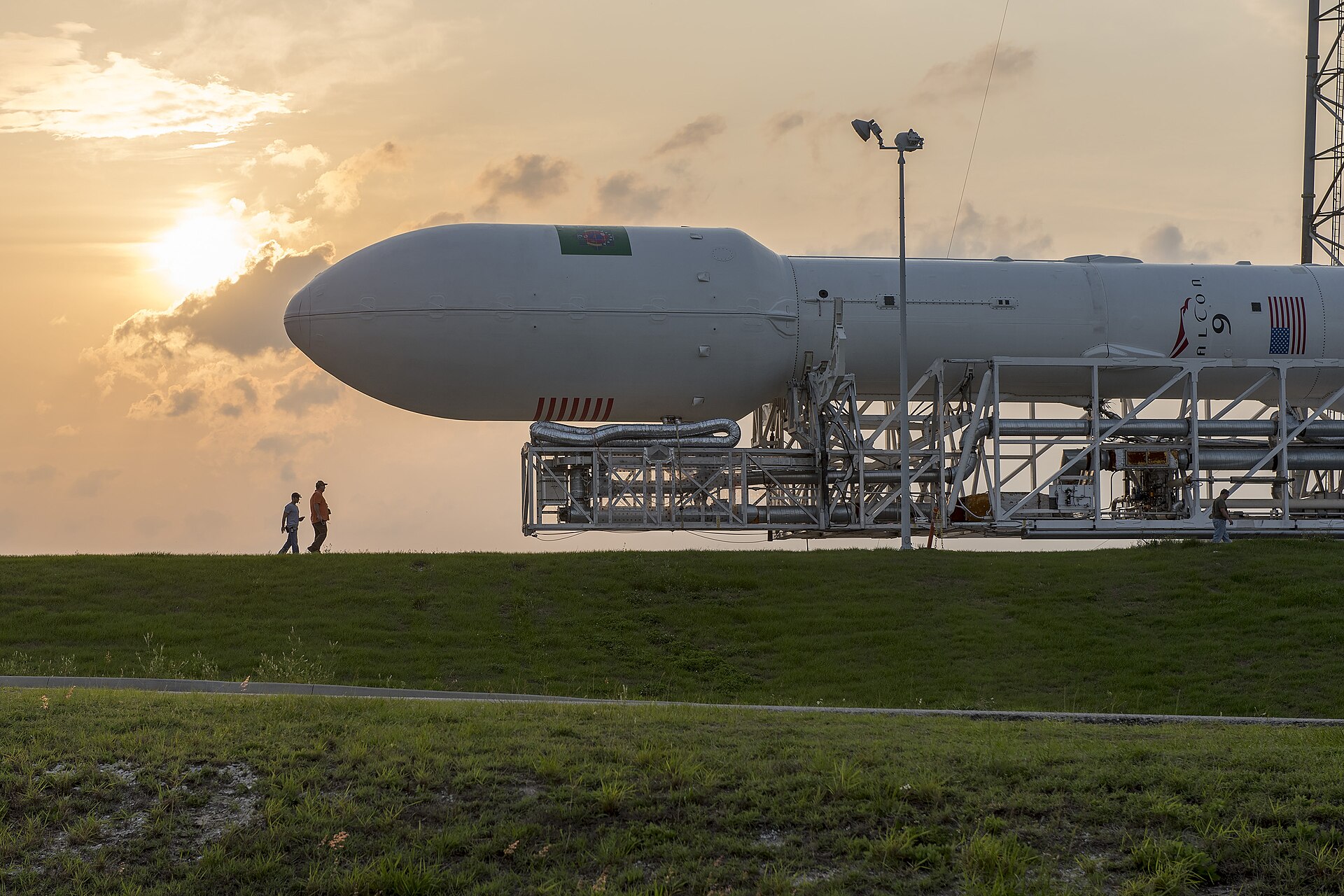
Falcon 9 rocket on the pad as SpaceX Q3 2026 earnings are released

FAQ: SpaceX Q3 2026 earnings

How much revenue did SpaceX report for Q3 2026?
SpaceX reported $14.6 billion in revenue, up 161% year over year.

What drove SpaceX’s revenue growth this quarter?
Starlink connectivity revenue grew 69%, and SpaceX’s AI business added $6.7 billion in incremental revenue, the two biggest contributors.

When did SpaceX go public?
SpaceX closed its IPO on 15 June 2026 and began trading on Nasdaq under the ticker SPCX.

What is SpaceX’s “Super Intelligence” business?
It is SpaceX’s AI unit, which includes cloud services agreements, the Cursor coding tool acquisition, and products like Grok and Bot.

Did Starship generate revenue this quarter?
Yes. SpaceX says its first revenue-generating Starship mission delivered 26 Starlink V3 satellites during Q3 2026.

How much cash does SpaceX have on hand?
SpaceX held $100 billion in cash and marketable securities as of its prior quarterly report.

Is SpaceX’s AI business bigger than its rocket business yet?
Not based on the figures reported here. Starlink remains the larger established segment, though the AI unit’s incremental growth this quarter was substantial on its own.

Does SpaceX compete directly with Microsoft or Google in AI?
In cloud and AI services, yes, to a degree. SpaceX is a newer entrant chasing some of the same enterprise customers as larger, more established cloud providers.