Netanyahu’s Bloc Just Won the Most Seats — But Not the Majority He Wanted

Israel’s Central Elections Committee was still counting ballots before dawn on 28 October 2026. The early tally already told a mixed story. The Netanyahu bloc election results released overnight gave the pro-Netanyahu bloc the lead over its rivals. But the margin kept narrowing as more boxes opened. Neither side had the 61 seats needed to govern alone.

One update from the Times of Israel’s live count covered roughly a third of ballot boxes. It put the pro-Netanyahu bloc at 59 seats against 46 for the opposing bloc. An earlier count, with about a quarter of boxes opened, had the pro-Netanyahu bloc ahead 63 to 49. The nonaligned Joint List held the rest. The gap moved both ways as counting continued. That is normal this early. It meant Israel woke up on 28 October without a declared winner.

What the Netanyahu bloc election results actually show so far

Likud remains the largest single party. Prime Minister Benjamin Netanyahu addressed supporters at Likud headquarters in Jerusalem overnight. He said the right-wing bloc held a “decisive majority” among what he called the Zionist public. He told the room “we are still waiting for the true results.” He called for a “right-wing, national, strong government.” He also criticized parties willing to work with Arab-led factions, calling it a “shame.”

Several small parties sat near the electoral threshold. The Reservists party polled around 2.7%. People of Israel polled around 1.8%. The Charedi Public list sat around 0.3% in the update reviewed. Each falls below the 3.25% cutoff a party needs to enter the Knesset. Soldiers’ ballots and double-envelope votes could still push one of them over that line. A single seat moving either way matters when coalition math is this tight.

Why the count keeps moving

Israeli election law counts regular ballot boxes first. It leaves military votes and “double envelope” ballots for later. Those are cast by people voting away from their registered polling station. This category has swung the final seat count in past Israeli elections, sometimes by several seats. Officials and party strategists treat early percentages as provisional for that reason. The Central Elections Committee has not set a date for final certified results as of this writing.

The opposition bloc is led by former military chief Gadi Eisenkot. It had not issued a public statement matching Netanyahu’s in the hours covered by available reporting. Some commentary, including from CNN’s live results coverage, framed the overnight numbers as a setback for Netanyahu’s governing coalition. That is despite his bloc holding the largest share of seats. In Israel’s proportional system, “largest bloc” and “governing majority” are not the same thing.

The coalition fight behind a close Netanyahu bloc election results count

Israel’s president formally invites a candidate to try to form a government once results are certified. That usually goes to whoever a majority of incoming Knesset members recommend. Both blocs sat short of 61 seats in the numbers reviewed. Attention now turns to the parties outside the two main camps. The Joint List and Ra’am, both Arab-led, have in the past signaled they might back a government from the outside. Neither would need to join a coalition to do it. That outside support could decide who actually forms the next government.

That kind of arrangement has collapsed before in Israeli politics. Netanyahu’s own remarks overnight suggested he plans to campaign against relying on it. A government built on narrow, shifting support has struggled before to pass a budget or survive a full term in Israel. Even a bloc that edges past 61 seats on paper may find governing harder than winning.

What happens before Israel has a government

Three things happen next, in order. First, the Central Elections Committee finishes counting double-envelope and military ballots. It then certifies final results, typically within about a week of election day. Second, Israel’s president consults the heads of every party that won seats. The president then designates someone to try to form a government, usually the leader with the best shot at 61 votes. That person gets a window of several weeks. Third, the designated leader negotiates coalition deals over ministries, policy commitments and budget priorities. Only then does a government go to the Knesset for a confidence vote.

Given how close the overnight numbers were, a drawn-out negotiation looks more likely than a quick handover. No outcome is locked in yet. Israel has gone to a second election before when coalition talks failed completely.
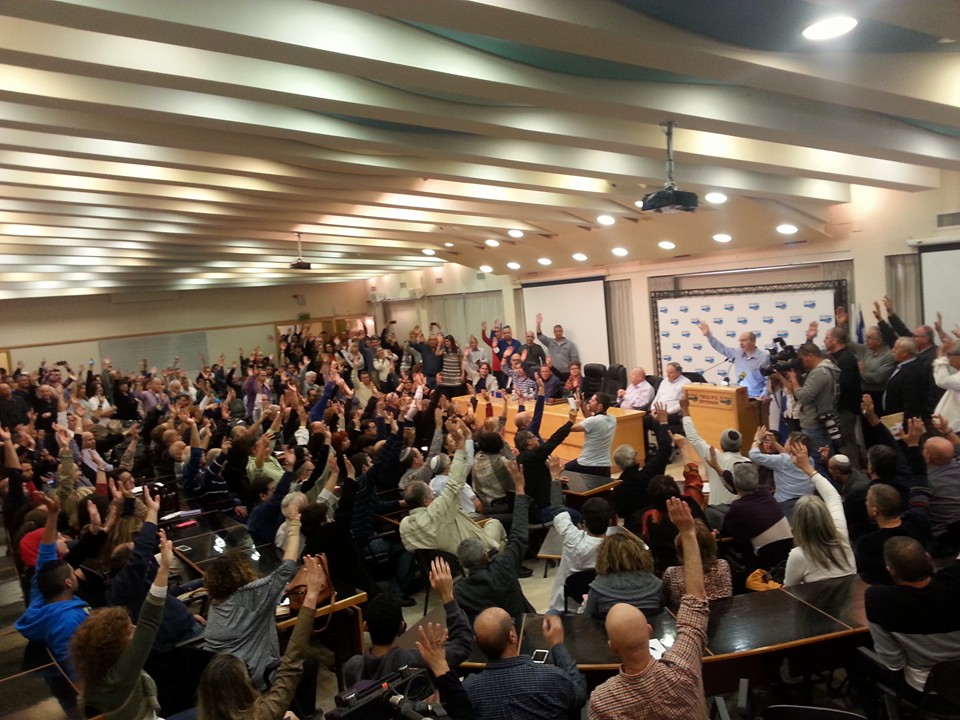
Voters casting ballots as Netanyahu bloc election results come in

For readers following other elections this season, Tamara News also covered the coalition math behind Tuesday’s vote and the pre-election polling that set expectations heading into election day. Readers tracking broader shifts in global politics can also see how the political transition in Venezuela is unfolding on a very different continent this same week.

FAQ: Netanyahu bloc election results

Did Netanyahu win the election outright?
No single bloc had reached the 61 seats needed for a majority in the counts reviewed. Likud was the largest individual party, and the pro-Netanyahu bloc led the opposing bloc, but neither had secured a governing majority.

When will Israel know the final result?
Final certified results typically follow about a week after election day, once double-envelope and military ballots are added to the count.

What is a “double envelope” ballot?
It is a vote cast by someone away from their registered polling station, sealed in an extra envelope so officials can verify eligibility before it is counted with the final tally.

Could smaller parties decide the outcome?
Yes. Several parties sat close to the 3.25% threshold needed to enter the Knesset, and whether they clear it can shift the final seat count enough to change who can realistically form a government.

What role could Arab-led parties play?
The Joint List and Ra’am have previously signaled they might support a coalition from outside without formally joining it, a dynamic that has decided past Israeli coalition fights.

What happens if no one can form a government?
Israel has gone to repeat elections before when coalition negotiations collapsed, though that outcome typically follows weeks of failed talks, not an immediate call for a new vote.

Rubio’s Blunt Warning to Venezuela: Reform Fast, Or Watch This Collapse

Venezuela’s political transition is entering a tense new phase. On 26 October 2026, US Secretary of State Marco Rubio told reporters that the alternative to a successful handover is either armed conflict or a return to the repression that marked the final years of Nicolás Maduro’s rule. “If this process doesn’t work, then the alternative is going to be worse,” he said, according to an IANS report carried by The Hans India.

Maduro himself is already out of power and in US custody, facing a fresh set of charges on top of earlier ones. In his place, interim president Delcy Rodríguez has been overseeing a government Washington still does not fully trust. Rubio’s remarks, delivered a day later on 27 October, make clear the transition’s deadline pressure has not eased just because Maduro is gone.

What Rubio said about Venezuela’s political transition

Speaking from Washington, Rubio set out a blunt framework for Venezuela’s political transition. According to a report from Agenzia Nova, he said the United States is prepared to use sanctions to push interim authorities to keep the commitments they have already made. He credited the interim government with meeting every deadline agreed so far, but warned that patience is not unlimited.

He was equally direct about accountability. Interim officials, Rodríguez included, “will be judged on their actions rather than their statements,” Rubio said, adding that immunity from prosecution is off the table for anyone in the interim government. That is a notably harder line than the kind of blanket amnesty often floated in negotiated transitions elsewhere.

Why the electoral council is the real sticking point

At the centre of Rubio’s demands sits an institutional problem rather than a political one. He wants Venezuela’s National Electoral Council and its Supreme Court replaced before any vote can be considered credible, arguing both bodies remain loaded with officials loyal to the old Maduro apparatus. “How can you have a legitimate election in Venezuela when the Electoral Council is controlled by people loyal to one side,” he said.

No fixed election date has been set. Rubio said Washington would not let interim leadership delay a vote indefinitely, but he also avoided naming a specific deadline, which leaves plenty of room for the kind of slow-walking that has derailed past transitions in the region.

Machado’s return and the sanctions lever

One concrete sign of progress: opposition leader María Corina Machado returned to Venezuela on 26 October without incident, Rubio said, after the US told interim authorities weeks earlier that her return should be permitted. Machado has publicly criticised a US-backed oil arrangement with a private company, but Rubio said those objections should not be allowed to derail the broader transition.

That oil arrangement is itself part of the leverage equation. Some sanctioned activity is currently allowed to continue under Treasury waivers and general licenses, which keep limited oil revenue flowing. Rubio suggested those waivers are conditional rather than permanent, and could be pulled back if the interim government falls behind on its commitments. He also said Washington’s broader goal includes making it possible for the estimated 6 to 7 million Venezuelans who left the country during the Maduro years to come home.

What happens from here

For now, Venezuela’s political transition remains a negotiation conducted mostly in public statements rather than signed documents. Rubio expressed confidence the process could be completed before his own time in office ends, which is as close as he came to putting a timeline on it. He also said Iranian and Cuban influence inside Venezuela has been sharply reduced since the transition began, a claim that, like much of this story, rests on the US government’s own account rather than independent verification.

The coming weeks are likely to turn on two concrete signals: whether the electoral council and court actually get replaced, and whether the oil waivers survive. Either one slipping would tell us more about where this transition is really headed than another round of statements.

Frequently asked questions

Why is Marco Rubio warning about civil war in Venezuela?
Rubio said that if the US-backed transition in Caracas stalls, the alternative is either armed conflict or a return to the repression of the Maduro era. He made the comments to reporters on 26 October 2026, framing the warning as pressure on interim authorities to move faster on reform.

Who is running Venezuela’s interim government?
Delcy Rodríguez has been acting as interim president since the transition began. Rubio said she and other interim officials would be judged on actions rather than statements, and ruled out immunity from prosecution for interim officials.

What does the US want changed before elections happen?
Washington wants Venezuela’s National Electoral Council (CNE) and Supreme Court (TSJ) replaced, arguing both are stacked with officials loyal to the former Maduro government and cannot run a credible vote.

Is María Corina Machado back in Venezuela?
Rubio said opposition leader María Corina Machado returned to Venezuela on 26 October 2026 without incident, after Washington told interim authorities weeks earlier that she should be allowed back.

Will the US lift sanctions on Venezuela?
Not unconditionally. Rubio said some oil-related activity is already permitted through Treasury waivers and general licenses, but warned those could be reconsidered if interim authorities fall behind on agreed commitments.

What happens if the transition fails?
Rubio framed it as a binary choice: reform that leads to a stable, internationally recognised government, or a slide back into armed conflict or authoritarian rule. He gave no fixed election date but said Washington would not let the process drag on indefinitely.

For more on how the region’s politics are moving this week, see our coverage of the charges Maduro now faces in US custody and the protests that preceded this transition.

Crowd demonstrating as part of Venezuela's political transition away from the Maduro government

Israel Just Voted — And the Real Fight for Power Hasn’t Even Started

Israelis cast their ballots on 27 October 2026 in the first national election since the Hamas-led attack of 7 October 2023 and the war that followed. All 120 Knesset seats were up for grabs, and the vote has been widely framed as a referendum on Prime Minister Benjamin Netanyahu’s long run in office. But as with every Israeli election, the count itself only sets up the real contest: Israel election coalition math, which decides who actually governs.

A race too close to call on its own

Pre-election polling, summarised by Al Jazeera, put the opposition bloc at around 52 projected seats against roughly 50 for Netanyahu’s religious-nationalist alliance of Likud, Jewish Power and Religious Zionism. Neither side was projected to reach the 61 seats needed for a majority. That gap is the whole story here: defeating Netanyahu at the ballot box, if that is even what happened, does not automatically remove him from power.

The opposition side is not a single party but a loose alliance. Yashar, the Democrats, Yisrael Beytenu and the Together alliance signed a non-aggression pact in September 2026 specifically to avoid splitting the anti-Netanyahu vote. Yashar’s Gadi Eisenkot is seen as the group’s likeliest candidate for prime minister, with Naftali Bennett of Together also mentioned as an alternative.

Why Israel election coalition math runs through two small parties

As reference tracking of the race shows, the Joint List and Ra’am, which together represent Palestinian citizens of Israel, are projected to win about 13 seats. In a Knesset where neither major bloc clears 61 on its own, that bloc of seats could end up deciding who forms the next government, whether by joining a coalition directly or by backing one from outside without taking cabinet posts. Most opposition leaders have so far rejected governing with Ra’am inside the coalition, which narrows an already tight path.

This is where Israel’s electoral system does its real work. Under proportional representation, no single party has ever won an outright Knesset majority, so every government since the state’s founding has been a negotiated coalition. The prime minister is not chosen directly by voters on election day; Knesset members effectively choose afterward, through weeks of bargaining over ministries, policy commitments and, often, personal rivalries.

The paths that are actually on the table

Several outcomes remain plausible once the final results are certified. A Netanyahu-led government is still possible if his bloc can find even a handful of additional seats through defections or late deals. An opposition-led majority is possible if Eisenkot or Bennett’s camp can stitch together support without relying on Ra’am’s votes inside the coalition. A minority government, propped up from outside by Arab-led parties that don’t take ministries, is a third route that has precedent in Israeli politics. A national unity government, or a rotating premiership arrangement between rival blocs, remains a longer-shot fourth option.

If none of that works, Israel would likely head to yet another election, a familiar pattern in a country that went to the polls five times between 2019 and 2022 alone. Netanyahu would stay on as caretaker prime minister in the meantime, which is itself a form of leverage in the negotiations to come.

What to watch next

The real signal in the days ahead will not be the headline seat count but which smaller parties start talking to which larger ones. Watch whether Shas and United Torah Judaism, the ultra-Orthodox parties that have both joined and abandoned Netanyahu’s coalitions before, swing toward him or stay on the sidelines. Watch whether Ra’am is offered any formal role or kept firmly outside the room. And watch how long the process takes: Israeli coalition talks have dragged on for months before, and a drawn-out negotiation is itself a kind of outcome, leaving Netanyahu in charge by default while his rivals try to agree on who should replace him.

Frequently asked questions

When is Israel’s 2026 election and why does it matter?
Israelis voted on 27 October 2026 for all 120 Knesset seats, the first election since the Hamas-led attack of 7 October 2023 and the war that followed. It is widely seen as a referendum on Benjamin Netanyahu’s long tenure as prime minister.

Did Netanyahu lose the election?
Pre-election polling put the opposition bloc at roughly 52 projected seats against about 50 for Netanyahu’s religious-nationalist alliance, with neither side projected to reach the 61 needed for a majority. The actual count determines nothing on its own; coalition talks do.

Who leads the opposition to Netanyahu?
Four parties, Yashar, the Democrats, Yisrael Beytenu and the Together alliance, signed a non-aggression pact in September 2026 to try to unseat Netanyahu. Yashar’s Gadi Eisenkot is seen as the likeliest prime ministerial candidate, with Naftali Bennett of Together also mentioned.

Why do Arab-led parties matter so much in this election?
The Joint List and Ra’am, which represent Palestinian citizens of Israel, are projected to win around 13 seats combined. With neither major bloc projected to reach 61 seats alone, those seats could decide who ends up forming a government.

How is Israel’s prime minister actually chosen?
Not directly by voters. Israel uses proportional representation, so Knesset members negotiate alliances after the vote until one side can command 61 seats. No party has ever won an outright majority on its own.

What happens if no coalition can be formed?
Israel would likely face another election, and Netanyahu would remain as caretaker prime minister until a new government is sworn in. That scenario has played out more than once in Israeli politics over the past decade.

For related coverage, see our reports on the proposed window for Russia-Ukraine peace talks and Venezuela’s own contested transition.

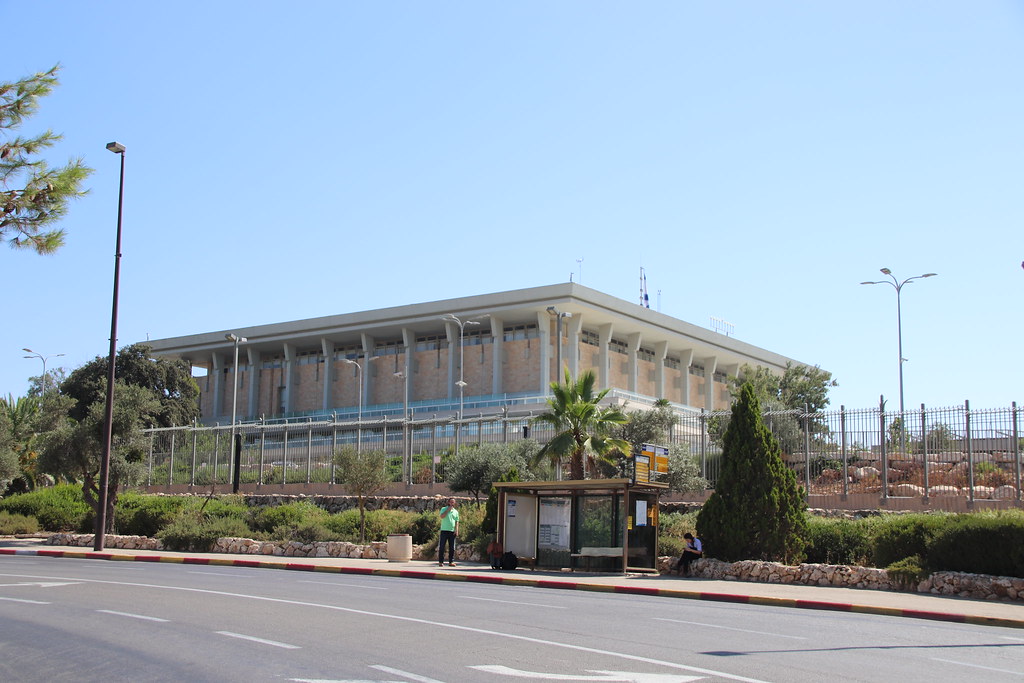
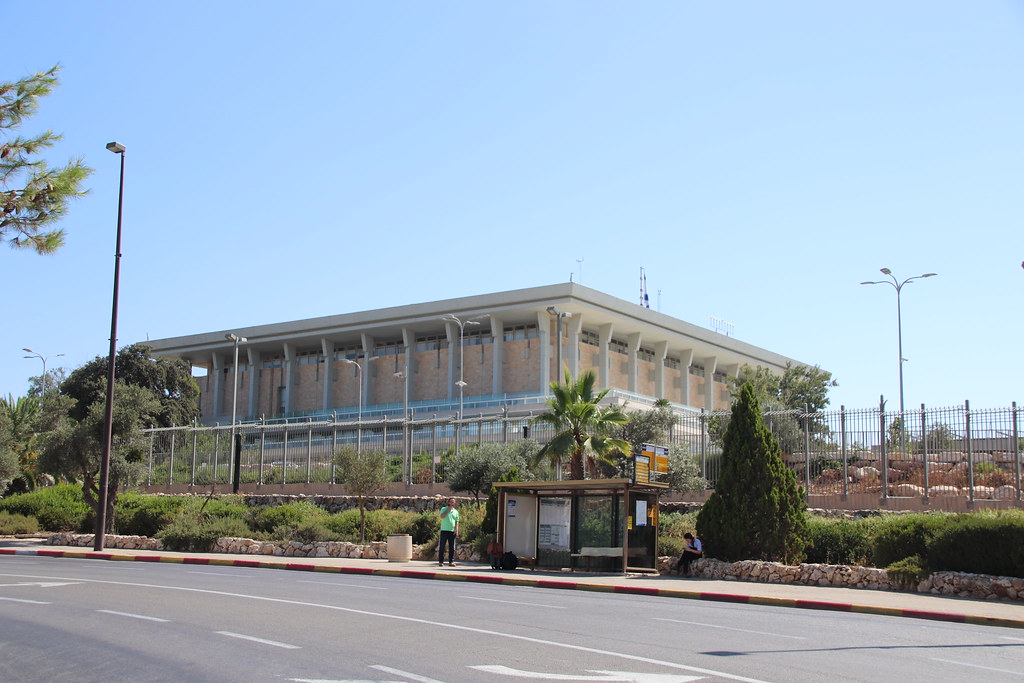
The Knesset building, the venue for Israel election coalition math negotiations after the 2026 vote

Maduro Faces a Second Set of Charges — And They’re Worse Than the First

The man US forces captured in a January raid on Caracas now faces a second set of federal charges. Manhattan federal court unveiled the Maduro torture indictment on October 8, 2026. It adds a conspiracy-to-commit-torture charge. That charge sits alongside the drug trafficking case Nicolás Maduro and his wife, Cilia Flores, already face. Both have pleaded not guilty to the drug charges.

What the Maduro Torture Indictment Alleges

Federal prosecutor Jamie McDonald announced the revised indictment at a news conference. He said the conspiracy’s members “were holding the shovel.” Prosecutors allege the scheme ran from at least 1999 through 2025. It drew in Venezuelan military, intelligence and law enforcement officials, according to Al Jazeera. Prosecutors say officials shocked and asphyxiated one detainee. That followed his arrest after a 2018 drone attack the Venezuelan government blamed on an effort to target Maduro.

Maduro torture indictment courtroom gavel symbolizing the case

The American Victims Named in the Case

Prosecutors cite three US citizens detained in Venezuela. Intelligence officers arrested one in January 2025 without even targeting him specifically. Officials allegedly beat him over two days, causing a permanent eye injury. They reportedly released him about a year later and warned him not to disclose what happened. Prosecutors allege Maduro personally directed, or was regularly briefed on, detainee abuse. In one instance, he allegedly ordered officials to “squeeze them harder” after a detained officer remained defiant. Flores allegedly attended some meetings where officials discussed detainee treatment.

How Maduro Ended Up in US Custody

Maduro served as Venezuela’s president from 2013 until his capture on January 3, 2026. US military forces seized him and Flores from their Caracas home that day. President Trump had authorized the raid, according to PBS NewsHour. Delcy Rodríguez now serves as Venezuela’s acting president. Brooklyn’s Metropolitan Detention Center holds both Maduro and Flores. Their drug trafficking trial is set for June 1, 2027. Maduro’s attorney, Barry Pollack, says his client denies the new torture allegations and looks forward to his day in court.

A Separate Fight Over Flores’s Detention

Judge Alvin Hellerstein denied a request to release Flores over medical concerns the same Thursday prosecutors unveiled the torture charges. Her lawyers told the court she is 69 and has lost 25 pounds. She may have suffered a minor heart attack in July. The court wasn’t persuaded that her condition justified release before trial. Her attorney said at the time he hadn’t yet reviewed the new torture allegations in detail.

What the New Charges Change Going Forward

The torture count doesn’t replace the drug trafficking charges. It sits alongside them, giving prosecutors a second and arguably more politically resonant case for the June 2027 trial. Venezuela is still adjusting to Maduro’s removal after more than a decade in power. The indictment keeps the accountability question in American courts rather than Venezuelan ones. That dynamic is likely to shape both the legal proceedings and the political transition under Rodríguez’s acting government. Venezuelan officials who served under Maduro now face a choice. They can cooperate with the broader investigation, or risk their own exposure if evidence implicates them directly.

What Happens Next in the Legal Process

A superseding indictment like this one does not restart the case from scratch. It adds the torture conspiracy charge to proceedings already underway over the drug trafficking allegations. Both sets of charges are set for the same June 2027 trial. Between now and then, prosecutors and defense attorneys exchange evidence through discovery. Courts also hear pretrial motions over what evidence can be used at trial. Maduro and Flores are expected to formally respond to the amended charges at an arraignment in the coming weeks. The allegations span more than two decades and involve multiple co-conspirators and overseas witnesses. Prosecutors have signaled that pretrial proceedings alone could take months. Judge Hellerstein denied Flores’s separate request for release pending trial, citing her medical condition. That ruling suggests both defendants will likely stay in federal custody at the Metropolitan Detention Center through pretrial proceedings. Federal criminal trials in the Southern District of New York are open to the public and press, so each stage of the case, from arraignment through jury selection, is likely to draw significant attention. US media outlets covered the January 2026 capture and the original drug trafficking charges heavily, and interest in the case has stayed high since.

Related Coverage on Tamara News

For more on Venezuela’s post-Maduro transition, see our coverage of the nationwide protests demanding new elections. We’ve also reported on the proposed window for Russia-Ukraine peace talks, another case testing what follows a change at the top.

Maduro Torture Indictment: Questions Readers Are Asking

What is the Maduro torture indictment?
A federal indictment unveiled October 8, 2026, in Manhattan. It adds a conspiracy-to-commit-torture charge to Nicolás Maduro’s existing drug trafficking case.

Is Maduro still president of Venezuela?
No. US forces captured him in January 2026, and he remains in federal custody in New York. Delcy Rodríguez is Venezuela’s acting president.

Who else was charged alongside Maduro?
His wife, Cilia Flores, faces the same torture conspiracy charge along with the existing drug trafficking charges.

What do the torture charges allege?
That Venezuelan officials tortured detainees between 1999 and 2025. Prosecutors say Maduro directed or was briefed on the abuse, and at least three victims were US citizens.

Where is Maduro being held?
At the Metropolitan Detention Center in Brooklyn, New York.

When is the trial scheduled?
June 1, 2027, according to court filings reported by PBS NewsHour.

Singapore Keeps Its Passport Crown, But One Rival Is Closing In Fast

The Henley Passport Index 2026 has Singapore holding the top spot again. The bigger story this year is how much ground the United Arab Emirates has closed on the traditional leaders. The index ranks 199 passports by how many destinations their holders can enter without a prior visa. It shows a widening gap between the most mobile travelers and everyone else.

Singapore Stays on Top of the Henley Passport Index 2026

Singapore’s passport gives holders visa-free or visa-on-arrival access to 192 destinations. That is enough to keep it in first place, a spot it has held for several years, according to Travel And Tour World. No other passport matches that figure in the current rankings.

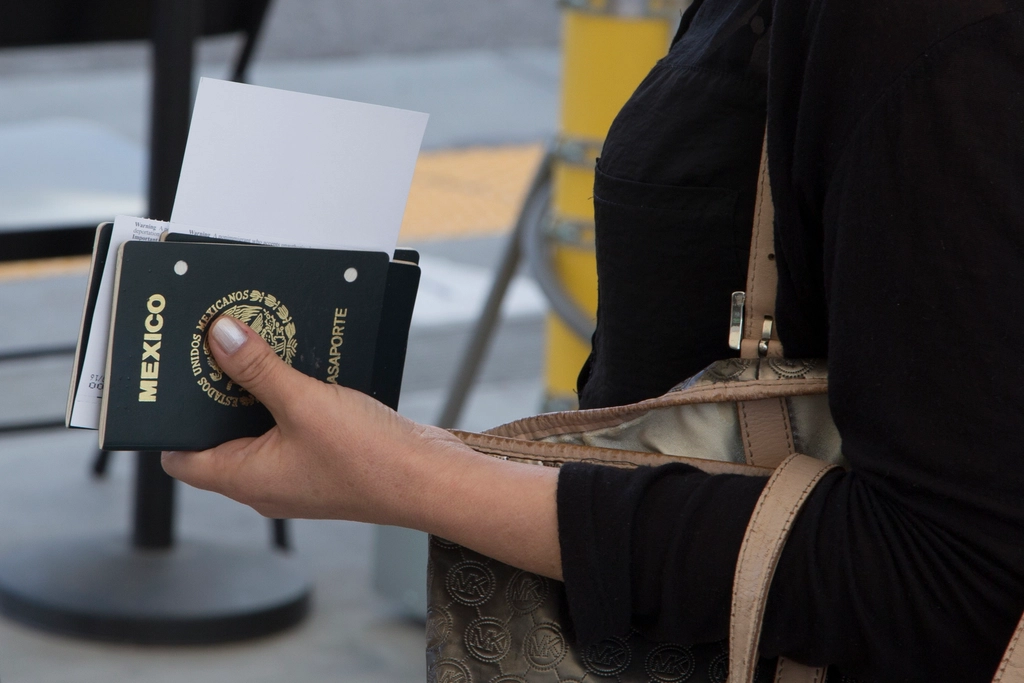
Henley Passport Index 2026 traveler at airport passport control

The UAE’s Climb to Second Place

The UAE now sits in a three-way tie for second with Japan and South Korea. Each offers access to 187 destinations. A decade ago, the UAE passport ranked far outside the top ten. Its rise reflects years of bilateral visa-waiver agreements the country has negotiated, though Henley’s published summary doesn’t break out the exact year-over-year gain. Belgium, Denmark, Germany, Ireland, Italy and Switzerland share fourth place with 185 destinations apiece.

Where the UK and US Rank in the Henley Passport Index 2026

The United Kingdom sits sixth with 183 destinations, tied with Hungary, Malaysia and Poland. The United States ranks tenth, with access to 179 destinations. Both countries have slipped down the index over the past decade. Gulf and East Asian passports have added visa-free agreements faster than legacy Western powers have. At the other end of the list, Afghanistan ranks last among the 199 passports assessed. Its holders can enter just 23 destinations without a prior visa.

Why the Rankings Keep Shifting

Henley’s index is built entirely from the number of visa-waiver agreements each country has in place. That means it moves whenever governments sign new deals or suspend old ones. It is as much a snapshot of diplomatic relationships as of tourism convenience. A passport’s rank can rise even if its holder’s actual travel habits never change, simply because their government struck a new agreement with another state.

How the Index Has Shifted Over the Past Decade

Henley has tracked passport strength using the same travel-document database for years, which is part of why comparisons across editions are considered reliable. Singapore has sat at or near the top for most of the index’s recent history, while the biggest story of the past decade has been the Gulf region’s rise. The UAE’s jump from outside the top ten to a share of second place reflects a deliberate diplomatic strategy rather than a single breakthrough deal, built instead on a string of bilateral waiver agreements signed over several years. Traditional Western powers such as the UK and US have not lost agreements outright. They have simply added new ones more slowly than Gulf and East Asian governments have, which is enough on its own to erode a ranking even without any country tightening its own rules. The practical effect for travelers is that passport strength has become less tied to a country’s wealth or diplomatic weight alone, and more to how actively its government has pursued waiver deals in recent years. Henley compiles the index twice each year, so a country’s position can still shift by the time the next edition is published.

Which Regions Dominate the Top of the 2026 Rankings

The top tier this year is a mix that would have looked unusual a decade ago. A Southeast Asian city-state holds first place. A Gulf state and two East Asian economies share second place. Six European countries bunch together in fourth. That spread shows the ranking is no longer a story of Europe versus the rest. Gulf states in particular have spent years negotiating reciprocal visa-waiver deals, pushing passports like the UAE’s into contention with the traditional leaders. European passports still dominate the upper-middle of the table, but they no longer have the top spot to themselves.

What the Gap Means for Travelers

For travelers from the top ten, a visa is rarely the obstacle it once was. For those lower down the list, including Afghan nationals, a visa application is still a routine part of almost any trip abroad. That comes with the cost, paperwork and waiting time it always has. The Henley Passport Index 2026 doesn’t just rank convenience. It’s a rough proxy for how unevenly visa-free mobility spreads worldwide.

Related Coverage on Tamara News

For more on how visa access is shifting around the world, see our coverage of Dubai’s record year for golden visas, South Korea’s extended travel exemption, and the US pilot program for expedited visa interviews.

Henley Passport Index: Reader Questions

Which passport ranks first in the Henley Passport Index 2026?
Singapore ranks first, with visa-free or visa-on-arrival access to 192 destinations.

Where does the UAE rank this year?
The UAE ties for second with Japan and South Korea, each offering access to 187 destinations.

How does the UK passport rank?
The UK sits sixth, tied with Hungary, Malaysia and Poland, with access to 183 destinations.

Where does the US passport rank?
The United States ranks tenth, with access to 179 destinations.

Which passport ranks last?
Afghanistan ranks last among the 199 passports assessed, with access to just 23 destinations.

How is the Henley Passport Index calculated?
It is based on the number of destinations each passport holder can enter without a prior visa, drawn from bilateral and multilateral visa-waiver agreements.