Renewing an H-1B Just Got $4,000 Costlier, For Some Employers

A new US rule took effect on 9 September 2026 that adds thousands of dollars to certain work visa renewals. The H-1B extension fee now reaches $4,000 for covered employers, and the equivalent L-1 charge reaches $4,500. The change applies to extension petitions that previously escaped it.

The Department of Homeland Security published the final rule on 10 August 2026. It amends the regulations governing the 9-11 Response and Biometric Entry-Exit Fee.

Form I-129 petitions postmarked or filed electronically on or after 9 September must include the fee where it applies.

Who the H-1B extension fee actually hits

The charge is limited to “covered employers”. The definition has two parts and both must be true.

The employer must have 50 or more US employees. More than 50% of that workforce must hold H-1B or L-1 status.

Hand typing on a keyboard representing employers affected by the H-1B extension fee

That test excludes most companies outright. A large firm with a handful of visa holders does not meet it. A mid-sized firm built mainly on sponsored staff does.

The rule therefore concentrates on staffing and outsourcing businesses rather than on employers generally. Most H-1B and L-1 workers will not see their employer charged.

What changed on 9 September

The fee itself is not new. It already applied to petitions seeking an initial grant of status, and it still does, unchanged.

What changed is the scope. Covered employers must now pay it on all extension of status petitions.

Previously the charge was tied to whether the related fraud prevention and detection fee applied. The new rule removes that link. Extensions that keep an employee with the same employer are now captured.

That last point matters most in practice. Routine renewals for existing staff were the common case that fell outside the old wording.

What this means for workers on these visas

The fee is an employer cost. Workers do not pay it directly.

Indirect effects are the real question. Employers facing a higher renewal cost may weigh sponsorship differently at the point of extension, particularly where margins are thin.

Consider a software engineer on an H-1B at a mid-sized consultancy where most staff hold sponsored status. That employer now faces $4,000 at each extension on top of existing filing costs. The engineer’s status is unaffected, but the renewal decision carries a new number.

Nothing in the rule changes eligibility, processing times or the cap. It changes price, and only for a defined set of employers.

This sits alongside other cost changes we have covered, including the proposed six-figure H-1B fee and the weighted selection and prevailing wage proposal.

How the 50-50 test works in practice

The threshold has a specific history. Congress created the surcharge for employers whose US workforce depends heavily on H-1B and L-1 staff, and the 50-50 label comes from its two limbs.

Counting the workforce is the first step. Employers count US employees, including full-time and, depending on their policy, other categories their counsel treats as employees.

Counting visa holders is the second. More than half of that total must hold H-1B or L-1 status for the surcharge to apply.

Employers near the line need care. A company at 48% one quarter and 52% the next changes category, and the test applies at the time of filing.

Getting this wrong cuts both ways. Underpaying risks rejection of the petition. Overpaying hands money to an agency that will not volunteer it back.

Dates and filings to keep in view

The 9 September trigger is based on the postmark or electronic submission date, not on the decision date. Petitions sent before then follow the old rules.

Employers close to the 50-employee or 50% thresholds should confirm their position before filing. The test is applied to the employer, not the individual petition.

Separately, a revised public charge guidance applies to Form I-485 filings postmarked on or after 18 September 2026. Applications filed before that date fall under the 2022 policy. That is a different rule affecting a different filing.

September is also the final month of the US fiscal year, which is when employment-based categories can hit annual limits. Our summary of the October 2026 Visa Bulletin covers where those categories stand.

Keep the two filings separate in your planning. An I-129 extension and an I-485 adjustment follow different rules, different fees and different cut-off dates.

Employers running both for the same worker should date each one deliberately. A single week can move a filing from one rule set to another.

Frequently raised points on the new charge

  • How much is the fee? $4,000 for H-1B and $4,500 for L-1, payable by covered employers.
  • When did it start? The final rule took effect 9 September 2026 and applies to Form I-129 petitions filed on or after that date.
  • Who counts as a covered employer? An employer with 50 or more US employees where more than 50% hold H-1B or L-1 status.
  • Does it apply to new petitions? The fee already applied to initial grants of status and continues to apply there unchanged.
  • What exactly changed? Covered employers must now pay it on all extension petitions, including extensions with the same employer.
  • Do employees pay it? No. It is charged to the petitioning employer.

Related immigration coverage

Read our reports on the $100,265 H-1B fee proposal, the weighted H-1B selection plan and the October 2026 Visa Bulletin.

Sources

  • Federal Register — 9-11 Response and Biometric Entry-Exit Fee for H-1B and L-1 Visas. federalregister.gov
  • American Immigration Lawyers Association — DHS Final Rule Expanding 9-11 Response and Biometric Entry-Exit Fee. aila.org
  • USCIS — H-1B Specialty Occupations. uscis.gov
A Federal Judge Could Still Stop This Student Visa Rule Before It Hits Sept 15

A coalition led by NAFSA: Association of International Educators filed a federal lawsuit on August 18, 2026. It seeks to block the Department of Homeland Security’s rule ending Duration of Status for international students. A hearing was held September 3 in Boston. The student visa rule lawsuit argues DHS violated the Administrative Procedure Act. It says DHS failed to properly assess the rule’s costs, respond to public comments, or consider less burdensome alternatives, according to the Presidents’ Alliance on Higher Education and Immigration.

The underlying rule was published July 17, 2026 and is set to take effect September 15. It would end the decades-old system letting F-1 students and J-1 exchange visitors remain in status for the length of their academic program. Instead, it caps their stay at their program’s end date or four years, whichever is shorter, plus a 30-day grace period. That is down from 60 days under the prior rule.

What the student visa rule lawsuit is asking a judge to do

The coalition includes the Presidents’ Alliance alongside other associations and labor unions. It filed a motion for a preliminary injunction alongside the complaint, asking the court to block the rule before its September 15 effective date. US District Judge F. Dennis Saylor IV set an August 31 deadline for the government to respond. He held a hearing on September 3 at the Moakley United States Courthouse in Boston, according to ClinchLaw Immigration News.

As of this writing, the court has not ruled on the injunction request. The September 15 effective date for the rule still officially stands. If the judge grants the injunction, the rule’s implementation would pause while the broader legal challenge proceeds, potentially for months.

The plaintiffs are not limited to a single university or student group. The coalition brings together higher-education associations and labor unions whose members range from research universities to community colleges. That shows how broadly the rule change would reach across US higher education. F-1 and J-1 status touches degree-seeking students, exchange visitors, researchers, and their dependents alike. All would face the same fixed-date tracking requirement under the new rule, replacing the flexible program-length system in place now.

Why students and universities are watching closely

United States federal courthouse where the student visa rule lawsuit was heard

Ending Duration of Status would mark the most significant change to student visa rules in roughly 50 years. Immigration attorneys tracking the litigation say so. Universities have advised international students to review their program end dates and consult designated school officials. A hard four-year cap, combined with a shortened 30-day grace period, leaves far less room for delays or extensions. Transitions to other visa categories also get harder than under the current system.

The lawsuit does not dispute the government’s authority to set immigration policy broadly. It argues specifically that DHS cut corners in the rulemaking process. That is a procedural argument. If it succeeds, the rule would go back for more thorough rulemaking rather than face a permanent bar on any change to Duration of Status.

What happens if the rule proceeds anyway

If no injunction comes before September 15, the rule takes effect as written. F-1 and J-1 holders would then need to track a fixed departure date rather than rely on program length alone. Extensions beyond the four-year cap would require a separate application. Students already in the US when the rule takes effect should fall under transition guidance DHS published alongside the rule. University international offices still have active questions about that guidance’s exact scope.

Large research universities often host thousands of F-1 and J-1 holders at once, giving them more staff capacity to walk students through the practical changes. Smaller colleges with fewer dedicated immigration specialists face a harder task communicating the same information. The uncertainty created by the pending litigation, layered on top of the rule itself, has made planning for the fall term unusually difficult for international offices of every size.

Frequently asked questions

What is the Duration of Status rule change?
A DHS rule set to take effect September 15, 2026. It ends open-ended Duration of Status for F-1 and J-1 visa holders. Instead, it caps their stay at their program length or four years, whichever is shorter, plus a 30-day grace period.

Who filed the lawsuit against it?
A coalition led by NAFSA: Association of International Educators and the Presidents’ Alliance on Higher Education and Immigration filed the complaint on August 18, 2026. Other associations and labor unions joined them.

What does the lawsuit argue?
That DHS violated the Administrative Procedure Act. It says DHS failed to adequately assess the rule’s costs and benefits, respond to public comments, or consider less burdensome alternatives.

Has a judge ruled on blocking the rule?
Not yet as of early September 2026. A hearing was held September 3 in Boston, but the September 15 effective date still officially stands.

How does the grace period change?
The rule shortens the grace period for F-1 students from 60 days to 30 days. That window covers the time to depart, extend, or change status after a program ends or the four-year cap is reached.

Related coverage

Sources

  • Presidents’ Alliance on Higher Education and Immigration — Coalition Files Federal Lawsuit Challenging Rule Ending Duration of Status. presidentsalliance.org
  • ClinchLaw Immigration News — Duration of Status Lawsuit Reaches Critical Juncture. news.clinchlaw.com

Stuck on a Green Card Waitlist? October Could Finally Move It

A new fiscal year means a fresh batch of green card numbers. For hundreds of thousands of applicants stuck behind country caps, that reset can’t come soon enough. The October 2026 visa bulletin will open a new allocation of employment-based immigrant visas. Early predictions suggest some of the most backlogged categories could finally see meaningful movement.

The US government’s fiscal year runs from October through September. Each October, the State Department releases a fresh supply of numerically limited visas across employment and family categories. After a year of minimal movement in several employment-based lines, immigration attorneys are watching October’s release closely.

Passport and travel documents tied to the October 2026 visa bulletin

What the October 2026 visa bulletin is expected to show

EB-2 India reached its annual limit and became entirely unavailable earlier this year. It is expected to reopen with a new cutoff date once the fiscal year turns over on October 1. Attorneys tracking the category say a return to availability is close to certain. How far the cutoff date advances remains uncertain.

EB-1 India covers applicants with extraordinary ability, priority executives and outstanding researchers. Forecasters project strong forward movement, potentially recovering to dates from late 2023 or early 2024. EB-2 China is expected to stabilize after summer warnings of retrogression, with potential advancement into 2021 or 2022 priority dates.

Why this bulletin matters more than most

Visa bulletin predictions are just that: predictions. Actual cutoff dates published by the State Department can diverge from forecasts. Demand patterns only become clear once the new fiscal year’s applications start flowing. Even so, October’s bulletin traditionally carries outsized importance. It is the one month each year guaranteed to bring a full fresh allocation rather than incremental movement within an already-constrained pool.

Applicants who have waited years behind India and China country caps feel the psychological weight of the October reset. That is true even when the practical movement turns out to be modest. Immigration attorneys often see a spike in client inquiries in the weeks before the bulletin publishes.

What applicants should do while they wait

Applicants with cases in backlogged categories should ensure all supporting documentation, medical exams and biometrics are current. That way they can move quickly if their priority date becomes current in October. Cases that sit ready to file the moment a date becomes current typically process faster than those needing additional documentation gathered afterward.

Employers sponsoring workers in affected categories should also coordinate with immigration counsel on timing. A sudden advancement in a previously unavailable category can create a narrow filing window. Demand can push the date back out again quickly.

What happens after the bulletin publishes

The official October 2026 Visa Bulletin typically releases in mid-September. That gives applicants and employers a few weeks of lead time before the new fiscal year numbers take effect on October 1. USCIS separately announces each month which chart applicants can use. That is either the more favorable “Dates for Filing” chart or the more conservative “Final Action Dates” chart.

How this year’s backlog compares to prior years

Employment-based categories have faced unusually tight movement over the past several fiscal years. That has been driven by a combination of high demand from India and China and spillover effects from pandemic-era visa processing delays. Immigration attorneys say the backlog built during that period has not fully cleared, even as annual allocations have returned to normal levels.

Family-based categories face similar pressure. The political and legislative debate around increasing annual visa caps has not produced any changes to the numerical limits Congress set decades ago. Without a legislative fix, attorneys expect country-specific backlogs for India and China to persist for years. October’s reset offers only temporary relief.

What historically happens after an October reset

Past October resets have produced mixed results. Some years bring dramatic jumps in previously stalled categories. Other years see only marginal movement once real demand becomes clear. Attorneys who track the bulletin closely say the size of the October jump often depends on how many visas went unused in the prior fiscal year, since unused numbers can roll forward into the new allocation under specific statutory rules.

Applicants should treat early predictions as a guide rather than a guarantee. The State Department has occasionally reversed course within the same fiscal year when demand surged faster than expected, pulling a cutoff date back after an initial advance.

Frequently asked questions

When does the October 2026 visa bulletin come out?
The State Department typically releases the visa bulletin in mid-September, ahead of the new fiscal year that begins October 1.

Will EB-2 India become available again?
Predictions suggest EB-2 India, which hit its annual limit, will reopen with a new cutoff date once the fiscal year resets on October 1.

Why does the fiscal year reset matter for green cards?
Each October brings a fresh allocation of numerically limited visas, which often advances cutoff dates that had stalled during the prior fiscal year.

Should applicants file anything before October?
Applicants should ensure documentation, medical exams and biometrics are current so they can move quickly if their priority date becomes current.

For more on categories affected by annual visa limits, see our coverage of the immigrant visa freeze and the DV-2026 diversity visa lottery deadline.

Sources

  • US Department of State — Visa Bulletin For September 2026. travel.state.gov
  • Shusterman Law — Visa Bulletin Predictions For October 2026. shusterman.com
  • Foster Global — Visa Bulletin September 2026: Minimal Movement Across Employment-Based Categories. fosterglobal.com

Your F-1 Grace Period Just Got Cut in Half — Here’s What Changes

Hundreds of thousands of international students and exchange visitors are about to lose a decades-old cushion. A new student visa duration status rule takes effect September 15. It replaces an open-ended admission period with a fixed expiration date for F, J and I visa holders across the United States.

The Department of Homeland Security published the final rule on July 17. It ends what is known as “Duration of Status,” or D/S. That system let international students and exchange visitors remain in the country for as long as they stayed enrolled or employed, without a hard expiration date on their paperwork.

International students affected by the student visa duration status rule

What the student visa duration status change actually does

Starting September 15, F-1 students will be admitted for a fixed period tied to their program length. The maximum is four years, plus a 30-day window for arrival and another 30 days for departure. J-1 exchange visitors and I-visa foreign media representatives face similar fixed timelines under the same rule.

The rule also shortens the standard post-completion grace period from 60 days to 30 days. That aligns F-1 students with the timeline J-1 visitors already followed. Anyone who leaves the country and re-enters on or after September 15 will fall under the new 30-day grace period, even if originally admitted under the old system.

Who is affected and who gets a transition

Students already inside the United States under Duration of Status before September 15 generally keep their existing 60-day grace period. That is true as long as they do not depart and re-enter after the rule takes effect. This transition detail matters enormously for students planning trips home during the upcoming academic year.

The rule further restricts the ability of both undergraduate and graduate students to switch degree programs mid-course. It also blocks international students who already hold one US degree from pursuing a second degree at the same academic level. Universities with large international enrollments are still working through how these restrictions apply to students partway through multi-year programs.

Why this counts as the biggest change in a generation

Immigration attorneys and university international offices describe this as the most significant overhaul of the student visa system in roughly 50 years. Duration of Status has been the default admission framework for F and J visa holders for decades. Replacing it with fixed dates introduces a new layer of paperwork and deadline tracking that neither students nor institutions have had to manage before.

International journalists face their own version of the change. Extensions are now capped at 240 days per request, or 90 days for journalists from China specifically, according to the final rule’s text.

What students should do before September 15

Anyone currently in the US on an F, J or I visa should confirm their program end date with their school’s international student office. They should understand exactly how the fixed admission period will apply to their situation. Students planning international travel this fall should pay particular attention to how re-entry after September 15 affects their grace period eligibility.

University international offices are advising students to request any needed program extensions well before their current authorization lapses. Fixed deadlines leave far less room for the informal flexibility that Duration of Status previously allowed.

How universities are preparing for the transition

International student offices have spent the weeks since the rule’s July publication updating internal tracking systems. They now flag fixed expiration dates rather than relying on continuous enrollment status. Staff at several large public universities say the shift requires far more individualized monitoring than the old system.

Some schools have added dedicated advising sessions ahead of the September 15 deadline. They are encouraging students to review their I-20 forms and confirm their program end dates match the new fixed-period system. Advisors are also warning students against assuming an extension will be automatic.

Immigration attorneys note that international students should keep copies of every version of their I-20 form going forward. Discrepancies between historical D/S records and the new fixed dates could create complications at future border crossings.

Frequently asked questions

When does the student visa duration status rule take effect?
The rule takes effect September 15, 2026, replacing open-ended Duration of Status admission with fixed expiration dates for F, J and I visa holders.

Does this affect students already in the US?
Yes, though those admitted under the old system before September 15 generally keep their 60-day grace period unless they depart and re-enter afterward.

How long is the new grace period?
The standard post-completion grace period drops from 60 days to 30 days for students who fall under the new rule.

Can students still switch degree programs?
The rule limits both undergraduate and graduate students’ ability to change programs, and blocks pursuing a second degree at the same level after already holding one US degree.

For related coverage of shifting US immigration policy, see our reports on the immigrant visa freeze and the new public charge rule affecting green card applicants.

Sources

  • Study in the States, DHS — Final Rule: Establishing a Fixed Time Period of Admission. studyinthestates.dhs.gov
  • Mintz — DHS Issues Final Rule Creating Fixed Period of Admission for F, J, and I Visa Holders. mintz.com
  • Yale OISS — Elimination of Duration of Status: Summary & FAQs. oiss.yale.edu

The US Is Still Turning Away Flights Over Ebola — Here’s Who It Affects

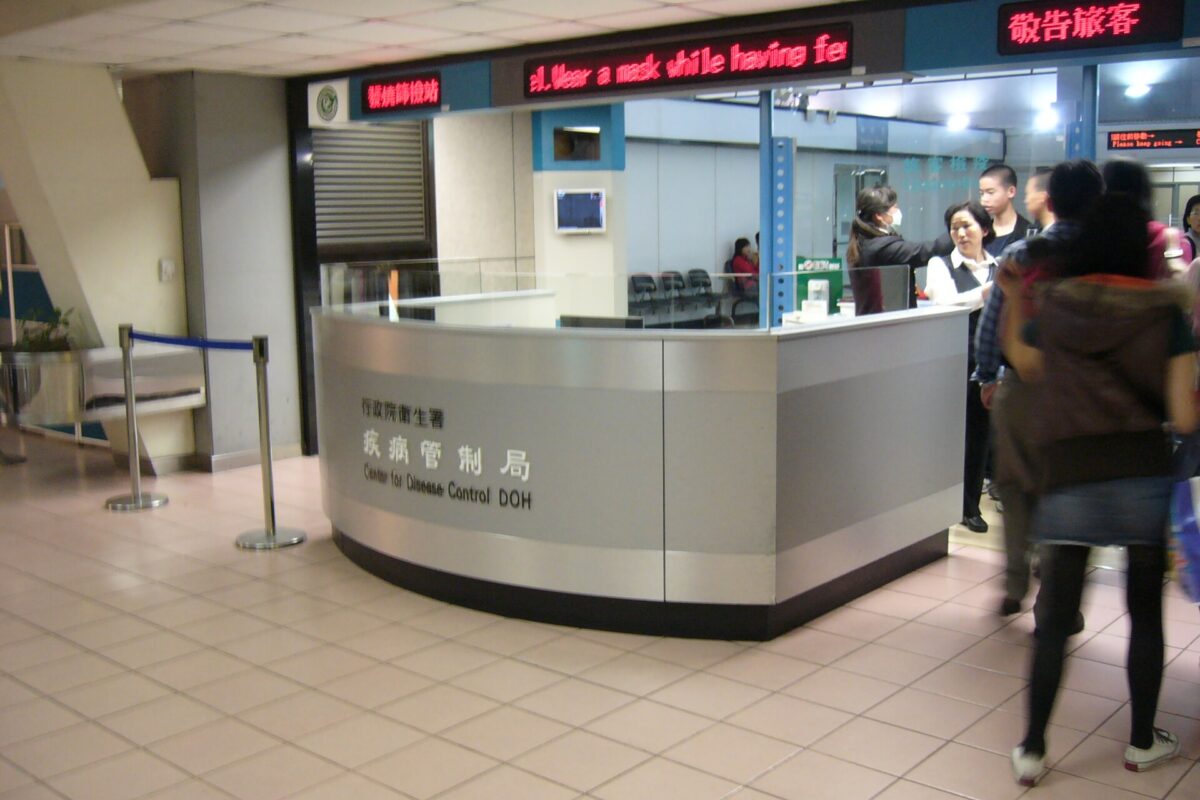
CDC Ebola entry restrictions tied to the ongoing 2026 Central Africa outbreak remain in effect for travelers who have recently been in the Democratic Republic of the Congo, Uganda or South Sudan. The Centers for Disease Control and Prevention first issued the order on May 18, 2026. It has renewed the order monthly since — most recently on August 12, 2026, for a 30-day period — according to the CDC’s own order text.

The measure suspends U.S. entry for foreign nationals who were physically present in any of the three countries within the preceding 21 days. The CDC maintains guidance on assessing and managing affected travelers on its emergency guidance page.

Who the CDC Ebola Entry Restrictions Actually Cover

The order exempts U.S. citizens and nationals outright. Military personnel and U.S. government employees serving overseas are exempt too. Everyone else who has been in the DRC, Uganda or South Sudan within 21 days of a scheduled flight cannot board a commercial flight to the United States. The rule applies regardless of the traveler’s ultimate nationality, as long as they are not a U.S. citizen or national.

People already inside the United States face a different set of rules. Those who recently returned from an affected country get screening and monitoring, not an entry bar, under separate CDC guidance. The restriction targets boarding a flight to the U.S. It does not target movement within the country after arrival. Nobody who departed an affected country more than 21 days earlier needs any monitoring at all.

Airlines connecting through the region check travel history before allowing boarding. That puts the practical enforcement point at the departure gate, not on arrival in the United States. A traveler who has been in an affected country within the 21-day window should expect a turn-away at check-in, not at U.S. immigration.

Why the CDC Keeps Renewing the Ebola Entry Restrictions

The order has been renewed four times since May, in June, July and August, each for roughly a 30-day window. That reflects the CDC’s usual approach: tie the restriction’s duration to the outbreak’s active status, rather than issue it as a one-time, open-ended measure. New cases in the DRC keep the restriction alive. Expect it to keep getting extended on a similar rolling basis as long as the 2026 Central Africa Ebola epidemic continues.

This travel measure is one of several disruptions affecting international travel in recent weeks. Tamara News has also covered airline disruptions tied to the security situation around Beirut and the potential effects of a U.S. government shutdown on air travel. All three are part of a broader pattern of travel friction building heading into the fall.

What Travelers From Affected Countries Should Know

Anyone planning U.S. travel who has recently been in, or plans to visit, the DRC, Uganda or South Sudan should check the order’s current status before booking. The 21-day exposure window counts physical presence in the country. It does not depend on intent to travel onward from a third country. The State Department’s consular guidance is the authoritative source for the order’s current expiration date and any updates.

Travelers with connecting flights through the region face particular risk of confusion. A layover inside an affected country still counts as physical presence there, even if the traveler never leaves the airport. Anyone routing through Kinshasa, Entebbe or Juba on the way to the U.S. should confirm their specific itinerary against the order’s exact wording. A short layover is not automatically safe.

Travel agents and airline staff booking multi-leg itineraries through Central and East Africa have had to build this restriction into their standard screening checklists. A routing that looked routine six months ago can now trigger an automatic denial at check-in. That is why airlines have leaned on the 21-day rule so heavily in their own booking systems. Most now flag affected itineraries well before a traveler ever reaches the airport.

How Long the Ebola Restrictions Could Last

The current order, issued August 12, runs for roughly 30 days. That puts its next renewal decision around mid-September 2026. Whether the CDC extends it again depends directly on whether new Ebola cases keep appearing in the DRC. That is the same pattern driving four consecutive monthly renewals so far. Travelers with upcoming plans should check back around that mid-September window for the next update.

Airport shuttle bus amid CDC Ebola entry restrictions

Reader Questions, Answered

Which countries are covered by the CDC Ebola entry restrictions?
The Democratic Republic of the Congo, Uganda and South Sudan.

Who is exempt from the restrictions?
U.S. citizens and nationals, along with military personnel and U.S. government employees serving overseas.

How long is the exposure window that triggers the restriction?
21 days. Anyone physically present in an affected country within 21 days of a scheduled U.S.-bound flight is barred from boarding.

When was the order first issued and how often is it renewed?
First issued May 18, 2026, and renewed monthly since — in June, July and most recently August 12, 2026, for a 30-day period.

Does the restriction affect people already inside the United States?
No entry bar applies to people already in the U.S.; separate CDC guidance recommends screening and monitoring for those who recently returned from an affected country.

Featured image: “CDC fever screening station at Taoyuan Airport 20070401a.jpg” by Patrick Nosker (CC BY-SA 3.0), via Wikimedia Commons. In-content image: “Funny Shuttle Bus Between Terminals At Dulles Airport (4128589294).jpg” by paul_houle (CC BY-SA 2.0), via Wikimedia Commons.