Author: Francisca Samuel

Francisca Samuel is an editor at Tamara News, where she covers immigration, travel, business and technology news for readers across Africa and the Gulf.

Canada Just Updated Visa Wait Times — And the Numbers Are a Mixed Bag

The latest Canada processing times update from Immigration, Refugees and Citizenship Canada shows a mixed picture for applicants, with faster turnaround in some categories and longer waits in others depending on where an applicant is applying from. Work permits for Pakistan dropped by a week, while study permits from the Philippines got a week slower.

IRCC’s Latest Numbers, Category by Category

For work permits, Pakistan saw the most notable improvement, dropping from eight weeks to seven, while in-Canada applicants saw a smaller two-day improvement to 113 days. The Philippines moved in the opposite direction, with work permit processing jumping from five weeks to seven, according to CIC News’ breakdown of the update. India’s work permit times also rose slightly, from nine weeks to ten.

Study permits told a different story. India saw the sharpest improvement of any category in this update, dropping from seven weeks to five, while in-Canada study permit applicants saw processing rise by a week to eight weeks, the category’s highest point in three months.

Where the Canada Processing Times Update Helped Applicants

Visitor visas saw only minor movement across the board, with changes limited to one or two days for India, the Philippines and Pakistan. That relative stability suggests IRCC resources are being shifted toward specific categories and countries, work permits and study permits in particular, rather than spread evenly across every visa type.

Super visas, the long-stay option for parents and grandparents of Canadian citizens and permanent residents, saw some of the largest improvements in this update. Pakistan’s super visa processing time dropped 23 days to 139 days, and the Philippines improved by 11 days to 93 days.

These country-specific differences generally trace back to visa office capacity and local application volumes rather than any policy distinction between applicants from different countries. A visa post handling a sudden surge in applications will naturally see its processing times climb relative to a post with steadier volumes, even when both are working from the same federal rules and resources.
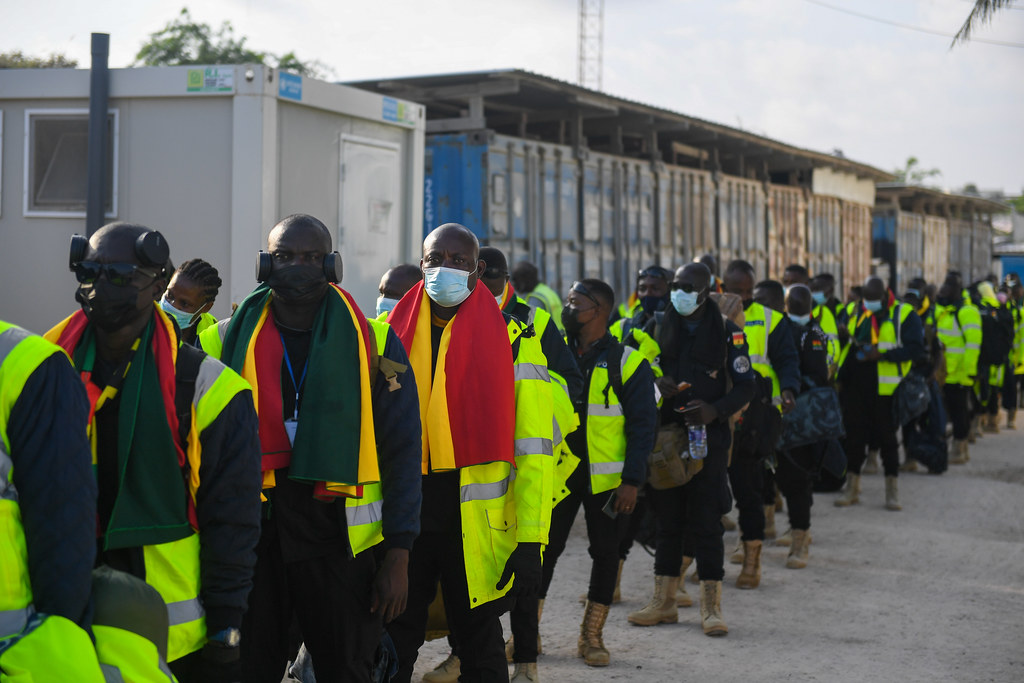
Canada processing times update

Where Wait Times Got Worse

India was the exception on super visas, rising five days to 66 days even as most other categories for Indian applicants improved. That kind of divergence, where one country improves on some categories and worsens on others within the same update, is common with IRCC’s rolling processing-time estimates, which reflect current application volumes and staffing rather than a fixed target.

In-Canada applicants also saw increases in two categories, work permits aside: study permits rose by a week, suggesting domestic processing capacity may be under more strain than overseas visa posts handling the same application types.

What These Numbers Don’t Promise

IRCC is explicit that these processing time estimates reflect how long a newly submitted application may take based on current conditions, not a guarantee or a firm timeline for any individual case. An application already in the queue when the numbers shift does not necessarily speed up or slow down to match a newly published estimate, since actual processing depends on the specific application’s complexity and completeness.

Applicants comparing this update to the previous one should treat the percentage or day-count changes as a general trend indicator for new applicants, not a precise forecast for their own case, especially given how much individual categories can swing between updates.

What to Expect in the Next Update

IRCC typically refreshes these processing time estimates on a rolling basis, so the next update could shift again depending on application volumes received in the interim. Given how much the Philippines’ work permit times moved in a single update, applicants from countries seeing worsening numbers should plan for further volatility rather than assuming wait times have settled into a new normal.

For prospective applicants with flexibility on timing, this update is a reminder that submission timing and country of application can meaningfully affect how long a decision takes, even for the same visa category.

Applicants who can submit from a visa post with shorter current wait times, where that flexibility genuinely exists, may want to weigh that factor alongside the usual considerations of cost and convenience when deciding where and when to file.

Processing Times: Common Questions

Which category saw the biggest improvement?
Study permits from India, which dropped from seven weeks to five.

Which category got noticeably slower?
Work permits from the Philippines, which rose from five weeks to seven.

Did visitor visa processing change much?
No, movement was limited to one or two days across India, the Philippines and Pakistan.

What happened to super visa processing?
Pakistan and the Philippines both saw significant improvements, while India’s super visa times rose slightly.

Are these processing times guaranteed?
No. IRCC describes them as estimates based on current conditions, not firm timelines for individual applications.

Related Coverage on Tamara News

For more on how visa processing is shifting globally this year, see our coverage of Canada’s new study permit proof-of-funds rule and the delayed October 2026 US visa bulletin.

Sources

European Markets Opened October in the Red. Blame the Bond Market.

European stocks bond yields moved sharply in opposite directions as October began, with the pan-European STOXX 600 index falling 1% to 628.1 points, its lowest level since mid-September. The decline came as global bond yields surged to multi-decade highs, with the US 10-year Treasury yield touching 5.3168%.

A Rough Start to the Fourth Quarter

Banks led the losses across most European sub-sectors, a sign that investors are repricing financial stocks as borrowing costs climb rather than treating higher yields as a straightforward win for lenders. The move extended a pattern that had already defined much of September, when global yields climbed steadily as investors sold government debt.

The sell-off reflects a market trying to digest several forces at once: higher interest rate expectations, persistent inflation concerns tied to energy costs, and continued strength in AI-related investment that is reinforcing broader growth expectations even as rate-sensitive sectors wobble, according to market data reported by Reuters via Investing.com.

Why European Stocks Bond Yields Losses Are Linked

When bond yields rise this fast, equity investors typically respond in two ways: they demand higher returns from stocks to compensate for safer government debt now paying more, and they reassess which sectors can actually pass higher input costs through to customers. Banks sit in an unusual position here, since higher rates can boost lending margins over time but also raise the risk of loan defaults and dampen demand for new borrowing in the short term, which appears to be the dynamic currently weighing on the sector.

The “higher for longer” narrative around interest rates has gained traction as investors price in the possibility that central banks will be slower to cut rates than markets had hoped earlier in the year, adding further pressure on yield-sensitive stocks.

European stocks bond yields

Insurance and real estate stocks, which tend to be similarly sensitive to borrowing costs, also featured among the session’s weaker performers, reinforcing that this was a broad rate-driven move rather than a problem isolated to banks alone. Defensive sectors less exposed to interest rate swings held up comparatively better, a typical pattern when markets reprice around rate expectations rather than reacting to a specific company or industry shock.

Banks Lead the Declines

One notable individual mover was UK-based Gamma Communications, which fell roughly 3% after Dutch private equity firm Waterland withdrew its takeover bid, a reminder that company-specific M&A news can still move share prices sharply even amid a broader macro-driven sell-off. That kind of deal withdrawal often signals that acquirers are growing more cautious about valuations in a higher-rate environment, since the cost of financing a buyout rises alongside benchmark yields.

Eurozone unemployment data due later in the session added another variable investors were watching closely, since a weaker labor market reading could complicate the European Central Bank’s own rate path at a moment when inflation concerns are already running high.

Oil Prices Tell a Different Story

Crude oil prices moved in the opposite direction, falling below $100 per barrel as Gulf exports recovered and US inventories posted a surprise increase. That divergence, falling oil alongside rising bond yields, complicates the simple inflation narrative that typically links higher energy costs directly to higher rates, suggesting supply-side factors are currently doing more to move oil prices than the same inflationary pressures hitting bond markets.

For investors trying to read the overall picture, the combination of falling oil and rising yields suggests markets are pricing in persistent rate pressure even without an acute energy-driven inflation shock behind it.

What Investors Are Watching Next

The key signal to watch in the coming weeks is whether the 10-year Treasury yield stabilizes near its current multi-decade high or continues climbing, since further increases would likely extend pressure on European equities, particularly rate-sensitive sectors like banking and real estate. Eurozone inflation and unemployment data will also shape how quickly the European Central Bank is willing to move on rates from here.

Markets heading into the fourth quarter are effectively testing whether strong AI-driven growth expectations can offset the drag from higher borrowing costs, or whether yields climbing further would eventually outweigh that optimism.

Currency markets are another indicator worth watching alongside equities and bonds. A sustained rise in US Treasury yields typically strengthens the dollar relative to the euro and pound, which can complicate the picture further for European exporters already contending with higher domestic borrowing costs.

European Markets: Quick Answers

How much did the STOXX 600 fall?
About 1%, to 628.1 points, its lowest level since mid-September.

How high did the US 10-year Treasury yield climb?
To 5.3168%, described as a multi-decade peak.

Which sector led the declines?
Banks, across most European sub-sectors.

What happened to oil prices?
Crude fell below $100 per barrel on recovering Gulf exports and a surprise rise in US inventories.

What company saw a notable individual drop?
UK-based Gamma Communications fell about 3% after Waterland withdrew its takeover bid.

Related Coverage on Tamara News

For related market coverage, see our reporting on Treasury yields ending September at multi-year highs and the S&P 500’s record highs despite climbing bond yields.

Sources

The UK Just Reopened a Refugee Route It Quietly Shut Down in 2024

The UK refugee resettlement scheme reopened on September 29, 2026, when Home Secretary Shabana Mahmood announced that Afghan women and girls, along with Palestinian refugees, would be prioritized under a route that had been effectively suspended since 2024. Roughly one in four arrivals under the reopened scheme are expected to come from these two groups.

A Route That Quietly Closed in 2024 Reopens

The UK Resettlement Scheme offers a legal, pre-approved path for refugees to reach Britain without crossing by small boat or other unauthorized means. Its effective suspension in 2024 had drawn criticism from refugee advocacy groups, who argued it left vulnerable people with fewer safe alternatives. Mahmood’s announcement reverses that pause, though admissions will start small and grow over time rather than reopening at full scale immediately.

According to The Week’s reporting on the announcement, Home Office briefing describes initial numbers as being “in the hundreds at first, but this will grow into the low thousands as levels of illegal migration fall.”

Who Qualifies Under the UK Refugee Resettlement Scheme

The scheme specifically prioritizes Afghan women and girls, many of whom face severe restrictions under Taliban rule, and Palestinian refugees displaced by the conflict in Gaza. Government messaging has framed the route as deliberately “more generous than those who arrive by small boat or other illegal means,” an explicit attempt to make the legal pathway more attractive than dangerous Channel crossings.

New arrivals accepted under the scheme will follow a five-year pathway to permanent settlement in the UK, giving them a clear, if lengthy, route to long-term status rather than an indefinite temporary arrangement.

UK refugee resettlement scheme

The Five-Year Path to Settlement

A five-year route to settlement is consistent with several other UK humanitarian visa pathways, giving successful applicants time to build a work history, housing stability and language proficiency before applying for permanent status. It also gives the Home Office a multi-year window to monitor compliance and integration outcomes before converting temporary status into something permanent.

Mahmood has also signaled flexibility elsewhere in the UK’s migration policy, indicating a willingness to soften stricter reforms after Labour MPs pushed to exclude an estimated 185,000 foreign-born care workers from proposed restrictions, suggesting the government is recalibrating its broader approach to migration rather than tightening uniformly across every category.

Resettlement routes like this one typically involve coordination with the UN refugee agency, which helps identify and refer eligible candidates from camps and informal settlements abroad rather than processing claims from people who have already reached UK soil. That structure is precisely what officials mean when they describe it as a “safe and legal” route: applicants are vetted and selected before travel, rather than making the journey first and seeking status afterward.

Reaction From Both Sides

The Refugee Council’s Jon Featonby welcomed the move, saying “the government deserves credit for creating new safe and legal routes that will help refugees reach the UK without risking their lives.” That reaction reflects relief among advocacy groups who had pressed for the scheme’s return since its 2024 suspension.

At the same time, the announcement is likely to draw criticism from the right of British politics, particularly given that women, girls and people with disabilities, groups more likely to depend on welfare support, make up a significant share of those expected to benefit from the reopened route.

That tension, between advocacy groups pushing for more generous legal routes and critics focused on welfare costs and overall migration numbers, has defined UK asylum policy debates for years. This announcement does not resolve that tension so much as restate it in a new, narrower context focused specifically on two vulnerable groups rather than refugees broadly.

What to Watch as the Scheme Expands

The real test will be whether admissions actually scale from “hundreds” to “low thousands” as promised, and whether that growth tracks the government’s stated condition of falling illegal migration numbers. If small boat crossings do not fall as expected, the government may face pressure either to expand the legal route faster regardless, or to hold numbers down and face renewed criticism from refugee groups.

Watch also for how this reopened scheme interacts with the UK’s broader asylum backlog, since a faster legal route only reduces pressure on the overall system if it processes people quickly rather than adding a new queue alongside the existing one.

UK Resettlement Scheme: Questions Answered

Who is prioritized under the reopened scheme?
Afghan women and girls, and Palestinian refugees, who together are expected to make up about one in four arrivals.

When did the scheme reopen?
Home Secretary Shabana Mahmood announced the reopening on September 29, 2026.

How many people will the scheme admit initially?
Admissions will start in the hundreds, with the Home Office projecting growth into the low thousands over time.

What status do accepted refugees receive?
A five-year pathway toward permanent settlement in the UK.

Why was the scheme suspended in the first place?
It was effectively paused in 2024; the announcement does not detail the original reasons for the suspension.

Related Coverage on Tamara News

For more on how European governments are handling migration this year, see our coverage of the European interior ministers’ meeting on border returns and the UK’s ongoing debate over EU relations.

Sources

Instagram’s New AI Tool Watches Your Videos So You Don’t Have To

The Instagram AI video assistant launched inside Edits, Meta’s CapCut-style editing app, on September 30, 2026. Rather than helping creators cut or edit their footage, the tool analyzes account performance, including follows, views, retention, likes and shares, and surfaces insights creators can act on themselves.

Meet Instagram’s New Analytics Sidekick

Brett Westervelt, who leads Edits at Meta, framed the tool’s purpose directly: “creators want a tool that handles the analysis, not one that does the creative work for them.” According to TechCrunch’s report on the launch, the assistant reviews comments, spots trending content on the platform, and tracks performance patterns over time rather than suggesting cuts, transitions or effects.

That positioning is deliberate. Meta first previewed the concept at a creator-focused event in June, giving the company months to refine the feature before a full rollout rather than rushing an AI tool to market the way some competitors have.

How the Instagram AI Video Assistant Works

The assistant draws on a creator’s own account data to generate personalized feedback instead of generic advice. If a creator’s retention consistently drops at the 10-second mark, for example, the tool is designed to flag that pattern rather than making a blanket suggestion that would apply to any account regardless of its specific numbers.

Westervelt’s framing, that “the creative calls are still yours,” signals Meta’s broader bet: that creators want AI to handle the tedious analytics work while keeping full control over the actual creative decisions, a different philosophy from tools that attempt to automate the edit itself.

Instagram AI video assistant

What Creators Get (and Don’t)

All Edits users can access the new assistant, though usage comes with limits for the free tier. The tool explicitly does not touch a creator’s raw footage or make editing decisions; its entire job is analysis and insight generation, leaving execution to the human behind the account.

That is a notable contrast with YouTube’s own concurrent push into AI-assisted editing, which TechCrunch’s report describes as leaning more toward conversational tools that help with the actual editing process rather than analytics alone. The two platforms are effectively testing different bets about what creators want most from AI.

For creators managing multiple accounts or posting across several platforms, an analytics-only assistant also has a practical advantage: it does not risk altering footage a creator has already finalized for cross-posting elsewhere. A tool that only reads data carries none of the version-control headaches that come with AI tools that actively modify video files.

Meta One Subscribers Get More

Meta One subscribers unlock additional usage of the assistant through their subscription, giving Meta a clear incentive layer tied to its broader subscription push. For high-volume creators who hit the free tier’s limits quickly, that paid unlock may become one of the more concrete reasons to subscribe, beyond the other perks bundled into Meta One.

The approach also reinforces a pattern across Meta’s recent product launches: pairing a free, broadly available AI feature with a premium tier that removes usage caps rather than gating the feature behind a paywall entirely, a pattern visible across the announcements on Meta’s own newsroom.

Where Instagram Takes Edits From Here

Expect Meta to keep expanding Edits’ analytics capabilities rather than pivoting toward automated editing, based on the clear positioning in this launch. The company’s stated philosophy, keeping creative control with the creator, suggests future updates will add more data points and sharper pattern detection rather than AI-generated cuts or transitions.

The bigger test will be whether creators find the insights genuinely actionable or just another dashboard to ignore. Meta’s few months of pre-launch testing before the June preview suggest it is betting on the former.

Meta has not said whether the assistant’s underlying analysis will eventually feed into Instagram’s broader recommendation system, which would let the platform use a creator’s own performance patterns to shape what gets promoted in the main feed and Reels. That would be a significant expansion beyond the tool’s current scope of simply reporting data back to the creator who owns the account.

Instagram’s AI Assistant: FAQ

What does the Instagram AI video assistant actually do?
It analyzes a creator’s account metrics, comments and trending content to surface personalized insights, without editing the creator’s footage.

Who can use it?
All Edits users, with usage limits on the free tier; Meta One subscribers get expanded access.

When did it launch?
September 30, 2026, after Meta previewed the concept in June.

Does it edit videos automatically?
No. It focuses entirely on analysis; creative and editing decisions remain with the creator.

How is this different from YouTube’s AI editing tools?
YouTube’s concurrent tool leans toward conversational, hands-on editing assistance, while Instagram’s focuses solely on analytics and insight.

Related Coverage on Tamara News

For more on how the major platforms are racing to add AI features, see our coverage of Meta Connect’s new VR and AI glasses announcements and OpenAI’s push into always-on AI agents.

Sources

The US Just Sanctioned 13 People and Companies Tied to Iran’s Weapons Supply Chain

US sanctions Iran network spanning Russia, China, Hong Kong and Pakistan took effect on September 29, 2026, when the Treasury and State Departments named 13 individuals and entities accused of helping Tehran rebuild its weapons capabilities. The action is designed to raise the cost of doing business with Iran’s military-industrial supply chain rather than target Iran’s government directly.

Who Was Sanctioned and Why

The list includes Seyyed Asghar Alizadeh Tabatabai, a Beijing-based representative of Iran’s Ministry of Defense, and Kavoshcom Asia R&D Group, an Iran-based electronics procurement firm. It also names EC Mojo Technology Co Limited, a Hong Kong firm, and its representative Li Fen, along with Waseem Pasha Tajammal, chairman of Pakistan’s Cavalier Group.

On the Russian side, the sanctions hit the Joint Stock Company Experimental Design Bureau named after A.S. Yakovlev, an aircraft manufacturer, along with MG-Flot LLC, a shipping company accused of transporting weapons-related cargo. Saha Airlines, an Iran-based carrier affiliated with the country’s air force, was also named, according to Reuters’ reporting on the action.

How the US Sanctions Iran Network Was Mapped

What stands out in this round is the geographic spread. Rather than targeting entities solely inside Iran, Treasury went after facilitators across four countries, reflecting how sanctioned regimes typically route procurement through intermediaries in jurisdictions with looser enforcement or weaker banking oversight. Treasury Secretary Scott Bessent said the goal was to “identify, expose, and isolate Iran’s enablers,” language that signals more rounds of sanctions are likely rather than a one-time action.

The inclusion of a Russian aircraft manufacturer and shipping firm also underscores how closely Moscow and Tehran’s military supply relationships have become intertwined, with component and logistics support flowing in both directions depending on each country’s needs at a given time.

Investigators typically build these networks by following financial transactions and shipping manifests rather than relying on a single source of intelligence. A procurement network like this one usually takes shape over months or years, as front companies in different jurisdictions are used to obscure the ultimate buyer of restricted components. That pattern makes a 13-name list look narrow, but each entity named here likely represents a node that intelligence agencies have been tracking for some time before the designation became public.

The involvement of a Hong Kong-registered firm alongside Russian and Pakistani entities also illustrates how procurement networks exploit jurisdictions with different enforcement postures. Hong Kong’s banking system, while subject to its own regulations, has repeatedly featured in sanctions cases precisely because it offers access to international finance with oversight that can differ meaningfully from mainland China’s.

US sanctions Iran network

What Asset Freezes Actually Do

Sanctions designations under this kind of action generally freeze any US-based assets belonging to the named individuals and entities, and bar American persons and companies from doing business with them. The more powerful effect is often indirect: banks and shipping insurers around the world tend to avoid transactions connected to sanctioned names even when they are not legally required to, out of fear of losing access to the US financial system themselves.

That chilling effect is precisely what this kind of targeted sanctions list is designed to produce. It does not need to stop every transaction to work; it only needs to make enough intermediaries nervous that the network’s costs rise and its options narrow.

Where the Pressure Campaign Goes From Here

Treasury’s language about continuing to “identify, expose, and isolate” suggests this list will not be the last of 2026. The US has used this network-mapping approach repeatedly in recent years, adding new entities as intelligence reveals fresh intermediaries rather than trying to capture an entire supply chain in a single announcement.

For companies operating anywhere near these sectors, especially shipping, aviation components and electronics, the practical takeaway is heightened due diligence: a counterparty’s country of registration is no longer a reliable shortcut for sanctions risk, given how dispersed this network already is.

Iran Sanctions: The Basics

How many entities and individuals were sanctioned?
13, spread across Iran, Russia, China, Hong Kong and Pakistan.

What were they accused of?
Helping Iran procure weapons components and provide logistics support, including aircraft manufacturing and shipping.

Which US agencies issued the sanctions?
The Treasury Department and the State Department, acting jointly.

What’s the practical effect of a sanctions designation?
It freezes US-based assets and bars American entities from doing business with those named, while discouraging banks and insurers elsewhere from facilitating their transactions.

Is this expected to be the last round of Iran-related sanctions this year?
Unlikely. Treasury’s statement signaled an ongoing effort to identify additional enablers.

Related Coverage on Tamara News

For related coverage of global security and defense moves this month, see our reporting on the Greenland security pact between the US and Denmark and the US arms offer to China.

Sources