Author: Francisca Samuel

Francisca Samuel is an editor at Tamara News, where she covers immigration, travel, business and technology news for readers across Africa and the Gulf.

TSMC’s Quarterly Results Show Just How Hungry the World Is for AI Chips

TSMC Q3 2026 earnings are due out today, October 15. The world’s largest contract chipmaker has already guided investors to expect roughly 37% year-over-year revenue growth at the midpoint of its forecast. TSMC’s own September monthly sales report, released ahead of the full results, showed NT$511.86 billion for the month, up 54.6% from a year earlier. That reinforces that demand tied to artificial intelligence computing has yet to show any sign of slowing.

The company’s guidance for the quarter put revenue at $44.6 billion to $45.8 billion. TSMC has already used the run-up to the earnings call to raise its outlook for the full year, now expecting 2026 revenue growth of slightly above 40%.

Why Everyone Is Watching Margins in TSMC Q3 2026 Earnings

Revenue growth alone isn’t the whole story. TSMC guided third-quarter gross margin to a range of 65% to 67%, down from 67.7% in the second quarter. Analysts have flagged margin trends as one of the most closely watched metrics on today’s call. A chipmaker can grow revenue quickly while still giving up profitability, if the mix shifts toward more capital-intensive manufacturing processes or if pricing power weakens even briefly. Investors are looking for confirmation that TSMC can keep expanding output without sacrificing much of that margin cushion.

TSMC Q3 2026 earnings illustration

Where the Money Is Going: 2-Nanometer and Advanced Packaging

TSMC’s 2026 capital spending plan runs to $60 billion-$64 billion, with 70% to 80% of that earmarked for advanced process technologies. That spending underpins two themes analysts expect to dominate today’s call. One is the ramp of TSMC’s 2-nanometer manufacturing node, the company’s most advanced process yet. The other is continued expansion of advanced packaging capacity, the technology that lets multiple chips be combined into a single package, which has become a bottleneck for AI accelerator production industry-wide.

The AI Demand Story Behind the Numbers

TSMC doesn’t design its own AI chips, but it manufactures them for nearly every major player in the industry. That makes its results one of the clearest proxies available for the underlying strength of AI chip demand, rather than any single company’s performance. The roughly 50% revenue growth implied by TSMC’s own monthly sales data points to continued strong bookings from its largest customers. At the same time, some analysts and investors have begun openly debating whether spending on AI infrastructure across the industry has outrun near-term demand.

What to Watch When Results Land

Beyond the headline revenue and margin figures, today’s call is expected to address capital spending guidance for 2027, the pace of 2-nanometer yield improvements, and management’s read on whether customer demand signals still justify the current pace of expansion. A result in line with or above the guided range would reinforce the view that AI-driven chip demand remains a durable trend, rather than a short-term spike. A miss, however small, would likely reignite the debate over whether the broader AI infrastructure buildout is moving faster than actual usage can support. For related coverage of how that debate is playing out across the chip and AI infrastructure sector, see Tamara News’ reporting on the memory chip price shortage, Microsoft’s new in-house AI chip, and warnings that AI data center spending may be running ahead of demand.

Frequently Asked Questions About TSMC’s Earnings

When does TSMC report its Q3 2026 earnings?
TSMC’s full third-quarter 2026 results and conference call are scheduled for October 15, 2026.

How much revenue growth is TSMC expecting?
Guidance put Q3 revenue at $44.6 billion to $45.8 billion, implying about 37% year-over-year growth at the midpoint, with full-year 2026 growth now guided to slightly above 40%.

Why does TSMC’s gross margin matter so much to investors?
Margin guidance of 65% to 67% for the quarter, down from 67.7% in Q2, signals whether rapid revenue growth is coming at the cost of profitability as production mix shifts toward more advanced, capital-intensive processes.

How much is TSMC spending on new capacity in 2026?
Its 2026 capital spending plan is $60 billion to $64 billion, with 70% to 80% directed toward advanced process technologies including the 2-nanometer node.

Does TSMC’s performance tell us anything about AI chip demand generally?
Yes. Because TSMC manufactures chips for most major AI chip designers rather than competing with them directly, its results are widely used as a proxy for underlying AI infrastructure demand across the industry.

Sources

Bumble Just Sold Itself for Less Than a Tenth of What It Was Worth at IPO

The Bumble Ithaca Holdings acquisition announced on October 13 takes the dating app private in an all-cash deal worth $1.3 billion. It ends a rocky five-year run as a public company. Under the terms, Ithaca Holdings will pay Bumble shareholders $6.05 per share in cash. That’s a premium of about 138% over the stock’s unaffected closing price on October 9, and roughly 119% over its 30-day volume-weighted average price.

The deal’s structure says as much about where Bumble has been as where it’s going. A premium that large over recent trading prices reflects just how far the stock had fallen before the announcement, not a sign the company is being bought at a peak.

Inside the Bumble Ithaca Holdings Acquisition Deal

Ithaca describes itself as a holding company focused on “enduring, market-leading technology businesses.” It pairs what it calls frontier technology with operating expertise to renew established companies. It’s co-led by Ravi Gupta and John Hegeman, who will become Bumble’s co-CEOs once the deal closes, working alongside founder Whitney Wolfe Herd. In a joint statement, Gupta and Hegeman said the investment is “a bet on the future of humanity,” framing the acquisition around using technology to support human connection rather than replace it. Reporting on the deal has noted that Ithaca has not yet detailed how it plans to use artificial intelligence within Bumble’s product.

The deal has Bumble’s board unanimous backing. An independent Special Committee, advised by outside legal and financial counsel, recommended the transaction. The full board approved it, with Wolfe Herd recusing herself given her dual role as founder and CEO. Board chair Ann Mather said the committee “determined that this transaction with Ithaca represents the best outcome for our shareholders.” Affiliates of Blackstone, Bumble’s largest shareholder, and Wolfe Herd then approved the deal by written consent, satisfying the shareholder approval requirement without a full vote.

Bumble Ithaca Holdings acquisition illustration

A Steep Drop From a $14 Billion IPO

Bumble went public in February 2021 at a valuation of roughly $14 billion. The $1.3 billion sale price, five years later, reflects a company that has struggled with a sustained decline in paying users and revenue. According to Reuters-sourced figures cited in coverage of the deal, Bumble’s paying user base fell 16.4% to 3.2 million in the second quarter of 2026 alone. Revenue has declined for nearly two consecutive years. Wolfe Herd, who returned to the CEO role in March 2025 after stepping back in 2023, has spent the time since cutting costs and revising the app’s core features, including dropping the rule that required women to message first.

What Happens to Bumble’s Public Listing

Once the transaction closes, Bumble will operate as a privately held company. It will keep offices in London, Austin and New York while remaining headquartered in Austin. Shareholders will receive an information statement under SEC rules, and certain deal participants will file a separate disclosure given the company’s move to private ownership. Bumble said it will still file its Q3 2026 quarterly report by November 9, but will not hold an earnings call for that quarter. That’s a sign the company is already operating with one foot out of the public markets. On social media, Bumble described the sale as “a new chapter, but not a new mission.”

What This Means for the Dating App Sector

Bumble’s exit from public markets lands amid a broader reckoning for dating apps. The sector has struggled with user fatigue, falling engagement among younger users, and intensifying competition for attention. Whether Ithaca’s technology-focused approach can reverse those trends, or whether Bumble simply becomes a smaller, private experiment in product turnaround, will likely take several quarters to become clear. The company won’t be holding public earnings calls to report on it. For related coverage of how investors are reassessing technology valuations more broadly this quarter, see Tamara News’ reporting on warnings over AI data center spending and Anthropic’s warning on self-replicating AI devices.

What People Are Asking About the Bumble Deal

How much is Ithaca Holdings paying for Bumble?
$1.3 billion in an all-cash deal, at $6.05 per share.

Does the deal price represent a premium or a discount for shareholders?
A premium relative to recent trading: about 138% above the unaffected closing price on October 9. It is, however, far below Bumble’s 2021 IPO valuation of roughly $14 billion.

Who will run Bumble after the deal closes?
Ithaca co-founders Ravi Gupta and John Hegeman will become co-CEOs, working alongside founder Whitney Wolfe Herd, who is staying involved.

Why was Bumble’s stock down so much before the sale?
Paying users fell 16.4% to 3.2 million in Q2 2026 alone, and revenue had declined for nearly two consecutive years.

Will Bumble still trade on the stock market?
No. Once the deal closes, Bumble becomes a privately held company. It will no longer operate as a publicly traded business or hold quarterly earnings calls.

Sources

Goldman Sachs Posts a Blowout Quarter While Wells Fargo Stumbles

Goldman Sachs Q3 2026 earnings landed well above what Wall Street expected this week. The bank posted one of its strongest quarters on record, even as rivals had a mixed showing. Goldman reported diluted earnings per share of $17.01 against a consensus estimate of $13.65. Revenue came in at $18.68 billion versus the $17.03 billion analysts had penciled in. The results, released October 13, kicked off a busy stretch of big-bank reporting. They showed just how differently the top US lenders are faring three years into a trading-driven earnings cycle.

CEO David Solomon described the results as reflecting “a complicated operating environment” alongside the firm’s “second highest quarterly net revenues.” That characterization captures both the headline beat and the caveats underneath it.

Where Goldman Sachs Q3 2026 Earnings Growth Actually Came From

The quarter’s strength was concentrated in trading and wealth management, rather than traditional dealmaking. Equities revenue reached $6.44 billion, up 72% year over year, while equities financing revenue rose 96%. Advisory fees hit a record $1.65 billion. Asset and wealth management revenue climbed 14% to $5.05 billion, and assets under supervision reached a record $4.1 trillion. Goldman’s year-to-date efficiency ratio improved to 59.4% from 62.1% a year earlier. The bank is converting revenue into profit more effectively, even after absorbing a roughly $450 million charitable contribution that weighed on the bottom line. Net earnings for the quarter came to $5.29 billion, and Goldman’s official filing puts annualized return on equity at 18.7%.

Not every signal in the report was positive. Goldman’s standardized CET1 capital ratio, a core measure of financial cushioning, fell to 12.4% from 14.3% at the end of 2025. That partly reflects the pace of share buybacks: the bank repurchased 2.9 million shares at an average price of $1,048.73 during the quarter. The investment banking fee backlog also declined from the end of the second quarter, driven mainly by a softer advisory activity pipeline, even as realized advisory fees hit a record.

Goldman Sachs Q3 2026 earnings illustration

Wells Fargo Didn’t Share in the Enthusiasm

Wells Fargo’s own Q3 2026 results, reported the same week, told a less flattering story. Revenue came in at $21.87 billion, a figure that disappointed traders and sent the stock down 3% to $81.08 in early trading. JPMorgan Chase, meanwhile, landed somewhere in the middle: shares were little changed around $334.39, as the market digested results that didn’t move the needle sharply in either direction. The divergence underscores how unevenly this earnings season has rewarded different business mixes. Banks leaning hardest into trading and wealth management outperformed those more dependent on traditional lending and deposit income.

What the Market Did With the News

Goldman shares rose roughly 1% in early trading to $904.09 following the release. That move was part of a broader rally that lifted the Financial Select Sector SPDR Fund (XLF) about 1% to $55.62, even as the S&P 500-tracking SPY dipped slightly. The muted index-level reaction suggests investors treated Goldman’s beat as a company-specific story, rather than a signal for the sector as a whole, especially with Wells Fargo’s weaker print landing in the same news cycle.

What to Watch as Earnings Season Continues

The biggest US banks are now mostly past their Q3 reporting dates. Attention shifts to what the mixed results mean for the rest of the financial sector heading into year-end. Three things stand out: capital ratios under pressure from buybacks, advisory pipelines that look softer than realized fee income suggests, and a trading environment that has rewarded scale and equities exposure over traditional lending. For related coverage of how the broader markets and monetary policy backdrop are shaping this earnings cycle, see Tamara News’ reporting on the Federal Reserve’s October rate decision and the widening gap between stock market highs and consumer sentiment.

Common Questions About This Earnings Season

How much did Goldman Sachs beat earnings estimates by?
Goldman posted diluted EPS of $17.01 against a consensus estimate of $13.65, and revenue of $18.68 billion against an estimate of $17.03 billion.

What drove Goldman’s strong quarter?
Equities trading revenue up 72% year over year, record advisory fees of $1.65 billion, and asset and wealth management revenue up 14%, with assets under supervision hitting a record $4.1 trillion.

Why did Wells Fargo’s stock fall after earnings?
Wells Fargo reported Q3 2026 revenue of $21.87 billion, which disappointed traders and sent shares down 3% to $81.08.

Did JPMorgan Chase have a good or bad quarter?
JPMorgan’s stock was little changed after its report, landing between Goldman’s strong beat and Wells Fargo’s disappointing print.

Is Goldman Sachs in a weaker financial position despite the earnings beat?
Its capital cushion narrowed somewhat. The standardized CET1 ratio fell to 12.4% from 14.3% at the end of 2025, partly due to share buybacks.

Sources

A Year Into the Gaza Ceasefire, the UN Says the Killing Never Stopped

A year after the guns were meant to fall silent, the Gaza ceasefire one year mark has arrived with a grim verdict from humanitarian groups. More than 100 of them, in a joint statement issued October 9, warned that the truce “exists in name only.” Signatories include Amnesty International, the Norwegian Refugee Council, Save the Children, Oxfam and Greenpeace. Their statement lands alongside separate figures from the United Nations Human Rights Office documenting over a thousand deaths since the ceasefire took effect.

The ceasefire itself began on October 10, 2025, under a US-backed framework known as the Gaza Board of Peace. One year on, two sets of casualty figures are circulating this week. They tell a similar story from different angles: a truce that stopped the heaviest fighting without stopping the killing.

What the Gaza Ceasefire One Year Mark Has Actually Verified

The UN Human Rights Office, OHCHR, says it has verified 1,076 Palestinian deaths in Gaza between the ceasefire’s announcement and the end of July 2026. Of those, 268 were children and 126 were women, meaning women and children made up 37% of verified fatalities. Ajith Sunghay, the OHCHR’s head for the Occupied Palestinian Territory, described continued violations during what was supposed to be a ceasefire as appalling. He said Palestinians continue to face attacks in what he called an “ever-shrinking area.”

The Palestinian Ministry of Health has put the toll higher, at more than 1,400 killed since the truce began. The OHCHR has verified 1,076 of those cases and says its own count is likely conservative, since it does not capture every civilian death among adult men. Separately, the 100-plus NGOs behind this week’s joint statement cited more than 1,400 deaths including at least 327 children in the year since the deal. Save the Children said nearly one child has been killed in Gaza every day since the ceasefire was announced.

Gaza ceasefire one year illustration

The “Yellow Line” Keeps Moving

Central to the dispute is the so-called Yellow Line, a buffer zone established under the ceasefire framework that marks how far Israeli forces have withdrawn. Humanitarian groups say Israel has shifted the line further into Gaza than the original agreement intended, crowding Palestinians into smaller areas. The OHCHR recorded 331 deaths near the Yellow Line alone, including 66 children, 27 women and 238 men. Violence has continued in the days immediately around the anniversary. At least eight Palestinians were reportedly killed on October 8, and heavy tank fire was reported in Khan Younis on October 9.

A Health System Still Running on Fumes

None of Gaza’s 36 hospitals is currently operating at full capacity, hampered by shortages of medicine, equipment and fuel, according to the NGO coalition’s statement. More than 18,500 patients are said to need medical evacuation out of Gaza, including at least 4,000 children. More than 1,000 people have died while waiting for one to be arranged. The World Health Organization estimates roughly 24% of the wounded from the broader war have sustained life-changing injuries requiring long-term rehabilitation, a quarter of them children.

Those figures sit on top of a much larger total. The Palestinian Ministry of Health’s running count since October 2023 stands at 74,254 people killed, including at least 21,000 children, or roughly 3% of Gaza’s pre-war population. About 175,000 people have been wounded, the equivalent of 1 in every 13 residents. The ministry’s methodology counts only hospital-recorded or officially registered deaths, so the true toll is likely higher.

Shelter and Food Are Still a Crisis, Not an Afterthought

Nearly 2 million Palestinians need shelter, with about 80% of structures in Gaza damaged, the NGO statement says. Humanitarian groups blame Israeli restrictions on construction materials and equipment for blocking reconstruction and repair work. On food, the coalition projects that 1.4 million people will face crisis-level hunger or worse through the end of 2026. Amnesty International’s Secretary General, Agnes Callamard, framed the stakes bluntly: “Accountability cannot be buried under the rubble.” The signatory groups are calling on Israel to comply with the International Court of Justice’s binding orders related to humanitarian access.

What Comes Next for Gaza’s Reconstruction

None of this week’s reporting points to an imminent resolution. The ceasefire framework remains in place on paper, but the gap between its terms and conditions on the ground is now the subject of UN verification reports and NGO monitoring, rather than active negotiation. Reconstruction funding, movement of materials, and accountability for the Yellow Line’s position are all likely to remain open questions well into next year. For related coverage of how international accountability and sanctions pressure is playing out elsewhere this month, see Tamara News’ reporting on the UK’s sanctions against Iranian nationals and the new torture charges filed against Venezuela’s Maduro and Flores.

Questions Readers Are Asking About the Ceasefire’s First Year

When did the Gaza ceasefire actually start?
It took effect on October 10, 2025, under the US-backed Gaza Board of Peace framework.

How many people has the UN confirmed were killed since the ceasefire began?
The UN Human Rights Office has verified 1,076 deaths between October 2025 and the end of July 2026, while cautioning that its count is likely incomplete.

Why do the casualty numbers from different sources not match?
The Palestinian Ministry of Health’s count (over 1,400) and the UN’s verified figure (1,076) cover different methodologies and time windows. The UN has formally confirmed a subset of the ministry’s reported cases.

What is the Yellow Line and why does it matter?
It’s the buffer zone marking the extent of the Israeli military withdrawal under the ceasefire deal. Humanitarian groups say it has moved further into Gaza than agreed, and nearly a third of verified deaths since the ceasefire have occurred near it.

Is Gaza’s humanitarian situation improving a year on?
Not according to the NGOs and UN agencies cited here. None of Gaza’s hospitals are at full capacity, almost 2 million people need shelter, and 1.4 million are projected to face crisis-level hunger through the end of 2026.

What are humanitarian groups asking Israel to do?
The coalition of over 100 organizations is calling for compliance with the International Court of Justice’s binding orders on humanitarian access and accountability for ceasefire violations.

Sources

Featured image for illustration: war-damaged buildings in Aleppo, Syria (not Gaza), credit: EU Civil Protection and Humanitarian Aid / Flickr (CC BY 2.0). In-content image: Zaatari refugee camp, Jordan, credit: DFID – UK Department for International Development / Flickr (CC BY 2.0).

Europe Is Sitting on €210 Billion of Frozen Russian Money. It Still Won’t Touch It

European Council leaders gathered in Brussels on October 15-16, 2026, for a summit that put EU frozen Russian assets back on the agenda. Once again, they left without resolving what to do with them. A senior European diplomat briefed reporters on condition of anonymity ahead of the meeting. Ukraine’s financing needs beyond 2026 would be discussed, the diplomat said — but no funding decision was expected this time around.

That holding pattern has defined the debate for the better part of a year. Roughly €210 billion in Russian central bank assets remain frozen across European institutions, most of it held through the Brussels-based clearing house Euroclear. Using that money to fund Ukraine’s defense and reconstruction has obvious appeal on paper. In practice, the EU has been unable to agree on how, or whether, to do it.

Why the EU Frozen Russian Assets Question Keeps Resurfacing

The idea came close to a breakthrough at the European Council’s December 2025 summit. The Commission proposed a so-called “reparations loan”: EU governments would advance Ukraine funds backed by the frozen Russian assets, to be repaid once Russia compensates Ukraine for the war. Belgium, which hosts most of the frozen holdings through Euroclear, blocked it. Belgian officials have repeatedly warned that unilaterally seizing sovereign assets, rather than merely freezing them, could expose Euroclear and the eurozone to legal and financial retaliation. That risk includes claims from Moscow and knock-on damage to confidence in European asset custody more broadly.

Instead of the reparations loan, the EU adopted a conventional €90 billion support package for Ukraine covering 2026 and 2027, approved in December. Officials say that package was expected to cover only around two-thirds of Ukraine’s financing needs over that period. That leaves a gap that frozen Russian assets were meant to help close — and still might, if Belgium’s objections can eventually be overcome.

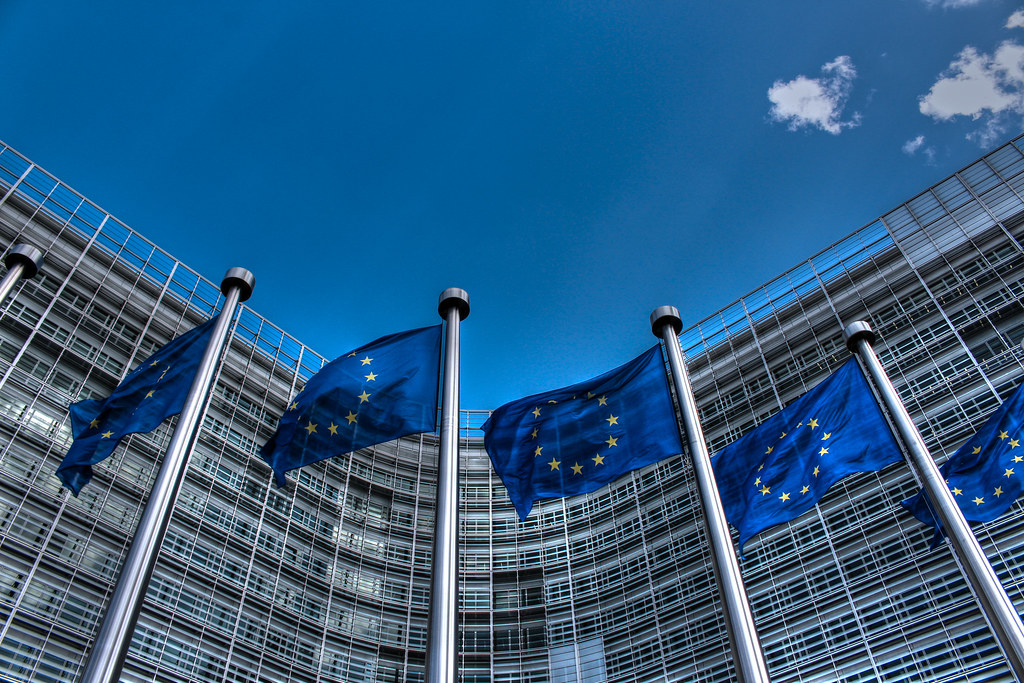
EU frozen Russian assets illustration

What EU Leaders Actually Discussed in Brussels

According to the diplomat who briefed Interfax-Ukraine ahead of the summit, the October 15-16 talks were expected to revisit Ukraine’s financing gap without producing a concrete decision. Positions on using the frozen assets “have not changed” since December, the diplomat said. It remained unclear how the discussion among the 27 heads of state and government would unfold once they sat down.

A separate EU spokesperson confirmed that the €90 billion package was never meant to be the whole answer. Work with international partners is continuing to help close the remainder of Ukraine’s funding needs, the spokesperson said. Those partners include the United Kingdom, Canada and Norway. The spokesperson gave no timeline for when, or whether, the asset question itself would be resolved.

Belgium’s Objection Is the Real Obstacle

Belgium’s position matters disproportionately because of where the money physically sits. Euroclear’s Brussels headquarters makes Belgium the custodian of most of the EU’s frozen Russian holdings. That gives Brussels effective veto power over any scheme that touches the underlying assets, rather than just the interest they generate. EU governments have so far relied on windfall profits from the frozen assets, interest income rather than the principal, to help fund Ukraine. It’s a far more legally conservative approach than the reparations loan Belgium rejected.

That caution reflects a genuine legal question EU lawyers have not fully settled. Is seizing a sovereign state’s central bank reserves defensible under international law, even in response to an illegal invasion? Or would it set a precedent that other states, and markets, come to see as confiscation rather than enforcement? The EU has not answered that question yet.

What Happens Next on Ukraine’s Funding Gap

Nothing in the Brussels talks suggests the stalemate breaks soon. The €90 billion package keeps Ukraine funded through 2027 on paper, but officials acknowledge it falls short of the full bill. The reparations loan idea has not been formally withdrawn, only shelved pending a legal and political fix that satisfies Belgium. Expect the topic to return at the next European Council meeting. Expect the UK, Canada and Norway to keep absorbing some of the gap in the meantime through bilateral support, rather than a unified EU mechanism.

For Ukraine, the practical effect is a financing plan built one summit at a time, rather than the multi-year certainty a resolved asset question would provide. For more on how the EU’s internal politics are shaping Europe’s response to the war, see Tamara News’ coverage of France’s 2027 budget cuts and the IMF and World Bank’s October meetings in Bangkok, where Ukraine’s financing also featured on the sidelines.

Frequently Asked Questions

How much Russian money is actually frozen by the EU?
EU officials put the figure at roughly €210 billion, most of it held through the Euroclear clearing system in Belgium.

What did EU leaders decide about EU frozen Russian assets at the October summit?
No new decision. A diplomat briefed on the talks said positions remain unchanged from December, when Belgium blocked a plan to use the assets as collateral for a “reparations loan.”

Why does Belgium object to using the frozen assets?
Belgium hosts most of the holdings through Euroclear. It has warned that seizing the underlying assets, rather than just their interest income, carries legal and financial risk that a windfall-profits approach avoids.

Does the EU’s €90 billion package cover all of Ukraine’s needs?
No. EU officials have said it was expected to cover only about two-thirds of Ukraine’s financing needs for 2026-2027, with the rest meant to come from partners or an eventual resolution on the frozen assets.

Who else is helping fund Ukraine besides the EU?
The United Kingdom, Canada and Norway are named as continuing partners working alongside the EU, though no unified mechanism has replaced the stalled reparations loan.

Is a decision on the frozen assets likely before the end of 2026?
Nothing from the October summit suggests an imminent breakthrough. Officials describe the legal and political questions as unresolved, rather than close to agreement.

Sources