Fed Rate Decision: Rates Held at 3.75-4% With Two Dissents

The Federal Reserve left its benchmark overnight lending rate in a range of 3¾% to 4% on 28 October 2026, a decision that passed 10–2, according to the Federal Open Market Committee statement. The Fed rate decision came with two dissents in the hawkish direction: Governors Lisa D. Cook and Beth M. Hammack preferred a quarter-point increase, the statement says. Al Jazeera reports the hold was widely expected and follows a rate rise in September, the first since July 2023.

In this report

What the Fed decided

The committee kept the target range unchanged and cited its dual mandate of maximum employment and stable prices. Its statement describes activity as growing briskly, with spending holding up despite elevated uncertainty, partly linked to geopolitical events, and with strong productivity and business investment. Hiring has matched labour force growth, and unemployment has barely moved. On the balance sheet, the committee said only that it is continuing to keep ample reserves in the banking system.

Why inflation is driving the debate

The statement says “Inflation remains elevated” and that the committee wants more information before settling on the policy stance needed to bring inflation back to 2% in a timely way. Al Jazeera cites the latest consumer price report as showing annual inflation of 3.7% in September, up from 3.4% in August, with energy prices the main driver of the monthly increase. It adds that the Fed’s preferred PCE inflation gauge is due on Thursday, which is today.

The political pressure

Al Jazeera reports that Fed Vice Chair for Supervision Michelle Bowman favoured a wait-and-see approach and said she felt no urgency to act further. President Donald Trump, who has pressed for cuts, wrote on Truth Social that US interest rates should be 1% or less, according to the same report. That is the president’s stated view; it is not a forecast by the committee, which just held rates well above that level.

What it means for borrowers abroad

As an illustration, not a real case: a Vietnamese graduate student with a US dollar education loan on a variable rate should expect borrowing costs to stay near current levels while the Fed holds, and should check the loan agreement for how and when the rate resets. Students planning US study can compare costs on our US visa bulletin coverage and use the visa eligibility checker to plan a route. For how markets have been pricing the dollar, see our report on gold and dollar strength in October, and our earlier FOMC preview.

What the Fed does next

The next meeting is on 8–9 December, which Al Jazeera says will bring the final rate decision of the year. The outlet adds that current forecasts point to a quarter-point increase but does not say who made those forecasts or when, so readers should treat that as one outlet’s summary of market expectations, not as a commitment by the Fed. Two dissents for a rise at this meeting show the committee is not united on holding.

Fed decision questions

What is the Fed’s rate range now?

3¾% to 4%, unchanged after the 28 October 2026 meeting, according to the FOMC statement.

Was the vote unanimous?

No. It was 10–2, with Governors Cook and Hammack preferring a quarter-point increase.

What is the latest inflation figure?

Al Jazeera cites 3.7% annual inflation in September, up from 3.4% in August.

When is the next meeting?

8–9 December 2026, per Al Jazeera.

Did the Fed raise rates recently?

Al Jazeera reports a rise last month, the first since July 2023.

What did Trump say?

According to Al Jazeera he wrote that US rates should be 1% or less.

Sources

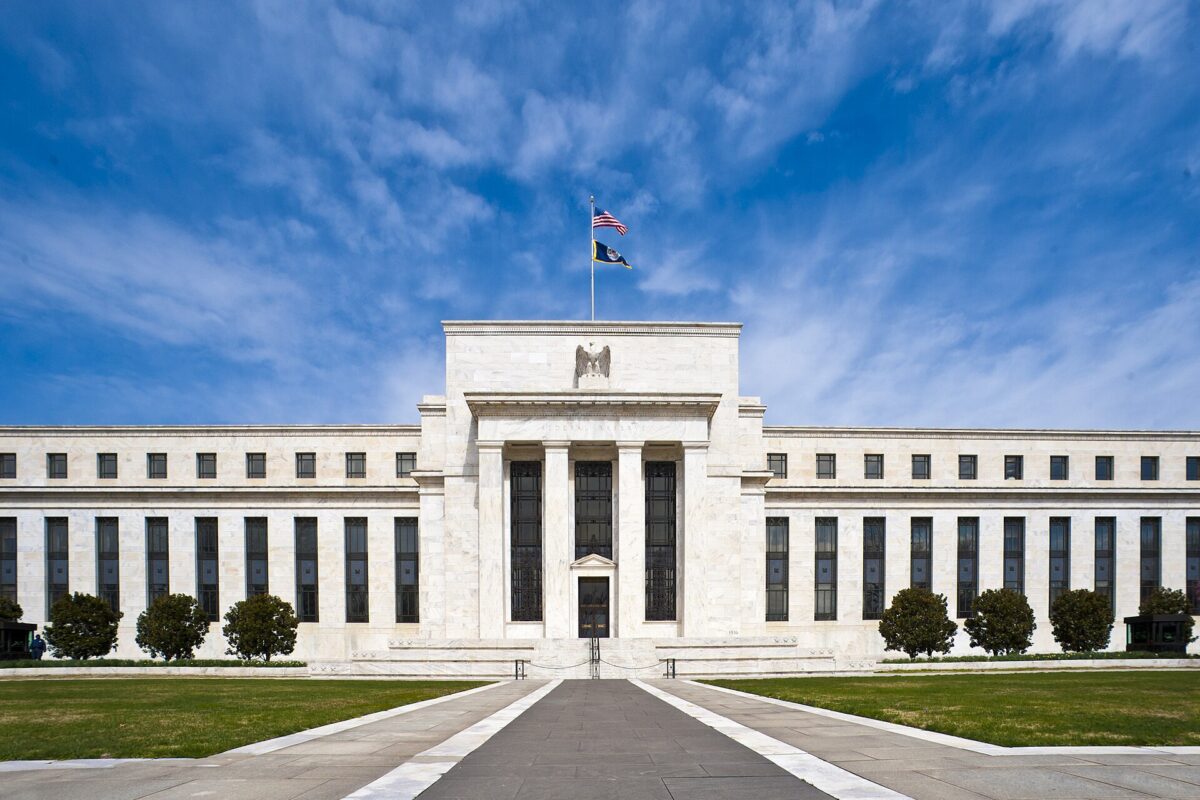
Image: Eccles Building, public domain, via Wikimedia Commons.

Wholesale Prices Just Jumped to a Level the Fed Can’t Ignore

US wholesale prices climbed faster than expected in August. The Producer Price Index rose 0.4% for the month and 5.4% from a year earlier. The Bureau of Labor Statistics released the data on September 10. The US wholesale inflation surge complicates the Federal Reserve’s decision just days before its next policy meeting. A hot PPI reading often points to more consumer inflation ahead.

Federal Reserve building, symbol of the policy response to the US wholesale inflation surge

US Wholesale Inflation Surge: What the August Numbers Show

The 5.4% annual increase is up from 4.8% in July. Core PPI, which strips out food and energy, rose 4.6% year over year, above July’s 4.2% pace. Both figures beat most economist forecasts, according to the Bureau of Labor Statistics’ official PPI release. It is the fourth straight month of accelerating wholesale prices, a trend the central bank has been watching closely.

Why Energy Costs Are Driving the Increase

Higher energy costs accounted for much of the monthly gain. Crude oil pushed above $100 a barrel in the days before the report. The spike is tied to ongoing turmoil linked to the conflict in the Middle East. Wholesale diesel prices soared 24.1% in a single month. Diesel feeds into the cost of moving nearly everything sold in the United States, from groceries to construction materials. That is why the spike shows up quickly across the wider producer price basket. Trucking companies typically pass fuel surcharges on to shippers within days, not months, which means the diesel spike is already working its way into freight invoices. Retailers who absorbed early-year cost increases to protect market share say they have less room to do so again if energy prices stay elevated through the fall.

How Markets and the Fed Are Reacting

Interest rate futures moved fast after the release. Traders priced in roughly a 70% probability that the Fed will raise its benchmark rate by 25 basis points in September. That is up from about 61% just a day earlier, according to Yahoo Finance’s coverage of the report. Bond yields ticked higher on the news. Equity traders spent the session weighing stronger producer prices against the risk of a more hawkish Fed.

Oil refinery and shipping infrastructure behind the US wholesale inflation surge

How This Compares to Earlier in 2026

Wholesale inflation has now accelerated for four straight months. It climbed from levels near 4% earlier in the year to 5.4% in August. Economists had expected the pace to level off once early-year tariff effects worked through the supply chain. Instead, the renewed jump in oil and diesel prices reopened the same cost pressures manufacturers and shippers had hoped were fading. Grocery delivery, home construction and freight all depend heavily on diesel-powered transport, so the August spike is expected to show up in a wide range of everyday prices over the next quarter. Some economists caution that a single month of oil-driven inflation should not be read as a permanent trend, since crude prices can fall as quickly as they rose if the underlying Middle East tensions ease.

What the Fed Does From Here

The Federal Open Market Committee meets September 15 and 16. A rate decision is due the afternoon of the 16th. A quarter-point hike would mark the first increase in several meetings, after the Fed held rates steady through the summer. The central bank will also have August’s Consumer Price Index in hand by decision day. That report will show whether wholesale price pressure has already started reaching shoppers. Businesses and households alike are watching for early signs of higher borrowing costs on mortgages, credit cards and business loans.

Frequently Asked Questions

What is the Producer Price Index and why does it matter?

The Producer Price Index tracks prices businesses receive for goods and services before they reach the consumer. A rising PPI often signals that consumer prices will follow within a few months.

How much did US wholesale inflation rise in August 2026?

The PPI rose 0.4% in August and 5.4% from a year earlier, up from 4.8% in July. Core PPI, which excludes food and energy, came in at 4.6% year over year.

Why are oil and diesel prices driving the increase?

Middle East turmoil pushed crude oil above $100 a barrel the week before the report. Wholesale diesel prices jumped 24.1% in a single month, feeding directly into transportation and manufacturing costs.

Will the Federal Reserve raise interest rates because of this?

It has made a rate move more likely. Traders priced in roughly a 70% probability of a 25 basis point hike, up from about 61% the day before the report.

When is the Federal Reserve’s next rate decision?

The Federal Open Market Committee meets September 15 and 16, 2026. A decision is expected the afternoon of the 16th.

How does producer inflation affect consumer prices later?

Businesses facing higher wholesale costs typically raise prices for retailers and consumers within one to three months. A sharp PPI reading often signals where consumer inflation is headed next.

For more on how central banks are responding to this year’s inflation pressure, see Tamara News’ coverage of the Bank of England’s September vote and the OPEC+ decision on October oil output. Companies bracing for the Fed’s move are previewed in our September earnings week preview.

Sources

Fed Holds at 3.50%-3.75% as September Rate Hike Stays Live

A Federal Reserve September rate hike remains firmly in play after the Federal Open Market Committee left its benchmark rate unchanged at 3.50% to 3.75% on 29 July, the fifth consecutive meeting at which it has stood pat. The decision passed on a 9-3 vote. Three policymakers dissented, each preferring an immediate quarter-point increase, and the committee’s statement pointed directly at the war in the Middle East as a source of elevated uncertainty.

The July meeting was the second chaired by Kevin Warsh, who was sworn in on 22 May 2026. Note that there was no Federal Reserve policy meeting in August; the committee’s next scheduled decision is on 16 September.

The vote, the dissents and the statement

The FOMC statement was unusually short. “The Committee decided to maintain the target range for the federal funds rate at 3-1/2 to 3-3/4 percent, in support of the Federal Reserve’s dual mandate,” it read, adding that the Fed is continuing its policy of maintaining ample reserves in the banking system.

On the economy, the committee said activity “is expanding at a solid pace despite elevated uncertainty that owes, in part, to the conflict in the Middle East”, that productivity growth and capital investment are strong, that job gains have kept pace with the workforce and that the unemployment rate has changed little.

On prices, it was direct: “Inflation remains elevated relative to the Committee’s 2 percent goal, in part reflecting supply shocks that have driven price increases in certain sectors, including energy.” The statement closed with a single sentence that markets read as a signal of intent: “The Committee will deliver price stability.”

Voting against were Beth M. Hammack of Cleveland, Neel Kashkari of Minneapolis and Lorie K. Logan of Dallas, all of whom preferred to raise the target range by a quarter of a percentage point at that meeting. Three dissents in a single direction is rare, and it is the clearest available signal that the committee’s centre of gravity has shifted towards tightening.

Why a Federal Reserve September rate hike is still live

Trading screens showing market data ahead of a possible Federal Reserve September rate hike

J.P. Morgan Wealth Management changed its base case shortly after the meeting, moving from no rate changes in 2026 to a quarter-point increase in September. Its chief investment strategist, Phil Camporeale, put it this way: “The combination of a slower-than-expected normalization of supply chains around the Strait of Hormuz and market questioning of inflation-fighting credibility after the July FOMC meeting has lowered the bar for a rate hike in September.”

The firm said on 5 August that futures pricing implied a roughly 65% chance of a September hike. It also noted that Warsh again offered limited forward guidance at his press conference, leaving markets with little to work with, and that the bond market repriced accordingly: short-term yields eased slightly after the meeting while long-term yields rose sharply, with the 30-year Treasury reaching its highest level since 2007.

The framing matters. On this reading, a September move would not be a response to an overheating economy. It would be a credibility exercise designed to keep long-run inflation expectations anchored while an external supply shock works its way through the price data.

What the inflation data shows

The most recent reading, published by the Bureau of Labor Statistics on 12 August, gives both camps something. The consumer price index rose 0.1% in July on a seasonally adjusted basis after falling 0.4% in June, and 3.4% over the 12 months to July, easing from 3.5% in the year to June. Core inflation, excluding food and energy, rose 0.2% on the month and 2.5% over the year.

Energy is where the conflict shows up. The energy index fell 1.5% in July, its second consecutive monthly decline, but was still 14.7% higher than a year earlier. Petrol prices were up 24.6% over 12 months and fuel oil up 39.1%. Airline fares, which track jet fuel with a lag, were 25.5% higher over the year. Shelter, the largest single component, rose 3.2%. The full release is available from the Bureau of Labor Statistics.

In other words, the headline rate is drifting down and core inflation is close to target, but the energy shock has not cleared. That is precisely the configuration that produces a split committee: one group sees disinflation in train, the other sees a supply shock that could re-accelerate if the Strait of Hormuz stays contested.

The data that lands before the decision

Two scheduled releases will shape the September meeting. The August consumer price index is due on Friday 11 September, four days before the committee convenes. Labour market data through August will also be in hand. J.P. Morgan Wealth Management has said that a string of cooler inflation prints, or a faster easing of energy-driven pressure, could remove the need for a credibility-focused hike altogether.

The larger variable is not economic but geopolitical. Shipping through the Gulf remains disrupted, and the pace at which supply chains around the strait normalise will do more to shape US energy prices over the autumn than anything the committee says. The firm’s strategists put crude at around $80 a barrel on 3 August and set out a scenario in which prices climb towards $120 if blockades persist and reserves cannot cushion supply, a level they described as manageable for the US economy but challenging for markets.

For households and savers, the practical effect of a single quarter-point move is modest, but the direction of travel matters for anyone borrowing, saving or moving money across borders. Documentation standards for cross-border transfers have already tightened this year, as our guides to proof-of-funds requirements in the UK, Canada and Australia and to the Noones shutdown and its effect on user funds both show.

Reader questions on the Fed decision

What did the Fed decide in July 2026?

The Federal Open Market Committee voted 9-3 on 29 July 2026 to keep the target range for the federal funds rate at 3.50% to 3.75%, the fifth consecutive meeting at which the range was left unchanged.

Who dissented, and what did they want?

Beth M. Hammack, Neel Kashkari and Lorie K. Logan voted against the decision. All three preferred to raise the target range by a quarter of a percentage point at that meeting.

When is the next Federal Reserve meeting?

The FOMC next meets on 15 and 16 September 2026, with the rate decision due on Wednesday 16 September at 2:00 p.m. Eastern time.

What is the current US inflation rate?

The Bureau of Labor Statistics reported that the consumer price index rose 0.1% in July on a seasonally adjusted basis and 3.4% over the 12 months to July, down from 3.5% in the year to June. Core inflation, excluding food and energy, was 2.5% over the year.

How is the Middle East conflict affecting the decision?

The FOMC statement said economic activity is expanding at a solid pace despite elevated uncertainty that owes, in part, to the conflict in the Middle East, and attributed part of elevated inflation to supply shocks in certain sectors including energy. Energy prices were up 14.7% over the year to July.

Who is the current Fed chair?

Kevin Warsh, who took the oath of office as chairman of the Board of Governors on 22 May 2026 and was selected unanimously by the FOMC as its chairman. July was his second meeting in the chair.

Tamara News covers central bank decisions and their effect on prices, borrowing and cross-border money. See our related business and finance reporting linked in this article.