A New Report Says Some Green Card Applicants Will Wait Longer Than a Lifetime

A new analysis puts a hard number on something many employment-based applicants already feel. The green card backlog wait times tracked by the National Foundation for American Policy keep growing, and for some nationalities, the projected wait now stretches well beyond a working career.

The NFAP analysis was covered by Newsweek in late August 2026. It found the employment-based backlog across the EB-1, EB-2 and EB-3 categories reached about 1.26 million people by December 2025. That is up from roughly 1.05 million in April 2020. The increase works out to 20.6% in under six years. EB-2 grew 22.9% over that period. EB-3 grew 30.1%. EB-1, the smallest category, actually fell 16.6%.

Why green card backlog wait times hit Indian applicants hardest

India accounts for nearly 1 million people in the backlog. That is about 79% of the total. The breakdown shows 731,566 people in EB-2 and 213,414 in EB-3. For Indian applicants filing in January 2026 or later, NFAP projects a wait of roughly 179 years in EB-2. EB-3 comes in at 38 years. EB-1 looks far better by comparison, at an estimated four to five years. Those numbers describe a queue no single applicant will realistically outlive in the slower categories.

Other countries face long waits too, just not on the same scale. China’s 2026 filers face a projected 25-year wait in EB-2. EB-1 runs five years for China, and EB-3 runs seven. The Philippines looks very different. Its applicants sit current or near-current in EB-1 and EB-2. Only EB-3 carries a wait, at six years. The gap between countries comes down to one structural rule. It has nothing to do with how hard anyone’s case gets reviewed.

The rule driving green card backlog wait times

The Congressional Research Service has documented this limit for years. Congress set the annual employment-based green card limit at 140,000 back in 1990. It has not raised that number since. Demand from a growing global applicant pool has climbed steadily in the meantime. A separate per-country cap adds another constraint. It limits any single nation to 7% of each category’s annual allocation, no matter how many qualified applicants that country produces. India and China send far more applicants into these categories than that cap can absorb each year. That mismatch is the direct cause of their multi-decade queues.

More than 280,000 extra green cards went out from FY2020 to FY2024. Those came from unused family-sponsored numbers that would otherwise have gone unclaimed. Even that extra supply did not shrink the backlog. Demand outpaced the bonus numbers every single year in that stretch.

How this connects to other 2026 visa changes

The backlog numbers help explain why several other 2026 immigration stories matter together, not just individually. Tamara News covered the November 2026 Visa Bulletin. That update moved most categories forward while leaving India and China largely stuck. A similar pattern showed up in coverage of the Department of Labor’s PERM suspension affecting major employers. That suspension slows the pipeline feeding into this backlog even further, for workers at large tech companies especially. Canada’s own Express Entry reforms this October show a different country taking a very different approach. Canada prioritizes high earners through a points system, not a strict per-country cap.

What would actually move green card backlog wait times

NFAP’s report points to one lever above all others: congressional action. Raising the 140,000 annual cap would help. Adjusting or removing the 7% per-country limit would help too. Either step, or both together, would directly shrink the projected wait times described here. Without legislative change, the report expects backlogs to persist or grow. Current limits predate the internet-era applicant pool by more than three decades. No such legislation was pending in Congress as of the most recent reporting reviewed for this piece.

US Capitol, where Congress sets the limits behind the green card backlog wait times

FAQ: green card backlog wait times

How big is the US employment-based green card backlog?
The NFAP analysis put it at about 1.26 million people across EB-1, EB-2 and EB-3 as of December 2025.

Which country faces the longest green card backlog wait times?
India, by a wide margin. NFAP projects roughly 179 years in EB-2 and 38 years in EB-3 for Indian applicants filing from January 2026 onward.

Why do India and China face much longer waits than other countries?
A per-country cap limits each nation to 7% of each category’s annual green cards, regardless of applicant volume, and both countries send far more applicants than that cap can absorb.

Has Congress raised the green card limit recently?
No. The 140,000 annual employment-based limit has stood since 1990, with no increase as of the most recent reporting.

Do EB-1 applicants face the same backlog?
No. EB-1 is in much better shape, with the category’s backlog shrinking 16.6% and projected waits of four to five years for Indian applicants.

What would shorten the green card backlog wait times?
NFAP points to congressional action, such as raising the annual cap or adjusting the per-country limit, as the main levers that could meaningfully reduce the backlog.

Can an employer do anything to speed up a green card case?
An employer can file early and keep paperwork current, but it cannot change the per-country caps or the annual limit, since those are set by federal law, not employer practice.

Does the backlog affect family-sponsored green cards too?
This particular analysis focuses on employment-based categories. Family-sponsored visas have their own separate backlog and per-country rules, which NFAP’s report does not cover in the same detail.


Good News for Most Visa Applicants in November — Unless You’re From India or China

The State Department’s November 2026 visa bulletin advances several employment-based green card dates for most of the world. Applicants from India and China, though, face yet another month with almost no movement in their categories.

What Changed in the November 2026 Visa Bulletin

The new dates are based on visa demand reported through October 5, 2026, according to Newsweek. For most countries, Mexico and the Philippines, EB-1 remains current. EB-2’s final action date advances three months to April 1, 2025. EB-3 advances one month to June 15, 2024. EB-3 Other Workers jumps five months to June 1, 2022, for the same group of countries. That is the single largest move in this month’s bulletin.

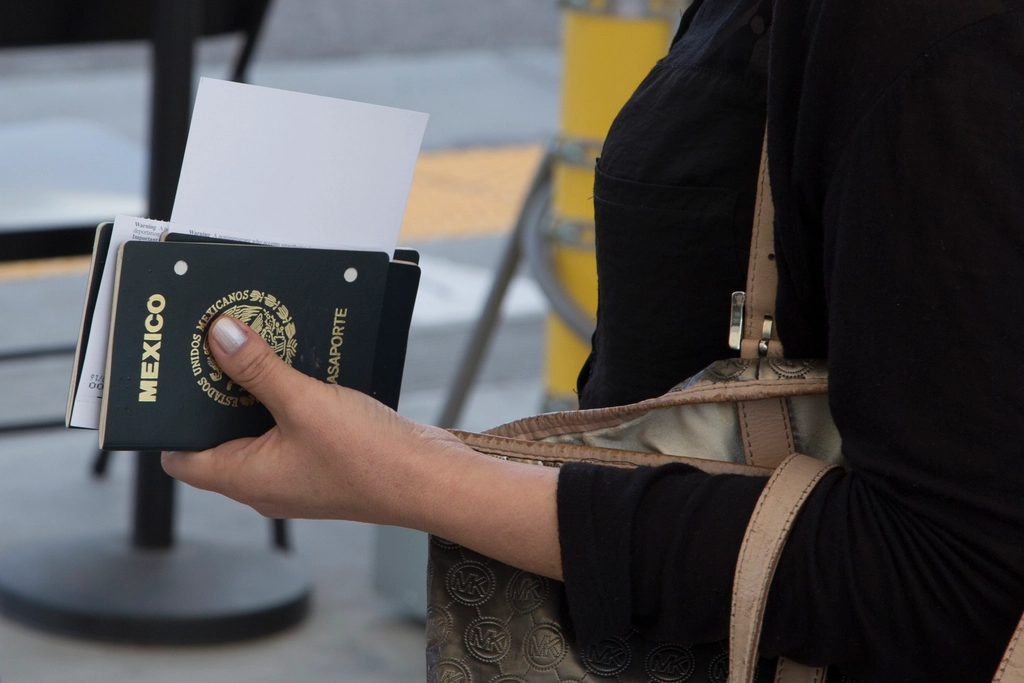
November 2026 visa bulletin passport with visa stamp

Why India and China Barely Moved

India’s EB-2 final action date stays frozen at November 1, 2013. China’s EB-2 holds at October 1, 2021. China’s EB-1 advances a single month, to August 1, 2023, while India’s EB-1 stays put at February 1, 2023. Both countries’ EB-3 Other Worker categories edge forward by just 14 days, to January 22, 2014, according to Erickson Immigration Group. China’s EB-3 moves separately to January 22, 2022. EB-4 holds at December 15, 2022 across the board. EB-5’s unreserved category stays current for most countries, with China fixed at December 1, 2016 and India at December 1, 2023.

What This Means for H-1B Workers Waiting on Green Cards

Douglas S. Pierce, a former USCIS supervisor who retired in late 2025, told Newsweek the lack of movement is especially significant for Indian and Chinese H-1B workers. “The biggest things that stand out are the lack of movement forward on India employment preference categories,” Pierce said. He added that H-1B workers from both countries are being “profoundly impacted by the lack of movement on these numbers.” Pierce linked the bulletin’s limited progress to other changes this year, including higher H-1B filing fees and changes to the PERM labor certification program and H-4 work authorization.

Filing Dates and What USCIS Will Accept

Separate from the final action dates, the bulletin’s Dates for Filing chart sets a later, more generous cut-off. That date determines when applicants can submit paperwork. For November 2026, the EB-2 filing date sits at March 15, 2026 for most countries, including Mexico and the Philippines. For India, it’s January 15, 2015. USCIS has confirmed it will accept adjustment-of-status applications using the Dates for Filing chart for November. That gives many applicants a few extra months to file before their final action date actually arrives.

How Priority Dates and the Visa Bulletin Fit Together

The visa bulletin’s dates matter because of how the US caps green cards each year. Congress sets an annual limit for each employment-based category. Demand from countries like India and China regularly exceeds that limit, since both countries have large numbers of pending petitions. When demand outstrips supply, the State Department sets a cut-off date. Only applicants whose priority date falls before that cut-off can move forward that month. A priority date is simply the date an employer first filed a petition on the worker’s behalf. India and China send far more petitions than the per-country limits were built to handle. That is why workers from those two countries tend to wait years longer than applicants from almost anywhere else. The imbalance is structural, not the result of any single policy change. It’s the main reason the same two countries land at the back of the queue nearly every month. That is also why India and China are listed as separate columns rather than folded into the “all other countries” category used for most of the world on the same chart. Most other countries move through their categories far faster as a result, since they share a single, much larger pool of available visa numbers each year.

The Caveat Every Applicant Should Know

The State Department routinely warns that cut-off dates can move backward. That happens if demand in a category exceeds the visas available for the rest of the fiscal year. Categories can also become temporarily unavailable altogether. Reaching your priority date on the bulletin isn’t the same as approval. It only means your case becomes eligible for the next stage of processing, which can still take months depending on USCIS workload.

Related Coverage on Tamara News

For more on the policy backdrop shaping these numbers, see our coverage of the DHS proposal to end deference on work visa extensions, the PERM suspension affecting major employers, and the $750 expedited visa interview pilot program.

November 2026 Visa Bulletin: Reader Questions

What is the November 2026 visa bulletin?
The State Department’s monthly update on employment and family-based green card cut-off dates, released in late October 2026 based on demand through October 5.

Did India’s EB-2 category move this month?
No. India’s EB-2 final action date remains at November 1, 2013.

Which category saw the biggest advance?
EB-3 Other Workers for most countries and Mexico, which advanced five months to June 1, 2022.

Can applicants file paperwork before their final action date arrives?
Yes, if their priority date is earlier than the Dates for Filing chart’s cut-off, which USCIS has confirmed it will accept for November 2026.

Why are H-1B workers particularly affected by this bulletin?
Former USCIS supervisor Douglas Pierce says the lack of movement in India’s categories compounds other recent changes, including higher H-1B fees and PERM program restrictions.

Can a visa bulletin cut-off date move backward?
Yes. The State Department can retrogress a date if demand exceeds the visas available for the rest of the fiscal year.

DHS Proposes $70,000 OPT Fee: What F-1 Students Should Know

The Department of Homeland Security has proposed a proposed OPT fee of $70,000 for a student’s first Optional Practical Training recommendation and $30,000 for each later one. According to a Duane Morris alert, the proposed rule was published on 8 October 2026 under docket ICEB-2026-0100. It is a proposal, not law, and nothing is owed unless DHS issues a final rule. Comments are open for a short window, and students, schools and employers have until early November to be heard.

In this report

What the proposed OPT fee would do

Optional Practical Training lets F-1 students work in the United States in their field of study during or after their degree. Under the proposal, a school would pay $70,000 the first time it recommends a student for OPT, of any type. The charge would apply once per student. Each later recommendation, including a STEM OPT extension, would cost $30,000. DHS also asks for comment on an alternative that would charge $70,000 again at each higher education level, according to Wolfsdorf Rosenthal.

The rule would take effect 60 days after a final rule is published. Students who are already approved for OPT, or whose schools have already recommended them before that date, would be grandfathered, according to Duane Morris. Changing employers on its own would not trigger the $30,000 charge, per the Wolfsdorf summary.

Who would actually pay

The legal obligation sits with the school, not the student. Both law-firm summaries say Student and Exchange Visitor Program (SEVP) certified schools would have to pay before a designated school official can enter the OPT recommendation in SEVIS, the government’s student database. Wolfsdorf notes that schools could try to recover the cost from students, employers or other sources. The proposal does not say they must, and it does not say they may not.

That gap is the main uncertainty for students. A university facing a $70,000 charge per graduate could pass it on, absorb it, limit OPT recommendations, or ask employers to contribute. None of these outcomes is set. Treat any claim about how a particular school will respond as speculation until that school says so in writing.

STEM OPT and later requests

STEM OPT extensions count as later authorisations, so each would carry the $30,000 charge. Wolfsdorf reports that DHS estimated about 95,000 STEM OPT participants were active in 2024. Consider a hypothetical case. Linh is a Vietnamese computer-science master’s student who expects to graduate in 2027. If the rule were final before her school made her first recommendation, that recommendation would trigger the $70,000 charge, and a later STEM extension would trigger $30,000. If she were recommended before the effective date, she would be grandfathered.

DHS’s own estimates

Duane Morris reports that DHS estimates 2,478 schools would be affected and that annual fees would run between $8.4 billion and $16.5 billion. These figures come from the agency that wrote the proposal, so they describe the department’s modelling rather than an independent audit. Universities and student groups are likely to challenge them in their comments.

What to do before the deadline

Comments must be filed through regulations.gov and must reference docket ICEB-2026-0100. Duane Morris gives the deadline as 11:59 p.m. Eastern on 7 November 2026, and Wolfsdorf’s summary points to the same date. A separate immigration-law update dated 13 October lists 9 November, so confirm the exact date in the published notice before you file. Emailed or mailed comments will not be considered.

Students who may be affected should ask their international office three questions: when will it recommend OPT, whether the school plans to pass on any cost, and what documents it needs. You can also check your wider options with our visa eligibility checker. For related US changes, read our reports on the court pause on the duration-of-status rule and the public charge rule for green card filers.

Questions on the proposed OPT fee

Is the OPT fee in force?

No. It is a proposed rule published on 8 October 2026. It would take effect 60 days after a final rule, and only if DHS adopts one.

Who pays the $70,000?

The proposal puts the payment on SEVP-certified schools, which must pay before an OPT recommendation can be entered in SEVIS. Schools may seek to recover the cost elsewhere.

Would STEM OPT extensions cost more?

Each STEM OPT extension would count as a later recommendation and carry a $30,000 charge under the proposal.

Would current OPT students have to pay?

Students already approved or recommended before the effective date would be grandfathered, according to Duane Morris.

When is the comment deadline?

Duane Morris gives 11:59 p.m. Eastern on 7 November 2026. One other update lists 9 November, so check the notice on regulations.gov.

Where do I file a comment?

On regulations.gov, citing docket ICEB-2026-0100.

Sources

Supreme Court Takes Up Trump Immigration Detention Policy

The Supreme Court immigration detention case will decide whether people held by ICE can ask a judge for a bond hearing. The justices agreed on 1 October 2026 to review the Trump administration’s policy of detaining many immigrants without bond, according to Stateline and NBC Los Angeles. No date for oral argument has been set.

In this report

What the Supreme Court agreed to hear

The court will decide whether immigrants arrested inside the United States have a statutory or constitutional right to a bond hearing while their deportation cases proceed. NBC Los Angeles reported that the question reaches the court on a challenge brought by the ACLU, which says the outcome could affect millions of noncitizens.

Stateline identifies the case as Ricardo Barbosa da Cunha, an appeal from the 2nd U.S. Circuit. The administration put the policy in place in July 2025. It requires detention without a bond hearing for people arrested by ICE who crossed the border illegally, regardless of how long ago the crossing happened.

A deep split among the appeals courts

Stateline counts nine appeals courts against the policy, including the 2nd, 3rd, 4th, 6th, 7th, 9th, 10th and 11th circuits, and two in favour: the 5th Circuit, covering Louisiana, Mississippi and Texas, and the 8th Circuit in the Midwest. The same report says lower courts have rejected the policy more than 20,000 times, including judges appointed by Republican presidents.

The 2nd Circuit wrote that the policy would create “the broadest mass detention-without-bond mandate in our Nation’s history for millions of noncitizens.” The administration, for its part, argues that the split produces “an unworkable patchwork of inconsistent immigration enforcement” and that the 1996 immigration law supports mandatory detention.

Why bond hearings matter

A bond hearing is the point at which an immigration judge decides whether a person can wait out their case at home. Without one, detention lasts as long as the case does. A Bloomberg Law report from May put the detained population above 60,000 as of early April 2026, up from roughly 48,000 a year earlier, and quoted Georgetown Law professor Denise Gilman on what is at stake: “basic physical liberty”.

Stateline adds a caution for both sides. A ruling for the administration could entrench detention. A ruling against it would not guarantee release, because judges could still deny bond on flight-risk grounds.

What it means for people with a long US history

Consider a hypothetical case: a Mexican welder who crossed without papers a decade ago, has a steady job and family, and is arrested at a traffic stop. Under the policy as reported, he would not get a bond hearing even though he was arrested far from the border and long after entering. Under the approach most appeals courts have taken, he could ask a judge to weigh whether he is a danger or a flight risk.

That illustration is not a prediction about any real person. It shows why the date of entry and place of arrest are central to the dispute. For related changes affecting people already in the US, see our coverage of the duration-of-status injunction for F-1 students and the narrowed USCIS filing deadline extension.

What happens next

With no argument date set, a decision is unlikely in the immediate term. Until the court rules, outcomes continue to depend on the circuit where a person is held, which is exactly the patchwork the administration says it wants the justices to end. Anyone affected should speak to a licensed immigration attorney about their circuit and facts; this article is news, not legal advice. People planning travel or applications can also use the official guidance in our diversity visa update.

Questions about the detention case

Has the Supreme Court decided the case?

No. The court agreed on 1 October 2026 to hear it. No oral argument date has been announced, according to Stateline.

What is the policy being challenged?

A policy in effect since July 2025 that requires detention without a bond hearing for people arrested by ICE who crossed the border illegally, regardless of how long ago.

Which courts have ruled for the administration?

Stateline reports the 5th and 8th circuits have backed the policy, while nine other appeals courts have ruled against it.

Does a loss for the administration mean release?

Not automatically. Stateline notes judges could still deny bond on flight-risk grounds even if bond hearings are required.

Who is challenging the policy?

NBC Los Angeles reports the ACLU represents the plaintiffs.

Follow our immigration coverage for the next filing in the case, and see our report on US sanctions policy for other Washington developments this week.

A New Executive Order Means Your Employer’s Layoffs Could Now Sink Your H-1B

A new H-1B layoff scrutiny order takes aim at a full year of a sponsor’s workforce history. President Trump signed it on September 18, 2026. It directs the Departments of State, Labor and Homeland Security to weigh whether an H-1B sponsor has conducted layoffs, past or planned, at every stage of the visa process. That covers the initial Labor Condition Application through consular interviews and border admission. It is titled “Enhancing Program Integrity and Interagency Coordination in the Administration of the H-1B Nonimmigrant Visa Program.” The order marks a sharp expansion of how closely regulators examine an employer’s workforce history before approving a petition.

What the H-1B layoff scrutiny order actually requires

The order instructs the Secretary of State, the Secretary of Labor and the Secretary of Homeland Security to consider whether an employer “directly or indirectly engaged in layoffs within the previous year or plans future layoffs that negatively affect the employment of similarly situated United States workers.” That is a significant widening of existing practice. Previous rules examined layoffs only within a narrow 90-day window around the petition filing date. Under the new order, a full year of layoff history becomes fair game for reviewers, and so do publicly stated future plans.

Employers this covers

Work visa documents tied to the new H-1B layoff scrutiny order

The scrutiny applies to “all H-1B employers, not only H-1B-dependent employers,” according to legal analysis of the order. Companies that assumed they were too small or too diversified to draw this kind of review are now covered too. Reviewers can raise questions at four separate checkpoints. These are Labor Condition Application certification, USCIS petition adjudication, consular visa processing, and admission at the US border. That gives agencies multiple chances to flag a mismatch between an employer’s layoff history and its sponsorship requests.

What happens in the next 30 days

That 30-day window is short by federal rulemaking standards, another sign of how quickly the administration wants agencies to act. The order gives the Department of Labor’s Wage and Hour Division 30 days to start reviewing data from previously submitted Labor Condition Applications. It must decide whether the case for further enforcement against sponsoring employers holds up. Legal commentators note the order leaves significant implementation details to forthcoming agency guidance. Exactly how aggressively this data review translates into denials, Requests for Evidence or audits is not yet clear. Attorneys are already telling clients to expect more Requests for Evidence, echoing earlier periods of tighter H-1B enforcement.

Why this matters beyond the tech sector

Coverage of H-1B policy tends to focus on Silicon Valley. That framing misses how wide the program actually reaches. H-1B sponsorship is often associated with technology companies, but the visa category spans healthcare, finance, manufacturing and education too. Any employer that has trimmed staff in the past year, for any reason, could now face extra questions when sponsoring a new hire. That includes layoffs the company made in an unrelated part of the business. Immigration attorneys say the broad wording of the order gives agencies wide discretion in how closely they scrutinize a given petition, which makes early legal review more valuable than it was before September 18.

What H-1B employers should do next

Larger companies with dedicated immigration counsel are likely to adapt fastest. Smaller sponsors without in-house legal support may be the ones most exposed to an unexpected denial. A single missed detail in a filing could now carry more weight than it did a month ago. Employers with any recent or planned layoffs should expect closer documentation requirements when filing new H-1B petitions or renewals. They should be ready to explain the relationship between workforce reductions and the specific positions they are sponsoring. This order is separate from the $100,000 H-1B fee policy covered in our earlier report on the H-1B fee extension. It adds a second, independent layer of scrutiny on top of that fee. For related visa-cap developments, see our coverage of the H-2B visa cap for FY2027.

H-1B Layoff Order: Common Questions

What does the H-1B layoff scrutiny order require?

It directs the State, Labor and Homeland Security departments to consider an employer’s past-year layoffs or planned future layoffs when reviewing H-1B filings at every stage of the process.

When did the H-1B layoff scrutiny order take effect?

President Trump signed it on September 18, 2026.

Which employers does the order apply to?

All H-1B employers, not just companies classified as H-1B-dependent.

How far back can layoffs be considered under the new order?

Up to one year, a significant expansion from the previous 90-day window around the petition filing date.

What happens within 30 days of the order?

The Department of Labor’s Wage and Hour Division must begin reviewing data from previously submitted Labor Condition Applications to assess whether further enforcement action is warranted.

Is this the same as the $100,000 H-1B fee policy?

No, it is a separate order focused on layoff scrutiny, distinct from the H-1B fee policy covered separately.

Sources