Google’s Parent Company Just Posted Record Results — Wall Street Still Wasn’t Happy

Alphabet’s Q3 2026 earnings, published October 28, showed revenue of $127.6 billion, up 25% year over year and essentially in line with Wall Street’s roughly $128 billion target. Google Cloud revenue jumped 103% to $30.7 billion. Despite those headline numbers, shares fell more than 8% in after-hours trading once investors got to the parts of the report that mattered more to them: profit and cash flow.

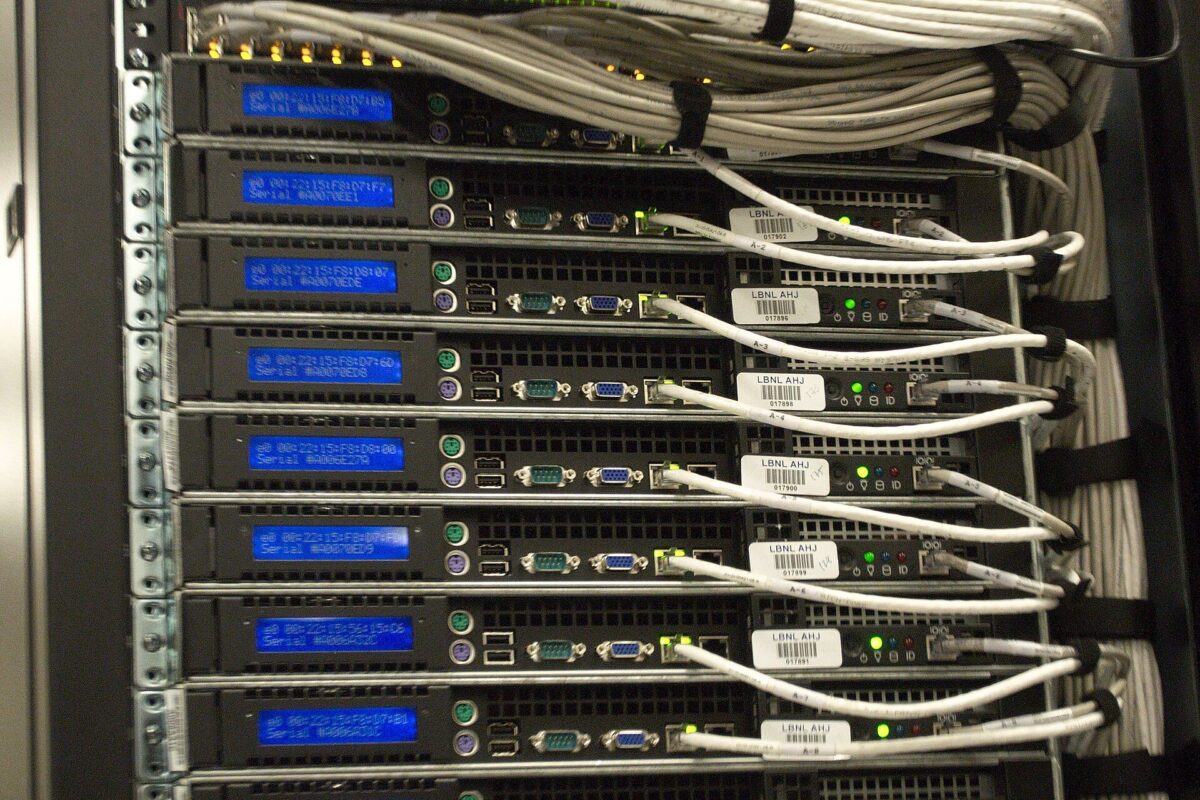
Data center server rack illustrating the cloud growth behind Alphabet Q3 2026 earnings

Alphabet Q3 2026 earnings: the headline numbers

Earnings per share came in at $2.12, well below expectations of close to $3.00. The gap traces largely to a $8.7 billion loss on equity investments, which alone cut EPS by $0.55. Net income fell 25% to $26.2 billion as a result, even though operating income actually rose 30% to $40.6 billion and operating margin improved to 31.8% from 30.5% a year earlier. Free cash flow turned negative, at -$9.1 billion, as capital spending accelerated sharply.

Why the stock fell despite record revenue

Investors zeroed in on two things: the equity-investment loss dragging down EPS, and a capital expenditure figure of $51.4 billion for the quarter, up 114% from a year earlier. Alphabet also raised its full-year 2026 capex guidance to a range of $195 billion to $205 billion. For a market already nervous about how much Big Tech is spending to build AI infrastructure before that spending reliably pays off, a headline profit miss layered on top of record capex was enough to override otherwise strong revenue growth.

Google Cloud’s breakout quarter

Google Cloud’s growth was the clearest bright spot in the report. Cloud revenue’s 103% jump came with an operating margin of 36.2%, sharply higher than 23.7% a year earlier, showing the business scaling profitably rather than just growing its top line. CEO Sundar Pichai told investors that Alphabet’s first-party model APIs now process nearly 32 billion tokens per minute, four times the rate from a year ago, and that the Gemini app has reached 1 billion users. Those figures help explain why Cloud demand, and the capital spending behind it, keeps climbing even as Wall Street balks at the price tag.

Alphabet’s results landed in the same week as Amazon’s own Q3 2026 earnings, where AWS posted 39% growth, underscoring just how competitive the cloud growth race has become among the largest tech companies.

What happens with 2027 capital spending

Alphabet has signaled that 2027 capital expenditures will top $300 billion, an enormous jump even from this year’s already-elevated guidance. The company is betting that continued Gemini adoption and Cloud demand justify spending at that scale. Whether investors come around to that bet, or keep punishing short-term profit misses the way they did after this report, will shape how patient Wall Street stays with the entire AI infrastructure buildout heading into 2027.

How Search and YouTube fit into the picture

Alphabet’s results this quarter were dominated by the Cloud and capex storylines, but the company’s core Search and YouTube advertising businesses continued to provide the steady cash generation that funds the AI buildout in the first place. Those legacy businesses remain Alphabet’s largest revenue sources by a wide margin, even as Cloud’s growth rate draws most of the market’s attention. Pichai’s comments about Gemini reaching 1 billion users point to Alphabet increasingly weaving generative AI features directly into Search itself, a strategy aimed at defending its core advertising business against competition from AI-native search tools built by rivals. Whether that integration strengthens Search’s competitive position or cannibalizes existing ad revenue remains one of the open questions analysts are watching closely heading into 2027, alongside the capital spending debate that dominated this quarter’s reaction.

Alphabet’s advertising business overall still generates the large majority of company revenue, even as Cloud growth captures a disproportionate share of investor attention on earnings calls. That dynamic is common across Big Tech firms investing heavily in AI infrastructure: the steadier, more mature advertising and search businesses fund expansion in faster-growing but less immediately profitable areas like cloud computing and generative AI products.

Alphabet’s own description of its 2027 outlook leans heavily on continued enterprise adoption of its Cloud and AI products, a bet shared across the industry by Amazon and Microsoft alike this earnings season. If that adoption slows while capital spending keeps climbing, the kind of profit-margin pressure that hit this quarter’s results could recur, which is likely why investors reacted as sharply as they did to a report that, on revenue alone, broke records.

Quick answers on Alphabet’s quarter

What were Alphabet’s Q3 2026 earnings results?

Alphabet’s Q3 2026 earnings showed revenue of $127.6 billion, up 25% year over year, but earnings per share of $2.12 fell well short of the nearly $3.00 analysts expected.

Why did Alphabet’s stock drop after record revenue?

Shares fell over 8% after-hours because an $8.7 billion loss on equity investments cut EPS sharply, and capital spending of $51.4 billion for the quarter, up 114% year over year, worried investors.

How much did Google Cloud grow in Q3 2026?

Google Cloud revenue grew 103% to $30.7 billion, with operating margin improving to 36.2% from 23.7% a year earlier.

What is Alphabet’s capital spending guidance for 2027?

Alphabet has signaled that 2027 capital expenditures will top $300 billion, up from a full-year 2026 guidance range of $195 billion to $205 billion.

What did Sundar Pichai say about Gemini and AI usage?

Pichai said Alphabet’s first-party model APIs now process nearly 32 billion tokens per minute, four times the rate a year ago, and that the Gemini app has reached 1 billion users.

Sources

Netflix’s Profits Jumped 37% — So Why Did the Stock Hit a 52-Week Low?

Netflix Q3 2026 earnings, released October 20, showed operating profit up 37% to $4.46 billion, with operating margin jumping to 34.6% from 28.2% a year earlier. Revenue of $12.87 billion came in essentially in line with the $12.88 billion analysts expected. Earnings per share of $0.87 beat the $0.82 consensus. Despite those strong profit numbers, Netflix stock fell to a 52-week low of $65.04 the following trading day, closing down 5.2% at $65.12.

Television remote control illustrating the streaming business behind Netflix Q3 2026 earnings

Netflix Q3 2026 earnings: the headline numbers

Net income rose nearly 44% year over year, a sharper increase than revenue growth alone would suggest, reflecting improving margins across the business. Netflix guided Q4 revenue to $13.44 billion and said it still expects to hit a full-year 2026 operating margin target of 31.5%, even after flagging roughly 120 basis points of margin drag in the fourth quarter tied to recent headcount reductions.

Why the ad-tier rollout is getting pushed back

The number that spooked investors most was a cut to Netflix’s 2026 advertising revenue outlook, lowered to about $2.7 billion from an earlier target near $3 billion. Netflix cited a slower rollout of its ad product capabilities as the reason. Plans to expand the ad-supported tier into 15 new countries have slipped into 2027, with the first group of new markets now expected in March rather than before the end of this year. For a company that has leaned on advertising as a key second growth engine alongside subscriptions, a delay of that size is the kind of detail that outweighs a strong headline profit beat for many investors.

Buybacks continue even as the stock slides

Netflix did not pull back on returning cash to shareholders despite the softer ad outlook. The company repurchased 63.9 million shares during the quarter for $4.8 billion, leaving $22.3 billion still authorized for future buybacks. That pace of repurchases signals management’s own confidence in the stock’s long-term value, even as short-term trading sent shares to a fresh 52-week low in the days immediately following the report.

How the market is weighing profit against growth

The gap between Netflix’s strong profit metrics and its weak stock reaction mirrors a pattern seen elsewhere this earnings season, where investors have shown less patience for anything that looks like decelerating growth, even when current profitability looks healthy. Netflix’s content slate and subscriber trends were not detailed in the same figures, leaving the ad-tier delay as the single clearest data point markets had to react to, which may explain why it dominated the stock’s response over the stronger operating numbers.

What happens next for the ad business

The real test for Netflix now shifts to execution: whether the March 2027 ad-tier expansion lands on schedule in its first wave of new countries, and whether advertising revenue growth reaccelerates once the rollout catches up. Until then, expect analysts to keep framing Netflix’s results around the ad business’s pace rather than its subscription business’s profitability, since that is the growth lever investors are watching most closely heading into 2027.

How this fits the wider streaming picture

Netflix’s ad-tier struggles land at a moment when rival streamers are racing to build their own advertising businesses, treating ad-supported subscriptions as the next major growth lever once password-sharing crackdowns and price increases have largely run their course as growth drivers. A slower-than-planned rollout gives competitors more room to pitch advertisers on their own platforms in the meantime, even as Netflix retains by far the largest global subscriber base among premium streaming services. Analysts covering the sector have noted that execution risk on new ad infrastructure, rather than subscriber growth itself, has become the main swing factor in how investors value streaming companies this earnings season.

Content spending commentary was notably absent from the headline figures investors focused on, even though Netflix’s programming budget remains one of the largest in the industry. The company’s buyback pace, continuing even as shares fell, suggests management views the post-earnings decline as a reaction to the ad-tier timeline specifically rather than a signal of deteriorating fundamentals across the wider business.

What people are asking about the quarter

What were Netflix’s Q3 2026 earnings results?

Netflix Q3 2026 earnings showed operating profit up 37% to $4.46 billion and EPS of $0.87, beating the $0.82 analysts expected, on revenue of $12.87 billion.

Why did Netflix stock fall after a strong earnings beat?

Netflix cut its 2026 advertising revenue outlook to about $2.7 billion from roughly $3 billion and delayed its ad-tier expansion into 15 new countries until 2027, which weighed on shares more than the profit beat helped them.

How much did Netflix spend on share buybacks in Q3 2026?

Netflix repurchased 63.9 million shares for $4.8 billion in the third quarter, leaving $22.3 billion still authorized for future buybacks.

What is Netflix’s revenue guidance for the fourth quarter?

Netflix guided fourth-quarter revenue to $13.44 billion and said it still expects a full-year 2026 operating margin of 31.5%, despite an expected margin drag from recent headcount reductions.

When will Netflix’s ad tier expand to more countries?

Netflix pushed its ad-supported tier expansion into 15 new countries to 2027, with the first group of markets now expected in March 2027.

More streaming and earnings coverage

Sources

Amazon’s Cloud Business Just Had Its Best Quarter in Five Years — So Why Did the Stock Drop?

Amazon’s Q3 2026 earnings, released after the bell on October 29, landed close to Wall Street’s revenue target but still sent the stock lower. Total revenue came in at $201.94 billion, just shy of the $202.20 billion analysts expected, while earnings per share of $1.89 missed the $1.96 consensus. The headline that mattered most, though, was Amazon Web Services: cloud revenue grew 39% to $45.98 billion, its fastest growth rate in nearly five years.

Amazon Q3 2026 earnings: data center server racks illustrating AWS cloud growth

Amazon Q3 2026 earnings: the headline numbers

Operating income rose 61% year over year, even as net income fell 2.4% to a figure weighed down by comparisons to a year-ago quarter that included one-time gains. Amazon’s board and executives pointed to AWS as the engine behind the quarter, with the cloud unit’s growth outpacing both Microsoft Azure and Google Cloud’s percentage gains reported the same week, even though all three clouds are now expanding at a pace few expected a year ago.

Capital spending stayed enormous. Amazon held 2026 capital expenditures at roughly $220 billion, nearly all of it going toward data centers, chips and the power infrastructure needed to run them.

Why AWS is growing faster than it has in years

CEO Andy Jassy told investors on the earnings call that AWS growth is projected to exceed 40% in both 2027 and 2028, a pace that would have sounded implausible for a cloud business this size just two years ago. Jassy also said Amazon expects to have two trillion-dollar revenue businesses within five to ten years, a reference to AWS and Amazon’s core retail operation both scaling toward that threshold. Demand for AI workloads, which require enormous compute capacity, is the main driver cited for the acceleration.

The one-time hit that masked the real story

Net income’s small decline came largely from the absence of a gain Amazon booked a year earlier tied to its investment in Anthropic, the AI company. Without that comparison, the underlying operating trend looked considerably stronger: operating income climbed sharply and operating margin improved, even as free cash flow came under pressure from the capital spending needed to keep up with AWS demand.

For Q4, Amazon guided to net sales growth of 12% to 16%, with advertising revenue growth expected to reaccelerate into the high teens. That guidance range gives the company room to beat expectations during the critical holiday shopping quarter, but it also reflects a business juggling heavy investment against still-solid consumer demand.

What investors are watching next

The market’s muted reaction despite record AWS growth shows how much investors now expect from Big Tech’s cloud and AI bets. A beat on cloud growth without a matching beat on profit no longer satisfies a market pricing in years of AI-driven expansion. Expect scrutiny to center on whether Amazon’s $220 billion capital spending pace continues into 2027, and whether Jassy’s 40%-plus AWS growth forecast holds up against competition from Microsoft and Google’s own cloud units, which also posted strong quarters the same week.

How the retail business performed alongside AWS

Away from the cloud headlines, Amazon’s core retail and advertising segments delivered a steadier, less dramatic quarter. Advertising revenue growth, while not broken out in full, is expected to reaccelerate into the high teens in the fourth quarter per Amazon’s own guidance, suggesting the retail media business that has quietly become one of Amazon’s most profitable units continues to scale. Amazon has spent much of 2026 integrating generative AI tools into its retail search and seller tools, a push executives say is still in its early stages of paying off in measurable revenue terms. The contrast between a maturing retail business growing steadily and a cloud business accelerating sharply is becoming a defining feature of Amazon’s investor story heading into 2027, with AWS increasingly treated by analysts as the company’s primary growth engine rather than a secondary business alongside retail.

Amazon shares have still outperformed the broader market over the course of 2026 even after this quarter’s muted reaction, reflecting investor confidence in the company’s multi-year AI infrastructure bet even when a single quarter disappoints on the bottom line. Analysts covering the stock broadly maintained their price targets after the report, treating the EPS miss as a comparison-quarter artifact rather than a sign of deteriorating fundamentals.

Quick answers on Amazon’s quarter

What were Amazon’s Q3 2026 earnings results?

Amazon’s Q3 2026 earnings showed revenue of $201.94 billion, just below the $202.20 billion analysts expected, and earnings per share of $1.89, below the $1.96 consensus.

How fast did AWS grow in the third quarter?

AWS revenue grew 39% year over year to $45.98 billion, Amazon’s fastest cloud growth rate in nearly five years.

Why did Amazon’s stock fall despite strong AWS growth?

Earnings per share missed analyst expectations and net income fell slightly, partly because a year-ago quarter included a one-time gain tied to Amazon’s Anthropic investment that did not repeat.

What did Andy Jassy say about future AWS growth?

Jassy told investors AWS growth is projected to exceed 40% in both 2027 and 2028, and that Amazon expects two trillion-dollar revenue businesses within five to ten years.

What is Amazon’s revenue guidance for the fourth quarter?

Amazon guided to net sales growth of 12% to 16% for the fourth quarter, with advertising revenue growth expected to reaccelerate into the high teens.

More Big Tech earnings coverage

Sources