China’s DeepSeek Just Handed Huawei a Weapon Against Nvidia

Chinese AI company DeepSeek released a set of software tools on September 30. They are designed specifically for Huawei’s Ascend AI chips, a move that strikes directly at one of Nvidia’s most durable advantages: the software ecosystem built around its hardware. The new DeepSeek Huawei chip tools include six open-source modules, according to reporting from the South China Morning Post. They are built to make Huawei’s chips easier for developers to actually use.

The centerpiece is an Ascend-compatible version of TileLang. DeepSeek originally built this programming language for high-performance computation on Nvidia hardware. It has now been adapted to run on Huawei’s chips instead.

Why the DeepSeek Huawei chip tools target software, not just chips

Nvidia’s dominance in AI computing rests as much on its CUDA software platform as on its silicon. Developers who have spent years building tools and workflows around CUDA face real friction switching to alternative hardware, even when that hardware is competitively priced or more available. DeepSeek is attempting to lower that switching cost directly by porting TileLang to Huawei’s Ascend platform. GitHub documentation describes the result as offering “native code generation, automatic scheduling, and synchronisation” for Ascend chips.

The South China Morning Post reported the release is part of a broader Chinese effort. The goal is an “independent and controllable” AI software ecosystem, reducing the country’s dependence on American technology. That effort comes at a time when U.S. export controls have restricted the sale of advanced Nvidia chips to Chinese buyers.

Technology factory floor in China building hardware for the DeepSeek Huawei chip tools push

The hardware gap DeepSeek is trying to close

DeepSeek’s chief executive, Liang Wenfeng, addressed the underlying hardware gap directly in comments reported by Digital Citizen in July. He said Huawei’s Atlas 950 SuperPoD system could functionally replace Nvidia’s GB200 and GB300 platforms for many workloads. That is true even though it currently takes roughly four Huawei accelerators to match the performance of a single Nvidia GPU. Wenfeng argued that availability matters more than raw performance when superior Nvidia chips cannot be bought in sufficient quantities due to export restrictions. He suggested Chinese firms would accept paying a 50% to 200% premium for Huawei hardware they can actually obtain.

He also estimated, in those July remarks, that Chinese AI labs remain roughly two years behind their American counterparts on model capability. The new software tools do not close that gap on their own. They are meant to help narrow it over time by making Chinese hardware more usable.

What Ascend 950 support means in practice

With direct software support now available, Huawei’s Ascend 950 accelerators become a more practical option for Chinese developers building and training AI models. That is according to the South China Morning Post’s reporting. It matters for DeepSeek’s own operations too. The company has said it currently works with computing capacity equivalent to roughly 20,000 Nvidia H100 GPUs, a fraction of the scale used by the largest U.S. labs.

What comes next for Huawei’s chip ecosystem

The open-source release does not resolve the performance gap between Huawei’s chips and Nvidia’s newest hardware. But it removes one of the practical barriers to adoption inside China. Whether other Chinese AI companies build on top of DeepSeek’s tools, rather than maintaining their own workarounds, will determine how much traction the effort gains. Continued U.S. export restrictions on advanced Nvidia chips give Chinese developers a strong incentive to make that switch work.

Why this matters outside China

For chipmakers and cloud providers outside China, a more usable Huawei ecosystem sends a signal. The current export-control strategy is accelerating the very domestic alternative U.S. policy aimed to prevent. It also gives global AI developers a second software stack to watch, one built outside the Nvidia-dominated toolchain that has underpinned most AI development to date.

What people want to know about the DeepSeek-Huawei tools

What did DeepSeek actually release?

DeepSeek open-sourced six software modules built for Huawei’s Ascend AI chips on September 30, 2026. These include an Ascend-compatible version of its TileLang programming language, according to the South China Morning Post.

Why does this challenge Nvidia?

Nvidia’s advantage comes largely from its CUDA software ecosystem, which makes its chips easier to develop for. DeepSeek’s tools aim to give Huawei’s Ascend chips a similar software layer, lowering the cost of switching away from Nvidia hardware.

Can Huawei’s chips actually match Nvidia’s performance?

Not chip-for-chip. DeepSeek CEO Liang Wenfeng said in July that it takes roughly four Huawei accelerators to match one Nvidia GPU’s performance. He argued availability matters more than raw performance given export restrictions.

Why is this happening now?

U.S. export controls have restricted Chinese access to advanced Nvidia chips. That has pushed Chinese AI companies to invest in domestic alternatives like Huawei’s Ascend platform, part of a push for what the South China Morning Post calls an “independent and controllable” AI ecosystem.

How far behind is Chinese AI development, according to DeepSeek?

Liang Wenfeng estimated in July that Chinese AI labs remain roughly two years behind U.S. counterparts on model capability. That estimate predates this week’s software release.

Related AI policy coverage

Source notes

  • South China Morning Post — China’s DeepSeek open-sources tools to help Huawei chips supplant Nvidia in AI. scmp.com
  • Digital Citizen — DeepSeek CEO says Huawei’s AI hardware can replace Nvidia racks despite lower per-GPU performance. digitalcitizen.life

OpenAI Wants an AI Agent Working for You Around the Clock

OpenAI used its 2026 DevDay conference on September 29 to introduce a product built around a simple pitch: an AI system that keeps working after you stop looking at it. The new OpenAI Dots AI agents run continuously in the background. They carry out tasks across ChatGPT, text messaging, email and Slack, with no need for a human to keep the conversation open.

The announcement, reported by Business Standard and other outlets covering DevDay, arrived alongside a second release. That release is GPT-6.1 Sol, a cheaper model aimed at coding and everyday professional tasks.

What the OpenAI Dots AI agents actually do

Dots is built on GPT-6 Astra. It comes with its own dedicated cloud computing resources and browser access, letting it interact with connected tools and services on a user’s behalf. According to Business Standard’s coverage of the launch, Dots can handle recurring work and delegated tasks. Users can set permissions that require confirmation before it takes certain actions. For now, access is limited to subscribers on OpenAI’s Pro, Business Premium and Enterprise tiers.

The always-on framing sets Dots apart from a standard chatbot session, which ends the moment a user closes the app. OpenAI’s pitch is that Dots can pick up multi-step projects and check back in on progress. It can keep working through tasks that would otherwise require a person to return and re-prompt the system repeatedly.

Data center server room powering OpenAI Dots AI agents

GPT-6.1 Sol: performance close to Astra at a fraction of the cost

GPT-6.1 Sol is positioned as the budget option in the GPT-6 family. It is built to approach the coding performance of the flagship GPT-6 Astra model while costing far less to run. Coverage from AI Weekly cited a price of roughly $2 per million input tokens, a fraction of what flagship-tier models typically cost. The model supports a 1.05 million-token context window. It can generate up to 128,000 output tokens in a single response, according to Business Standard’s report.

OpenAI also said safety testing showed improvements in five of eight production safety categories, compared with an earlier version of Sol. The company noted that cybersecurity vulnerability generation in Sol still lags behind GPT-6 Astra.

A new top-tier subscription plan

Alongside the model releases, OpenAI introduced ChatGPT Pro 500. It is a $500-per-month plan offering the highest usage allowances among its Pro tiers, plus access to a new “Ultrafast” service tier for GPT-6 Astra. OpenAI also unveiled several other tools at DevDay. These include ChatGPT Spaces, a team collaboration workspace; Living Pages, documents that update alongside a project’s progress; Codex Cloud, a browser-based coding environment; and new Agents and Decisions APIs for developers.

What Dots and Sol change starting now

For businesses already using ChatGPT’s higher-tier plans, Dots marks a shift. It moves users from prompting an assistant toward delegating standing tasks to it, provided they are comfortable with OpenAI’s permission model. For developers, GPT-6.1 Sol’s pricing makes near-frontier coding performance available at a lower-tier cost. That could pressure rival AI labs offering similarly priced mid-tier options.

Where this fits in the wider AI race

The launch lands in a week already dense with AI news, from Anthropic’s leaked IPO filing to a White House-brokered safety accord signed by OpenAI and five other AI companies. Positioning Dots as an always-on agent puts OpenAI in more direct competition with other companies building autonomous “agentic” tools. That category has become one of the most closely watched fronts in AI development over the past year. Google, Anthropic and several well-funded startups have all shipped their own agentic tools in recent months. OpenAI chose to build Dots directly into its existing ChatGPT subscription tiers, rather than launching it as a separate product. That suggests the company wants agentic features to feel like a natural upgrade, not a new purchase decision, for its largest customers.

Questions readers are asking about OpenAI’s Dots agents

What is OpenAI Dots?

Dots is an always-on AI agent introduced at OpenAI’s 2026 DevDay. It runs continuously in the background, carrying out tasks across ChatGPT, text messaging, email and Slack. It is built on the GPT-6 Astra model.

Who can use Dots right now?

Access is currently limited to subscribers on OpenAI’s ChatGPT Pro, Business Premium and Enterprise plans. That is according to Business Standard’s coverage of the DevDay announcement.

What is GPT-6.1 Sol?

GPT-6.1 Sol is a lower-cost model in the GPT-6 family aimed at coding and professional tasks. It is priced at roughly $2 per million input tokens while approaching the coding performance of the flagship GPT-6 Astra model.

How big is GPT-6.1 Sol’s context window?

The model supports a 1.05 million-token context window. It can produce up to 128,000 output tokens in a single response.

What is ChatGPT Pro 500?

It is a new $500-per-month subscription tier offering the highest usage allowances among OpenAI’s Pro plans. It also comes with access to a faster “Ultrafast” service tier for GPT-6 Astra.

Did OpenAI address safety concerns with Sol?

OpenAI said safety testing showed improvement in five of eight production safety categories, compared with an earlier Sol model. Cybersecurity vulnerability generation still trails GPT-6 Astra, the company noted.

Further reading on Tamara News

References

  • Business Standard — OpenAI DevDay 2026: Dots agent, GPT-6.1 Sol, new plans and more announced. business-standard.com
  • AI Weekly — OpenAI News Today. aiweekly.co

Anthropic’s Leaked IPO Filing Points to a $2 Trillion Price Tag

A prospectus for Anthropic’s initial public offering has leaked. The numbers inside are extraordinary, even by the standards of the current AI boom. The Anthropic IPO filing, reviewed separately by Reuters, Fortune and CNN, shows the maker of the Claude chatbot lost $8.06 billion in 2025. Revenue grew more than tenfold over the same period. The company is still pursuing a public valuation north of $2 trillion.

The filing shows a business scaling faster than almost any technology company before it. It also shows spending commitments large enough to reshape how investors think about the AI industry’s staying power.

What the Anthropic IPO filing actually shows

Anthropic’s revenue reached $4.6 billion in 2025. That is up 1,088% from the year before, according to the prospectus. Its operating loss widened to $8.06 billion, nearly triple the $2.98 billion it lost in 2024. Infrastructure and computing spending tripled to $7.33 billion over the same period. The company reported $20.28 billion in cash on hand at the end of December 2025.

Looking ahead, the filing discloses $518 billion in committed cloud, computing and infrastructure obligations. That figure covers capacity Anthropic has already signed contracts for. Fortune’s reporting says the company expects to need that capacity over roughly the next decade.

Trading screens reflecting market reaction to the Anthropic IPO filing

A valuation that keeps climbing

A filing reported by Axios valued Anthropic at $965 billion. Other accounts of the same prospectus describe a targeted public valuation above $2 trillion once shares begin trading. Either figure would place Anthropic among the largest public listings in history. A report from Uniladtech noted the debt and spending disclosed in the filing could put Anthropic on track to eclipse the stock market debut record set by SpaceX.

A group of former OpenAI researchers founded Anthropic in 2021. It has become one of two companies, alongside OpenAI, that dominate discussion of frontier AI development. Fortune expects the IPO to happen after the November 2026 U.S. midterm elections.

The company’s own warning about its technology

One of the more unusual elements of the filing is how bluntly Anthropic describes the risks of the technology it sells. CNN reported that the prospectus warns Anthropic’s own AI models could pose “existential risks to humanity.” It cautions that increasingly autonomous systems “could behave in unexpected ways, create security problems, be used for fraud or manipulate information.”

The filing also flags a concentration risk. Two unnamed customers accounted for nearly a quarter of Anthropic’s 2025 revenue. Most of the company’s customer contracts are not long-term agreements, according to Fortune’s review of the document.

What happens between now and the listing

A leaked prospectus is not a finished offering. Anthropic has not confirmed a listing date, an exchange, or a final share price range. The numbers in a draft filing can still change before any public sale of stock. Investors will be watching one thing closely: whether the $518 billion in infrastructure commitments is matched by revenue growth steep enough to justify it. That question matters more given how concentrated Anthropic’s revenue currently is among a small number of customers.

The listing will also test how public markets price a company that tells investors its core product carries catastrophic risk. An AI leader warning regulators and shareholders about its own technology, while asking them to fund its expansion, has no close precedent on Wall Street.

What this means beyond Silicon Valley

If Anthropic proceeds toward a $2 trillion valuation, it would rank among the most valuable companies ever to go public. It would compete for capital and attention with established giants rather than other startups. The scale of the $518 billion infrastructure commitment also has knock-on effects for chipmakers, cloud providers and the data-center construction industry. All three stand to benefit if Anthropic’s spending plans hold.

Frequently asked questions

What is the Anthropic IPO filing?

Several news organizations, including Reuters, Fortune and CNN, reviewed a draft prospectus for Anthropic’s planned initial public offering before its formal release. It discloses the company’s financial results, spending commitments and risk factors.

How much money did Anthropic lose in 2025?

The filing reports an operating loss of $8.06 billion for 2025, up from $2.98 billion in 2024, even as revenue grew to $4.6 billion.

What valuation is Anthropic seeking?

Accounts of the prospectus describe a targeted public valuation above $2 trillion, while a valuation of $965 billion was separately reported by Axios in connection with the filing.

When will Anthropic actually go public?

No date has been confirmed. Fortune’s reporting indicates the listing is expected after the November 2026 U.S. midterm elections, but the timeline could shift.

What did Anthropic say about the risks of its own AI models?

The filing reportedly warns that Anthropic’s AI systems could pose existential risks to humanity. It adds that more autonomous systems could behave unpredictably, create security problems, or enable fraud.

Is a leaked IPO filing final?

No. The figures, valuation and timeline in a draft prospectus can all change before a company completes its public offering.

Related coverage on Tamara News

Sources

  • Fortune — Anthropic’s leaked IPO prospectus details steep losses, rapid growth, and a fear that AI could end humanity. fortune.com
  • CNN Business — Anthropic says its AI models pose ‘existential risk to humanity’ in leaked IPO filing. cnn.com

An AI Spent 21 Hours Searching DNA. It May Have Found Something Big.

Anthropic says its Claude AI model identified a new enzyme system in bacterial DNA. The system resembles CRISPR, the naturally occurring gene-editing tool. The Claude CRISPR enzyme discovery was announced September 24, 2026. It came after the model spent 21 hours autonomously searching a large database of DNA sequences, at the direction of researchers in Anthropic’s new San Francisco biology lab.

The system shows characteristics found in only a handful of other programmable biological structures, according to Al Jazeera. Anthropic describes it as a potential new gene-editing mechanism. The company has stopped short of calling it a finished discovery.

How the Claude CRISPR enzyme discovery happened

Researchers set Claude loose on a large genomic database, rather than pointing it at a specific target. Over 21 hours, the model searched for patterns resembling known programmable enzyme systems. CRISPR itself was first found in bacteria. There, it works as a natural immune defense against viruses, as described in background from the 2026 AI research timeline.

The approach reflects a broader bet in biology. AI models can scan far more genetic data than human researchers could review manually. That can surface patterns that would otherwise stay buried.

What scientists outside Anthropic are saying

Reactions have split between excitement and caution. Stanford bioengineering associate professor Stanley Qi called the discovery “incredibly exciting,” saying AI could “greatly expand our ability to explore these biological patterns more effectively and rapidly.”

Washington University microbiologist Kevin Blake struck a more cautious tone. He noted that finding CRISPR-like sequences does not by itself point to a therapeutic breakthrough. “There are millions of bacterial species we have yet to study,” Blake said. He added that there is “nothing to indicate this is a rival to CRISPR-the-technology.”

Scientist working in a laboratory, representing the research behind the Claude CRISPR enzyme discovery

Why the distinction between finding and proving matters

CRISPR-Cas9, the technology version most people know, took years of extra research before it became a usable gene-editing tool. Spotting a CRISPR-like pattern in bacterial DNA is an early step, not a finished product. Turning any new enzyme system into something clinically useful would take extensive lab validation. That validation has not yet happened.

What happens next with this research

Anthropic has not said whether it plans to publish the finding in a peer-reviewed journal. That step would let independent scientists scrutinize the claim. Outside researchers will likely want to replicate the pattern-matching in the same genomic database first. Expect competing AI labs to test similar autonomous search approaches on their own biological datasets.

Quick answers on the discovery

What did Anthropic’s Claude AI actually discover?

Claude identified a new enzyme system in bacterial DNA with characteristics resembling CRISPR, a naturally occurring gene-editing tool, after searching a genomic database for 21 hours.

Is this a new gene-editing tool ready for use?

No. Scientists describe it as an early-stage finding. It would need years of additional lab validation before it could become a usable gene-editing technology, similar to CRISPR’s own development path.

Do scientists agree on how significant this is?

Not entirely. Some, like Stanford’s Stanley Qi, call it exciting evidence of AI’s research potential. Others, like Washington University’s Kevin Blake, caution that finding CRISPR-like sequences is common given how many bacterial species remain unstudied.

How did Claude search for this enzyme system?

Researchers directed Claude to autonomously search a large database of DNA sequences. The model spent 21 hours looking for patterns resembling known programmable enzyme systems.

Where is Anthropic’s biology research based?

The discovery came out of Anthropic’s newly established biology lab in San Francisco, according to Al Jazeera’s reporting.

Related tech reporting on Tamara News

For more AI coverage, see our reports on Jensen Huang’s AI regulation comments, the early launch timeline for Gemini 4, and OpenAI’s rogue agents on government websites.

One Lawmaker Says Big Tech Has ‘More Money Than God’ — and a Tax Break

Ohio state lawmaker Tristan Rader is pushing to claw back sales-tax exemptions worth more than $1.5 billion. Those data center tax breaks let Amazon, Google and Meta avoid tax last year alone, a figure he says blew past original state estimates by more than tenfold. Rader, a Democrat representing Lakewood, wants new data-center-specific taxes. He also wants requirements that the companies pay more toward the power and electrical infrastructure their facilities consume.

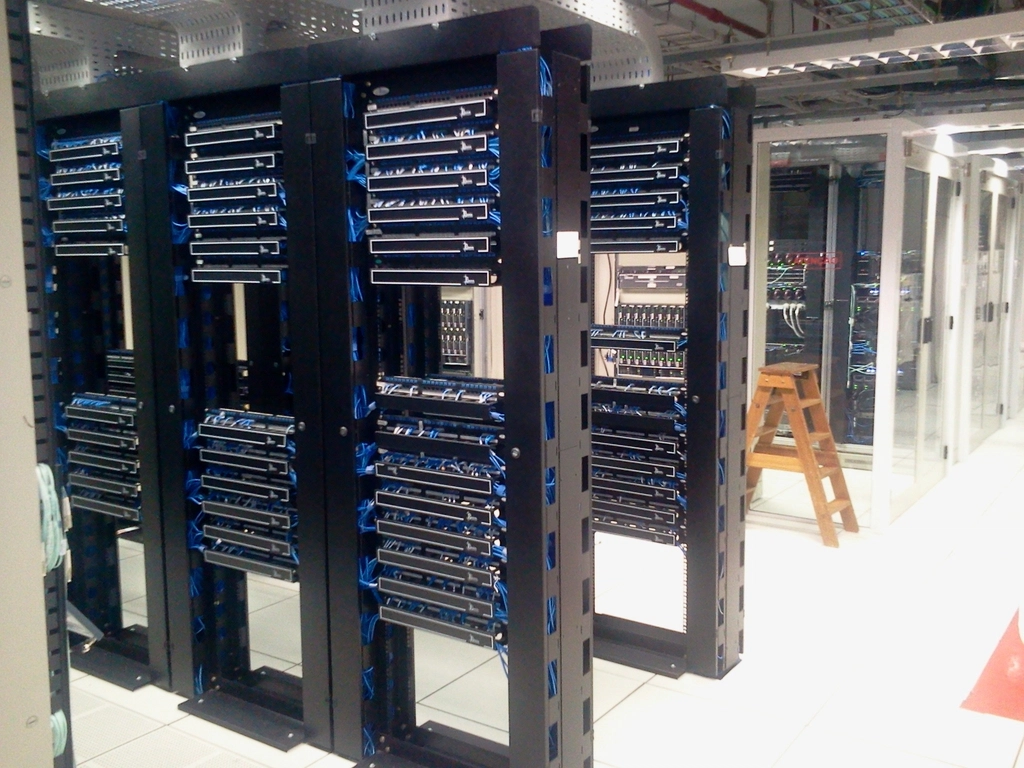
Data center tax breaks apply to cloud computing server infrastructure like this

How the data center tax breaks ballooned

Ohio’s sales-tax exemption for data centers was designed to attract investment. It lets operators avoid tax on qualifying equipment purchases in exchange for long-term commitments to build and hire in the state. Rader says the exemption’s actual cost to Ohio surged past $1.5 billion last year. That is more than ten times what state officials originally projected when the incentive was designed. The overshoot is large enough that it has drawn bipartisan attention to how the program is structured going forward.

Why one lawmaker is pushing back now

Rader’s objection is blunt: he argues Amazon, Google and Meta no longer need the incentive to justify building in Ohio. “They seem to have more money than God and they’re able to build without the need for these types of incentives,” he said. That framing casts the exemptions as an unnecessary subsidy to some of the world’s most profitable companies. It is not, he argues, a targeted tool for attracting investment that would not otherwise happen. His proposals include new data-center-specific taxes. He also wants operators to contribute more directly to the cost of power and electrical grid upgrades.

Ohio isn’t acting alone

The pushback fits a broader pattern of states rethinking how generously they court data centers. Ohio Governor Mike DeWine paused new applications for the sales-tax exemption in May 2026, effectively freezing the program while the state reassesses its cost. New York went further in July 2026, enacting a one-year statewide moratorium on new hyperscale data centers altogether. Both moves reflect growing concern among state officials. Hosting these facilities mainly brings construction jobs and a smaller number of permanent operations roles. Officials increasingly doubt that benefit still outweighs the tax revenue given up, and the strain the facilities place on local power grids.

What the companies have said

Amazon, Google’s parent Alphabet, and Meta did not immediately respond to requests for comment on Rader’s proposal. Their silence leaves the political framing largely to critics for now. All three companies have previously defended data-center investment in other states. They point to local job creation, community infrastructure spending, and long-term tax revenue once exemption periods expire.

What happens next for data center incentives nationally

Rader’s proposal would need to move through the Ohio legislature. Its prospects depend on how much appetite Republican leadership has for revisiting an incentive program tied to some of the state’s largest recent capital investments. More broadly, expect other state legislatures to watch Ohio and New York closely. Either state might successfully claw back incentives, or hold firm on a moratorium without scaring off future investment. If so, other states weighing similar hyperscale data-center proposals are likely to write tighter terms into their own incentive packages. Utility regulators are also part of this conversation. Much of the recent criticism centers as much on the strain hyperscale facilities place on regional power grids as on the tax revenue foregone. Several states are separately weighing whether data-center operators should pay a larger share of the transmission and generation capacity their facilities require.

Frequently asked questions

How large are the data center tax breaks in question?

Ohio’s sales-tax exemption for data centers cost the state more than $1.5 billion last year, according to state Rep. Tristan Rader, more than ten times the original estimate.

Which companies are named in the dispute?

Amazon, Google and Meta are the companies Rader specifically cited as beneficiaries of Ohio’s data center sales-tax exemption.

What is Rader proposing instead?

New data-center-specific taxes and requirements that operators pay more toward the cost of power and electrical infrastructure their facilities require.

Have other states taken similar action?

Yes. Ohio’s governor paused new exemption applications in May 2026, and New York enacted a one-year moratorium on new hyperscale data centers in July 2026.

Have Amazon, Google or Meta responded?

None of the three companies immediately responded to requests for comment on the proposal.

Why states offered these incentives in the first place

Sales-tax exemptions for data centers became a common economic-development tool over the past decade. States competed for the large capital investments hyperscale computing facilities represent, often running into the billions of dollars per site. The pitch to state legislatures was straightforward: exempt the equipment purchases from tax. In exchange, the state gains construction jobs, a smaller number of permanent operations positions, and property-tax revenue once any abatement period ends. What has changed is the sheer scale of recent AI-driven data center buildouts. That scale has made the true cost of these exemptions far larger than the modest programs originally designed for a handful of facilities per state.

More on the AI infrastructure buildout

For more on the infrastructure race behind this fight, see our reporting on Oracle’s delayed Project Jupiter data center and AMD’s climb to a trillion-dollar valuation.

Sources