Qualcomm Just Bet Its Future on a $60 Billion Amazon Handshake

For a company still best known for smartphone chips, Qualcomm just landed one of the largest data-center bets of the year. The Qualcomm Amazon AI chip deal, announced September 8, could see Amazon Web Services spend up to $60 billion on custom Qualcomm silicon. That figure covers chips, networking hardware and manufacturing services through 2036.

Inside the Qualcomm Amazon AI chip deal

Under the multi-generational co-development agreement, Qualcomm will design customized chips for AWS’s AI infrastructure. Revenue from the partnership begins in Qualcomm’s fiscal first quarter of 2027, the December 2026 quarter, with chips already in production. As part of the arrangement, Qualcomm granted Amazon warrants worth about $4 billion. They cover up to 25 million Qualcomm shares at $161.26 each, vesting as Amazon hits commercial purchasing milestones (Bloomberg).

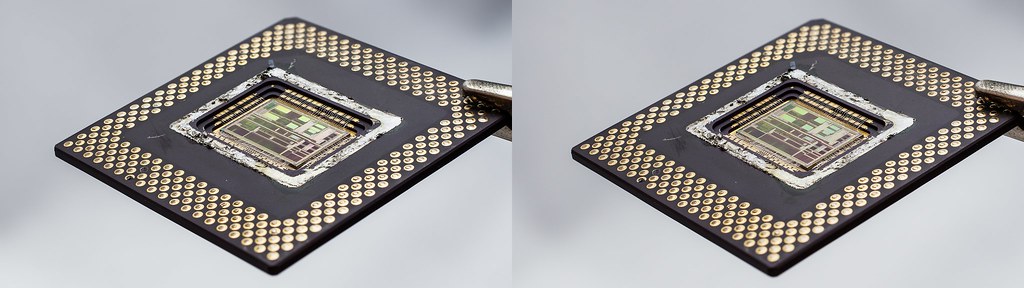
A circuit board with a processor, illustrating the silicon at stake in the Qualcomm Amazon AI chip deal

Why this is Qualcomm’s first Western hyperscaler win

The AWS agreement marks Qualcomm’s first major supply relationship with a Western cloud giant. It is a milestone the company has pursued for years, as it looks to diversify beyond a smartphone market that has matured. Qualcomm shares jumped on the announcement. Investors welcomed the company’s entry into a data-center chip market where Nvidia has dominated throughout the current AI infrastructure boom (Tech Times).

What the deal signals about the AI chip market

Amazon’s willingness to commit up to $60 billion to a second chip supplier suggests hyperscalers are working to reduce dependence on any single vendor. That matters most for AI inference workloads, the computing needed to run trained AI models rather than train them from scratch. The deal covers inference silicon specifically. That is a segment expected to grow rapidly as more companies deploy AI models in production rather than just researching them.

What happens next for Qualcomm and Amazon

The vesting structure means Amazon’s actual spending, and Qualcomm’s warrant payout, depends on AWS following through on purchases over the coming decade. It is not a fixed upfront commitment. Analysts will be watching Qualcomm’s upcoming earnings calls for early signs of how quickly the AWS relationship translates into booked revenue. They will also watch how rivals like Nvidia, AMD and Broadcom respond to a competitor’s growing foothold in hyperscaler data centers.

Chipmakers are competing hard for AI infrastructure contracts right now. See Tamara News’ coverage of Nvidia’s Hugging Face partnership and the ongoing memory chip shortage squeezing the broader supply chain.

Why AWS wanted a second chip supplier

Amazon has spent years developing its own in-house AI chips, branded Trainium and Inferentia. It also relies heavily on Nvidia hardware for the most demanding training workloads. Adding Qualcomm as a third major silicon partner gives AWS more leverage in future price negotiations with its existing suppliers. It also reduces the risk that a single vendor’s production delays or price increases could constrain AWS’s data-center expansion plans. Industry analysts describe the arrangement as part of a broader hyperscaler strategy: diversifying chip supply chains after years of AI-driven demand outstripping available manufacturing capacity.

What the warrant structure tells us about the deal’s real value

Amazon’s warrants only vest as it hits purchasing milestones. That means the headline $60 billion figure represents a ceiling on potential spending, not a guaranteed contract value. This structure is increasingly common in large technology partnerships. It lets both sides commit to a long-term relationship, while tying the financial upside to actual commercial performance rather than upfront promises. For Qualcomm, meeting those milestones over the next decade would mark one of the most significant diversification efforts in the company’s history. It would shift a meaningful share of revenue away from the mobile handset market that has defined Qualcomm for more than three decades.

How rivals are likely to respond

Nvidia, AMD and Broadcom have each built substantial data-center chip businesses over the past several years. None is likely to cede ground to a new entrant without a response. Analysts expect rival chipmakers to lean on their own multi-year hyperscaler deals and software ecosystems. Those remain a real advantage over newer entrants like Qualcomm. Even so, Amazon’s decision to commit a potential $60 billion to a fourth major supplier signals something real. Hyperscalers see value in a wider field of viable AI chip vendors, not just the handful that have dominated the market so far.

Frequently asked questions

  • How much could Amazon spend under the deal? Up to $60 billion on Qualcomm chips, networking hardware and manufacturing services through September 2036.
  • When was the Qualcomm Amazon AI chip deal announced? September 8, 2026.
  • What did Qualcomm give Amazon as part of the agreement? Warrants worth about $4 billion, covering up to 25 million Qualcomm shares at $161.26 each, vesting on commercial milestones.
  • When does revenue from the deal begin? In Qualcomm’s fiscal first quarter of 2027, covering the December 2026 quarter, with chips already in production.
  • Why does this deal matter for Qualcomm? It is Qualcomm’s first major AI chip supply relationship with a Western hyperscaler, helping it diversify beyond smartphone chips.

Sources

The $1.4 Trillion Interest Bill Hiding Inside the US Budget

With one month left in the fiscal year, the government’s ledger already shows a shortfall most households would find unimaginable. The US budget deficit 2026 reached $1.97 trillion through August. Treasury data reported this week shows a record $1.4 trillion in interest payments on the national debt driving much of the gap.

US budget deficit 2026 nears the $2 trillion mark

The gap between what Washington spends and what it collects has grown steadily through fiscal year 2026, which ends September 30. Interest costs alone now rival some of the government’s largest discretionary spending categories. That reflects both higher debt levels and the elevated interest rates the Federal Reserve has maintained through much of the year. With one reporting month remaining, the final full-year figure is expected to land close to, or potentially above, the $2 trillion threshold.

US dollar bills, representing the scale of the US budget deficit 2026

Why interest payments have become the story

A record $1.4 trillion in interest payments reflects years of accumulated borrowing meeting a higher-rate environment. Every increase in the Fed’s benchmark rate raises the cost of rolling over existing government debt and issuing new bonds. That creates a feedback loop: higher rates, intended partly to fight inflation, also widen the deficit they are meant to help control. That dynamic is likely to draw fresh attention as the Fed weighs another possible rate increase at its September 16 meeting.

How this fiscal year compares to recent history

Deficits above $1.5 trillion have become a recurring feature of federal budgets in recent years. But the pace of growth in 2026 has outstripped prior-year comparisons, largely due to the interest-cost component rather than new spending programs. Lawmakers on both sides of the aisle have flagged the trajectory as unsustainable in public statements. Still, no major deficit-reduction package has advanced through Congress this year.

What happens as the fiscal year closes

The Treasury Department will release final fiscal year 2026 figures in October, once September’s numbers are tallied. Congressional budget negotiations for fiscal year 2027 are already underway. The size of the current deficit is likely to shape arguments from both parties over spending priorities, and over whether to extend or scale back tax provisions set to expire. Rising interest costs also narrow the fiscal room available for emergency spending, a consideration already surfacing in discussions tied to the ongoing US-Iran conflict’s economic effects.

Other forces are shaping federal finances this month too. See Tamara News’ reporting on the wholesale inflation surge and the Federal Reserve’s September rate decision.

Why deficit reduction keeps stalling in Congress

Both parties have acknowledged the deficit’s trajectory as a long-term problem in public statements. Yet neither has advanced a comprehensive reduction package this year. Republicans have generally resisted tax increases. Democrats have resisted major cuts to entitlement programs like Social Security and Medicare. Those programs, together with interest payments, make up the largest and fastest-growing shares of federal spending. That impasse has left a feedback loop largely unaddressed: higher rates raise borrowing costs, which raises the deficit, which increases future borrowing needs.

How rising deficits could shape the next rate debate

A widening deficit does not force the Federal Reserve’s hand directly, since the Fed sets rates based on inflation and employment goals, not federal borrowing levels. But heavier government bond issuance to finance the deficit can push up long-term Treasury yields independent of Fed policy. That complicates the interest-rate picture for mortgages and business loans, even if the Fed itself holds steady. Some economists point to this dynamic as a reason the bond market’s reaction to September’s Fed decision may matter as much as the decision itself.

What a $2 trillion deficit means outside Washington

For most households, the deficit’s size registers indirectly. It shows up in the interest rates on mortgages, auto loans and credit cards that heavier federal borrowing helps push higher over time. Economists generally agree that persistent large deficits tend to crowd out some private borrowing, especially when driven by interest costs rather than productive investment. They can also limit a government’s flexibility to respond to future emergencies, whether a recession, a natural disaster or a prolonged conflict like the tension with Iran. None of that means an immediate crisis is at hand. But it does narrow the margin for error the next time Congress needs to respond quickly to a shock.

Frequently asked questions

  • How large is the 2026 US budget deficit so far? The deficit reached $1.97 trillion through August, with one month left in the fiscal year.
  • What is driving the deficit higher? A record $1.4 trillion in interest payments on the national debt is the single largest factor.
  • When does the federal fiscal year end? Fiscal year 2026 ends on September 30, 2026.
  • Why have interest payments grown so much? Years of accumulated federal borrowing are now being financed at higher interest rates, raising the cost of servicing existing and new debt.
  • When will final fiscal year 2026 figures be released? The Treasury Department typically releases final year-end figures in October, after September data is tallied.

Sources

Markets Have Already Decided What the Fed Will Do Next Week

Markets have mostly made up their minds about what the Federal Reserve will do next week, even before the meeting starts. The Fed September rate decision lands on September 16 at 2:00 p.m. ET. Traders are pricing a quarter-point increase as more likely than not. That marks a notable shift from the wait-and-see mood that dominated earlier in the summer.

What the Fed September rate decision could bring

The Federal Open Market Committee has held its target range at 3.50% to 3.75% since July. A run of firmer inflation data has shifted expectations, along with a hawkish tone from Fed Chair Kevin Warsh at the late-August Jackson Hole gathering. Markets now see a move to a 3.75%-4.00% range as more likely than not. A solid August jobs report gave policymakers room to prioritize inflation control over growth support (FedRateCalc).

US dollar bills, illustrating what the Fed September rate decision means for borrowing costs

Why inflation pressure is building now

August’s Consumer Price Index rose 0.4% month over month, as expected, up from just 0.1% in July. Core CPI advanced 0.3%, above the 0.2% consensus forecast. Much of the renewed price pressure traces back to energy costs tied to the ongoing conflict between the US and Iran. That conflict has disrupted oil markets and pushed fuel prices higher across the US economy. The September meeting is also one of four each year that includes the Fed’s Summary of Economic Projections. It gives investors a fresh look at where officials expect rates to land through 2027 and 2028.

How the September meeting differs from July’s pause

The Fed left rates unchanged in July for a fifth consecutive meeting. It cited uncertainty over how tariffs and geopolitical shocks were feeding into prices. That caution has partly given way to concern that inflation is proving stickier than hoped, even as growth data has held up better than expected. A rate increase, rather than a cut, would mark a reversal from the easing path many investors had anticipated earlier in 2026.

What happens after the decision

Chair Warsh’s press conference is set for 2:30 p.m. ET on September 16. It will likely draw as much attention as the rate decision itself. Reporters are expected to press him on how the Iran conflict’s energy effects factor into the Fed’s outlook. A rate increase would raise borrowing costs for mortgages, credit cards and business loans. That would land just as the European Central Bank and Bank of England also adjust their own policy stances this month.

For related coverage of how other central banks are responding to the same inflation pressures, see Tamara News’ reports on the ECB’s September rate hike and the Bank of England’s upcoming vote.

How a hike would ripple through household budgets

A quarter-point increase would push the federal funds rate to its highest level since before the Fed’s 2024-2025 easing cycle began. That has direct effects on variable-rate credit cards, home equity lines of credit and new auto loans, within weeks of the decision. Mortgage rates tend to move somewhat independently, tracking longer-term Treasury yields more closely than the Fed’s overnight rate. But a hike accompanied by hawkish guidance could still push 30-year mortgage rates higher. That would happen if investors conclude the Fed intends to hold rates elevated for longer than expected. Savers, by contrast, would likely see modestly higher yields on savings accounts and short-term certificates of deposit.

Why this meeting carries extra weight for markets

September’s meeting includes updated quarterly projections. Investors will be parsing not just the rate decision itself, but the Fed’s revised outlook for where rates are likely headed through 2027 and 2028. A hike paired with projections showing further increases would signal a more sustained tightening campaign than markets currently expect. A hike framed as a one-time adjustment to near-term energy-driven inflation could instead leave the door open to a pause, or even cuts later in the cycle. Chair Warsh’s press conference remarks are expected to be scrutinized closely for which of those two narratives the Fed intends to convey.

Frequently asked questions

  • When is the Fed’s September rate decision? The Federal Reserve announces its decision on September 16, 2026 at 2:00 p.m. ET, followed by a press conference at 2:30 p.m. ET.
  • What is the Fed’s current interest rate? The federal funds target range has been 3.50% to 3.75% since July 2026.
  • Why are markets expecting a rate increase? Firmer August inflation data, a hawkish Jackson Hole speech from Chair Warsh, and a solid jobs report have shifted expectations toward a hike rather than a pause.
  • How is the Iran conflict connected to US inflation? The conflict has disrupted global oil markets, pushing up energy costs that feed directly into US consumer prices.
  • What is the Summary of Economic Projections? It is the Fed’s quarterly set of forecasts for growth, inflation and interest rates, released alongside four of its eight annual meetings, including September’s.

Sources

The €3.8 Billion Truck Deal Quietly Reshaping Global Trucking

A truck maker most drivers in India know well is about to become the majority owner of one of Europe’s oldest commercial vehicle brands. The Tata Motors Iveco takeover officially opened its shareholder acceptance window on September 7. That gives Iveco Group investors until late October to tender their shares. The deal values the Italian company at roughly €3.8 billion.

Tata Motors Iveco takeover terms and timeline

Under the offer, TML CV Holdings, a subsidiary tied to Tata Motors’ commercial vehicle business, will pay €14.10 per share for all common shares of Iveco Group. The acceptance window opened at 8:30 a.m. CET on September 7. It is scheduled to close at 5:30 p.m. CET on October 26, unless extended (BusinessApac). Iveco’s largest shareholder is the Agnelli family’s holding company Exor, which controls 27.1% of the company. Exor has already committed to tender its shares.

A cargo truck on a highway, illustrating the commercial vehicle market at stake in the Tata Motors Iveco takeover

Why the deal needed a defence business carve-out first

Completion of the offer was conditional on Iveco separating its defence unit before the takeover could proceed. Iveco sold its IDV and ASTRA defence businesses to Italian aerospace and defence group Leonardo, in a €1.7 billion deal that closed in March 2026. That sale cleared the way for Tata’s civilian truck business to move forward, without regulators treating the transaction as a foreign acquisition of sensitive military assets. Italy’s government approved the remaining commercial deal under its Golden Power screening framework.

How Tata Motors is financing a €3.8 billion purchase

Tata Motors has lined up a $4.5 billion bridge loan with a 12-month term to fund the acquisition. It plans to refinance the borrowing through a mix of new equity and long-term debt within 12 to 18 months of closing. The financing structure lets Tata move quickly on the tender offer while it arranges permanent funding. That is a common approach in large cross-border industrial takeovers.

What a combined Tata-Iveco means for the truck market

If the deal closes as planned, Tata Motors and Iveco together would create one of the largest commercial vehicle manufacturers in the world by volume. The combination pairs Tata’s dominance in Indian and emerging-market trucking with Iveco’s established European dealer network and defence-adjacent engineering heritage. Analysts covering the sector expect the combined company to compete more directly with Volvo, Daimler Truck and Traton. The battleground: large fleet contracts across Europe, Asia and Africa.

The tender period runs through late October. Iveco shareholders who have not yet decided will be watching how the stock trades relative to the €14.10 offer price in the coming weeks. For more on how consolidation is reshaping other sectors this month, see Tamara News’ coverage of the Enbridge-Tallgrass pipeline deal and the WaFd-EverBank reverse merger.

How regulators shaped the final structure

Italy’s government treated the original, unified Iveco business as a matter of national industrial and security interest. The company has supplied military and civilian vehicles to European governments for decades. Rather than blocking the deal outright, regulators used the Golden Power screening process to require the defence-business separation as a precondition. That structure let Tata proceed with the commercial vehicle business, while keeping Iveco’s defence contracts and sensitive technology under Italian and European control through Leonardo. Other European governments are watching the approach closely, as more foreign buyers pursue stakes in dual-use industrial companies.

What workers and dealers can expect during the transition

Iveco employs tens of thousands of workers across manufacturing plants in Italy, France, Spain and elsewhere in Europe. Unions representing those workers have sought commitments on job security as part of the ownership change. Tata Motors has publicly emphasized continuity, framing the deal as an expansion of Iveco’s existing operations rather than a restructuring. It has not yet detailed specific plant-level plans. Dealers across Iveco’s European network are expected to keep operating under the existing brand in the near term. Any rebranding or product-line integration will likely unfold gradually, once the tender offer closes and Tata takes operational control.

Frequently asked questions

  • How much is Tata Motors paying for Iveco? The offer values Iveco Group at approximately €3.8 billion, or €14.10 per share.
  • When does the tender offer close? The acceptance window opened September 7, 2026 and is scheduled to close October 26, 2026, unless extended.
  • Why did Iveco sell its defence business first? Completion of the Tata deal was conditional on separating Iveco’s defence unit, which was sold to Leonardo for €1.7 billion in March 2026.
  • Who is Iveco’s largest shareholder, and what have they decided? Exor, the Agnelli family holding company, owns 27.1% of Iveco and has committed to tender its shares.
  • How is Tata Motors funding the acquisition? Through a $4.5 billion bridge loan, which it plans to refinance with equity and long-term debt within 12 to 18 months.

Sources

Seven Years for a Candle: Hong Kong’s Last Tiananmen Vigil Leaders Sentenced

Three of Hong Kong’s best-known pro-democracy figures learned on September 11 how many years they will spend in prison. Their offense: organizing a candlelight vigil. A Hong Kong court handed down sentences of five to just over seven years. The three led the group that had run the city’s annual Tiananmen Square remembrance. The Tiananmen vigil organizers sentenced this week were convicted of inciting subversion under Beijing’s 2020 national security law. The case began with their arrests in September 2021.

Tiananmen vigil organizers sentenced to years behind bars

Lee Cheuk-yan received seven years. Chow Hang-tung, a barrister who kept defending the vigil in public even after her arrest, received seven years and three months. That was the longest term of the three. Albert Ho, 74, was sentenced to five years and two months after entering a guilty plea. A guilty plea typically shortens a term under Hong Kong law. All three had already spent years in pretrial custody by the time the sentences were read (Al Jazeera).

Statue of Lady Justice outside a Hong Kong court where Tiananmen vigil organizers were sentenced

The group behind three decades of candlelight

The defendants led the Hong Kong Alliance in Support of Patriotic Democratic Movements of China. It ran the only large-scale public commemoration of the 1989 Tiananmen Square crackdown anywhere on Chinese soil. For 30 years, tens of thousands gathered each June in Victoria Park. They held candles and observed a minute of silence. That vigil has not been permitted since 2020. The Alliance itself dissolved under legal pressure in 2021 (NBC News).

A case widely read as a test of Hong Kong’s freedoms

Legal observers and rights groups call the prosecution a clear marker of how far Hong Kong’s civil liberties have narrowed. Amnesty International called the sentencing a “triple tragedy.” It pointed to the defendants’ years in custody, the loss of the vigil itself, and a broader erosion of protections that once set Hong Kong apart from mainland China. The United Nations and the European Union both issued statements criticizing the verdict. Hong Kong and Beijing maintain the prosecution followed due process under the city’s laws.

International reaction and what happens next

Governments in Europe and North America have called for the defendants’ release. Hong Kong authorities have rejected those calls as interference in the city’s judicial affairs. Chow Hang-tung and Lee Cheuk-yan have both indicated they plan to appeal. That process could take months to resolve in Hong Kong’s Court of Appeal. All three had already been detained since 2021. Their formal release dates will therefore fall several years earlier than the headline sentences suggest, once time served is factored in.

The case leaves Hong Kong without any organization permitted to publicly mark the 1989 crackdown, a gap now in its sixth year. Rights groups expect scattered, unofficial tributes to continue. None are likely to match the scale the Alliance once drew to Victoria Park. For background on how Beijing’s national security law has reshaped the city’s institutions, see Tamara News’ earlier coverage of the EU’s response to security incidents in Europe and its report on a separate high-court ruling reshaping political representation.

How the trial unfolded over four years

The three defendants were first arrested in September 2021. That came shortly after the Hong Kong Alliance voted to disband under mounting legal pressure. Prosecutors pointed to the group’s charter, which called to “end one-party rule” in mainland China, language used for decades. They argued it amounted to incitement once the national security law took effect in 2020. Defense lawyers countered that the wording predated the law by nearly 30 years. They called it a peaceful, long-standing political position, not a call to violence. The trial itself ran intermittently for roughly a year. The September 11 sentencing closed a legal process that outlasted the organization it targeted.

What the sentences mean for Hong Kong’s civil society

Legal scholars watching the case note the sentences fall within the range prosecutors sought. The court’s written reasoning leaned heavily on the defendants’ continued public advocacy after their 2021 arrests. Judges treated that advocacy as evidence of ongoing intent. Press freedom and rights organizations argue the outcome sends a clear signal to any remaining civil society groups in Hong Kong. In their reading, organizations that predate the national security law are not protected from retroactive scrutiny of their founding documents. Hong Kong’s government has repeatedly rejected that characterization. It maintains the prosecution addressed specific criminal conduct, not the Alliance’s broader existence.

Frequently asked questions

  • Who were the three people sentenced? Lee Cheuk-yan, Chow Hang-tung and Albert Ho, all former leaders of the Hong Kong Alliance in Support of Patriotic Democratic Movements of China.
  • What were they convicted of? Inciting subversion of state power under Hong Kong’s 2020 national security law.
  • How long are the sentences? Seven years for Lee, seven years and three months for Chow, and five years and two months for Ho, who pleaded guilty.
  • Will they serve the full terms? No. All three have been in custody since 2021, so time served counts toward their sentences.
  • Can the sentences be appealed? Yes. Lee and Chow have signaled they intend to challenge the convictions in Hong Kong’s Court of Appeal.
  • Does the Tiananmen vigil still take place in Hong Kong? No public vigil has been permitted in Victoria Park since 2020, and the organizing Alliance dissolved in 2021.

Sources