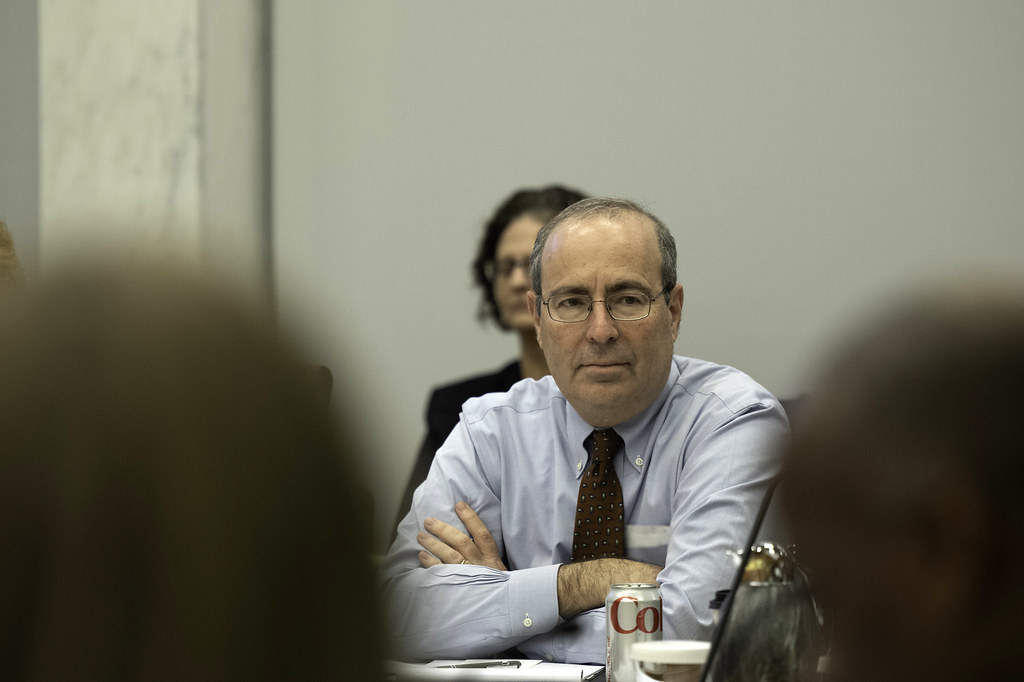
Fed Rate Hike Lifts Benchmark to 3.75%-4% in Policy Turn

The Federal Reserve delivered a Fed rate hike on 16 September 2026, lifting the target range for the federal funds rate by a quarter of a percentage point to 3.75%-4.00%. The Federal Open Market Committee voted unanimously, 12-0. It is the first increase since 2023, and it reverses the direction policy had been travelling for most of the past two years.

The Committee framed the move as unfinished business rather than a new emergency. “Inflation remains elevated,” it said in its statement, adding that the action “will support a timelier return to the Committee’s 2 percent goal.”

The decision in numbers

The target range moves from 3.50%-3.75% to 3.75%-4.00%. The implementation note published by the Federal Reserve Board sets out the corresponding adjustments to the administered rates that keep the effective funds rate inside that band.

What separates this from a routine quarter-point step is the direction. Markets had spent two years pricing a path that trended down. A unanimous vote to go the other way removes the argument that the Committee is split on whether the inflation problem has been solved.

What Kevin Warsh said

In his opening statement at the post-meeting press conference, Chair Kevin Warsh said inflation had remained too high for too long, and that recent readings had not shown a meaningful improvement in the underlying trend. That is a deliberately narrow claim: not that inflation is accelerating, but that the disinflation many had assumed was continuing has not shown up in the data with enough consistency to act on.

It was Warsh’s second meeting as chair; his first was in June 2026. Reporting from CNBC’s coverage of the decision characterised the accompanying message as more hawkish than the hike itself.

The projections matter more than the hike

The quarter point was widely expected. The Committee’s updated projections were not fully priced. Sixteen of eighteen policymakers now anticipate at least one further quarter-point increase before the end of 2026. Only two see the rate staying where it is. Officials’ year-end projections sit between roughly 4.1% and 4.4%.

A single hike can be read as insurance. A hike plus a near-unanimous expectation of another is a forecast that the Committee thinks the level of rates, not just the direction, was wrong.

How this sits against other central banks

The Fed is not moving in isolation. The European Central Bank has already been navigating its own turn, covered in our report on the ECB’s interest rate decision this year. Where the two diverge is in the starting point and in how much slack each economy still has.

Rate-sensitive assets responded immediately, including the moves in metals set out in our note on gold’s slide to a six-week low. Bank research desks have been revising their year-end paths accordingly, as tracked in our summary of one major bank’s 2026 forecast.

What it means away from the trading floor

For households, the transmission is slow but not subtle. Variable-rate borrowing reprices first, followed by new fixed-rate lending as banks reset their offers. Savers see the benefit sooner than borrowers see the cost, because deposit rates can move within days while most existing loans reprice on a schedule.

For companies, the question is refinancing. Debt raised during the low-rate years matures on a calendar that does not care about the policy cycle, and each maturity now rolls into a materially higher coupon. Businesses with staggered maturities absorb that gradually; those with concentrated refinancing dates do not.

For governments outside the United States, a higher federal funds rate tightens conditions without any domestic decision being taken. Dollar borrowing costs rise, currencies managed against the dollar come under pressure, and central banks face a choice between defending the exchange rate and supporting domestic demand.

What follows from here

Three things are worth watching. The first is the next inflation print, because the Committee has now tied itself explicitly to the underlying trend rather than headline readings. The second is whether the two dissenting projections become a bloc; unanimity on a decision does not mean unanimity on the path. The third is the transmission lag. A rate that has moved once after two years of the opposite signal takes time to filter into credit conditions, and the Committee has said it will judge by what the data shows rather than by a pre-set schedule.

The Fed’s next scheduled opportunity to act falls before year-end. On its own projections, most of the Committee expects to use it.

Questions readers are asking

How much did the Federal Reserve raise rates in September 2026?

The Federal Open Market Committee raised the target range for the federal funds rate by 25 basis points, to 3.75%-4.00%, at its meeting on 16 September 2026. The vote was unanimous at 12-0.

When did the Fed last raise interest rates before this?

The last increase before September 2026 was in 2023. Every move in between was either a cut or a hold, which is why this decision is being described as a turn rather than a continuation.

Why did the Fed hike instead of holding?

The Committee said inflation remains elevated and that the action would support a timelier return to its 2% goal. Chair Kevin Warsh said recent readings had not shown meaningful improvement in the underlying trend.

Is another rate increase expected in 2026?

The Committee’s own projections show 16 of 18 policymakers expecting at least one more quarter-point increase before the end of 2026. Only two saw rates staying where they are.

Where do Fed officials think rates end the year?

Year-end 2026 projections from officials cluster between 4.1% and 4.4%, which implies at least one more quarter-point step from the new 3.75%-4.00% range.

Does a Fed hike affect borrowers outside the United States?

Indirectly, yes. The federal funds rate anchors dollar funding costs worldwide, so dollar-denominated debt, trade finance and currencies managed against the dollar all tend to move when the Fed shifts direction.


Gold Price Slides to Six-Week Low as Rate Hike Nears

The gold price has slipped to around $4,290 an ounce, its weakest level since early August, as a firmer dollar, higher Treasury yields and expectations of a US rate rise combine against the metal in the busiest central bank week of the quarter.

In this briefing

Where the price sits

Gold settled at $4,295.94 an ounce on 15 September 2026, down 0.07 per cent on the session, according to market data compiled by Trading Economics. Over the previous month the price fell about 2.7 per cent, but it remains roughly 16 per cent higher than a year earlier.

Both facts matter. A 2.7 per cent monthly decline from an elevated base is a pullback inside an uptrend, not a reversal of one. Headlines describing a slide should be read against the year-on-year gain.

Why gold is falling in an inflationary year

The intuition that gold rises with inflation is only half right. Gold competes with government debt, and the relevant comparison is the real yield — the return on a bond after inflation.

When central banks respond to an inflation shock by raising policy rates faster than inflation itself, real yields rise, and a non-yielding asset becomes more expensive to hold. Add a stronger dollar, which makes dollar-priced gold costlier for buyers using other currencies, and the direction of the past month follows. That is exactly the combination currently in place.

A dense week of decisions

The Federal Reserve’s decision falls on 16 September. Market pricing points to a 25 basis point increase to a 3.75 to 4.00 per cent target range, which would be the first US hike since 2023. That is an expectation derived from futures, not an announced outcome, and it should be treated accordingly until the statement lands. The Fed publishes the resulting rates in its H.15 selected interest rates release.

The European Central Bank follows on 17 September; our report on the ECB’s move covers the euro area picture. The Bank of Japan is expected to act on 18 September, and the Bank of Canada and Swiss National Bank both decide on 24 September, per the published 2026 decision calendar. The Bank of England met on 10 September.

Four major central banks moving inside nine days is unusual, and it concentrates currency volatility. For gold, the dollar leg of that is as important as the rates leg: a synchronised tightening cycle abroad limits how far the dollar can strengthen, which cushions the metal.

Energy is the variable underneath

None of this is happening because of demand overheating. It is happening because oil has stayed above $100 a barrel after supply disruption in the Middle East, including the shutdown of a major Saudi export pipeline. Our coverage of the East-West pipeline outage and the wider price shock sets out the supply picture.

Energy-led inflation is awkward for central banks because raising rates does not produce barrels. The tightening is aimed at stopping the shock feeding into wages and expectations, not at the shock itself — which is why the forecast dispersion among analysts on where oil goes next is unusually wide, and why rate paths beyond this month are genuinely uncertain.

How to read the next few sessions

For gold, the near-term signal is not the rate decision itself but the guidance attached to it. A hike already priced in does little; language implying further increases lifts real yields and pressures the metal further, while any hint that this is a one-off would likely put a floor under it.

The broader market read runs the same way. Equity investors have spent the month weighing the same energy-and-rates combination, as our report on the big tech earnings week and on the run-up to the Fed decision both describe.

Gold and rates, explained

What is the gold price now?

Gold settled at $4,295.94 an ounce on 15 September 2026, down 0.07 per cent on the day and around 2.7 per cent lower over the previous month.

Is gold still up year on year?

Yes. Despite the recent slide it remains roughly 16 per cent higher than a year earlier.

Why does a rate hike push gold down?

Gold pays no income. When yields on government debt rise, the opportunity cost of holding a non-yielding asset rises with them, and a stronger dollar makes gold more expensive for holders of other currencies.

Which central banks are deciding this week?

The US Federal Reserve on 16 September and the European Central Bank on 17 September, with the Bank of Japan expected to move on 18 September. The Bank of Canada and the Swiss National Bank follow on 24 September.

Is the Fed expected to cut or hike?

Market pricing points to a 25 basis point increase to a 3.75 to 4.00 per cent target range, which would be the first hike since 2023. That is an expectation, not an announced decision.

What is driving inflation in this cycle?

Energy. Crude above $100 a barrel following Middle East supply disruption has fed through to headline inflation in most large economies.

Keep reading

Russian State Duma Election Set for 18-20 September

The Russian State Duma election runs across three days from 18 to 20 September 2026, the first parliamentary vote since the start of the full-scale invasion of Ukraine. All 450 seats in the chamber’s ninth convocation are contested, and the timing has become an explicit factor in when talks over Ukraine might resume.

Guide to this briefing

The mechanics of the vote

President Vladimir Putin signed the decree setting the election date, naming 20 September 2026, with voting spread across three days from 18 September as has become standard practice.

The State Duma is the lower house of the Federal Assembly and is elected by parallel voting. Half the chamber, 225 deputies, is returned from single-mandate constituencies on a plurality basis. The other 225 are allocated by party-list proportional representation, with parties needing 5 per cent of the national vote to qualify for list seats.

That split matters for outcomes. A party with concentrated regional strength can convert it into constituency seats without clearing the list threshold, while a party with thin national support and no local strongholds gets nothing from either half. The system has historically produced larger majorities than vote shares alone would suggest.

The field going in

United Russia enters as the governing party, having won the 2021 election with 49.8 per cent of the vote and 324 of the 450 seats — a constitutional majority. Interfax reported the decree and the three-day voting arrangement.

Dozens of other contests at regional and local level run on the same days, which compresses the administrative load and the observation effort across the entire country into a single window.

Why the date matters beyond Russia

The election has become a scheduling constraint on diplomacy. Ukrainian President Volodymyr Zelensky has said the first results on the path to peace could come by the end of September. US presidential envoys Steve Witkoff and Jared Kushner said after a visit to Moscow that Russian officials would be ready to resume peace talks after the elections, and that substantive negotiation was unlikely during the campaign.

That places any real movement in the last ten days of September at the earliest. It also means the composition of the new Duma — and the political capital the result is presented as conferring — will be part of the backdrop to whatever follows. Our report on the EU’s renewal of Russia sanctions covers the pressure track running in parallel.

Observation and credibility

Three-day voting, extensive remote electronic voting and the scale of simultaneous regional contests have all been raised by election-monitoring groups as complicating independent observation. The European Platform for Democratic Elections has been publishing updates on preparations for the vote.

Those concerns sit inside a wider picture. International IDEA’s latest democracy assessment, released this week, records severe global declines in the indicators measuring credible elections, freedom of the press and effective parliaments — the three that determine whether a legislative election is a competitive event or a confirmatory one.

After 20 September

Three things to watch once counting ends. Whether United Russia’s constitutional majority holds, since the two-thirds threshold governs what can be changed without cross-party assembly. Whether turnout figures and any reported irregularities become a point of contention domestically. And how quickly the resumption of talks that envoys have trailed actually materialises, given that the post-election window is the one both sides have pointed to.

Elsewhere in Europe, voters have been delivering their own verdicts — see our coverage of Sweden’s 2026 election result — while the multipolar diplomacy running alongside all of this is set out in our report on the BRICS New Delhi declaration.

Your questions on the Duma vote

When is the Russian State Duma election?

Voting runs across three days, 18 to 20 September 2026, with 20 September set by presidential decree as election day.

How many seats are being contested?

All 450 seats in the ninth convocation of the State Duma, the lower house of Russia’s Federal Assembly.

How does the voting system work?

Parallel voting. Half the chamber, 225 seats, is elected in single-mandate constituencies by plurality; the other 225 are allocated by party-list proportional representation with a 5 per cent threshold.

Who holds the majority now?

United Russia, which took 49.8 per cent of the vote and 324 seats at the 2021 election.

Are other elections happening at the same time?

Yes. Dozens of regional and local races across Russian regions are scheduled for the same days.

What does this mean for Ukraine talks?

US envoys said after visiting Moscow that Russian officials indicated readiness to resume talks once the elections are over, which places any substantive negotiation after 20 September.

Also on Tamara News

The Biggest Data Breaches of 2026 and What They Reveal

The biggest data breaches of 2026 have run to a pattern: fewer credit card numbers, far more health records, identity documents and account data, and at least one attack that destroyed systems rather than stealing from them. A roundup published on 15 September by TechCrunch puts the year’s incidents side by side.

Sections

The incidents by scale

Ranked by people affected, four incidents dominate the year so far.

The AI music generation platform Suno exposed information associated with 55.3 million user accounts, the largest account count of the year. Charter Communications lost more than 42 million customer records to an extortion group. The insurer DentaQuest saw health data on 15 million people stolen — the largest confirmed breach of sensitive health information in 2026. The Dutch telecoms operator Odido disclosed an attack affecting up to 6.2 million customers.

The Odido disclosure is instructive about what modern breach data looks like. Investigators found unauthorised access to a customer contact system, from which attackers downloaded varying combinations of names, addresses, email addresses, mobile numbers and personal identification details. None of that is a password. All of it is enough to open an account somewhere else in the victim’s name.

Carnival Corporation notified six million people in May that personal information had been taken in an April intrusion. Independent breach trackers, including public breach lists, record a long tail of smaller incidents behind these.

Why health data keeps topping the list

Health records have been the highest-value category for several years and 2026 has not changed that. The reason is durability. A stolen card is cancelled in a day; a diagnosis history, insurance identifier and date of birth stay valid for life and support both insurance fraud and highly credible phishing.

Healthcare and insurance environments also concentrate risk. They run large third-party ecosystems — claims processors, benefits administrators, imaging providers — each of which holds a copy of the same records. Breach numbers in the sector are frequently a count of one supplier’s customers rather than one hospital’s patients.

The attack that deleted rather than stole

The outlier of the year was at Stryker, the US medical technology company. In March, attackers described in reporting on the incident as Iranian broke in and remotely wiped tens of thousands of employee devices, disrupting the company’s operations for several days.

That attribution is as reported rather than judicially established, and should be read with that caveat. What is not in question is the shape of the attack: the objective was disruption, not extortion. Wiper incidents leave no data to negotiate over and no decryption key to buy, which makes recovery entirely a function of how well an organisation can rebuild from backups.

The most recent disclosure

The newest entry is McKesson, the pharmaceutical distributor, which discovered a cybersecurity incident on 25 August 2026 involving unauthorised access to third-party applications and data exfiltration. On 29 August the company narrowed the scope to a subset of customers within its Oncology and Multispecialty and its Medical-Surgical units.

The four-day gap between discovery and scoping is the part worth noting. Initial breach statements almost always describe a larger blast radius than the final forensic picture, or a smaller one. Early numbers should be treated as provisional in both directions.

Financial services has had its own bad month — see our report on the Revolut data breach — while the software supply chain keeps producing entry points, as our coverage of the VMware Workstation and Fusion flaw sets out.

What actually reduces exposure

For individuals, the realistic assumption is that an email address, phone number and home address are already circulating. The defences that still work are the ones that break the chain between leaked identity data and account takeover: app-based multi-factor authentication rather than SMS codes, which are vulnerable to SIM swapping; unique passwords generated and stored in a manager; and a credit freeze where the jurisdiction offers one.

For organisations, the recurring failure in this year’s list is third-party access. Suno, McKesson and DentaQuest all involve data reachable through a system that was not the company’s core product. Inventorying which suppliers hold customer data, and what each can reach, is duller than threat hunting and has prevented more incidents. Governance frameworks are catching up — our report on Microsoft’s AI code of conduct covers one vendor’s attempt to formalise those commitments.

Breach questions, answered

What is the largest known data breach of 2026?

The theft of health data belonging to 15 million people from the insurer DentaQuest is the largest confirmed breach reported so far this year.

Which incident exposed the most user accounts?

The AI music platform Suno, where information tied to 55.3 million user accounts was exposed.

What happened at Charter Communications?

An extortion group stole more than 42 million customer records, according to reporting on the incident.

What data was taken in the Odido breach?

Attackers reached a customer contact system and downloaded varying combinations of names, addresses, email addresses, mobile numbers and personal identification details for up to 6.2 million customers.

Was any 2026 attack purely destructive?

The March intrusion at the US medical technology firm Stryker was, in that attackers remotely wiped tens of thousands of employee devices and disrupted operations for several days rather than seeking a ransom for data.

What should individuals actually do?

Assume email addresses and phone numbers are already public, turn on app-based multi-factor authentication rather than SMS, use unique passwords through a manager, and freeze credit files where the jurisdiction allows it.

More on security

Airline Fuel Costs Jump to $350bn and Fares Follow

The global airline fuel cost bill is on course to rise from $252 billion in 2025 to $350 billion in 2026, according to the International Air Transport Association — an increase of close to 40 per cent that is already showing up on tickets as carrier-imposed surcharges.

What follows

The numbers behind the fare rises

IATA’s mid-year assessment, published in its June release on industry profitability, put jet fuel at an expected average of $152 a barrel for 2026, up almost 70 per cent on the $90 average of 2025. The underlying crude assumption was Brent at $95 a barrel for the year, up 37 per cent from $69 in 2025.

Because fuel sits at roughly 29 per cent of global airline operating expenses — a share IATA expects to reach 31.4 per cent in 2026 — a move of that size cannot be absorbed in margins. Passenger ticket revenue is forecast at $839 billion in 2026, up 9.2 per cent on $768 billion in 2025, and a good part of that increase is fuel pass-through rather than growth.

These are an industry association’s own projections, and IATA has an interest in framing cost pressure sympathetically. The direction, though, is corroborated by its own jet fuel monitor and by carrier disclosures.

The crack spread problem

Crude is only half the story. The crack spread — the premium refined jet fuel commands over Brent — is expected to average $57 a barrel in 2026, which IATA describes as a historic high.

That matters because hedging programmes are usually built around crude, not the refined product. An airline that hedged Brent well can still be badly exposed if refining margins blow out, which is what a record crack spread means. It also means fares do not fall as fast as crude does when the oil price retreats, because the refining premium is slower to normalise.

How it reaches your ticket

Passengers rarely see a line item called fuel. They see YQ or YR codes, grouped on the fare breakdown under “taxes, fees and carrier-imposed surcharges”. The grouping is misleading: those two codes are set by the airline, not by any government or regulator.

On long-haul premium itineraries the amounts are substantial. On a round trip between London and New York in a premium cabin, carrier-imposed surcharges alone can exceed $700. The effect is sharpest on award bookings, where surcharges are typically payable in cash — so a redemption that cost a fixed number of points last year now carries a much larger cash component.

Two practical checks help. Compare the total, not the headline fare, when the same route is offered by carriers in different jurisdictions, since surcharge practice varies. And on award tickets, price the same route on a partner airline before booking, because surcharge policy differs between partners on identical metal.

Airlines are still profitable

The industry is not in distress. IATA forecasts net profit of $23.0 billion for 2026 — roughly half the previous year’s figure — on operating expenses of $1.117 trillion, with expense growth of 13 per cent outrunning revenue growth.

Halving a margin is painful, and it changes behaviour: thinner routes get cut, frequencies fall on marginal city pairs, and older, less efficient aircraft come out of service faster. Passengers feel that as reduced choice before they feel it as higher headline fares.

The variable nobody controls

Every figure above rests on the crude assumption, and crude has run ahead of it. Brent has traded above $100 a barrel since supply disruption in the Middle East, with the shutdown of a major Saudi export line adding to the pressure — see our reports on the East-West pipeline outage and the resulting price shock across Asia.

If Brent holds above the $95 assumption for the rest of the year, IATA’s profit forecast is optimistic and surcharges have further to run. If the disruption eases, crude falls before the crack spread does, so relief on tickets will lag relief at the pump. Either way, the near-term direction for fares on long-haul routes is up. Operational strain is compounding it, as our coverage of UK airport disruption this month shows.

Questions about fares and surcharges

How much are airline fuel costs rising in 2026?

IATA projects the industry fuel bill rising from $252 billion in 2025 to $350 billion in 2026, an increase of close to 40 per cent.

What is the crack spread and why does it matter?

It is the premium jet fuel commands over crude. IATA expects it to average $57 a barrel in 2026, which it describes as a historic high, meaning airlines pay more than the crude price alone would imply.

What are YQ and YR on a ticket?

They are carrier-imposed surcharge codes shown under taxes, fees and carrier-imposed surcharges. The airline sets the amount, not a government or regulator.

Are airlines losing money?

No. IATA forecasts industry net profit of $23.0 billion in 2026, roughly half the previous year’s level, on operating expenses of $1.117 trillion.

Do surcharges affect points bookings?

Yes. Carrier-imposed surcharges are generally payable in cash even on award tickets, which is why redemption values fall when surcharges rise.

Will fares keep climbing?

That depends on crude. IATA’s forecast assumed Brent averaging $95 a barrel for the year, and prices have traded above $100 since the Middle East supply disruption.

Related business coverage